Tag: asia

  • Tumi and McLaren launch collaborative range

    Tumi and McLaren launch collaborative range

    Travel and lifestyle brand Tumi has unveiled a new luggage and travel collection designed and developed in partnership with luxury supercar maker and Formula 1 team McLaren.

    Each of the nine pieces in the capsule collection is, according to the partners, designed to simplify all aspects of travel and life on the move.

    Tumi and McLaren said their common vision of “continually pursuing higher levels of excellence” is reflected in the details and materials featured in the new range. Elements of McLaren’s supercars are included, along with the brand’s signature Papaya colourway and CX6 carbon fibre accents.

    Key travel pieces include Aero International Expandable 4 Wheel Carry-On and the Quantum Duffel. The carry-on features Tegris, a hardwearing thermoplastic composite found in race cars and a moulded fabric front panel which contrasts the hard shell.

    The supercar-influenced design is echoed throughout the collection and compression straps are modelled from the six-point racing harnesses found in McLaren race cars and track-only models, such as the limited-edition McLaren Senna GTR.

    The Tumi x McLaren range includes the Aero International Expandable 4 Wheel Carry-On, Velocity Backpack and Teron Travel Kit.

    “For me, this is the ultimate collaboration as Tumi and McLaren have an innate synergy. We are two like-minded brands who share the same values – unparalleled quality, technical innovation and design excellence. The value of this partnership, however, extends beyond the product” – Tumi Creative Director Victor Sanz

    The Velocity Backpack includes a USB port, padded laptop compartment and ‘add-a-bag’ sleeve while the Torque Sling and Lumin Utility Pouch offer hands-free options. Accessories include the Orbit Small Packing Cube, Trace Expandable Organizer, and split compartment Teron Travel Kit.

    The collection is available from 31 March on Tumi and McLaren websites, in Tumi stores and through selected McLaren retailers.

    Tumi Creative Director Victor Sanz said: “For me, this is the ultimate collaboration as Tumi and McLaren have an innate synergy.

    “We are two like-minded brands who share the same values—unparalleled quality, technical innovation and design excellence. The value of this partnership, however, extends beyond the product.

    “With a keen focus on lifestyle, we design for the betterment of the customer experience. With McLaren’s advanced technology and our top-of-the-line materials, our gear can tackle the most arduous excursions and still effortlessly translate into daily life.”

    Packing aerodynamic automotive inspiration: The Orbit Small Packing Cube is designed for quick journeys

    McLaren Automotive Design Director Rob Melville commented: “When I first met with Victor to define the collection we quickly realised that we each brought a shared creative vision for what we wanted to achieve.

    “At McLaren we focus on articulating a clear design language and materials selection which combines and leads into our car’s performance. We wanted to capture those aspects with Tumi so we have spent a great deal of time working to analyse and refine every aspect of this collection.

    “The result is something that I am incredibly proud of and that I believe will elevate the owner’s experience while serving as a reminder that, like our cars, it’s about enjoying the journey and not simply the destination.”

    McLaren Racing Chief Commercial Officer Mark Waller commented: “McLaren strives to push the boundaries of design, performance and perfection in everything it does, whether on the road or on the track. This collaboration exemplifies that spirit.

    “We are delighted to be collaborating with Tumi on this collection. We look forward to seeing our race team use it around the world as we commence the 2021 Formula 1 season.”

  • Deliveroo eyes US$10.5 billion listing after some funds steer clear

    Deliveroo eyes US$10.5 billion listing after some funds steer clear

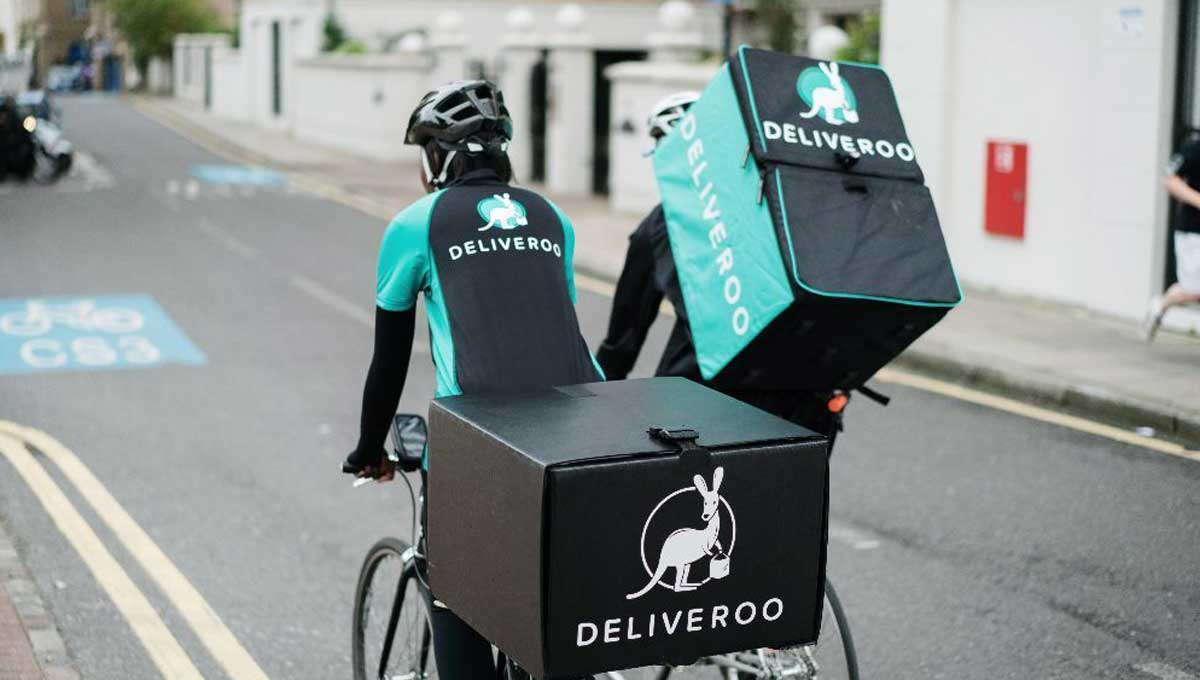
    Deliveroo will price its initial public offering at 390 pence per share, banks working on the deal said on Tuesday, at the bottom end of previously indicated valuations for the food delivery group.

    Food delivery company Deliveroo will price its initial public offering at 390 pence per share, banks working on the deal said on Tuesday, at the bottom end of a previously indicated range for the food delivery group.

    That would indicate an overall valuation of 7.6 billion pounds (US$10.46 billion), less than initially expected, after a string of major UK fund managers said they would not take part, citing concerns about its dual-class share structure and its gig economy business model.

    The listing is covered multiple times over, the bookrunners said, with the deal expected to close at 1200 GMT.

    “Given volatile global market conditions for IPOs, Deliveroo is choosing to price responsibly and at an entry point that maximises long-term value for our new institutional and retail investors,” a spokesperson for Deliveroo said.

    The listing of London-based company, founded by boss William Shu in 2013, is set to be London’s biggest IPO since Glencore’s in May 2011 and also the biggest tech float on the London Stock Exchange.

    Heavyweight investors Aberdeen Standard Life, Aviva, Legal & General Investment Management and M&G have all said they will sit the deal out, amid criticism of its workers’ rights.

    Some of them also question whether the loss-making business can ever justify its valuation.

    Having initially looked for up to 8.8 billion pounds, the British tech firm on Monday went with a narrower price range, indicating a maximum valuation of up to 7.85 billion pounds, citing market volatility.

    Deliveroo’s self-employed drivers have seen a boom in demand during the COVID-19 pandemic, bringing food from otherwise-shuttered restaurants to housebound customers.

  • FamilyMart launches ‘convenience wear’ clothing range

    FamilyMart launches ‘convenience wear’ clothing range

    Family Mart, one of Japan’s most common convenience store chains, will now be offering apparel. Dubbed “Convenience Wear,” Family Mart will be launching 68 different articles of clothing, designed by FACETASM designer Hiromichi Ochiai.

    Spanning essentials like T-shirts, long-sleeves, tank tops, shorts and socks, each piece is neatly folded in transparent zip-lock packaging labeled with detailed information about the piece’s size, color, material and measurements. Most of the colors are kept minimal, too — navy, white, black and grey. Jointly developed with Asahi Kasei Co., many of the silhouettes also come with “Paircool” fabrication for optimal breathability. Beyond clothing, other pieces in the collection like towels round off the expansive assemblage.

    Family Mart’s “Convenience Wear” range is currently available on Family Mart’s website, ranging from ¥390 – ¥990 JPY (approximately $3 – $9 USD).

  • China slashes import tax to boost semiconductor sector

    China slashes import tax to boost semiconductor sector

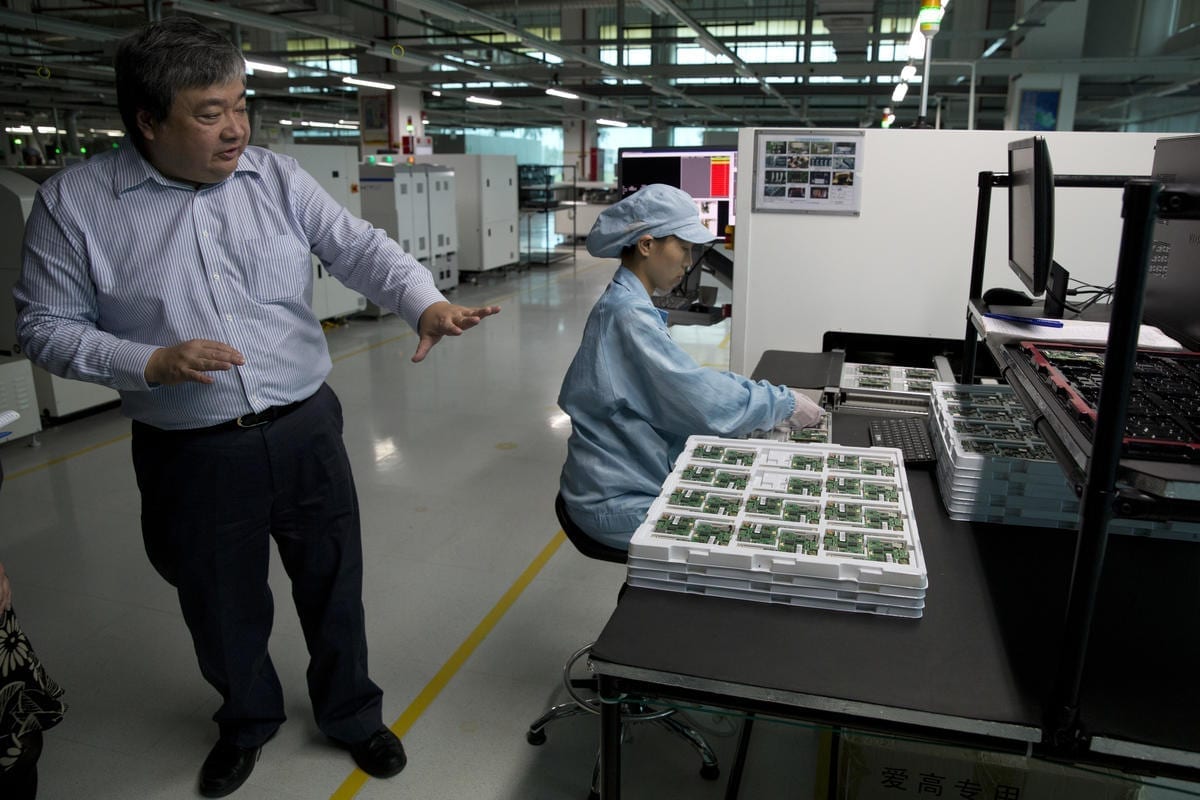
    China announced new import cuts this week to boost the nation’s semiconductor industry. This follows after US sanctions on some Chinese companies including tech giant Huawei and chipmaker SMIC to ease the impact on the industry.

    According to China’s finance ministry, chipmakers producing high-end 65-nanometer technology or smaller chips can import raw materials and machinery tax-free through 2030.

    Totaling more than $300 billion annually, China’s processor chips and other semiconductors form the country’s largest single import. Despite the country’s strong chip industry, China still relies on Taiwan, the US and Europe for certain parts. In China’s fourth session of the 13th National People’s Congress (NPC) held in early March, the party pledged to build up self-reliance in science and technology.

  • AirAsia Group airlines anticipate strong recovery in 2Q

    AirAsia Group airlines anticipate strong recovery in 2Q

    The AirAsia group is something of a bellwether for the Southeast Asian airline industry due to its footprint in a range of countries in the region. So the widely varying rates of recovery for the group’s members give important indicators of the outlook for both the AirAsia empire and the broader Southeast Asia region.

    The brutal period that AirAsia has endured during the COVID-19 pandemic is highlighted by the RM5.9 billion ($1.4 billion) annual loss it reported for 2020.

    But looking ahead, the airline believes there is reason for near term optimism, as demand is projected to improve in its most important domestic markets. Some are bouncing back strongly towards pre-COVID levels, while others are in weaker condition as they prepare to emerge from the latest lockdowns.

    But the general trend is upward in the second quarter. The group’s view is that there is even light at the end of the tunnel for its international operations, which have suffered most during the pandemic.

    Granted, it is in AirAsia’s interests to paint a positive picture as it seeks to reassure financial markets during what is still a pivotal period for the airline. Nevertheless, it certainly has grounds to predict general improvement as it moves towards midyear and beyond.

  • Huawei and China Mobile support one-of-a-kind 5G smart port in China

    Huawei and China Mobile support one-of-a-kind 5G smart port in China

    Ningbo is a time-honored international port city in east China’s Zhejiang province. Its port, the Ningbo-Zhoushan Port, is the largest port in the world. Recently, the port worked with China Mobile Ningbo and Huawei to showcase the hybrid platooning of 5G smart and traditional container trucks. The platooning is a stride towards realizing the goal of becoming a world-class port. With this solution, in berth 8 of its busy Meishan container terminal, 13 5G smart container trucks run automatically and smoothly, greatly improving automation and safety in the port.

    Due to the collaboration of Zhejiang Seaport Group, China Mobile Zhejiang, Huawei, and other leading players, the Ningbo-Zhoushan Port has been transformed into a smart 5G port. To date, the port has reached a number of milestones, becoming the first in the industry to integrate 5G automated rubber-tired gantry (RTG) cranes into routine operation and implement 5G network slicing and 5G Super Uplink in port businesses.

    Smart container trucks represent a new breakthrough in the smart port transformation. Their scaled application offers an effective solution to driver shortage and fatigue while improving efficiency and reducing safety risks. They will play an important role in replacing intensive labor in the port with unmanned, automated, and intelligent operations.

    Smart container trucks require real-time 5G smart sensing, truck-road and truck-truck synergy, and video transmission. One container truck requires an uplink bandwidth of 20 to 30 Mbps and a low latency of below 20 ms. During peak hours, more than 40 container trucks will be working at the same time. This requires the network to ensure an uplink bandwidth of 1,200 Mbps.

    5G can provide better network support for these applications. Based on 3GPP Release 16, China Mobile and Huawei have developed a 5GtoB solution for port applications. Ample verification tests have been conducted, with results showing that the solution meets the requirements of smart container trucks on both network performance and stability. With CPEs deployed to support dual feeding and selective receiving solution, the network further improves the quality and latency stability of smart container trucks’ signal transmission. As such, 5G has become a preferred network solution for full-function applications of smart container trucks.

    In the Ningbo-Zhoushan Port, container trucks no longer have drivers — an important indicator of the automated logistics of 5G smart trucks in modern ports. Powered by 5G and AI, upon detecting that containers unloaded from bridge cranes are properly loaded, container trucks automatically power on to move the containers to their destinations. During this process, they automatically identify nearby objects, machinery, and lighthouses and respond intelligently, such as decelerating, braking, steering, bypassing, and parking. They can also accurately move to the RTG-specified positions along optimal routes provided by the smart dispatching system, meeting the demand for horizontal transfer in closed areas.

    Looking to the future, the Ningbo-Zhoushan Port will continue to work with China Mobile Ningbo and Huawei as well as other industrial partners to further integrate upstream and downstream resources and promote the pilot and promotion of remote device control, smart tallying, unmanned driving, online AI port monitoring, and trunking communication based on 5G networks so as to build a comprehensive benchmark of 5G smart port.

  • Techcombank expects profit growth

    Techcombank expects profit growth

    Vietnam’s largest private lender Techcombank targets an increase of 25 percent in this year’s pre-tax profits to a record VND19.8 trillion ($858 million).

    It expects credit to grow by 12 percent. Profits rose by 23 percent last year to VND15.8 trillion.

    It has undistributed profits of VND26.7 trillion, which it plans to use to fund operations. It has not paid dividends for the last 10 years.

    In a year when businesses struggled to repay loans due to the impact of the Covid-19 outbreak, the lender saw provisions for bad debts triple to VND2.66 trillion.

    Meanwhile, the bank’s board is seeking shareholders’ permission to make Ho Anh Ngoc, a brother of chairman Ho Hung Anh, a director.

    Ngoc, 39, has a doctorate in economics from Macquarie University in Australia. He has held several positions in the bank since 2017 and is currently chairman of the bank’s southern representative board.

  • Vietnam startup CEOs earn less than Indonesian, Singaporean peers

    Vietnam startup CEOs earn less than Indonesian, Singaporean peers

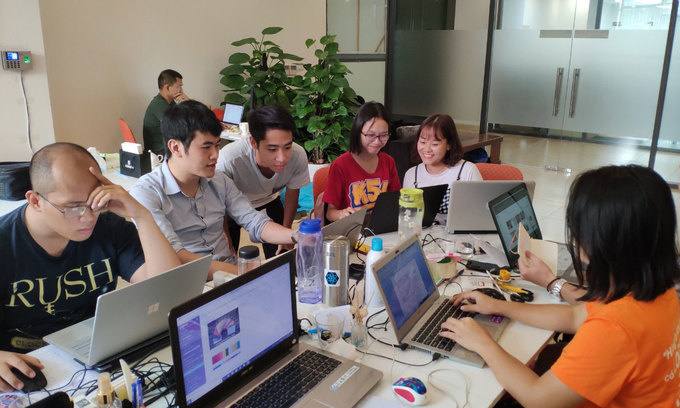
    The CEOs of early startups earn a median salary of $1,000 per month, lower than those in Indonesia and Singapore, a recent report says.

    A startup in the $0–5 million funding stage pays its CEO $2,000 a month in Indonesia and $4,000 in Singapore, according to a recent report by Southeast Asia-focused venture capital firm Monk’s Hill Ventures and Asia-Pacific jobs site Glints.

    For startups in the $10-50 million funding stage, CEOs in Vietnam get paid $6,000, compared to $11,500 in Singapore.

    But vice presidents engineering in Vietnam startups in the Series B stage earn up to $10,000 a month, same as in Singapore, while the monthly remuneration in Indonesia is $7,100.

    Due to an oversupply of fresh graduate junior engineers in markets such as Indonesia and Vietnam, starting salaries can be low; however, they quickly grow with a few years of experience to the $700–1,200 range.

    Engineers in Vietnam typically earn higher salaries than those in Indonesia but lower than their Singapore peers, the report says.

    A senior frontend developer, for example, earns up to $2,800 in Indonesia, $3,500 in Vietnam and $9,500 in Singapore.

  • Citi Names Head of Asia Consumer Bank

    Citi Names Head of Asia Consumer Bank

    He takes over from Gonzalo Luchetti, who was named U.S. consumer banking head, as reported in January.

    Citi has named Kartik Mani as its new consumer banking head for Asia, according to an internal memo Mani will report to Anand Selva, global consumer bank CEO and Peter Babej, Citi’s Asia Pacific CEO,  and join the bank’s Asia Pacific Operating Committee.

    Mani joined Citi in July 2020 as consumer head for China, Hong Kong, Taiwan, Korea and Australia, and cards and loans head APAC and EMEA. He previously held global and regional senior leadership roles at American Express, Standard Chartered, HSBC and Lloyds.

    Babej described Mani as a digitally focused leader who is able to deliver growth while maintaining strong discipline on risk and controls, noting that he led the revitalization of Citi’s Cards and Lending business in Asia, while deftly navigating the pandemic.

    It’s imperative that we continue to execute on our strategic priorities in Asia as we transform our business model and continue to digitize, Babej said in the note.

  • Goldman Sachs Joins Crypto Wealth Wave

    Goldman Sachs Joins Crypto Wealth Wave

    Goldman Sachs is the latest to join the wave of global financial institutions seeking a share in the rapidly growing cryptocurrency market.

    Goldman Sachs plans to offer investments in bitcoin and other digital assets to its wealth clients, according to a report, starting from the second quarter.

    The planned offering could include physical bitcoin, derivatives and traditional investment vehicles.

    Earlier in March, the bank’s president and chief operating officer John Waldron had already signaled interest in launching its own crypto business.

    Client demand is rising, Waldron said, according to a report that said the bank’s crypto trading desk had reopened in the same month and began dealing bitcoin futures and non-deliverable forwards.

    We are regulated on what we can do. We continue to evaluate it and engage on it.

    A gradually increasing number of global banks are entering the crypto market, particularly with a focus on serving wealth management client demand.

    Morgan Stanley also launched its own crypto offering earlier last month via three funds.

    Outside of the U.S., DBS and Standard Chartered have also entered the crypto market, launching their offerings in December last year.

  • UOB CEO Takes Pay Cut

    UOB CEO Takes Pay Cut

    His compensation in 2020 included an unchanged base salary of S$1.2 million, S$8.568 million bonuses, and S$37,000 in-kind benefits.

    Wee Ee Cheong, UOB’s deputy chairman, and CEO, received a total of S$9.805 million in 2020, down 8.8 percent from S$10.75 million in 2019, according to the bank’s annual report, published Wednesday.

    Some 60 percent of the variable pay will be deferred and vest over three years. Of the deferred portion, 40 percent will be in cash and the remaining 60 percent will be on the form of share-linked units, the report said.

    The bank posted earnings of S$2.92 billion ($2.21 billion) for the full year 2020 – 33 percent lower than 2019’s record earnings.

    Earlier this month DBS also said it would be cutting the payout of chief executive Piyush Gupta by 24 percent to S$9.18 million ($6.82 million) in 2020.

  • UBS Singed by Archegos

    UBS Singed by Archegos

    Switzerland’s largest bank didn’t escape the Archegos wreckage unscathed. UBS’ singing is however far from the burn that rival Credit Suisse is nursing.

    Zurich-based UBS, the sixth-largest prime broker according to data provider Preqin, also catered to troubled hedge fund Archegos. Yet the Swiss bank was mum as its crosstown rival Credit Suisse warned of a major hit against its first-quarter results.

    The damage unleashed at Credit Suisse by the hedge fund now reportedly tallies at as much as $5 billion. How did UBS, which ranks directly behind Credit Suisse in catering to hedge funds, escape a similar fate?

    The answer is that the Swiss wealth management giant didn’t entirely, according to a person familiar with the matter. UBS, silent this week as Credit Suisse issued its profit warning, is reportedly still unwinding a series of complicated instruments when it called margin on the hedge fund.

    Though estimates vary, the bank believes it will be left nursing losses of not more than low-three-digit millions from business with Archegos, the person said. The damage isn’t such that it will neither torpedo UBS’ quarterly profits nor trigger a warning, the person noted. A spokeswoman for UBS declined to comment.

    Analysts expect a quarterly profit of $1.44 billion from UBS when it reports on April 27, according to a consensus compiled by the bank itself. Executives at both banks scrambled late last week to evaluate the Archegos debris, with Swiss regulator Finma intervening early on.

    UBS’ top investment banker Rob Karoskfy, risk chief Christian Bluhm, and finance overseer Kirt Gardner were among the top executives involves. The Swiss bank apparently feels confident enough it can extricate itself from the wreckage without wiping out the quarterly progress.

    This puts UBS squarely in the camp of Goldman Sachs and Morgan Stanley, which were both able to offload their Archegos holdings quickly. By contrast, Credit Suisse and Japan’s Nomura, which on Monday flagged a $2 billion hit, weren’t as fast.

    The episode illustrates that UBS’ risk limits held in this case, while raising manifold questions about Credit Suisse’s limits. The latter’s shares slumped more than 16 percent since the bank disclosed the Archegos hit on Monday; investors sent UBS’ shares just three percent lower over the same period.

  • Making the most of Shopify in Google Search

    Making the most of Shopify in Google Search

    Getting organic traffic is something that every eCommerce store owner dreams about. Targeted traffic coming to your site for free sounds like a pipe dream, but it is exactly what millions of website owners do every day. Now, it is a little more difficult for an eCommerce site to get that kind of traffic.

    This is why some platforms that your store could be built upon are better than others. Shopify, for instance, has a lot of built-in features that make it much easier to take care of your SEO. Any kind of help you can get from your platform should come very welcome. SEO is complicated and there are a lot of moving parts to keep track of.

    That’s why there are agencies dedicated strictly to SEO because it can be very difficult to do on your own. In this article, however, we will give you several Shopify SEO tips to help you bring in a lot of organic traffic.

    Optimize your site structure

    There are a few situations in which site owners, and even SEO experts, focus a lot on what Google wants and ignore the users. Luckily, when it comes to site structure you are killing two birds with one stone.

    Your site should be structured in a way that allows Google to crawl your site effectively and understand what the topic is. The more easily Google can access the relevant content then the better it can know where to rank your pages.

    On the other side of the coin, a site that is well structured is easy for a visitor to navigate. A good user experience is then had and they are more likely to stay on the site and convert from there. Whether your conversion goals are for them to sign up for a newsletter or to make a purchase, they are not likely to hit the mark if the site is hard to navigate.

    It all comes together when they stay on your site, look at lots of pages, and don’t bounce back to the SERPs. This sends a signal to Google that the site satisfied their search and that the content is good. This helps raise your site in the rankings as it will be seen as an authority on the topic.

    The best way to structure it is to break it down into categories and have each category in the menu bar that is easily seen. Then, make sure to have a lot of your relevant pages interlinked within the content.

    Make sure it’s responsive

    As more and more people use their phones as a computer, it makes sense that your site needs to be mobile-friendly. In fact, Google has stated that it is a major goal to create a system in which sites that are mobile-ready and have few of the issues associated with responsive pages will be rewarded over sites that are not.

    When your site has been online for a while and you have access to the analytics, you will surely find that most of your traffic is coming from mobile and tablets. Desktops are being used less and less.

    Luckily, this is not something you have to worry about since Shopify templates come responsive out of the box. You do need to keep a few things in mind.

    For instance, links that are too close together will be difficult for people to press since they are using their finger and not a mouse. Google will take note of these things.

    Use content marketing

    Even with all the features built into Shopify for SEO you still need content. It is the content that will bring people in, to begin with, and is what keeps them on your site. Just working on technical SEO is not enough. In fact, many content marketers will tell you that content marketing is better than technical SEO.

    The way it works is that you build authority by using various channels with lots of content. All of the content should be curated according to what your ideal user’s needs. It starts with using organic SEO and writing content on your site to rank on Google. This involves using the keywords that your audience is actively using in search and then crafting good content around those keywords. Which means having a blog on your store site.

    Then, make sure to have a consistent presence on social media. Your ideal customer is likely using just one or two platforms so it’s important to figure out which ones they are most likely using and focus there. This means that if your target audience is gamers under 25 then you shouldn’t deal with Facebook as they are not hanging out there. If your ideal customer is a middle-aged housewife then Facebook is the ideal place to focus.

    To shore up your authority create a podcast and Youtube channel. On these channels make sure to be creating content that is helpful to people so they will keep coming back for more. Over time you will be seen as a trusted source of information and head over to your site to buy your products.

    Not only are you going to be bringing in traffic through these sources, but Google will also take notice that a lot of traffic is coming in this way and use social proof to give you more authority. And more authority means better rankings.

    Use structured data 

    I mentioned how important content marketing is and that it is more important than technical SEO. Well, one way that technical SEO is crucial is to make sure to use structured data on your site.

    There are predefined formats for different types of features on your site. This is the structured data and it helps Google understand what is happening on your site. For instance, if you have a FAQ section then there should be some structured data that allows Google to know that this is what the section is. The same goes for a recipe or a how-to list.


  • How much do you need to begin investing in crypto?

    How much do you need to begin investing in crypto?

    So far, 2021 has been the year of cryptocurrencies. With Bitcoin smashing through the previous record to reach an all-time high of £42,000 ($58,000) and firms such as Tesla now investing, it appears that there has never been a better time to jump on board and start investing in crypto. Of course, while Bitcoin may be the most well-known cryptocurrency it is by no means the only one. Alongside this, there is also the likes of Ethereum, Litecoin, and Cardano to consider. Even looking at these additional cryptos is only touching the tip of the iceberg as there are literally thousands of them in existence.

    With all of the media coverage of crypto and what this year has seen, now may be the time that you are considering investing. If you are unfamiliar with crypto terms such as algorithmic peg, altcoin, and bag there is a good chance that you may need to invest in some education before taking the plunge, but here’s a look at some of the key points that you’ll need to know.

    What is Crypto?

    Before considering how much you need to start investing, it is important to understand what crypto is and, just as importantly what it isn’t. Cryptocurrencies are digital currencies that exist online and in secure wallets. They can be used to buy goods and services, but more importantly, they can also be traded for profit.

    Crypto works by using blockchain technology. This is a decentralised computer system that keeps information extremely secure. The fact that crypto is decentralised also means that no government or single person controls it. This means that, although values can change, it is not susceptible to world events like a traditional currency is.

    What are the most popular cryptocurrencies?

    When it comes to considering investing in cryptocurrency, it is worth taking a look at what are the most popular. With so many in existence, it is easy to get lost in a sea of names and not really be sure what you are investing in. The most popular cryptos to invest in are:

    Bitcoin

    The open-source software for Bitcoin was released in 2009. The person behind this is only known as Satoshi Nakamoto and has never had his real identity confirmed. The first time that Bitcoin was used was to purchase a pizza, but since then it has gone on to achieve incredible values and is now even accepted as a method of payment by PayPal, showing that it is now truly mainstream.

    Ethereum

    The work of Vitalik Buterin saw Ethereum being launched in 2015. At the time of release, there were 72 million coins made available. Although not reaching the heights of Bitcoin, it still has a respectable all-time high of £1,239 ($1,700).

    Litecoin

    The creator behind Litecoin was Charlie Lee who founded this in 2011. Going live in 2013, this crypto works in an almost identical way to Bitcoin although the technology allows for faster confirmation of transactions. Its all-time high was £262 ($360).

    How can I invest in crypto?

    To invest in cryptocurrencies, you are going to need somewhere to buy it and then somewhere to keep it. This is where exchanges come into play. The most common of these is Coinbase. Here you can buy Bitcoin and Ethereum with your debit card. For other cryptos, you generally need to trade Bitcoin and Ethereum and can not use traditional currencies to buy them.

    Given the high values of these currencies, investing may seem unobtainable for many. The good news is that you do not need to purchase an entire Bitcoin. Exchanges allow you to purchase fractions of cryptocurrencies which makes investing accessible for everyone. Potential new investors should not be intimidated by the rising values. Instead, this should be taken advantage of by using fractional options which remove any barriers to entry.


  • Hanoi to take over metro operation in May

    Hanoi to take over metro operation in May

    Hanoi’s first metro line Cat Linh – Ha Dong is set to be handed over to city authorities in May for commercial operation.

    The company that built it, China Railway Sixth Group Co Ltd., on Wednesday began the process of handing over the Cat Linh – Ha Dong Metro Line to local authorities.

    The handover will take three to four weeks.

    Deputy Transport Minister Nguyen Ngoc Dong told reporters Wednesday that since January, Hanoi authorities have been working to finish the last details of the project, like setting up signs for disabled passengers, installing a device to prevent the conductor from falling asleep and adding more staff at each station to supervise and assist passengers embark and disembark.

    Each train on the route will be capable of carrying 960 passengers. A one-way trip will take 23 minutes, including a 30-second stop at each station.

    There will be a train every 10-15 minutes in the initial period, with higher frequency during rush hours.

    The Cat Linh – Ha Dong Metro Section is set to be the first such project to operate in Vietnam. It runs 13 kilometers on elevated tracks through 12 stations from downtown Dong Da District to Yen Nghia in Ha Dong District in the southwestern part of the city.

    The project has been delayed for years and missed several commercial operation deadlines with the Ministry of Transport blaming the Chinese contractor for its inexperience.

    Last year, its safety evaluation was delayed several times because the Chinese and French experts who had returned home late January and were unable to return to Vietnam since international flights were grounded due to the Covid-19 pandemic.

    The section, one of eight lines planned in the city of 8.3 million, is expected to partly resolve chronic traffic congestion and motivate more residents to use public transportation.