Tag: asia

  • New Levi’s store in Indonesia is its largest in SEA

    New Levi’s store in Indonesia is its largest in SEA

    The store represents the brand’s largest store yet in Southeast Asia, and features the brand’s new ‘Next Gen’ design concept.

    The new store is located in Grand Indonesia East Mall and features a range of technology features including Levi’s first associate ordering system, which is part of a broader omni-channel shopping experience. The new store also features a Tailor Shop where customers are able to customize their own items; options available include embroidery, hemming and alterations. Customers can also create their own t-shirt at the store’s print bar.

    Sameer Koul, Country Manager at Levi Strauss Indonesia, commented: “We are focused on bringing a highly personalized shopping experience to consumers and in a large format. This store can embody a bold brand image and vision for Indonesia. Levi’s Next Gen Store offers the most diverse products and brings our brand story to life with the feeling of being in a theatre.”

  • Hong Kong e-commerce scene ready for growth in 2021

    Hong Kong e-commerce scene ready for growth in 2021

    E-commerce businesses in Hong Kong are set to recapture their growth hit by the COVID-19 pandemic, with supply chain and logistics issues and a decline in sales, Paypal’s new study showed.

    Despite the obstacles brought by COVID-19, two-thirds (61%) of businesses surveyed are anticipating a recovery at the end of 2020, along with the measures to address the financial pressure and customer relationship challenges.

    The study also found 86% of respondents believing to improve their e-commerce experience for consumers to boost their competitiveness in this time.

    The PayPal Hong Kong Merchant Survey was conducted in August to understand the impact of the pandemic on e-commerce businesses and their thoughts on recovery. 86% of respondents seek capitalization on the opportunity of improving online shopping experiences to boost competitiveness.

    While online shopping amplified, 27% of respondents reported tough challenges amidst the pandemic – mainly growing concerned on their sustainability.

    Since January 2020, 86% of businesses claimed to have supply chain and logistics problems, while 52% reported decrease in sales as their main challenge. Such are creating dual pressure on businesses in addition to the increasing operational costs.

    These issues are also causing failing customer relationships in Hong Kong businesses, including rising complaints, damaged company reputation, and loss of regular customers.

  • National Pharmacies Improves Patient Privacy and Customer Experience with the SOTI ONE Platform

    National Pharmacies Improves Patient Privacy and Customer Experience with the SOTI ONE Platform

    National Pharmacies, one of Australia’s most progressive pharmacy and optical groups, has adopted the SOTI ONE Platform across its retail network to enhance mobile operations, reduce IT costs and increase data security to protect patient privacy.

    Founded in 1911, National Pharmacies previously relied on manual and desktop IT infrastructure to address customer transactions, enquiries and to manage stock through its retail supply chain.

    To overcome business challenges associated with manual and fixed in-store processes, National Pharmacies required a solution that empowered staff, enabled mobility, and improved the customer experience. As a result, National Pharmacies moved from fixed terminals to help automate the stock replenishment process, assist with customer queries, and improve member engagement, through in-house mobile apps.

    A Cure for Greater Functionality and User Support

    With more mobile devices being used within the business, remote functionality became a critical feature. National Pharmacies needed to deploy mobile apps remotely and previously struggled with a lack of visibility into their devices in the field.

    “Our pharmacies continue to keep pace with emerging mobile technologies, and we are always looking to improve the patient care experience,” said Joe Polisena, Chief Technology Officer at National Pharmacies. “Mobile technologies are considered part of our critical infrastructure in delivering health solutions and SOTI MobiControl provides us with the right tools for the job; verifying each device has the right software updates, right permissions and comprehensive logging to ensure privacy is respected for each patient.”

    SOTI MobiControl Protects Patient Data and Delivers IT Cost Savings

    “Mobility and the growth of the Internet of Things (IoT) are having a tremendous impact on the pharmacy and healthcare sectors. The challenge, however, is that more devices and more connected things increases security risks and the potential of leaking confidential patient data. In order to provide the high level of data security necessary to protect patients, National Pharmacies is trusting the SOTI MobiControl to secure and manage the vast numbers of endpoints they are deploying to keep patient data secure and private,” said Michael Dyson, VP of Sales, APAC at SOTI.

    Since working with SOTI, National Pharmacies has experienced IT cost savings and seen a double-digit reduction in the number of help desk tickets logged for mobile devices, resulting in improved user and customer satisfaction.

    “SOTI was able to provide a full, no cost proof of concept for National Pharmacies on their devices, in their environment, and assist them with all the challenges encountered throughout their deployment with ease,” said Michael. “Since implementing SOTI MobiControl, National Pharmacies has seen an immediate impact, with a 10X ROI saving both time and money across their operations.”

    For more information on how National Pharmacies is using the SOTI ONE Platform to improve their mobile operations, read our latest case study.

    About SOTI

    SOTI is the world’s most trusted provider of mobile and IoT management solutions, with more than 17,000 enterprise customers and millions of devices managed worldwide. SOTI’s innovative portfolio of solutions and services provide the tools organisations need to truly mobilise their operations and optimise their mobility investments. SOTI extends secure mobility management to provide an integrated solution to manage and secure all mobile devices and connected peripherals in an organisation.


     

  • Deliveroo announces IPO Price Range

    Deliveroo announces IPO Price Range

    Deliveroo is providing an update on trading for the 2 month period January and February 2021 versus the comparable period in 2020.

    GTV – the total amount of transactions it processes on its platform – has grown +121% year on year at the group level in January and February 2021. GTV in the UK and Ireland has grown +130% year on year and GTV in the Group’s other markets has grown +112% year-on-year.

    This follows the Company’s Registration Document, published on 8 March 2021, which showed GTV grew64% in 2020. Fourth quarter 2020 run-rate GTV amounts to over £5 billion. In 2020, underlying gross profit margin as a percentage of GTV grew from 5.8% in 2018 to 8.8%, demonstrating fast growth underpinned by strong unit economics.

    IPO Offer Highlights

    • The price range for the Offer has been set at £3.90 to £4.60 per Share, implying an estimated market capitalisation at Admission of between £7.6 billion and £8.8 billion (excluding any over-allotment shares).
    • We will apply for admission of shares on the standard listing segment of the Official List of the FCA and to trading on the main market of the London Stock Exchange.
    • The Offer will comprise of new Shares to be issued by Deliveroo (expecting to raise gross proceeds of approximately £1 billion) (“New Shares”) and existing Shares to be sold by certain existing shareholders.

    o    Bringing the food category online represents an enormous market opportunity. The way we think about it is simple: there are 21 meal occasions in a week – breakfast, lunch, and dinner – seven days a week. Right now, less than one of those 21 transactions takes place online. We are working to change that.

    o    We have executed well, from a growth, expansion, and profitability perspective, but we are just truly starting our journey.

    o    We will continue to invest in the innovations that we believe will further enhance our core marketplace for consumers, restaurants and grocers, and riders, while also continuing to further develop our growth businesses, in particular, Editions, Plus and Signature.

    Will Shu, Founder and CEO of Deliveroo, said: 

    “We are proud to be listing in London, the city where Deliveroo started. Becoming a public company will enable us to continue to invest in innovation, developing new tech tools to support restaurants and grocers, providing riders with more work and extending choice for consumers, bringing them the food they love from more restaurants than ever before. This will help us in our mission to become the definitive food company. We have enjoyed a strong start to 2021 and we are only at the start of an exciting j

  • Google has a plan to make app updates feel faster on Android

    Google has a plan to make app updates feel faster on Android

    Google would like Android users to have their apps installed faster on their Android devices. We discovererd something new in the Google Play Store called “App install optimization” that would use crowdsourced information to make this happen. As Google explains, “When you turn on App install optimization, Google can tell which parts of an app you use the first time you open it after installation. When enough people do this, Google can optimize the app to install, open, and run faster for everyone.” And even though crowdsourcing is used to make this work, no personal data such as your name and email address is shared.

    The crowdsourced feature also “doesn’t look at anything outside of the app, such as other apps or content on your device. It also doesn’t collect information about content uploaded or downloaded in the app, such as images in a social feed, or rankings on a leaderboard.” What Google does is combine your data with data from other users in order to “find trends and identify which parts of the app are most important to everyone.” This information, Google says, will speed up the time it takes to install apps from Google Play, lower the amount of time it takes to open and run a particular app, and reduce the strain on your device’s CPU, battery, and storage.

    Let’s look at an example, shall we? Let’s say that after installing Instagram on your phone, you spend the first ten minutes creating your profile and finding friends. If Google discovers that most people follow the same routine when installing the app from the Play Store, Google will make sure that the first parts of Instagram that get installed from the Play Store deal with profile creation and finding friends. The story viewer and the files needed to post on the app will remain uninstalled until you try to use them or your signal gets stronger. And instead of opening the entire app into RAM at once, Your phone might load only those parts of the app you use the most lowering the amount of RAM being used while reducing the stress on your phone’s processor.

    Android users not happy with App install optimization will be able to opt-out of the feature although this will simply stop your data from being used in the crowdsourcing. You will still benefit from the faster install times created when other Android users’ data is collected by Google. Version 25.5.13 of the Google Play Store makes a reference to the feature which means that we could see it hit the Google Play Store soon.

  • An “Instagram for Kids” is in the making

    An “Instagram for Kids” is in the making

    Facebook, Instagram’s parent company, have taken it upon themselves to begin development for a children’s version of the app.  It is widely known the regular Instagram app is hardly an ideal environment for young children. The minimum age to create an account is 13 years old, but kids are shrewd when it comes to figuring out how to sidestep this restriction, exposing themselves to possible dangers.

    Adam Mosseri, head of Instagram, spoke out about the difficulty of verifying users’ age, as “most people don’t get identification documents until they are in their mid-to-late teens.” Mosseri will be overseeing the development of the new app dedicated to providing a kid-friendly Instagram experience, which is still in its infancy stage, along with Pavni Diwanji (previously in charge of Google’s YouTube Kids and other kid-focused projects).

    I’m excited to announce that going forward, we have identified youth work as a priority for Instagram. We are accelerating our integrity and privacy work to ensure the safest possible experience for teens and building a version of Instagram that allows people under the age of 13 to safely use Instagram for the first time.

    It isn’t difficult to imagine the perils and pitfalls pre-teens could encounter while using the regular Instagram app, and mingling with all sorts of strangers. Because the app caters to teenagers and adults, its restrictions are minimal to accommodate to that age group. The fact that it allows nudity (albeit for artistic or body-positive purposes), and other explicit content, is the least of it.

    There, children are vulnerable and exposed to both predators who lurk on the platform, and other negative influences such as unrealistic body standards, shady chat groups with 18+ content, as well as abuse and bullying. Neither is the merciless bombardment from advertisers and product-pushing influencers appropriate for the many children on Instagram, whose minds are too easily influenced and too young to think critically and make conscious decisions.
    A lot of children, either by choice or by accident, migrate [from YouTube Kids] onto the broader YouTube platform. Just because you have a platform for kids, it doesn’t mean the kids are going to stay there. —Kumar

    Researcher Priya Kumar has spoken up to make the case that a kid-friendly Instagram in no way guarantees that children won’t find themselves on the main app sooner or later. Moreover, it will only serve to reel them in and get them hooked onto social media at an earlier age than ever, as well as tread the moral fence of monetizing their interactions on the platform to boot.

    Buzzfeed adds that after Facebook developed Messenger Kids in 2017 (boasting strict safety measures and parental controls), in 2019, a bug was discovered in the app which allowed children to join chats with complete strangers.

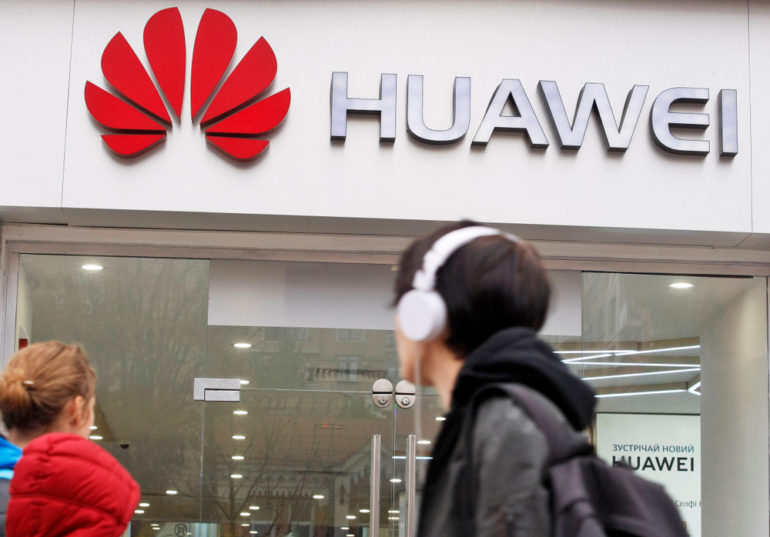
  • Chinese manufacturer will reportedly use Huawei’s ecosystem in case it too loses access to Google

    Chinese manufacturer will reportedly use Huawei’s ecosystem in case it too loses access to Google

    In May 2019, the U.S. placed Huawei on the Entity List. Not only did this ban Huawei from accessing its U.S. supply chain, it also banned Huawei from using Google’s Android apps on Huawei handsets. Not that this really mattered since many of these apps such as YouTube, Search, Google Maps, Drive, and others were already banned from the Chinese versions of Huawei’s phones by the government. Google’s apps were allowed on the international versions of Huawei’s phones.

    Huawei’s Entity List placement means that Google Mobile Services is not allowed on Huawei handsets and had to be replaced. Huawei developed its own ecosystem called Huawei Mobile Service (HMS). As of last December, HMS covered 500 million monthly active users in over 170 countries; the buzz around the water cooler is that a non-Huawei handset will soon be available with HMS pre-installed (more on this below).

    Huawei also had to replace the Google-licensed version of Android with the open-source version of Android and will now switch to its homegrown HarmonyOS. The company’s first 2021 flagship, the camera-centric Huawei P50 series, could be the first smartphones to run HarmonyOS. According to Huawei staff member Akiba Ziluo, Chinese smartphone manufacturer Meizu will have the first non-Huawei handset to support HMS Core through the Huawei Mobile Service. According to Huawei, “HMS Core offers a rich array of open device and cloud capabilities, which facilitate efficient development, fast growth, and flexible monetization. This enables global developers to pursue groundbreaking innovation, deliver next-level user experiences, and make premium content and services broadly accessible.”

    Each Chinese phone manufacturer has a secret fear; they worry about becoming the next Huawei and ending up in a similar predicament. That is why many of them are looking for Chinese technology that could be used in a jiff to replace American software in case they are banned from using U.S. technology like Huawei is.

  • Japan Car Makers Scramble To Assess Impact Of Renesas Auto Chip-Plant Fire

    Japan Car Makers Scramble To Assess Impact Of Renesas Auto Chip-Plant Fire

    Toyota, Nissan, Honda and other Japanese automakers scrambled on Monday to assess the production impact of a fire at a Renesas Electronics automotive chip plant that could aggravate a global semiconductor shortage. “We are gathering information and trying to see if this will affect us or not,” a Honda spokesman said. Other car makers including Toyota and Nissan said they too were assessing the situation. The effect on car makers could spread beyond Japan to other auto companies in Europe and the United States because Renesas has around a 30% global share of micro control unit chips used in cars.

    Renesas said it will take at least a month to restart production on a 300mm wafer line at its Naka plant in northeast Japan after an electrical fault caused machinery to catch fire on Friday and poured smoke into the sensitive clean room.

    Two-thirds of production at the affected line is automotive chips. The company also has a 200mm wafer line at the Naka plant, which has not been affected. Concerns on the impact of the fire on production sent auto shares sliding in Tokyo on Monday, with the big three, Toyota, Honda and Nissan, down more than 2% by the midday break. Renesas shares tumbled as much as 5.5% and were down 3.9% midday. The benchmark Topix index shed 1.1%.

    “It will probably take more than a month to return to normal supply. Given that, even Toyota will face very unstable production in April and May,” said Seiji Sugiura, senior analyst at Tokai Tokyo Research Institute. “I think Honda, Nissan and other makers will also be facing a difficult situation.”

    Semiconductors such as those made by Renesas are used extensively in cars, including to monitor engine performance, manage steering or automatic windows, and in sensors used in parking and entertainment systems.

    Nissan and Honda had already been forced to scale back production plans because of the chip shortage resulting from burgeoning demand from consumer electronic makers and an unexpected rebound in car sales from a slump during the early months of the coronavirus pandemic. Toyota, which ensured parts suppliers had enough stocks of chips, has fared better so far.

    “It could take three months or even half a year for a full recovery,” said Akira Minamikawa, analyst at technology research company Omdia. “This has happened when chip stockpiles are low, so the impact is going to be significant,” he added.

    Renesas said it customers, which are mostly automotive parts makers rather than the car companies, will begin to see chip shipments fall in around a month. The company declined to say which machine caught fire because of the electrical fault or which company made it. The Japanese government promised help for the auto industry.

    “We will firmly try to help the Naka factory achieve swift restoration by helping it quickly acquire alternative manufacturing equipment,” Chief Cabinet Secretary Katsunobu Kato told a regular news conference on Monday.

    The latest incident at the Naka facility comes after an earthquake last month shut down production for three days and forced Renesas to further deplete chip stocks to keep up with orders. The plant was closed for three months in 2011 following the deadly earthquake that devastated Japan’s northeast coast.

  • First Neobank Launches in the Philippines

    First Neobank Launches in the Philippines

    The opportunity is ripe for the digital-only bank in the country, which has a population of over 100 million – 70 percent of whom is currently unbanked – spread across a vast territory of 7,600 islands.

    Tonik has rolled out its long-awaited deposit, payment, and card products to consumers in the Philippines, where it hopes to disrupt the traditional retail banking sector.

    The digital-only bank intends to boost financial inclusion, as previously unbanked customers can have accounts set up within five minutes through its mobile app, which come with a virtual MasterCard debit card. Accounts can be topped up via interbank transfer, debit card, or in cash at close to 10,000 retail agents across the country.

    Tonik said its use of technology will dramatically cut operating costs, and allows it to offer «game-changing» interest rates and not to charge unfair fees to customers. It plans to expand its offer to include a physical debit card and to allow customers to take out an all-digital consumer loan.

    We expect our proposition for the #NeoNormal to resonate particularly strongly with the “digital natives” in the Philippines, who constitute most of the population,» Long Pineda, president of Tonik Digital Bank, said in an announcement on Friday.

    Tonik is headquartered in Singapore, and is backed by venture capital funds including Sequoia India and Point72.

  • Targeting Tesla, China’s Geely To Launch New Premium EV Brand

    Targeting Tesla, China’s Geely To Launch New Premium EV Brand

    China’s Geely plans to roll out electric vehicles under a new marque with different branding and sales strategies, people familiar with the matter said, as the Volvo owner looks to take on its main EV rival Tesla with higher-end vehicles. The brand, positioned in the premium segment and named “Zeekr”, will be housed under Geely’s to-be-launched EV entity Lingling Technologies, according to three people, who declined to be named as the plan is not yet public. Reuters reported the plans for Lingling last month.

    Geely, the owner of Volvo Cars and 9.7% of Daimler AG, will roll out models under the new marque based on its open-source EV chassis, announced in September and called Sustainable Experience Architecture (SEA), the sources said.

    It will be a new attempt to go up-market by Geely, and backs founder and Chairman Li Shufu’s long-held ambition to make premium cars “like Mercedes-Benz” in a bid to take on EV leader Tesla Inc.

    Geely will open showrooms, or “hubs”, in city centres to sell cars at a fixed price, departing from traditions to sell cars through dealerships – marketing tactics pioneered by Tesla, which last year saw sales expand quickly in China, the world’s biggest car market.

    The plan follows a flurry of tie-ups by Geely earlier this year as the automaker pursues its goal of becoming a leading EV contract manufacturer and engineering service provider.

    “Traditional gasoline cars and electric vehicles are two race tracks of business. Geely does not have a clear advantage in electric vehicles at the moment so it appears that it wants to complete its own innovation by creating a new brand,” said Alan Kang, analyst at auto consultancy LMC Automotive.

    China’s automakers largely compete with entry-level and mass-market manufacturers including Volkswagen and Toyota, but EV maker Nio Inc sells cars with higher prices and counts BMW as a rival.

    Hangzhou-based Geely also plans a broad array of sales and marketing strategies to seek deeper relationships with the EV buyers. It will open lifestyle lines for clothing and accessories and launch a car owner’s club, tactics used by Nio, sources said.

    Zeekr is also considering rolling out a share ownership plan that allows customers to become shareholders of Lingling, which management hopes will boost sales and the relationship between brand and customers.

    Geely declined to comment. Shares of its Hong Kong-listed company Geely Automobile fell 3% on Friday as Chinese equities dropped after a rise in global bond yields prompted selling in high-priced consumer and material stocks.

    Many conventional automakers have used a new brand to launch their EV units. Geely’s rivals including Great Wall, and SAIC Motor have rolled out their respective new standalone EV brands.

    China’s government has heavily promoted new energy vehicles (NEVs) – such as battery-powered, plug-in petrol-electric hybrid and hydrogen fuel cell cars – in response to chronic air pollution and a warming climate, spurring interest from technology companies and investors alike. China forecasts NEVs will make up 20% of its annual auto sales by 2025 from around 5% in 2020.

  • HSBC Reopens Hong Kong Headquarters

    HSBC Reopens Hong Kong Headquarters

    HSBC has reopened its main Hong Kong office but is only advising critical staff to come in for work, according to an internal memo.

    Precautionary measures – such as wearing masks, pre-entry temperature screening, hand sanitizers, spaced queuing and portable acrylic screens at open banking counters – will continue to be in place, according to a statement from the bank, adding that it conducted deep cleaning and disinfection last week.

    The bank closed the office last week following a recent outbreak in a local gym popularly frequented by expatriates. Visitors who stayed within the building for over two hours between March 3 and 16 were required to undergo coronavirus tests.

    The gym-linked cluster has resulted in nearly 150 cases and has prompted other financial firms, including Goldman Sachs and UBS, to encourage more work-from-home measures.

  • UK and EU regulatory agencies confirm COVID-19 Vaccine AstraZeneca is safe and effective

    UK and EU regulatory agencies confirm COVID-19 Vaccine AstraZeneca is safe and effective

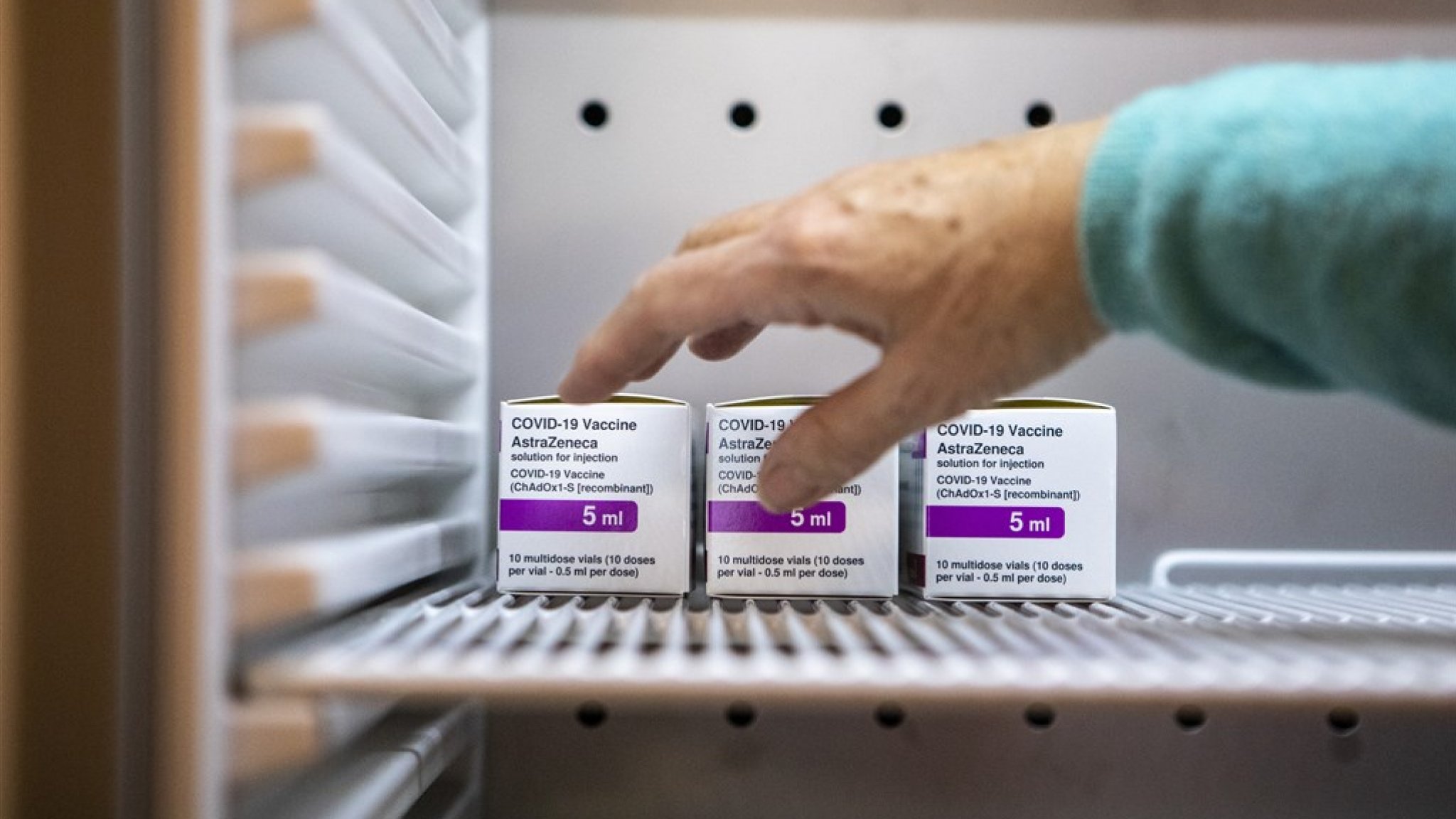
    On March 18, the Medicines Health Regulatory Authority (MHRA) and European Medicines Agency (EMA) reaffirmed the benefits of COVID-19 Vaccine AstraZeneca continue to far outweigh the risks.

    Earlier today, the MHRA announced their review of the small number of thromboembolic events in over 11 million people who received COVID-19 Vaccine AstraZeneca in the UK. The UK regulator confirmed that the benefits of the vaccine in preventing COVID-19 far outweigh the risks, and people should continue to get vaccinated when asked to do so. Following the rigorous scientific review, the MHRA concluded there is no evidence that blood clots in veins are occurring more than would be expected in the absence of vaccination. A detailed review of five UK reports of a very rare and specific type of blood clot in the cerebral veins (sinus vein thrombosis) occurring together with lowered platelets (thrombocytopenia) is ongoing. This has been reported in fewer than one in a million people vaccinated so far in the UK, and can also occur naturally – a causal association with the vaccine has not been established.

    Subsequently, the EMA’s Pharmacovigilance Risk Assessment Committee (PRAC) concluded there was no increase in the overall risk of blood clots (thromboembolic events) with COVID-19 Vaccine AstraZeneca. However, the PRAC also concluded that, for very rare cases of serious thromboembolic events with thrombocytopenia, a causal link with the vaccine is not proven, but is possible and deserves further analysis. Furthermore, there was no evidence of a problem related to specific batches of the vaccine or to particular manufacturing sites.

    AstraZeneca will continue to work closely with health authorities to ensure the appropriate use of COVID-19 Vaccine AstraZeneca. The Company recognises and will implement the recommendations of the PRAC, including the update of the product information, whilst continuing to understand the nature and relevance of these events to ensure the safe delivery of the vaccine continues during this public health crisis. Analysis of AstraZeneca’s safety database on tens of millions of records for COVID-19 Vaccine AstraZeneca did not show that these events occurred any more commonly than would be expected in millions of people.

    Ann Taylor, Chief Medical Officer, said: “Vaccine safety is paramount and we welcome the regulators’ decisions which affirm the overwhelming benefit of our vaccine in stopping the pandemic. We trust that, after the regulators’ careful decisions, vaccinations can once again resume across Europe.”

    Patient safety remains AstraZeneca’s highest priority and the Company has robust processes in place for the collection, analysis and reporting of adverse events and these are shared with regulatory authorities around the world.

  • Honda Temporarily Cutting Production At All U.S., Canada Plants

    Honda Temporarily Cutting Production At All U.S., Canada Plants

    Honda Motor Co said late Tuesday supply chain issues will force a halt to production at a majority of U.S. and Canadian auto plants for a week. The Japanese automaker added the issue will result in some production cuts next week at all U.S. and Canadian plants, citing “the impact from COVID-19, congestion at various ports, the microchip shortage and severe winter weather over the past several weeks.”

    “In some way, all of our auto plants in the U.S. and Canada will be impacted,” Honda said.

    Some U.S. and Canadian plants are expected to have smaller production cuts next week, but a spokesman for Honda added “the timing and length of production adjustments could change.”

    The company declined to specify the volume of vehicles impacted but said “purchasing and production teams are working to limit the impact of this situation.”

    The company added when production is suspended Honda workers “will continue to have the opportunity to work at the impacted plants.” Honda workers were notified of the production cuts Monday.

    Sam Fiorani, vice president of global vehicle forecasting at AutoForecast Solutions, said Honda typically produces about 30,000 vehicles a week in the United States and Canada.

    The production issues are hitting Honda plants in Ontario, Ohio, Alabama, and Indiana. Honda said its Mexico operations have not announced any production cuts.

    The chip shortage, which has hit most of the global automakers, stems from a confluence of factors as carmakers, which shut plants for two months during the COVID-19 pandemic last year, compete with the sprawling consumer electronics industry for chip supplies.

    General Motors Co has cut production at many plants and warned it could shave up to $2 billion from this year’s earnings.

    GM’s U.S. rival Ford Motor Co previously said the shortage could hurt 2021 profit by up to $2.5 billion and said it had curtailed production of its flagship F-150 pickup.

  • Jabra Launches Evolve2 30 to Keep You Productive

    Jabra Launches Evolve2 30 to Keep You Productive

    Jabra today announces the launch of the Jabra Evolve2 30, the latest product to join the Evolve2 range. This next generation of the Evolve range is Jabra’s best-selling and market leading Unified Communications (UC) headset to enhance productivity whether working from the office or working from home.

    UC are professional grade products that provide a consistent unified user interface and user experience across multiple devices and media types. A typical UC platform is Microsoft Teams which operates as a hub for team collaboration, integrating the people, content, and tools the team needs to be more engaged and effective – the Evolve2 30 is one such tool.

    The headset is built with the modern-day desk worker in mind, engineered for collaboration, concentration and comfortable productivity all day long – all at an affordable price starting at only RM480.

    The new normal has created the need for a hybrid approach to work, where flexibility between remote working and being office-based is a key priority. Virtual collaboration has grown from 14 percent in 2019, to 77 percent in 2020. Meanwhile, productivity is still a big challenge for businesses, as the complexity of work increases exponentially, but average productivity rates diminish by the day. Headsets are playing a crucial role in the flexible revolution of the workplace and Jabra’s Evolve2 30 fulfils this with an affordable yet premium quality headset.

    Seamless collaboration and instant concentration 

    The Jabra Evolve2 30 is perfectly suited for the modern flexible worker – users who spend the majority of their day at their desk, in a noisy office setting or at home. Collaboration and concentration continue to be the two key pillars of effective office work – no matter where that may be.

    The 2-microphone call technology can clearly capture your voice so you can participate in calls and online meetings from anywhere. With 28mm speakers and an advanced digital chipset, you can enjoy great audio

    quality too, for both calls and media playback. The Evolve2 30 is also available in a Microsoft Teams certified variant, which comes with a dedicated Microsoft Teams button so you can jump in and out of virtual meetings with just one touch, while the boom arm allows you to easily mute and unmute yourself in an instant.

    Taking collaboration one step further, the Jabra Evolve2 30 meets the Microsoft Open Office requirements – which is a strict test of how effective a headset microphone is at suppressing surrounding noise and office talk – making sure that the device is suited for any environment. The easy plug-and-play feature means users are able to seamlessly connect to all devices through the USB A or C plug, for maximum collaboration.

    When it comes to concentration, the Evolve2 30 does not disappoint. The Evolve2 30 is specifically engineered to deliver portable concentration anywhere. The oval ear cushions of the headset and the angled earcup design are developed to block out any noise and disturbances in the surrounding. The single-sided busylight within turns on automatically when you’re on a call and can also be turned on manually to signal “do-not-disturb” to those around you, so you can stay undisturbed in your concentration zone.

    Reliable all-day comfort 

    The discomfort from prolonged headset wearing can be a huge hindrance to productivity. The Jabra Evolve2 30 is ergonomically designed to support prolonged wear, and to exert evenly distributed pressure. It’s built with premium soft memory foam ear cushions that mold to your ear’s natural contours and ease the weight of the headset on users’ heads, offering ideal comfort all day long.

    The super lightweight Evolve2 30 is built to be as durable as it is comfortable. Both the headband and slider of the Evolve2 30 are assembled with stainless steel, with a much higher degree of durability and flexibility compared to its predecessor, the Evolve 30. Hundreds of drop tests and boom-arm strength tests have been conducted to ensure the headset is able to stand the test of time even when used for long periods.

    “Raising productivity levels is an ongoing uphill battle for every organization,” said Gladys Kong, Country Manager, Enterprise, Malaysia & Brunei at Jabra. “We are excited to be rolling out our latest product aimed at battling productivity distractions for those in the office, but also the flexible workers. We’ve designed the Jabra Evolve2 30 to be at an affordable price-point so every user can enjoy the benefits of experiencing premium collaboration, concentration and comfort while working. The Jabra Evolve2 30 truly embodies the motto that work is no longer somewhere you go, but something you do.”

  • OCBC Deploys Facial Recognition ATMs

    OCBC Deploys Facial Recognition ATMs

    The technology taps on Singapore’s National Digital Identity (NDI) platform and biometric database to enable verification.

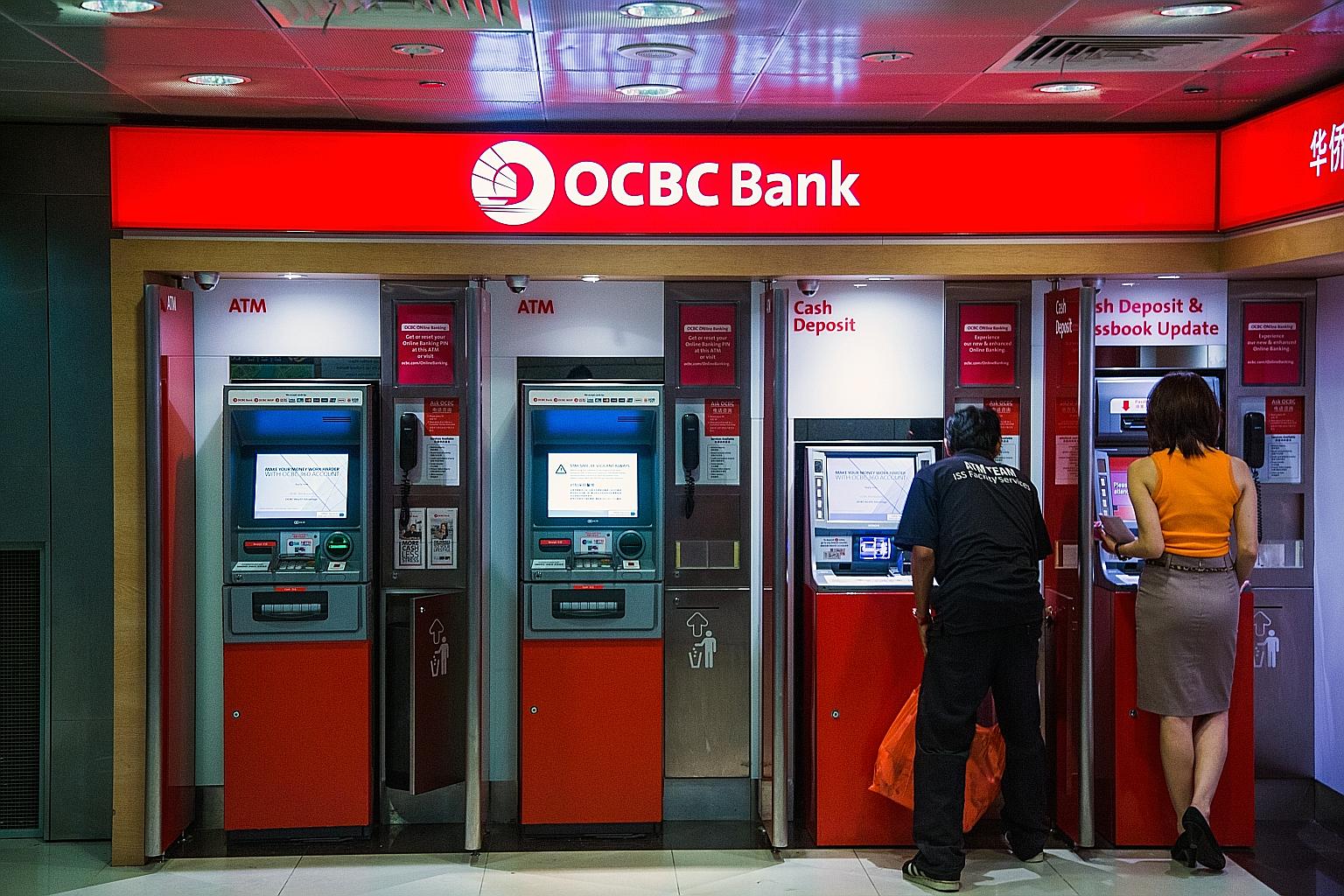
    OCBC wants to eliminate the need for customers to carry around an ATM card by introducing facial biometrics at its teller machines.

    The bank is launching facial recognition at eight of its ATMs tomorrow, which will allow customers to check their account balances. This service will then progressively roll out to OCBC’s entire ATM network of 550 machines for cash withdrawals from June 2021, it said in an announcement on Thursday.

    Singapore consumers are keen digital adopters – even the elderly. While cash is still a key mode of payment in Singapore, the digital overlay to get cash is very welcomed by consumers, Sunny Quek, OCBC Bank’s head of consumer financial services, said.

    According to the bank, ATM usage remains high with more than 2 million cash withdrawals monthly. At the same time, digital adoption among its customers has grown year-on-year in 2020 with more than 40 percent more customers signed up on PayNow, and PayNow transactions doubling, compared to 2019. QR code cash withdrawals at ATMs grew 88 percent year-on-year in 2020.