Tag: asia

  • Toyota Holds $293 Million Stake In Uber

    Toyota Holds $293 Million Stake In Uber

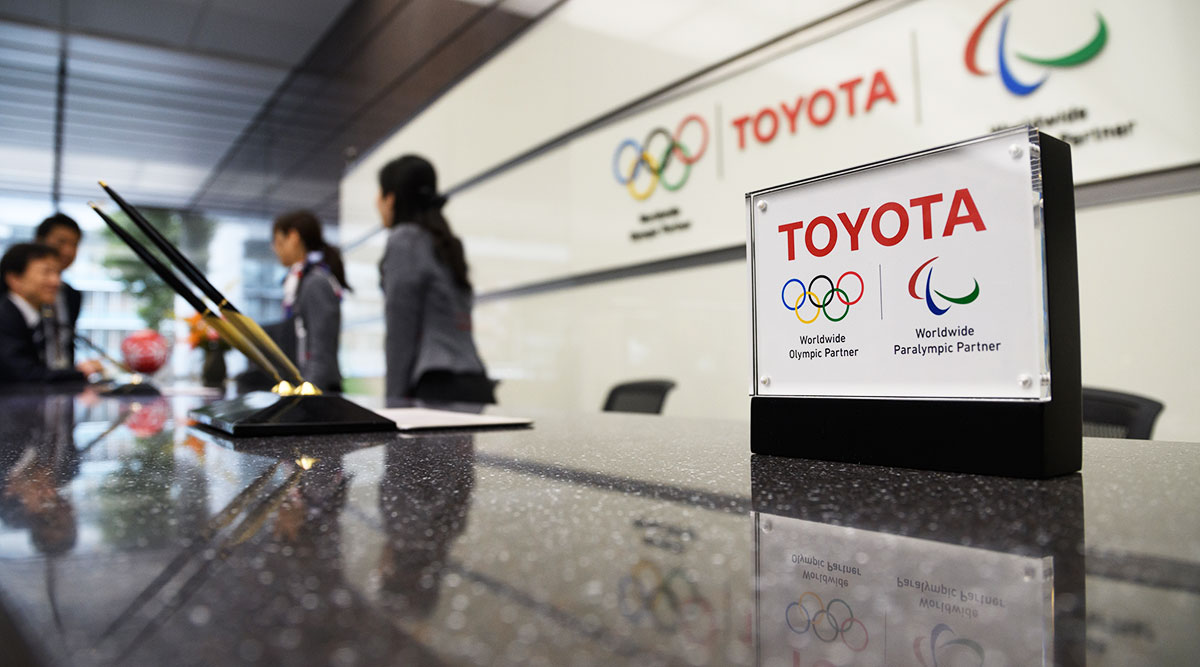
    Toyota Motor holds a $293 million stake in Uber Technologies, as it partners with the ride-hailing company to further expand into new mobility services, Toyota’s latest corporate governance report released on Wednesday showed.

    The Japanese automaker has also unloaded shares in some of its suppliers, adjusting its portfolio to reflect partnerships with rival automakers and technology firms as it transforms into a mobility services company, the report showed.

    Reporting the total size of its stake in Uber, which became a listed company last year, Toyota said it held 10.25 million shares valued at 31.15 billion yen ($292.46 million) as of March 30. That is around 0.6% of Uber’s outstanding shares, according to a Reuters calculation.

    Toyota, one of the world’s biggest automakers, said it had reduced its shareholdings in 24 companies and increased them in 10, including two listed companies. Lufthansa shares down as investor battles bailout

    Lufthansa shares slumped Monday morning after CEO Carsten Spohr said the company would seek to avoid a grounding and insolvency in a battle with the airline’s biggest shareholder over the terms of a 9-billion-euro bailout. Ciara Lee reports

    In the past year, it took a stake in rival Suzuki Motor Corp as the pair deepen cooperation around the development of lower-emission vehicles.

    Toyota sold its stakes in cutting tool manufacturer OSG Corporation, Nippon Steel Corporation, automotive lights and interior mirrors maker Ichikoh Industries, and transmission belt maker Mitsuboshi Belting.

    “If Toyota determines a shareholding is no longer meaningful or the meaning of a shareholding has been diluted due to changes in a business environment or other reasons, (it) will proceed with the sale of such shares,” the automaker said in the report.

    Toyota currently has an interest in 174 firms, including 65 listed companies, compared with 200 firms in 2015, of which 80 were listed companies.

    Toyota’s biggest shareholders remained the same, although investors including Nippon Life Insurance Co, JPMorgan Chase Bank N.A. and State Street Bank and Trust Company slightly increased their stakes, the latter two through proxy Mizuho Bank.


  • Victoria’s Secret Hong Kong flagship store abruptly shut down

    Victoria’s Secret Hong Kong flagship store abruptly shut down

    The high-profile Victoria’s Secret Hong Kong flagship store has been closed suddenly. According to multiple reports, employees were all laid off last night (June 24) on the even of Hong Kong’s public holiday.

    Signs were placed on the store’s entrance announcing the closure and telling customers they could continue to shop online. People visiting the store today could see stock being boxed in the store.

    Operated by Victoria’s Secret’s US parent Limited Brands, the store’s future was questioned by Inside Retail on several occasions, most recently last month as part of a strategic review of the company’s Chinese operations.

    The Victoria’s Secret Hong Kong store opened two years ago after another struggling US retailer Forever 21 quit the site. The lingerie brand’s four-story flagship featured a whole level for its Pink brand, and a floor dedicated to high-end products, complete with the city’s most luxurious fitting rooms.

    Sources said that Limited Brands was paying US$903,000 a month for the 50,000sqft space, which is about half the rent Forever 21 reportedly paid previously. In return, they signed a 10-year lease in 2017 which runs until August 2027. It took nearly a year to fit the store out.

    It is not clear what deal – if any – Limited Brands has agreed to in order to exit the space, however, a senior real estate industry source said last month he doubted the then rumors that the store would close because of the length of the lease.

    “They have a long lease and can’t just walk away. I would be surprised if the landlord takes backspace voluntarily.”

    Our source said the site would be difficult space to fill as it is so large and needs significant capital expenditure to convert into multiple retail spaces or refurbish to suit another brand.

    “If the landlord did take it back, it would need to be sub-divided as it was before with multiple tenants.”

    Another source told a Hong Kong publication that Limited Brands would face a $77 million bill for terminating the contract early – equivalent to nearly 90 months rent.

    In May, Limited Brands reported a 37-per-cent slump in first-quarter sales to $1.65 billion, with revenue from Victoria’s Secret down 45.6 percent, in part due to store closures relating to Covid-19.

    Subsequent to that, a company executive told an analysts’ briefing that it was “evaluating strategic alternatives to reduce or eliminate losses in the UK and China”. The Victoria’s Secret UK business subsequently collapsed early this month.

  • Tesla Plans Battery Manufacturing Facility Under Project ‘Roadrunner’

    Tesla Plans Battery Manufacturing Facility Under Project ‘Roadrunner’

    Tesla Inc plans to build a battery research and manufacturing facility in Fremont, California, to be operated around the clock, under a project dubbed Roadrunner, documents from the city government showed.

    The plan signals the U.S. electric vehicle (EV) maker’s efforts to make its own automotive batteries, EVs’ most expensive components.

    Tesla, which said it currently has a “small-scale” battery manufacturing operation in Fremont, applied for city government approval to build an expanded battery operation. It estimated construction of the project, including the installation of all manufacturing equipment, can be completed in around 3 months.

    Tesla’s stock jumped above $1,000 a share for the first time on Wednesday after Chief Executive Elon Musk told his staff it was time to bring the Tesla Semi commercial truck to “volume production.” Conway G.

    Workers assigned to the facility would total 470, of which 400 would “work in shifts, such that there are 100 employees working at manufacturing and production operations at any given time, all day, every day.”

    Tesla did not immediately respond to Reuters’ request for comment.

    Chief Executive Elon Musk earlier this week said it will give a tour of Tesla’s battery cell production on Sept. 15, the tentative date for what the automaker has dubbed Battery Day.

    Tesla currently produces batteries with Japan’s Panasonic Corp at the so-called Gigafactory near Reno, Nevada. It also has battery contracts with South Korea’s LG Chem Ltd and China’s Contemporary Amperex Technology Ltd.

  • SoftBank sells T-Mobile shares at a 4 percent discount

    SoftBank sells T-Mobile shares at a 4 percent discount

    Back in July 2013, the battle between SoftBank and Dish Network over Sprint was won by SoftBank as the latter paid $21.6 billion for 78% of the company. Over time, SoftBank hiked its stake to 80% of Sprint and when T-Mobile closed on its purchase of Sprint on April 1st, SoftBank ended up with 304.6 million shares of T-Mobile.

    Perhaps at a different time, SoftBank might have held on to the 24.7% of T-Mobile’s stock that it received following the merger. But the company has been having difficulties; during its most recent fiscal year SoftBank was drowning in $13 billion worth of red ink. Positions it held in WeWork and Uber produced disastrous results and SoftBank had even considered selling as much as $11.5 billion of its stake in Chinese tech firm Alibaba.

    As part of the transaction, former Sprint CEO Marcelo Claure will purchase 5 million T-Mobile shares in a stock purchase that Claure will fund via a loan provided by SoftBank. Interestingly, Claure happens to be the current CEO of SoftBank Group International and is also a director on T-Mobile’s board. Not adding to its holdings in T-Mobile is Germany’s Deutsche Telekom. The latter owns a 43% stake in T-Mobile and some analysts expected it to add the additional 7% that would put it near the 50% mark. Instead, Deutsche Telekom has two options to purchase 101.5 million T-Mobile shares. If it exercises all of the options it has, the German telecom giant would own 51.8% of T-Mobile. Both options expire on June 22nd, 2024.

    SoftBank is selling as many as 198 million T-Mobile shares or 65% of its stake via the carrier. 133.5 million is going to the general investment public while the underwriters get a total of 10% to cover over-allotments. Existing T-Mobile holders get a crack at 19.75 million shares and 30 million more are being sold to a public trust. The transaction had an interesting effect on T-Mobile’s stock price over the last few days with increasing volatility. Today, with most shares getting hit by coronavirus fears in several states, the broad market was taking it on the chin. But after early weakness, T-Mobile moved ahead for the day and closed at $108.43 for a gain of $1.27.

    So what does the future hold for T-Mobile? With its cake-based 5G setup consisting of low-band 600MHz airwaves that travel great distances and penetrate buildings better than other signals; the 2.5GHz mid-band spectrum it acquired in the Sprint merger providing faster than expected 5G download speeds; and mmWave spectrum delivering zippy fast download data speeds, some believe that the carrier will end up as the fastest 5G wireless provider in the country. It is important to note that the number of T-Mobile shares outstanding will not increase due to the transaction which is actually positive for the carrier’s current stockholders.

    A week from today, on July 1st, Dish Network will close on its purchase of Boost Mobile and 14MHz of 800MHz spectrum for $6 billion. Dish will then sign a seven-year MVNO agreement with T-Mobile that will allow it to offer wireless service while it builds a standalone 5G wireless network. The goal is to make Boost the nation’s new fourth-largest wireless carrier replacing Sprint which was swallowed up by T-Mobile. The Justice Department was concerned that reducing the number of major carriers by 25% would lead to higher prices for consumers.

    The complex financial dealings happen to mark the end of the T-Mobile career of long time Chief Financial Officer Braxton Carter. The latter first became T-Mobile’s CFO back in 2005.

  • DBS Inks Taxi Tie-Up

    DBS Inks Taxi Tie-Up

    DBS and ComfortDelgro, which operates a fleet of about 10,000 taxis in Singapore, have entered into a strategic partnership to enhance payment services for their customers in Singapore, the bank announced on Thursday.

    With the partnership, ComfortDelGro is the first public transport operator to be integrated into DBS’ «PayLah!» ecosystem, which serves 1.7 million users in Singapore. Customers can access and pay for their taxi bookings directly and seamlessly on the platform.

    «This marks a significant milestone in our journey to inject dynamism into our mobile ecosystem platform, where we leverage technology and artificial intelligence to proactively piece together individual journeys for our customers. In doing so, we can provide personalized nudges and contextualized offers which they will welcome as thoughtful reminders,» Jeremy Soo, DBS’ Singapore head of consumer banking, said in the announcement.

    The two parties previously partnered to introduce QR code payment for taxi rides in 2017, which helped pave the way for consumers in Singapore to use QR code payments widely in everyday transactions. According to the bank, 20 percent of QR code transactions took place within the transport segment before the Covid-19 pandemic.

  • Deliveroo Hong Kong launches plan to feed the needy

    Deliveroo Hong Kong launches plan to feed the needy

    Deliveroo has unveiled a new program allowing customers to round up payments for their orders to feed people in need. Deliveroo will collect the donations made via its app to selected charities, starting with local NGO Feeding HK.

    “One of the most challenging effects of Covid-19 has been a significant rise in demand from charitable food systems across Hong Kong,” said Deliveroo Hong Kong GM Brian Lo. “One of our imperative sustainable development goals at Deliveroo is ‘Zero Hunger,’ in line with the United Nations Sustainable Development Agenda, and so together with Feeding Hong Kong, we’re trying to make sure that no one in Hong Kong goes unfed.”

    Feeding HK collects surplus stock from food companies, sorts and stores it, before redistributing it to multiple charities across the city.

    The company’s support for Feeding HK expands beyond its cash contribution initiative. Until the end of this year, Deliveroo will contribute 100 hours of volunteering by its employees to help rescue and redistribute surplus food to help frontline charities across the city.

    The company hopes to raise more than US$129,000 (HK$1 million) during the next six months from the app.

    “Deliveroo is dedicated to being a positive member of the Hong Kong community, which includes making sure that the economically disadvantaged get the help they need,” said Lo.

  • Chinese Bank Runs Pile Up

    Chinese Bank Runs Pile Up

    Signs of concerns continue to build up in China’s financial system with another two lenders affected by recent bank runs.

    The Local governments and police of Baoding city in Hebei province and Yangquan city in Shanxi province pleaded customers not to withdraw cash from local lenders Baoding Bank and Yangquan Commercial Bank, respectively.

    Last week, the Baoding city government reassured on its social media account that Baoding Bank was operating normally while urging the public against believing or spreading rumors. The police followed up with a statement claiming it had arrested two individuals for spreading rumors that led to «panic among the public».

    Yangquan’s government also issued a similar statement, adding that customers should be watchful of risks of holding a lot of cash.

    There are growing concerns from China’s public about the health of the domestic financial system evidenced by increasing bank runs. In April this year, the Bank of Gansu was hit by a bank run which led to regulator intervention. During a two-week period In November last year, depositors from Liaoning-based Yingkou Coastal Bank and Henan-based Yichuan Rural Commercial Bank swarmed to withdraw cash.

    Bank runs aside, China has also had to increasingly restructure banks including last year’s historic trio of bailouts which included Baoshang Bank, Bank of Jinzhou and Hengfeng Bank.

    At the end of 2019, Baoding Bank’s non-performing loan ratio was 2.12 percent, up from 2.09 percent in 2018. Yangquan Bank has not published data for 2019, but its ratio had more than doubled to 2.57 percent in 2018 from 1.03 percent in 2017.

  • Skype update adds Android Auto support for text messages

    Skype update adds Android Auto support for text messages

    Great news for Android Auto fans, as Microsoft recently confirmed that Skype now features support for the service. Both versions of Skype, Android and iOS, have been updated this week, but only the former received Android Auto support.

    More importantly, Skype’s Android Auto support is limited to text messages. Basically, this means that you will be able to see your text messages on the car’s display, but there won’t be voice or video calls support, at least not after the latest update.

    Microsoft also revealed that it fixed many notifications bugs in Skype for Android, especially some that prevented users from using Meet Now. And that’s about all the changes included in the latest version of Skype for Android.

    On the other hand, Apple fans have received a couple of improvements to their Skype app as well. After the latest update, iOS users will be able to change their camera background even on their iPhone and iPad. This specific feature is available on iPhone 7, iPad 2018, iPod Touch 2019 and iOS 12 or later.

  • Minecraft’s biggest update since launch is here

    Minecraft’s biggest update since launch is here

    Microsoft has been working on the so-called Nether Update for Minecraft for a very long time. But it makes perfect sense since this is one of the biggest and most important updates since Minecraft’s launch.

    Minecraft’s Nether Update is now available not just on Android and iOS, but also on all the other platforms the game was released, including PC, PlayStation 4, Xbox One and Nintendo Switch. The thing is depending on what platform you’re playing the game, you’ll get a different set of new features and improvements.

    The gist of the new update is that it brings an entirely new world with its own biomes, mobs, and blocks. In the new world, players will discover a powerful new material called Netherite, which is even harder than diamond.

    To access the new world, Minecraft players must get the “Way of the Nether” quest, which is available for free via the Minecraft Marketplace. Then, you’ll have to visit Poppy Isle and enter the dimensional rift that has just appeared to venture into the Nether.

    There are four new biomes (locations) included in the update: Crimson Forest, Warped Forest, Soulsand Valley, and Basalt Deltas. New mobs like Piglins and Hoglins have been added too, along with new bricks and wood galore.

    More importantly, the Nether Update fixes more than 300 bugs since the previous major update, Buzzy Bees. Also, new music and ambient sounds are now available in-game. There are also a lot of new gameplay features introduced such as Ruined Portals, Bastion Remnants, Blackstone, Respawn Anchor, Lodestone, and a lot more. Make sure to check out the full changelog for the Nether Update to learn more about what’s new.

  • Hyundai Verna Fuel Economy Figures Out

    Hyundai Verna Fuel Economy Figures Out

    The 2020 Hyundai Verna Facelift was launched in India last month and while the company had shared the specifications and details at the time of the launch, its fuel economy figures were still unknown. Finally, we have managed to get our hands on the fuel efficiency figures of all variants of the Verna across its engine line-up. The new Hyundai Verna Facelift is offered in India in four variants- S, S+, SX, SX(O), and SX(O) Turbo and it’s the first fully connected compact sedan on sale in India.

    The Hyundai Verna is offered in India with three engine options and five engine and gearbox combinations. First up is the 1.5-liter, naturally aspirated four-cylinder motor that delivers 17.7 kmpl when mated to a six-speed manual transmission and 18.45 kmpl when it is offered with the CVT automatic gearbox. The 1.0-liter, the three-cylinder turbo engine is offered with the seven-speed automatic dual-clutch transmission (DCT) as standard and delivers a fuel economy of 19.2 kmpl. The 1.5-liter, four-cylinder diesel mill when offered with the torque converter automatic transmission delivers a fuel economy of 21.3 kmpl while the diesel manual transmission variant delivers the highest fuel economy in the range at 25 kmpl.

    The 1.5-liter, four-cylinder MPi petrol engine belts out 113 bhp and 144 Nm of peak torque and comes mated to a six-speed manual transmission as standard while an iVT (CVT) gearbox is optional. Then there is the 1.5-liter, four-cylinder diesel engine that puts out 113 bhp and 250 Nm of peak torque. This engine is also mated to a six-speed manual transmission as standard while a six-speed torque-converter transmission is optional. The most powerful of all is the 1.0-liter, three-cylinder Turbo GDi petrol engine that churns out 118 bhp and 172Nm of peak torque which is mated to a seven-speed dual-clutch transmission (DCT) which is a segment-first.

  • Gojek Consolidates to Focus on Core Services

    Gojek Consolidates to Focus on Core Services

    The company is laying off 430 staff – 9 percent of its workforce – to prioritize its core businesses of payments, transport, and food delivery. Southeast Asian on-demand multi-service platform and digital payment technology group Gojek will be shuttering several non-core services that have been impacted by the pandemic and will streamline the company structure for future growth and sustainability, the company said in a statement on Wednesday.

    The layoffs will be Gojek’s only Covid-19 related layoffs, the statement said, noting that many of the 430 staff leaving are from its GoLife and GoFood Festivals businesses that will be closed, owing to a «significant downturn over the past few months as the COVID-19 pandemic has affected consumer habits.»

    Focusing on our core services, shutting down verticals that are no longer viable during this period, and making bold bets on changing customer needs will ensure that we continue making a positive impact on the lives of millions of people while securing future growth, co-CEOs Andre Soelistyo and Kevin Aluwi said in an internal email sent to staff.

    Launched in 2011, Gojek has been expanding its ride-hailing platform to include a range of on-demand services and allow its customers to make online payments and has been beefing up its coffers to take on regional rival Grab, with a focus on supporting payments and financial services in the region.

    In March, Gojek completed a $130 million deal for Jakarta-based mobile point-of-sale (POS) market leader Moka, making it a major player in Indonesia’s digital payments space. It’s Gopay platform has focused on increasing access to the digital economy among micro, small and medium enterprises, the majority of which continue to rely on cash to operate.

    In June, Gojek announced that Facebook and PayPal had joined as investors in its current fundraising which has reached almost $3 billion and also includes Visa, Tencent, Google and more. As part of the agreement, PayPal’s payment capabilities will be integrated into Gojek’s services and the two companies will also collaborate to allow customers of GoPay, Gojek’s digital wallet, to gain access to PayPal’s network of merchants globally.

    The news follows Grab’s announcement on 16 June that it would be letting go of 5 percent of its workforce as part of plans to become a leaner organization to better face challenges of a post-Covid economy. Founder Anthony Tan said the strategic roadmap for Grab Financial, which is a «long-term bet for the future,» remains unchanged

  • Instagram opening advanced shopping feature to influencers

    Instagram opening advanced shopping feature to influencers

    Instagram will soon allow both businesses and creators to utilize its Shopping feature, meaning brands and influencers will have a greater ability to reach a customer base.

    According to Instagram, the change will go live on July 9 in every country that supports Instagram Shopping, and will require businesses and influencers to link to a single website that they own and sell from.

    “This update will give more businesses the power to sell on Instagram, and help our thriving creator community turn their passion into a living,” Facebook Australia director of sales Naomi Shepherd said.

    “Businesses of all kinds will now have access to our shopping tools, which is especially important in light of the economic challenges many are facing this year.”

    The update comes just two months after Instagram opened the doors for food retailers to sell on the platform by way of meal ordering platforms such as UberEats, Deliveroo or Doordash, and just one month after Facebook announced it was overhauling the shopping experience for brands and customers alike with Facebook Shops.

    The offering will let brands sell directly to customers through Facebook, Instagram, and WhatsApp through “shopfronts”, as well as offer brands a new way to sell products through Facebook Live.

    “It almost feels like they underplayed what it actually is,” retail strategist Salena Knight said at the time.

    “Up until now, it’s been quite difficult for a lot of businesses that aren’t at the enterprise level to be able to get that omnichannel, seamless experience across platforms. And now they’re able to offer that across Instagram, WhatsApp, Facebook Messenger, and Facebook. [It wasn’t] something I was expecting.

    “I certainly didn’t expect it for free.”

  • Grab Malaysia sees ‘instant retail’ reducing need for physical stores

    Grab Malaysia sees ‘instant retail’ reducing need for physical stores

    Grab Malaysia is expanding its instant retail service after studying customer demand for goods during the nation’s Covid-19-related social-distancing initiative.

    According to Grab Malaysia MD Sean Goh, many convenience stores and grocery retailers were able to treble their sales using the GrabMart delivery service during the lockdown restrictions. Now, as the country’s retailers are allowed to open their doors again and normal trading resumes, Grab believes more consumers are seeking safe, reliable ways to shop for daily needs without visiting stores.

    “While we saw a clear uplift to safe, instant deliveries for food, drinks, snacks, and other essential goods via GrabFood, GrabMart, and especially ‘Pasar’ on GrabMart, we see a new challenge for retailers,” explained Goh.

    “The ‘new normal’ will potentially affect retailers who traditionally rely on high foot traffic and walk-ins – from health and beauty retailers, toys, gifts, and stationery shops to florists. This is a gap where we believe GrabMart is able to step in and address while helping to make the government’s upcoming Shop Malaysia Online initiative a success.”

    GrabMart was launched last November, before anyone foresaw the emergence of Covid-19.

    Goh said that after the government’s movement controls were put in place, many retail chains signed up to GrabMart, not just in the grocery and food categories, but pharmacies, health & beauty, eyewear, books, stationery and gift retailers.

    He believes this has caused consumers to evolve into ‘on-demand shoppers’ who are already accustomed to using mobile technology for their daily needs, and increasingly expect faster speed and safety for their retail purchases. Grab is delivering most goods from retailers in less than 30 minutes for a charge as low as US$1.20 (MYR5).

    Goh believes the convenience of services like GrabMart and the rapidly increasing adoption of apps by consumers to order online will substantially reshape retailing.

    “It is no longer sustainable for businesses to keep expanding their retail presence to get closer to their customers’ homes. Together, we can realise our nation’s vision for a more robust digital economy as businesses adjust seamlessly to the new norm,” he said.

    “We are excited to expand and help more businesses transition seamlessly to adopt instant retail.”

    Grab Malaysia operates GrabMart in Kuala Lumpur’s Klang Valley, Johor Bahru, Kota Kinabalu, Kuching, Ipoh, Melaka and Penang.

  • Facebook Shops opens in South Korea

    Facebook Shops opens in South Korea

    Facebook Shops has launched in South Korea to compete in a booming e-commerce market.

    On a playing field dominated by local businesses, Facebook’s service allows sellers to showcase their products via a highly customizable online storefront, which shoppers can browse using Facebook or Instagram accounts, saving products they wish to purchase. The service will include a feature to make purchases via instant messaging within the near future.

    The firm has partnered with local services Shopify, Bigcommerce, Woocommerce, and Cafe24 as it rolls out the platform.

    Facebook Shops has been live in the US and key locations in Europe since last month, in a move Facebook says it will support small enterprises impacted by the coronavirus pandemic.

    Rival platform Google Shopping is also expected to unfold in the territory this year.

  • UBS and The Future of Working From Home

    UBS and The Future of Working From Home

    The concept of the home office is taking root: Switzerland’s UBS is developing new structures that will allow up to a third of its personnel to work from home at any one time.

    While Switzerland as a country is slowly working its way back into the office, the times of the strict distinction between work and home increasingly looks a concept of a past era. Large companies such as UBS are in the process of implementing new forms of flexible work for its staff.

    Sabine Keller-Busse, the chief operating officer of the Zurich-based bank, told Bloomberg that in future, up to a third of the company’s staff will be allowed to work from home

    A spokeswoman for the bank said that the bank wouldn’t have a set quota and that the possibility to work from home would be handled flexibly. This means that a third of the workforce working from home will be made up of different people, with many members of staff able to do some home office work in the future.

    The bank has the technology available to maintain its services throughout an emergency situation such as the one presented by the pandemic, giving remote access to its bankers to systems they need for their work – anywhere, at any time from any device. Thus, UBS was able to run its business with as many as four out of five staff working from home during the lockdown period.

    The extended form of home office for UBS staff evidently will require an adjustment of the office space needed by the bank. The bank has no ready concept yet of such changes, the spokesperson added.