Tag: asia

  • Lotte to launch snack subscription service

    Lotte to launch snack subscription service

    Lotte Confectionery Co, a unit of South Korean conglomerate Lotte Group, will launch a snack subscription service dubbed “Monthly Snack,” the first of its kind in South Korea.

    The new service is based on the concept of the subscription economy, which refers to a business model that offers regular products or services to consumers who subscribe and make recurring payments.

    Those subscribing to the snack subscription service will receive a box full of snacks made by Lotte Confectionery on a monthly basis. The box will have different contents each month.

    With this service, subscribers can enjoy a wide variety of snacks without having to go to the store to buy snacks for themselves – and try new things.

    The monthly service will offer a wide range of best-selling and newly-released snacks at lower than market prices.

    Those interested can subscribe to the service through Lotte Confectionery’s official Instagram or Facebook account by June 23. The number of subscribers will initially be limited to about 200, who will be selected on a first-come, first-served basis.

  • Dairy Farm launches new Market Place store in Hong Kong

    Dairy Farm launches new Market Place store in Hong Kong

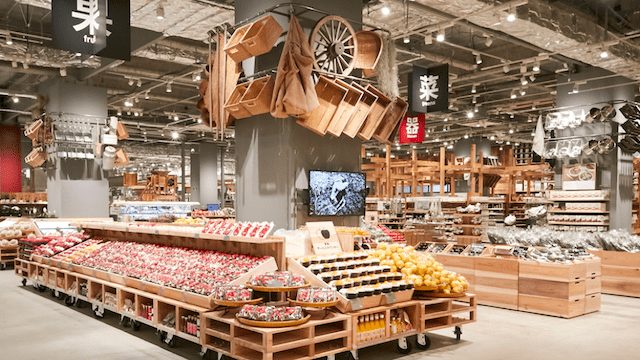
    Dairy Farm launched its new Market Place fresh food and grocery store at Hong Kong’s Langham Place shopping centre today.

    Described as “a brand new gourmet experience for foodies and gastronomes” the store features fresh foods at its core with made-to-order meals and fresh-baked breads

    “This new design has been created to bring to life an exceptional food experience for all passionate foodies,” a spokesperson told Inside Retail Asia.

    The emphasis of the store’s design is on conveying the “freshness of the farm to the table”, a “contemporary twist on the modern farmhouse”.

    Classic black and white branding combined with splashes of vibrant color, bold food photography and a soundtrack of “cool, smooth modern beats,” complement the designers’ focus on smooth flow through the store and easy navigation.

    Decorative barrels suspended from the ceiling create the atmosphere for the Cellar section, which stocks, among other things, local Hong Kong craft beer Gweilo and a selection of 1000 wines.

    While the store is unique to Hong Kong, the design features elements similar to Dairy Farm Group’s Cold Storage Fresh and Mercato stores in Singapore and Penang, Malaysia.

  • Snapchat removes racist Juneteenth Lens, says that it wasn’t approved

    Snapchat removes racist Juneteenth Lens, says that it wasn’t approved

    This past Friday, June 19th, the U.S. recognized Juneteenth. It is a holiday that celebrates the emancipation of those who were enslaved in the United States. In the wake of the social protests that took place in the U.S. following the murder of George Floyd, no U.S. company was spared for any branding or product that could be considered insensitive in terms of race. That is why products like Mrs. Butterworth, Uncle Ben’s, and other iconic brands are being replaced.

    A major faux pas was committed by messaging app Snapchat which was forced to remove a racially insensitive Lens it created for Juneteenth. The filter showed the Pan-African flag in the background and prompted users to smile. This would lead to the image of a chain appearing in the background; the chain would then break. A spokesman from Snapchat parent Snap said in a statement, “We deeply apologize to the members of the Snapchat community who found this Lens offensive. A diverse group of Snap team members was involved in developing the concept, but a version of the Lens that went live for Snapchatters this morning had not been approved through our review process. We are investigating why this mistake occurred so that we can avoid it in the future.”

    A Twitter user by the name of Mark S. Luckie disseminated a tweet revealing what the Lens looked like before it was removed. Snapchat Lens use augmented reality (AR) to add animation to a photo of the user’s face. For example, a Snapchat user can turn into a dog with droopy cartoon ears and a nose. Or, the user can turn into a dancing bunny. There isn’t anything offensive about those (unless you really are a dog or a rabbit).

    Investors were pleased to see the racist Lens removed from Snapchat. On Friday, with most stocks giving up ground, SNAP rose over 3% to $22.66 a share. Snapchat is available in the App Store for iOS users and the Google Play Store for Android users.

  • 6ixty8ight makes Japanese debut with online launch

    6ixty8ight makes Japanese debut with online launch

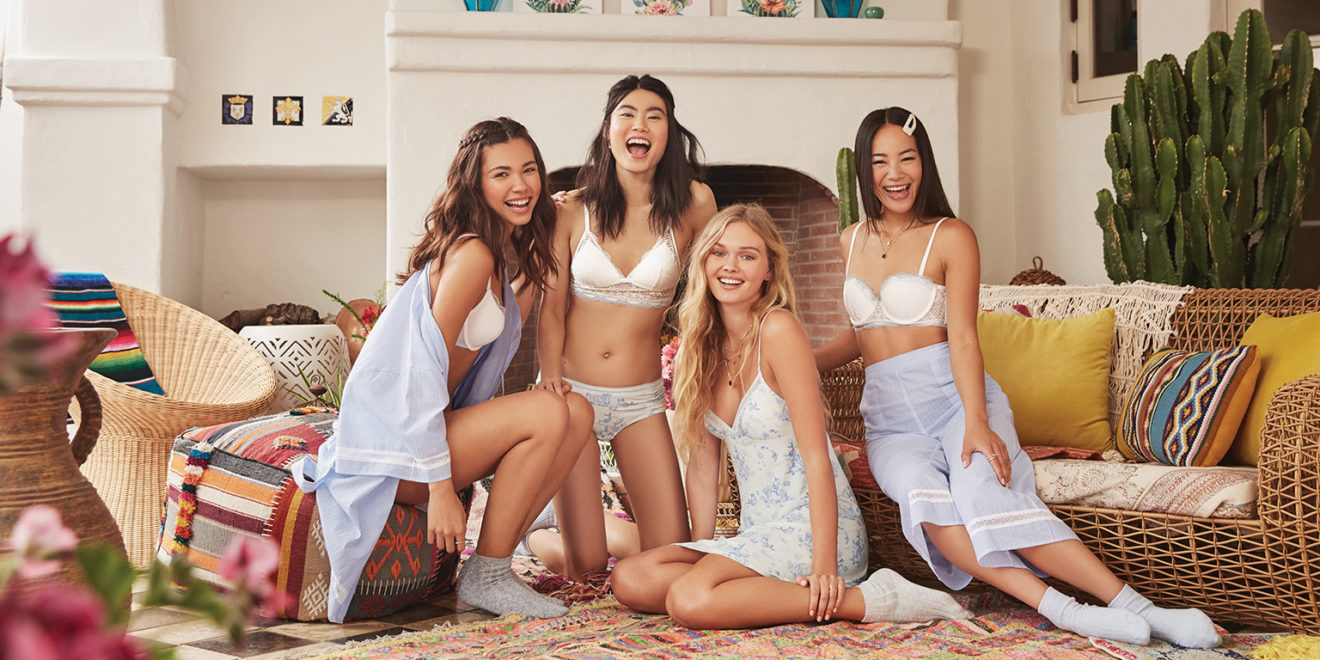
    Hong Kong lingerie brand 6ixty8ight marks its Japanese debut tomorrow by launching an e-commerce store.

    The 6ixty8ight Japan online store will be used to build brand awareness in the market before the first physical stores open later this year.

    “The brand’s expansion strategy has been highly focused on e-commerce since the last quarter of 2019, which also became the top business priority as a result of multiple markets being locked down due to Covid-19 epidemic since the beginning of 2020,” the company said in a statement.

    The online store will feature a full range of lingerie, homeware, casualwear and accessories. The brand will also introduce its new collections on the Japan online store including Tropical Lace Collection and Everyday Dresses.

    Founded in 2002, 6ixty8ight operates more than 200 stores across Greater China, South Korea, Singapore and Malaysia.

  • How H&M got glocal in Asia

    How H&M got glocal in Asia

    ‘Glocalisation’ is a trend retail chains have been embracing for more than a decade. It’s the art of fostering a local appeal to a globalised retail offer, empowering regional decision making in the hope of creating a bond with people in communities of consumers a world away from the company’s head office, but continuing to enjoy the advantages of critical mass in production, logistics and other back-of-house operations.

    But the fashion industry, trapped in the pressure cooker of seasonality-driven product design and release, has been slow to respond on a global scale. While luxury brands have always found an insatiable audience of consumers in markets like China, where wearing a brand is a sign of status and success, some mainstream global fashion brands have foundered abroad. Gap failed in Australia, Victoria’s Secret had mixed success after discovering its styles, fits and sizes weren’t really a natural match for typically petite Asian physiques. River Island and Banana Republic never took off in Singapore, Marks & Spencer quit Mainland China – and labels like Forever 21 and Macy’s struggled to make any headway on the mainland.

    And that’s before you consider some of the public-relations disasters in recent years by brands large and small who were tone deaf to cultural differences and regional geopolitical tinder points (think Versace, Coach and Givenchy, who learned the hard way not to project Hong Kong, Macau and Taiwan as territories separate from China…)

    Given that context, H&M has begun to stand out from its peers by steadily building affinities with local personalities, influencers and designers – and most recently models. Not just in China, but regionally, one of the few continents where the company is aggressively expanding its store networks as growth wanes in Europe and North America.

    The move has been subtle and undertaken without fanfare (H&M declined to comment for this feature) but it gained momentum last year when the company appointed musician and artist Lay Zhang Yixing as its spokesperson for its menswear collection in Greater China.

    Most recently, the company assembled a group of models from around Asia for a photoshoot for its up-scale H&M Studio Spring Summer 2020 collection, choosing women well known in their home markets. While H&M has long embraced diversity in the talent modelling its new lines, this was something quite unique for the label.

    From Gotland to Sumba

    While top international models posed in the new collections on beaches and sand dunes in America, far away on the island of Sumba in Indonesia, five Asian models created a very different look for the range. The five were Quynh Anh Shyn of Vietnam, who has her own fashion line, Iman Fandi Ahmad of Singapore, and three Malaysians: designer Kittie Yiyi, blogger Rachel Wong and fashion and beauty entrepreneur Bella Kuan.

    The move drove widespread exposure for the brand and the range across Southeast Asia as the models-cum-influencers shared their experiences during the photo shoot, which one Vietnamese fashion magazine described as an “island boot camp”.

    “Free, colourful and bravery – adjectives to describe H&M Studio Spring Summer 2020 – are also adjectives easy to relate to Quynh Anh Shyn’s fashion style during the past year,” it wrote.

    That’s grassroots glocal praise for a fashion brand bedded in Sweden and a range inspired by a research trip to the Swedish island of Gotland, according to H&M creative advisor Ann-Sofie Johansson.

    “The SS20 collection muse is a forward-looking free spirit – someone who surfs, climbs, explores and who wants to experience new things,” she explained at the US launch. “The collection is both raw and refined: natural fabrics with raw edges are mixed with refined elements, such as shiny metallics and futuristic accessories. There’s a freedom in the way the collection can be worn, too: we want our customers to feel that anything goes.”

    Some of the new Studio pieces went on sale in February this year and the balance will be launched in late May.

    China focus

    Unsurprisingly, perhaps, a core focus of H&M’s ‘glocalisation’ in Asia is Mainland China.

    Lay’s appointment was a first for the brand’s menswear collection. The 28-year-old Chinese singer was a member of the South Korean-Chinese boy group Exo and has starred in films including The Island and Golden Eyes. Lay has also served as an ambassador for other global fashion brands, including Converse, Mac Cosmetics, Chaumet Paris and Ray-Ban. Last year he also signed on as Calvin Klein’s first Chinese global spokesperson and publicly terminated a similar contract with Samsung after the company violated the One-China policy.

    When he was signed with H&M, the company said in a statement that the move was aimed at continuing to enhance its market competitiveness and brand influence.

    “The brand is taking a bigger step developing further its business in Greater China based on its menswear products with design and quality.”

    “I hope everyone can see the versatility of H&M men’s wear through Lay’s interpretation,” added Magnus Olsson, GM of H&M Greater China, at the time.

    In late September, H&M released its first collaboration with a Chinese designer Angel Chen, which it says was inspired by the theme of “Kung Fu”.  “The collection portrays a surprising, unique east-meet-west street style via a groundbreaking combination of vivid colour and embroidery,” Chen’s publicity explained.

    Educated in London but now Shanghai-based Chen has her own successful label, which is now sold through 70 retailers around the world, including department stores Bergdorf Goodman in the US, Lane Crawford in Hong Kong, Galeries Lafayette in France and Selfridges in the UK. She has tailored garments for influential celebrities including Bella Hadid, Chris Lee and Fan Bingbing, all influential pop culture figures in Mainland China.

    Lunar New Year provides an opportunity for many international brands to plug in to a core feature of China’s culture and H&M is no different.

    This year, the brand released what was probably its most extensive range yet, spanning women, men and children. Celebrating the Year of the Rat, items featured motifs, bold red colour swatches and comfortable silhouettes, spanning more than 100 SKUs. The accompanying campaign and photography focused on families sharing time together, a core aspect of the festive season across Asia.

    H&M has a long way to go in its Asian journey. While it has an established presence in Southeast Asia, there was – before the coronavirus pandemic – a plan to open stores in smaller cities.

    India is H&M’s fastest-growing market globally, with 47 stores in tier-one cities (compared to Zara’s 22) and an online presence achieving 49-per-cent year-on-year growth last year. It is now targeting smaller cities and has announced a collaboration with local designer Sabyasachi Mukherjee to launch a new collection this year.

    With their rapidly rising middle class, parts of Asia represent a huge opportunity for global fashion brands. Using local models, influencers and celebrities is a sure-fire way to engage with consumers, adding local context to a global brand name.

  • Taco Bell launches D.I.Y Taco Kit for the first time in Thailand

    Taco Bell launches D.I.Y Taco Kit for the first time in Thailand

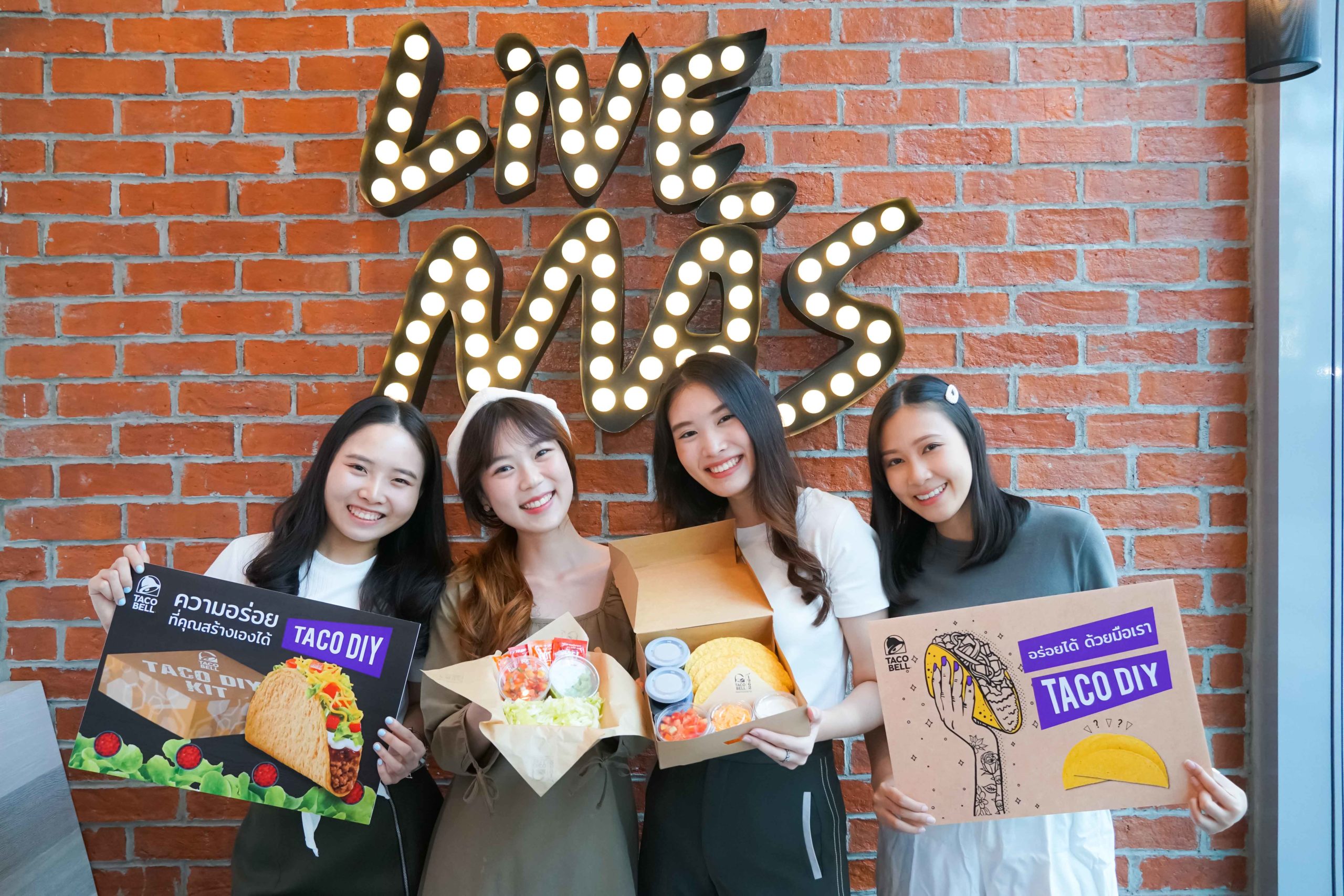
    In response to the trend of New Normal, Taco Bell launches “D.I.Y. Taco Kit”, inspiring customers to become Mexican Chef and create Taco Bell’s signature Taco Supreme, in their own style, anytime, anywhere with the similar spicy taste as served at Taco Bell restaurant. Taco Bell’s D.I.Y. Taco Kit is available from 22 June to 31 August, 2020 at Baht 389/box. Customers can easily place their D.I.Y. Taco Kit order from foodpanda delivery service or buy at Taco Bell stores to take back home.  To win special prizes, customers have to capture their Taco Supreme and share delicious moments on Facebook: @TacoBellTH.

    Mr. Chalermchai Mahagitsiri, President and CEO of TTA and Director of Siam Taco Co., Ltd., stated that, “We have experienced on unprecedented shift in our way of life and are pushed to embrace the “new normal” practice due to the Covid-19 pandemic.  We also pay more attention to cleanliness and social distancing to keep ourselves, our colleagues and our family members safe.  This crisis triggers a dramatic adaptation in food businesses as consumers become less confident about eating outside the home. The food delivery service is gaining considerable popularity among customers, supporting by the work-from-home policy. Consequently, Taco Bell has achieved a significant increase in their online order sales.

    “In order to serve the demand for online ordering and contactless delivery, Taco Bell revolutionizes the Taco industry by initiating D.I.Y. Taco Kit special for customers in Thailand. We believe that our customers will enjoy making their own delicious-style tacos anywhere, anytime.”

    D.I.Y. Taco Kit for Taco Lovers. No waste time waiting in line at Taco Bell stores. Just unbox it, all of which come with choices of 4 crunchy hard or soft taco shells, favorite seasoned ground beef or chicken, shredded iceberg lettuce, diced tomato, hot sauce, sour cream, cheddar cheese. To make it even more delicious, one can add pico de gallo salsa and Guacamole, which do not normally put in signature Taco Supreme. All ingredients are wrapped and packed in a sealed packaging to ensure food safety.  Customers can also add more ingredients for more flavors and a lot of fun, then share their good memories on TacoBellth Facebook to win some prizes. For more update activities, news and promotions please visit Facebook: facebook.com/TacoBellTH, IG: @TacoBellTH, Twitter:  @TacoBellTH, and Line: @TacoBellTH.

    Currently, Taco Bell operates 6 branches in Thailand: The Mercury Ville @Chidlom, Siam Paragon, Central Pinklao, Samyan Mitrtown, Central Westgate, and Sukhumvit Soi 11. Every store strictly adheres to safety measures in accordance with the government policy and nationwide policy from Centre for the Administration of the Situation due to the Outbreak of the Communicable Disease Coronavirus 2019 (COVID-19).


  • Singapore fashion labels get boost from OneOrchard online store

    Singapore fashion labels get boost from OneOrchard online store

    Singaporean non-profit trade association Textile and Fashion Federation (TaFF) will launch an e-commerce platform in support of local fashion labels.

    Oneorchard.store, scheduled to go live on June 19, is designed to showcase and facilitate exposure of a range of locally-based designers from emerging to established labels. The platform is conceived of as a means to face current challenges in the industry and present an opportunity for sustenance within the Singapore retail market.

    The initiative has been borne out by a TaFF consumer survey showing the popularity of shopping on label e-commerce platforms amongst respondents in spite of the impact of Covid-19.

    A key finding of the survey was that local brands are just as popular as foreign brands within the territory, with 86 percent of respondents willing to make a repeat purchase of a local brand.

    “The launch of oneorchard.store is an essential step in the development of our long-term commitment in boosting the local fashion industry and promoting the local retail ecosystem,” said TaFF spokesperson Jiayi Wong.

    “In support of the recovery and the opening of physical retail, we hope this platform can complement those efforts and carry on working towards building a sustainable retail landscape.”

    TaFF’s portfolio of homegrown talents range from retailers in womenswear to accessories and childrenswear. Participating brands include Adrian Furstenberg, Ans.ein, Bells & Birds, Carrie K, Forbidden Hill, Ginlee Studio, Hher, Josee P, Ling Wu, Minor Miracles, Oeteo,  Plain Supplies, Quintessential, Ranee of Sarawak, R y e, Shirt Number White, The Form, Top Middle Base (Nena), Weekend Sundries and Ying The Label amongst others.

  • Muji Marina Square store closes permanently

    Muji Marina Square store closes permanently

    The Muji Marina Square store will not reopen today when social-distancing measures allow retailers to recommence trade. in Singapore.

    The Japanese household and consumer goods retailer announced the closure on Facebook this week, thanking customers for their patronage over the years and apologizing for the inconvenience.

    The brand will continue to maintain 10 outlets within Singapore – some of which offer dining options – including its stores at Jewel Changi Airport and JEM. Muji launched the two-story airport location in May last year as a venue housing more than 4000 products and an 88-seat Cafe&Meal dining area.

    Muji’s flagship store within the territory is at Plaza Singapura. Its product range includes apparel, furniture, kitchenware, toiletries, stationery and food items.

    All Muji outlets in Singapore, including Muji Marina Square, closed temporarily during the coronavirus outbreak.

  • Morphe launches Coca Cola cosmetics and accessories

    Morphe launches Coca Cola cosmetics and accessories

    Beauty brand Morphe has teamed up with Coca Cola to launch a new makeup collection.

    Different to Morphe’s usual partnerships with famous beauty gurus such as Jaclyn Hill or Jeffree Star, the co-branding with Coca Cola has marked one of the brand’s biggest collabs.

    Called Thirst for Life Collection, the new beauty line will feature products designed with Coca Cola’s label, including lip glosses, an eyeshadow palette, highlighters and brushes.

    “The Thirst For Life Artistry Palette, in particular, was inspired by the full experience of drinking a Coca Cola – from the green glass of the bottle, to the blues of ice, to the colours of the actual liquid beverage,” the company said in a statement.

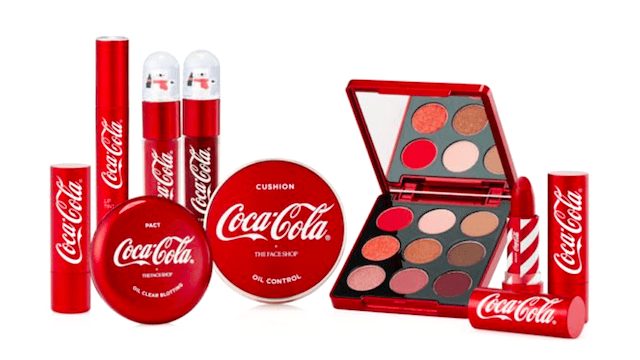
    Morphe is not the first beauty brand to collaborate with Coca Cola. The US soft drink brand teamed up with The Face Shop to launch a beauty collection in South Korea.

    The Morphe x Coca Cola Collection was launched today, June 18, with all products priced under US$30.

  • Loss-making Sa Sa will continue to cull stores if landlords won’t compromise

    Loss-making Sa Sa will continue to cull stores if landlords won’t compromise

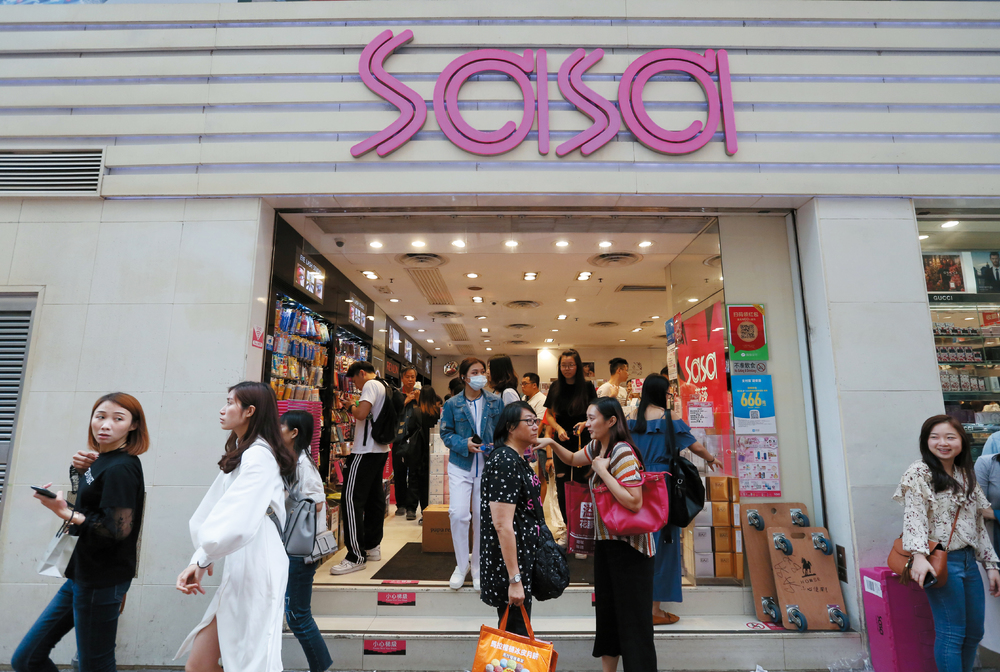
    Beauty-products retailer Sa Sa International says it will continue to renegotiate rents and quit locations where it cannot get satisfactory rent reductions as it struggles to return to profitability in the decimated Hong Kong retail market.

    The company has just reported a loss of US$66.6 million for the year to March on sales down 29.9 percent to $737.7 million. The previous year, Sa Sa International posted a profit of $60.7 million. However, if a one-off impairment related to retail store assets in line with changing accounting standards, and a loss of $5.3 million related to the closure of the company’s Singapore business are excluded, the trading loss would have been a more modest $26.4 million.

    Retail and wholesale sales in Hong Kong and Macau fell 33.2 percent to $611.5 million.

    Between October 1 and June 14 this year, Sa Sa has closed 12 stores in Hong Kong, primarily in the tourist districts of Tsim Sha Tsui, Causeway Bay and Mongkok.

    “As we move into FY2020/21, we strive for a significant rental reduction in the renewal negotiations or closures of shops with an unsatisfactory rental reduction in order to reduce the rental expenses of the group as more leases will expire in this financial year,” said chairman and CEO Simon Kwok in a commentary for shareholders.

    “Meanwhile, we will continue to negotiate with landlords for temporary rental relief for shops with leases not yet expiring in the near term.”

    With new leases, the company is exploring changing from fixed-rental rates to turnover rent, which is the arrangement adopted for almost all of its current leases in Hong Kong and Macau.

    “This would help merchants such as Sa Sa and our landlords to align interests during market fluctuations,” said Kwok. “However, some landlords are willing to offer this arrangement only on a temporary basis.”

    Like most Hong Kong discretionary retailers Sa Sa has been hit heavily by declining tourist numbers from Mainland China, at first related to general economic malaise across the border, then concerns over protests from June last year and finally Covid-19 effectively ending border crossings since January.

    The chart below shows the change in the number of inbound mainlanders entering Hong Kong month by month between April last year and March this year (blue line), the decline of total retail sales in the territory (pink line) and the change in sales of medicines and cosmetics (black line).

    The year-on-year decline in Mainland tourist sales was 80.2 percent in the fourth quarter, reaching 97.4 percent in February for Hong Kong and Macau SARs combined. In the three months to March last year, mainlanders accounted for 71 percent of Sa Sa International’s sales, but in the same quarter this year just 38 percent.

    “Local consumption declined less by comparison, decreasing by 16.6 percent in the fourth quarter thanks to our quick shift of product sourcing towards personal protection equipment,” said Kwok.

    Inventory reduction

    On a more positive note, Sa Sa managed to cut its inventory by $52.6 million to $129.8 million, thanks to clearance sales and wholesale measures. Turnover days decreased by three days from 104 to 101 during the year.

    While the group’s cash balance reduced to $82.8 million at the end of March, the company says reserves are adequate for its current operational needs.

    “Currently, the top priority for Sa Sa is to manage our costs and working capital to navigate and survive the storm and to adjust our business strategy to ride on the much-awaited wave of gradual recovery,” said Kwok.

    “In addition to closely monitoring our inventory and cash positions, we aim to reduce our inventory by implementing aggressive clearance activities, as well as implementing stringent controls on product order placement to ensure that funds will only be allocated to strategically focused products.

    “While striving to retain stores and staff as much as we can, we aim to realize a leaner cost structure and enhance operational efficiency in order to achieve long term healthy development for the group.”

  • Iconic US hat brand Stetson reinvents for e-commerce age

    Iconic US hat brand Stetson reinvents for e-commerce age

    American heritage brand Stetson is rolling out a global rebranding effort involving a new modern identity and e-commerce experience.

    The exercise is Stetson’s first visual refresh in more than 20 years, undertaken in collaboration with boutique Dallas-based agency, Tractorbeam. The firms explored the brand’s extensive archive, examining logos, marks and expressions from the 1860’s through to the modern era. Then, the teams developed a brand projection that uses historical assets in keeping with Stetson’s roots.

    The new brand identity will roll out globally across stores and consumer touchpoints over the next year, beginning with a launch this week on the new Stetson.com website.

    “The relaunched Stetson.com combines legendary heritage and modern commerce to deliver a best-in-class experience,” said Stetson’s SVP of marketing and e-commerce Andrea Bozeman.

    “This refresh speaks to Stetson’s timelessness, enduring relevance, and ability to adapt,” said Stetson Worldwide president Xiao Li Tan.

    “The Stetson brand is synonymous with Americana. Our products are iconic in the imagery of the Old West, our dress hats were worn by the jazz legends and we’ve outfitted the National Park Service and US Cavalry soldiers. Stetson’s updated brand identity speaks to our legendary heritage and history, with an eye for appealing to the modern consumer.”

  • Geely Automobile Steps Toward Mainland China Listing

    Geely Automobile Steps Toward Mainland China Listing

    Geely Automobile Holdings Ltd said its board has approved a preliminary proposal to list new renminbi shares on mainland China’s Nasdaq-like STAR board, sending its Hong Kong-listed shares up as much as 7% on Thursday.

    The Zhejiang-based automaker is currently listed on the Hong Kong Stock Exchange with a market capitalization that exceeded HK$120 billion ($15.48 billion) in morning trade.

    Geely Automobile and sister company Volvo Cars, which parent Zhejiang Geely Holding Group Co Ltd bought from Ford Motor Co in 2010, are planning to merge and list in Hong Kong and possibly Stockholm – as well as on the mainland, if Geely Automobile’s latest proposal receives final approval.

    Zhejiang Geely Holding Group, led by billionaire Li Shufu, has a number of other investments including owning 9.7% of Germany’s Daimler AG, 49.9% of Malaysia’s Proton, and a majority stake in British sport car brand Lotus.

    Luxury EV brand Polestar is gearing up to take on Tesla in China, while Alibaba-backed Xpeng also has its sights set on the U.S. brand.

    Geely Automobile in a filing late on Wednesday said the proposed renminbi shares would be listed on the Shanghai Stock Exchange’s STAR board and would not involve the conversion of existing shares. It said its board will hold further talks on the size of the issue.

    Funds raised will be used for “business development and general working capital of the Group,” it said, without elaborating.

    “We believe such proceeds are likely to be used for the Volvo merger, although Geely cannot explicitly state it before the merger approval by disinterested shareholders,” said analyst Shi Ji at Haitong International.

    “It is a good way for the company to raise funds as valuations in the A-share market are usually higher than the H-share market,” Shi said, comparing mainland and Hong Kong markets.

    Geely Automobile plans to introduce six models under the Geely, Lynk&Co and Geometry marques this year. It sold 1.36 million cars in 2019 and targets sales of around 1.4 million vehicles this year. It reported profit of 8.19 billion yuan ($1.16 billion) last year.

    Last month, it raised HK$6.48 billion from a share placement.

  • Zoom changes its mind giving a big win to its non-paying subscribers

    Zoom changes its mind giving a big win to its non-paying subscribers

    Last month, video-conferencing app Zoom announced that its acquisition of Keybase would allow it to offer end-to-end encryption. That means that those on the sending and receiving end of a Zoom video session would be able to escape scrutiny by law enforcement and hackers. But at the time, Zoom said that only those paying $14.99 a month for its premium tier of service would be in line for what is called E2EE (end-to-end encryption).

    Zoom said that it was unable to offer E2EE to its free users in case the app was used to help run an illegal business and the FBI or other law enforcement needed to cut into a Zoom conference to gather information. At the time a company spokesman said, “Zoom does not proactively monitor meeting content, and we do not share information with law enforcement except in circumstances like child sex abuse. We plan to provide end-to-end encryption to users for whom we can verify identity, thereby limiting harm to these vulnerable groups. Free users sign up with an email address, which does not provide enough information to verify identity.”

    But a blog post today revealed a change in Zoom’s thinking. The company wrote that “Today, Zoom released an updated E2EE design on GitHub. We are also pleased to share that we have identified a path forward that balances the legitimate right of all users to privacy and the safety of users on our platform. This will enable us to offer E2EE as an advanced add-on feature for all of our users around the globe – free and paid – while maintaining the ability to prevent and fight abuse on our platform.”

    To make this work, free/basic Zoom users will have to follow a one-time process that includes verification of a phone number via a text. Zoom said, “Many leading companies perform similar steps on account creation to reduce the mass creation of abusive accounts. We are confident that by implementing risk-based authentication, in combination with our current mix of tools — including our Report a User function — we can continue to prevent and fight abuse.”

    Zoom says that an early beta of the end-to-end encryption feature will start next month. The app is available from the Apple App Store and the Google Play Store.

  • New York fashion label Sies Marjan closes its door

    New York fashion label Sies Marjan closes its door

    New York-based luxury fashion label Sies Marjan has shut down its operations after five years in business.

    Although the brand was backed by billionaire investors, Sies Marjan was financially affected by the impact of Covid-19 pandemic.

    “What we have worked on has been a dream come true,” said Sander Lak, creative director of Sies Marjan. “Thank you to everyone who has given their time and talent to Sies Marjan over the years.

    “We have built a singular brand whose legacy is not just in the clothes and collections but within each person who contributed along the way.”

    Named after Lak’s parents, Sies Marjan made its debut at the New York Fashion Week in 2016 and became famous for its colourful palette.

    The luxury brand successfully secured funding from billionaires, Howard and Nancy Marks, with an estimated net worth of US$2.2 billion. However, Sies Marjan faced a setback after its major stockist Barney New York went bankrupt last year.

  • HSBC Singapore Spared as Overhaul Resumes

    HSBC Singapore Spared as Overhaul Resumes

    The bank’s said that the city-state remains a growth market and will continue to hire talent in its bid to become the leading international bank.

    Singapore will not be affected this year by the bank’s restructuring exercise that is expected to see it shed some 35,000 employees globally, people familiar with the matter said.

    The bank said plans to hire more than 400 retail and private banking customer-facing employees by 2023 also remains on track.

    Since 2018, HSBC Singapore has grown its headcount by 10 percent and has invested in our premises, digital capability and propositions in order to grow our customer base and market share,» a spokesperson said, the newspaper reported. «These investments and growth ambitions will continue.

    Yesterday, HSBC lifted its moratorium on job cuts to about 15 percent of its workforce, announced in March at the height of the Covid-19 pandemic.

    HSBC chief executive Noel Quinn, who unveiled the overhaul in February, told the bank’s 235,000 global staff in a memo that the exercise is even more necessary today.

    The British lender is currently at the center of a controversy over its support for Beijing’s new security law for Hong Kong, the bank’s most important market.