Tag: asia

  • SGX Reduces MSCI License Agreement

    SGX Reduces MSCI License Agreement

    The bourse said it will continue to broaden and deepen coverage of Asia by developing more derivatives products on its own or in collaboration with its partners.

    Singapore Exchange (SGX) will discontinue its license agreements with index provider MSCI for equity futures indices and futures contracts when they expire in February 2021, SGX announced on Wednesday.

    The two parties will retain their partnership on MSCI Singapore Index products and will both work to extend it well beyond 2021, the announcement said, noting that MSCI Singapore futures and options remain listed. SGX said it will work closely with the relevant stakeholders in managing their open interest during this period.

    While this may have a near-term impact on our equities derivatives open interest, our multi-asset portfolio shelf has reached a critical mass. SGX’s track record in derivatives positions us well to refresh and grow our suite of pan-Asian access products in a new direction, Loh Boon Chye, SGX chief executive, said.

  • UBS Nabs Top Credit Suisse Private Banker

    UBS Nabs Top Credit Suisse Private Banker

    Wealth manager UBS is poaching the banker instrumental in setting up Credit Suisse’s entrepreneur’s bank. He is the first prominent defector to join Iqbal Khan at UBS.

    UBS is enlisting Remi Mennesson to set up a financing team in a bid to provide better and faster service for its wealthiest clients, according to a memo. Mennesson is a discreet Swiss banking heavyweight and 20-year veteran of Credit Suisse, where he was a key ally of top private banker Iqbal Khan.

    At Credit Suisse, Mennesson led a strategic transactions unit that catered financing solutions to ultra-high net worth clients, generally viewed as those with more than $30 million in bankable assets. Khan and his co-head Tom Naratil have renewed emphasis on the segment by carving it out into a smaller group in January.

    Mennesson, a managing director at Credit Suisse, will join UBS in November. He will report to four co-presidents: investment bank co-bosses Rob Karofsky and Piero Novelli as well as Khan and Naratil. A spokesman for UBS confirmed the contents of the memo, which was first reported by Reuters overnight.

  • Covid-19 virus outbreak will speed up the reshaping of global retail trends

    Covid-19 virus outbreak will speed up the reshaping of global retail trends

    “Customers today care less about the breadth of assortment and more about availability.”

    Covid-19 has accelerated key underlying global retail trends that were already reshaping the industry according to a new report by KPMG.

    The research finds that retail markets globally are changing and the industry is continuing to evolve while facing massive challenges from Covid-19 crisis. However, far from stopping or slowing change in the industry, the pandemic has sped them up.

    In its report Global Retail Trends 2020, KPMG’s retail sector experts identified four key trends which will continue to impact operators:

    • An evolving retail business model, with online platforms becoming the shopping malls of tomorrow.
    • An increasing desire to explain a ‘sense of purpose’ to consumers.
    • A rethink of the costs of doing business.
    • A stronger focus on customer choices.

    KPMG’s retail sector group predicts just two types of retailers will survive: those offering a limited yet curated selection and those offering unlimited selection.

    The report also concludes that retail leaders will think more clearly about their investments into three key areas: customer loyalty programs, customer data, and technologies aimed at making the shopping experience easier, safer and more efficient.

    “In the post-Covid-19 environment, consumers will place greater emphasis on both convenience and safety,” explains Jessie Qian, partner, head of consumer and retail at KPMG in China.

    “During the lock-down, we have seen brands and shopping centers using WeChat Mini-programs, online social groups and live streaming videos to reach consumers through new channels without the need for foot traffic.

    “Customer data has now become both an important and a valuable asset,” says Qian. “Brands and retailers will aim to use customer data to improve business efficiency and increasingly provide more targeted and personalized services.”

    She says that while many physical stores will return to growth when the Covid-19 crisis passes, consumers’ experience shopping online through necessity will impact shopping behavior in the future.

    KPMG’s report on global retail trends predicts that during the year ahead, ongoing challenges with supply, demand, and business continuity will force many retail groups to rethink their business models. This should spark “a new wave of innovation and competition in the industry”.

    For retailers, cementing customer relationships may be the key to maintaining commercial viability in a post-pandemic world.

    “For most retailers, that means leaning strongly into online sales, proving that speaking to customers and understanding their needs has become just as important as the bottom line,” says Qian.

    Alice Yip, partner, head of consumer and industrial markets, Hong Kong, at KPMG China, says Covid-19 has been a catalyst for change in Hong Kong’s retail sector, impacting different retail formats by varying degrees.

    “Retailers relying on traditional brick-and-mortar stores have taken a considerable hit, while online shops are increasing their trading volumes and attracting new customers. When preparing for a post-Covid-19 environment, Hong Kong retailers will need to revisit their business models to better connect sourcing, logistics, customer interaction, and product sales both online and offline.

    “The aggressive cost-containment strategies implemented in the midst of Covid-19 have shown retailers that they will need to go further if they hope to return their business to profitable growth. Retailers will increasingly need to leverage data and analytics to identify their most profitable stores, configurations and products, and based on this, make important decisions,” she says.

    “The Covid-19 pandemic has shifted customer expectations. Customers today care less about the breadth of assortment and more about availability.”

    That sentiment was echoed by Anson Bailey, partner, head of consumer and retail in Asia Pacific at KPMG:

    “As we see changing consumer behavior, business models are evolving with the rise of platforms in Hong Kong and retailers need to move quickly as the technology is accelerating and the speed of change is relentless,” he says.

    “Consumers have greater expectations from those online experiences in terms of unlimited selections, instant delivery, transparent pricing and more flexible payments. We are therefore going to see a greater focus and investment dollars on those e-commerce platforms.”

    The group predicts that in the light of new global retail trends, retailers will focus on improving transparency, and on helping society respond and recover from the current health crisis.

    They also expect leading retailers will move from having a purposeful brand promise to using their purpose as a guiding growth principle and “a decision-making lens”.
  • Vely Vely selects Indonesian YouTube rising star to boost SE Asian brand

    Vely Vely selects Indonesian YouTube rising star to boost SE Asian brand

    South Korean cosmetic brand Vely Vely is banking on Indonesian YouTube star “Sunnydahye” to increase brand awareness as it launches into Southeast Asia.

    Sunnydahye is one of the most popular KoLs in Indonesia with more than 1.8 million subscribers on her YouTube channel. Using Sunnydahye’s influence in Indonesia and across Southeast Asia, Vely Vely hopes to accelerate its overseas market entry.

    The brand recently hosted her at its five-story flagship store in the Seoul district of Sangsu-dong.

    During her time in South Korea, Sunnydahye was introduced to Vely Vely’s latest beauty line including face mists and eye shadows. The Indonesian KoL later reviewed the products online.

    “We are very much pleased to invite Sunnydahye who has a large fan base in Indonesia while the level of interest in K-beauty is increasing in the Southeast Asian region,” said a company spokesperson. “With Sunnydahye, we will be able to introduce Vely Vely and Imvely brands to a greater number of customers in Indonesia.”

    Sunnydahye’s video review has attracted more than 250,000 views and 1000 comments, attesting to the South Korean brand’s growing popularity in Indonesia.

  • LVMH chairman Bernard Arnault buying stakes in Lagardere

    LVMH chairman Bernard Arnault buying stakes in Lagardere

    LVMH chairman Bernard Arnault will buy a stake in Arnaud Lagardere’s publishing and media group Lagardere Capital & Management (LCM).

    The transaction between the two French billionaires is expected to see Arnault pick up about a quarter of LCM’s share capital, according to a Reuters report.

    Lagardere’s portfolio includes numerous global travel retail stores, many of which are in Asia. In Hong Kong it is in a joint venture with China Duty-Free running key airport concessions for liquor & tobacco and it has a license to roll out the Thai-based Dean & Deluca cafes in airports in Europe and Asia.

    According to a statement released by LVMH and Lagardere, the move is set to “strengthen the corporate structure and financial capacities of LCM”.

    “The family groups led by Bernard Arnault and Arnaud Lagardere will act in concert with regard to Lagardere SCA”.

    Lagardere has recently been resisting attempts by leading shareholder Amber Capital to extend its influence over the firm by replacing the firm’s supervisory board. The moves are partly in response to criticism of the firm for its overly broad range of business interests and flagging stock exchange performance.

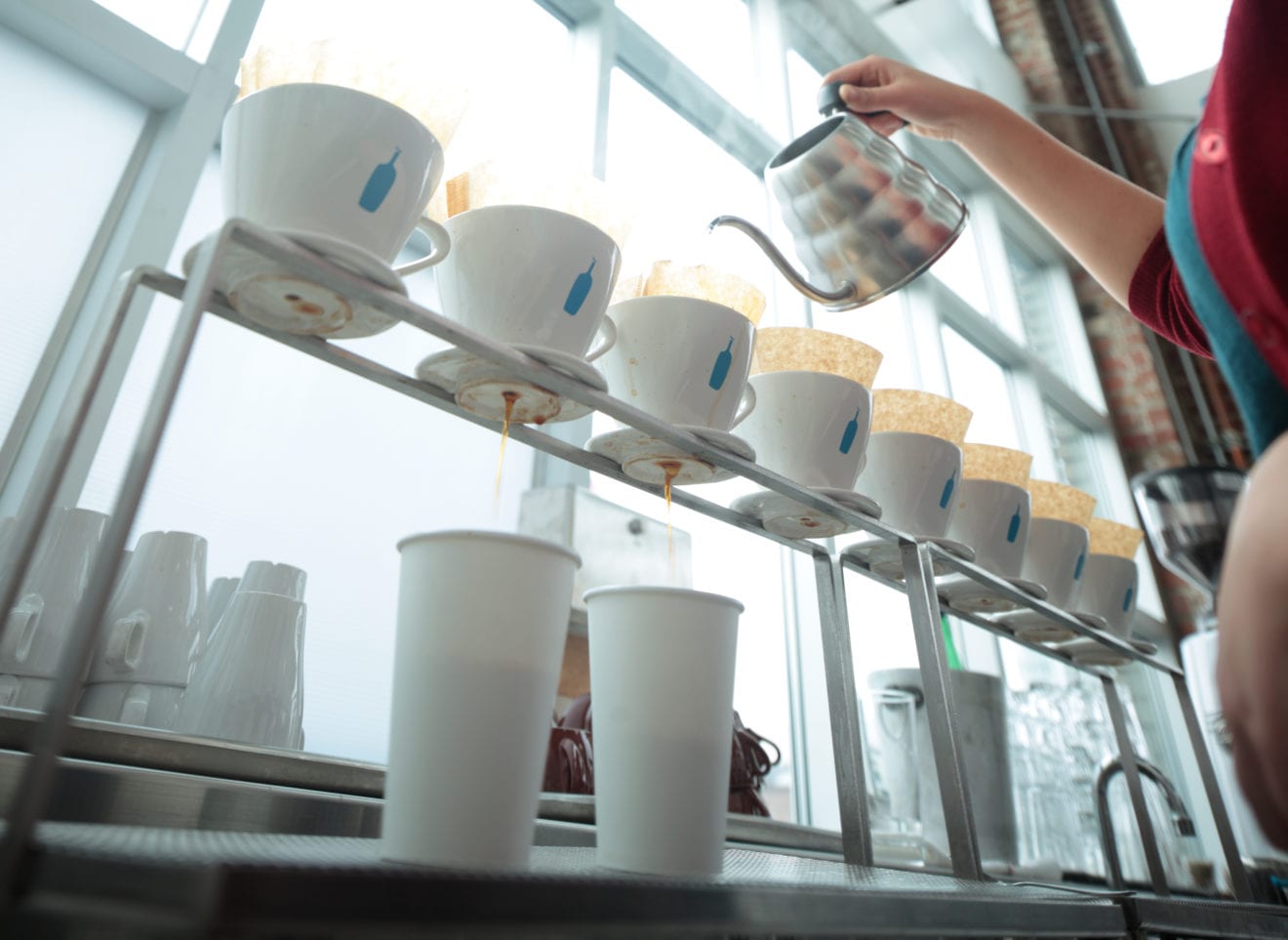
  • Korean coffee chains weigh impact of Blue Bottle debut

    Korean coffee chains weigh impact of Blue Bottle debut

    A year has passed since South Korea’s first Blue Bottle Coffee shop opened in Seoul’s eastern Seongsu neighborhood – a trendy hangout spot where young artists and designers renovated existing buildings into art spaces, fine restaurants and cafes to woo customers.

    What impact has this American coffee franchise had on the coffee industry in South Korea?

    Blue Bottle Coffee now runs five shops, located in Seongsu-dong, Samcheong, Yeoksam, Apgujeong and Hannam.

    Among coffee industry analysts, opinions are mixed. Some believe that the newcomer’s focus on specialty coffee has contributed to the expansion of the high-end coffee market, while others say that the company’s influence has been minimal.

    The coffee industry believes that Blue Bottle contributed to the popularisation of specialty coffees, once popular only among coffee enthusiasts, arguing that the market expanded when Blue Bottle opened for business.

    “Blue Bottle made a significant contribution to starting a new era for the South Korean coffee market, spreading the culture of specialty coffee far and wide,” an industry source said.

    “The company will continue to attract more popular interest in specialty coffee.

    There are others, however, who believe that Blue Bottle’s influence in South Korea has been minimal.

    A limited number of vendors and its operational focus on Seoul has led Blue Bottle to be tied up regionally, and most of the customers are hard-core coffee enthusiasts who have limited influence in the popularisation of specialty coffee, they say.

    In addition, Blue Bottle’s shops don’t provide free wireless internet and other convenience facilities normally found in other coffee shops, breaking with tradition as South Koreans commonly visit coffee shops to meet with others.

    “Blue Bottle gained attention when the first shop opened. Now, it struggles to win the heart of South Korean customers,” another industry source said.

    “They should have entered the South Korean market with a better understanding of South Korean customers.”

  • Jollibee Foods vows to make the most of Covid-19 virus opportunities

    Jollibee Foods vows to make the most of Covid-19 virus opportunities

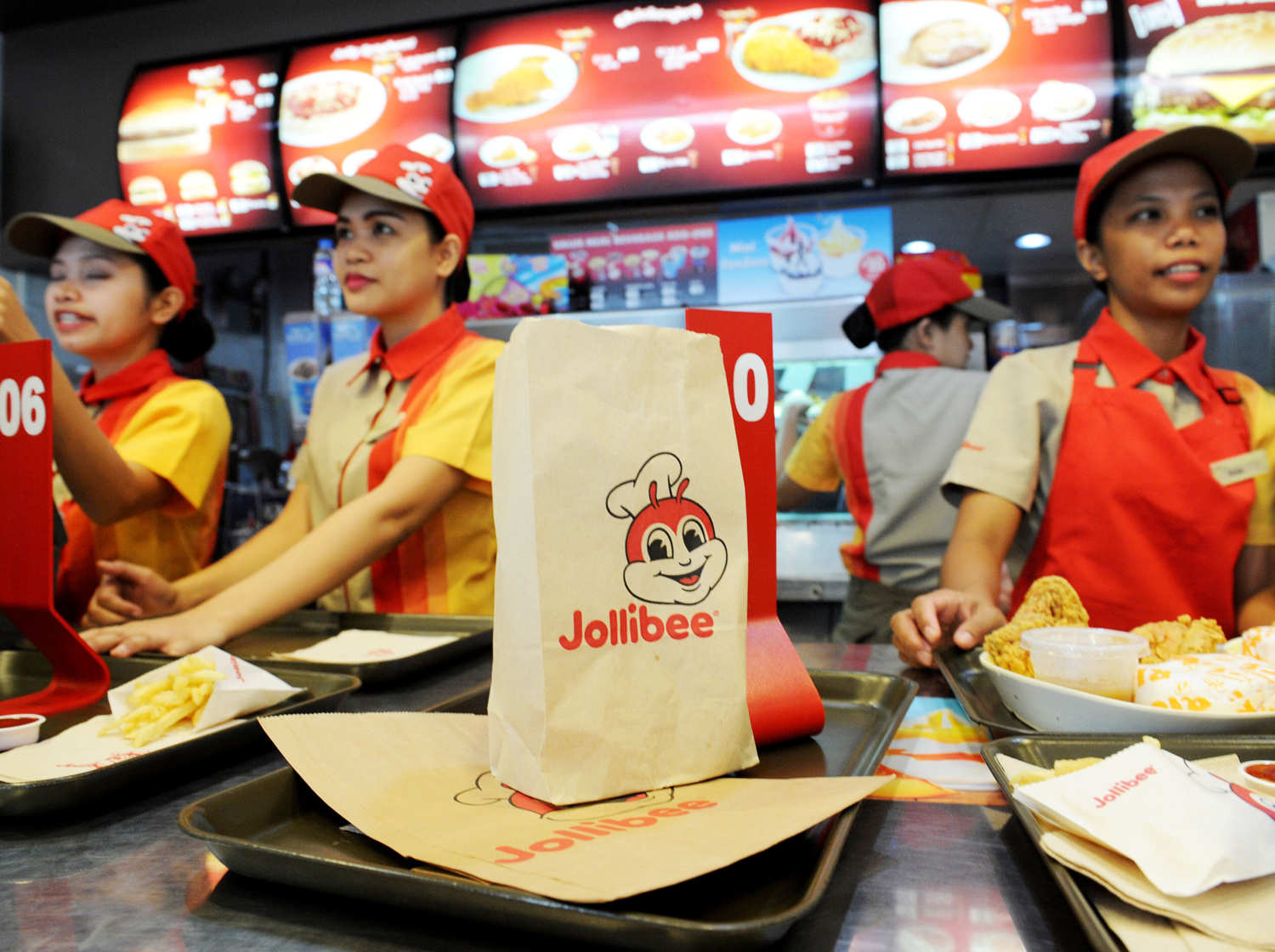
    Filipino restaurant operator Jollibee Foods is set to open 171 stores globally and renovate 96 outlets this year, aiming to capture prime locations made available in a weak economic climate brought on by the coronavirus pandemic.

    While that number of planned new stores is less than it predicted prior to the advent of Covid-19, the company still sees an opportunity to expand despite an extremely challenging start to the year globally.

    The firm will also spend US$137.9 million on a restructuring of its international business, which will include attention to non-performing stores, store network, supply chain facilities, and management and support group structure.

    Jollibee Foods will devote some resources to the establishment of new delivery and take-out services – including unmarked delivery outlets without dine-in facilities – in anticipation of a slow return to business-as-usual following the resolution of the pandemic.

    “2020 is an extremely challenging year for JFC as for most other businesses, but out of this transformation, we aim to emerge in 2021 as an even stronger business and organization,” said Jollibee chairman Tony Tan Caktiong.

    CFO Ysmael Baysa said the company expects its profit for 2020 will “not be good at all due to the overall economic environment. But like Caktiong, he put a positive spin on the crisis: “We are taking this opportunity to implement truly major changes in 2020 so that JFC will start 2021 in a much stronger position in terms of business model, operating efficiency, profitability and organization strength.

    “We will then resume strong and consistent profitable growth for the years ahead.”

    In January, Jollibee Foods reported a 14.4-per-cent drop in earnings after operating income fell by 25.1 percent.

    However a strong fourth quarter prevented a worse annual result, with operating income up 11.6 percent on a 23.2-per-cent boost on systemwide sales.

    “Practically all brands in the Philippines improved their same-store sales growth quarter on quarter, led by Jollibee, Red Ribbon, Greenwich and Burger King,” said a spokesperson then.

    Besides regional expansion across Vietnam, China and other Asian markets, the company is trying to restructure the troubled Coffee Bean business it bought last year and Smashburger, a year earlier. It is also looking to expand the Tim Ho Wan business in China and wants to open new restaurants under various banners in North America.

  • HSBC Digital Payment User Growth Surges

    HSBC Digital Payment User Growth Surges

    HSBC’s PayMe – Hong Kong’s largest e-wallet operator – reached 2 million users, fuelled in part by the city’s love for card and tile games.

    The 2 million users represented a 25 percent year-on-year increase as transactions in the broader e-wallet payment activity, run by 10 operators, tripled due to the Hong Kong Monetary Authority’s faster payment systems (FPS).

    According to HSBC’s managing director and head of PayMe Kerry Wong Chu Po-yin, the accelerated growth was driven by the ongoing pandemic and increasing bill settlements.

    We have seen above-average growth in registration and more active usage of PayMe over these few months of Covid-19 pandemic,” Wong said in an SCMP report. The increase is seen in settling of bills, including those related to online social games such as mahjong and poker.

    The ongoing coronavirus pandemic has caused significantly accelerated digital adoption in Asia across banks and client segments. It took PayMe 17 months to acquire its first million users but around eight months to achieve the second million.

    Need for digital access aside, the coronavirus pandemic has created a bankconstant demand for healthcare goods – some merchants with 15,000 to 40,000 transactions in a single day involving surgical face masks, according to Wong.

    «Our payment platform also helps start-ups and other businesses to accept payment easily,» she said. «Looking ahead, we will line up more big companies [such as utility providers].»

  • Lotte Shopping gearing up store-exit plan

    Lotte Shopping gearing up store-exit plan

    South Korean retail group Lotte Shopping will sell off 121 stores this year in an attempt to recover from the impact of the coronavirus pandemic on sales.

    The company says it will close five department stores, 16 discount stores, 75 supermarkets and 25 physical stores linked to its online mall LOHB within this year.

    The move accelerates Lotte’s existing plans to sell roughly 200 stores to refocus on e-commerce.

    A spokesperson from the firm indicated Lotte would move to quickly shake off its less-profitable assets in the interests of improving its financial health. Lotte Shopping’s first-quarter results, at a loss of US$35 million, represented a massive drop from the $88.2 million profit it achieved during the same period last year.

    Lotte Shopping has around 700 department stores, discount stores, and supermarkets.

  • Google tests useful Search related feature for Android YouTube app

    Google tests useful Search related feature for Android YouTube app

    It appears that Google is testing Google Search integration with the Android version of the YouTube app. An example posted by a Redditor shows YouTube search results for “open beer with knife,” a talent that could come in handy if you are living alone during the pandemic and your openers are all dirty. The results come back with some useful and not so useful videos to watch.

    Underneath the videos there is a section that says Result from the web which essentially is a result of Google Search. In this case, it brings up an article from Lifehacker titled “Open a Beer Bottle With a Butter Knife.” Underneath the title, there is a short description of the article. As Android Police points out, this integration isn’t listed in the “YouTube test features and experiments” page on the Google Support website. And a quick search showed that our Pixel 2 XL running Android 10 does not yet have this feature.

    As you know, Google owns YouTube and integrating Google Search into the Android YouTube app is a sure-fire way to generate more clicks and advertising revenue for the company. During the first quarter, which covers January through March 2020, Google Search generated $24.5 billion in revenue for a year-over-year gain of 11.6%. While the integration does help out Google financially, is there any benefit to users? Sure. Those interested enough to search for videos on a subject matter will be happy to find more information about it on Google Search.

    Although Google is currently testing this feature on the Android version of the YouTube app, there is no reason why Google Search integration can’t also be found on the iOS version of YouTube.

  • HSBC Ordered to Restart and Deepen Overhaul

    HSBC Ordered to Restart and Deepen Overhaul

    The economically crippling coronavirus pandemic has driven HSBC’s board to push the British lender not only to restart the original overhaul strategy but also further deepen cost cuts.

    The ongoing health crisis has prompted the board to review the HSBC’s recent reorganization, according to a «Financial Times» report citing unnamed sources from the bank, and consider more drastic measures.

    The bank has been undergoing restructuring changes while concurrently attempting to retain most jobs. After announcing its plan to cut 35,000 jobs, $4.5 billion in costs and $100 billion in risk-weighted assets, HSBC announced a pause most of the job cuts while proceeding with its original plan «wherever possible»

    Intensified restructuring could potentially include more job cuts or a possible sale of its U.S. business, its retail network in France and operations in smaller non-strategic markets, the report added.

    A spokesperson for HSBC declined to comment on the report.

    HSBC has been continuously facing a stampede of challenges after finally confirming its permanent chief executive Noel Quinn in March this year. Since then, the London-headquartered bank has faced social unrest in Hong Kong, a temporary pause to its plans to cut 35,000 jobs, a dividend cancellation fiasco and now a greater overhaul driven by the pandemic.

  • Le Saunda posts third consecutive loss

    Le Saunda posts third consecutive loss

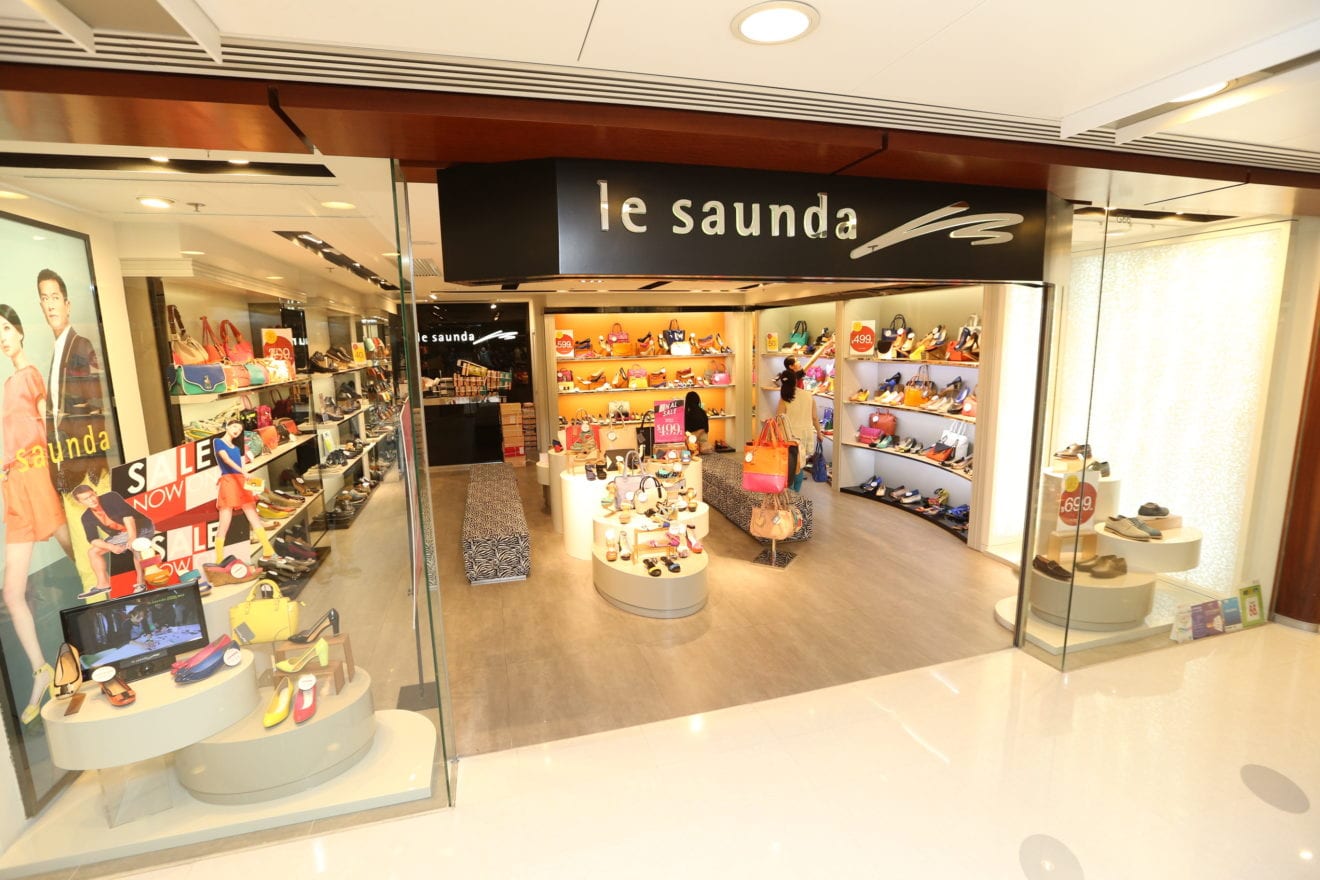
    Hong Kong shoe retailer Le Saunda has reported yet another annual loss – this time of US$4.28 million – as a “super-cold winter” hit Hong Kong’s retail sector.

    The loss followed last year’s $3.9 million, while in 2018 it lost $8.4 million. That adds up to a $16.6 million deficit for the last three years and given the tumult of the Greater China retail market in the wake of Covid-19, it is hard to see the beleaguered business returning to the black any time soon.

    The last time Le Saunda posted a profit was in the year to February 2017, of $10.5 million.

    Chairman James Ngai said in a results filing that the group’s total revenue in the year to February fell 19 percent to $103.26 million. The company, which trades under the brands Le Saunda, Linea Rosa, Pitti Donna and CNE, closed a net 85 stores during the year leaving its chain at 441. The majority of the closures were company-owned stores, the balance of 11 Mainland China franchised outlets.

    Ngai said the Sino-US trade conflict dampened consumer sentiment on the mainland, the major source of its revenue, and then the Covid-19 outbreak drove sales down further.

    “While the Hong Kong market was expecting that consumption would be stimulated during the traditional peak season of the Chinese New Year, there came the threat of the Covid-19 epidemic, worsening the already gloomy local market and pushing Hong Kong’s retail industry into a super-cold winter,” he said.

    Hit by the local social events, Covid-19 and the external economic uncertainties, sales in Hong Kong and Macau decreased by 46.8 percent to $4.3 million. Le Saunda now has just six stores left in Hong Kong and Macau, five fewer than at the end of the previous fiscal year, and Ngai said more will close “as appropriate” given Hong Kong landlords have not dropped rents in line with falling retail sales. Le Saunda will focus on accelerating the development of local online business and work to improve service and operating efficiency of those physical stores it retains.

    While the group managed to reduce its inventory by 16.1 percent year on year, because the decline in sales outweighed the change in stock levels, the inventory turnover days of finished goods stretched out by 43 days to 369 days.

    Subsequent to February 29, the group closed its factory at Shunde in Guangdong as it now outsources all footwear production to external subcontractors to better manage inventory and control costs. Space within the plant continues to be used as a warehouse and for offices.

  • AirAsia extends credits for 2 years

    AirAsia extends credits for 2 years

    AirAsia customers with flights that had been scheduled to depart between March 23 and July 31, 2020 can now choose between a credit with a 2-year validity, or unlimited changes for flights departing up to Oct 31, 2020.

    AirAsia has also extended all credits previously issued for COVID19 related disruptions with validity for up to 2 years.

    The unlimited flight changes option means that customers can change their booking to any new travel date before Oct 31, 2020, on the same route, for an unlimited number of times, without any additional cost, subject to seat availability.

    The credit can be redeemed within 730 calendar days from the issuance date. The travel date of the new booking can fall on any date within the published flight schedule on AirAsia’s website.

    The two options are only applicable for direct online bookings made via airasia.com.

  • CapitaLand kicked new e-commerce platforms off in Singapore

    CapitaLand kicked new e-commerce platforms off in Singapore

    CapitaLand has launched new e-commerce and food ordering platforms in Singapore.

    The new eCapitaMall and Capita3Eats services are aiming to drive sales for retailers at its shopping malls during Singapore’s Phase 1 safe reopening protocol, as the country starts pulling itself out of the coronavirus lockdown. Both platforms will be accessible via the firm’s CapitaStar app and mall websites from June 1.

    “The circuit breaker has brought to the fore the importance of an omnichannel, 24/7 strategy for Singapore’s retailers,” said CapitaLand Singapore MD Chris Chong. “As the operator of Singapore’s largest mall network, we want to help our retailers reach out to more consumers and online business opportunities by using the strong brand awareness of CapitaLand and the digital capabilities we have built up over the years. Retailers on our eCapitaMall and Capita3Eats platforms will get a leg up in the digital space by tapping the more than 1 million CapitaStar members in Singapore and marketing reach through our physical network.”

    Customers using the app will be able to buy goods from (predominantly) retail tenants at CapitaLand malls, opting for home delivery or in-store collection. The food app is Singapore’s first mall-operated food ordering platform offering consumers three ways to fulfil their food orders – by delivery, takeaway or dine-in.

  • Three Hyundai India Workers Test Positive For Coronavirus

    Three Hyundai India Workers Test Positive For Coronavirus

    Three employees at Hyundai Motor Co’s Indian plant have tested positive for the coronavirus, the company said on Sunday, days after the South Korean automaker resumed operations after a near two-month lockdown. Test results of sixteen more workers who possibly came into contact with the infected employees are expected over the next two days, a senior government official told Reuters.

    “The state’s policy is to not let the industry stall,” said P Ponniah, the top bureaucrat in the Kancheepuram district of southern India where Hyundai’s plant is located. “We will ensure the areas inside the plant visited by the COVID positive employees are sanitized,” he said, adding that until such time workers would be barred from working in those areas.

    Hyundai, which restarted operations at the plant on May 8, said the three employees started showing mild symptoms of coughs and colds in the first week of restarting and were tested positive. They are being treated, Hyundai’s India spokesman said in a statement.

    “All the necessary measures are being taken for contact tracing, self-isolation, and complete sanitation,” he said, adding the well-being of employees was a priority.

    The cases at Hyundai, India’s second-largest carmaker by market share, come as bigger rival Maruti Suzuki India said late on Saturday that one employee at its plant in the northern city of Manesar tested positive and there may be the possibility of a second case.

    0Comments

    The cases expose the risks and challenge Prime Minister Narendra Modi’s government faces in restarting automobile production in an effort to kickstart the economy after a near two-month lockdown to fight the spread of the novel coronavirus.