Tag: asia

  • Carousell supports Small Businesses, hawkers during Covid-19 crisis

    Carousell supports Small Businesses, hawkers during Covid-19 crisis

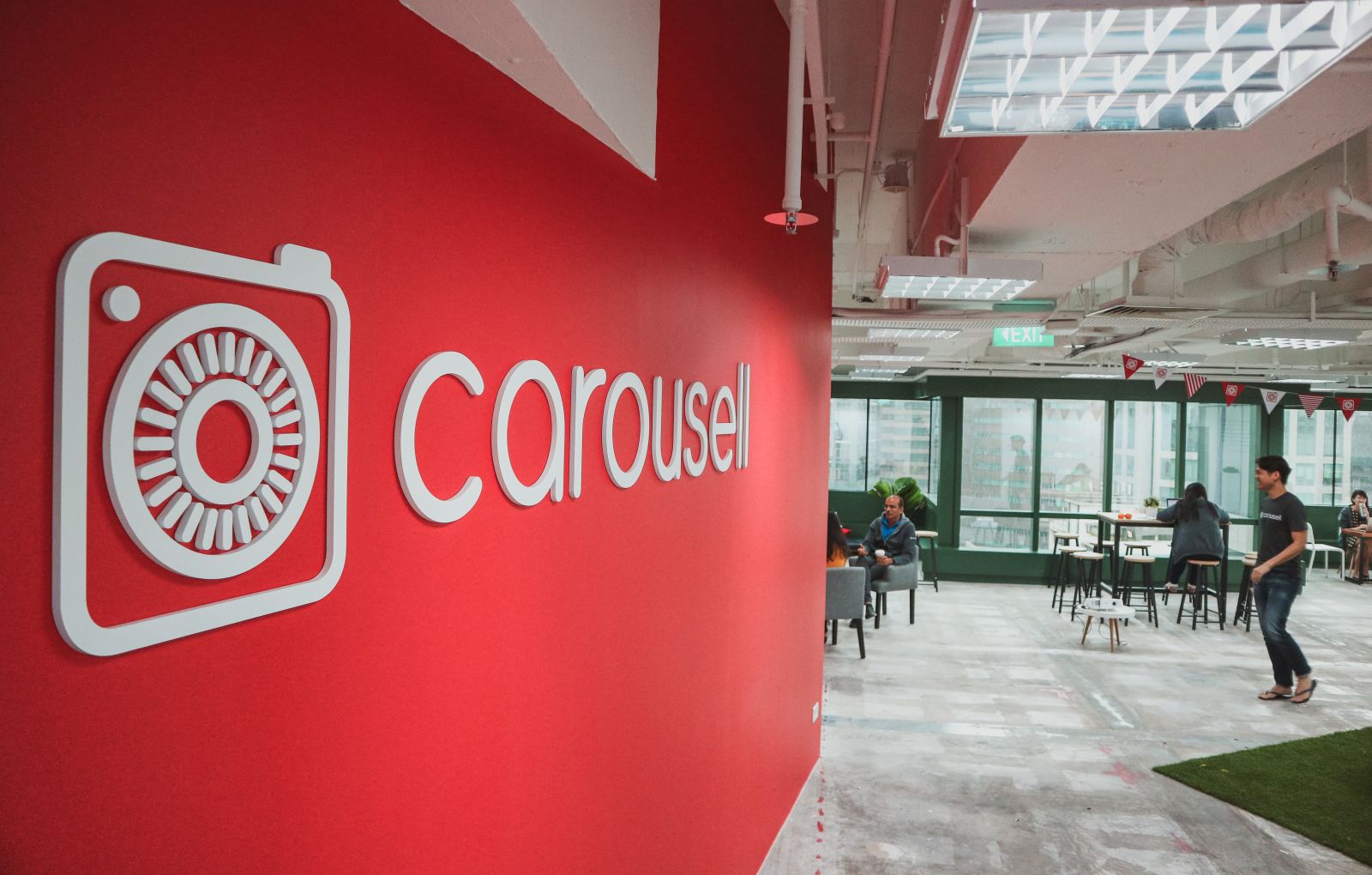
    Classified-ad service Carousell is offering up to SG$2 million (US$1.3 million) in free advertising for nonprofits serving communities impacted by the coronavirus outbreak.

    Organizations in Singapore, Malaysia, Hong Kong, and the Philippines engaged in initiatives to support those affected by the pandemic will be eligible for the program.

    “This initiative will give non-profit organizations more visibility and offer an alternative platform for advertising that doesn’t require paying premium fees,” said Carousell’s MD for advertising JJ Eastwood. “As a C2C classified  platform, Carousell has a broader vision for our community and users that transcends the current Covid-19 climate.”

    Existing partners include Singapore Red Cross, Give. Asia, Free Food for All in Singapore, Parents Without Partners in Malaysia, Habitat For Humanity in Hong Kong and Caritas Manila in the Philippines.

    Meanwhile, in Singapore, Carousell has launched the #SupportLocal campaign to help business owners impacted by the pandemic, targeting both SMEs and small food & beverage operators. The first phase of the initiative, ‘#SupportLocal F&Bs’, encourages Singaporeans to support the smaller eateries and hawkers in their own neighborhoods.

    Partnering with Unilever Food Solutions, Carousell plans to sign up more than 2500 F&B businesses onto a newly created Local F&B category on its platform.

    “The onboarding process will ensure that business owners who have not had prior experience with online operations are still able to list on Carousell for increased visibility,” the company explains. “With Carousell listings, F&B owners will be able to provide on-demand takeaway services without having to pay a premium or commission to external vendors, and Carousellers will be able to conveniently and directly support the local F&B establishments near them.

    Ivan Lu, MD for Malaysia and Singapore at Unilever Food Solutions, says the company believes Carousell’s initiative will help provide the local F&B community with an additional option to attract the orders they sorely need.

    “It’s a tough time, but the Singaporean F&B community is amazingly resilient. With our Kampong spirit, we can weather any storm,” says Lu.


  • FamilyMart Taiwan starting delivery service with Foodpanda

    FamilyMart Taiwan starting delivery service with Foodpanda

    FamilyMart Taiwan is partnering with the food-delivery platform Foodpanda to launch a delivery service.

    Starting Wednesday next week, the firm plans to offer delivery services from its 1000 outlets nationwide by June, with initial services commencing out of Familymart Taiwan’s 146 locations within Taipei and New Taipei. The service will be rolled out to the remaining outlets in two further phases.

    Deliveries will be made between the hours of 5.30 pm to 2 am on the day following the purchase, and will serve almost 200 of its food items including snacks, beverages, groceries and pre-packed meals.

    FamilyMart Taiwan partnered with Uber Eats last year to start a food delivery service before the advent of the Covid-19 pandemic. That partnership ended in March.

    The new partnership is expected to address the sharp rise in e-commerce trading in response to the coronavirus outbreak as consumers are staying home. The firm has seen demand for delivery of its products rise 15 percent since February, according to senior executive Lee Ching-hsien.

  • BMW Motorrad India Sales Grow By 71 Per Cent In Q1 2020

    BMW Motorrad India Sales Grow By 71 Per Cent In Q1 2020

    BMW Motorrad India has shared its sales report for the first quarter of 2020, and the manufacturer managed to sell 1024 motorcycles between January and March this year. The German motorcycle maker registered a 71.5 percent hike in sales in Q1 2020, as compared to the same period in 2019 wherein it sold 597 units. Driving the sales momentum for the brand were its entry-level motorcycles, the BMW G 310 twins – G 310 R and the G 310 GS – that contributed to over 80 percent to the total sales or a little over 800 units in three months.

    Speaking on the sales growth, Rudratej Singh, President and CEO, BMW Group India said, “BMW Motorrad India has posted robust growth in Q1 2020, a result of the extremely strong brand we have built among motorcycling enthusiasts in India. BMW Motorrad has brought its most aspirational and desirable global products to Indian customers and developed a truly close-knit riding community that attracts riders who use motorcycling as a means to explore life. The BMW 310 and the GS range are particularly popular among the Indian riders. Though our riding events are on hold to ensure social distancing, we are engaging with fellow riders digitally and through social media. We are closely monitoring the market situation and its impact on future demand.”

    The new generation BMW S 1000 RR has found a large audience in India, according to the company

    While the G 310 twins have been hugely popular for BMW Motorrad, the company has also been actively pushing the 310 motorcycles with huge discounts at the dealer level. The discounts range between ₹ 65,000-75,000. The company is yet to announce BS6 compliant versions of the motorcycles.

    The other main contributors for BMW Motorrad continue to be the  R 1250 GS/GSA, F 750/850 GS as well as the 850 GSA, and the BMW S 1000 RR.

  • HSBC’s Pro-Dividend Shareholders Call for Regulator Intervention

    HSBC’s Pro-Dividend Shareholders Call for Regulator Intervention

    Enraged retail investors of HSBC in Hong Kong have invoked the Securities and Futures Commission in the latest development of the HSBC dividend cancellation fiasco. A 500-strong group that claimed to be HSBC shareholders assembled at the offices of the Securities and Futures Commission (SFC), urging the local regulator to intervene and help reverse a decision by the British lender to scrap dividends on Bank of England orders. Leading the group was local politician Christine Fong Kwok-shan.

    The [Prudential Regulation Authority] orders have hit many retirees hard in Hong Kong, including my father who invested in HSBC shares for decades,» Fong said, according to a report that claimed SFC staff accepted the letter without commenting.

    We understand that HSBC canceled dividend payments at the order of the British regulator. As usual, it needs a regulator to talk to another regulator.

    The new group joins the growing coalition of pro-dividend shareholders that include the Hong Kong Federation of Trade Unions, which boasts 420,000 members, and a self-dubbed HSBC Shareholder Alliance of allegedly 600 owners of HSBC stock.

    Despite the fact that dissatisfied investors have no legitimate case to push for a reversal, they continue nonetheless to mobilize in order to meet the 5 percent shareholder threshold to trigger an extraordinary general meeting and have their demands directly heard. As of Thursday, 3 percent of shareholders have pledged their support.

    We profoundly regret the impact this will have on you, your families and your businesses, said HSBC chief executive Noel Quinn in a rare letter earlier this week directly addressing Hong Kong shareholders earlier this week. We are acutely aware of how important the dividend is to our shareholders in Hong Kong. We deeply value your support as a shareholder and we never take that for granted.

  • Ikea calls for recommitment to climate change

    Ikea calls for recommitment to climate change

    Home furnishings giant Ikea has joined an alliance of key industry and political groups in calling for a renewed commitment to long-term climate change initiatives despite the immediate urgency of the coronavirus pandemic.

    The European Green Recovery Alliance includes more than 180 political decision-makers, business leaders, trade unions, NGOs and think tanks working to reinforce commitments to addressing climate change.

    “Even if the outbreak of the Covid-19 virus calls for urgent measures to mitigate the effects on people and business, we will not lose sight of our long-term goals,” said Inter Ikea Group CEO Torbjorn Loof. “We will continue to be long-term in everything we do and remain committed to our ambitious sustainability goals for 2030. This is not an ‘either/or’ situation, the challenging situation today makes us even more determined to accelerate our efforts to tackle climate change.”

    In a newsletter published on its website, Ikea reiterated its commitment to “continue to share knowledge and experience to help accelerate the transition toward a green economy in the wake of the coronavirus crisis”. The firm pledged to “share knowledge, examples and experience with lawmakers and participate actively in the Green Deal discussion for new policy and regulatory initiatives”.

  • Michelin, Enviro Working On New Recycling Technique To Transform Old Tyres Into Raw Materials

    Michelin, Enviro Working On New Recycling Technique To Transform Old Tyres Into Raw Materials

    Michelin has announced entering a new partnership with Swedish start-up Enviro, to introduce a new technology to recycle end-of-life tires. Under the new partnership, the companies will work towards industrializing an innovative pyrolysis technology on a large scale to recycle old tires and convert them into raw materials. Currently, recycling is a major issue with tires, and each year, about 1 billion tires reach the end of their life and are discarded as waste. But this new recycling technology will bring them back into the equation.

    The process involves a new technique developed by Enviro that modifies the chemical composition and physical phase of the pneumatic material (tires) during the pyrolysis process while ensuring minimal energy consumption. Simply put, this technology will allow the companies to extract high-quality raw materials such as – recovered carbon black, pyrolysis oil, steel or gas from old tires. These raw materials can then be re-incorporated into various other production circuits in different industrial sectors.

    The new partnership will see both the companies bring in their expertise from different fields to deploy Enviro’s pyrolysis technology on a larger scale and build a factory to industrialize the technology. Michelin will use its industrial know-how in terms of research and development and production for the construction of the new plant, while Enviro will bring its patented pyrolysis technology, which will produce high-quality products. The location of the plant will be confirmed at a later date.

    Michelin currently holds 20 percent stake of Enviro’s capital, amounting to 32.5 million SEK or ₹ 247.4 crore, as per the current exchange rate, making it the largest shareholder in the company. There is also a joint Supply Agreement between Michelin and Enviro. Michelin says that this partnership reiterates the company’s long-term commitment to recycling and sustainable mobility.

  • Singapore E-commerce Programs break barriers to shop online

    Singapore E-commerce Programs break barriers to shop online

    Enterprise Singapore (ESG) has launched the Singapore E-Commerce Programme to support SME retailers with little or no e-commerce experience to commence online trading.

    The group’s program is set up to cover 90 percent of costs up to SGD9000 (US$6300) for retailers to use e-commerce platforms for domestic and/or overseas markets, as well as providing additional manpower if needed.

    The Singapore E-Commerce Programme has been built in collaboration with e-commerce platforms Amazon, Lazada Singapore, Qoo10 and Shopee, which will provide assistance in curating and listing products for up to six months.

    The move aims to assist retailers in upgrading and diversifying their business model beyond traditional brick-and-mortar, of particular relevance during the coronavirus pandemic.

    “It is more crucial now for retailers to diversify revenue streams by using e-commerce channels,” said ESG deputy CEO Ted Tan. “The Singapore E-Commerce Programme primarily helps retailers with little e-commerce knowledge and capabilities to start using online channels. Our partnership with the established e-commerce platforms both in Singapore and overseas ensures a good-sized market for these retailers to tap on. We want to empower all retailers to develop long-term and sustainable e-commerce strategies that will ensure business resilience beyond Covid-19.”

    Eligible retailers are invited to sign up for the package directly with the respective e-commerce platforms by September 30.

  • Google Debuts P2P Fund Transfers in Singapore

    Google Debuts P2P Fund Transfers in Singapore

    With OCBC enabling peer-to-peer (P2P) fund transfers on Google Pay, the city-state becomes the third globally to offer the service, after India and the United States.

    The integration means that OCBC customers can now transfer or receive payments directly from their bank accounts to or from anyone registered to PayNow using the Google Pay app, the bank announced in a statement this week.

    At the same time, bank account holders without credit cards can also Google Pay to make payments to merchants in Singapore.

    We have long rejected the ‘digital wallet’ approach that requires customers to top up an e-wallet and hold funds in one without earning interest. Instead, we put a lot of effort into developing OCBC Pay Anyone as an open-loop payment system, whereby customers literally ‘pay anyone’ directly from their bank accounts, Ching Wei Hong, OCBC head of Global Wealth Management & Consumer Banking, said.

    Introduced in 2017, Singapore’s national e-payments system PayNow enables digital payments directly between customers’ bank accounts and funds transfers using their recipients’ mobile numbers.

    The integration of Google Pay and PayNow is expected to significantly impact the adoption and usage of PayNow in Singapore, which already recorded more than 70 million transactions worth S$12.16 billion in 2019, OCBC noted.

    Google previously said it is looking at adding more banks to Google Pay, including DBS and Standard Chartered, with launches expected by the end of 2020.

  • Citi Marketeer Joins Mastercard

    Citi Marketeer Joins Mastercard

    His career spans multiple functions and geographies, bringing together data, technology and culture in building Citi’s brand strategy and positioning.

    After 16 years at Citibank, marketeer Mayank Dutt is joining Mastercard as its head of marketing and communications for Southeast Asia, the exec announced on LinkedIn.

    He will report to both Safdar Khan, division president, Southeast Asia Emerging Markets and Rustom Dastoor, senior vice president, head of marketing and communications, Asia Pacific, and will work closely with them to accelerate Mastercard’s core business, diversify its customers and build new businesses across Southeast Asia, a spokesperson said.

    Dutt joined Citi in 2004 as AVP and branding head, and has held a number of senior roles at the bank, including chief marketing officer, where he led a team of marketing, insights and digital acquisition specialists; customer franchise head for the consumer banking business in Vietnam; and most recently, director, regional insurance, APAC EMEA, according to his LinkedIn profile.

    With a young and tech-savvy population, Southeast Asia is one of the world’s fastest-growing regions, reinforcing the need for Mastercard to design and deliver experiences that are simple, seamless and secure. With almost two decades of digital marketing experience, Dutt is very well placed to accelerate the brand to greater heights in this region, Dastoor said about the hire.

  • OCBC Shutters Investors Hub During Circuit Breaker

    OCBC Shutters Investors Hub During Circuit Breaker

    The bank hopes to encourage more people to stay home and comes in support of stricter social distancing measures implemented by the government to contain the spread of Covid-19.

    OCBC Bank’s wholly-owned brokerage subsidiary, OCBC Securities, will temporarily close its Investors Hub at OCBC Centre South from 20 April to 4 May 2020, it announced in a statement on Friday.

    The bank said customers will be able to continue to trade or make transactions through their trading representatives or on OCBC Securities’ digital platform, iOCBC, as the brokerage will continue to be operational during this time.

    The Monetary Authority of Singapore also urged the public to minimize visits to their premises during the current circuit breaker period.

    While financial services remain available as one of the essential services exempted from the suspension of activities at workplace premises announced by the Ministry of Trade and Industry (MTI) on 3 April 2020, customers are urged to use digital, email, and telephone channels as far as possible and minimize face-to-face interactions at FI premises,» the regulator said in a statement on Friday.

    About half of the bank branches in Singapore have closed, along with most of the physical service locations of insurers, brokers and fund managers, in view of reduced customer traffic.

  • WhatsApp to increase group audio and video call limit in upcoming update

    WhatsApp to increase group audio and video call limit in upcoming update

    The current global crisis has led to an increase in communication services usage, but it looks like they’re able to cope with the demand for the time being. Even though it seems that there’s enough bandwidth to accommodate the spike in usage, many of these services require improvements.

    WhatsApp is in the process of upgrading its mobile apps with a couple of improvements that are meant to allow multiple users to participate in audio and video calls. WABetaInfo has learned that WhatsApp plans to extend group audio and video call limit on Android and iOS devices.

    Currently, WhatsApp users can initiate group calls with up to 4 participants, but a future update will increase the number of participants that you can invite in a group call to at least 6. It’s unclear what the final number will be, but we do know that WhatsApp will apply the same enhancements to the video call group feature.

    Neither of these improvements is available in the beta version of WhatsApp yet, but they are evident in some strings of code discovered by WABetaInfo. The changes are expected to be implemented in both Android and iOS versions of WhatsApp, but we don’t know when exactly they will be rolled out.

  • Samsung to double down on cheaper 5G phones to tackle sales slump

    Samsung to double down on cheaper 5G phones to tackle sales slump

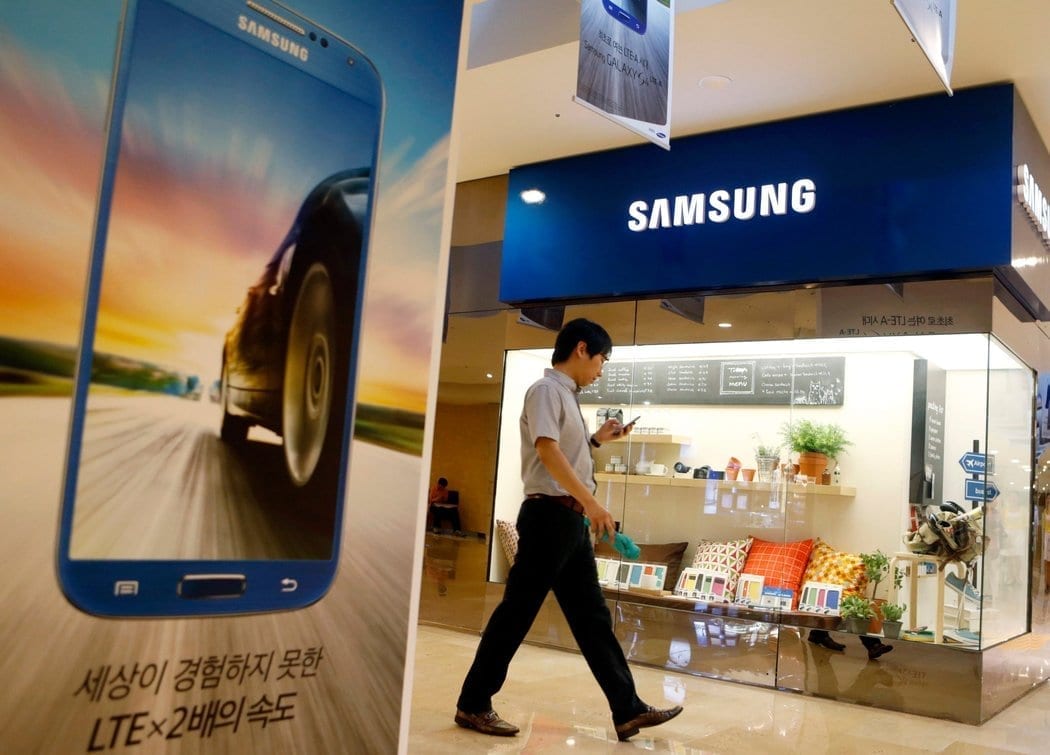
    Smartphone shipments are expected to fall by over 10% this year because of the ongoing COVID-19 pandemic. The situation is affecting all brands yet it seems Samsung is in an even tougher position following the poor reception of the Galaxy S20 series.

    Samsung has been betting heavily on 5G-ready smartphones ever since it announced the premium Galaxy S10 5G in early 2019. That phone was eventually followed by the Galaxy Note 10+ 5G and the Galaxy A90 5G, two very expensive offerings.

    This year the strategy is all about taking the technology mainstream. The South Korean giant has already introduced the Galaxy A51 5G and Galaxy A71 5G, priced at $499 and $599 respectively, but is now expected to double down on next-gen network support.

    The exact plans remain unclear at this stage but Samsung is reportedly working on an updated Galaxy A series that incorporates even more 5G-ready smartphones. Crucially, these will be even cheaper in the hope of attracting consumers on tighter budgets.

    The global financial crisis is going to make selling smartphones this year harder than ever – global sales tumbled a humongous 38% annually in February – and Samsung along with other top manufacturers aren’t under any illusions that the worst is behind them.

    But Samsung does believe that, if something is going to convince people to upgrade in 2020, it will be 5G. After all, next-gen networks grant access to unprecedented upload and download speeds that make cloud gaming and video streaming, among other things, easier and more seamless than ever.

  • LVMH caps sales decline with 15 percent

    LVMH caps sales decline with 15 percent

    LVMH has reported a sales decline of 15 percent for the first quarter of this year, a staggering achievement given its most lucrative market, China, was shut down for most of the period.

    “Thanks to everyone’s commitment and the strength of its brands, the LVMH group maintains good resilience in the face of this worldwide challenge,” said Bernard Arnault, chairman and CEO.

    Nevertheless, the company has trimmed its previously announced dividend and Arnault and other executives will work for free during April and May as the company works through the next stage of the coronavirus crisis.

    “For several weeks, our teams have once again demonstrated that excellence, creativity and responsiveness will allow us not only to overcome this crisis but, above all, to emerge even stronger when it fades,” he said.

    Group-wide revenue reached €10.6 billion for the quarter, with all divisions in the group recording sales declines.

    Worst hit were the watches and jewelry business and selective retailing (including Sephora and DFS) which both fell by 26 percent, largely linked to enforced store closures in Greater China.

    Bvlgari, Tag Heuer and Hublot were particularly hit by store closures in Asia and while all Sephora beauty stores were closed in China for a major part of the quarter, those located in Europe and the US have been closed since mid-March. However, online sales rose “significantly”  over the quarter and shopping in stores has gradually picked up in China since the end of the quarter, the company said.

    DFS experienced “a significant decline” inactivity in most destinations as a result of the suspension of international travel.

    A positive currency effect and a policy of firm increases in prices partially offset a decline in volume sold, resulting in a 14-per-cent year-on-year decline in sales for the liquor business group. “The US market demonstrated its good resilience over the period, supported by advance orders from distributors,” the company said. Sales of Hennessy cognac slowed in China due to lower demand linked to the coronavirus pandemic, and the timing of Lunar New Year.

    Sales by LVMH’s perfumes & cosmetics division fell by 19 percent as retailers reduced their inventory levels, however, online sales grew rapidly.

    And the fashion & leather goods business group recorded a 10-per-cent decline in sales, again impacted by store closures, but mitigated in part by strong online growth.

    “LVMH has proven its ability to be resilient in an economic environment disrupted by a serious health crisis that has led to the closure of stores and manufacturing sites in most countries in recent weeks, as well as the suspension of international travel,” the company said in a statement.

    “In a very turbulent context, the group will maintain a strategy focused on preserving the value of its brands, based on the exceptional quality of its products and the responsiveness of its teams. In the current situation, the group will further strengthen its policy of controlling costs and being selective in its investments. The closures of the group’s manufacturing sites and stores in most of the world’s countries in the first half will have an impact on the annual revenue and results. This impact cannot be precisely evaluated at this stage without knowing the timetable for a return to normal business in the different areas where the group operates.

    “We can only hope that the recovery happens gradually from May or June after a second-quarter which will still be very affected by the crisis, in particular in Europe and the US.”

  • Luk Fook sales down as Covid-19 throttles tourism

    Luk Fook sales down as Covid-19 throttles tourism

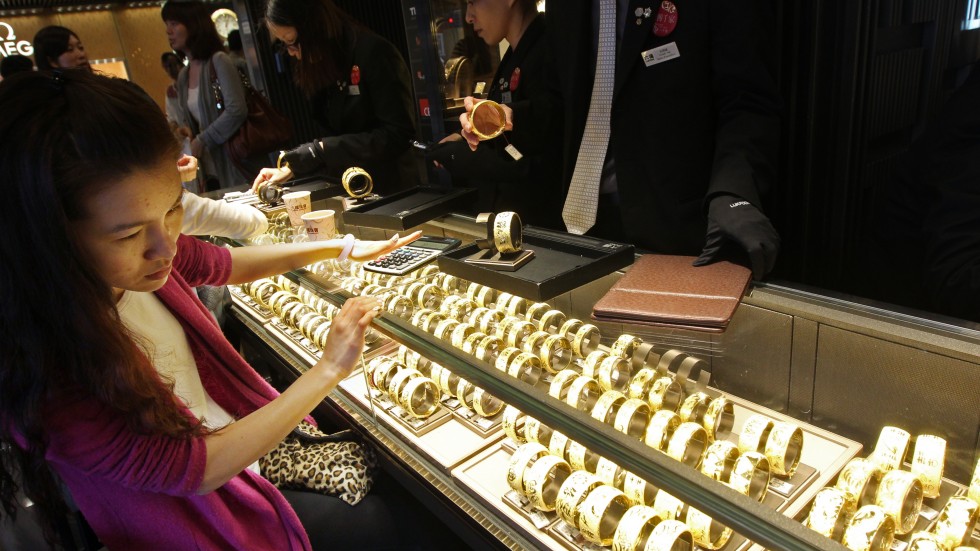
    Hong Kong-listed jeweler Luk Fook says its March-quarter same-store sales plunged 57 percent as the Covid-19 outbreak saw the mainland border closed and tourist numbers fall to almost zero.

    Sales of gem-set jewelry were down by 64 percent year on year, and of gold (by weight) by 58 percent.

    The sales decline was worst in Hong Kong and Macau, falling by 60 percent overall due to Macau stores being closed for most of February and March, and low footfall in Hong Kong. The only positive note was that the gold price rose by about 20 percent during the quarter which boosted the average selling price of gem-set jewelry by a similar amount.

    Sales at self-operated stores on the mainland were down by 41 percent and of licensed stores by 32 percent. Most of Luk Fook’s stores on the mainland were closed for the entire month of February and while most reopened in March, the company said foot traffic “largely declined”.

    During the March quarter, Luk Fook permanently closed two stores in Hong Kong and one in Macau. On the mainland it opened a net 26 new stores taking its network to 2046.

    “Given most of the new shops were opened before the outbreak, the expansion plan for FY2020 therefore has not been seriously affected,” the company said in a stock-exchange filing.

    “The net shop addition for the full year was 287 shops, slightly below the target of 300 shops. With the gradual recovery of industrial, consumption and investment activities in Mainland China, the group’s business [on the mainland] improved progressively in the first two weeks of April, while the business in Hong Kong and Macau has not shown obvious signs of recovery due to substantial decline in the number of visitors as compared with the same period last year.”

    To reduce costs during the ongoing pandemic, Luk Fook has adopted a policy of natural turnover and unpaid leave measures for staff to cut labor costs, and negotiated rent relief with landlords. A reduced inventory has left the company in a strong cash position.

  • India is now H&M’s fastest-growing market

    India is now H&M’s fastest-growing market

    Fast-fashion retail giant H&M has labelled India its fastest-growing emerging market.

    The firm is now targeting ₹2,000 crore (US$280,000) in turnover from the territory, a goal it is likely to achieve by the end of this year despite signs of reduced domestic consumption.

    H&M’s growth in the region has benefitted from both online and offline efforts, along with its collaborations with local partners and affordability of the brand. It operates 47 outlets in the country, compared to 22 run by rival firm Zara, with financial figures suggesting it may have a leading edge in terms of sales.

    According to a report in the Business Standard, H&M India country head Janne Einola has indicated H&M will target tier-II and -III markets for future store locations. It is expected to launch up to 10 new Indian stores this year, as well as diversify its product range into different sectors such as home furnishings and beauty, as well as traditional Indian clothing.