Tag: asia

  • Li Ning profit boosts almost double

    Li Ning profit boosts almost double

    Chinese sportswear giant Li-Ning reported a massive 110-per-cent boost in profit for last year on sales up 32 percent.

    Total revenues reached ¥13.87 billion (US$127.9 million) compared with ¥10.51 billion ($96.95 million) in 2018. Net profit attributable to shareholders increased from ¥715.3 million ($6.6 million) to ¥1.5 billion ($13.8 million).

    CEO and executive chairman Li Ning, said the result reflected the company’s strategy of creating and enhancing the brand’s “experience value”.

    “We have adopted diversified strategies and approaches to consolidate the advantages of online and offline and also made use of digital marketing to further promote our engagement with different consumer groups and hence enhance the image and value of the Li-Ning brand.”

    The former Olympian said throughout last year the company steadily improved profitability and operational efficiency.

    The group improved its gross profit margin by a whole percentage point to 49.1 percent.

    “The increase in gross profit margin was mainly attributable to the group providing a higher percentage of tag price on delivery to franchised distributors due to the increasing brand recognition, and there was better sales discount on both new and old products in self-operated channels, while the tag-cost-ratio further improved,” the company said.

    Last year, Li Ning continued to focus on five core categories: basketball, running, training, badminton and sports casual.

    At the customer front, Li Ning opened full-category flagship stores and China Li-Ning stores in shopping malls, while actively exploring new channel types.

    “To enhance channel efficiency and optimize store structures, the company continued to accelerate the closure of loss-making stores, as well as upgrade and improve low-efficiency stores.”

    The company ended the year with 6449 Li Ning points of sale in Mainland China, a net increase of 105 for the year, along with 1101 Li-Ning Young stores, a net increase of 308.

  • AirAsia Group hibernates fleet

    AirAsia Group hibernates fleet

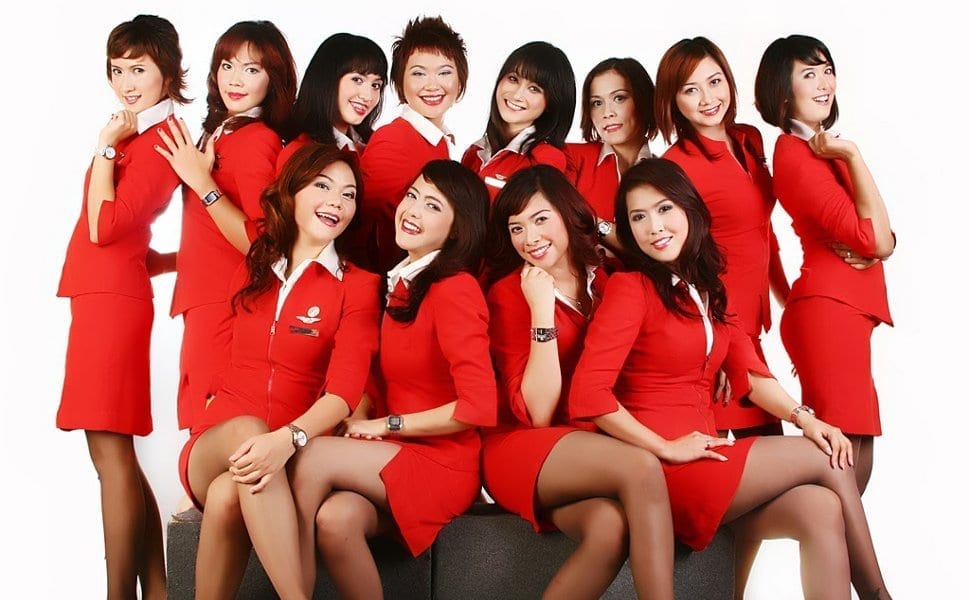
    AirAsia Group announced, at the weekend, it is temporarily hibernating most of its fleet across its entire network in Asia, in view of the COVID-19 pandemic that led to extensive border restrictions.

    The actual fleet downtime differs with each of the group’s member airlines.

    AirAsia Malaysia suspended all flights, international and domestic, 28 March and that continues to 21 April.

    AirAsia Philippines suspended all flights 20 March, and that continues to 14 April

    AirAsia Thailand suspended all international flights from 25 March to 25 April and now suspends all domestic services from 1 to 30 April.

    AirAsia Indonesia suspends all domestic flights 1 to 25 April and international flights from 1 April to 17 May.

    AirAsia India suspended all flights 25 March for 21 days. (The airline flies only domestic routes)

    AirAsia X Malaysia suspended most flights from 28 March until 31 May. The airline only services international routes.

    AirAsia X Thailand suspended all flights 16 March for three months. Its DMK-ICN service suspended until 19 April.

    Issued on behalf of the entire AirAsia Group and the AirAsia X Group the statement said: “With governments imposing travel and movement restrictions including home quarantine orders, AirAsia is also playing its part in helping curb the spread of the virus in order to keep flying safely for everyone.”

    The group added that it was prepared to reinstate services as soon as the situation improves and subject to the necessary regulatory approvals.

    Passengers have the option of converting flight bookings into a credit account that is valid for future redemption for 365 days or moving their flights for an unlimited number of times without any charges to another date prior to 31 October 2020.

    The changes to bookings are made via AirAsia virtual Allstar AVA on airasia.com or support.airasia.com. However, passengers mainly through social media posts that virtual chatbot AVA could not keep up with the influx of requests with no back-up system manned by people to relieve the pressure.

    The group added that the “temporary fleet hibernation is the right thing to do to ensure the well-being of our passengers and employees.”

    Both management and senior employees of AirAsia Group have volunteered a salary sacrifice, ranging from 100% at the very top to 15%.

    “This will help ensure that we can ride out this prolonged period of extremely low travel demand and at the same time minimise the impact on our employees, especially those in junior positions,” AirAsia Group Berhad explained in the statement.

  • Singapore Airlines gets $13bn lifeline as airlines beg for help

    Singapore Airlines gets $13bn lifeline as airlines beg for help

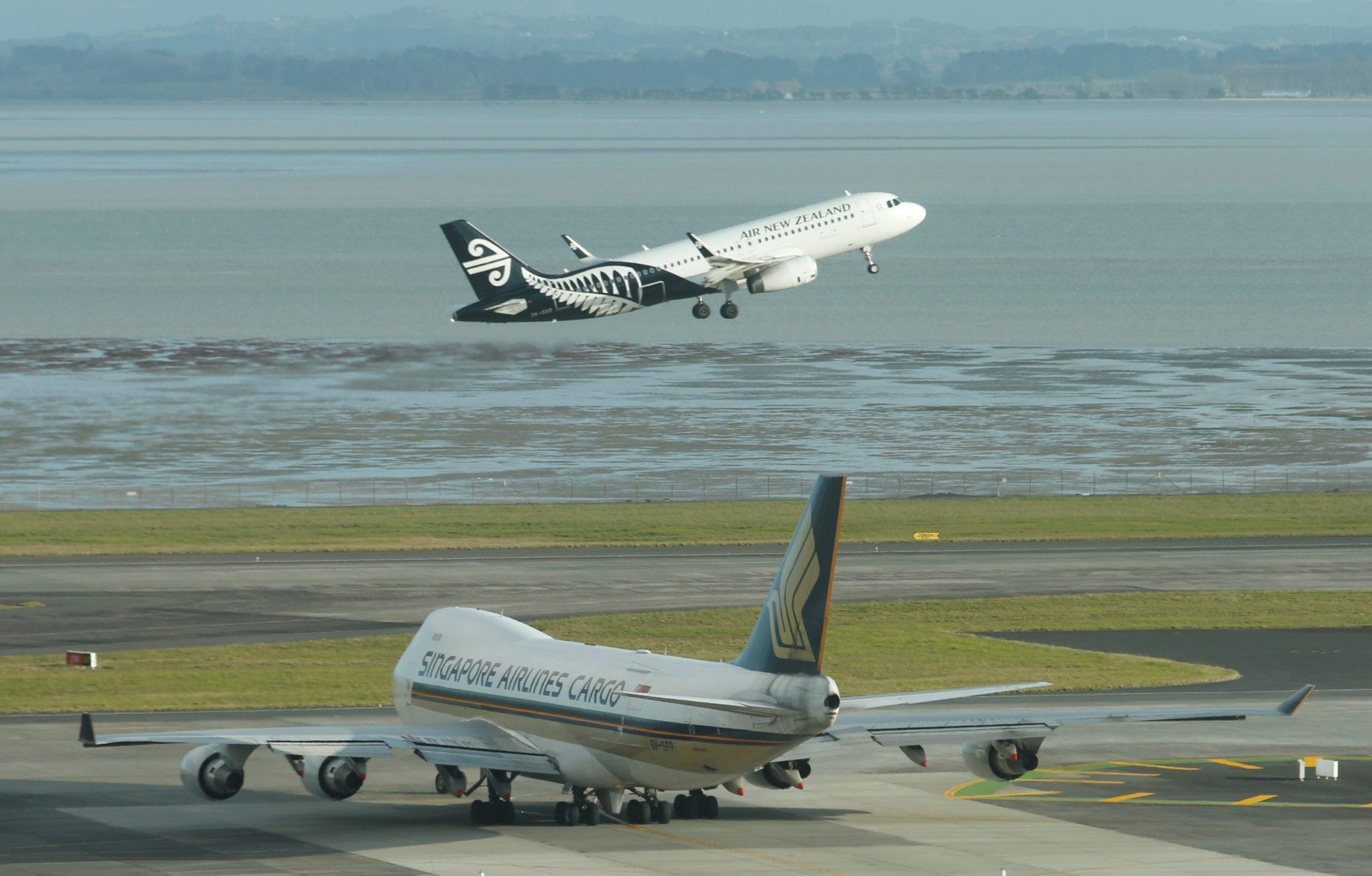
    Singapore’s state investor Temasek Holdings and others will inject as much as 19 billion Singapore dollars ($13.27bn) into Singapore Airlines (SIA) in the world’s single-biggest rescue of an airline slammed by the coronavirus pandemic.

    The enormous financing plan, which drove SIA shares down as much as 10.5 percent on Friday, underscores the depth of financial trouble for the global airline industry, with nearly one-third of the world’s aircraft already grounded because of the pandemic, according to data provider Cirium.

    Many governments worldwide have already stepped in to help airlines amid the virus-induced travel slump, with the United States offering $58bn in aid. Many carriers have grounded fleets and ordered thousands of workers on unpaid leave to keep afloat.

    The 5.3 billion Singapore dollars ($3.72bn) in equity and up to 9.7 billion Singapore dollars ($6.8bn) in convertible notes – bonds that can be converted into equity stakes in the company – of the Singapore Airlines fundraising are being underwritten by Temasek, which owns about 55 percent of the group.

    The carrier has also obtained a 4 billion Singapore dollar ($2.8bn) bridge loan facility with the country’s biggest lender, DBS Group Holdings Ltd, to support near-term liquidity requirements.

    “This is an exceptional time for the SIA Group,” SIA Chairman Peter Seah said in a statement late on Thursday.

    SIA’s shares went into a rare trading halt earlier Thursday after plunging to their lowest in 22 years this week as investors feared the virus will have a deep impact on the company.

    “Under the current dire circumstances, the rights issue is the best tactical move for SIA. It underscores the carrier’s strategic importance to Singapore and the island state’s position as both a financial centre and aviation hub,” Shukor Yusof, head of aviation consultancy Endau Analytics, said in a blog post.

    SIA has said it would cut capacity by 96 percent, ground almost its entire fleet and impose cost cuts affecting about 10,000 staff amid what it called the “greatest challenge” it had ever faced.

    The rights issue will be offered at 3 Singapore dollars ($2.10) per share, a 53.8 percent discount to SIA’s last traded price of 6.5 Singapore dollars ($4.56).

    “While the raising looks earnings and valuation decretive, SIA now looks well-positioned to ride out the storm with balance sheet concerns largely de-risked,” Bank of America analysts told clients.

    Temasek International Chief Executive Dilhan Pillay Sandrasegara said the deal would not only tide SIA through its short-term liquidity challenge but would position it for growth beyond the pandemic.

    SIA said it would use the funding from the rights issues to beef up its capital and operational expenditure needs.

    On Thursday, the Singapore government announced more than $30bn in new measures to help businesses and households brace against the pandemic.

    Airlines around the world are seeking government aid to stay afloat after the coronavirus pandemic wiped out travel demand.

    Airport traffic at 12 key hubs in Asia-Pacific region plunged by 80 percent on average in the second week of March compared with the same period last year, Airports Council International Asia-Pacific said on Friday as it called for government relief measures for airport operators.

    United States airlines are preparing to tap the government for up to $25bn in grants to cover payroll, even after the government warned it may take stakes in exchange for bailout funds, people familiar with the matter said.

    American Airlines Group Inc, a much larger carrier, on Thursday evening disclosed it would be eligible for $12bn of US government aid as part of a $58bn loan and grant package for the airline industry.

    Australia’s Qantas Airways this week secured 1.05 billion Australian dollars ($636.1m) against its aircraft fleet.

    Others, including Air New Zealand Ltd and Virgin Australia Holdings Ltd, have warned they expect to be smaller carriers in the future.

    South Korean low-cost carrier Eastar Jet has begun returning some of its Boeing 737 planes to lessors, while Southwest Airlines Co said it would consider actions to reduce the company’s size if passenger traffic remains significantly lower six months from now.
  • South Korean department stores look to VIPs as sales slide

    South Korean department stores look to VIPs as sales slide

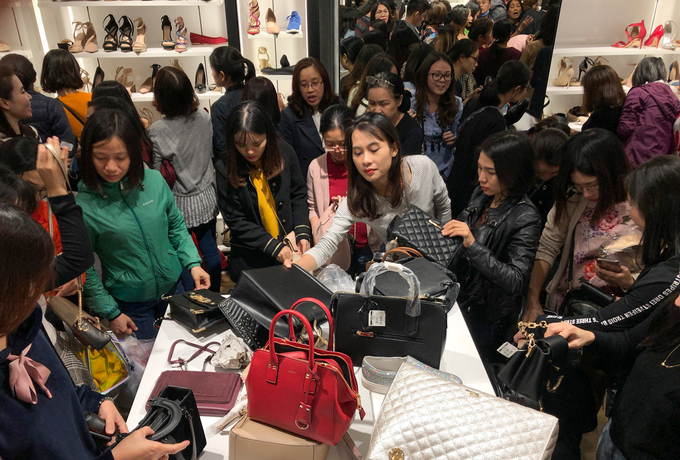
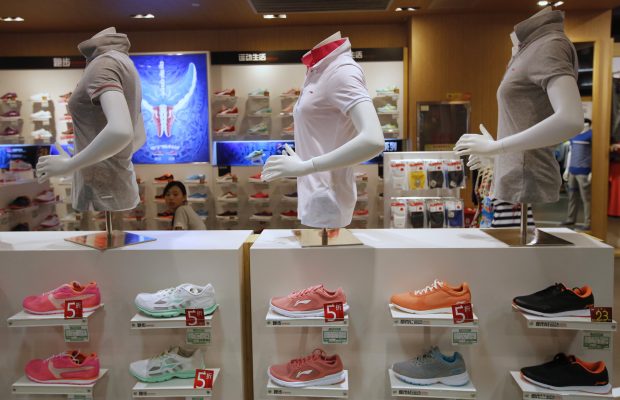
    South Korean department stores have launched an all-out effort to secure VIP customers who spend more than ordinary customers.

    Department stores have suffered fallout from the surge in popularity of online shopping malls for years, but sales have come under further pressure with the coronavirus outbreak.

    Sales at Lotte Department Store from March 1 to 22 decreased by 37.8 percent compared to the same period last year.

    At the height of the pandemic, and under the burden of its economic consequences, the top priority for South Korean department stores is to secure VIP customers.

    While VIP customers at the Galleria Department Store account for only 10 percent of all customers, their consumption amounts to 60 percent of sales.

    According to Shinsegae Department Store, the number of VIP visits last month was 2.5 times that of regular customers.

    Even when the number of visits by regular customers dropped by half after the Covid-19 outbreak, the number of VIP customers dropped by only about 20 percent.

    Managing loyal VIP customers and securing more big players in the future is a matter directly related to a store’s survival.

    This is why Lotte Department Store made changes to its VIP system. Under the old scheme, customers had to spend 20 million won (US$16,400) per year to qualify for the lowest level VIP program, as part of what was a four-level system.

    However, Lotte recently added another lower-level program to expand the scope of its VIP offerings.

    Meanwhile, Galleria Department Store, unveiled the largest VIP lounge in South Korea on the 12th floor of its newly opened Gwanggyo branch in Suwon, south of Seoul.

    VIP lounges in South Korean department stores have typically been places for customers who spend tens of millions of won a year. However, at the Gwanggyo branch, customers who spend 5 million won per year can enjoy the VIP lounge.

    “The fact that VIP thresholds have been lowered is indicative of a sales strategy to secure loyal customers by providing better services to more customers,” said a source in the department store industry.

  • Burberry trench-coat factory to make coronavirus protection gear

    Burberry trench-coat factory to make coronavirus protection gear

    Luxury fashion label Burberry is retooling its Yorkshire trench-coat factory to produce non-surgical gowns and masks in response to the coronavirus outbreak.

    The supplies will be produced for patients and will be subject to approval from the Medicines and Healthcare Products Regulatory Agency (MHRA).

    Burberry is also working to leverage its existing supply chain to help deliver surgical masks, non-surgical masks and gowns for use by medical staff and patients in the UK.

    The firm’s other contributions include funding research into a single-dose vaccine for Covid-19 developed by the University of Oxford with human trials scheduled to begin next month, as well as donations to charities tackling food poverty across the UK.

    “The whole team at Burberry is very proud to be able to support those who are working tirelessly to combat Covid-19, whether by treating patients, working to find a vaccine solution or helping provide food supplies to those in need at this time,” said Burberry CEO Marco Gobbetti. “Covid-19 has fundamentally changed our everyday lives, but we hope that the support we provide will go some way towards saving more lives, bringing the virus under control and helping our world recover from this devastating pandemic.”

    The contributions reflect luxury fashion house Ralph Lauren’s commitment to making face masks and medical gowns in the US via its Ralph Lauren Corporate Foundation charity. The firm intends to produce 250,000 masks and 25,000 isolation medical gowns.

  • Covid-19 Hits UOB

    Covid-19 Hits UOB

    United Overseas Bank has confirmed a case of Covid-19 at Tower 2 of its UOB Plaza headquarters in Singapore.

    The employee who tested positive for the coronavirus works in a non-customer facing role and was last in the office on 16 March, the bank said in a statement on Thursday.

    He is currently under medical care, and colleagues with whom he had close contact are now on Leave of Absence until next week, and those who worked on the same floor are currently working from home, while monitoring their health for any flu-like symptoms, the statement said.

    Meanwhile, UOB is conducting a thorough deep cleaning and disinfection of the entire floor and the common areas of UOB Plaza 2.

    DBS was the first bank to evacuate its staff when a 62-year-old male employee at its Marina Bay Financial Center (MBFC) Tower 3 headquarters tested positive for Covid-19 in February.

    Later that month, another of its employees was hit – this time a 35-year-old male staff member at its Ngee Ann City office on Orchard Road. He was in close contact with the first DBS employee infected, a spokesperson said.

    The two have since recovered and have been discharged from the hospital.

  • StanChart Offers Preferential Financing Rates

    StanChart Offers Preferential Financing Rates

    Standard Chartered on Monday said it will set aside $1 billion to finance companies that are providing goods and services to tackle the Covid-19 outbreak.

    The lender plans to offer financing at preferential rates to firms that are manufacturers and distributors in the pharmaceutical industry, healthcare providers, as well as manufacturers of items such as ventilators, face masks, protective equipment, and sanitizers.

    Clearly, there’s a cost for companies to switch into these hugely in-demand items, so it’s an area where we can help them get up and running more quickly. At the same time, we want to make sure that existing manufacturers and service providers get the support they need, said Simon Cooper, CEO of StanChart’s corporate and institutional banking division in a media statement.

    Financing will come in the form of loans, import finance, export finance, or working capital facilities to help these firms tool up and get their products to market. The bank, which derives about two-thirds of its total operating income from Asia, is also trying to identify companies that may switch into, or add, anti-virus products to their output but have not indicated that they will do so.

    Our industry teams are looking across our client base and, given our understanding of clients’ current manufacturing processes, we’re assessing which companies might want to consider adding these items to their production line, Cooper added.

  • Hong Kong Financial Center Competitiveness Plunges

    Hong Kong Financial Center Competitiveness Plunges

    Social unrest was singled out as a key driver of a dented outlook, according to a survey by London-based think tank Z/Yen Group, which led the city’s ranking as a leading global financial center to drop to sixth place.

    Hong Kong dropped three places to the new ranking in the biannual survey published in partnership with Shenzhen-based China Development Institute. Perhaps more illustrative than its ranking change is its rating change which posted a 34 point plunge – the highest of any of the top 50 financial centers in the survey.

    Given the social unrest, brain drain would be expected and supply and demand for skilled labor would be diminished, said an unnamed respondent claiming to be a Hong Kong-based head of legal at an investment management firm.

    The survey rates over 108 financial centers based on over 5,000 respondents and criteria covering a wide range of areas such as regulatory friendliness for business, level of corruption and effective infrastructure.

    At the top, shuffles from several Asia-based financial centers were the prime drivers of ranking changes. New York and London retained the top and second spot, respectively, while Tokyo rose three rankings to reach third place. Shanghai also climbed one ranking to reach fourth place. Singapore rounded out the top five at fifth, dropping one ranking since the last survey in September.

    Uncertainty about trade, [and] the economic impact of the Covid-19 pandemic has led to much more volatility in the index results than is normal, said Michael Mainelli, Z/Yen Group’s executive chairman, in a statement.

  • Why exemplary ethics will pay off beyond the coronavirus outbreak

    Why exemplary ethics will pay off beyond the coronavirus outbreak

    In the midst of the coronavirus (Covid-19) outbreak, retailers that have made bold commitments to their staff, customers and the wider community will be remembered while those that have proven themselves to be less ethical risk falling out of favor with shoppers when normality returns.

    In the UK, grocers were some of the first retailers to make changes to their operations due to the Covid-19 pandemic, for instance working to address the lack of product availability of key items due to stockpiling by introducing limits on the number of items shoppers could purchase, and shopping hours dedicated to the vulnerable, elderly and National Health Service workers.

    Those that have gone beyond this will be remembered more by shoppers, with Morrisons emerging as a retailer willing to take additional steps to protect its staff and suppliers – for instance by setting up a hardship fund for staff in financial difficulty, launching a call center for those who are unable to shop online, and paying small suppliers immediately to help them survive this crisis.

    As demand for fashion drops, international brands are harnessing their production capacity to produce equipment to help fight Covid-19. Inditex announced that it will produce surgical masks and hospital gowns for Spanish healthcare facilities, and LVMH has switched from manufacturing perfume to hand sanitizer for French hospitals.

    This highlights the retailers that are more willing to incur costs to benefit society as few major fashion brands are manufacturing such items so far, though many have the capacity to do so. Retailers need to make sure that press-friendly responses in the midst of plummeting sales do not backfire by ensuring the health of workers involved in the manufacturing of these items as the outbreak grows globally.

    Conversely, there are retailers that will be remembered for profiteering and treating their staff poorly, impacting consumers’ purchasing habits beyond the outbreak, especially if friends or family have been affected. The prime suspects of such behavior in the UK are, unsurprisingly, Arcadia and Sports Direct.

    Arcadia announced it was closing all of its stores hours before the government announced its job-retention plan, ending its fixed-term employment contracts early. Sports Direct initially said its stores would remain open following the announcement of lockdown in the UK, but quickly made a U-turn and closed all stores, leaving it unclear as to whether staff will be paid during the closure, and significantly inflating the prices of sports equipment that can be used to stay fit at home.

    Additionally, online behemoth Amazon has reportedly had cases of Covid-19 in 10 of its warehouses globally. As a retailer that has struggled with poor consumer perceptions of its ethics, this crisis provides Amazon the chance to improve this, as it could leverage its global logistics network to distribute medical supplies or get essential goods to vulnerable people.”

  • JD Super boosts tea sales through live streaming

    JD Super boosts tea sales through live streaming

    Chinese online supermarket JD Super has used live streaming to achieve a 100-per-cent increase in tea sales.

    During a recent tea festival, the JD subsidiary invited social influencers and experts to participate in live streams to promote a deeper understanding of Chinese tea among enthusiasts. More than 200 live broadcasts were hosted by intangible cultural heritage tea authorities and tea experts from major brands.

    One popular video stream attracted nearly 70,000 viewers, generating sales of RMB300,000 (US$42,300).

    “JD Super has strict standards for selecting tea and provides tea brands with support in big data, traffic and operations,” said the firm. “These act as the guarantor for Chinese consumers to access high-quality tea products on JD.com.”

    The firm’s logistics arm JD Express has also developed a rapid supply chain solution for spring tea, including tea collection, packaging and delivery to tea gardens.

  • Facebook launches Messenger Coronavirus Community Hub

    Facebook launches Messenger Coronavirus Community Hub

    Facebook, just like many other big companies, are trying to ease the transition to social distancing by offering free services and products. But people need to stay informed about what’s happening in the world even when they’re self-isolating.

    In that regard, Facebook launched recently the so-called Messenger Coronavirus Community Hub, which offers users tips and resources that should help them stay connected to their friends, family, and community in general.

    The new Messenger Coronavirus Community Hub will also act as a tool to prevent the spread of misinformation, as it explains how people can recognize and avoid scams and fake news. Beyond that, Facebook’s new hub is about serving its users as they try to maintain their communities and social connections even when they can’t be together in real life. On top of that, you’ll be able to find accurate and reliable information about COVID-19 developments, as well as tips to help you prevent the spread of fake news.

    Last but not least, the Messenger Coronavirus Community Hub will also act as a communication bridge between important organizations like WHO (World Health Organizations) and CDC (Centers for Disease Control) with Facebook’s developer partners with the purpose of helping these organizations to share information more effectively.
  • Thailand’s Central Pattana to waive the rent for retailers

    Thailand’s Central Pattana to waive the rent for retailers

    Thai retail property developer Central Pattana is to waive rent for tenants affected by the government’s shutdown order.

    The company said in a statement that it will waive the rent for tenants who have been ordered to shut by authorities and offer rent reductions ranging from 10 percent to 50 percent for stores that remain open.

    “We are confident that with complete cooperation from all parties we will overcome this challenge together,” said Precha Ekkunakul, president and CEO of Central Pattana. “We are ready to support every business to resume its normal operations and to help coordinate government aids for all sectors who have been affected during this crisis.”

    The company has also organized call centers, pick-up counters and drive-through pickup points to support its food-and-beverage partners and customers.

    Central Pattana said it plans to adjust its upcoming projects and is working on a plan to resume business operations after the crisis is resolved, in order to ensure its growth and return shareholders’ investment.

    Central Pattana has temporarily closed all of its 15 shopping centers in Bangkok and 13 out of 18 shopping centers in the provinces. Essential services including supermarkets, pharmacies and convenience stores remain open during the closure.

  • South Korean retail sales surge as people stay home

    South Korean retail sales surge as people stay home

    South Korean retail sales surged 9.1 percent in February, despite the advent of the coronavirus pandemic.

    The year-on-year increase reflected consumers buying more daily necessities online as the virus spread. And, with people largely staying home, substantially less was spent eating out, so consumers were buying more food to prepare or eat at home.

    According to data compiled by the Ministry of Trade, Industry and Energy, South Korean retail sales rose from US$7.92 billion in February last year to $8.68 billion last month.

    Online sales soared by 34.3 percent, the strongest increase since data was first collected in 2016. By comparison, for the whole of last year, online sales rose by 14.2 percent.

    Food sales almost doubled, driving overall growth, while sales of household products were up by 44.5 percent.

    Convenience-store turnover rose by 7.8 percent, however, overall sales across offline stores fell 7.5 percent year on year, with department stores hardest hit, down by 21.4 percent.

  • Tao Heung shuts 48 restaurants for a fortnight in coronavirus fight

    Tao Heung shuts 48 restaurants for a fortnight in coronavirus fight

    Chinese restaurant operator Tao Heung will shutter all 48 of its venues for more than a month following tightening restrictions on dining in Hong Kong.

    As the territory’s administration has now moved to limit the maximum number of diners per table to four – at tables spaced 1.5 meters apart – in an effort to curb the coronavirus outbreak, the group decided to close all of its restaurants through to April 10.

    “For everyone’s health and safety, from today, our restaurants will not serve anyone under mandatory quarantine,” read an announcement on the group’s Facebook page.

    Tao Heung’s venues mainly serve traditional Chinese delicacies. The business also operates venues in Mainland China.

    The group is one of several major F&B chains to respond to the official measures in the midst of the pandemic.

    Hong Kong’s total number of coronavirus cases has already passed the 500 mark, prompting more stringent social distancing measures on the part of the government, including a proposed ban on alcohol sales at Hong Kong’s licensed bars and clubs that has since been withdrawn after an outcry from the industry.

    Restaurants are now restricted to operating at half their capacities and must institute mandatory temperature checks and hand sanitization.

    Venues failing to comply with regulations will face maximum fines of HK$50,000 (US$6450) and six months in prison.

  • Esprit places its German subsidiaries into administration

    Esprit places its German subsidiaries into administration

    Hong Kong-listed apparel retailer Esprit has placed six German subsidiary companies in administration to give them protection during the coronavirus crisis, which has decimated sales.

    The move was finalized at the end of last week while the company’s shares were suspended from trading.

    The measure, called Protective Shield Proceedings under the German Insolvency Act, allows restructuring to take place in self-administration. Esprit stresses the process is only available to businesses that are still liquid – ie: they are able to continue to meet day-to-day expenses as opposed to long-term debt.

    In an explanatory statement filed with the Hong Kong stock exchange, Esprit said that with many countries implementing public health measures and taking drastic actions to slow the spread of the coronavirus pandemic, all of Esprit’s European stores have been temporarily shuttered, along with almost all those of the group’s franchise and wholesale partners.

    “Subsequent to the announcement, the position of the European companies in the group has further deteriorated significantly, as they currently generate only weak e-commerce turnover, while salaries, rents and operating costs continue to accrue.”

    Esprit describes the protective self-administration as a “proactive and forward-looking measure to protect the solvency and liquidity of the group”. It protects the company from claims from individual creditors while they work out a restructuring plan for the approval of creditors and the courts, which must be lodged by June 29.

    The German courts approved the process on Friday, appointing Dr Biner Bahr, a Dusseldorf-based partner of the international law firm White & Case, as the preliminary custodian to supervise the restructuring of the subject subsidiaries in self-administration. Esprit has appointed Detlev Specovius, a partner of the German restructuring law-firm Schultze & Braun, who has extensive experience in self-administration cases, to actively support the process.

    Esprit said in its filing that while under the protective shield process, it will continue to “pursue and accelerate” the group’s restructuring plan launched in 2018.

    “The restructuring plan will help to significantly reduce the liabilities of the [German subsidiaries] to a sustainable and manageable level and one that is in-line with the business needs of the group. By pursuing the Protective Shield Proceedings, the subsidiaries aim to effectively restructure all their liabilities and long-term lease contracts, obtain funding for salaries and social security payments of the German workforce from the German Federal Employment Agency and negotiate with works councils for more flexible solutions.”

    Esprit said the move was necessary because while the group is currently liquid, its future liquidity was threatened due to the pandemic and its consequences.

    “The company has been working relentlessly to secure the continued operation of all other European subsidiaries in order to allow each of them to return to its ordinary course of business when public life will start again and shops will be reopened with the lifting of the mandatory public lock-down measures as the pandemic subsides in the future,” Esprit said.

    “Facing the unprecedented challenge caused by the pandemic, management is focused on optimizing and streamlining the group’s business in order to be stronger, leaner and fitter so as to be better placed to pursue the market opportunities that may arise after the pandemic.”

    In Hong Kong, Esprit’s share price fell by more than 20 percent when trading resumed this morning. From a previous closing price of HKD 71 cents last week before trading was suspended, it fell below 55 cents in early trading, before recovering to about 60 cents (about USD0.077).