Tag: asia

  • Pandora lays off 180 staff due to reorganization

    Pandora lays off 180 staff due to reorganization

    Danish jewelry giant Pandora has announced a new company structure that will eliminate an organizational layer between the global headquarters and local markets with the aim of getting closer to the customer and speeding up the execution of marketing campaigns and product launches.

    Effective April 2, Pandora will close its three regional organizations (Americas, EMEA, and Asia Pacific) and group the 100-plus markets where it operates into 10 clusters, each headed by a GM.

    The GMs, based in the largest market in each cluster, will report to a newly established chief commercial officer position, who will report directly to Pandora’s president and CEO, Alexander Lacik, and be part of the executive leadership team.

    The three current regional presidents will step down from the executive leadership team and 180 employees from regional offices and markets will leave the company.

    The total cost of the reorganization is expected to amount to around US$197 million, with one-off costs of around $30 million, primarily related to severance payments, additional consultancy support, extraordinary recruitment costs and other costs of closing down the regional offices.

    David Allen, currently president of Pandora EMEA will stay with Pandora and support the company’s turnaround plan, Programme Now, while Sid Keswani, current president of Pandora Americas, will become president of the North America cluster.

    Kenneth Madsen, current president of Pandora Asia Pacific, will leave the company.

    The cost reductions from the redundancies of 180 employees are expected to be largely offset by costs related to the further strengthening of the global organization, limiting the net cost savings.

    Lacik said in a statement that the new structure would ensure feedback from customers was incorporated into new designs more quickly.

    “The reorganization will reduce organizational complexity, enable Pandora to execute with more speed and agility, and add critical capabilities required to support growth,” he said.

  • Volkswagen Tiguan Diesel To Be Discontinued From April 2020

    Volkswagen Tiguan Diesel To Be Discontinued From April 2020

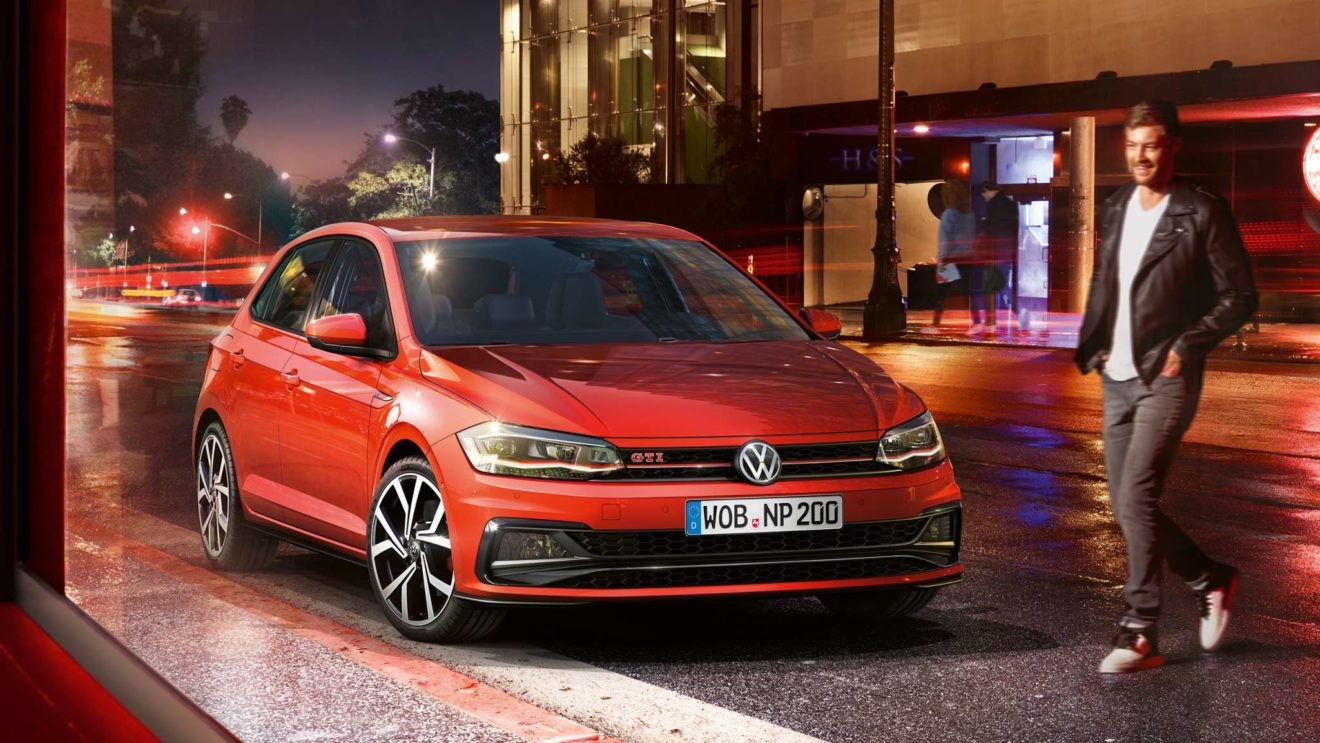
    With the BS6 norms kicking in, Volkswagen India has done some major restructuring to its current lineup. While the automaker has launched the updated Polo and Vento with the 1.0-litre petrol motor, the diesel versions have been discontinued. Similarly, the German auto giant is all set to boot the Tiguan diesel from its Indian line-up by the end of this month. The five-seater Volkswagen Tiguan diesel won’t be upgraded to meet the BS6 emission norms that kick-in from April 2020.

    The Volkswagen Tiguan was launched in India in May 2017 as a five-seater premium SUV. The model is powered by a 2.0-litre TDI diesel engine and does not get a petrol engine, even as an option. With the VW Group going petrol-only in India, the engine won’t be upgraded to meet the BS6 emission norms. Although, it is likely that the company will bring a petrol version of the Tiguan, if it has strong demand for it.

    Volkswagen has shifted its focus to the SUV segment starting 2020 and it launched the Tiguan AllSpace, which is the long wheelbase, seven-seater version of the SUV at a price tag of Rs 33.12 lakh (ex-showroom). The AllSpace is a more practical alternative for the Indian market and is more suited to lock horns with rivals in the segment including the Toyota Fortuner, Honda CR-V, Mahindra Alturas G4 and the likes. The Tiguan Allspace’s introductory price makes it just ₹ xx lakh expensive than the top-end Tiguan 5-seater and that’s one reason why the company can expect the demand for this 7-seater to surge.

    The Volkswagen Tiguan AllSpace is a petrol-only offering and comes with the 2-litre turbocharged TSI motor that develops 187 bhp. The model is offered only with the 7-speed DSG automatic transmission and is fully loaded on the feature front with All-Wheel Drive as standard. Nevertheless, the void of a five-seater SUV from Volkswagen will be soon filled by the T-Roc compact SUV that is slated to be launched on March 18, 2020. Like the Tiguan AllSpace, the T-Roc is being brought to India as a Completely Built Unit (CBU) and will be priced around the ₹ 20 lakh (ex-showroom) mark. The SUV will be sold in a single-variant with power coming from the 1.5-litre TSI turbo petrol engine that belts out 148 bhp. The new T-Roc will take on the Jeep Compass, MG Hector, Tata Harrier and the likes, and will be sold in a fully-loaded single variant.

  • Japan’s Maruya opens first overseas store

    Japan’s Maruya opens first overseas store

    Osaka-based drugstore Maruya has made its international debut in Hong Kong with its first store in Sheung Shui, a prominent ‘border town’ notorious for parallel traders.

    The drugstore will feature imported Japanese goods including cosmetics and daily necessities, at the same price as in its Japanese stores. Additionally, consumers can also make customized requests for specific medicine and the retailer will offer an independent quotation and arrange the logistics and delivery direct from Japan.

    Amidst the low consumer confidence during the coronavirus crisis, the brand’s website strongly emphasizes its quality assurance and its Japanese authenticity.

    For an opening promotion, Maruya is offering complimentary surgical masks with purchases.

  • Volvo Inaugurates Battery Assembly Line In Belgium

    Volvo Inaugurates Battery Assembly Line In Belgium

    Volvo Cars inaugurated a brand new battery assembly line at its Belgian manufacturing plant in Ghent, where it will start building its first fully electric car, the XC40 Recharge P8, later this year. The inauguration of the assembly line is in line with the company’s ambitious electrification strategy and its climate action plan. Ghent is one of two car manufacturing plants operated by Volvo Cars in Europe and has produced Volvos since 1965. It aims to reduce its lifecycle carbon footprint per car by 40 percent between 2018 and 2025, as the first step towards its goal of becoming a climate-neutral company by 2040.

    Over the next five years, Volvo Cars will launch a fully electric car every year, as it seeks to make all-electric cars 50 percent of global sales by 2025, with the rest hybrids. Recharge will be the overarching name for all chargeable Volvos with a fully electric or plug-in hybrid powertrain.

    The XC40 Recharge gets dual electric motors which are mounted on the front and rear axle that develop 402 bhp & 659 Nm

    Geert Bruyneel, head of global production operations, said “As the first of our plants to get a battery assembly line, Ghent plays a pioneering role as we continue to prepare our manufacturing network for electrification.”

    Earlier this year the company announced the planned construction of a battery assembly line at its US plant outside Charleston, South Carolina. Construction of that assembly line is expected to start soon. The company will also build battery electric vehicles at a Volvo-operated manufacturing plant in Luqiao, China, based on the CMA platform.

    Last year, Volvo Cars signed long-term supply agreements with two leading global battery suppliers, CATL of China and LG Chem of South Korea. The agreements cover the supply of batteries over the coming decade for next-generation Volvo and Polestar models, including the XC40 Recharge P8.

  • Chatbots aren’t going away any time real soon

    Chatbots aren’t going away any time real soon

    Much-maligned chatbots are not about to go away anytime real soon, suggests new research.

    Consumer retail spends via chatbots is likely to reach US$142 billion within four years, according to the Juniper Research report, “Chatbots: Vendor Opportunities & Market Forecasts 2020-2024”. It revealed that the industry can expect an average annual growth of 400 percent from last year’s total of just $2.8 billion as a result of software advances in natural language processing, which enable the bots to efficiently process human inputs and more accurately respond to user requests.

    That argument is backed by a senior Microsoft executive, Raj Raguneethan, regional business lead, retail and consumer goods, at Microsoft Asia, said that while the early generation of chatbots may have had their day the concept is not yet dead. He said while the standard chatbot “question-and-order queue format” is gone, advanced deployments of chatbot which can fully integrate into the whole call-centre back office and all the way online will take their place.

    According to the Juniper report, technological advances in the software will see more than 50 per cent of retail chatbot interactions completed successfully by 2024, without the need for human intervention. Eighty per cent of global consumer spend over chatbots will be attributable to discrete chatbots within this period, which are embedded directly into a retailer’s mobile app rather than accessed via a browser or messaging application.

    The research suggests that 70 percent of chatbots in 2024 will be attributable to the Far East and China, with more than $80 billion spent via chatbots in China. This will account for more than 55 percent of global chatbot spend in that year.

  • Starbucks opening signing store in Tokyo

    Starbucks opening signing store in Tokyo

    Starbucks Japan is to open its first signing store in early Summer 2020 in Kunitachi City, Tokyo.

    Launched for the convenience of the deaf and hard of hearing, the new Starbucks outlet will provide service to customers in Japanese Sign Language. Signing stores have previously opened in Malaysia, Washington DC, and China. The store will be the first of its kind in Japan and the fifth globally.

    Deaf and hard-of-hearing staff will work alongside hearing partners to provide service to customers. The store is located close to a school for the deaf.

    A statement from the firm read “Starbucks aspires to become a people positive company where we uplift each other, our customers, and the communities we serve. Since 2018, Starbucks Japan has taken a ‘no filter’ approach to diversity and inclusion to create a place of belonging where partners can bring their best selves to work, without prejudice, assumption or bias toward race, age, gender, position, employment status, disability, personal values, or any other basis.”

  • Apple might soon let you unsend iMessages

    Apple might soon let you unsend iMessages

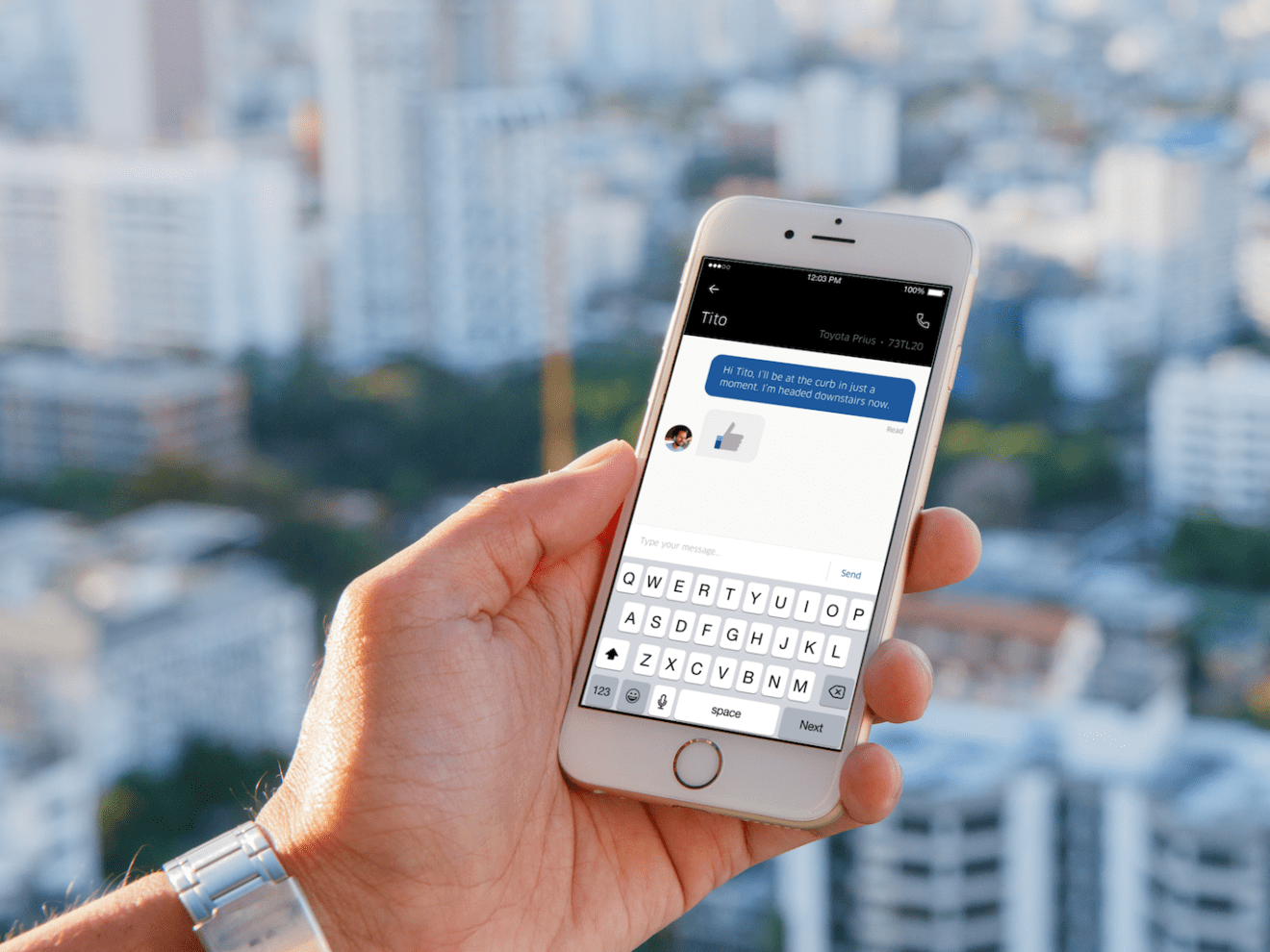
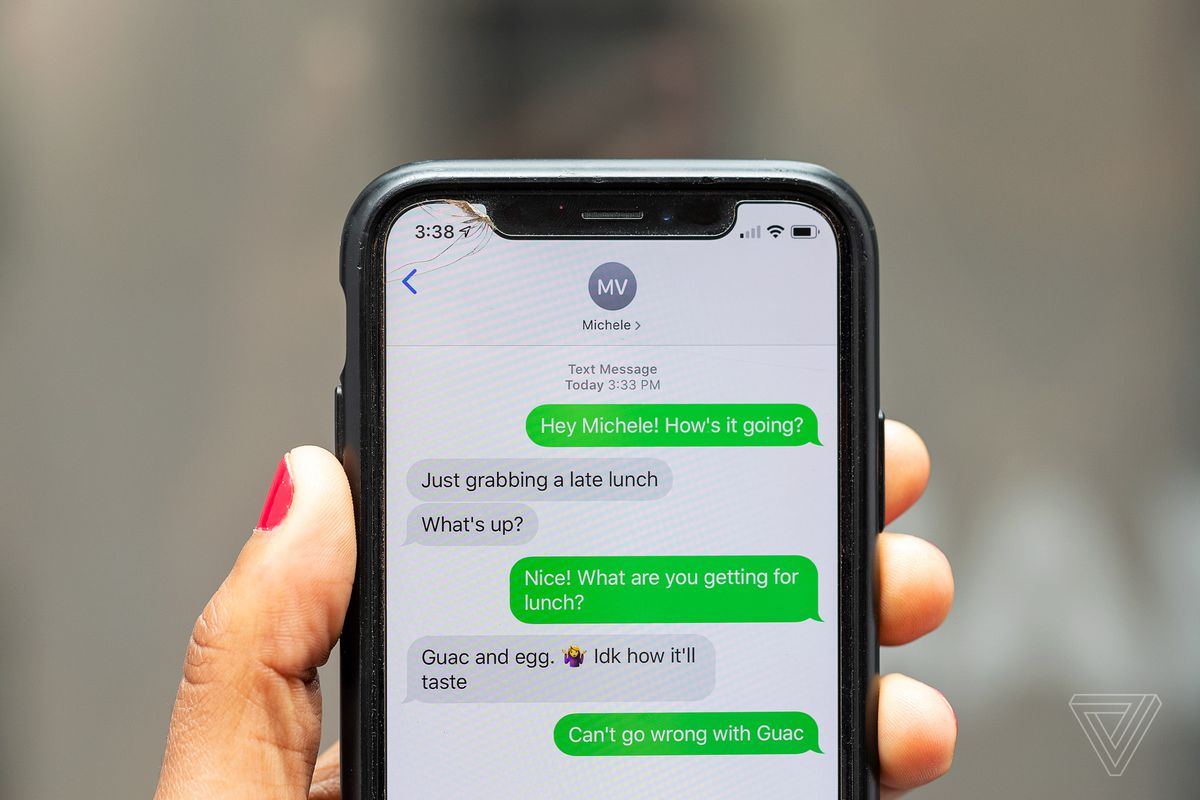
    According to rumors, Apple is testing a bunch of useful iMessage features that could potentially make it to iOS 14. One of those will reportedly let you retract already sent messages, with some fine print visible to both the sender and the recipient indicating that a message has been retracted from the conversation thread.

    How is that different from simply deleting a message you’ve sent over iMessage? Simple – that one deletes it just for you and for none of the recipients. Retracting, however, essentially allows you to “unsend” the message, deleting it from both your and the recipient’s respective chat threads. A godsend feature that could potentially save you from for those times when your brain tricks you into sending gibberish or… the most embarrassing of situations. Oops!

    Another new iMessage that’s allegedly in the testing face will let you tag or mention specific contacts in a Slack-like manner by using the @ sign. Upon typing that one with your keyboard, your iPhone will suggest a list of contacts for you to choose from and mention. The tagged individual will reportedly be alerted even if they disabled alerts for the specific chat thread, which more often than not applies to group conversations.

    But that’s not all: it seems iMessage could score even more features. In particular, a “/me” command is reportedly being tested. It would allow you to share custom status updates inside the chat thread, which is similar to what Skype and Slack allow you to do. There would also be typing indicators for group chats, which is becoming a common trope of most messaging clients, especially ones with desktop clients. You will seemingly be able to mark the last message in a conversation as “unread” even after opening it.

    All of these point out that Apple is very likely preparing to improve the Messages app with a slew of features that will make it a direct competitor to Slack and Skype, two predominantly work-oriented messaging services. Most of these will most likely make it to the Mac version of Messages as well, allowing Apple to take on Slack and Skype on the desktop as well.

    When will these features be released, if at all? Supposedly, at the next WWDC developer summit, provided that it doesn’t get canceled due to the coronavirus outbreak that’s sweeping around. And that one could be the least of Apple’s problems right now.

    However, evidence of cross-platform support is still nowhere to be seen, but let’s be honest – it might never happen.

  • Uncertainty looms over WWDC 2020 as Santa Clara bans mass gatherings

    Uncertainty looms over WWDC 2020 as Santa Clara bans mass gatherings

    Apple might suffer yet another blow after the Public Health Department in Santa Clara issued a ban on mass gatherings in the County for at least three weeks, effective March 9. The culprit is again the coronavirus, with 43 confirmed cases in the area until now and one death, leading to the ban.

    WWDC is one of the biggest events on Apple’s calendar, gathering thousands of developers in San Jose, California, every June. The company announces the exact dates of the event in late April but with the ban in place, we might have to wait a bit longer. It’s worth noting, that in the worst-case scenario of the event being canceled, the expected announcements of iOS 14, iPadOS 14, macOS 10.16, watchOS 7 and tvOS 14 will probably happen in one form or another.

    The COVID-19 outbreak has already lead  the cancelation of many international events and forced companies to opt for online product announcements in order to avoid the spread of the disease and protect their employees. The 2020 Mobile World Congress in Barcelona was among the first victims: after major companies withdrew from the event, the GSMA canceled the conference altogether. Facebook, Microsoft, and Google have scrubbed the live parts of their conferences as well, choosing to live-stream the important stuff instead.

    In the past few years, Apple has transformed the WWDC event from one happening almost behind closed doors to a full-blown live conference with one-on-one sessions between developers and engineers, with key announcements streamed live on the internet. The Santa Clara ban explicitly forbids any gathering of 1000 or more people, which limits Apple’s options concerning the WWDC organization. The company remains silent on the matter, and it’s still not clear if the event will take place at all.

    Apple has some space left for maneuvering and can use Apple Park’s studios to live stream the session part of the event, while the keynote might still be held live at the Steve Jobs Theater if the proper health checks are in place for all the attendees. The Lab sessions will be a hard gig to replicate, with online Q&A sessions maybe the next best thing. Apple is already suffering financial losses from the coronavirus outbreak after 42 retail stores in China closed doors, contributing to a serious plunge in iPhone sales in the country.

  • Google updates Google app with a shortcut for Chrome incognito mode

    Google updates Google app with a shortcut for Chrome incognito mode

    The Google app’s default option for browsing incognito has been around for nearly a year. However, the feature contained one major flaw that made going incognito meaningless – when clicking on a search result from the incognito tab, the window that opens is not incognito and all activity is saved to your Google account’s history.

    However, according to Android Police, Google is going to provide a solution to this issue. Some users have noticed a new option added to the Google app – the possibility to open a new Chrome incognito tab.

    Apparently, the feature is a shortcut which reportedly will lead you to Chrome to browse in incognito there. When tapping on the option, you get the usual disclaimer for an incognito window, advising you that data might still be visible to carriers, websites and employers or schools.

    Unfortunately, this is another server-side update from Google, as the one for Google Photos, and it cannot be manually installed, even if you have a beta version of the Google app. So, we will wait and see when this feature will be rolled out to all the users.

  • Ant Financial Services targets 40 million service providers

    Ant Financial Services targets 40 million service providers

    Ant Financial Services subsidiary Alipay says it will spend the next three years opening up its online payments platform to support the digital transformation of 40 million service providers across China.

    “The service sector in China is still in the nascent stages of digital transformation, and that means it has huge untapped potential,” said Ant Financial CEO Simon Hu.

    He said consumer demand for digitalized services has been expanding rapidly in Mainland China with the number of searches for lifestyle services within the Alipay app surging 300 percent last year alone. Currently, just 1 million service providers are on the platform.

    “Alipay’s success has always depended on the success of our partners, and that is why we believe the only way to best serve consumers is to open up our platform further, so service providers can better tap into consumer demands,” he said.

    “Building a one-stop digital lifestyle platform not only creates immense value for our users – it will also play an essential role in accelerating the digital transformation of the service industry and unlocking more growth opportunities.”

    Alipay will work with 50,000 independent software vendors to help the service providers digitize their operations, helping service companies in fields including consumer retail, food-and-beverage, hotels-and-accommodations, transportation and medical services.

    Hu said that during the coronavirus outbreak, Alipay launched an incentive program for service providers to create mini-programs that could help consumers deal with the impact, including providing for the needs of people forced to stay at home and minimizing physical contact with service providers. It took just one week for more than 1200 developers to respond and 181 mini-programs were created allowing ‘contactless services’ in areas such as grocery delivery, medical and legal advice, logistics and public services. One, offering free medical advice by AliHealth, attracted an average of 700,000 visits daily.

    “Amid the ongoing coronavirus outbreak, we have also seen how digital technology can be used to help service providers become more agile and respond effectively to the fast-changing market environment,” said Hu.

    Another example was Beijing grocery startup Meicai, which connects farmers with consumers and restaurants. A mini-program making its delivery services available to Alipay users amid the coronavirus outbreak drew more than 800,000 new users and attracted orders from 80 cities across China.

  • Giordano looking for global expansion

    Giordano looking for global expansion

    Giordano group sales fell 11.9 percent last year to HK$4.852 billion (US$624.6 million).

    Sales from physical stores fell by 9.6 percent, while sales to franchisees declined by 24.2 percent, partly due to the tightening of the company’s credit policy in light of weakening economic conditions.

    Excluding the impact of a change in accounting standards to allow a direct comparison of year-on-year results, Giordano would have recorded a profit for the year of HK$289 million ($37 million) for the year, down 39.8 percent. But the group’s gross margin slipped by just 0.3 percent to 58.7 percent.

    In a stock-exchange filing, the company said multiple factors including the Sino-US trade war, social unrest in Hong Kong, and an unseasonably warm winter impacted on sales by dampening consumer sentiment. The worst-hit markets were Hong Kong and Mainland China.

    One of Giordano’s biggest challenges was its e-commerce business on the mainland, where sales dropped 15 percent to HK$267 million ($34.4 million) due to “ferocious competition on established third-party platforms”.

    But e-commerce in other regions recorded strong growth. In Hong Kong “substantial growth” was achieved as the group launched on local third-party platforms such as HKTV Mall.

    “Management is determined to further develop our e-commerce business in all regions by improving the product mix and collaboration with emerging online platforms, the company said.

    In the year ahead, Giordano plans to expand its global footprint. Four franchised stores opened in Mauritius in the second half of last year and this year the company plans openings in India and Kenya. The Middle East and Indonesia businesses recorded sales growth last year, making them “critical markets” for short-term expansion.

    Meanwhile, the company expects the coronavirus outbreak to affect its business “significantly” in the first quarter of this year. “Nevertheless, with a secure brand positioning and quality merchandise, management is confident of overcoming the challenges ahead. Management will further strengthen the group’s financial position through a combination of strategies and actions.”

    The group plans a more cautious approach in Mainland China and Hong Kong this year and will instead focus on overseas markets, especially the Middle East and developing markets in Southeast Asia – Vietnam and Indonesia.

  • CIMB Chief Steps Down To Take Finance Minister Role

    CIMB Chief Steps Down To Take Finance Minister Role

    CIMB Group Holdings announced on Monday that its chief has relinquished his post on Monday, as he has been appointed the new Finance Minister in Malaysia.

    Zafrul Tengku Abdul Aziz , who has been appointed the new Finance Minister on Monday, has resigned as group CEO of CIMB Group Holdings and CEO of CIMB Bank. He has also resigned from all other board positions on the same date, the lender said in a statement on Monday.

    The appointment of Zafrul was announced by Prime Minister Muhyiddin Yassin when he unveiled his new Cabinet. Tengku Zafrul has served the Group for six years when he re-joined in 2014. He has done an outstanding job, shaping CIMB’s transformation under our T18 and Forward23 strategic plans, said Chairman of CIMB Group Holdings Mohd Nasir Ahmad.

    In his place, the board has appointed Omar Siddiq, currently the Group Chief Operating Officer, as Officer-in-Charge for CIMB Group and CIMB Bank Berhad, marking a start in the group’s succession plan.

    CIMB Group is Malaysia’s second-largest financial services provider by assets, offering consumer banking, commercial banking, investment banking, Islamic banking, and asset management products and services. Headquartered in Kuala Lumpur, the Group is present in all 10 Southeast Asian nations (Malaysia, Indonesia, Singapore, Thailand, Cambodia, Brunei, Vietnam, Myanmar, Laos and Philippines), with 702 branches as at 31 December 2019.

    Beyond Southeast Asia, the Group has market presence in China, Hong Kong, India, Korea, the U.S., and U.K. CIMB Group operates its business through three main brand entities, CIMB Bank, CIMB Investment Bank, and CIMB Islamic. CIMB Group is also the 92.5 percent shareholder of Bank CIMB Niaga in Indonesia, and 94.8 percent shareholder of CIMB Thai in Thailand.

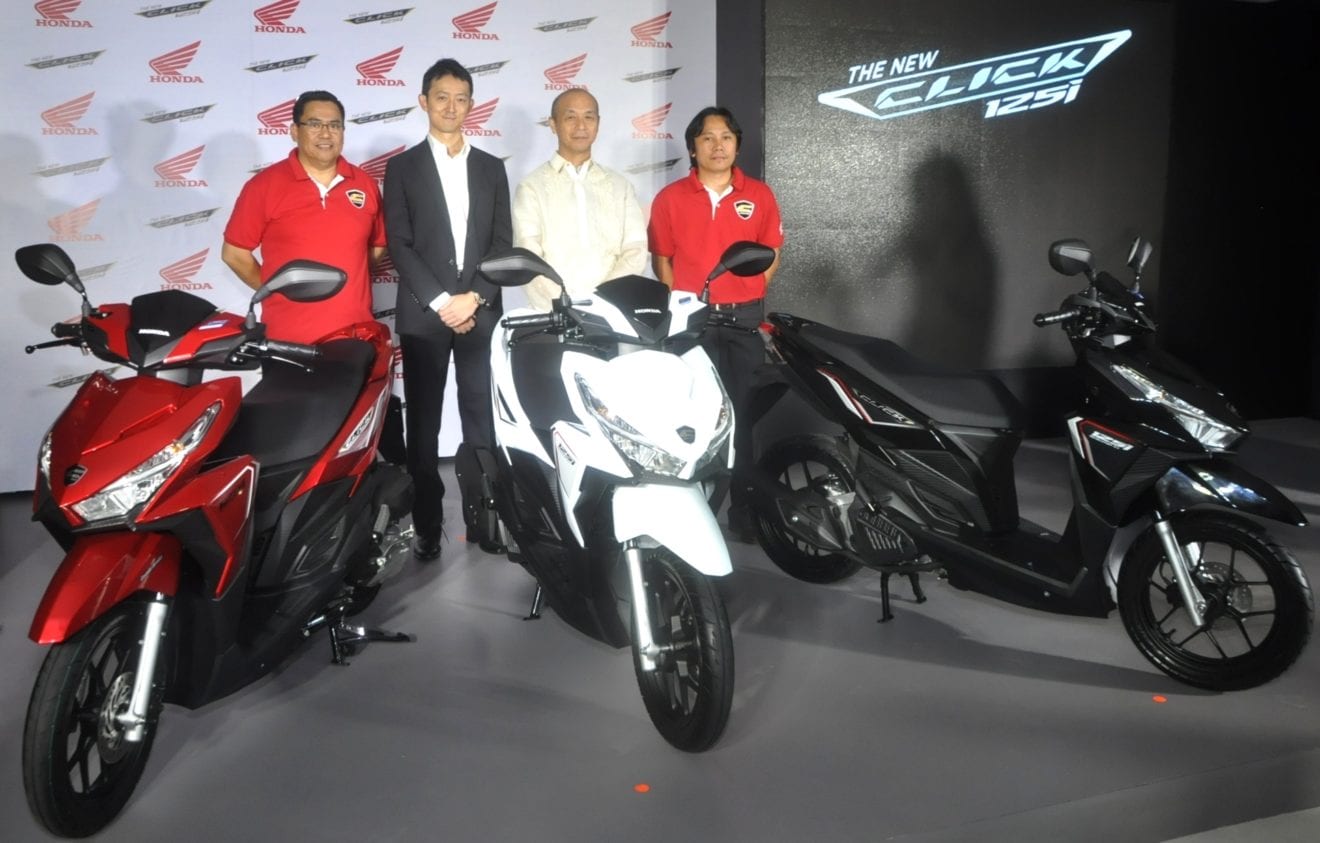
  • Honda Motorcycle And Scooter India To Start Testing A New Electric Scooter

    Honda Motorcycle And Scooter India To Start Testing A New Electric Scooter

    Honda Motorcycle and Scooter India (HMSI), the second-largest two-wheeler brand by volume in India, is all set to start testing an electric scooter. While HMSI has time and again maintained that there’s no plan for developing electric two-wheelers, the latest development does seem to indicate that Honda will now test waters to possibly develop an electric two-wheeler. The development comes after we brought you an exclusive report about India’s largest two-wheeler manufacturer, Hero MotoCorp, working on the Hero eMaestro electric scooter. Now, it seems Honda is not averse to working on an all-electric two-wheeler after all. While electric vehicles do seem to be the next growth of the automotive industry, Honda has not confirmed a timeline, or if at all an electric scooter will be developed and launched in India.

    Yadvinder Singh Guleria, Senior Vice President, Sales and Marketing, HMSI, said, “We are bringing one of our electric scooters to India which will be basically used for the study. We will be doing a market survey and feasibility survey with this model and decide on the roadmap of future EVs of Honda in India. It’s very difficult to set the next future line-up but the survey will be starting in the next three to four months.”

    However, Honda hasn’t shared any plans about launching the scooter in India yet as the EV industry is still in a nascent stage. Though the industry is trying to speed up the process of EV adoption, there are quite a few complications automakers will have to resolve in a bid to make EVs as viable as any regular two-wheeler. “We see that there is an effort by the Indian two-wheeler makers as well as the Society Of Indian Automobile Manufacturers (SIAM) and certain talks are there. But there are other challenges as well in terms of the EV infrastructure, in terms of charging infrastructure, the real performance of the vehicle and the range of the vehicle. So, these are the challenges, in the long run, the industry really will have to tackle,” Guleria added.

    Honda is yet to share details about the scooter that will undergo testing in India and chances of it making to production will depend on its real-world performance on the road and how well the industry can deal with the challenges. For now though, there’s no concrete word on if Honda will go on to the next phase of designing and developing an electric two-wheeler for India. The feasibility study with the electric scooter may be the first step in that direction. With more and more mainstream two-wheeler manufacturers going electric, Honda definitely doesn’t want to be left out. TVS Motor Company has already launched the iQube electric scooter, and Bajaj Auto has revived the legendary Chetak name in the company’s new electric scooter. With Hero MotoCorp also planning to launch the eMaestro, Honda certainly seems to be looking to join the electric bandwagon as well.

  • Hong Kong food-delivery companies join WWF campaign to combat plastic use

    Hong Kong food-delivery companies join WWF campaign to combat plastic use

    Hong Kong food-delivery companies, Deliveroo and Foodpanda, have joined WWF’s Plastic Action Initiative (PACT) to help reduce single-use plastics.

    According to PACT rules, both companies have to follow sustainable requirements including setting up a default opt-out option for single-use plastic cutlery and creating a program for its merchants to improve packaging material.

    “At WWF, we recognize the effectiveness of business at influencing change, so it is really encouraging to see that businesses are taking responsibility to rein in the plastic crisis,” said Laurence McCook, head of oceans conservation of WWF Hong Kong. “PACT is only a starting point to catalyze actions.”

    With the partnership of the two companies, PACT initiative aims to clear unsustainable packaging by 2025 and set up a more circular economy for plastic in the city.

    “We see the commitment to WWF’s PACT initiative to be a crucial step towards building a more sustainable future for the food delivery industry,” said Brian Lo, GM of Deliveroo Hong Kong. “It is fundamental for not only us but the entire F&B industry to rethink our approach when it comes to packaging and products.”

    After the PACT signing, Deliveroo has collaborated with WWF to offer co-branded paper bags for customers ordering from its Editions sites.

    Meanwhile, Foodpanda has committed to activating online formats, promoting the initiatives for PACT. The CEO of Foodpanda Hong Kong, Arun Makhija, said that since 2018, the company has been taking steps towards driving a more sustainable delivery service by having customers opt-out of tableware. “This year we are committed to do more.”

    Both companies have eliminated 60 tonnes of plastic last year and aim to boost that to 130 tonnes in 12 months after joining PACT.

  • Chinese fast-food companies will recover soon from virus crisis

    Chinese fast-food companies will recover soon from virus crisis

    China’s fast-food sector will recover soon, according to analysts, as life in major mainland cities slowly begins to return to normal, the peak of the coronavirus crisis there now over.

    Anne Ling, an equity analyst at Jeffries, said strong growth in fast-food sales has boosted China’s delivery business during the crisis when many residents stayed at home rather than eat out to reduce the risk of virus transmission.

    “We believe that for fast-food chains like KFC, its business will recover soon. Consumers’ change in behavior is likely to benefit bigger chains like KFC,” said Ling.

    “For casual dining, like Pizza Hut or Haidilao, we believe it will take longer to recover depending on guidance from local governments on consumer safety.”

    Local governments have issued guidelines to restaurant operators, requiring consumers to be spaced out in restaurants.

    Ling says restaurants will need to reassure customers of the safety of eating on their premises. “There is a chance that operators might need to redesign the restaurant layout so there is more space between tables.”

    Major fast-food chains in Mainland China have developed effective contactless-delivery procedures, or consumers have been asking delivery riders to drop food at the front gate of their residential complex, which helps efficiency, she said.