Tag: asia

  • Walter Mart expands network in Luzon, Philippines

    Walter Mart expands network in Luzon, Philippines

    Luzon supermarket operator Walter Mart has added six new stores to its network this year and the company has also ventured online.

    The Philippine firm says online retailing is its way of expanding its customer base beyond its physical stores across Metro Manila.

    Rosemarie D Caalam, Walter Mart Supermarket GM, said that the expansion would further boost Walter Mart’s presence in Luzon. The company has no plan yet to expand in another area however she stressed it will continue to provide the community’s needs.

    Caalam was commenting during the opening of ‘I Love Philippines’, a program of the Department of Trade and Industry (DTI), and part of the government’s Go Local project.

    Walter Mart Supermarket has now 41 stores in Metro Manila, Central, and South Luzon. The chain operates its anchor stores such as the Walter Mart Supermarket, Walter Mart Cinemas, Abenson Appliances, Homeplus Furniture, Electroworld, and SB Furnitures.

  • Tesla Wins Approval To Sell Longer-Range China-made Model 3 Vehicles

    Tesla Wins Approval To Sell Longer-Range China-made Model 3 Vehicles

    Tesla Inc has secured Chinese government approval to sell longer-range China-made model 3 vehicles in China, the Ministry of Industry and Information Technology said on Friday.

    The vehicles will have a driving range of more than 600 kilometers before they need to be recharged, the ministry said in a statement, while the current China-made Model 3 has a standard driving range of more than 400 kilometers.

    Tesla started delivering cars in December from its $2 billion factories in Shanghai.

  • HKTV Mall sets records as Hongkongers move online during coronavirus crisis

    HKTV Mall sets records as Hongkongers move online during coronavirus crisis

    HKTV Mall has achieved the highest monthly turnover of its six-year history in the wake of the coronavirus crisis.

    In a personal post on social media, HKTV Mall CEO Ricky Wong said the e-commerce company achieved sales of HKD482 million (US$62 million) last month, compared with HKD179 million ($23 million) in February last year.

    As Hongkongers choose to self-isolate and avoid crowds, constantly rising demand for daily essential supplies is fuelling a new wave of online shopping in the territory. Orders have surged year on year from an average of 12,300 a day to 32,600.

    During the initial days of the coronavirus outbreak in January, the epidemic sparked momentum for online shopping with HKTVmall experiencing a 64.7-per-cent uptick in its average orders to 22,400 a day. However, customers were met with prolonged waiting times for both end-to-end delivery and self pick-up, which prompted the retailer to expand its click-&-collect network to more than 100 additional locations in partnerships with various retail chains. This included HKTV Mall’s own O2O shops, its mobile pick-up trucks and other merchants’ pick-up points across the city.

    In a LinkedIn post, Wong said the company’s recent success was attributable to its ability to adapt during moments of crisis and said he hopes “all retailers in Hong Kong will take this opportunity to change their mindset and mode of operation to make more use of technology to alleviate pressure from landlords”.

    HKTV Mall now reigns as the top local operator in the market, despite facing tough competition with Alibaba and JD.com in the past, as local consumers favored cross-border shopping due to its low pricing. And, since the protest movement began last year, many locals have opted to boycott China businesses helping HKTV Mall to rise through the ranks. Wong’s pro-democratic stance helped the brand as well.

    HKTV Mall was one of the first local companies to source surgical masks as the city faced shortages early on in the coronavirus crisis. Wong bought a face mask machine at his own expense, paying four times its normal cost at US$200,000 (HK$1.56 million) and sourcing raw materials from a supplier in Taiwan in order to produce more than 1 million masks in just 30 days.

    The empathy the retailer showed towards Hong Kongers has since earned the brand top spot among local consumers on YouGov’s Brand Index, reflecting positive affiliation.

    Hong Kong has always been slow to adopt e-commerce given the city’s compact nature, rendering online shopping unnecessary, to say the least. Revenue from e-commerce only makes up 11 percent of Hong Kong’s total retail spend (SCMP, 2018) and only a quarter of Hong Kongers shop online (eShopworld, 2018) despite a high internet penetration. However, there is good growth potential in the digital space as it is forecast to expand at a CAGR of 10.2 percent by 2021 (China Daily, 2017).

    The epidemic has propelled changes in consumer behavior and accelerated adoption, although has left many single-channel retailers under pressure due to the absence of a digital presence. However retailers has been alert and responsive to the opportunity as we’ve witnessed many partnerships come to fruition between online platforms and local merchants to achieve quick turnarounds, such as Pandamart’s 15-minute deliveries with local traders, and ticketing system The Gulu, partnering with Sasa and Japan Home Centre in the distribution of masks.

  • Struggling Shandong Ruyi fails to support Bally buy

    Struggling Shandong Ruyi fails to support Bally buy

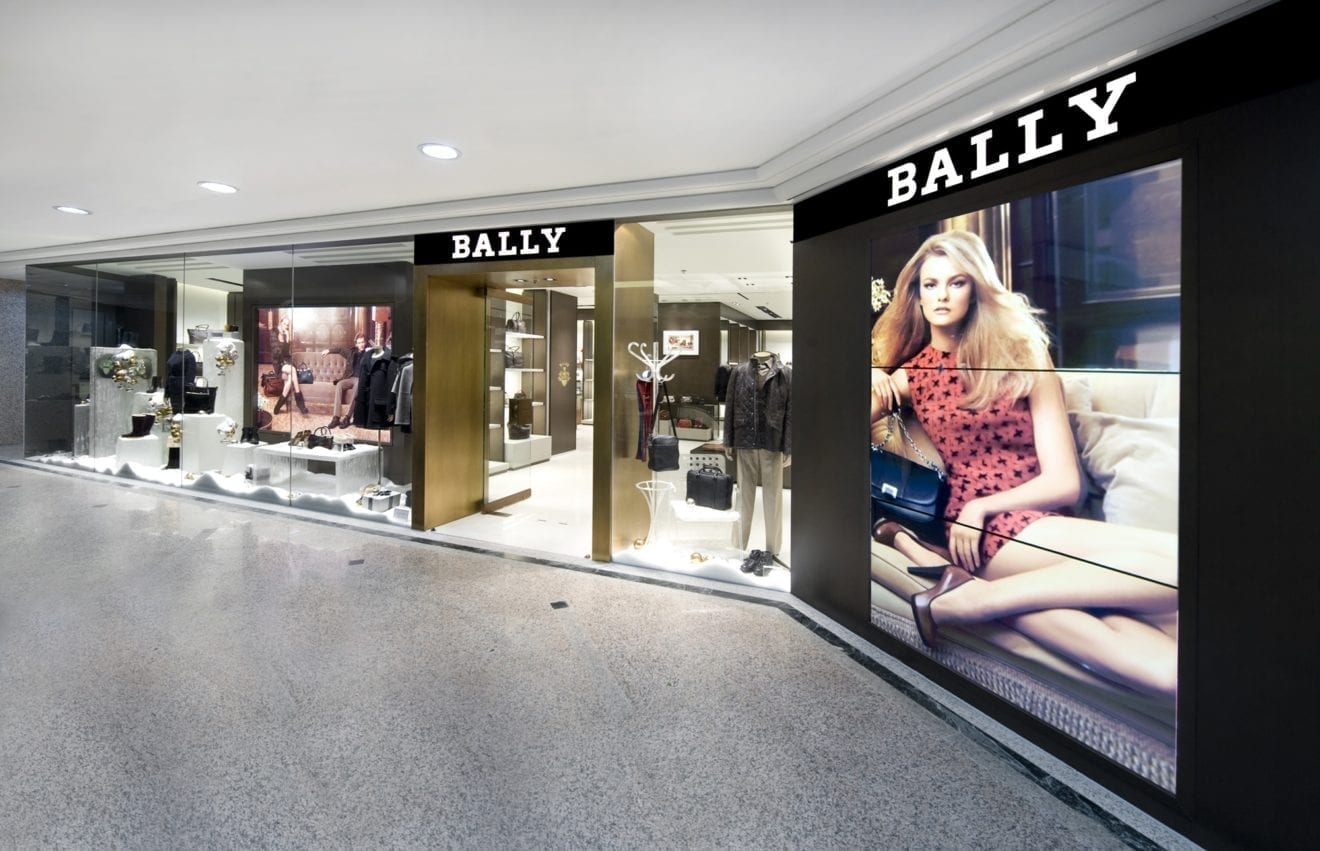
    Chinese apparel group Shandong Ruyi has been unsuccessful in raising funds to settle its planned purchase of Swiss luxury brand Bally.

    According to a Reuters report, the potential deal has been in the works for more than two years and would have required funding of US$600 million. Since making the agreement, the firm has suffered financial difficulties, with the recent coronavirus outbreak proving the final insurmountable hurdle against the transaction.

    Shandong Ruyi has already spent billions of dollars in purchasing luxury brands from Europe, including Aquascutum and SMCP brands Sandro, Maje and Claudie Pierlot, with a view to establishing a major luxury fashion house to rival the likes of LVMH, which has brought significant pressure to bear on the firm’s own financing. It also bought the iconic Lycra business last year.

    Sales of its newly purchased brands have suffered heavily during the epidemic.

    The firm recently suffered negative publicity for its difficulties settling payment for a controlling stake in Israeli menswear group Bagir. Another disgruntled partner, Japanese clothing group Renown, has reported losses caused by failure to collect debts from Ruyi, while Portuguese tailoring company Calvelex has also moved to sue Ruyi for non-payment of debts.

  • Hongkong Land posts record profit, despite protests

    Hongkong Land posts record profit, despite protests

    Property developer Hongkong Land has reported a 4-per-cent rise in underlying profit to a record US$1.076 billion for last year – but warned that the advent of the coronavirus outbreak will dent results this year.

    “The group’s results in 2020 will be impacted by the COVID-19 outbreak, with the performance of development properties in the Chinese mainland and the group’s retail properties expected to be most affected,” said chairman Ben Keswick.

    “The extent of the impact will be dependent on the duration and geographic extent of the outbreak. Stable contributions are expected from the group’s other businesses, although there are expected to be higher financing costs,” he said.

    In Hong Kong, where the company’s high-profile retail portfolio is centred, beneath its Central office towers, all store spaces were fully occupied and delivered “a respectable performance over the Christmas period” following several challenging months for the retail market in the city relating to anti-extradition bill protests.

    “Despite positive base rental reversions, however, the average retail rent in 2019 decreased to HK$222 per sqft from HK$233 per sqft in 2018, due to temporary rent relief and a decline in turnover rent,” the company said in a statement.

    Meanwhile, planning of the group’s 49-per-cent owned prime mixed-use retail and Grade A office development in Bangkok’s CBD, a partnership with local Central Group, continues on schedule. The development is expected to complete in 2025.

  • AirAsia offers six million promotional seats

    AirAsia offers six million promotional seats

    Asia’s leading low-cost carrier, AirAsia, is offering guests six million promotional seats, including zero-fare seats, to many popular destinations in Malaysia as well as overseas.

    AirAsia said customers can enjoy the promotional seats for travel beginning March 8, 2020, to July 1, 2021.

    “Booking is open for the public from March 9 to March 15, 2020, while booking for BIG members and BigPay begins on March 8,” it said in a statement today.

    It said BIG members can enjoy discounted domestic flights from as low as RM12 one way to fly from Kuala Lumpur to Johor Bahru, Penang, Langkawi, Alor Setar, and Kota Bharu.

    BIG members can also enjoy fares as low as RM71 one way when they fly AirAsia X from Kuala Lumpur to overseas destinations, including Fukuoka, Seoul, and the Gold Coast.

    Besides Japan, South Korea and Australia, international destinations covered under the promotion include Thailand, Indonesia, Cambodia, Vietnam, India, and Taiwan.

    Meanwhile, free seats are available when one books a SNAP (flight plus hotel) package from RM129 per person.

    airasia.com chief executive officer Karen Chan said AirAsia understands the current sentiments of its customers so it provides ample opportunity for people to book in advance for an affordable getaway with the travel period up to July 2021.

    “The best way to snap the lowest fares and best value travel deals is to plan ahead and book early as with this latest BIG Sale 2020,” she said.

  • Starbucks sales down in Mainland China

    Starbucks sales down in Mainland China

    Starbucks China has predicted sales will halve in the current quarter due to the coronavirus crisis.

    According to the US parent company’s CEO Kevin Johnson and CFO Patrick Grismer, sales at Starbucks China stores dropped 78 percent year on year because of a sharp decline during the coronavirus outbreak.

    Prior to the outbreak, Starbucks aimed to achieve 3-per-cent sales growth in China at stores open at least 13 months. At the moment, the company predicts a 50 percent drop in sales this quarter and delays store openings in the country.

    “We remain confident in the strength of the Starbucks brand and the long-term profitability and growth potential of our business in China,” the company said in a statement.

    Starbucks China temporarily closed most of its stores in China last month to protect staff and customers from exposure to the virus. Recently, the coffee chain has progressively reopened stores business with limited trading hours. The company aimed to open 95 percent of its stores by the end of the second quarter, said CNN.

    Meanwhile, Ikea China is reopening nine more stores after resuming trade at five stores last week, as it slowly returns to normal business.

  • Crypto Trading In Different Countries

    Crypto Trading In Different Countries

    Cryptocurrency is an acceptable legal tender anywhere in the world. “Anywhere in the world”, does not mean you take ‘cash’ crypto to a pawn shop to get whatever you want. It is an e-currency. Hence, by “anywhere in the world”, it means digital businesses that are run from locations based anywhere in the world. According to a resourceful material on https://insidebitcoins.com/bitcoin-trading, the topmost countries in the world that accept crypto trading, include the US, the UK, Canada, and Australia.

    Crypto Trading in the UK

    Several UK-based platforms allow bitcoin as the legal trading currency. Many of those platforms are regulated by certain guidelines. For most, of all, FCA act as the primary regulator. Most of the UK-based platforms allow different deposit methods, all of which can be linked within a short time. In fact, either deposit is made via euro or pound, or bitcoin, you can also cash out in any of the currencies as well, when you make transactions that can bring money. Binance and Plus500 are the topmost UK online brands where you can make bitcoin trading if you are in the UK. However, Binance is not an actively-regulated site by the FCA; hence, it does not allow trading CFD products, rather the actual bitcoin transaction. 

    In the United Kingdom, cryptocurrency trading can be done by common transactional exchanges between a seller and a buyer, or you can invest in other cryptocurrency trading systems that will give you return on investment. 

    Crypto Trading in the United States

    In the United States, trading bitcoin can happen through different methods. The most widely accepted methods are to make sales and purchases on platforms that allow crypto trading and investing in a cryptocurrency trading platform, based in the US. Interested traders of bitcoins buy bitcoin assets on approved websites and they make trades accordingly, not by price or equivalence with other currencies. Some huge risk-takers afford to go for bitcoin trading robot and they wait to get their returns on investment after a while.

    Certain states in the United States, such as Las Vegas are more liberal and permit online casinos that allow residents within the states to gamble and earn returns in bitcoins. This allows them to gamble and cash out their profits in cryptocurrency or any other means allowed by a specific casinos.

    Crypto Trading in Canada

    Canada is like the United States; similar trading rules and methods apply to both. 

    Crypto Trading in Australia 

    Gradually, bitcoin is becoming an acceptable trading means for online-based businesses. Sadly, bitcoin and PayPal are barred as transaction means in certain regions of the country. Nonetheless, by using Plus500, you can link your PayPal account and fund your Plus500 account. Funds are transferrable between PayPal and the Plus500 platforms. Then, you can use trade with your Plus500 account. With your Plus500 as a major funding source, you can now purchase bitcoin CFDs as instructed. Australians are also able to trade with bitcoin trader robot, maximizing their bitcoin profits and cashing out the equivalent value of their profit.

    Crypto Trading in New Zealand

    Like Australia, New Zealand is gradually embracing cryptocurrency trading. Thus, there are still many platforms where cryptocurrencies cannot be used. Nonetheless, by setting up a funding account source on the Plus500 platform, with PayPal, it becomes possible to trade on several platforms using your Plus500 account. Same conditions are applicable to Australia and New Zealand.

    Crypto Trading in Germany

    Bitcoin trading in Germany is quite technical. Bitcoin trading faces a lot of negative pressures in Germany, but it is not impossible to trade bitcoin. For the few platforms that allow bitcoin trading, verification processes are always rigorous. By leveraging certain global platforms, folks in Germany can make bitcoin trades via credit and debit card, ACH bank transfer, and other transfer means. Berlin accepted Bitcoin, early enough. Most of the cryptocurrency adoption rate from Germany source from Berlin.

    The challenge with cryptocurrency in Germany is that it is not ruled as a financial instrument, even though about 29% of Germans think cryptocurrency is worth investing in, according to a survey by German retail bank Postbank.

    Germany also has bitcoin ATMs where people can make certain bitcoin transactions. Furthermore, there are certain companies where people can transact bitcoins and companies to invest in. You don’t have to necessarily look for a German platform, you can check out global bitcoin trading platforms that are eligible for German citizens. 
     

  • The Impact of Libra and Alipay on Monetary Policy

    The Impact of Libra and Alipay on Monetary Policy

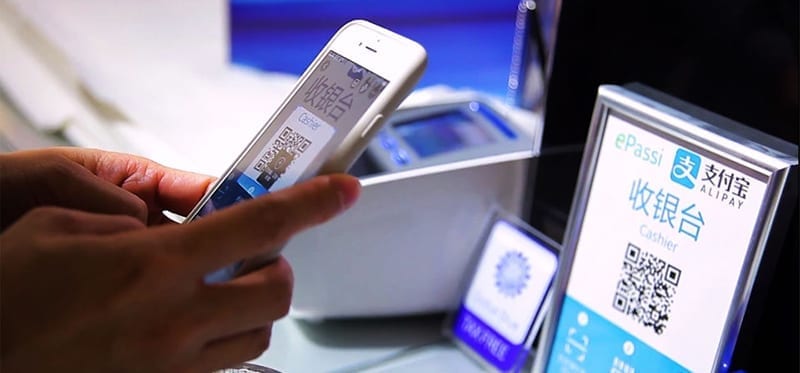
    Digital payment systems such as Libra and Alipay may eventually weaken traditional tools of monetary policy. In doing a good job, central banks can prevent this from happening though, according to a high-ranking Swiss central banker.

    The Swiss National Bank (SNB) is currently engaged in a fight against an appreciation of the Swiss franc and – presumably – is spending huge amounts of money on the purchase of euros and dollars. A fight against all odds it seems – and with the emergence of Alipay or eventually even Libra, the risk is that traditional means of monetary policy lose their effectiveness.

    Once such a purely digital means of payment takes on the role of a trading currency across national borders, central banks are faced with a set of whole new questions.

    It is clear that it would become more difficult to implement the monetary policy if a major part of payments in Switzerland is conducted in another currency than the franc, said Thomas Moser, member of the enlarged governing board of the SNB.

    Moser is convinced that central banks can meet the challenges by simply doing a good job, and thereby prevent people from opting for alternative means of payment. But, at the moment, the bank estimates that the introduction of digital central bank money for consumers would entail hardly an advantage, but major risks.

    The emergence of such means of payment is closely linked to the Blockchain, which is the focus of the second wave of digitization and decentralization. The Blockchain-enabled things beyond our imagination, Moser said. «Today as then, expectations were exaggerated. But in the long run, the consequences are underestimated.»

    Central banks and governments are keen to provide a legal framework for such new projects and to make them conform to the current regulation in a bid to enable the financial market to exploit the new opportunities arising.

  • Google Assistant loses this fun feature on March 23

    Google Assistant loses this fun feature on March 23

    Google Assistant has long featured celebrity voices, but you might want to use them while you still can.

    John Legend’s Google Assistant cameo first debuted in April of 2019, becoming the first celebrity to virtually lend his voice to devices all over the world. The singer’s smooth tones were a big hit among fans, and though Google said the option would be temporary, they didn’t specify a date.

    Or until now, at least, because the Pixel makers just announced that it will be gone come March 23. So after just under a year, the first celebrity voice on Google Assistant will be gone. It’s a good reminder that, as Google warned from the start, these cameos are not permanent. The company also debuted a second celebrity voice from actress and producer Issa Rae back in October. Her voice is still available for now, but we assume it might be gone in six month’s time as well.

    Whether you’ll miss the Legendary voice or not, the good news is that Google will still do everything it used to. Just with a more robotic voice.

  • Lunar New Year timing boosts Singapore retail sales in January

    Lunar New Year timing boosts Singapore retail sales in January

    Excluding motor vehicles, Singapore retail sales in January rose by 0.6 percent, but it will be another month until the effects of the growing coronavirus crisis on tourism and domestic consumer spending is evident.

    Including vehicles, Singapore retail sales in January decreased by 5.3 percent year on year, but this as much reflects changing criteria for vehicle ownership certificates of entitlement in the city-state as an economic trend. Month on month, retail sales were down by 0.5 percent excluding vehicles.

    Online retail sales in January comprised about 5.8 percent of the total. The major categories here were computer & telecommunications equipment, where online accounted for 25.9 percent of total category sales, furniture & household (10.9 percent) and supermarkets & hypermarkets (7.8 percent).

    Overall retail sales of furniture & household equipment declined by 16 percent in January, while sales of optical goods & books fell by 9.4 percent.

    However, sales by supermarkets & hypermarkets, food & alcohol, and apparel & footwear grew by between 6.4 percent and 8.7 percent, due partly to increased spending during the Lunar New Year.

    January saw 9.1 percent growth in sales of food & beverage services, again due mainly to the timing of Lunar New Year, which was earlier this year. On a seasonally adjusted basis, sales of food & beverage services increased by just 0.8 percent in January.

    The value of food & beverage services in January was estimated at S$963 million. Of that, online sales comprised about 9.8 percent.

    Turnover of restaurants, fast-food outlets, and food caterers increased by between 8 percent and 16.4 percent in January, again fuelled by increased spending due to the Lunar New Year.

    Sales by cafes, food courts & other eating places fell by 2 percent.

  • Coronavirus to wipe US$8.3bn off Asia-Pacific duty-free sales

    Coronavirus to wipe US$8.3bn off Asia-Pacific duty-free sales

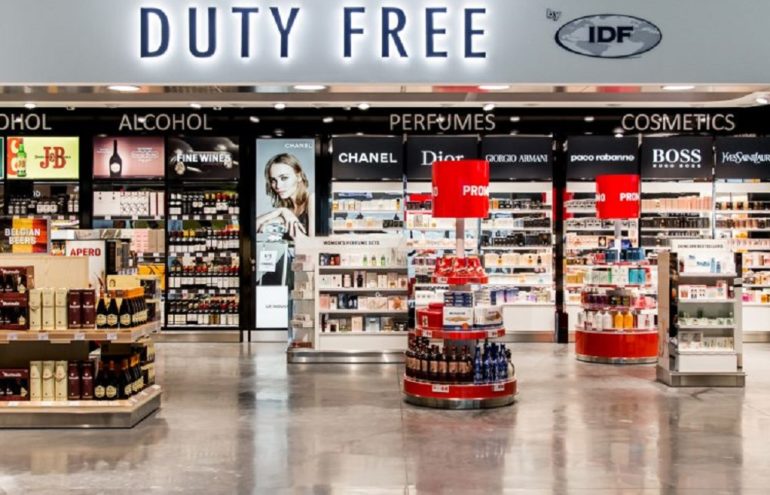
    The coronavirus outbreak has substantially altered forecasts for Asia-Pacific duty-free sales this year, according to research firm GlobalData.

    Takings were originally forecast to reach US$43.4 billion by the end of the year. New calculations show the outbreak will likely cost the industry $8.3 billion off that figure.

    Globaldata now expects Asia-Pacific duty-free sales to reach $35.2 billion, 19.1 percent lower than the original forecast. Positive outlooks for China and South Korea especially have been dashed by the epidemic, with regions expecting to profit from burgeoning Chinese tourism now forlorn.

    “Other Asia-Pacific countries such as Japan, Singapore, Hong Kong, and Thailand with a considerable increase in the number of new cases over the past few days are estimated to worsen the impact,” said GlobalData Retail analyst Suresh Sunkara.

    “The forecasts may change further during the course of time if the virus spread is prolonged to the second half of this year or if it spreads to other key duty-free markets in the region including India, Malaysia, and Australia, which are currently not significantly affected by the spread.”

    Many key airports in the region have closed with travel between countries broadly impacted by the viral threat. Major duty-free operators such as Shilla, Lotte, Shinsegae and China Duty-Free Group are now left re-evaluating their strategies and identifying other consumer groups and markets to help offset a weakening in revenue.

    “The Tokyo Olympics should … aid the recovery in Asia-Pacific duty-free sales over the summer,” said Sunkara, “on the provision that the crisis has calmed down and travel restrictions have been relaxed. If not, the market growth will take an even more serious hit this year.”

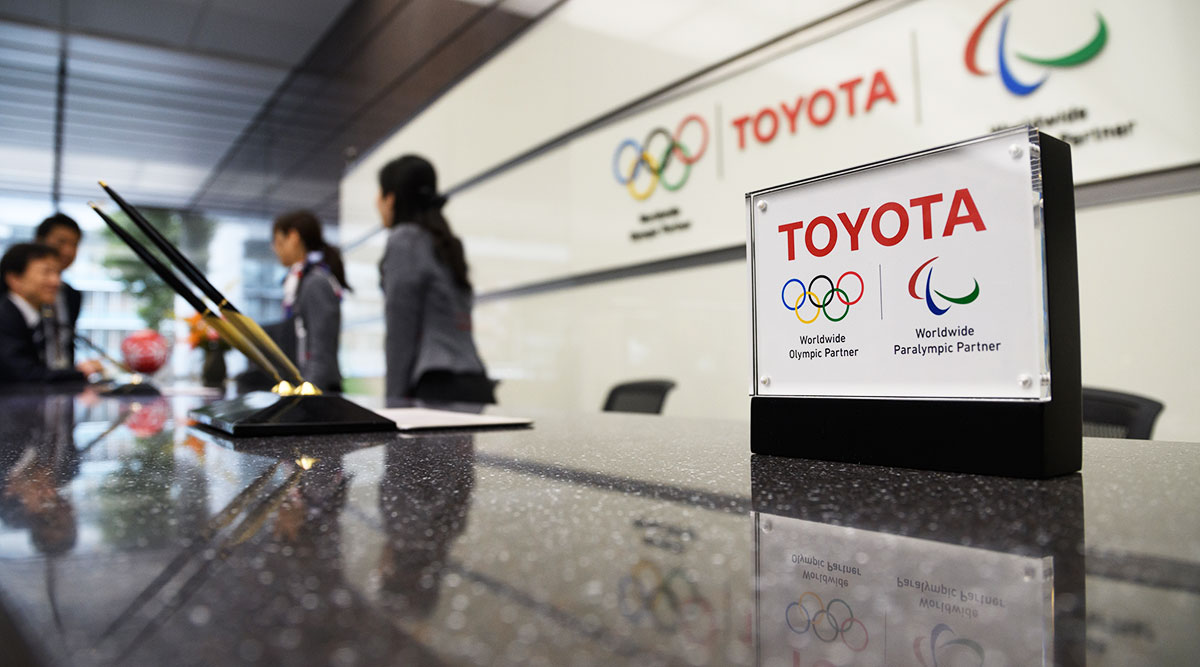
  • Toyota Recalls 3.2 Million Vehicles Worldwide Over Fuel Pump Problem

    Toyota Recalls 3.2 Million Vehicles Worldwide Over Fuel Pump Problem

    Toyota said the recall now covers 1.8 million U.S. Toyota and Lexus vehicles in total in the United States, including older vehicles from as far back as the 2013 model year — and more than 1 million vehicles than it announced in January.

    Toyota Motor said Wednesday it is now recalling 3.2 million vehicles worldwide to address a fuel pump issue that could result in engine stalling. The Japanese automaker first said in January it would recall 696,000 U.S. vehicles with a fuel pump that may stop operating and lead to stalling of the engine. Dealers will replace the fuel pumps with new ones.

    Toyota said the recall now covers 1.8 million U.S. Toyota and Lexus vehicles in total in the United States, including older vehicles from as far back as the 2013 model year — and more than 1 million vehicles than it announced in JanuaryToyota began a probe into the fuel pump issue in June.

    The automaker told the U.S. National Highway Traffic Safety Administration in January it was aware of 66 field reports and 2,571 warranty claims that relate to fuel pump failures in the vehicles initially recalled. Owners have complained of rough engine running, engine not starting and loss of power while driving at low speeds. Toyota said the reports occurred more commonly in areas of the southern U.S. with warmer climates.

  • Japan Food Town in Isetan Singapore shuttered

    Japan Food Town in Isetan Singapore shuttered

    Isetan’s Japan Food Town restaurants on the Singaporean department store’s fourth floor have been unexpectedly shuttered.

    A Straits Times report said Isetan filed a statement with the Singapore Exchange in late January, saying that notice had been served to the development for non-payment, immediately terminating the tenancy. The food court was a collaboration between the Japan Association of Overseas Promotion for Food & Restaurants and the Cool Japan Fund, backed by the government of Japan.

    Optimistic reports dating from just four years ago spoke of a long term commitment to the success of the project – those sentiments have now given way to an austere notice on Japan Food Town’s website announcing its closure and social-media announcements of promotions that faded out in late February.

    At least one of the tenants has now relaunched in multi-stall restaurant Picnic Food Park down in Wisma Atria, with potentially more to follow.

  • Fresh insights on how Singaporean men shop online

    Fresh insights on how Singaporean men shop online

    The majority of Singaporean men spend at least 30 minutes of shopping online every day, according to a survey by Southeast Asian e-commerce platform Shopee.

    The Men’s Online Shopping Behaviour Survey 2020 has also found the target group of 2515 Singaporean male spends almost 70 percent more money online compared to last year.

    Comparing prices to find the best deals is very important to close to 70 percent of Shopee’s male users. The data also revealed that most male users prefer to shop after work, especially from 11 pm to 1 am, or during lunchtime.

    Singaporean men tend to shop for consumer electronics such as phone cables and wireless earphones as well as beauty & personal care products such as hair pomades and pimple patches. When not shopping, close to 60 percent of survey respondents revealed that they regularly use Shopee’s entertainment features, including in-app games.