Tag: asia

  • Sa Sa teams up with Shopee to revitalise its onlineretail strategy, strengthens presence in Singapore

    Sa Sa teams up with Shopee to revitalise its onlineretail strategy, strengthens presence in Singapore

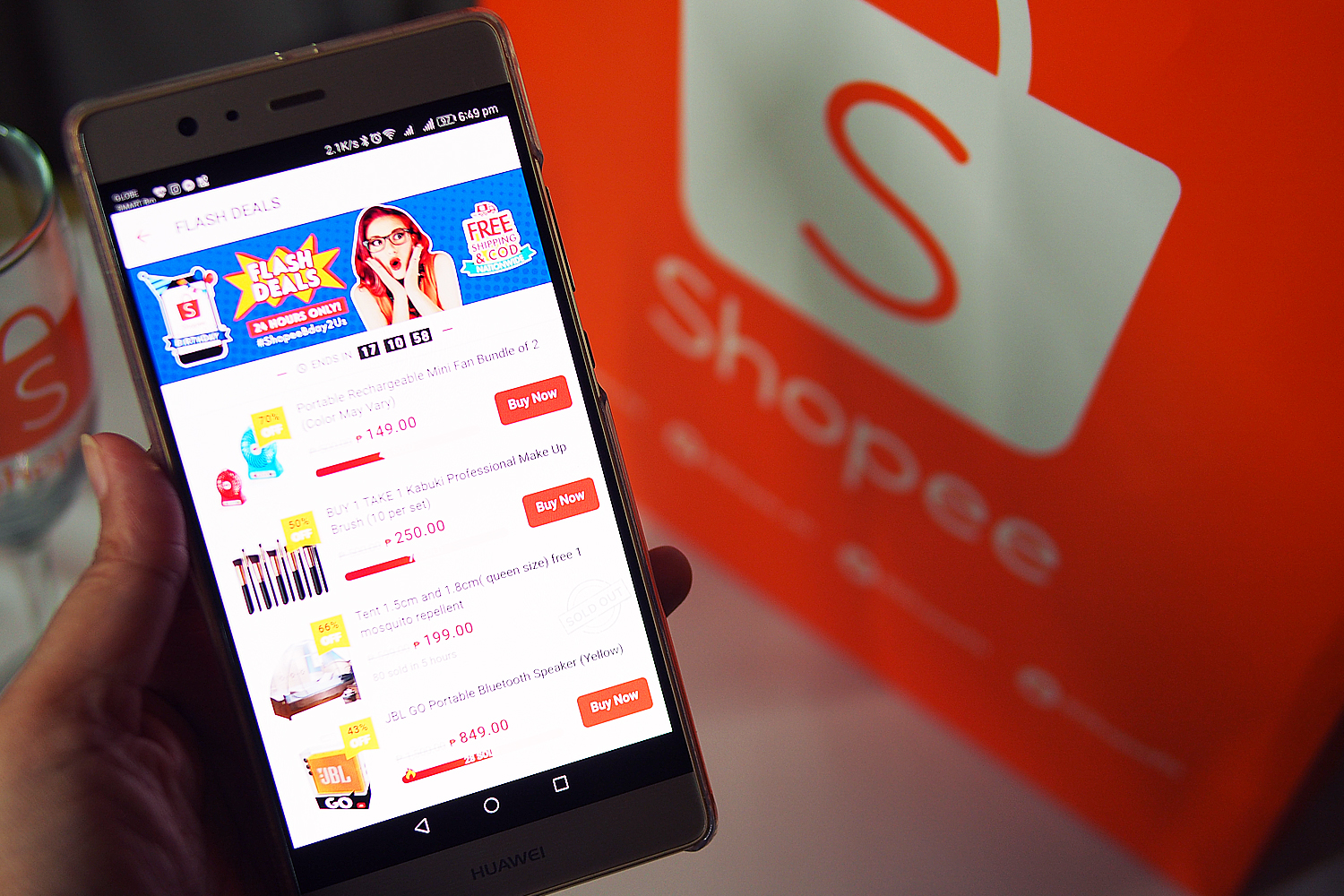
    Shopee, the leading e-commerce platform in Southeast Asia and Taiwan, has announced its partnership with Sa Sa Dot Com Limited (“Sa Sa”), a subsidiary of Sa Sa International Holdings Limited. The Shopee-exclusive Sasa Official Store launched on Shopee Mall in Singapore yesterday, marking the start of Shopee Brands Festival – an 11-day long campaign featuring a host of exciting sales, deals, and promotions.

    With the launch of the Sasa Official Store on Shopee in Singapore, Sa Sa aims to not only strengthen its online presence, but also tap on Shopee’s extensive user base to reach a wider audience. The strategic partnership between both brands will enable Shopee to drive greater growth in one of its top-performing categories, Beauty & Personal Care, by providing users access to a greater assortment of products on the platform. This includes luxe beauty products such as the SK-II Facial Treatment Essence, Lancome Youth Activating Concentrate, and Shiseido Ultimune Power Infusing Concentrate.

    Dr Simon Kwok, SBS, JP, Chairman and Chief Executive Officer, Sa Sa International Holdings Limited, said “We are excited to boost our online retail strategy through this partnership with Shopee, the leading e-commerce platform in the region. The launch of the Sasa Official Store will allow us to bring a greater variety of beauty products and tools to a wider audience. This will enable us to effectively drive sales growth and lay a solid foundation for the development of our new retail model. We look forward to strengthening our e-commerce business further and are positive that working with Shopee will allow us to achieve success in the near future.”

    Zhou Junjie, Chief Commercial Officer, Shopee, said “Shopee is committed to helping our brands and retail partners unlock their full potential, and Shopee Brands Festival demonstrates our dedication to empowering new and existing brands on our platform. This campaign is another step forward for us in bringing our users the most popular and exciting products from their favorite brands. We look forward to working closely with Sa Sa, starting with the launch of its Shopee-exclusive store.”

    The Sasa Official Store launched exclusively on Shopee yesterday. Users can look forward to deals of up to 60% off all Sasa products storewide, vouchers, and more during Shopee Brands Festival.

    Running from 20 February to 1 March 2020, Shopee Brands Festival will give users access to a variety of exciting deals, promotions, and sales across a host of popular brands including Bose, 3M, Colgate, Enfagrow, and more. In Singapore, the campaign will feature more than a week of super promotions, with key highlights including:

    • 10 back-to-back Super Brand Days with exclusive deals and product launches across leading brands

    • Lowest Price Guaranteed on products such as the Apple MacBook Air 13-inch, SK-II Facial Treatment Essence, Dyson Supersonic Hair Dryer, and more

    • A chance to win up to 80,000 Shopee Coins with Shopee Shake, which will run twice daily from 21 February to 1 March

  • Some Banks Already Prepare for Economic Rebound in Asia

    Some Banks Already Prepare for Economic Rebound in Asia

    Some financial firms operating in Singapore and Hong Kong have delayed hiring due to the coronavirus outbreak but others are quietly laying plans to prepare for an economic rebound in Asia.

    Despite the slowdown in hiring seen by some recruitment firms in the two financial centers, some lenders have moved ahead to acquire talent in the locations they view as a strategic fit. For example, U.S. lender J.P. Morgan on Monday announced the appointment of three new senior staff in Asia, with one being a newly-created role.

    New digital banks, which do not need physical branches to serve clients, are also getting more staff to deal with inquiries and expanding their offerings. On job portal jobs.db.com, a search for virtual banking jobs in Hong Kong landed at least seven new listings by virtual banks such as Ping An OneConnect and WeLab this week. Meanwhile, Hong Kong’s Z.A. Bank said it has received over 20,000 applications to be new customers despite the gloomy situation.

    Many domestic and foreign institutions in the two financial hubs have slowed recruitment, according to headhunters in the two cities. The hiring processes have been affected by quarantines, precautionary measures that include travel restriction to and from China, and decisions not to conduct face-to-face interviews.

    Everybody is distracted,» said Gurj Sandhu, a managing director at Morgan McKinley Group in Singapore. While none of his clients are canceling roles, hiring has fallen in priority, he added.

    Hiring processes and relocation plans are taking longer than usual because of logistical challenges. Bethan Howell, a Hong Kong-based consultant at Selby Jennings, gave the example of a person scheduled to relocate to Hong Kong from Shanghai for a quant fund.

    The person may have to work from the client’s Shenzhen office while waiting for a visa, which is taking more time these days, she said. As a result, some lenders are considering whether to hold off on adding headcount for non-essential roles such as back-office functions, according to Mark Li, head of client solutions at Randstad Singapore.

    Although some financial firms are conducting interviews by video conference or phone, closing the deal is more problematic, especially at investment banks and wealth-management units. This is because bankers are considered «big-ticket items,» said Hubert Tam, a managing partner at Sirius Partners in Hong Kong.

    Private banks and investment banks are holding off on hiring until they can meet candidates in person, even if they had a good record last year, he added.

    In fact, many private bankers with clients in mainland China would have to travel to the country to meet clients first to «get their blessings» before moving banks, according to Amod Jain, a Morgan McKinley consultant in Singapore. Not everything can be done by phone.

    In fact, some banks have pushed back events meant to generate sales and legacy planning opportunities. A popular conference amongst financial executives – Money20/20 Asia – that was earlier scheduled to happen in March, has been moved to August, according to its website.

  • UBS Hires a Proven Digital Transformer in Ralph Hamers

    UBS Hires a Proven Digital Transformer in Ralph Hamers

    Ralph Hamers brings with him a track record of not only profitability but also effective transformation to compete with tech giants that threaten to take the financial sector’s lunch.

    As expected, Sergio Ermotti stepped down from UBS’s top role succeeded by 30-year ING veteran Ralph Hamers. Though ending on a less than ideal note with 2019 results missing both profit and cost targets, Ermotti leaves behind a legacy of successfully transforming the business from being investment banking-focused to wealth management-focused.

    In Hamers, UBS has also hired a chief with a proven track record for transformation. His thoughts, speech and subsequent results at ING may very well paint him as the poster boy for the current zeitgeist in banking.

    In mid-2019, ING’s app was reportedly ranked 10th by daily usage in the Netherlands, behind mainstays like Facebook or Google. The reasons are almost purely non-financial. In addition to regular online banking, it was the biggest outlet for Philips products in the country through an e-platform that sells a vast array of non-food products including barbecues, TV sets, clothing and discount tickets for theaters.

    The Amazons, the Facebooks, the Googles of this world – knowing what people are looking for – are involved much earlier in this decision-making process, Hamers said. They know the trajectory of this customer going through that process and already have more intelligence than we will ever get. The question for me is whether I can build this platform, which is open, so I extend my activities into this decision-making process.

    Stemming from this strategic focus on mind share, the bank in 2018 purchased Makerlaarsland, a sizeable digital housing broker and agent (4-5 percent market share), precisely to be involved earlier in the decision-making process.

    While Europe does not house as many household tech names as the U.S. or Asia, its regulatory environment in finance is nonetheless in many ways more liberal and progressive. Since 2017, regulators leveled the playing field in payments through the Payment Service Directive 2 (PSD2), breaking banks’ monopoly on customer data.

    Fintechs force us to be more efficient, as a consequence of which we can deal more easily with low-interest rates and tougher regulations. If you open up to trends and try to make them yours, then it can still be fun to run a bank, Hamer said in a 2015 report with German newspaper Handelsblatt.

  • Saigon metro to test run in Q3

    Saigon metro to test run in Q3

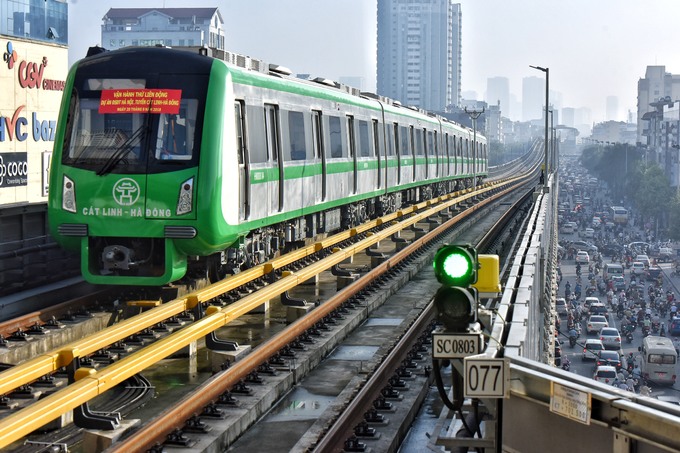
    An elevated section of Ho Chi Minh City’s Ben Thanh-Suoi Tien Metro Line 1 will be tested out within the third quarter this year.

    This elevated section crosses Ho Chi Minh City’s District 9, spanning from central Binh Thai Station to Long Binh Depot, a train maintenance center, the HCMC Management Authority for Urban Railways (MAUR) said in a report to the city’s People’s Committee.

    Once testing is complete, MAUR said it would test another section between Binh Thai and Van Thanh stations in District 2.

    The city targets project completion to advance to 85 percent before the end of this year, to officially enter operation by the end of 2021, it was added.

    The first locomotives and trains for the line, produced by Japanese manufacturer Hitachi, are set to arrive in HCMC from Japan in June.

    Hitachi is currently testing out two trains to deliver first, then will send over another 15, all of which will have three carriages each, as Metro Line 1 is being completed, the MAUR said.

    All 17 trains are part of a $370 million package signed with Hitachi in 2003, which includes delivery of other equipment such as signaling and communication, electricity generation, and electronic fee collection systems.

    On Monday, the city removed a barrier between the metro line’s two underground segments, integrating the entire length of Ben Thanh-Suoi Tien Metro Line 1. Removal of the barrier, erected to facilitate construction of both segments, paves the way for the next phase of the project – equipment installation, officials said.

    When completed, HCMC’s Metro Line 1 will span 19.7 kilometers from Long Binh in District 9 to Ben Thanh in District 1 with a total of 14 stations.

    Work on the line started in August 2012, with the elevated segment cleared in June 2018.

    It was approved in 2007 with a total investment of VND17.4 trillion ($747 million). This was raised to VND47 trillion ($2.02 billion) in 2010 after design changes and fluctuations in the exchange rate of the Japanese Yen, though the increase was not approved by relevant ministries.

    Last November, the National Assembly allowed HCMC authorities to approve a new total investment of VND43.6 trillion ($1.87 billion).

  • Chow Tai Fook completes Enzo purchase

    Chow Tai Fook completes Enzo purchase

    Chow Tai Fook has completed a full acquisition of the luxury colored-gem jewelry brand Enzo.

    Enzo currently operates 60 points of sale in Mainland China, most of which are in Tier I and II cities. It also maintains a robust presence on several major Chinese e-commerce platforms.

    Under Chow Tai Fook’s ownership, the Enzo brand aims to expand its footprint further in the territory through both self-operated and franchise models.

    “Distinguished by exquisite craftsmanship and creativity, Enzo will continue its niche position as a natural colored gem specialist to complement the group’s multi-brand strategy, enabling us to further venture into the colored gemstone arena,” said Chow Tai Fook executive director Adrain Cheng.

    “On the other hand, Enzo can leverage Chow Tai Fook’s retail and industry know-how to generate greater values to its customers.”

  • Jasons Food Hall at Bangsar to be replaced by new Food Purveyor concept

    Jasons Food Hall at Bangsar to be replaced by new Food Purveyor concept

    The Jasons Food Hall at Bangsar shopping centre in Kuala Lumpur is set to be replaced by a new concept from the country’s fast-growing independent grocery retail group The Food Purveyor.

    Geoff King, The Food Purveyor’s CEO, told Inside Retail Asia that his company hopes to take over the fixtures and the store space before the Jasons lease expires on March 22, “but that depends on landlord consent and the cooperation of the previous tenant”.

    “We hope to be up and trading before the 23rd,” he confirmed.

    The Food Purveyor owns the supermarket chain BIG (Big Independent Grocer) which recently opened new outlets at the Toppen Centre in Tebrau, Johor Bahru, and at the Mall of Medini.

    As Inside Retail Asia reported last week, Jason’s will close its only store in Malaysia after 20 years. A spokesperson for the store’s parent, Dairy Farm International’s Malaysian joint-venture subsidiary Giant, said it had failed to renegotiate a lease on satisfactory terms and was closing Jasons Food Hall at Bangsar with regrets.

    “After months of negotiations, we are very disappointed that we have been unable to come to a mutual and workable agreement with the landlord to renew the lease,” a Giant spokesperson said in an email.

    King says a final decision has not been made on the brand the new store will trade under, but it will be a premium offer in keeping with the suburb’s demographic, which includes a large expat population.

    “The store range and prices will belong to the BIG format but we will be adding some extra touches and features befitting the location and likely launch with a unique name,” he said.

  • Philippine chain AllHome eyes strong expansion

    Philippine chain AllHome eyes strong expansion

    Philippine home-store chain AllHome will expand its store network to push its selling space beyond 450,000sqm this year.

    “We are set to bring AllHome to more locations in 2020,” said the firm’s chairman Manuel Villar Jr. “Our expansion program is both sustainable and strategic by taking advantage of the synergies between our real estate companies, such as Vista Land, as well as the opportunities in the home improvement industry in the Philippines.”

    As of last year, the firm’s total selling area covered 313,000sqm.

    In part as a response to the coronavirus outbreak, the firm has moved to secure its inventory sufficiently enough to cover its planned expansion and existing network for several months. China is one of AllHome’s major inventory sources.

    “We can easily shift to our other existing sources, like Vietnam, Indonesia, Malaysia, Thailand, India, and even the US,” said AllHome president Benjamarie Therese Serrano. “Our fresh funds indeed came in at the right time when it comes to our inventory management.”

    AllHome’s net income grew 225 per cent in the first three quarters last year. Its total revenues increased by 72 per cent to PHP8.2 billion (US$162 million).

  • Bossini profit down as protests hit Hong Kong sales

    Bossini profit down as protests hit Hong Kong sales

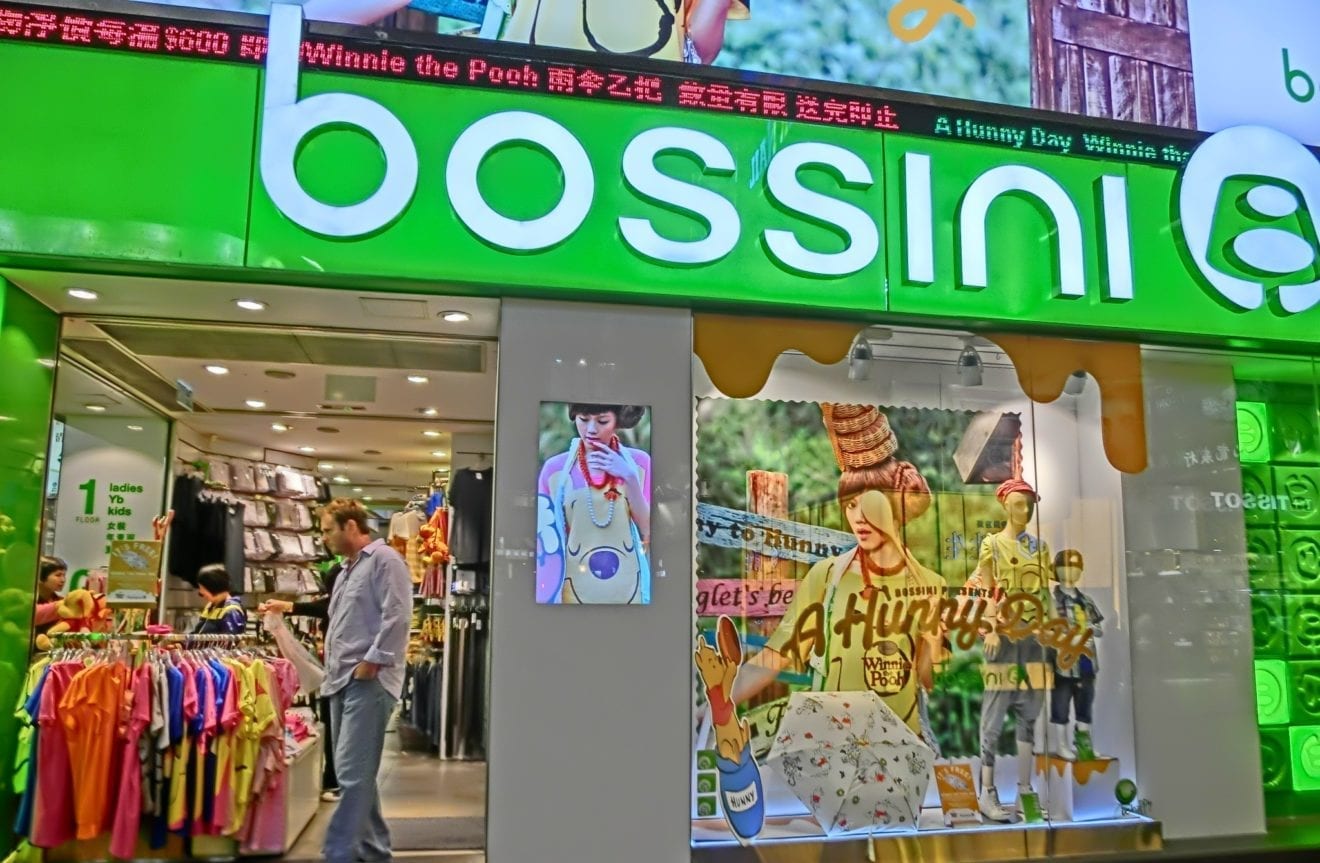
    Apparel retailer Bossini has revealed a loss of HK$93.7 million (US$12 million) during the six months to December – more than triple the $25.7 million loss of the same period a year earlier.

    Sales were down 20 percent from $875 million to $699 million ($89.9 million).

    The bleak results were not unexpected, after the company filed a profit warning last week estimating a deficit ranging between $85 million and $105 million.

    While 58 percent of Bossini’s revenue comes from Hong Kong and Macau, the group has a presence in 30 countries and regions around the world and 1086 stores in all, of which 287 are company-run the remainder franchised. China accounts for 23 percent, Taiwan 11 percent and Singapore 8 percent.

    Overall sales per square foot fell 18 percent from $4000 to $3300 across the Bossini network. In Hong Kong and Macau retail sales were down by 29 percent as protests and geopolitical issues decimated the number of inbound mainland Chinese tourists. Sales on the mainland fell by just 3 percent.

    Chairman Bess Tsin said in the interim results that Hong Kong is poised to recover from months of social activities with government stimulus plans long-awaited to ease social and economic hardship, “in spite of political turmoil that will likely continue weighing on domestic activity”.

    “Disastrously, the novel coronavirus infection threat is heavily weighing on inbound tourism and local consumption sentiment is expected to last months, bringing another blow to the fragile economy. The business environment for retail trade has become even more difficult.”

  • Don Don Donki to expand after success of debut store in Thailand

    Don Don Donki to expand after success of debut store in Thailand

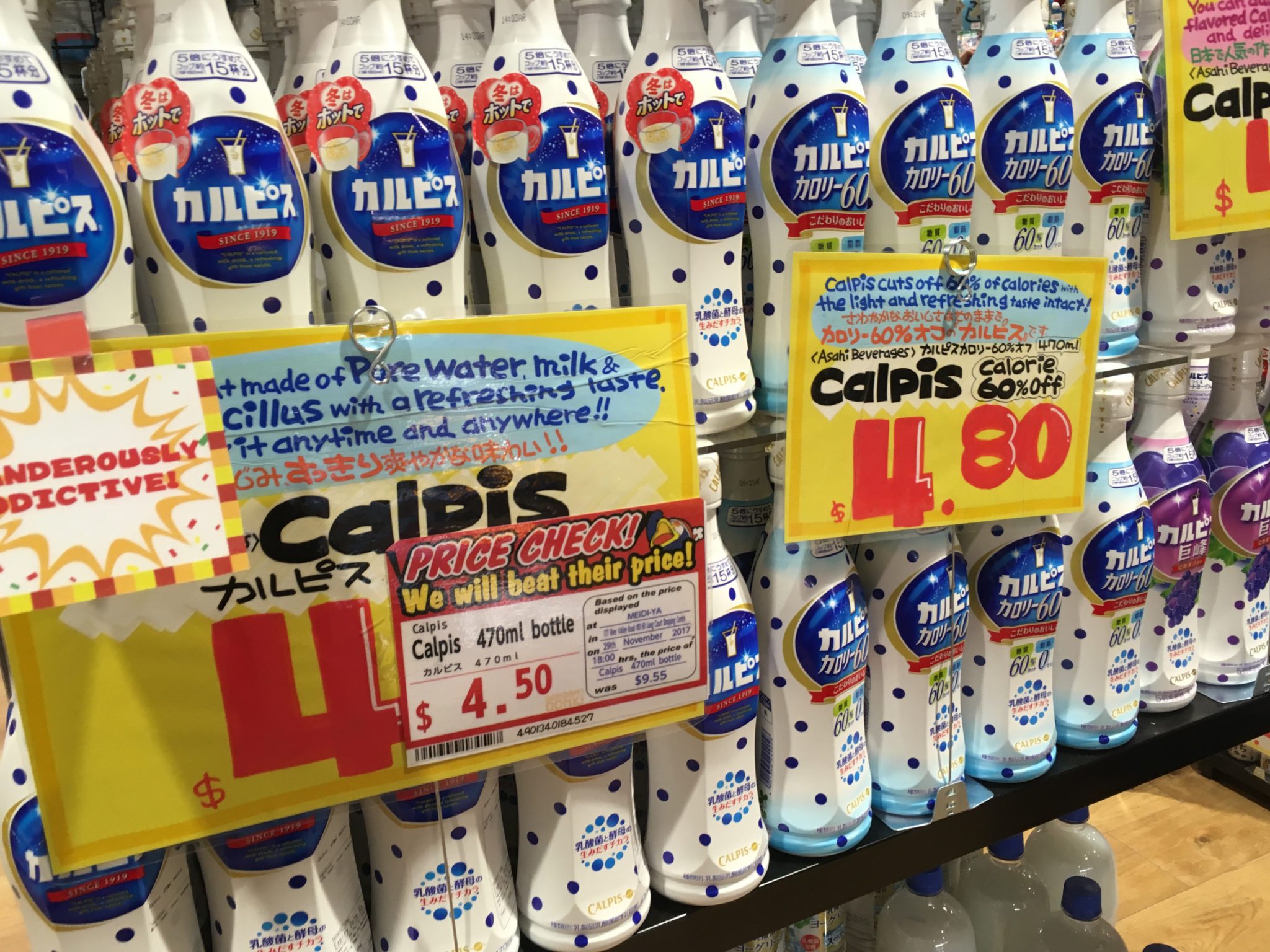
    Don Don Donki Thailand will expand its retail network this year after a positive trading performance of the first outlet.

    In partnership with Saha Pathana Inter-Holding (SPI), the holding company for consumer product conglomerate Saha Group, Don Don Donki Thailand plans to open its second outlet on Ratchadamri Road, which is three times bigger than the first store.

    President and executive director at SPI, Vichai Kulsomphop, said the venture aims to open 10 branches across the country. Each of the stores will cost THB500 million and occupying a space of between 5000 and 6000sqm.

    “Saha Group is also willing to be an overseas partner of Donki if the Japanese firm really wants to expand its business in Asean,” said Vichai.

  • Puma experiences its best year yet as sales soar globally

    Puma experiences its best year yet as sales soar globally

    Puma’s worldwide sales surged 18.4 percent last year, to €5.502 billion and its pre-tax profit rose 40 percent to €262 million.

    But the positive results were tempered by a warning from CEO Bjorn Gulden about the year ahead given the outbreak of coronavirus in China.

    “After a good start into 2020, February has of course been negatively affected by the outbreak of COVID-19. The business in China is currently heavily impacted due to the restrictions and safety measures implemented by the authorities.”

    He said businesses in other markets, especially in Asia, are suffering from lower numbers of Chinese tourists.

    “Given the current uncertainty around the virus, it is, of course, impossible to forecast its impact on the business. We will do everything we can in the short term to minimize the damage and remain very positive in the long term both for our industry and for Puma,” said Gulden.

    Puma’s year ended with a strong fourth-quarter result, with revenue up by 20.6 percent and pre-tax earnings up by 47 percent.

    “All regions and all product divisions were up by double-digits. This made 2019 the best year in Puma‘s history,” said Gulden. “I am very proud of what the team has achieved and thought this performance shows the global potential of the Puma brand.”

  • Philippine airlines are losing Chinese tourists amid coronavirus outbreak

    Philippine airlines are losing Chinese tourists amid coronavirus outbreak

    When Philippine President Rodrigo Duterte pursued closer foreign relations with China, he helped attract planeloads of Chinese tourists to the Southeast Asian nation. Now, the coronavirus outbreak is reversing the trend, much to the chagrin of airline companies.

    Budget carrier Cebu Pacific has put its expansion plans into the Chinese market on hold after the Covid-19 disease triggered the biggest health scare in the region since the Sars (severe acute respiratory syndrome) outbreak in 2003. Cebu Pacific and Philippine Airlines have both canceled all China-related flights until the end of March, and both stocks have taken a beating along the way.

    The country has reported three infection cases, and recorded the first death outside China on February 2. After that, Duterte imposed a sweeping ban on travels to and from mainland China, Hong Kong and Macau to protect the country in one of the most drastic reactions by regional governments. Approvals for visas on arrival have also been tightened.

    “Traveller volumes on China-Philippines routes have fallen,” said Jose Enrique Perez De Tagle, vice-president of corporate communications at PAL Holdings, which owns Philippine Airlines. Mainland Chinese account for about 10 percent of its global passengers, he added.

    Global travel restrictions on Chinese travelers as airlines cut flights to mainland
    15 Feb 2020

    Since Duterte won the presidential election in June 2016, the combative president has embraced closer ties with Beijing despite territorial disputes in the South China Sea. He has also distanced the country from the US, including a decision last week to end the Visiting Forces Agreement, a 21-year pact that allowed US troops to be based in the country for bilateral exercises.

    Mainland Chinese tourists have since become the nation’s second-largest source of tourist arrivals in the Philippines, according to government data. They made up more than one-fifth of the 7.5 million arrivals in the first 11 months of last year, versus 9.1 percent in 2013.

    The Philippines received 1.26 million Chinese tourists in 2018 versus 491,000 in 2015, according to Colliers, citing government data. They spent US$1,130 per person on average, boosting the retail and tourism sectors. In January to November last year, arrivals jumped 40 percent year-on-year, faster than the national average of 10-15 percent, Colliers said.

    Ending Philippines-US military pact will affect South China Sea disputes: analysts
    16 Feb 2020

    The coronavirus outbreak has claimed more than 1,800 lives and infected more than 71,000 people worldwide, mostly in mainland China.

    Before the outbreak, which originated in Wuhan, local carriers were emboldened by the surge in Chinese visitors to consider adding more routes in China to take advantage of the growth.

  • Vietnam’s Coffee Queen abdicates Trung Nguyen throne

    Vietnam’s Coffee Queen abdicates Trung Nguyen throne

    Le Hoang Diep Thao has transferred all shares in the Trung Nguyen empire she ran with her ex-husband, pursuant to their final divorce ruling.

    Thao, former deputy director of Trung Nguyen Group (TNG), is no longer on the company’s list of shareholders, TNG announced in a statement Wednesday.

    She and her ex-husband were referred to in the media as the King and Queen of Vietnamese coffee.

    Her ex-husband, Dang Le Nguyen Vu, founder, chairman and CEO of TNG, now owns all shares in the coffee giant and its subsidiaries and has full control of the group. He has also completed a VND1.19 trillion ($51.1 million) “difference in assets” payment to Thao following their divorce ruling on December 5 last year, TNG said.

    On January 13, the Ho Chi Minh City Civil Judgment Execution Department had confirmed that it received Vu’s payment of the above VND1.19 trillion ($51.1 million) in full. The same day, the department also received a written request from the Supreme People’s Procuracy to postpone the execution of the ruling, to give it time to “consider a cassation request Thao had submitted on the judgment.”

    But because Vu had already fulfilled his obligations in accordance with the judgment in question, the City Civil Judgment Execution Department went ahead with the execution and notified the Supreme People’s Procuracy of its action on January 16.

    Vu and Thao, who got married in 1998, differed on how the group, which had developed one of the biggest brands in the country, should be run. In 2015, Thao filed for divorce.

    In March, the court of the first instance had ruled that the stocks and cash of TNG shared by Vu and Thao, as well as the couple’s cash deposits, would be split 60:40 in Vu’s favor.

    Both Thao and Vu had appealed against the entire verdict. The HCMC People’s Appellate Court on December 5 quashed both appeals, finalized the divorce, and upheld the previous judgment.

    Vu will receive all of his and Thao’s stocks in the Trung Nguyen Group, estimated at over VND5.7 trillion ($244.74 million), and have sole management rights over the Trung Nguyen coffee empire, the court had ruled.

    Vu would also receive six properties worth VND350 billion ($15.03 million) that were jointly owned by the couple, while Thao would get the remaining seven worth over VND376 billion ($16.48 million).

    Thao would also receive cash and cash equivalents, gold and foreign currency belonging to TNG that have been deposited at banks totaling VND1.76 trillion ($75.57 million). Vu was liable to pay the difference in assets to Thao, valued at VND1.22 trillion ($52.38 million), the court had ruled.

    Trung Nguyen Group, founded in 2006, is the leading coffee brand in Vietnam. The group began experiencing difficulties six years ago when Vu and Thao fell out on how the corporation should be run.

  • Moody’s Economist Joins Citi Australia

    Moody’s Economist Joins Citi Australia

    The bank is expanding its local research team as it hopes to strengthen its research insights and provide tailored insights on the implications for Australia.

    Citi Australia is bolstering its research capabilities with the addition of Faraz Syed, the bank announced in a statement on Wednesday.

    Syed joins from Moody’s Analytics, where he was an economist responsible for producing thematic analysis on domestic macroeconomic issues, and country forecasts for Australia, Japan and India, and led research on the Australian housing market. He was previously a research economist at the Australian Bureau of Agricultural Resources, Economics and Sciences.

    In his new role, Syed will report to Citi Australia chief economist Josh Williamson. In the announcement, Citi noted growing demand among clients for deeper insights into key macro-economic influences, as well as its Equity Research function, which has more than 160 ASX-listed stocks under coverage.

  • Standard Chartered Hires Fintech Leader

    Standard Chartered Hires Fintech Leader

    The bank is bringing on board a fintech evangelist, who will focus on strengthening data analytics and channel capabilities at its transaction banking business.

    Standard Chartered has announced that fintech leader Kahina Van Dyke has joined its Corporate, Commercial and Institutional Banking division (CCIB) team in Singapore as global head, digital channels, and client data analytics. Her career in financial services spans more than two decades, during which she focused on the access and delivery of financial services worldwide.

    She previously spent just under two years at blockchain payments company Ripple, where she was senior vice president of business and corporate development. She also held executive roles at Facebook, MasterCard, and Citi.

    She moves to Singapore for her new role and reports to CCIB chief executive Simon Cooper. She will also be a part of the CCIB management team, the statement said.

    The move signals the bank’s continued commitment to building its digital capabilities as fintech players continue to encroach on its turf, especially in Asia. In January Standard Chartered announced the appointment of Rene Keller as a chief information officer, CCIB.

    Projects to boost its tech capabilities include a mobile token rolled out for corporate clients in more than 38 markets; the joining of the Enterprise Etherium Alliance to develop blockchain research and application in banking; and a new venture with five other banks to address unmet financing demand from the early stages of supply chains.

  • Huawei Lawyers Accuse U.S. for Overlooking HSBC Misconduct

    Huawei Lawyers Accuse U.S. for Overlooking HSBC Misconduct

    Huawei’s legal representatives claim that U.S. authorities had knowledge of the bank’s violations against Iran sanctions but chose not to pursue the matter.

    In exchange, HSBC allegedly cooperated to support the American federal prosecutor’s case against the Chinese telecom tech giant.

    The government agreed to overlook HSBC’s continued misconduct, electing not to punish the bank, prosecute its executives or even extend the monitorship,» according to a report citing a letter filed by Huawei’s lawyers. «[In return], HSBC agreed to cooperate with the government’s efforts to depict Huawei as the mastermind of HSBC’s sanctions violations and supply witnesses to the government’s stalled investigation of Huawei.»

    This is the latest development in the legal battle involving allegations against Huawei of bank fraud and Iran sanction violations with more charges coming later this month. In an indictment unsealed last year, Huawei’s chief financial officer Meng Wanzhou – currently fighting extradition from Canada to the U.S. – was accused of defrauding banks by misrepresenting the smartphone maker’s relationship with Skycom Tech Co Ltd, a suspected front company in Iran.

    The timing couldn’t be worse for HSBC’s interim chief executive Noel Quinn who is not only fighting to regain shareholder confidence after 2019 profits plummeted but also for his job, as the bank has yet to name a permanent chief.