Tag: asia

  • Tesla Seeks Approval To Build Longer Range Model 3 Cars In China

    Tesla Seeks Approval To Build Longer Range Model 3 Cars In China

    Tesla Inc is seeking approval from Chinese regulators to offer a new China-made Model 3 variant, a government document shows.

    The variant would have a longer driving range, a source familiar with the matter said.

    Tesla shares overvalued: strategist

    National Securities’ Art Hogan says don’t buy Tesla at current levels because the stock has “gotten ahead of itself.

    Like the current China-made Model 3, which has a standard driving range of more than 400 kilometers, it would be a rear-wheel-drive vehicle, the source said, who was not authorized to talk about the matter and declined to be identified.

    Tesla, which started delivering cars in December from its $2 billion Shanghai factory, also sells longer-range imported Model 3s with an all-wheel-drive in China.

    The electric vehicle maker restarted production in Shanghai on Monday after the government ended an extended holiday that had been put in place due to the new coronavirus outbreak.

  • UBS with a personal touch

    UBS with a personal touch

    One of the key challenges facing wealth managers today is how to gauge the needs of their clients. UBS has designed an app that will help its bankers to collect information going far beyond the core financial interests.

    What are you passionate about? Who are the people you care about most? What do you really want to do with your wealth and life?

    These are questions that the wealth management of UBS will put to its U.S. clients soon with the help of an app it designed together with Deloitte consultants. The new app is designed to help clients gain a more complete picture of their total wealth.

    The bank worked closely with clients and financial advisers in the launch of the application, it said in a statement. The clients can expect tailor-made insights through the use of the app.

    Apart from gathering information about the personal needs of clients with the help of algorithms, the app also introduces functionality that lets clients set and track financial milestones, alongside enhanced online account management features.

    In a bid to enhance the communication between client and relationship manager, the bank is introducing a one-click connection to the financial adviser. This feature sets the app apart from rival bids.

    The app will also help customers keep a view over their finances at UBS and other companies, something that UBS rivals also are keen to introduce as it would help them in advising their clients.

  • Former Grab leader appointed CEO of VinID

    Former Grab leader appointed CEO of VinID

    Former CEO of Grab Financial Group Vietnam, Nguyen Tuan Anh, is the new general director of Vingroup’s loyalty program VinID.

    Tuan Anh, who had left the ride-hailing firm last month, confirmed his new appointment with VnExpress, saying he had taken over last Friday.

    The VINID Joint Stock Company (VinID) said that it expected Anh would help strengthen its apparatus to compete with other rivals and become an independent service company.

    Anh left Grab Vietnam last month after six years. He is credited being the person who laid the first bricks for the company’s operations in Vietnam in 2014 and paving the way for the successful deployment of its ride-hailing services, especially GrabBike.

    Born in 1982, Anh graduated in Information Technology from the National University of Singapore. Prior to joining Grab, he had worked with American web services provider Yahoo and several other startups.

    VinID JSC was established in July 2018. It has a chartered capital of VND3 trillion ($129.4 million) and is 80 percent owned by Vingroup, Vietnam’s biggest private conglomerate.

  • Vietnam Airlines loses up to $10.8 million a week to Covid-19

    Vietnam Airlines loses up to $10.8 million a week to Covid-19

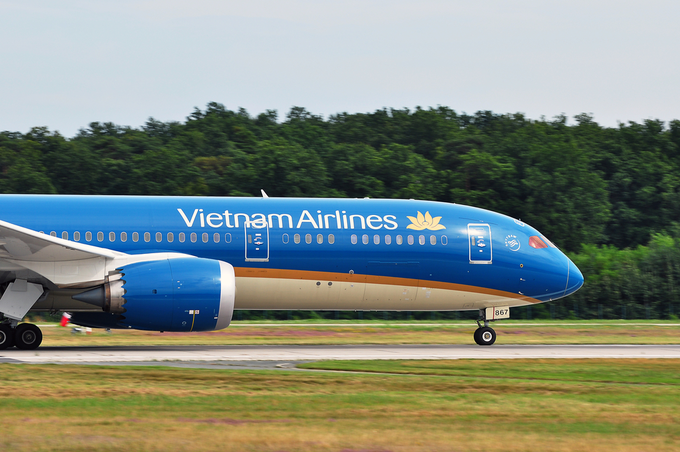
    Vietnam Airlines has lost VND200-250 billion ($8.6-10.8 million) per week following flight suspension to China, the national carrier said in a statement.

    Vietnam Airlines has suspended all flights to and from mainland China since the end of January, directly affecting 70,000 visitors per month between both countries while air routes to China account for 10 percent of Vietnam Airlines’ market share, the airline said.

    “The epidemic has significantly reduced the demand for domestic and international travel among Vietnamese passengers,” the airline reported, adding the number of passengers on its domestic routes had fallen by 20-30 percent over the past two weeks.

    Vietnam welcomed around 5.8 million Chinese tourists last year, accounting for one-third of the 18 million foreign visitors to the country.

    The Civil Aviation Authority of Vietnam said Wednesday the deadly virus had cost Vietnamese airlines over VND10 trillion ($430.5 million) in revenue so far.

    Vietnam declared the Covid-19 outbreak an epidemic on February 1. The country has recorded 16 cases of infection with 11 in Vinh Phuc. Of the remaining five, three were found in Ho Chi Minh City, one in Khanh Hoa and another in Thanh Hoa.

    As of Friday the global death toll had climbed to 1,383 and confirmed infections topped 64,434.

  • Viettel used fake accounts to discredit rivals

    Viettel used fake accounts to discredit rivals

    Facebook has removed a network of accounts and pages linked to Vietnamese telecom giant Viettel for allegedly using disinformation tactics to discredit rivals.

    The social network behemoth said Wednesday it had removed 13 accounts and 10 pages linked to Vietnam’s biggest telecom provider Viettel and its Myanmar venture Mytel for “violating” its “policy against coordinated inauthentic behavior”.

    The move marks the first time Facebook has taken action against businesses for directly using disinformation against competitors.

    Facebook said the individuals behind the network used fake accounts to manage pages posing as independent telecom consumer news hubs. They posed as customers to criticize their rivals, it stated in a release.

    “The page admins and account owners typically shared content in English and Burmese about alleged business failures and planned market exit of some service providers in Myanmar and their alleged fraudulent activity against their customers.”

    The world’s largest social media platform also noted that although the people behind these activities, which originated from Myanmar and Vietnam, attempted to conceal their identities and coordination, its investigation found links to Mytel in Myanmar and Viettel in Vietnam.

    Viettel owns a 49 percent stake in Mytel.

    The controversial pages have around 256,600 followers, and admins have paid around $1.15 million for ads on Facebook in U.S. dollars and Vietnamese dong, it added.

    Military-run Viettel said in a statement Friday that as a company with a presence in 11 countries, it always complies with the laws and business ethics in each market.

    The company is verifying the allegation and is willing to cooperate with Facebook. It will punish anyone guilty of misconduct, Viettel said.

    The company added it supports Facebook’s efforts to clean up the social network environment and expects the latter to function in a cooperative manner to avoid making unilateral allegations.

    Viettel’s revenue last year rose 7.5 percent year-on-year to $251 trillion ($10.78 billion), accounting for 50 percent of Vietnam’s telecom revenues. The company eyes to commercially launch 5G services in June using its own equipment.

  • How Chieh Huang built a pureplay online warehouse giant

    How Chieh Huang built a pureplay online warehouse giant

    Started in a garage in Edison, New Jersey, Boxed – unlike its brick-and-mortar rivals – is membership-free. It offers direct delivery of bulk-sized packages, ordered online or via a mobile app.

    Huang, who shared his story on stage at the BrandLoyalty conference in Amsterdam, was inspired to create Boxed when living in Manhattan. Without a car or a wholesale club nearby he realized he didn’t have access to those types of retailers any longer, recognizing a blind spot in the wholesale market. So he returned to his roots in suburban New Jersey with a plan to change that.

    “It started off in my garage in tropical New Jersey, a very exotic place, home to the Jersey Shore and folks like Bon Jovi and Bruce Springsteen. I was sitting there, saying, okay, it’s time; I’m going to start my own business.”

    Things usually start off slow in business, but pushing the boulder up that proverbial hill didn’t take long. As Huang recalled: “When we started really growing we started hiring friends and family members, and by this time, trucks would drop off entire pallets on my driveway. And if you find my home address on Google Maps, you’d actually find a street view picture of like, a huge 40-foot container in my driveway, in the middle of a residential neighborhood with 20 people walking in and out of the house. So of course, my neighbors thought I was selling drugs.”

    But it was toilet paper being moved in bulk, not drugs, and Huang was soon nicknamed ‘The Toilet Paper Guy’. It wasn’t long before the business outgrew a suburban garage and the founding team needed to find a proper facility. “We had to get out of my garage, because at this point in time, like the neighbors, they were definitely going to call the cops,” he jokes. “So we moved into our first facility, our first warehouse.”

    Though it wasn’t the nicest of warehouses, it allowed Boxed the space to continue to expand, which it did, at a rapid pace, filling a niche in the wholesale market while generating millions in sales.

    Even Huang couldn’t believe it. “When you think about a retailer that went from $40,000 in sales to hundreds of millions in 60 short months, that sounds absolutely nuts. It’s even crazier because this type of service didn’t exist 10 years ago. It tells us that in the current economic climate that this rate of change is only going to get faster and faster and faster.”

    With such a rapid ascent there have been a lot of triumphs as well as a number of lessons. For one, Huang had to learn to stop micromanaging his employees. He referenced this in a recent Ted Talk he participated in when he said, “What is micromanaging? I posit that it’s actually taking great, wonderful, imaginative people, bringing them into an organization, and then crushing their souls by telling them which font size to use. Thankfully, there’s a cure to this management madness: trust. When we stop micromanaging the wonderfully creative people at our own companies, innovation will flourish.”

    Which is precisely what happened. Boxed has been innovative in its relationships with both producers and consumers alike. In regard to producers, just one example is how the company took a new approach to advertising.

    “We like to think of ourselves as not only retailers, but also as an advertising platform. A significant portion of the revenue that we generate is not from just selling potato chips online, but it’s also from selling ads for potato chips, which is actually an almost 100-per-cent gross-margin business.”

    Boxed works with those manufacturers, providing data on buying patterns. They agree on a performance benchmark for sales and if that is not met, the manufacturer receives a rebate. This serves as an alternative to catalogs and flyers and manufacturers compete with each other for promotional space as they would on Google or Facebook.

    Such strategies are clearly resonating with manufacturers just as consumers are embracing the convenience of shopping on Boxed in bulk, saving money and having goods delivered to their door. Huang says the company is turning inventory 12 to 15 times a year. In Boxed’s first year its turnover was about US$40,000. Six years on, it turns over hundreds of millions of dollars annually.

    While Boxed is selling products in bulk – 24-bottle slabs of water or 48-packet boxes of Oreo cookies – it is still personalizing its engagement with customers.

    “Even though we’re a new retailer, we use some old-school kind of things like handwritten notes. If you buy diapers from us the folks at the fulfillment centers will write a nice note that says, ‘say hi to the baby for us’. And then as time goes on and the diaper sizes increase, the next note will say, ‘wow, the baby is growing up so fast’. And so they start to kind of form that one-on-one connection.”

    Another hallmark of Huang’s business strategy for Boxed is the corporate concern the company shows towards social injustice. That’s not to say they are taking a stand on hot-button political issues.

    As Huang explains: “Treating our customers’ right with trusted brands and the best pricing, that’s just good customer service. But we’re actually helping them with social issues that feel unjust. For example, women are charged tax in numerous states for feminine care products like tampons and pads while items for men like condoms and Regaine are not charged.

    “We have to collect the tax by law, but then we rebated it back to customers, even though it hits our bottom line. But when you poll customers, especially the 60 percent who are female, one of the top reasons that they shop with us is because we take stands like this.”

  • Bossini half-year loss could quadruple

    Bossini half-year loss could quadruple

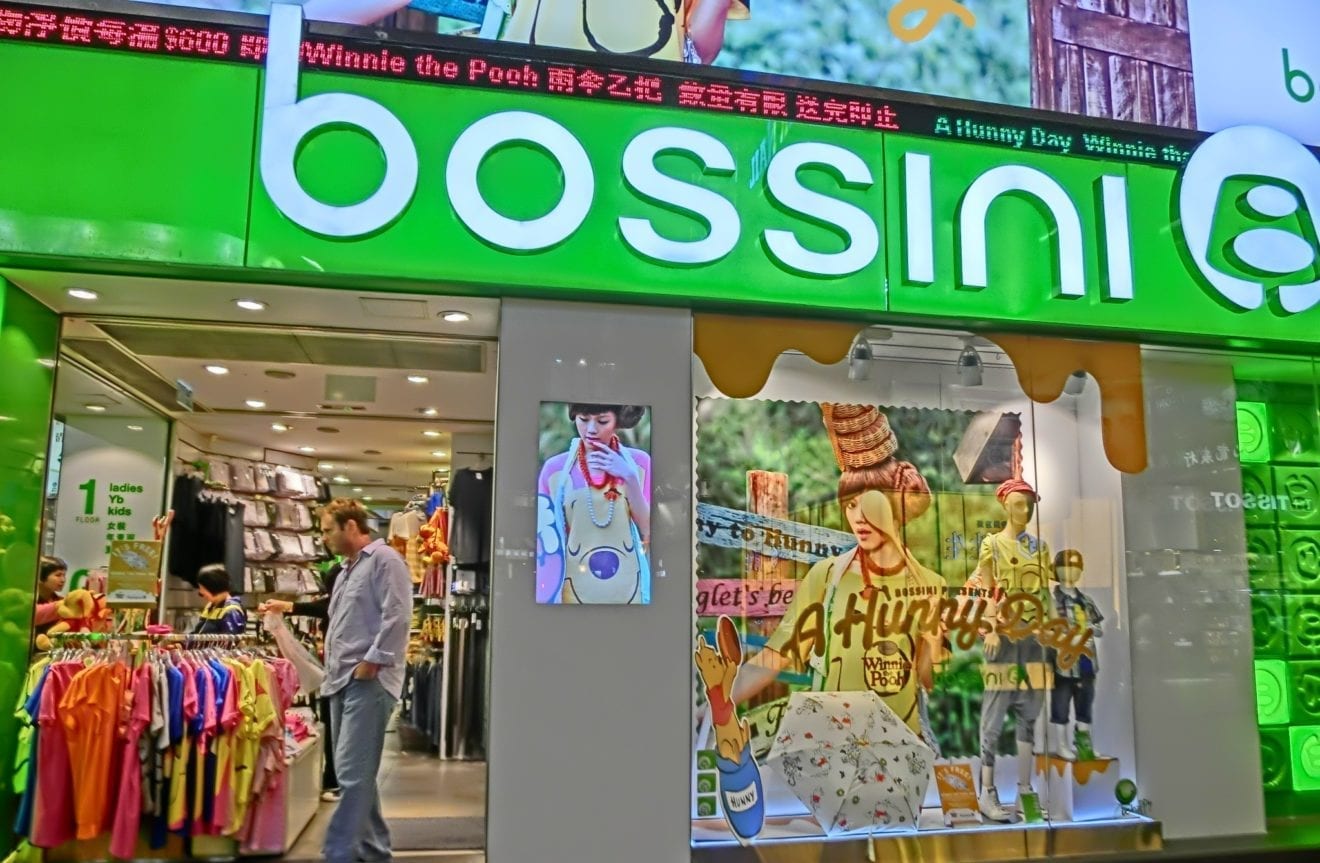
    Chairman Bess Tsin said in a stock-exchange filing that the group expects to record a loss attributable to shareholders ranging between HK$85 million and $105 million for the six months ended December 31.

    That could be as much as four times the loss of $26 million it recorded in the same six months a year earlier.

    Tsin said the loss was “mainly due to a sharp decline in inbound visitors in Hong Kong, the Mainland China-US trade disputes, weakened consumer sentiment and the unseasonably warm winter weather in several core markets where the group operates”.

    Bossini is scheduled to release its half-year results in “mid-February”.

  • Indian tea chain Chaayos raises capital for expansion

    Indian tea chain Chaayos raises capital for expansion

    The fundraising, led by US firm Think Investments and including $3 million of venture debt from InnoVen Capital, will assist the firm to increase its store count to 300 within three to four years.

    “We will deploy the capital to expand our store network, hire a few more senior people, and invest more in technology,” Chaayos founder and CEO Nitin Saluja said in an article published by Livemint.

    Tea chain Chaayos is noted for its use of an IoT-enabled teamaker, called Chai Monk.

    “We have structured ourselves as a neo-retail business, which is a traditional retail business heavily leveraged on technology,” said Saluja. “The entire technology stack that Chaayos runs on has been developed in-house and we have filed for multiple patents as well”.

  • JD and Dada Group to hire 35,000 staff to support SMEs

    JD and Dada Group to hire 35,000 staff to support SMEs

    Chinese online giant JD and its on-demand delivery platform Dada Group, will provide 35,000 jobs during the coronavirus epidemic to minimize its impact on employment.

    The initiative is also intended to support SMEs that may suffer from the economic impact of the virus.

    About 20,000 of the positions being created will be frontline warehouse and logistics jobs. So far, 700 of the positions have been filled by workers from JD partner firms. The other 15,000 jobs will be offered under Dada Group to support the current rise in online orders for partner retailers.

    JD’s hi-tech supermarket 7Fresh has also initiated a scheme to hire temporary staff from restaurants, hotels, cinemas and other retail firms closed for trading sitting the epidemic. It is also setting up remote working customer service positions for staff who need to remain home with families.

    “7Fresh is operating every day to ensure customers can get enough fresh food,” said the company’s head of human resources Chunhua Cao. “It is JD’s responsibility to work with partners and help them and their employees get through this special time.”

    The temporary employees will be monitored periodically with temperature checks and disinfections as a protective measure against the spread of the virus. They will also receive an insurance package specific to the coronavirus.

  • Lotte Duty Free to build Sydney CBD flagship

    Lotte Duty Free to build Sydney CBD flagship

    Lotte Duty-Free is to open a flagship store in Sydney’s CBD early next year, planning to tap into the 4 million visitors to the city each year.

    The three-level 3000sqm store will be built by Mirvac on a prime site at the corner of Pitt and Market Streets. It will stock beauty and skincare brands, a prestige-watch boutique, fine and rare liquor and wine shopping experience, and a number of VIP services including concierge and limousine transfers to Sydney’s top hotels and dining.

    The store is Lotte Duty-Free’s first ground-up build in Australia and follows the acquisition of JR Duty-Free in 2018 and the subsequent opening of its first airport store, in Brisbane.

    Lotte Duty-Free Oceania CEO Stephen Timms said the downtown Sydney site is in the heart of the city’s luxury-retail precinct

    “We couldn’t have asked for a more premium location to showcase our quality curated offer.”

    Last year Timms said that the business was looking to lead the duty-free market in Australia by 2023, and is forecasting over AU$280 million (US$188 million)  revenue in its first year in the region.

    “Travel retail is a unique sector. No other industry has such a divisive target audience, which provides both possibilities and challenges,” Timms said.

    “It’s crucial to have an understanding of the types of people who are traveling through a region – their nationalities, their shopping motivations and the special occasions they celebrate in order to generate strong and targeted sales.”

  • Little romance likely for China retailers on Valentine’s Day

    Little romance likely for China retailers on Valentine’s Day

    The coronavirus outbreak is set to rob retailers of all the romance on Valentine’s Day tomorrow according to analysts from OC&C Strategy Consulting.

    Pascal Martin and Veronica Wang, partners at OC&C, say the outbreak will lead to “markedly different behavior” among consumers in Mainland China and Hong Kong tomorrow.

    “We anticipate a continuing surge in online grocery shopping, and a drop in traditional grocery, as has already been widely reported by Chinese e-commerce players and observers,” the pair said in an email to Inside Retail Asia.

    “However, this is contingent on whether merchants like Alibaba and JD will be able to fulfill the delivery orders effectively, which may be challenging given the sheer volume of demand and availability of staff during the crisis.”

    Online retailers are delivery services are stretched in both markets, especially on the mainland where tens of thousands of retail stores and restaurants are closed either on local government orders or due to negligible demand as consumers stay at home to avoid contact with other people.

    “After more than two weeks filled with fear and anxiety, consumers are also seeking unique experiences to energize themselves at this very moment, but they are also wary of going to public spaces,” said Martin and Wang.

    “Therefore, instead of spending the upcoming Valentine’s Day at conventional venues such as cinemas or upmarket restaurants, people are more inclined to seek safer alternatives such as home-cooked candlelight dinners, ordering gifts and flowers online and having them delivered to their home.”

  • Indonesian retail sales fell in December

    Indonesian retail sales fell in December

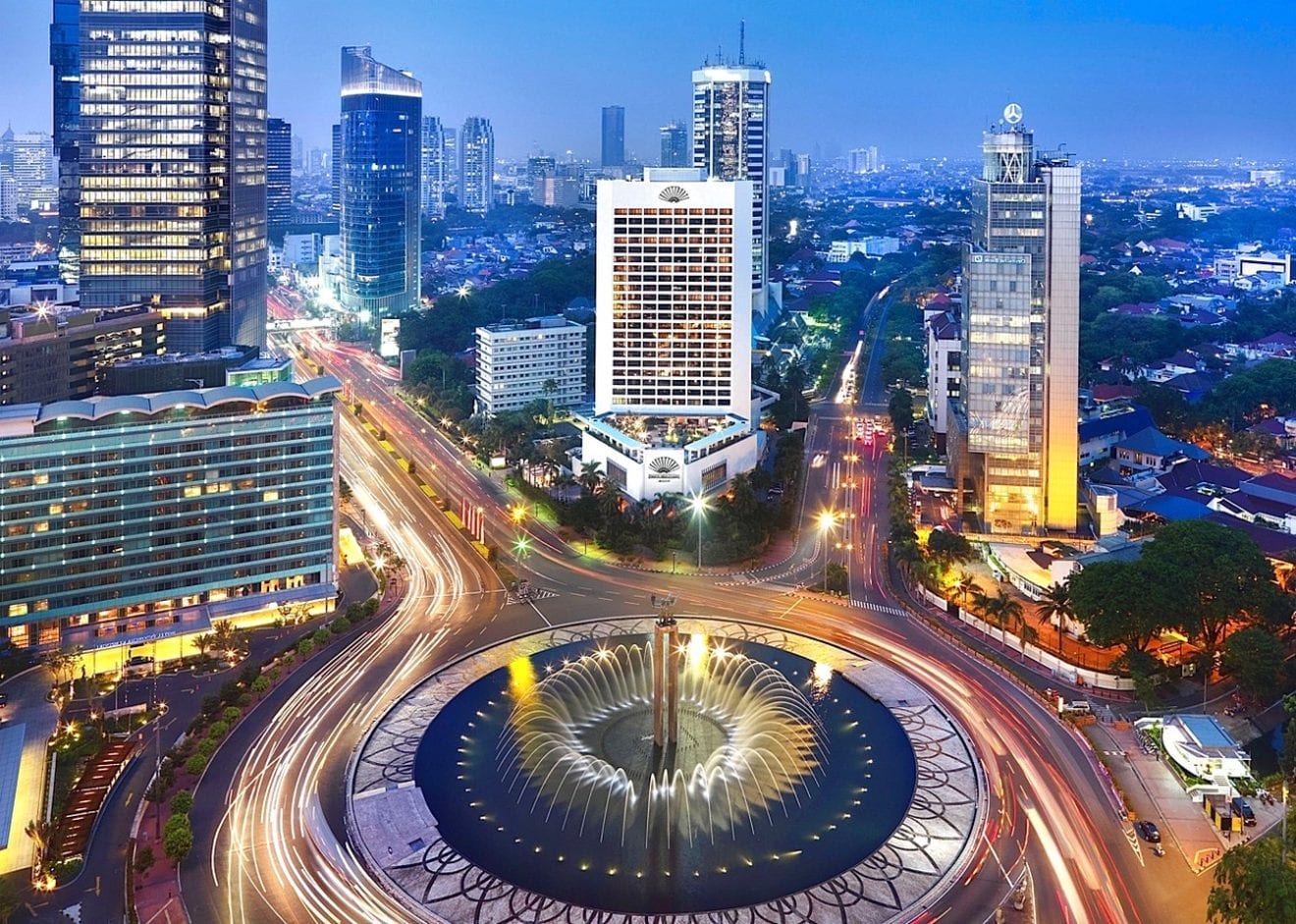
    Indonesian retail sales have witnessed a downturn despite the festive season.

    According to a survey conducted by Bank Indonesia, the retail sales fell 0.5 percent in December compared to year on year.

    The survey predicted January retail sales will stay weak. Key retail sectors, including fashion and food & beverage, will drop 3.1 percent on an annual basis.

    Indonesian retail sales in November rose by 1.3 percent, marking the fifth consecutive month of growth.

  • Singapore retail sales flat in December

    Singapore retail sales flat in December

    Singapore retail sales were flat in December, after motor vehicles were removed from the data, rising by a mere 0.1 percent.

    Including motor vehicles, a decrease of 3.4 percent was recorded, but this relates more to the scarcity of Certificates of Entitlement by which Singapore’s government restricts the number of vehicles on the roads. New vehicle sales were down by 24 percent year on year.

    Compared with November, and again excluding vehicles, retail sales slipped by 1.4 percent.

    Singapore retail sales totaled SG$4.2 billion (US$3.2 billion) for the month. Significantly, online shopping accounted for 6.8 percent of that figure, one of the highest rates yet.

    Aside from cars, the worst-performing retail categories were furniture & household equipment down 8.2 percent, and computer & telecommunications equipment, down 6.3 percent. Sales at department stores fell 5.6 percent, and optical goods & books recorded a 1.2 percent decline.

    Categories to post growth included watches & jewelry (up 8.9 percent). Retailers of petrol service stations, medical goods & toiletries, and mini-marts & convenience stores achieved growth rates between 3.1 percent and 5.4 percent.

    Compared to the same period last year, Sales of food & beverage services in December increased by 2.7 percent to an estimated SG$964 million, compared to $938 million in December 2018.

    Turnover of fast-food outlets, cafes, food courts & other eating places, and restaurants

    Increased by between 2 percent and 7.7 percent year on year.

  • Another 11.11 record boosts Alibaba’s quarterly results

    Another 11.11 record boosts Alibaba’s quarterly results

    Alibaba Group has reported top-line revenue growth of 38 per cent in the December quarter.

    “Our digital economy reached new heights with another record 11.11 Global Shopping Festival for our merchants and partners,” said chairman and CEO Daniel Zhang.

    “Continued investment in user engagement, especially through social-commerce content, contributed to our strong gains in annual active consumers. As a result of its rapid growth, our cloud-computing services for the first time generated revenue of over RMB10 billion (US$1.4 billion) in a single quarter,” he said.

    Total Alibaba Group revenue reached US$23.192 billion for the quarter and non-GAAP net income was $6.678 billion, an increase of 56 per cent year-over-year. Adjusted EBITDA growth was 37 per cent.

    During the quarter, Alibaba boosted the number of annual active consumers by 18 million to 711 million over the 12 months to September 30. Mobile monthly active users rose by 39 million to 824 million.

    The company said it was responding to the coronavirus by mobilizing the “powerful forces of commerce and technology” across its ecosystem in order to “fully support the fight against the outbreak, and ensure supply of daily necessities for our communities”.

    The company has also introduced practical relief measures for its merchants.

    “No matter past, present or future, we remain true to our mission and we will support our merchants to overcome this challenging time together,” said Zhang.

    “Looking forward, we will remain dedicated to investing in digital infrastructure and services, supporting our customers and partners across the Alibaba Digital Economy, especially during the challenging time,” added Maggie Wu, Alibaba Group’s CFO.

  • CapitaLand launches fund to help retailers impacted by coronavirus

    CapitaLand launches fund to help retailers impacted by coronavirus

    Capitaland is taking measures to support its 3500 retail tenants across its malls in Singapore in the midst of the coronavirus epidemic.

    The support includes a SGD10 million (US$7.2 million) marketing assistance program.

    While Capitaland’s malls’ operating hours will remain as standard – from 10 am to 10 pm – stores may open from as late as 11am and close as early as 8pm.

    “We are reaching out first to our retailers as their businesses have been directly impacted,” said Capitaland Group president (Singapore & International) Jason Leow. “The customized support we offer our Singapore retail partners will be based on their specific needs and trades. It will take into consideration the impact of the situation on the performance of their stores across the malls within CapitaLand’s network. This will allow us to leverage the strength of CapitaLand’s shopping mall network to offer holistic support.”

    “As the operator of Singapore’s largest shopping mall network, it is incumbent on Capitaland to take the lead in showing support for our retailers,” said Capitaland Singapore MD Chris Chong. “The wide-ranging support measures we have put in place during this period include the flexibility to operate shorter store hours and targeted marketing assistance. We will continue to monitor the situation and stand ready to offer more support.”

    Capitaland’s marketing assistance program will be used to support both retailer-driven promotions and mall-wide marketing initiatives. These include complimentary booking of atrium spaces for retailers and free parking for shoppers during lunch or dinner hours.