Tag: asia

  • India’s duty-free purchase limits to be cut

    India’s duty-free purchase limits to be cut

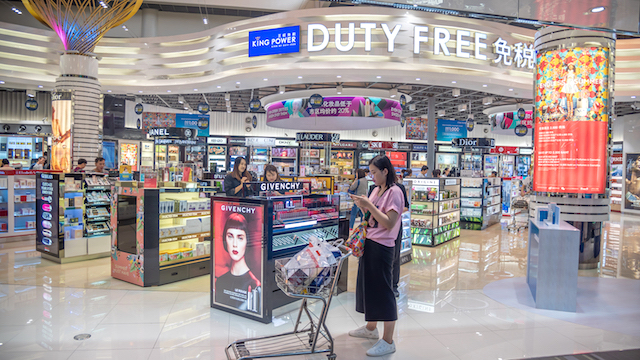
    Proposed changes to India’s duty-free purchase limits may dent the country’s duty-free market growth prospects, says GlobalData.

    The country’s Commerce and Industry Ministry plans to limit duty-free alcohol sales to inbound travelers to one bottle or one liter per person – half the current limit – and to ban all sales of tobacco products.

    The ministry also plans to reduce the value of goods and gifts that a passenger can get into the country without paying import duty which is currently capped at US$712.65 (INR50,000). The government says the move will bring duty-free limits into line with other countries such as the US, China, and South Korea.

    “The proposed changes, if implemented, will negatively impact the duty-free market in India as alcoholic beverages and cigarettes account for a significant share of total duty-free sales,” says Vijay Bhupathiraju, a retail analyst at GlobalData.

    “Drinks is the largest product category sold in the Indian duty-free market with category sales at US$695.7 million in 2018, accounting for 66.8 percent of overall duty-free sales. However, the proposed slashing of the limit on alcoholic drinks to half is forecast to reduce the category sales by nearly 25 percent.

    “On the other hand, tobacco is the fourth-largest product category with its sales at US$64.7 million (6.2 percent share) in 2018. If the proposed plan to completely prohibit inbound tourists from purchasing cigarette cartons at duty-free shops is to be believed, it results in a complete nullification of inbound spending on cigarettes, slashing the category sales by as high as 50 percent,” said Bhupathiraju.

    India is the world’s fastest-growing duty-free market globally, with sales growing at a compound annual growth rate (CAGR) of 23.1 percent during 2013-2018 to reach US$1 billion in 2018 and forecast to grow at a CAGR of 19.2 percent to reach US$2.5 million by 2023.

    Bhupathiraju says if the proposed changes are enacted, India’s duty-free retailers need to diversify their offerings to include essential product categories such as cosmetics and toiletries, food, and jewelry and watches to offset lost sales in liquor and cigarettes.

    “The move is also a jolt to non-aviation revenues for airports, impacting the overall growth of airport retail in an otherwise fast-growing airport retail market.”


  • Chinese store Nova Pets encourages owners

    Chinese store Nova Pets encourages owners

    A new grooming salon concept in China called Nova Pets allows customers to chill with their pets in a retail space.

    Located in Hangzhou, Nova Pets features a sunken cafe, playground and a swimming pool for pets.

    “The project started with an idea of creating a new type of pet store, a place where people could really socialise with their pets,” said a spokesperson for the designers Say Architects.

    Using yellow, black and gray as project’s themed colors, one of the founders Yan Zhang explained “Those are the main colours that dogs can see in their daily doggy life.”

    Nova Pets occupies a 450sqm area, half of which is dedicated to a cafe and a pet playground with the other half used for a grooming salon.

    The playground for pets is adjacent to the store’s entrance. A cafe is located on the upper floor, featuring two curved, hollow “valleys” where customers can sit and enjoy drinks, at the same time, watch their pets running around the playground.

    Say Architects also design a small tunnel with windows for animals to travel between the sunken seating areas.

    In case customers are away or use the restroom, their pets will be taken care of at Nova Pets’ “hotel”.

    The store also features instagrammable spots for photoshoots and a paddling pool for four-legged visitors.

    Say Architects described a concrete column, which lies at the centre of the floor plan, as a nova. This is also where the salon chooses its name.

    “We imagine this column to be the origin of the whole room,” explained the practice.

  • Renault-Nissan Can Overhaul Alliance Without Ownership Change

    Renault-Nissan Can Overhaul Alliance Without Ownership Change

    he comments from Jean-Dominique Senard point to an emphasis on more cooperation and operational efficiency as the automakers and junior partner Mitsubishi Motors Corp strive to rebuild profits, which have slumped in the wake of former chairman Carlos Ghosn’s arrest in 2018.

    Renault and Nissan have struggled to repair a relationship badly strained after the arrest of Ghosn, who fled Japan to his childhood home of Lebanon at the end of last year. He has been charged with financial misconduct, which he denies.

    “We all share a sense of urgency,” Senard told reporters in Yokohama, after he and the heads of the three automakers met. He said there was “no other option” but to change, but added reforms could be made without a shift in the capital structure. “The priority as clearly stated was to increase significantly the efficiency of the alliance,” he said.

    Renault SA, which is part-owned by the French state, owns 43% of Nissan Motor Co, while the Japanese firm has 15% of the French carmaker, with no voting rights – a structure that has caused friction in Japan, given Nissan is the larger of the two.

    Renault has previously indicated a desire to move towards a full merger, something Ghosn is said to have championed and which Nissan has strongly opposed.

    Nissan CEO Makoto Uchida told reporters that in order to leverage their respective strengths, Nissan would take an operational lead in China, where it leads its partners in sales, Renault on its home turf in Europe and Mitsubishi in southeast Asia, an area it dominates.

    A similar model will be taken for engineering, where one company will lead in developing a key technology that would then be shared among the partners, the companies said in a statement.

    Fuel economy credits would be pooled by the three in Europe, they added.

    The three companies, which together sold nearly 11 million vehicles in 2018, will announce revised mid-term plans by May, Uchida said.

    The automakers need to improve profitability to compete with global rivals, which are investing heavily to develop electric vehicles, self-driving cars and other new technologies that are transforming the industry.

    Reuters reported this week that Nissan was set to eliminate at least 4,300 white-collar jobs and shut two manufacturing sites as part of broader plans to add at least 480 billion yen ($4.4 billion) to its bottom line by 2023.

  • Malaysia’s E-Commerce Payments More Than Tripled

    Malaysia’s E-Commerce Payments More Than Tripled

    The e-commerce market in Malaysia is among the fastest-growing in Southeast Asia, with a total transaction value of MYR25.6bn (US$6.2bn) in 2019. This is expected to cross $11 billion in 2023, according to GlobalData.

    Rising Internet and smartphone penetration, growing middle-class population and increasing tech-savvy millennials, coupled with government initiatives, propelled the e-commerce market value to grow more than three times between 2015 and 2019, according to GlobalData’s latest report, Malaysia Cards & Payments: Opportunities and Risks to 2023.

    Total transaction value in the space is expected to grow at a compound annual growth rate (CAGR) of 15.9 percent to reach 46.3bn Malaysian Ringgit ($11.2 billion) in 2023, the firm adds.

    In addition to the increasing number of online shopping population, the government is also supporting the country’s e-commerce market with initiatives under its National eCommerce Strategic Roadmap (NESR), said Sowmya Kulkarni, Banking and Payments Senior Analyst at GlobalData.

    As part of the NESR, the government is putting concerted efforts to increase awareness among consumers and businesses, especially small and medium-sized enterprises (SMEs). The government launched the Digital Free Trade Zone in March 2017 with an aim to position Malaysia as one of the regional e-commerce hubs.

    Alternative payments are the most preferred mode of e-commerce purchases in Malaysia, accounting for 38.2 percent in 2019, closely followed by payment cards with 38 percent, based on GlobalData’s 2019 Banking and Payments Survey.

    With consumers gradually shifting from cash to electronic payments in Malaysia, the rise in online shopping will provide payment companies a significant growth opportunity in Malaysia, added Sowmya.

  • Alipay-Owned Insurance Platform Extends Help to Coronavirus Victims

    Alipay-Owned Insurance Platform Extends Help to Coronavirus Victims

    An Alipay-owned insurance platform has offered to support families and medical staff affected by the ongoing coronavirus outbreak.

    The platform will help affected medical staff apply for coverage of 100,000 yuan ($14,000) each and 500,000 yuan ($72,000) for families of deceased victims. This follows Alibaba co-founder Jack Ma’s decision to donate $14.5 million through charitable foundations to support the development of a vaccine for the deadly virus.

    Various Alibaba-linked entities continue to expand their efforts to combat the epidemic including the group’s offer of $144 million to purchase medical materials for hospitals in the Hubei province and Wuhan – the origin of the outbreak. Alibaba Health Information Technology also said it would offer some of its services for free during the outbreak and has already provided free advice to 2.8 million people in the last week.

    Alibaba is not alone in the relief efforts with more than 30 technology and other new economy companies, including Tencent and Meituan Dianping, collectively donating more than $430 million to related causes. Altruism and branding aside, pundits believe that a move to support the government in the current crisis will bode well for the future as such new economy firms require significant amounts of funding for development which is often provided by state-backed lenders.

  • Mavcom imposes fines on AirAsia, AirAsia X, MAHB

    Mavcom imposes fines on AirAsia, AirAsia X, MAHB

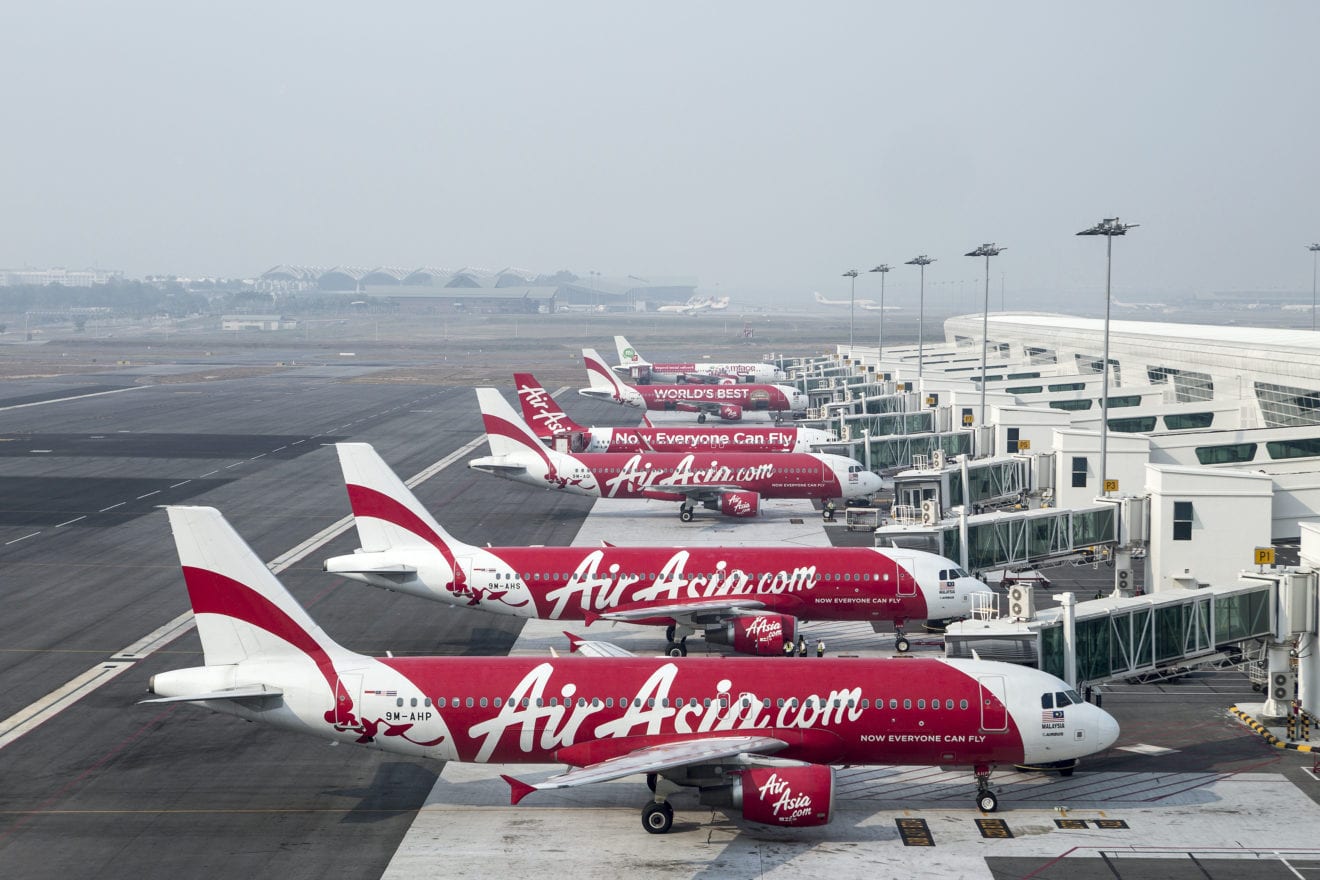
    he Malaysian Aviation Commission (MAVCOM) has imposed financial penalties on AirAsia (AK, Kuala Lumpur Int’l), AirAsia X (D7, Kuala Lumpur Int’l) and MA Sepang, a subsidiary of Malaysia Airports Holdings Berhad (MAHB), according to a press release issued by the commission. The airlines breached the consumer protection code, while the airport operator failed to meet the quality of service (QoS) standards.

    According to MAVCOM, the airlines contravened the Malaysian Aviation Consumer Protection Code 2016 (MACPC) in the period from August 10, 2019, to September 11, 2019, by charging credit card, debit card, and online banking processing fees separate from their base fares. Both were fined MYR2 million ringgit (USD490,000) for the breaches.

    The two airlines were charged with the same contravention in September 2019, this time in the period between June 1, 2019, to August 9, 2019. On that occasion, AirAsia and AirAsia X were fined MYR200,000 (USD49,000) each.

    According to the ch-aviation capacities module, AirAsia is the largest seat provider at Kuala Lumpur Int’l, with a weekly capacity of 270,000. AirAsia X is the third-biggest airline, with close to 74,000 weekly seats, behind Malaysia Airlines (MH, Kuala Lumpur Int’l) in second spot.

    MAVCOM imposed a MYR865,875 (USD210,000) fine on MA Sepang for failing to meet several requirements of the Airports QoS Framework during the period of April 1, 2019, to June 30, 2019. The framework, which came into effect at Terminal 1 and 2 at Kuala Lumpur on September 1, 2018, was introduced to ensure that air

  • Verizon’s 5G network goes live in three more cities

    Verizon’s 5G network goes live in three more cities

    Verizon’s 5G network covered 31 cities in the United States until recently but starting today, three more cities will benefit from Verizon’s 5G mobility service. The carrier announced its 5G network is now live in three more cities: Little Rock, Kansas City, and Cincinnati.

    Just like every other city on the list, these three won’t feature full 5G network coverage. If you live in one of these cities, here is where you should be able to take advantage of 5G blazing-fast data speeds.

    • Little Rock: parts of Midtown, University District, Birchwood, Otter Creek and near landmarks such as UAMS College of Medicine, the University of Arkansas at Little Rock, Rock Creek Square Plaza Shopping Center, and Outlets of Little Rock.
    • Kansas City: parts of Downtown, Midtown-Westport, Plaza Midtown, Olathe and near landmarks such as The Garment District, Kauffman Center for the Performing Arts, Rockhurst University as well as inside and around the professional football stadium.
    • Cincinnati: parts of Downtown, Mt. Adams, West End, Evanston, Walnut Hills, Corryville, Clifton, Price Hill, Over-The-Rhine, Mt Auburn, Avondale, Newport (KY), Dayton (KY), Bellevue (KY) near landmarks such as Great American Ballpark, Duke Energy Convention Center, Serpentine Wall, City Hall, Xavier University, Cincinnati Zoo, Hebrew Union College, Cincinnati Christian University and Newport Waterfront (KY).

    Besides the three cities included in today’s announcement, Verizon’s 5G network is live in parts of Cleveland, Columbus, Hampton Roads, Charlotte, Greensboro, Grand Rapids, Miami, Salt Lake City, Spokane, Hoboken, Memphis, Des Moines, Los Angeles, Boston, Houston, Sioux Falls, Dallas, Omaha, Chicago, Minneapolis, Denver, Providence, St. Paul, Atlanta, Detroit, Indianapolis, Washington DC, Phoenix, Boise, Panama City, and New York City.

  • Android Auto update adds option to disable notification sounds

    Android Auto update adds option to disable notification sounds

    Google has been trying to fix and improve Android Auto for years, but there’s still a lot of features missing or not working as intended. The latest Android Auto app update doesn’t fix anything but adds a new feature that should have been there a long time ago.

    A new option added after the latest update lets Android Auto users disable notification sounds while they’re driving. Spotted by a Reddit user, the option to disable notification sound is not really new, as Google added and removed the feature a few times before.

    This time, however, Google opted for a toggle, so it’s now much easier to completely disable sounds from notifications whenever you want to focus on driving. The problem is this option does exactly what it says, it disables the sounds, so you will still get notifications on the screen. Not only that, but some users report that notifications will remain on the screen until you manually dismiss them.

    Although the update was released last week, it appears that a wider rollout is happening right now, so everyone should see the new app in the Google Play Store in the next couple of days.

  • Apple launches redesigned Maps app for users in the US

    Apple launches redesigned Maps app for users in the US

    Apple has just announced that Maps users in the United States now have access to a redesigned app that integrates a lot of social elements, but also important under-the-hood improvements. Apple’s new Maps app is faster and more accurate thanks to the many new features introduced by iOS 13 not long ago.

    In an attempt to compete with Google Maps, Apple’s own navigation app promises to offer extensive views of roads, buildings, parks, airports, and malls. Also, Maps now includes support for popular apps like Photos, Messages, Calendar, Weather and more.

    An important addition to the app is the new interactive street-level imagery with high-res, 3D photography that you can see above. This feature lets people from anywhere in the world virtually visit many US cities, including New York City, San Francisco, Los Angeles, Las Vegas, and Houston.

    As far as the social aspect goes, Maps now includes a new feature called Collections where users can share lists of their favorite restaurants, as well as places and locations they wish to visit. Furthermore, Maps lets commuters or users who frequently visit a certain location to add it to Favorites so that they bring it up on the screen with just one tap.

    It’s also worth noting that the app now includes indoor maps for airports and malls, along with an option to send an ETA to family or friends. More importantly, Apple Maps offers real-time information about transit schedules, live departure times, arrival times and so on. For the time being, real-time transit is not available in all US cities, but it’s up and running in San Franciso Bay Area, Washington D.C., New York, Los Angeles, and Miami.

    Apple says it will continue to improve Maps and that the newly redesigned app will be rolled out to customers in Europe in the coming months, so expect more news about it very soon.

  • Leading Southeast Asian online luxury fashionmarketplace BlinQ partners with global luxury fashion retailer YOOX

    Leading Southeast Asian online luxury fashionmarketplace BlinQ partners with global luxury fashion retailer YOOX

    Leading Southeast Asian luxury online fashion marketplace BlinQ today announced a commercial affiliation with the leading global online fashion retailer that revolutionized the luxury fashion industry, the YOOX Net-a-Porter group. This closely follows the launch of the BlinQ pre-loved segment and Asean Houz – a collection of high-end fashion brands from around the region.

    With operations all over the world from the United States to Japan, YOOX has over 3 million high-spending customers worldwide. This partnership with BlinQ will bring more of YOOX’s products into the Southeast Asian region. Fashion lovers looking to spend their red packet money on BlinQ will be spoilt for choice: they will now be able to access a catalog of more than 10,000 products from over 700 luxury brands, on top of the products already on the platform — all while enjoying better customer experience, with lower shipping costs and shorter fulfillment times.

    Bob Chua, founder and CEO of BlinQ, commented: “We are thrilled to work with YOOX to drive their unmatched selection of luxury products and designers into this part of the world. This will give Southeast Asian consumers easy access to thousands of new products from amazing high-end luxury brands. We have been growing quickly, and this partnership provides a greater depth of brands and products to our users in the Southeast Asian region.”

    BlinQ has over 30,000 users joining the platform every month, with luxury brands such as Kenzo, Prada and Off-White included on the platform.

    This partnership will provide YOOX with a strong Southeast Asian partner to expand their potential customer base in Southeast Asia. The global luxury fashion powerhouse is in a strong position to gain significant market share in a region that has a growing luxury market.

    A spokesperson from YOOX shared: “We’re extremely excited to work with BlinQ, and we can’t wait to expand our reach with them moving forward.”

  • AirAsia revenues boosted by tailored services

    AirAsia revenues boosted by tailored services

    On January 15, this journalist visited “Santan Restaurant” located inside the Mid Valley Megamall in Kuala Lumpur, the capital of Malaysia. Santan Restaurant, which is run by a Malaysian low-cost carrier (LCC), is the world’s first restaurant specializing in airplane food.

    Opened in December last year, the restaurant offers some 20 varieties of snacks and lunchbox as well as beverages and coffee that are actually served onboard. An in-flight meal with a beverage can be had for around 4,500 won. “We’re planning to franchise the brand to meet the increasing consumer demand to experience in-flight food on land,” said Catherine Ko, the senior manager at Santan Restaurant.

    AirAsia is building international reputation as a low-budget airliner posting additional revenues through such fringe services and businesses as Santan Restaurant. The company also became the first LCC to introduce a “Flatbed seat,” a premium seating comparable to business class of large-sized carriers. AirAsia also features a “silent zone” exclusive to passengers aged 10 or older, and it offers a special seat dedicated to couples.

    The LCC allows passengers to choose the amount of luggage transfer service from 20 to 40 kilograms. Flight fares are set according to the luggage weight and time of ticket purchase, providing an expanded scope of choice to meet the different needs of passengers. AirAsia is actively harnessing data to develop better services by identifying consumer needs. The airliner analyzes passengers’ information such as their patterns or preferences throughout the entire cycle from travel planning, tickets issuance to boarding.

    While the seats come with no back-side monitors, AirAsia is providing their passengers with a rental service of tablet PCs containing video content, such as movies or dramas, as well as useful information on duty-free products, shopping, and tourist guide. Users are required to enter their information such as gender, age, and flight number. This gives the airliner access to the preferences and interests of its passengers.

    AirAsia.com, one of the company’s departments, developed a new service that allows passengers to choose what they want from various options such as hotels, leisure activities, Airtels, and traveler’s insurance. Passengers can purchase the flight tickets of other airliners on AirAsia’s homepage and enjoy shopping on its online shopping mall.

    “We’ve identified the trend where an increasing number of consumers are all pursuing different lifestyles in using airline services, so we’ve developed services that satisfy such varied needs,” said Tony Fernandes, the CEO of AirAsia.

  • AirAsia shaves carbon footprint

    AirAsia shaves carbon footprint

    AirAsia will implement digital solutions to improve fuel efficiency and reducing carbon emissions.

    Developed by the Paris-based Safety Line, OptiFlight-In-flight guidance is a unique suite of digital solutions that optimize all flight phases.

    Following extensive validation tests, AirAsia has implemented OptiClimb which will save up to 3%  of its climb fuel, potentially representing a fleetwide carbon footprint reduction of at least 73,000 tons of CO2 per year.

    By introducing new digital initiatives to its flight operations, AirAsia is not only offsetting its carbon emissions but also pro-actively reducing them at the source whilst also further reducing costs for the benefit of its customers.

    AirAsia Group chief operations officer Javed Malik said: “AirAsia is making every effort to improve its operational efficiency and become a digital airline in all aspects of our business including flight operations, and OptiFlight will allow us to leverage vast amounts of flight data with the aim of reducing CO2 emissions.”

    In addition to implementing OptiClimb, AirAsia joined the OptiFlight Innovation Partnership in September 2019, which provides further flight optimization opportunities that will be explored in all flight phases. The airline will be the first in Asia to trial OptiDirect, a solution that recommends some adjustments to pilots based on historical tracks flown and forecasted weather on the route.

  • Hong Kong food-delivery sales down

    Hong Kong food-delivery sales down

    Food-delivery sales in Hong Kong soared 20 percent over Lunar New Year week as consumers chose to stay indoors, sheltering from the coronavirus.

    A spokesperson for Deliveroo told Inside Retail Asia that the Chinese New Year holiday period is usually a busy period for the company, the market leader in food-delivery in the territory.

    “We saw an increase of more than 20 percent in order volume as compared to the week before, potentially indicating that people were choosing to stay home and order in during the Chinese New Year holiday following traditional visits to relatives over the weekend.”

    The company witnessed a 6-per-cent drop in Chinese food orders and a 6-per-cent increase in American food orders when compared with the week before. Taiwanese cuisine also experienced an order growth of around 3 percent over the festive period.

    The spokesperson said Deliveroo had been in touch with all of its 4000 self-employed riders in Hong Kong to share official guidance with regards to the coronavirus, including safety practices.

    “Health and safety is our top priority. We have a customer service team ready to answer any questions customers may have.”

    Asked if the company was scheduling extra drivers to cope with an increase in demand as consumers ordered in rather than venturing out to public spaces, the spokesperson said the company is prepared year-round unexpectedly busy order times.

    A rider-supply planning team which is responsible for the operational performance of the delivery network uses data analytics to match supply and demand, “ensuring the company has the right number of riders on the road, in the right place and at the right time”.

    In Mainland China, Alibaba-owned delivery service Ele.me has been delivering meals for more than 100 restaurant partners to the frontline medical staff at hospitals and treatment centers.

  • Shopee Joins Hands With SUTD To Nurture Singapore’sTech Talent Pipeline

    Shopee Joins Hands With SUTD To Nurture Singapore’sTech Talent Pipeline

    The Singapore University of Technology and Design (SUTD) and Shopee, the e-commerce arm of Sea, announced that they will join hands to nurture Singapore’s tech talent pipeline. SUTD will look to leverage Shopee’s industry expertise, regional presence, and ecosystem to create new opportunities for SUTD students.

    The partnership will comprise two parts:

    1. Shopee-SUTD Scholarship: To provide financially disadvantaged students with the opportunity to pursue an education in technology and design.

    2. Shopee-SUTD Industry Collaboration Dialogues: To explore further opportunities for Shopee to broaden its support for SUTD’s capacity building initiatives for tech talent in Singapore.

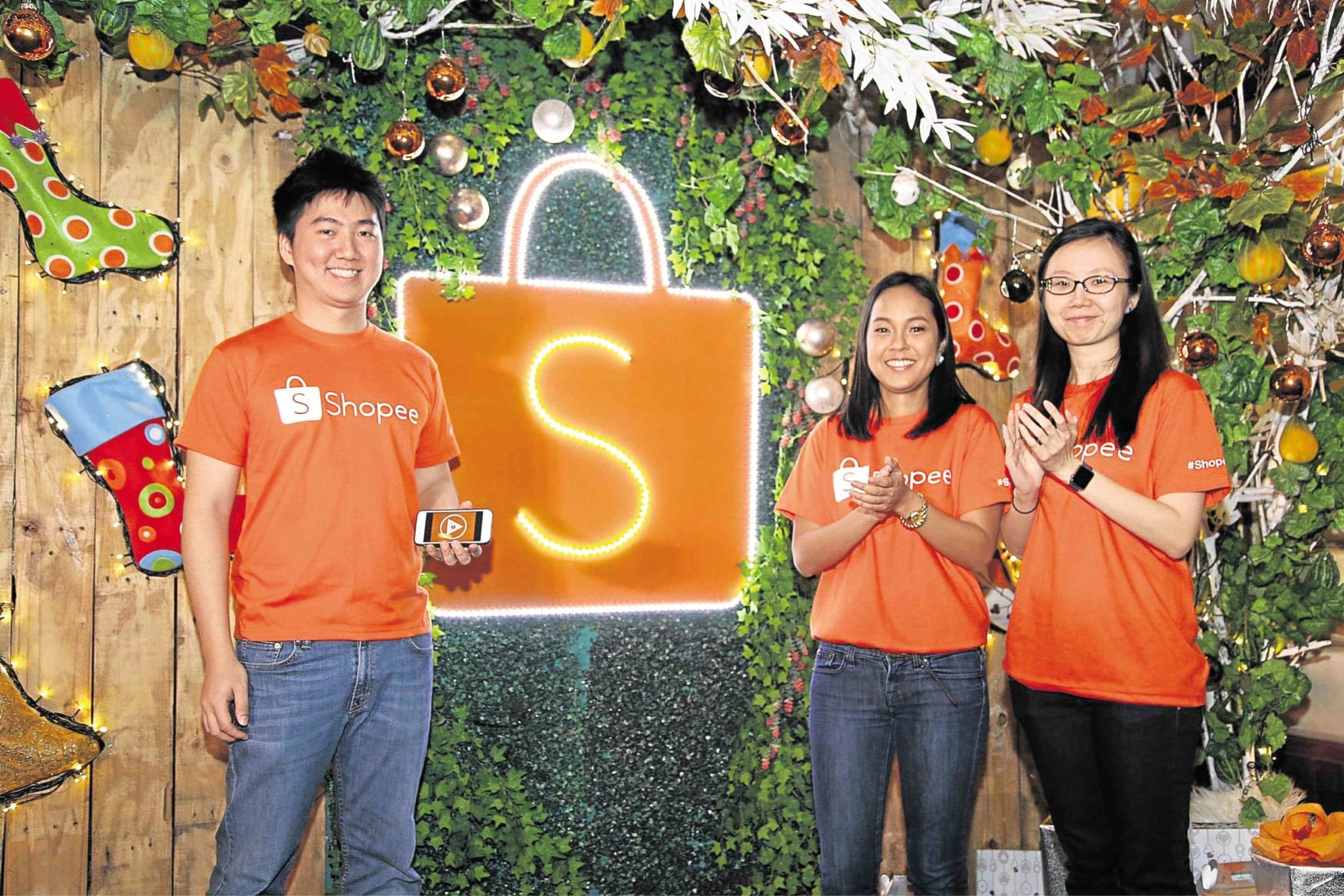
    (L-R) Prof Chong Tow Chong, President of SUTD and Gang Ye, Group Chief Operating Officer of Sea at the Shopee-SUTD Scholarship Gift Ceremony on 23 January, 2020.

    The Shopee-SUTD scholarships will provide a total of four financially disadvantaged Singaporean students with full, four-year scholarships that will cover their tuition fees and study-related expenses. The scholarships will be awarded across four years, starting from the Academic Year 2020 intake. Each scholarship will be worth $15,000 annually and will not require recipients to undertake any service orbond requirements.

    The Shopee-SUTD Industry Collaboration Dialogues will see Shopee and SUTD explore additional avenues for industry-university collaboration by combining Shopee’s industry know-how, regional presence, and ecosystem together with SUTD’s educational expertise.

    These build on Shopee’s ongoing initiatives with SUTD, which include internship programmes and knowledge-sharing sessions, as well as project sponsorships – most recently, Shopee sponsored Team SUTD’s participation at the Autonomous Aerial Vehicle Challenge (AAVC) 2020 in Chumphon, Thailand.

    Gang Ye, Group Chief Operating Officer of Sea, said, “Shopee is always looking for new ways to better the lives of people – whether it is by building communities, helping entrepreneurs get started, or creating valuable learning opportunities for our leaders of tomorrow. Together with SUTD, we want to do our part to shape the future of Singapore.”

    Prof Chong Tow Chong, President of SUTD, said, “SUTD is grateful to donors like Shopee, who understand the important role education plays in lifting families out of financially difficult circumstances, and whose generosity help ensure that all deserving students with financial need have equal opportunities to pursue a high-quality education.”

    Shopee’s partnership with SUTD is part of Sea’s “10 in 10” initiative, which aims to provide at least 10 million people across the region with the skills and training they need to succeed in the digital economy over the next decade.

  • Giordano issues profit warning to Stakeholders

    Giordano issues profit warning to Stakeholders

    Giordano International expects profit attributable to shareholders to fall by about 38 percent for the December year, based on a preliminary review of accounts.

    The fashion label issued a statement to the Hong Kong Stock Exchange warning shareholders ahead of a formal results announcement scheduled for March.

    Chairman and CEO Peter Lau said that while the decline in part followed the adoption of new Hong Kong Financial Reporting Standards 16 regarding leases, which took effect on January 1 last year and the impairment loss on right-of-use assets, it also reflected trading conditions.

    “The board is of the view that the decrease is largely confined to Greater China markets, and primarily attributable to, among other matters, the weak retail environment in those regions stemming from the Sino-US trade dispute, an unseasonably warm winter and social issues.”

    He said that despite the decrease which may be recorded in unaudited profit, the board considers the group’s overall business in non-Greater China markets remains healthy and the board remains positive on the long-term prospects of the group.