Tag: asia

  • Vietnam’s Pharmacity eyes 1000 stores by end of 2021

    Vietnam’s Pharmacity eyes 1000 stores by end of 2021

    Vietnam’s largest pharmacy retailer Pharmacity has raised VND730 billion (US$31.8 million) in a fresh funding round as it ramps up its expansion plans.

    According to a statement, the new funding will be used for further store network expansion. However, the identity of the investors was not revealed.

    Pharmacity, which previously has received backing from Mekong Capital, aims to open 350 new stores this year and reach 1000 stores by the end of next year.

    The company is targeting more than VND3 trillion (US$130 million) in revenue.

    Last year, Pharmacity achieved revenue growth of 129 percent year on year, it said in a statement.

    Prior to the latest funding round, Pharmacity had successfully raised VND150 billion (US$6.44 million).

  • Vietnam Airlines, Jetstar Pacific cut China flights

    Vietnam Airlines, Jetstar Pacific cut China flights

    Vietnam Airlines and Jetstar Pacific will stop flights on some routes to China and reduce them on others amidst the ongoing coronavirus outbreak.

    National flag carrier Vietnam Airlines will suspend routes between Vietnamese localities and China’s Beijing, Shanghai, Guangzhou and Shenzhen cities starting February 4. It will stop flying to and from China’s Chengdu starting February 5, and Macau starting February 6.

    The airline will also suspend flights on the Hanoi-Hong Kong route from February 6 and reduce the number of flights between Ho Chi Minh City and Hong Kong from 10 to 7 per week starting the same day.

    It will disinfect all aircraft upon returning to Vietnam from China to prevent the spread of 2019-nCoV, which originated in Wuhan City of Hubei Province in mainland China.

    Jetstar Pacific, the budget carrier of Vietnam Airlines, will stop operating flights on the Hanoi-Hong Kong route starting February 6, Hanoi-Guangzhou starting February 9 and HCMC- Guangzhou starting February 11.

    Passengers who wish to fly between the mentioned destinations before the suspension can change dates free of charge or ask for a refund from both airlines.

    Budget carrier Vietjet had earlier announced that it will suspend all China flights starting Saturday.

    Over 30 airlines in the world have suspended all or certain flights to China in the wake of nCoV, which as of Saturday had killed 259 people in the country.

    As of Friday, Vietnam had quarantined 97 people, of whom 32 remain isolated pending test results, according to the Ministry of Health.

    As of Saturday morning, the country has recorded six confirmed cases of infection: two Chinese nationals, and four Vietnamese, including three returning from Wuhan, and a female hotel receptionist who has caught the coronavirus infection from the two Chinese nationals presently quarantined in Saigon.

  • Conscious consumers a major threat to fashion and footwear retailers

    Conscious consumers a major threat to fashion and footwear retailers

    Conscious consumers pose “the biggest threat to clothing and footwear retailers in 2020” according to research by GlobalData.

    When asked about their intentions last month, 19.2 percent of UK consumers said they planned to spend less than average on retail products, according to the survey of 2000 nationally representative shoppers.

    “A worrying 48.9 percent of these consumers said they are making a conscious effort to buy less stuff,” said Sofie Willmott, lead retail analyst at GlobalData.

    “Although some shoppers will struggle to keep up this mindful mentality past January, the shift away from spending on non-essential retail products is set to continue throughout the year as consumers prioritize spend on holidays, activities and meals out, and especially as sustainability concerns seep into their consciences.

    “With sustainability becoming a bigger consideration for more consumers, the easiest way they can reduce their impact on the environment is by not buying anything new. Buying second-hand items or reducing the number of clothing and footwear products they purchase is a win-win for consumers who are focused on spending their disposable income wisely while also acting in a sustainable way, but these shifting shopping habits will not help struggling retailers in what is already a challenging and highly competitive trading landscape,” said Willmott.

    Early signs of a new wave of conscious consumers came with the results of discount-fashion retailer Primark. For the 16 weeks to January 4, Primark recorded a marginal decline in like-for-like sales. Willmott says that suggests volume growth will be difficult for clothing retailers to achieve this year.

    “In order to thrive in testing times, it is vital that retailers provide transparency in their supply chains and although years of building a production process with the main aim of providing fast fashion at accessible prices will be difficult to transform into an environmentally sustainable operation, retailers should clearly convey the steps they are taking.

    A brand’s positive environmental stance must be communicated through aspects that customers can interact with. For example, & Other Stories offers 10 percent off a purchase when you bring back an empty beauty container and H&M has garment collection bins in store which customers can donate a bag of clothes to and receive a £5 voucher to use at H&M when they spend £25 or more,” she said.

    “Sustainable clothing pioneer Reformation has taken it to more of an extreme giving their customers the option to purchase ‘climate credits’ such as a credit for an international flight for £22 which offsets the carbon emissions.”

  • South Korean restaurants remain empty as coronavirus fears spread

    South Korean restaurants remain empty as coronavirus fears spread

    South Korean consumers are opting to avoid crowded places, causing restaurant bookings to plunge by as much as half as fears grow of the spreading coronavirus.

    “Lunar New Year, followed by graduation and enrollment ceremonies, should have been a chance to boost our sales,” said the owner of one Seoul Chinese restaurant. “This year, though, reservations have dropped by more than half.”

    Group dinners, accounting for a significant portion of all sales at this time of the year, have dwindled, and schools are canceling graduation and enrollment ceremonies.

    “It’s important that I don’t get infected, but it is also important not to take any chance of spreading the disease to other people. It doesn’t hurt to stay careful,” said a local office worker.

    Some companies have chosen to axe group dinners.

  • Kjus opens Beijing flagship store

    Kjus opens Beijing flagship store

    Luxury sportswear brand Kjus China has opened a flagship store in Beijing, incorporating a VIP lounge with a cafe and highlighting the luxury image of the brand.

    Designed by 5 Star Plus Retail Design, the store features a futuristic, high-tech and luxurious ambiance using cool high-end materials in metal and stone.

    “We used cool, modern, and high-end materials such as metal and stone,” a 5 Star Plus spokesperson explained about the design of the store.

    “Using stone elements in retail fixtures and stone-look flooring helped to create a more luxurious feeling to the store.

    While Kjus stores elsewhere in the world typically use wood, the 5 Star team thought wood would not achieve a futuristic feeling in this location as it is considered something of classic material.

    “However, using wood on a smaller-scale helps to draw a connection to the Switzerland-born brand. We used a wooden background for some of the high-rack equipment, as well as wooden tables, which help to create some warmth in an otherwise cool space.”

    Another important element of the Kjus China store which communicates luxury is to ensure there is enough empty space in the store, without displaying too many SKUs.”

    Special lighting effects and technological advancements are used to explain product features, key products and collections.

  • Amorepacific launching Etude in Indonesia

    Amorepacific launching Etude in Indonesia

    South Korean beauty company Amorepacific Group is set to launch the Etude brand in Indonesia.

    The firm has partnered with local lifestyle retailer PT Mitra Adiperkasa Tbk (MAP) to boost the growth of its business in the territory.

    MAP plans to expand Amorepacific’s presence beyond Jakarta and across Bali, Surabaya and Bandung, giving more local customers better accessibility to the Etude brand, as well as Amorepacific’s other global brands such as Sulwhasoo, Laneige and Innisfree.

    “We are looking forward to working with MAP, the largest retailer in Indonesia to unlock the enormous potential the country has to offer,” said Amorepacific Group president Dong-hyun Bae.

    “With their expertise in retail, MAP and Amorepacific’s global brands are expected to create a great synergy and thereby provide the best quality service to the customers in Indonesia.”

  • OCBC Automates Cooperation with Law Enforcers

    OCBC Automates Cooperation with Law Enforcers

    OCBC has implemented an automated solution that accelerates collaboration with law enforcement agencies by up to 100-fold.

    On average, it takes between 10 days and three months for banks to respond to production orders or requests by law enforcement agencies to provide information for investigation on the bank accounts of individuals or companies. With the new solution – Production Orders: Electronic Transmission (POET) – OCBC will cut turnaround time to just one or two working days with minimal manual processing assuming the information requested does not exceed 13 months.

    By greatly reducing the turnaround time for production orders, we are doing our part to put the squeeze on criminals, said Loretta Yuen, OCBC’s head of group legal and regulatory compliance.

    After a successful pilot, OCBC launched POET in collaboration with the Commercial Affairs Department (CAD) in July 2019. Since then, it has extended collaboration to other agencies including the Singapore Customs, Inland Revenue Authority of Singapore (IRAS), the Corrupt Practices Investigations Bureau (CPIB) and various units under the Singapore Police Force. It is in collaboration with more than 10 law enforcement agencies and expects about 70 percent of production orders to come through POET.

    Other banks are also considering to adopt the solution to improve compliance efficiency. In addition to DBS and UOB, the report noted that foreign banks in Singapore also expressed interest in POET.

    Collaboration with regulators aside, Yuen also highlighted the benefit of data gathered by POET for banks not only to respond to requests but to identify compliance risk early.

    We can use it as additional surveillance risk indicators, as well as in intelligence data mining and transactional link analysis to identify hidden relationships and/or clustering relationships that may pose money laundering risks to the bank, Yuen said.

    On average, OCBC receives more than 1,000 production orders per month from law enforcement agencies and the figure is projected to rise in the coming years.

  • Chatbots still have their place, according to Microsoft

    Chatbots still have their place, according to Microsoft

    The early generation of chatbots may have had their day – but the concept is not yet dead, says a senior Microsoft executive.

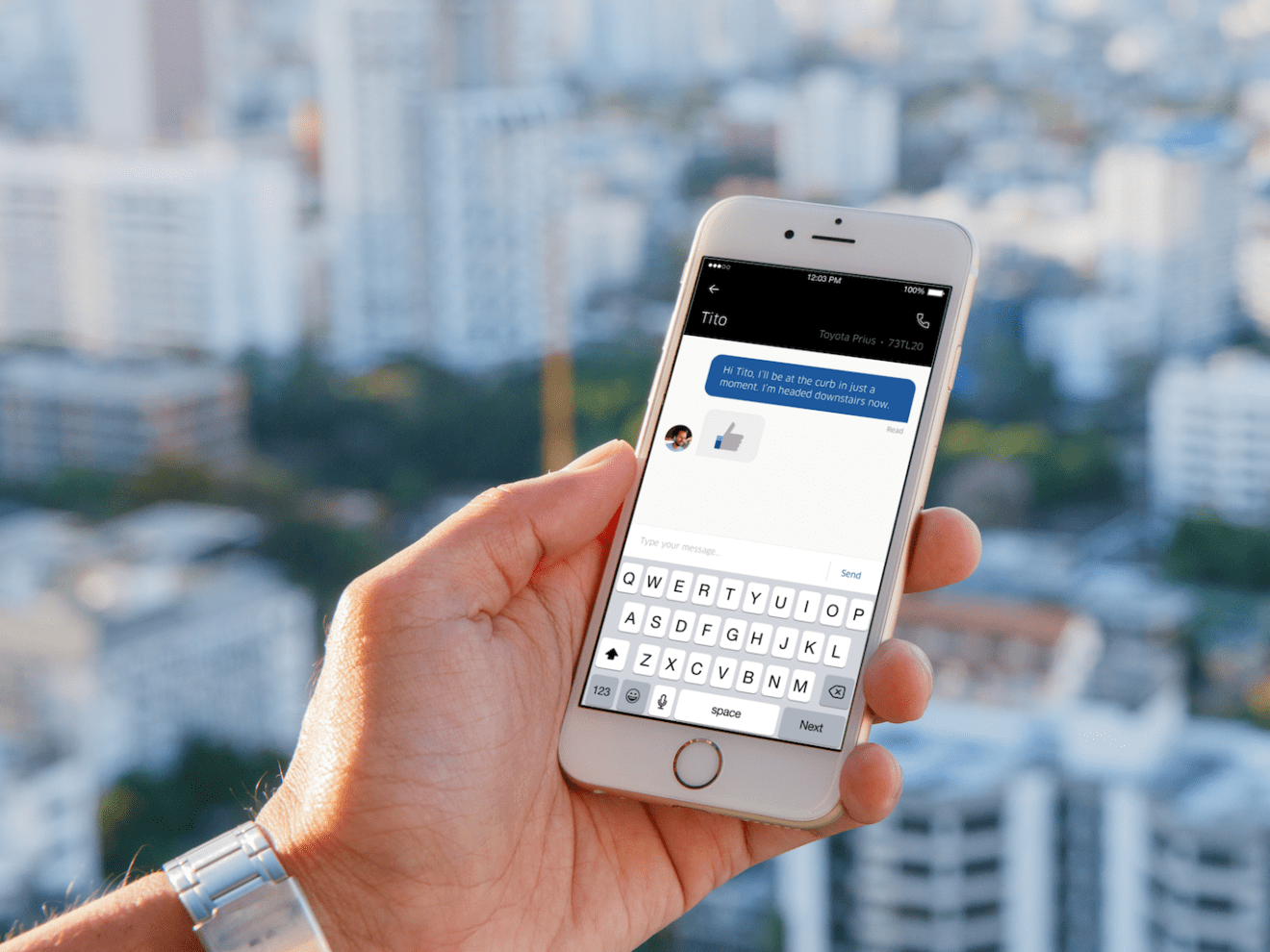
    Raj Raguneethan, regional business lead, retail and consumer goods, at Microsoft Asia, told Inside Retail Asia that the standard chatbot question and order queue format is gone.

    “But we have advanced deployments of a chatbot which can fully integrate into the whole call-center back office and all the way online. You can ask questions, it will connect back to your back office systems tell you when your order is going to be delivered, you can ask questions and it tells you that you can buy this product from this store, and here is a promotional offer for you.”

    Early renditions of chatbots often succeeded in only infuriating consumers with clumsy interfaces, irrelevant answers and being all-too-obviously artificial. The end result: consumers often consider old-style chatbots as insincere, an image unsurprisingly transferred to the brand itself.

    “We have seen customers continue to use them,” says Raguneethan. “It’s not so much chatbot, it’s about cognitive services which are fully integrated.”

    He explains that advanced cognitive services-based solutions that are connected to the same system used by customer call centres, can use chatbots that provide real service and assistance to shoppers.

    “So it’s how you deploy and how you leverage them that is the key. If you just deploy them for an FAQ, it’s probably not interesting. But if you really deploy them connecting into all the systems you have, then you are delivering a superior experience.”

    Raguneethan says new-generation chatbot technology should be able to provide customers with real-time, accurate information about the delivery status of a product they have ordered.

    “Or, I should be able to come in and say ‘I want to buy a shirt, I’m looking for this brand’, you should be able to tell me sorry it’s not here in this store, you can order online, or you can go to this store, or we will place an order for you to pick up from this store.”

    “If you deploy chatbot technology in those scenarios, you will definitely see a difference.”

  • Nissan Weighs Restarting China Production In Dongfeng Venture After February 10

    Nissan Weighs Restarting China Production In Dongfeng Venture After February 10

    Nissan Motor said on Tuesday it is considering restarting production in China in its venture with Dongfeng Motor Group sometime after Feb. 10, citing government guidance and its assessment of the coronavirus epidemic.

    The Japanese carmaker also said production in Hubei province, the epicenter of the epidemic, will start sometime after Feb. 14.

    The production plan is subject to change after reviewing the coronavirus situation in the days ahead, a company spokeswoman said. The virus outbreak has killed over 420 people, spread around the world and raised fears about global economic growth.

  • Alibaba’s Freshippo sales soar during virus outbreak

    Alibaba’s Freshippo sales soar during virus outbreak

    Sales are soaring for Alibaba’s fresh-food chain Freshippo in the wake of the coronavirus outbreak.

    With many Chinese nationals being advised to stay at home during the course of the epidemic, demand for fresh food and household items has soared. Buyers are purchasing more items in bulk so as to reduce contact with home-delivery personnel.

    A spokesperson for Freshippo revealed that it has prepared 250 tons of packaged vegetables and 80 tons of bulk vegetables for around 50 Shanghai stores, six times above its normal volume.

    Freshippo’s head of vegetable procurement Huang Yifan said that the group is planning to ship an extra 100 tons of fresh vegetables from its supplier farm regions every day.

    Similar increases have been reported by Walmart’s delivery business in the region, JD Daojia, with reports of a five-fold increase in sales volume.

  • Reliance to open Armani Cafe in India

    Reliance to open Armani Cafe in India

    Indian conglomerate Reliance Industries is launching a Michelin-star restaurant in Mumbai in partnership with Italian luxury firm Emporio Armani.

    The first Armani Cafe venue is set to open in the firm’s upcoming luxury Bandra Kurla mall, the Jio World Centre.

    Armani restaurants have opened in several major cities among 20 international locations.

    Reliance is the luxury brand’s master franchisee in the Indian territory, and already operates Emporio Armani, Giorgio Armani and Armani Exchange outlets nationwide. It is expected to roll out Armani’s sportswear brand EA7 in March.

  • RCBC to Launch Digital Bank for Rural Filipinos

    RCBC to Launch Digital Bank for Rural Filipinos

    The launch is part of RCBC’s plan to reach a bigger retail market base and serve low-income segments.

    The Rizal Commercial Banking Corporation (RCBC) is setting up a rural bank that will join the digital banking race in the Philippines.

    Diskartech is expected to launch in February and will be run by Lito Villanueva, RCBC executive vice president, and chief inno­vation and inclusion officer, RCBC president Eugene Acevedo said in a filing with the Philippines Stock Exchange on Tuesday, the publication reported.

    This development is a critical component of RCBC’s overall digital blueprint in reaching the grassroots and bring in millions of unbanked and underserved Filipinos. 2020 will definitely be an exciting year for all of us, Acevedo said.

    Under its digital banking roadmap, RCBC plans to add 1 million new customers this year. A virtual bank would allow it to better cater to low-income segments, which include accounts with a daily average balance of 800-1,000 Philippines pesos ($15.72-$19.65).

    RCBC’s announcement follows Singapore-based Tonik Financial’s statement earlier in January that it will debut a pure-play digital bank in the Philippines in 2020.

    Tonik, which received a banking license from the central monetary authority, said the banking market in the Philippines is ripe for disruption, as the country is a world leader in internet and social media use, but 70 percent of adults are unbanked.

    Only two digital banks currently operate in the Philippines, operated by Malaysia-based financial giant CIMB Bank and Dutch lender ING Bank, which both debuted in 2019.

  • Cambodia Readies Digital Currency

    Cambodia Readies Digital Currency

    Cambodia is set to roll out Project Bakong, the country’s blockchain-based payment network that features a central bank digital currency (CBDC) payment system.

    The platform, trialed in July 2019 and set to go live this quarter, already has the backing of 11 banks, with others to join soon, Serey Chea, National Bank of Cambodia (NBC) assistant governor and director-general of central banking said.

    NBC will maintain centralized control of the proposed CBDC with a closed system that will include participants like banks and other financial institutions in the country, the report said.

    Serey called the currency the national payment gateway for Cambodia. Bakong will play a central role in bringing all players in the payment space in Cambodia under the same platform, making it easy for end-users to pay each other regardless of the institutions they bank with.

    Cambodia’s launch of the CBDC comes amid the launch of other state-backed digital currency projects, as central banks come under pressure from private digital currency projects like Facebook’s Libra.

  • Vietjet suspends all China flights

    Vietjet suspends all China flights

    Vietjet will stop all flights to and from China starting Saturday to try and limit the spread of the deadly coronavirus.

    The budget airline said in a statement Friday that it had prepared this plan earlier, and will cooperate with Vietnamese authorities and the World Health Organization (WHO) in taking steps to prevent the spread of the nCoV among its crew members and passengers.

    Vietjet is the first Vietnamese airline to stop China flights. At the time of writing, Vietnam Airlines and Jetstar Pacific were still operating flights to China.

    Globally, British Airways was the first airline to suspend all direct flights to and from China. Other carriers such as U.S.-based United Airlines and Indonesia-based Lion Air have suspended flights to certain Chinese cities.

    The Civil Aviation Authority of Vietnam Wednesday ordered local airlines to stop all flights between Vietnam and infected locations in China.

    The Ministry of Health confirmed Thursday that three Vietnamese have tested positive for the nCoV. One is being treated at the Thanh Hoa General Hospital in the eponymous central province and the others at the National Hospital of Tropical Diseases in Hanoi.

    As of Friday, there were five confirmed cases of infection in Vietnam. The first cases of nCoV infection detected in the country were a Chinese father and son duo. The son has recovered.

    The World Health Organization (WHO) on Friday declared a global health emergency as the death toll reached 213, all of them in China.

  • With ads out of the picture, how Facebook will monetize WhatsApp

    With ads out of the picture, how Facebook will monetize WhatsApp

    There are many different kinds of mobile payment services available depending on the phone in a user’s hand. There is Apple Pay, Google Pay, Samsung Pay, and LG Pay just to name a few. And these create streams of cash for the companies providing this service. For example, Apple earns .15% of the amount of each transaction where Apple Pay is used. For example, if you use Apple Pay to cover a $200 purchase, Apple receives 30 cents. While that doesn’t sound like a lot of money, Apple has been averaging over 11 million Apple Pay transactions per day.
    The promise of getting paid a small percentage of millions of transactions every day is attracting another player to the business. During Facebook’s conference call last week (following the release of its latest quarterly earnings report), co-founder and CEO Mark Zuckerberg discussed plans to turn WhatsApp and Messenger into private platforms that will allow users to connect to businesses. This is similar to the plans that the Cross Carrier Messaging Initiative (CCMI) has for Android users through the Rich Communication Services (RCS) app that they plan on disseminating some time this year. RCS is the next generation of messaging for Android and the CCMI is made up of the four major U.S. wireless providers (Verizon, AT&T, T-Mobile, and Sprint).

    While talking about his plans, Zuckerberg said, “One example that we’ve been working on is WhatsApp Payments where you’re going to be able to send money as quickly and easily as sending a photo.” And the executive even revealed a timeframe. “I’m really excited about this, and I expect this to start rolling out in a number of countries and for us to make a lot of progress here in the next six months. We got approval to test this with one million people in India back in 2018. And when so many of the people kept using it week after week, we knew it was going to be big when we get to launch.”

    WhatsApp Pay’s rollout may be limited at first to developing countries where WhatsApp is used to connect consumers with businesses. In India, the service uses the National Payments Corporation of India’s Unified Payments Interface (UPI). The latter allows peer-to-peer payments and business transactions to be conducted through bank accounts. Not yet fully licensed in India, WhatsApp Pay is in Pilot Mode in the country. Discussing the plans, Zuckerberg said, “We’re taking a number of different approaches here, ranging from people buying and selling to each other directly to businesses setting up storefronts, to people engaging with businesses directly through messaging and a number of things on payments –using existing national systems like India’s UPI to creating new global systems.” Once WhatsApp Pay is fully licensed in India, it will reach 400 million Indians.
    Zuckerberg says that handling transactions and facilitating business is going to be important for his company’s properties that include Facebook, Messenger, Instagram, and WhatsApp. In fact, last month Facebook decided not to monetize WhatsApp by placing ads on the app which makes it more important for services like WhatsApp Pay to be offered in as many countries as possible.
    Facebook ended up acquiring WhatsApp for $21.8 billion in cash and company stock; the deal closed in October 2014. The deal originally called for payments of $4 billion in cash and $12 billion in stock, but Facebook shares appreciated in value between the time the deal was announced and when it closed. When Facebook purchased WhatsApp, it quickly removed the $1 annual subscription fee that users were being charged; with over 1.5 billion users globally, this seemingly insignificant fee would be bringing in over $1.5 billion a year. Offering commerce services like WhatsApp Pay seems the best way for Facebook to monetize its purchase of the app without greatly offending users.