Tag: asia

  • Leading tour operator reports losses

    Leading tour operator reports losses

    Vietravel reported a VND14.1 billion ($606,000) loss in the last quarter of 2019 largely due to rising financing costs.

    Its profit margin slipped in the final quarter, with sales rising by 9.13 percent to VND1.45 trillion ($62.33 million) but cost of goods sold increasing by 10.48 percent to VND1.35 trillion ($58.03 million), according to the company’s latest consolidated financial statement.

    Vietravel’s revenues mainly came from selling tours, goods and tickets on flights it chartered. Q4 financial expenses topped VND26.66 billion ($1.15 million) after ballooning seven-fold year-on-year as the company obtained over VND160 billion ($6.89 million) in short-term loans from various banks.

    Vietravel merely said the loans were to supplement operating capital without elaborating.

    The loss came after three profitable quarters, and in the same quarter of 2018 the company had made a post-tax profit of VND7.3 billion ($313,800).

    Consolidated revenues for full-year 2019 came to VND7.26 trillion ($312 million), up 0.28 percent year-on-year, while post-tax profits fell 32 percent to VND39.93 billion ($1.72 million).

    It applied for a license for setting up an airline last year, and said it plans to launch its first flight late this year using either the narrow-body Airbus A321neo or Boeing 737.

    In the last two years it operated around 300 charter flights a year, both domestically and internationally.

    If licensed, Vietravel Airlines will enter a fiercely competitive aviation market which already has six players: Vietnam Airlines, Vietjet, Jetstar Pacific, Vietnam Air Services Company (VASCO), Bamboo Airways, and newly-licensed military-run carrier Vietstar Airlines, the last two making their debut last year.

    Analysts have forecast 2020 to be a difficult year for tourism companies with the outbreak of the new deadly nCoV pneumonia virus, which has caused Vietnamese airlines to suspend most flights to China.

    The arrival of Chinese tourists, who accounted for 32 percent of all visitors to Vietnam last year, is also expected to fall sharply.

  • % Arabica expands in Indonesia

    % Arabica expands in Indonesia

    Japanese coffee chain % Arabica is launching four locations in Indonesia.

    The stores, scheduled to open in Jakarta and Bali next month, are the result of three years’ planning and were designed by German architect Alexis Dornier.

    According to an Instagram post by the company’s Indonesia partner, the first store to open will be at District 8, a mixed-use development in SCBD, South Jakarta, followed by one in Central Park, West Jakarta and one in Bali’s Seminyak Village the following month. The last of the first four stores, which is set to open in Ubud in May, will be % Arabica’s Indonesian flagship.

    % Arabica now operates 56 outlets in 13 countries since first opening in Kyoto in 2014. The chain has two stores in the Philippines, three in Singapore, and one in Cambodia, with a Bangkok store expected to launch shortly as well as new outlets in Malaysia and Vietnam on the horizon.

  • Hong Kong Customs seize counterfeit US-bound goods

    Hong Kong Customs seize counterfeit US-bound goods

    Hong Kong Customs has seized some 10,000 counterfeit products destined for the US in a targeted operation to combat cross-boundary counterfeiting activities.

    The goods had an estimated street value of about HKD1.1 million (US$141,000), were seized, including medicines, mobile phones, handbags, shoes and clothing.

    The seizures resulted from a sharing of intelligence with US regulatory authorities, something Hong Kong Customs says it expects to continue as it targets cross-boundary counterfeiting activities to a variety of other countries.

    Under Hong Kong’s Trade Descriptions Ordinance, anyone who imports or exports goods with a forged trademark commits an offense. The maximum penalty upon conviction is a fine of HKD500,000 ($64,400) and imprisonment for five years.

  • Grab enters wealth-management space with Bento Invest buy

    Grab enters wealth-management space with Bento Invest buy

    Grab has bought Singapore-based robo-advisory start-up Bento Invest which will be rebranded as GrabInvest, offering wealth management solutions to drivers, merchant partners and consumers through the Grab app.

    Grab’s move adds another business vertical under its financial-services division Grab Financial Group which will now be led by Bento Invest founder and CEO Chandrima Das. The investment app will join Grab’s existing financial services including GrabPay, GrabRewards, GrabInsure and GrabFinance.

    Reuben Lai, senior MD of Grab Financial Group, said there is a lack of access to affordable wealth-management products and retirement planning solutions for most people in Southeast Asia.

    He said Grab’s purchase of Bento Invest aims to “democratize” access to retail wealth-management products, an opportunity traditionally restricted to affluent individuals and institutional investors. The app will provide a low-cost model that is easy for customers to understand by allowing them to transact on a platform they are familiar with.

    “As we face an increasingly volatile and uncertain economic environment, it is imperative for Southeast Asians to acquire the tools and knowledge to protect their future by sustainably building wealth for themselves and their families,” said Lai.

    “The launch of GrabInvest brings us a step closer to democratizing access to affordable financial solutions that will help them achieve the financial stability they need well into their retirement years.”

    Founder Das, a former MD at Bank of Singapore and CEO of ING Investment Management, has more than 20 years of leadership experience with banks and asset managers across Asia and the UK.

  • Sports Illustrated CBD product range to be launched by Authentic Brands Group

    Sports Illustrated CBD product range to be launched by Authentic Brands Group

    Authentic Brands Group (ABG), the owner of the Sports Illustrated brand, announced a strategic partnership with Sentia Wellness, a distributor of CBD-infused wellness products. Through this partnership, Sentia Wellness will develop, produce and distribute Sports Illustrated and Sports Illustrated Swim-branded CBD-infused topicals. A Limited-Edition Recovery Cream will debut this weekend, followed by a full rollout later this year.

    “Sports Illustrated has been at the forefront of sports and culture for over 65 years and is a name that resonates with the athlete and fan in all of us,” said Daniel W. Dienst, vice chairman at ABG. “We are excited to partner with Sentia, a leader in the wellness industry, as we continue to expand the Sports Illustrated brand and create trusted, high-quality consumer products.”

    “As we continue to develop products for active, health-conscious individuals who understand that there is so much more to sport than the game itself, it became clear that Sports Illustrated was the perfect brand to partner with,” said Amy McClintick, COO, licensed brands division of Sentia Wellness. “We are excited to see the initial response from consumers, and cannot wait for the full rollout of complementary products later this year.”

    ABG’s portfolio of brands generates more than $10 billion in annual retail sales and includes Marilyn Monroe, Mini Marilyn, Elvis Presley, Muhammad Ali, Shaquille O’Neal, Sports Illustrated, Dr. J, Greg Norman, Neil Lane, Thalia, Nautica, Aéropostale, Juicy Couture, Vince Camuto, Herve Leger, Judith Leiber, Barneys New York, Frederick’s of Hollywood, Nine West, Frye, Jones New York, Louise et Cie, Sole Society, Enzo Angiolini, CC Corso Como, Hickey Freeman, Hart Schaffner Marx, Adrienne Vittadini, Taryn Rose, Bandolino, Misook, 1.STATE, CeCe, Chaus, Spyder, Tretorn, Tapout, Prince, Volcom, Airwalk, Vision Street Wear, Above The Rim, Hind, Thomasville, Drexel and Henredon.

  • Hennessy partners with Chinese artist Zhang Huan

    Hennessy partners with Chinese artist Zhang Huan

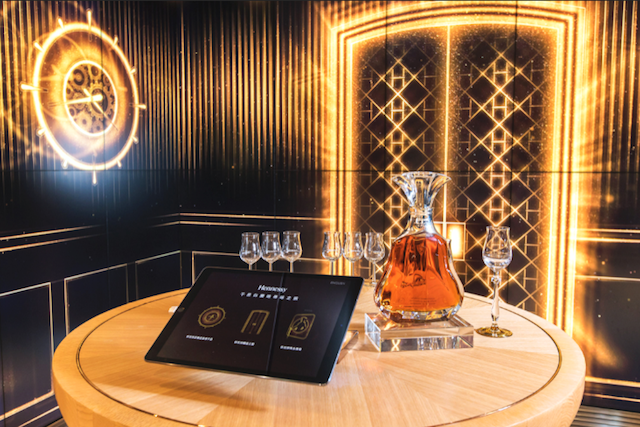
    Hennessy has collaborated with contemporary Chinese artist Zhang Huan in a Chinese New Year promotion running at Singapore’s Changi Airport until February 9.

    The cognac brand has adapted its successful space in Terminal 1, one of the longest-running pop-ups for both the brand and Changi Airport, into an experiential zone offering special New Year-packaged products and interactive features with souvenir photos and personally engraved products.

    “At Hennessy, we recognize that travel retail is an amazing platform to build brand desirability in front of affluent and sophisticated consumers,” said Laurent Boidevezi, Moet Hennessy’s global travel retail president.

    “Crafting experiences is at the heart of Moet Hennessy’s DNA. This Chinese New Year, along with DFS Group and Changi Airport Group, we wanted to combine the traditional with the modernity by presenting customers with a revolutionary molecular tasting experience using Hennessy VSOP. We want to inspire them to re-create a classic cocktail for their own experiences during this festive season,” he said.

    At the heart of the promotion was the commissioning of a work of art from Zhnag Huan, called Eaux-de-vie. The artwork features throughout the pop-up space, including on packaging, as a backdrop to photos in a selfie booth and on red packets. The limited-edition VSOP bottle is an Apac travel retail exclusive, available only at Changi Airport.

    At the Terminal 1 pop-up store, a ‘molecular tasting bar’ allows travelers to immerse themselves “in the spirit of Eaux-de-vie”. Travelers can discover two different Hennessy VSOP cocktails encapsulated in molecular pearls that explode in one’s mouth.

    Airport partnership

    Teo Chew Hoon, group senior VP of airside concessions at Changi Airport Group, said the Changi endeavors to work with partners to create experiential installations to interest travelers passing through the airport.

    “Changi Airport Group continues to work with Hennessy and DFS Group to create unique and one-of-a-kind activations. Located next to the Social Tree at Terminal 1, the walk-through Chinese New Year pop-up concept ingeniously combines art and retail to bring novel experiences for our travelers this festive season,” he said.

    Open daily from 7am to midnight, the Hennessy pop-up at Changi Airport’s Terminal 1 remains open until February 9.

    Activations were also set up at Terminals 3 and 4 to showcase Zhang Huan’s artwork for the tripartite partnership between Hennessy, DFS Group and Changi Airport.

  • Sustainable wines gaining popularity in SEA

    Sustainable wines gaining popularity in SEA

    As Chinese wine consumers – and those across Southeast Asia – are growing a taste for wine, so too they are embracing sustainable wines.

    Although global wine consumption continues to rise, disruption to the wine industry is resulting in changes to production methods, packaging, and marketing techniques. Discerning wine consumers are increasingly looking for good quality wine that is produced with minimal impact on the environment. As a result, new innovations are improving sustainability which is helping winemakers connect to a wider audience.

    Analysis of wine drinking by The International Wine and Spirit Research predicts that within the next three years, the global consumption of organic wine will reach 1 billion bottles. China’s demand for wine, increasingly being met through online sales, is still growing, and research undertaken by the University of Adelaide predicts a continuing rise in Southeast Asia’s consumption of fine wine. Meeting these consumer demands responsibly, but without compromising on taste and quality, is now a priority for wine producers.

    Accessing high-quality, sustainable wine

    As wine consumption continues to rise in Asia, China has recently overtaken the US to become the world’s number one buyer of online wine, creating great opportunities for internet wine retailers. Through ordering a wine subscription box online, consumers can enjoy carefully selected, high-quality wine that is chosen to match personal preferences and taste profiles.

    More wine producers are using sustainable farming techniques such as natural pest control, composting and crop rotation, that are not only ecologically beneficial but economically and socially responsible too. By bottling their own wine produced using these techniques, a company that fulfills subscription orders itself can ensure the delivery of quality wine that is produced in an efficient and environmentally friendly manner.

    Reading wine labeling now goes beyond understanding and recognizing the basic appellation credentials. Increasingly, consumers are also looking for signs that a glass of wine is naturally produced or organically grown, reflecting the efforts made to reduce the environmental impact of wine production. Natural wines are made without chemical additives, and organic wines are grown from grapes untouched by pesticides or synthetic fertilizers.

    As well as being more environmentally friendly, a recent paper looking at the reasons behind Chinese consumers’ organic wine purchase found that the health benefits of increased natural production methods were also highly appealing. Although wine manufacturers are not required to ingredients on wine labels, on wine that is produced naturally in the US, the Department of Agriculture’s organic label reassures consumers that the wine contains no added preservatives, sulfites, or sugar.

    Reducing the impact of transportation

    Discerning taste in fine wine is increasingly being coupled with a desire to minimize environmental impact. Another way for consumers to reduce the environmental impact of wine drinking is to purchase more wine from local sources.

    Although connections with French wine producers are strong, already 80 percent of all the wine that is enjoyed in China is domestically produced. Half of this wine is produced in The Yantai-Penglai region alone, where over 140 different wineries can be found.

    Through supporting local wine producers in the Yamanashi wine region in Tokyo, or buying from wineries based in the Asoke Valley near Bangkok, Japanese and Thai consumers can enjoy distinctive local wines while minimizing the financial and environmental costs of transportation. However, with the introduction of biodegradable and plastic-free bottles made from innovative, sustainable materials, in the future, these costs could be drastically reduced even when importing wine from abroad.

    As global wine consumption continues to grow, discerning drinkers are increasingly looking to look for evidence of organic production and sustainable manufacturing methods. Wine producers are responding by producing high-quality wines grown without chemicals and unnecessary additives and made easily available to both local and wider markets worldwide.
  • Hong Kong retail sales dropped in December

    Hong Kong retail sales dropped in December

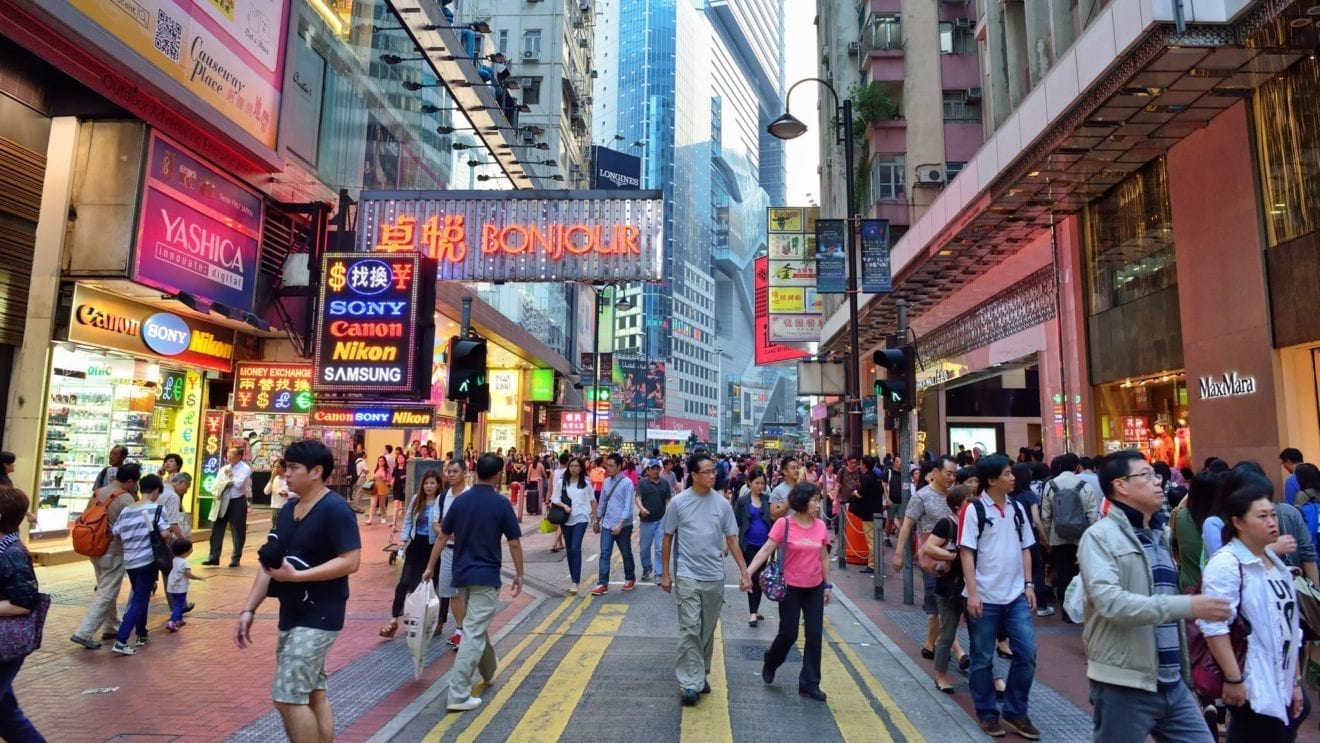
    Hong Kong retail sales in December slumped 19.4 percent, a softer fall than November’s 23.7 percent, but continuing the decline which began with the civil unrest after June.

    For the whole year,  total retail sales decreased by 11.1 percent in value and by 12.3 percent in volume terms (after accounting for price fluctuations) compared with 2018.

    A government spokesman said that Hong Kong retail sales in December continued to decline sharply, as the impact of the local social incidents on consumption- and tourism-related activities remained “severe”.

    “The business environment for retail trade has become even more difficult recently, with the threat of the novel coronavirus infection heavily weighing on inbound tourism and local consumption sentiment,” the spokesman said.

    “The near-term outlook for retail sales depends critically on how the situation of the novel coronavirus infection will evolve.”

    According to figures from The Census and Statistics Department (C&SD) the value of total Hong Kong retail sales in December was estimated at HKD36.2 billion, (US$4.66 billion). After adjusting for inflation, December sales were down 21 percent year on year compared with a 25.5 percent decline in November.

    Listed in terms of their impact on total sales, the worst-performing categories were jewelry, watches, clocks and valuable gifts, down by 36.7 percent, supermarket sales down by 3.1 percent; apparel by 22.1 percent; and department-store sales by 25.3 percent.

    Food, alcoholic drinks and tobacco sales were down by 1.9 percent; electrical goods and other consumer durable goods, by 17.4 percent, other consumable goods not otherwise classified by 14.5 percent; medicines and cosmetics fell 29.9 percent; footwear and accessories by 20.4 percent; furniture and fixtures by 1.4 percent; books, newspapers, stationery and gifts by 14.8 percent; Chinese drugs and herbs by 9.8 percent; and optical shop sales fell 19.3 percent.

    The only category of Hong Kong retail sales in December to show growth was fueled, up by 13.5 percent.

  • First Tiffany store opens in New Delhi

    First Tiffany store opens in New Delhi

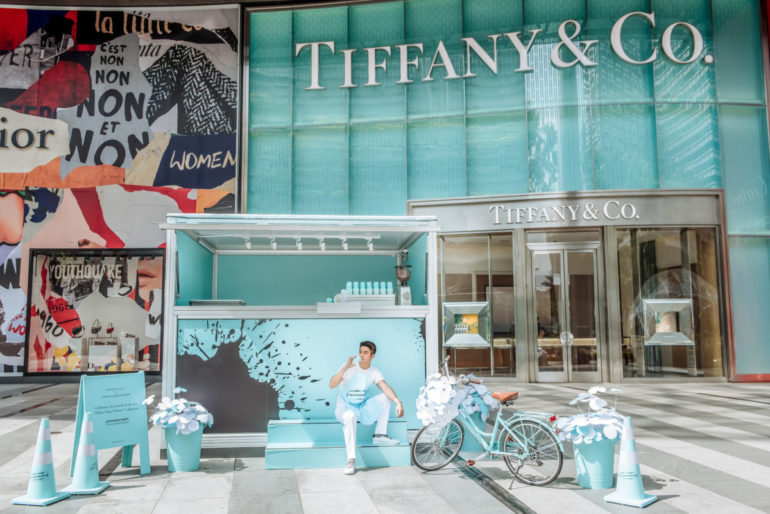
    The first Tiffany India store has opened, located in New Delhi’s upmarket The Chanakya shopping center.

    The 2600sqft store was described as “an important milestone for our iconic brand” by Tiffany & Co CEO Alessandro Bogliolo.

    “As a global luxury jeweler with stores in many of the world’s most important cities, Tiffany’s emergence in New Delhi presents a unique opportunity, particularly given India’s growing luxury consumer base and passion for jewelry,” he said.

    The Tiffany India store stocks the full range of Tiffany’s jewelry collections, hardware, and home & accessories collections.

    Meanwhile, Tiffany & Co shareholders have approved a multibillion-dollar takeover offer by French luxury-goods maker LVMH, scheduled to take effect later this year.

    Tiffany operates more than 300 stores in more than 25 countries, including 80 in the Asia-Pacific region.

  • Macau closing casinos as coronavirus outbreak widens

    Macau closing casinos as coronavirus outbreak widens

    Macau’s government has ordered the closure of the territory’s casinos for at least two weeks over fears coronavirus might be spread through venues.

    The closures followed a reduction of some 87 percent in the numbers of mainland Chinese visiting Macau during recent weeks, the result of the mainland government banning outbound group tours.

    The casino closure is likely to decimate sales at the territory’s malls, most of which are located in the same mixed-use resorts housing the largest of the casinos.

    As at 10 am ICT Wednesday, 24,503 cases of coronavirus had been reported, the vast majority in Mainland China. To date, 492 have died, all but two of those on the mainland, the other being in the Philippines and Hong Kong.

    Meanwhile, in Hong Kong, tourist destinations Disneyland and Ocean Park have been closed indefinitely and Shanghai Disneyland has also been closed due to the coronavirus outbreak. Disney said in a statement that it expects its theme parks in Shanghai and Hong Kong to be shut for two months, resulting in a US$175 million hit to its operating income this quarter.

    Retailers across Mainland China continue to close stores. Ralph Lauren says it has now closed about half of its 110 stores on the mainland. Tiffany has closed an undisclosed number in areas worst affected by the virus crisis. Hugo Boss has also closed an undisclosed number of stores in the market, where it experienced double-digit growth in the last quarter of last year.

  • Vietjet to venture into cargo business in Malaysia

    Vietjet to venture into cargo business in Malaysia

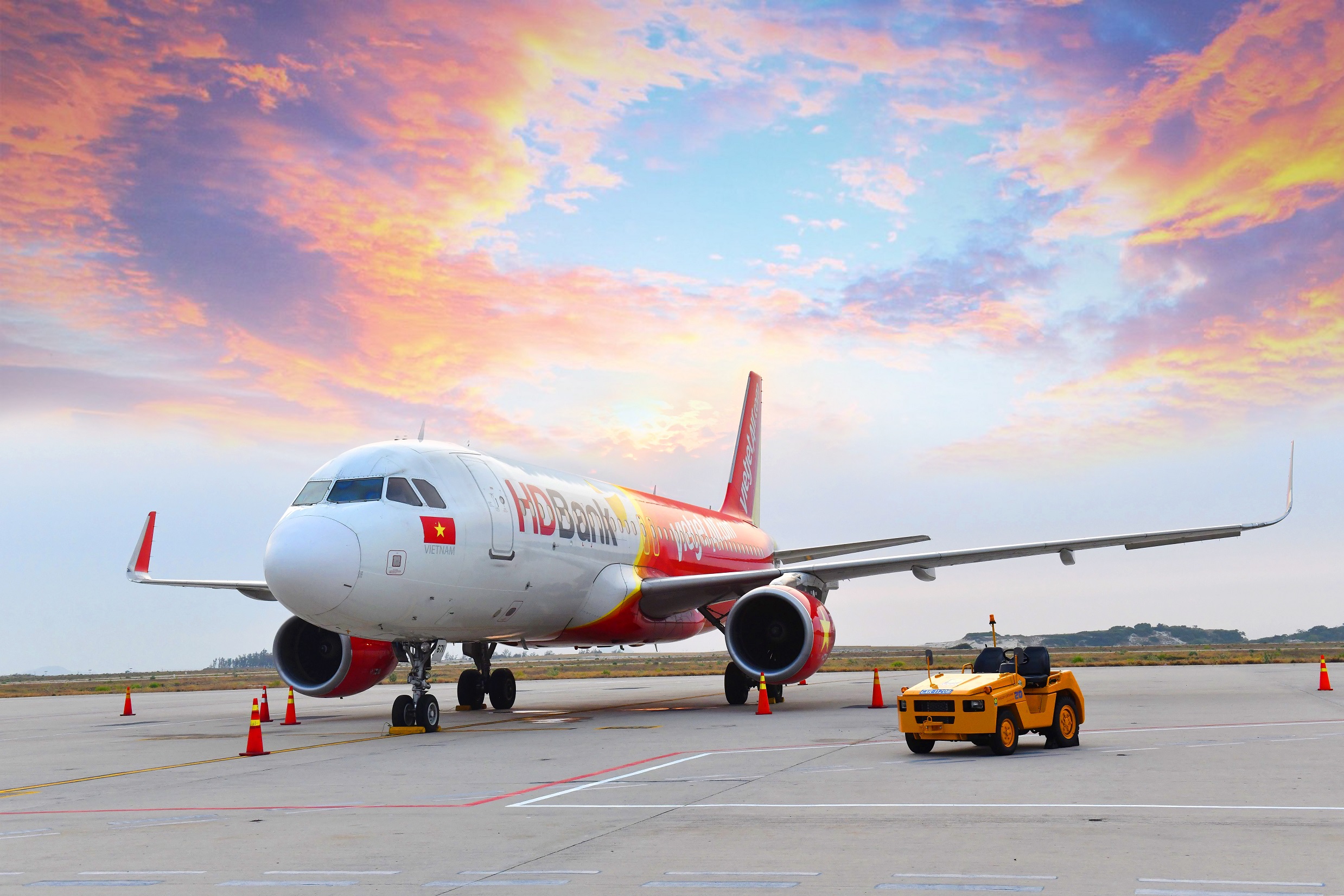
    In order to enhance and further develop its cargo network, the new-age carrier Vietjet is pleased to announce that its subsidiary and cargo arm, Vietjet Cargo is opening a tender for a cargo General Sales Agent (GSA) in Kuala Lumpur and is inviting companies to bid for the first time in Malaysia on February 2020.

    The GSA will be responsible for all the commercial activities for sales, marketing and promotion on Vietjet’s flight network connecting to over 400 flights daily covering more than 140 destinations across Vietnam and internationally such as Malaysia, China, Japan, Korea and Taiwan, etc. which includes a daily flight from Kuala Lumpur to Ho Chi Minh City.

    The GSA will also be actively controlling the pricing policy and space management, working with the cargo warehouse and ground handling agency, supervising the operations, maximizing the uplifted cargo and securing the service level commitment to clients directly.

    Nguyen Thanh Son, Vietjet Vice President, said: “At Vietjet, we believe in diversification to create sustainable business prospects. Following the establishment of Vietjet Cargo in 2014, we have independently and strategically developed and grown demand for air cargo services in Vietnam in addition to our main function as a commercial airline. Today, we have grown internationally, taking the necessary steps to expand our cargo business to the Malaysian market.

    To-date, Vietjet has transported nearly 100 million passengers in Vietnam with a fleet of 80 Airbus aircraft, comprising the Airbus A320/A321 aircraft, a world-class high-tech airplane in the aviation industry, with a capacity of four to five tons of cargo per flight and more.

    Moving forward, Vietjet will continue to work towards the establishment of its subsidiaries in the aviation industry worldwide, bringing a wide range of services and business opportunities to potential partners not only in Malaysia, but also in other countries while expanding Vietjet’s flight network globally.

  • First Starbucks Reserve store in Penang opens at Gurney Plaza

    First Starbucks Reserve store in Penang opens at Gurney Plaza

    Starbucks has opened its first Reserve store in Penang, Malaysia.

    The new store, located in Gurney Plaza, is the 12th Starbucks Reserve Store in Malaysia and features an interactive coffee bar equipped with a variety of brewing equipment.

    Starbucks Reserve Gurney Plaza has two bars, the main one serving core Starbucks products as well as a coffee bar that highlights rare, small-lot coffees from around the world.

    “The opening of Penang’s first Starbucks Reserve further reinforces our coffee leadership here in Malaysia,” said Starbucks Malaysia & Brunei MD Sydney Quays, “while also committing to fostering coffee education and moments of connections between our Starbucks partners [employees] and our customers.”

    The materials and patterns used in designing the store highlights the main stage where the Reserve bar sits, and is a nod to locally sourced textiles. The store’s ceiling element is inspired by the patterns and textures of the mountains where many Arabica coffee cherries are grown, and is featured throughout the store.

    Customers can enjoy the classic Starbucks menu in addition to specialty beverages inspired by the six Starbucks Reserve Roasteries around the world, including Shanghai, Milan and Tokyo.

  • Citibank’s Singapore Head of Retail Exits

    Citibank’s Singapore Head of Retail Exits

    Citi’s head of retail banking in the city-state leaves after more than two decades with the American lender.

    Charles Wong exits the bank after nearly five years in his last role as Singapore head of retail banking. A spokesperson for the bank confirmed his exit.

    In 2015, Wong was appointed to his current role to oversee the retail banking business alongside wealth management, bancassurance, sales and network distribution.

    With over 20 years of experience at Citi, Wong has held a range of roles in retail banking, bancassurance, credit payment products and marketing across Asia Pacific. He was seconded to Citibank’s China business from 2006 to 2008 where he was the head of branch expansion and ATM distribution as well as director for CitiBusiness and customer experience. He was also previously involved in the launch of the Citi Priority segment across APAC which targets emerging affluent customers.

  • Harley-Davidson Global Annual Sales Fall In 2019

    Harley-Davidson Global Annual Sales Fall In 2019

    Harley-Davidson has announced annual results, and the sales numbers for 2019 aren’t very encouraging. The American motorcycle brand’s worldwide sales declined 4.3 percent with a total of 2,18,273 units sold worldwide. Even more worrying is the sales slowdown in Harley-Davidson’s home market, the US. The Bar & Shield brand’s sales in the USA fell by 5.2 percent to 1,25,960 units in 2019, from 1,32,868 units in 2018, while international sales fell 3 percent to 92,313 units in 2019, from 95,183 units a year ago. Harley-Davidson’s 2019 sales in almost all global geographies are in the red, with the Asia Pacific region showing a slight glimmer of hope with 2.7 percent growth.

    With 29,513 units sold in 2019 in the Asia-Pacific region, this is now Harley-Davidson’s third most important geography in terms of sales, after the US market, as well as Europe, Middle East and Africa (EMEA). Sales in EMEA fell 5.4 percent in 2019, down from 46,602 units in 2018 to 44,086 units in 2019. The Latin American geography also ended the year in the red, declining 3.9 percent from 10,167 units in 2018 to 9,768 units in 2019. Harley-Davidson’s sales declined the most in Canada, falling 7.7 percent from 9,690 units in 2018 to 8,946 units in 2019.

    On the financial side of things, Harley-Davidson reported annual revenue growth of 5.5 percent in 2019, up from $ 7,48,229 in 2018 to $ 7,89,111 in 2019. As part of the company’s More Roads To Harley-Davidson program, the American brand intends to introduce a whole new range of motorcycles over the next few years, to generate a new generation of customers, both in US, and more importantly, in newer markets abroad, like the Asia-Pacific.

    Later in 2020, Harley-Davidson is expected to introduce the Bronx Street Fighter, in a completely new segment, which is a departure from the company’s traditional cruiser-styled motorcycles. The Harley-Davidson Pan America will be the brand’s first adventure touring bike, and will be the brand’s first foray into the segment. More important though, will be a new small motorcycle, developed with Chinese partner Qianjiang Motorcycle. The 338 cc Harley-Davidson will be based on the Benelli 302 platform and will be manufactured in China, to be targeted at Asian markets.

  • Grab Moves Into Wealth Management With Acquisition

    Grab Moves Into Wealth Management With Acquisition

    Grab on Tuesday announced the acquisition of Bento Invest, a Singapore-based Robo-advisory start-up for an undisclosed sum. It allows Grab to kickstart the offering of retail wealth management solutions to users, driver-partners, and merchant-partners via its app.

    With the acquisition, Bento will be rebranded as GrabInvest with products launched on the Grab app in the first half of the year in Singapore. GrabInvest will be a new core business vertical under Grab’s financial services arm, Grab Financial Group, led by Chandrima Das, founder, and chief executive of Bento.

    «In Southeast Asia, there is a lack of access to affordable wealth management products and retirement planning solutions for most people. As we face an increasingly volatile and uncertain economic environment, it is imperative for Southeast Asians to acquire the tools and knowledge to protect their future by sustainably building wealth for themselves and their families,» said Reuben Lai, Senior Managing Director of Grab Financial Group in a media statement.

    Bento’s proprietary digital wealth platform includes client onboarding, and portfolio construction and rebalancing supported by robust risk management capabilities. The platform is built and backed by a team of seasoned asset management and banking professionals who will join the GrabInvest team. Bento’s founder, Chandrima Das, has over two decades of leadership experience in banks and asset managers across Asia and the U.K. She was formerly Managing Director at Bank of Singapore and prior to that, CEO of ING Investment Management.

    GrabInvest will operate under a retail wealth management capital markets services license in Singapore, namely the MAS Retail Licensed Fund Management Company (LFMC) license. It hopes to offer cash management and portfolio-based financial solutions to its users, driver-partners, and merchant-partners, with Singapore as the first market to roll-out.

    GrabInvest said its aim is to democratize access to retail wealth management products, by providing people in Southeast Asia with the opportunity to save and invest in financial products traditionally limited to affluent individuals and institutional investors. GrabInvest aims to make wealth management services accessible by adopting a low-cost model, easy to understand by allowing users to transact on a platform they are familiar with, transparent by having full disclosures on fees with zero hidden elements, and trusted by adhering to consumer protection standards outlined by the regulators.

    Grab Financial Group currently offers financial services across Southeast Asia in payments (GrabPay), rewards (GrabRewards), lending (GrabFinance), and insurance (GrabInsure) to micro-entrepreneurs, small business owners, driver-partners and users across Southeast Asia.