Tag: asia

  • US sandwich chain Blimpie makes Asian debut

    US sandwich chain Blimpie makes Asian debut

    American ‘submarine sandwich’ chain Blimpie has opened its first store in Singapore, marking its debut in Asia.

    Located in Tampines, the Blimpie Singapore store offers a menu adapted for halal consumers.

    In a style similar to Subway, customers can choose a type of bread ranging from white, wheat, olive, or Parmesan and choose fillings they want. Price range between SGD6.50 (US$4.81) and SGD13.50 (US$9.99) for regular subs.

    Last year, American restaurant group Kahala Brands entered an agreement with Singapore’s Deelish Brands to launch Blimpie Singapore. The Singapore business is 100-per-cent Muslim owned and has the same owners as Fatburger Singapore, which is halal certified.

    “Although Blimpie Singapore is not yet certified, the supply chain is 100-per-cent halal and we will be applying for certification shortly”, the company said in a statement.

  • Hugo Boss sales soar in China and online

    Hugo Boss sales soar in China and online

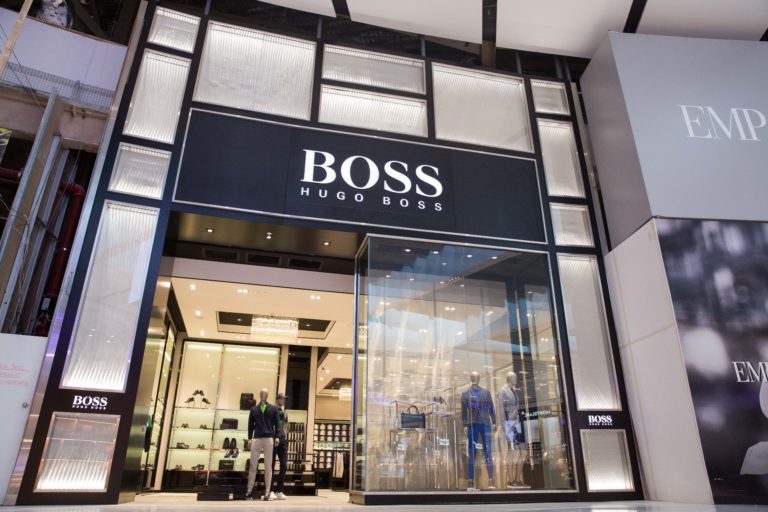
    Fashion label Hugo Boss has reported a staggering 52-per-cent leap in online sales which helped drive a 9 percent boost in operating profit.

    The German brand, which has been struggling lately, says the fourth-quarter sales growth of 4 percent to euro 825 million reflects the impact of store renovations and a new focus online.

    Operating profit for the quarter was euro 122 million, which compensated for a decline in the preceding three quarters.

    The company said the retail market in Hong Kong remained “difficult” in the latest quarter, but the company achieved double-digit sales growth in Mainland China.

    Currency-adjusted sales in the Americas fell by 7 percent after, which was a 1-per-cent improvement on its third-quarter performance there.

  • Indosat Ooredoo provides relief to employees affected by Jakarta floods

    Indosat Ooredoo provides relief to employees affected by Jakarta floods

    The Indonesia telco giant organized a number of programs to help ensure the safety and wellbeing of employees and their families.

    Just to name a few, the objectives of this campaign would be to register and identify all employees affected by the floods, get in touch with employees believed to be impacted and assist in emergency logistics to medical centers or provide evacuation assistance if necessary.

    According to the Communication and Information Minister Johnny G. Plate, he said that power cuts had occurred in response to the disaster. He said that “most customers were able to use cellular services despite power cuts because the BTSs had backup power and providers deployed mobile backup power and portable generators.”

    Jakarta is currently experiencing one of the worst periods of heavy rainfall and flooding in recent years.

    Local reports state that downpours began last Tuesday and continued into the next day, essentially flooding the city and rendering large areas of the city underwater, causing communication disruptions and endangering lives, with at least 53 people already reported dead.

  • China Mobile looks to India for future cloud service opportunities

    China Mobile looks to India for future cloud service opportunities

    Reports have stated that the Chinese telco giant has shown immense interest in working with the Indian operators to bring unparalleled cloud networking services.

    Through this, China Mobile could potentially own a substantial stake in the business via a holding company framework.

    This means that while the China-based telecoms major would not be directly involved in the venture’s day-to-day operations, it would still be eligible for board seats and voting rights within the Indian telecom companies.

    According to an unnamed source, reports had surfaced that “top executives of China Mobile met senior management of Bharti Airtel and Vodafone Idea separately in December.”

    “China Mobile is interested in the Indian market” and has expressed its desire to become a holding company “with either of these two companies or even both,” the source said.

  • ZTE acquires significant chunk of NFV network equipment

    ZTE acquires significant chunk of NFV network equipment

    Moreover, in this bidding, ZTE has also won the bidding for the user plane in Shandong, Anhui, Fujian, Yunnan and other 12 provinces in China, demonstrating ZTE’s leading position in the fields of NFV cloudification and the next-generation core network.

    The phase-1 project of China Mobile’s NFV network includes six parts: PS network VNFs of eight regions and 31 provinces, IMS network VNFs, virtual-layer software, distributed storage, MANO, and system integration. This purchase marks the beginning of the large-scale construction of the NFV cloud network of China Mobile, the world’s largest operator.

    As a technology leader and provider of cloudified products and solutions, ZTE has partnered with China Mobile to build a secure, reliable, mature, and stable end-to-end cloudified network, by means of four years and five stages of pilot and verification in NFV field.

    Furthermore, ZTE’s NFV infrastructure TECS, Ceph-based carrier-grade distributed and unified storage platform CloveStorage, carrier-grade server operation system CGSL, 2/3/4/5G fully integrated cloud core network Common Core and the AI-based automatic O&M management system CloudStudio have also been put into commercial use in global operators’ networks and government & enterprise networks, laying solid foundation for 5G commercialization and vertical industry applications.

  • Indian authorities investigate e-commerce giants over anti-trust accusations

    Indian authorities investigate e-commerce giants over anti-trust accusations

    Bezos, whose worth has been estimated at more than $110 billion, is officially in India for a meeting of business leaders in New Delhi.

    But the Competition Commission of India announced Monday that it was investigating Amazon and its main rival in the domestic market, the Walmart-owned Flipkart, over accusations they had killed off small businesses by favoring “preferred sellers” on their platforms.

    Media reports said Bezos has sought a meeting with India’s Prime Minister Narendra Modi, but neither the government nor Amazon would confirm if talks would be held.

    Amazon has said it will cooperate with the investigation and was “confident” it was operating legally.

    But traders across India said they would stage protests during the visit to demand the government takes action against Amazon.

    The merchants accuse Amazon and Flipkart of flouting foreign investment rules and pouring billions of dollars into discounts that force traditional traders out of business.

    Flipkart was Indian owned until bought by Walmart for $16 billion in 2018 following a bidding war with Amazon.

    The Confederation of All India Traders, which says it represents 70 million small businesses, vowed “strong protests” in 300 cities — including New Delhi, where Bezos was to speak on Wednesday at the Amazon business summit.

    The competition commission said it will report in 60 days, but its inquiries normally take a lot longer.

    Last year it fined Google $21 million for “search bias” and abusing its dominant position.

    After arriving Tuesday, Bezos paid tribute to India’s independence leader Mahatma Gandhi, dressing in an Indian kurta to lay flowers at a memorial in Delhi.

    He described Gandhi in a Twitter message as someone who “truly changed the world”.

    Bezos will also visit India’s financial capital Mumbai, where he will reportedly attend a party with Bollywood celebrities on Thursday evening.

    Since its launch in India in 2016, the company’s streaming platform Amazon Prime has partnered with the who’s who of Bollywood to produce entertainment content in several Indian languages.

  • Cebu Pacific announces seat sale

    Cebu Pacific announces seat sale

    Filipinos and residents in the UAE can get a chance to enjoy the most exciting festivities in the Philippines as Cebu Pacific, the Philippines’ largest national carrier, offers flights from Dubai to Manila for as low as Dh395 ($107.5) base fare.

    The Philippines is known for its stunning beaches some of which are recognized as one of the best in the world. But aside from its magnificent coastlines, the country is also a home to some of the best festivals you’ll ever get to see.

    Cebu Pacific celebrates the success of their hometown’s Sinulog Festival with these Festivals of Fun seat sale! Catch the remaining festivals of the Philippines this year by starting with Panagbenga aka annual flower festival in February.

    In addition, Cebu Pacific has the widest network in the Philippines—connecting travelers from the UAE to 37 local destinations and 25 international destinations with over 120 routes.

    The sale will be from January 20 to 23 and will cover the travel period from February 1 to June 30, which means a chance to experience as many festivals in the country as one can.

    Book now through www.cebupacificair.com or the mobile app, available both in Google Play and App Store. Those who prefer to pay in cash may pay over the counter at any branch of Al-Ansari Exchange, UAE Exchange and Al Rais Travels located across the country, within 24 hours of making a booking online.

  • Singapore Jumped Three Spots In Bloomberg Innovation Index

    Singapore Jumped Three Spots In Bloomberg Innovation Index

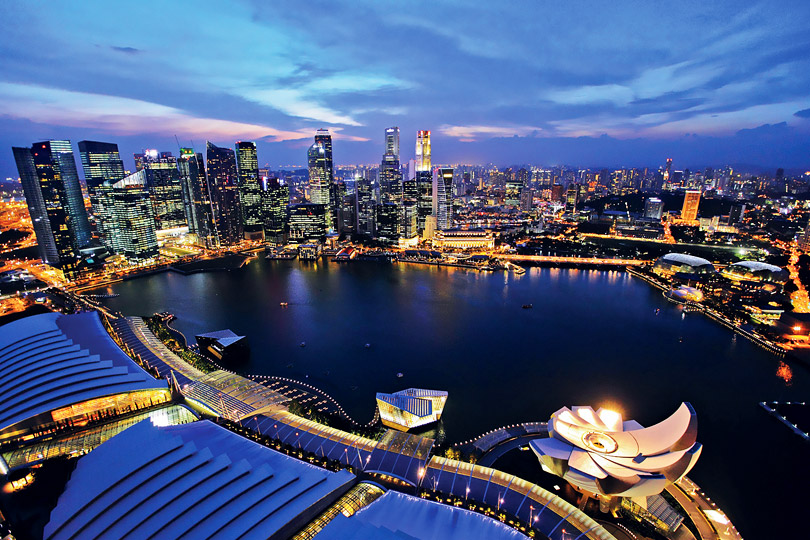
    Singapore has reclaimed its number three rank in the 2020 Bloomberg Innovation Index, after leaping three spots. However, economies across Asia-Pacific showed a mixed picture of progress.

    Singapore’s rise against global peers was underpinned by stronger showings in productivity and patent activity, while the city-state also retained a world-beating ranking in tertiary efficiency. For the latter category, Bloomberg’s rankings take into account factors such as graduation rates of first-degree earners and the share of the labor force that’s made up of new science and engineering graduates.

    Singapore’s high standing in the index speaks to its long-term focus on adapting to an aging population as well as a tighter labor market, as it guns for higher productivity. We see more innovation in the pipeline with even more use of automation in multiple industries. There’s a lot that’s on the way in that regard — and being willing to experiment,»  said David Mann, chief economist for Standard Chartered in Singapore.

    Both Singapore and Vietnam clinched the most-improved title in the region, with the latter climbing three spots to number 57 after it first qualified for a ranking last year. Vietnam was hailed an «e-commerce leader» for trimming regulations and improving cross-border trade, according to a post by Rebecca Sta Maria, executive director of the Asia-Pacific Economic Cooperation Secretariat, ahead of the Index release.

    What also works are reforms that focus on education, skills, infrastructure, and social security, and address barriers that prevent women, small businesses, and traditionally marginalized groups from fully participating in the digital economy, she wrote.

    The annual Bloomberg Innovation Index analyzes dozens of criteria using seven metrics, including research and development spending, manufacturing capability and concentration of high-tech public companies. The Index, in its eighth year, was released just before the annual World Economic Forum in Davos, Switzerland, where innovation will be a key theme of meetings from 21 January to 24 January.

    After a six-year streak at the top, South Korea was unseated from its best-in-world spot by Germany — but only just. Japan and New Zealand were among those losing ground in innovation against global peers, while Vietnam showed a big gain, according to the results.

    The world’s biggest economies had opposite fortunes, with the U.S. dropping one level to No. 9 and China improving by one spot to No. 15. The U.S. was ranked No. 1 when the Innovation Index debuted in 2013.

    The news wasn’t great for advanced economies in the Asia-Pacific, either, with Japan dropping three spots and Australia falling one. New Zealand’s five-spot decline was the biggest slide of any economy ranked in this year’s Innovation Index, mainly due to a drop in productivity and value-added manufacturing.

    The 2020 ranking process started with more than 200 economies. Each was scored on a 0-100 scale based on seven equally weighted categories. Nations that didn’t report data for at least six categories were dropped off the rankings, trimming the total list to 105. Bloomberg then publishes the top 60 economies.

  • HSBC Axes 100 Equity Jobs

    HSBC Axes 100 Equity Jobs

    HSBC will offload around 100 employees in its equities business including research, sales, trading and back-office functions.vMost of the cuts will be made in the bank’s continental European trading floors, according to a report citing anonymous sources. A handful of layoffs will apply to Hong Kong.

    The bank could not comment on the matter ahead of scheduled reporting of its annual results for 2019.

    HSBC is undergoing a major cost-cutting exercise under interim chief Noel Quinn and was reportedly reviewing its equities business as part of the latest round of cuts which could total 10,000 jobs in Europe. This also follows announcements in August by the bank to layoff more than 4,700 jobs to cut 4 percent of wage costs.

    HSBC is expected to redirect its European equities business to focus on its core home market in the U.K., sources added, while retaining the trading hub in Paris to serve continental Europe. As part of Its retreat in the region, the bank will also seek to sell its French retail business and has repeatedly hired Lazard to support the estimated $1.1 billion deal.

  • Unrests In Hong Kong Hits Lucrative Life Insurance Sector

    Unrests In Hong Kong Hits Lucrative Life Insurance Sector

    Anti-government protests in Hong Kong have dealt a severe blow to one of the city’s most lucrative industries and favored channels for getting money out of mainland China.

    The sale of life insurance products to Chinese tourists has always been yielding good profits, up until protests rocked the city. The value of new life insurance policies taken out by mainland citizens in Hong Kong fell 18 percent to $1.2bn in the three months to September, according to the latest available data from the territory’s Insurance Authority.

    Sales have since fallen further as hostility in the territory towards mainland Chinese has grown and tourist arrivals have plunged, industry analysts warned. Fourth-quarter momentum will be even worse than the third quarter because protests accelerated in September, October and November. It will be a big challenge,» said Shengbo Tang, an analyst at Nomura.

    Hong Kong insurers have in recent years enjoyed a boom in business provided by mainland Chinese, who need to be physically present when a new premium is signed. Two of the biggest life insurers in the territory, AIA and Prudential, get up to 60 percent of their new business in Hong Kong from mainland Chinese customers, according to analysts.

    A lot of the life insurers have for a long time been reliant on the huge premiums from mainlanders. But they’re not coming to Hong Kong anymore, said a Hong Kong-based adviser to multinational insurance companies.

    In order to counter the slowdown, some life insurers have begun offering transportation services whereby prospective Chinese customers are picked up from the airport or land border with the mainland to parts of Hong Kong that have not yet been affected by the protests, people familiar with the industry said. The protests have also encouraged some insurers to bring forward plans to expand in the mainland.

    However, the opening up of financial markets has burnished China’s allure for insurers but gaining ground in the country could take a while, observers say. In the near term, growth will be slowing: mainland business won’t make up for the drop in Hong Kong, said Tang

  • Telstra Australia waives firefighters’ phone bills in unprecedented show of support

    Telstra Australia waives firefighters’ phone bills in unprecedented show of support

    Exacerbated by prolonged drought, intense heat and the overall global climate change, the bushfires have had catastrophic consequences on people, their livelihoods as well as the myriad of native animal species that call the Australian bush home. It is now estimated that billions of native wildlife have perished in the deadly blazes.

    Australian telco giant Telstra has responded immediately to the crisis by showing their support for the countless firefighters who have left their families to battle the fierce fires. Earlier this year, Telstra announced that they will be waiving all mobile phone bills for firefighters as a show of thanks for their heroic efforts.

    “Today we’re doing our part to thank our volunteer firefighters by providing them with free mobile bills over December and January,” said Telstra CEO Andrew Penn.

    Penn added, “”We’re doing everything we can to get these communities back up and connected as quickly as possible, but given the horrific conditions we have seen over the past few days, this may take some time.”

    Not long after Telstra made the announcement, both Optus and Vodafone joined in by waving their own mobile service costs for volunteer firefighters doing their part to protect the lives of all Australians.

  • Card Payments To Exceed One Billion In Hong Kong

    Card Payments To Exceed One Billion In Hong Kong

    Despite the dominance of cash, card payments volume in Hong Kong is expected to surpass one billion in 2020, says GlobalData.

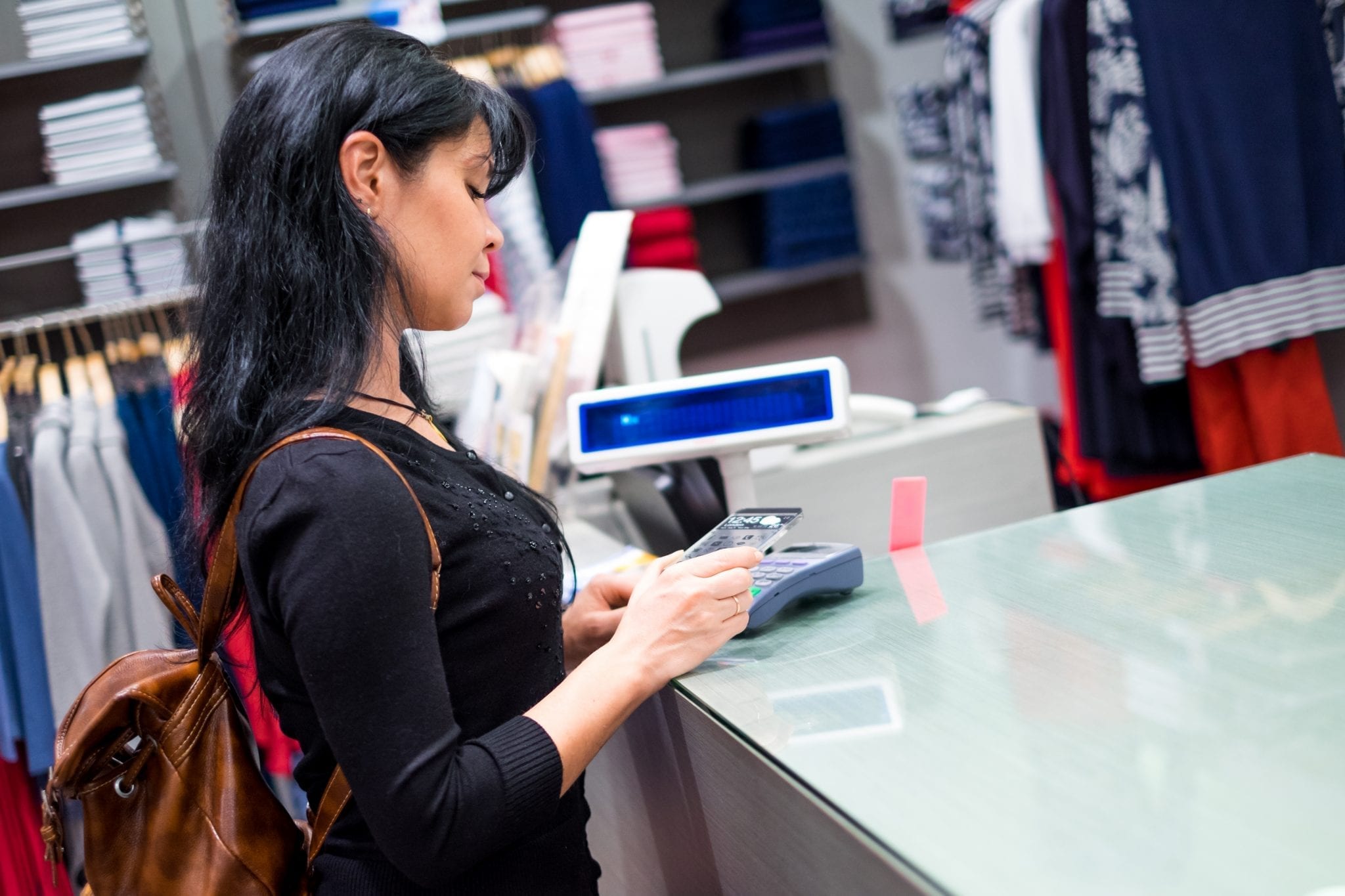
    The convenience of electronic payments, robust payment infrastructure and the emergence of contactless payments are expected to drive the total number of card payments from 642.0 million in 2015 to 1 billion in 2020, according to GlobalData, a data and analytics company.

    Hong Kong’s high banked population, growing preference for contactless technology and, the growing e-commerce market will further support the use of payment cards over the next five years,” said Nikhil Reddy, Banking and Payments Analyst at GlobalData in a media statement on Monday.

    Hong Kong has a highly penetrated payment card market, with each individual holding more than three cards in 2019. The steady progress in the adoption and use of payment cards, plus the high penetration, are supported by the government and banks’ efforts to provide banking services even in remote areas.

    The expansion of banking infrastructure through the introduction of mobile banking branches, new physical bank branches and the establishment of virtual banks, were also factors.

    Hong Kong’s payment card market is mainly driven by credit and charge cards, which accounted for 67.9 percent of total card payment value in 2019, GlobalData’s Payment Cards Analytics reveals. The total card payment value in the country is forecast to increase from HK$43.3bn in 2019 to HK$59.6bn in 2023.

    The pricing benefits such as referral programs, installment facilities, cashback and discounts associated with credit and charge cards are some of the key reasons for their preference. In addition, these cards are increasingly preferred for online shopping and for transactions overseas.

  • One-Third of Chinese Tourist Payments Made Through Mobile

    One-Third of Chinese Tourist Payments Made Through Mobile

    The mobile payment’s penetration of the Chinese tourist market continues to grow with 3.4 times out of 10 transactions made through the channel in 2019.

    Whilst the user base remained stable, usage increased compared to 2018 when 3.2 out of 10 transactions were made through a mobile payment platform, according to a report jointly released by Nielsen and Alipay. This was in spite of the fact that Chinese tourist was increasingly shifting travel destinations from popular East Asian countries in favor of more distant locations where cash is more prominent.

    «In contrast to Asian tourism markets where Chinese mobile payment solutions were adopted earlier, some European countries are witnessing an acceleration of the acceptance of Chinese mobile payment solutions,» the report explained.

    In the U.K. and France, for example, the percentage of Chinese tourists who used mobile payments increased to 65 percent in 2019 while per capita mobile-based spending rose about 10 percent.

    Despite only being ranked as the sixth most popular travel destination for the Chinese in 2019 (9 percent), Singapore was a leader in mobile payments (77 percent).

    Unsurprisingly, the city-state is reaping the rewards from its early and collective efforts including the government’s decision to name e-payments as a national priority in its 10-year plan for a «Smart Nation». And 66 percent of the surveyed merchants in Singapore hopes to run more digital retail operations and improve marketing through mobile payments platforms, the report added.

    Rounding out the remaining top five Chinese tourist mobile payment leaders are South Korea, Japan, Australia and Thailand.

  • Ikea eco-store under construction in Vienna

    Ikea eco-store under construction in Vienna

    A seven-level Ikea eco-store is being built in Vienna – with no car parks, targeting pedestrians, cyclists and public transport users.

    The new venue features a bookcase-style design with green facades and a green roof terrace with plenty of strolling space. The store, designed by Querkraft Architekten, is thought to appeal to the many families in the region living without cars.

    “The concept focuses on the current megatrends and takes into account the dramatically changed shopping behavior as well as a new form of mobility without a car,” read a statement from the firm.

    “Customers have little time and appreciate convenience and comfort. This is clearly noticeable in the furnishing area: more and more customers no longer even think about carrying their purchases home themselves. You can have them delivered.”

    The Ikea eco-store is scheduled for completion next year.

  • Singapore Tops List For Mobile Payment Usage

    Singapore Tops List For Mobile Payment Usage

    Singapore is ranked global leader in mobile payment usage among Chinese tourists, fueled by the country’s maturity in mobile payment solutions, according to a joint report by Nielsen and Alipay. The availability of mobile payment is among the top three factors affecting Chinese tourists’ overseas shopping habits.

    The Southeast Asia region maintains its leadership in mobile payment usage among Chinese tourists, with Singapore and Thailand positioned at #1 and #6 in the global ranking, reflecting the region’s maturity in mobile payment solutions. Other countries on the list of «Top 10 countries where Chinese tourists love to use mobile payments» include South Korea, Japan, Australia, France, New Zealand, Canada, the UK, and the U.S.

    In Singapore, an early adopter of Chinese mobile payment solutions, almost all merchants (97 percent) indicated steady improvement compared to the previous year in terms of mobile payment usage and the amount of mobile spending by Chinese tourists. «Chinese mobile payment engagement level and the depth of usage among Chines tourists continued to increase…as such, overseas merchants are showing a more open attitude towards the application of Chinese mobile payment platforms and digital operations,” said Justin Sargent, President of Nielsen China in a media statement.

    These results are encouraging more overseas merchants to deepen the use of Chinese mobile payment platforms as they go digital. Nearly seven out of ten (66 percent) surveyed merchants in Singapore, South Korea, and the U.K. hope to carry out more digital store operations through Chinese mobile payment platforms and hope to further their promotional and marketing activities leveraging Chinese mobile payment platforms.

    «The trend of more overseas merchants going beyond payment to adopt more digitalized services is a promising one, as it helps brick-and-mortar businesses become better integrated with the digital economy while bringing more personalized experiences for consumers around the world,» said Angel Zhao, President of Ant Financial’s International Business Group. Slightly under two-thirds of merchants surveyed in Singapore, South Korea and the U.K. (63 percent) said that they are likely to recommend Chinese mobile payment systems to their industry peers.

    Surveying 4,837 Chinese travelers and 547 overseas merchants, the report provides a new look at the digitalization trend of the overseas retail sector at a time when online and offline businesses are increasingly merging and Chinese tourists are poised to have even more influence as they travel abroad.

    Destination related insights

    • Among all the countries surveyed, the usage of Chinese mobile payments in Singapore, South Korea, and Japan was highest, with Singapore in the leadership position.
    • 77% of Chinese tourists in Singapore use mobile payments for their transactions.
    • Total spending via mobile payment of Chinese tourists increased significantly in countries where Chinese mobile payment adoption is relatively mature.
    • In Singapore, Malaysia, Thailand, Japan, and South Korea, the usage rate of mobile payment among Chinese tourists was high, reaching 70% in both 2018 and 2019.
    • Correspondingly, the total amount spent by Chinese tourists increased by 14% in Singapore and Thailand and 23% in Japan and South Korea between 2018 and 2019.

    Merchant related insights

    • More overseas merchants intend to deepen the use of Chinese mobile payment platforms as they go digital.
    • 66% of surveyed merchants in Singapore, South Korea, and the UK hope to carry out more digital store operations through Chinese mobile payment
    • 66% hope to further their store’s promotional and marketing activities leveraging Chinese mobile payment platforms.
    • 97% of surveyed merchants in Singapore indicated steady improvement compared to the previous year in terms of mobile payment usage and the amount of mobile spending by Chinese customers.
    • 63% of surveyed merchants in Singapore, South Korea, and the U.K. said that they are likely to recommend Chinese mobile payment systems to their industry peers.

    Tourism-related insights

    • In 2019, destinations located a four-hour flight away such as Japan, South Korea, Thailand, and Singapore, remained the most popular choices for Chinese tourists.
    • In addition, the U.S., Australia, U.K., and Canada were also among the top 10 countries, which indicated that Chinese tourists were fairly keen on traveling to English-speaking countries.
    • Thailand and Singapore were among the Top 10 overseas destinations visited by Chinese tourists in 2019 and the Top 10 Countries for Overseas Travel Plans in 2020.
    • In 2019, compared with last year, Chinese tourists born in the 1990s spent nearly 12% more on a single overseas trip while those born in the 1980s spent 15% more. An underlying reason for the increased travel expenses may be the desire for a more in-depth experience of local cultures.
    • Top three factors affecting Chinese tourists’ overseas shopping habits are:
      • Payment methods accepted by the merchant (37%);
      • Product variety and quality (36%); and
      • Product price (36%)