Tag: asia

  • Chinese people rush to gold amid uncertain economy, crisis-ridden real estate market

    Chinese people rush to gold amid uncertain economy, crisis-ridden real estate market

    People in China have been turning to gold despite rising prices as the precious metal is deemed the best safe haven asset amid economic uncertainties and a crisis-hit property sector.

    Prices of the yellow metal have gained about 11% in the year to date, Business Insider reported.

    Despite this, Caibai, a renowned jewelry store in Beijing, China, has seen more and more customers, many of whom have no great wealth and only modest savings, buying gold as a way to safeguard their wealth amid economic uncertainties, as reported by French newspaper Le Monde.

    As China struggles to recover from several years of pandemic and reels from a property sector in crisis, gold remains the best safe haven asset for its citizens.

    “It’s reliable. People think it’s the best investment. There was also real estate and the stock market, but today people are hesitant, whereas gold has continued to rise,” Wang Anmei, a salesman at Caibai, explained.

    The demand for safe havens has pushed China’s gold consumption up 5.94% from a year earlier to 308.91 tons in the first quarter of 2024, according to data from the China Gold Association cited by state-owned daily newspaper China Daily.

    The gold rush is not only seen among people in China, but its central bank has also been snapping up the precious metal.

    According to industry association World Gold Council, the People’s Bank of China (PBOC) purchased 225 tons of gold in 2023, the most for a single year since at least 1977.

    This also makes PBOC the world’s largest institutional buyer of gold, the association said.

    The central bank had been snapping up the yellow metal for 18 straight months before pausing last month when spot gold prices hit a record high of $2,449.89 per ounce, official data showed on Friday.

    It had actually started to slow purchases in April, when it bought just 1.87 tons of the precious metal, down from 4.98 in March and 12.1 in February.

    Nonetheless, industry players said that they are expected to resume buying yellow metal once prices ease.

    “They are just waiting and watching. If prices correct to the US$2,200 per ounce level, they will resume again,” David Tait, CEO of the World Gold Council (WGC), told Reuters.

  • WhatsApp beta adds the ability to transfer chat history sans Google Drive

    WhatsApp beta adds the ability to transfer chat history sans Google Drive

    WhatsApp announced many new features and improvements over the weekend meant to enhance the call experience. The ability to share screens with audio and the increase in video call participants are among the most important changes coming to WhatsApp users this week.

    However, if you’re also enrolled in the beta program, you’re getting even more new features. Even though they might not work properly at first, it’s always nice to get a sneak peek into the future.

    The latest WhatsApp beta for Android 2.24.13.6 adds the ability to transfer chat history without using Google Drive. Spotted by WABetaInfo, the new feature doesn’t seem to be ready for testing yet, so even if you’re a member of the beta program, you might not have access to it yet.

    Thankfully, the folks at WABetaInfo discovered the feature and even took a screenshot that reveals WhatsApp does indeed plan to remove the need for have Google Drive to transfer chat history to another phone.

    Although this feature, which seems to be in development, has only been spotted in the Android version of the app, it’s unlikely that iOS users won’t be getting a similar one sooner or later.

    WhatsApp already offers users the option to transfer chat history from their older phones, but the process is not that user-friendly regardless of whether you’re using an Android or iOS device. The new feature is meant to streamline the process of transferring chat history by removing at least one step.

  • WhatsApp rolling out feature that lets you set HD quality as the default for media

    WhatsApp rolling out feature that lets you set HD quality as the default for media

    WhatsApp, one of the most popular encrypted messaging apps, is gearing up for a significant update that could change the way users share media. The app is rolling out an HD quality default setting, a change that could make high-resolution images and videos the new norm.

    This upcoming feature builds upon the app’s previous enhancements in media sharing. In August, WhatsApp introduced an HD image sharing option, followed shortly by HD video sharing. While HD doesn’t equate to uncompressed, it significantly improves the resolution of photos and videos compared to WhatsApp’s standard compression, which can often reduce media quality.

    Previously, users had to rely on workarounds like attaching media as documents to bypass the compression, adding unnecessary steps to the sharing process. The new default setting eliminates the need for such workarounds, making sharing high-quality media seamless and intuitive.

    According to reports from Android Police and beta users, the new default setting has been spotted in WhatsApp’s beta version 2.24.13.10. This suggests that the feature is in its final stages of testing and could be released globally soon. Users can check if they have the option in the app’s settings under Storage and data > Media upload quality.

    While this feature is a welcome addition for many users, WhatsApp does caution that HD quality files can be significantly larger than standard quality files, potentially consuming more bandwidth and storage space. However, for users who prioritize image and video quality, this tradeoff might be worth it.

    The introduction of an HD quality default setting aligns with WhatsApp’s continuous efforts to enhance its user experience and stay competitive. Looking ahead, it’s possible that WhatsApp will further expand its HD media features, however, there’s no official word on when or if these features will be implemented.

  • Decathlon opens first-ever airport retail pop-up at Changi

    Decathlon opens first-ever airport retail pop-up at Changi

    Decathlon has launched its first global duty-free pop-up at Singapore’s Changi Airport, featuring a curated range of sports and travel goods.

    The pop-up will be open for customers to visit until September 1, located at the Terminal 3 Departure or transit hall.

    The brand says the launch also presents its new logo, “The Orbit,” symbolising its dedication to circularity and progress toward new heights.

    Exclusive Decathlon x Changi branded products, such as sleek travel bum bags, comfortable hiking backpacks, and lightweight microfiber towels, will be available at the pop-up. Trekking pouches and an Easybreath Surface Mask are also featured.

    The brand has also arranged a series of sports challenges from the June 19 to 26, including a Bike Trainer Challenge, Resistance Band Squat Challenge, and Push-Up Challenge.

    Stephan Veyret, CEO of Decathlon Singapore, said: “Decathlon Singapore will be the first in the world to launch a Decathlon pop-up within an airport transit area at the renowned Changi Airport.

    “This hands-on pop-up reflects our commitment to innovation, providing travellers with a unique opportunity to explore and engage with our range of sporting goods.

    “We aim that our collaboration with the Changi Airport Group will encourage and prepare more people to embrace the joys of sports, even while on the move,” Veyret concluded.

  • DHL identifies four ways for companies to bolster supply chain resilience in latest Trend Report “Supply Chain Diversification”

    DHL identifies four ways for companies to bolster supply chain resilience in latest Trend Report “Supply Chain Diversification”

    Amidst the recent developments such as geopolitical crises, attention is increasingly turning to supply chain diversification. Yet, until now, there has been no clear definition and comprehensive framework for this approach. Rising to the challenge, DHL and leading academics have presented a new definition and a versatile model to explain this important and holistic concept in the latest DHL Trend Report, “Supply Chain Diversification”. Supply chain diversification is defined here as a proactive approach where companies incorporate one or several dimensions into their supply chains to minimize risk. This includes multi-shored supply networks, multi-sourcing, parallel modes of transportation, and concurrent or redundant logistics operations. The report also provides tangible customer case examples, enabling companies to assess their diversification level and devise a suitable strategy.

    “The events of the last years have shown us the importance of resilient supply chains and companies adapting their global supply networks accordingly,” says Katja Busch, Chief Commercial Officer and Head of DHL Customer Solutions & Innovation. “At DHL we are committed to supporting our customers in staying resilient in a sustainable way by providing tailored solutions, sharing best practices, and facilitating collaborative initiatives.”

    “This latest DHL Trend Report underscores our aim to be at the forefront of supply chain trends to empower our customers but also businesses across industries,” adds Klaus Dohrmann, Vice President and Head of Innovation and Trend Research at DHL Customer Solutions & Innovation. “We equip companies with the latest research, our industry expertise, tools and logistics solutions needed to bolster resilience, drive agility, improve sustainability, and thus grow their competitive advantage.”

    Illustrative model of the dimensions of supply chain diversification.

    In the novel model developed by DHL in collaboration with Emeritus Professor Richard Wilding OBE, one of the world’s leading experts in Logistics and Supply Chain Management, four dimensions of supply chain diversification are illustrated:

    Dimension 1 – Multi Shoring: This involves spreading manufacturing and supplier locations across different regions or countries to mitigate risks. It includes duplicating manufacturing capabilities and using the same supplier in different locations.

    Dimension 2 – Manufacturing & Supplier Network: Expanding the network to include redundant suppliers and manufacturing capacities to address financial and operational risks.

    Dimension 3 – Mode of transportation: Utilizing multiple transportation modes simultaneously, covering all stages of transport, including first mile, long haul, and last mile, to diversify routes and reduce risk.

    Dimension 4 – Logistics Operations: Expanding logistics infrastructure to include additional functions like hubs, warehouses, and distribution centers. This may involve adding redundant capacity nearby and outsourcing certain logistics activities for diversification.

  • Google Meet update adds full HD support for recorded meetings

    Google Meet update adds full HD support for recorded meetings

    Great news for Google Meet users, as the app’s latest update brings high definition video support for meeting recording and devices. Google has just announced that full HD video content is now available for recorded meetings in the Meet app.

    This means that Google is increasing the maximum resolution for the speaker’s video feed from 720p to 1080p. Although Meet already supported 1080p recording for presented content, this feature was not available for the speaker’s video feed until this update.

    Besides full HD video content for recorded meetings, the latest update also brings the ability to send full HD video on all computers with 1080p cameras. Keep in mind though that this is disabled by default and requires the user to enable it via the settings menu.

    According to Google, full HD video is only sent when recording is enabled or when one or more users have pinned the 1080p-enabled user on a screen large enough to render the 1080p video feed.

    Google Meet will automatically adjust the resolution if the device is bandwidth constrained, which is important to mention considering that additional bandwidth will be required to send 1080p video.

    The full HD video for meeting recordings is now available for Google Workspace customers with Business Standard and Plus, Enterprise Essentials and Essentials Plus, Enterprise Starter, Standard, and Plus, as well as Education Plus and the Teaching & Learning Upgrade.

    On the other hand, the ability to send full HD video on computers with 1080p cameras is available for Google Workspace customers with Business Standard and Plus, Enterprise Starter, Standard, and Plus, Education Plus and the Teaching and Learning Upgrade, Enterprise Essentials and Essentials Plus, as well as Google One subscribers with 2TB or more storage space.

  • Hermes reopens Lee Gardens store in Causeway Bay

    Hermes reopens Lee Gardens store in Causeway Bay

    Hermes has reopened its expanded store at Lee Gardens in Causeway Bay, Hong Kong.

    The store first opened in 1997 and is one of the luxury brand’s six stores in the metropolis.

    Hermes partnered with Parisian architecture agency RDAI for the expanded store’s design, which draws inspiration from nearby natural landscape.

    The expanded store now features three storeys, with its curves and ridges inspired by Hong Kong’s masonry wall trees and the interior showcasing metallic panels.

    A triptych of horses in motion by Japanese artist Ryu Mitarai is displayed at its three windows, which can be seen from the outside.

    The lower floor flaunts Hermes’ men’s and women’s ready-to-wear items, equestrian goods, home collection, and has two private rooms.

    A wooden cocoon on the first floor presents leather, watches, and jewellery metiers.

  • Coupang fined US$102 million for manipulating search algorithm

    Coupang fined US$102 million for manipulating search algorithm

    South Korea’s antitrust regulator has fined e-commerce giant Coupang 140 billion won (US$102 million) for using unfair search algorithms and manipulating product reviews to boost sales of its own private-label items.

    The Fair Trade Commission (FTC) also referred the company, as well as one of its subsidiaries, Coupang Private Label Brands (CPLB), to the prosecution for further investigation and ordered the companies to take corrective measures.

    Coupang has used” deceptive algorithms” according to the FTC, giving them greater exposure to the retailer’s private-label products on its platform ahead of those from other suppliers since February 2019.

    By doing so, at least 64,250 kinds of products have been prioritised, which caused the total sales of such items to soar over 76 per cent during the period.

    The company also had 2297 employees write positive product reviews of private-label products since 2019 in an effort to boost its sales.

    They wrote a combined 72,614 reviews of 7342 kinds of private brand items so far, which helped those products to be exposed more easily in violation of the Monopoly Regulation and Fair Trade Act.

    “Such practices have prevented customers from making reasonable choices and hampered fair market competition,” the FTC said, vowing stern responses to such unfair business practices.

    Established in July 2020, CPLB is Coupang’s subsidiary in charge of selling private brand items.

  • DB Schenker officially opens state-of-the-art facility in Manchester

    DB Schenker officially opens state-of-the-art facility in Manchester

    DB Schenker has officially opened its new, recently purchased purpose-built facility at Trafford Park. The £11 million freehold building provides a significant boost to the local economy and is a testament to the company’s commitment to the Greater Manchester area. Located on a 2.3 acre site, this project underscores DB Schenker’s strategic expansion across the UK & Ireland cluster alongside a dedication to sustainable development.

    Spanning some 47,500 square feet of warehousing and 7,500 square feet of office space, this modern hub has been designed with efficiency and sustainability in mind, and is a TAPA A, AEO and customs approved warehouse facility. It aims to support the diverse needs of DB Schenker’s operations and client base across the region.

    Aaron Scott, CEO UK & Ireland cluster says: “This investment reflects our long-term commitment to the region and will support a broad range of industry verticals, highlighting our dedication to providing comprehensive solutions for our customers.  Our team in the north have worked tirelessly to bring this multi-modal hub of innovation and efficiency to fruition.”

    The new building was opened by Councillor Tom Ross, leader of Trafford Council who said: “I would like to welcome DB Schenker to Trafford. It was an honour to be invited to open this new multi-million-pound transportation and contract logistics hub here in Trafford. This is a momentous occasion that will attract millions of pounds of investment into the borough – and it is also testament to the company’s commitment to the Greater Manchester area.

    “I’m delighted that DB Schenker has chosen Trafford Park for its strategic UK expansion given it is already home to numerous world-famous names across the business sector. We have a strong and thriving business community in Trafford, with great transport links and a skilled workforce making it one of the most successful and economically competitive areas within Greater Manchester. I will look forward to working alongside DB Schenker in the near future.”

    Touching on the advantages for the local community, Scott states, “We are pleased to contribute to the economic development of the region, creating job opportunities and fostering growth. Our new facility will not only enhance our operational capabilities but also reinforce our position as a key player in the market. We look forward to the continued success and growth this investment will bring, benefitting both DB Schenker and the wider community”.

    Scott adds, “As part of our commitment to the future, we continue to invest in young talent, providing opportunities and training for the next generation. Moreover, many of our employees have been with us for over 30 years, demonstrating our dedication to nurturing long-term careers and the wealth of experience within our team.”

    The new building features solar panels on the roof, significantly reducing its carbon footprint and reliance on non-renewable energy sources. Additionally, the site is equipped with electric vehicle charging stations for use by DB Schenker vehicles, colleagues and visitors. It is also equipped with an x-ray machine for local airfreight screening, to allow cargo to depart from Manchester Airport.

    The Manchester facility serves as a key facility for various diverse industry verticals including industrial, aerospace, retail, healthcare and renewables.

  • Etihad Cargo ramps up belly hold cargo capacity with summer schedule

    Etihad Cargo ramps up belly hold cargo capacity with summer schedule

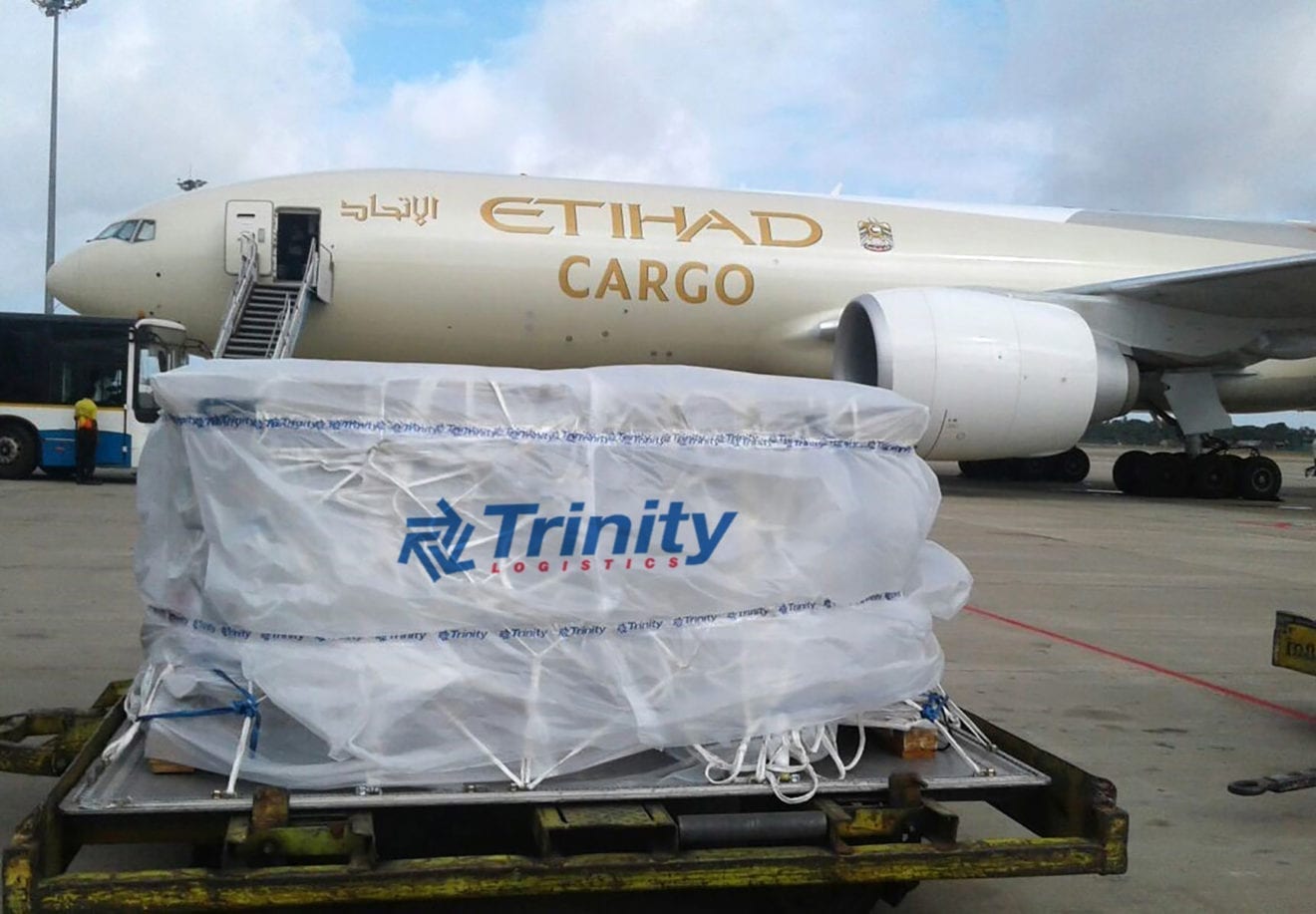
    Etihad Cargo, the cargo and logistics arm of Etihad Airways, will provide its customers and partners with increased belly hold cargo capacity across its global network starting from June 2024. The carrier’s summer schedule will introduce 23 passenger flights to new destinations and increase passenger flights to existing routes by 77 per week, totalling 100 new weekly passenger flights.

    Popular seasonal destinations in Europe return to the carrier’s schedule, and Etihad Cargo will offer additional belly hold cargo capacity to Spain, Greece, and France and launch a new route to Turkey. From 2 June, customers will be able to book cargo capacity on three weekly passenger flights to Malaga and two flights per week to Nice. In addition to increasing the flights to Athens to 14 per week, two flights to Greece’s capital will operate via Myknos, and two flights will operate via Santorini. The airline will also launch a new route to Antalya via three weekly flights in addition to increasing weekly flights to Istanbul from ten to 14 from 22 July. Etihad Cargo’s customers will also benefit from increased cargo capacity for Dublin, with three more flights being offered from 23 July, bringing the total number of flights to the Republic of Ireland’s capital to ten per week.

    Etihad Cargo’s partners and customers will have access to increased belly hold cargo capacity in the Middle East. In addition to three passenger flights to Al-Qassim in Saudi Arabia, a new destination for the carrier, the airline will also increase frequencies to Middle Eastern destinations by 32 flights per week. This includes seven additional flights to Amman, bringing the total to 14 per week, seven more flights to Kuwait, bringing the total to 28 per week, two more flights to Bahrain, Beirut and Muscat, five more flights to Doha, and, by mid-July, flights to Cairo will have increased to 28 per week.

    The carrier’s India network will grow to include four weekly flights to the new destination, Jaipur. Following the launch of Thiruvananthapuram to the carrier’s 2023 winter schedule, weekly flights will increase from seven to ten per week in response to increased demand. Two new flights to Ahmedabad will bring the weekly total to 17, three new flights to Bengaluru will bring the weekly total to 17, and flights to Kolkata will increase by one to eight per week.

    Strengthening its commitment to the Asian market, the airline will also launch a new route via four weekly flights to Bali. Additional belly hold capacity will also be offered via an extra weekly flight to Bangkok, bringing the total to 18; eleven more flights to Colombo, bringing the total to 27; three more flights to Karachi, bringing the total to 17; and four more flights to Seoul, bringing the total to 11.

    Stanislas Brun, Vice President Cargo at Etihad Cargo, said: “With the launch of its summer schedule, Etihad Cargo will deliver significant benefits to its partners and customers, thanks to the added belly hold cargo capacity and enhanced connectivity to key markets. The expansion of the airline’s passenger network, in combination with Etihad Cargo’s regular and charter freighter services, will substantially increase cargo capacity across Europe, the Middle East and Asia. Introducing new routes and increased frequencies will reinforce the connections between Abu Dhabi and major global markets, effectively meeting the growing demand for cargo capacity.”

    In March 2024, Etihad Cargo launched a fourth US gateway destination, offering belly hold cargo capacity to Boston via four weekly flights. Celebrating its 20th anniversary in 2024, the carrier is committed to continuously evaluating its network, increasing frequencies, launching new destinations and expanding cargo capacity to better serve its customers and remain the air cargo partner of choice.

  • Gasoline prices tiptoe up

    Gasoline prices tiptoe up

    Gasoline prices rose slightly Thursday afternoon after hitting the lowest in nearly five months last week.

    The popular fuel RON95 went up 1.18% to VND22,230 per liter. Biofuel E5 RON92 rose 0.80% to VND21,310.

    Diesel increased by 1.13% to VND19,640.

    Regulators said that gasoline prices fluctuated last week after the U.S. Energy Information Administration lifted its growth forecast on global fuel demand while the military conflict between Russia and Ukraine continued.

    Gasoline prices rose 1.2-1.5% while oils went up 1.4-1.9%.

  • High aircraft lease prices make carriers reluctant to expand: Bamboo Airways CEO

    High aircraft lease prices make carriers reluctant to expand: Bamboo Airways CEO

    Rising jet leasing prices make Vietnamese airlines reluctant to expand their fleets since they fear their losses might then increase, Bamboo Airways CEO Luong Hoai Nam said.

    Airfares would only fall from the current high levels when airlines expand their fleets, he said Wednesday at a forum organized by Nhan Dan newspaper, pointing out that the number of planes has dropped by 60-70 since before Covid to 160.

    While aircraft are available for lease, prices are now high, he said.

    “If leasing more jets results in higher profits we would have done that already.”

    The price limits on domestic airfares, which have been around for decades, have made profits impossible, he claimed.

    Before the pandemic airlines used to make profits from international flights, but the high competition now has made that challenging, he said.

    He urged the government to reconsider the price caps, which go against market principles, to give airlines motivation to expand their fleets.

    Lai Xuan Thanh, chairman of the Airports Corporation of Vietnam, also called for removing the caps.

    Other countries use floor prices to prevent unfair competition and monopolies, he added.

    Nguyen Quoc Ky, chairman of Vietravel Airlines, said the cost of running an airline in Vietnam is very high due to the excessive dependence on foreign equipment, and even minor changes in the global market could result in a big impact on local airlines.

  • Spotify Jams could soon get a chat feature

    Spotify Jams could soon get a chat feature

    Spotify, the popular music streaming service, might be adding a new feature to its Jam sessions. A recent breakdown of the Spotify app code, known as an APK teardown, revealed a hidden “Chats” feature with the codename “campfire.” This discovery suggests that Spotify may be working on adding a chat function to Jam sessions, allowing friends to have conversations while listening to music together.

    Spotify Jam is a feature that allows premium subscribers to create a shared playlist with friends. Whether in person or virtually, friends can listen to and add songs to the queue together. However, it currently lacks an in-app chat function, forcing users to switch to other apps to communicate. This upcoming addition of a chat feature would address this issue and enhance the social aspect of Jam sessions.

    While the code for this chat feature appears to be a work in progress, its presence hints that Spotify is actively developing it. Based on the limited code found, it seems that this feature is specifically designed for group conversations within Jam sessions. Although not yet confirmed, it’s possible that Spotify is already internally testing the feature.

    The ability to chat directly within the Spotify app during Jam sessions would be a welcome addition for users, particularly during virtual sessions where face-to-face communication isn’t possible. It would eliminate the need to switch between apps to message friends and create a more seamless and integrated social experience.

    It’s important to note that APK teardowns offer a glimpse into potential future features, but they don’t guarantee that these features will be officially released. However, this discovery does indicate that Spotify is exploring ways to enhance the social aspect of its platform and make Jam sessions more interactive and engaging for users.

    As Spotify continues to refine and develop this chat feature, it will be interesting to see how it integrates with Jam sessions and what additional functionalities it might offer. We’ll definitely be keeping an eye out for further updates on this potential addition to Spotify’s features.

  • Yahoo News gets smarter with AI-powered makeover

    Yahoo News gets smarter with AI-powered makeover

    Yahoo News has recently unveiled a significant update to its news app, incorporating artificial intelligence (AI) to enhance the user experience. This revamp comes after Yahoo’s acquisition of Artifact, an AI-powered news app founded by Instagram’s co-founders. With this update, Yahoo aims to streamline news consumption for its massive user base of over 180 million monthly visitors in the US.

    The most notable feature of the updated app is its personalized news feed. Users can select topics and publishers of interest, allowing the AI algorithms to tailor the feed accordingly. Additionally, a “Key Takeaways” feature provides a concise summary of an article’s main points, saving users time by offering a quick overview. This is akin to Artifact’s “Summarize” feature, highlighting the integration of Artifact’s technology into Yahoo News.

    Customization options go beyond topic selection. Users can block specific keywords or publishers they wish to avoid, further refining their news consumption experience. A particularly intriguing feature is the app’s ability to identify clickbait headlines. The AI can rewrite misleading, sensationalized, or incomplete headlines to provide more accurate and informative summaries.

    Yahoo’s AI-powered enhancements extend beyond the app itself. The company is also revamping its homepage layout, emphasizing top news, personalized recommendations, and real-time trending topics. This updated interface is designed to evolve and adapt over time, promising an ever-improving user experience. Yahoo plans to introduce new AI-powered features gradually, allowing users to opt in and explore these changes as they become available.

    The AI-powered update to the Yahoo News app represents a significant step in personalizing news consumption. By leveraging AI algorithms and user preferences, Yahoo aims to deliver a more relevant and engaging news experience. While currently available for mobile users in the US, the update is expected to roll out on desktop platforms soon, further expanding its reach.

    It’s worth noting that this integration of AI into news delivery raises questions about the potential for algorithmic bias and the need for transparency in how news is selected and presented. As AI plays an increasingly prominent role in shaping our information landscape, these are important considerations for both news providers and consumers. You can download the new Yahoo News app from the App Store or the Google Play Store.

  • Google might make it even easier to chat with Gemini within the Messages app

    Google might make it even easier to chat with Gemini within the Messages app

    Google is experimenting with a new way to access Gemini, its large language model (LLM) chatbot, within the Google Messages app. The tech giant is reportedly testing a dedicated button that would take users directly to the Gemini conversation screen, eliminating a few steps from the current process.

    Currently, starting a chat with Gemini in Google Messages involves tapping the “Start chat” button and then selecting Gemini from the options. The new feature, discovered in the app version messages.android_20240610_01_RC00 through an APK teardown, would introduce a Gemini logo button above the “Start chat” button. Tapping this new button would immediately open the Gemini conversation interface, allowing users to type in their prompts without delay.

    Interestingly, as seen in the above screenshots, the new Gemini button is notably smaller than the existing “Start chat” button. Whether this size difference is a deliberate design choice or an unintentional bug remains unclear.

    While removing a single step might seem like a minor adjustment, it could significantly impact user interaction with Gemini. By making the chatbot more accessible and prominent, Google could potentially encourage more users to engage with Gemini and explore its capabilities.

    This change aligns with Google’s broader efforts to integrate Gemini across its product ecosystem. The company has already introduced Gemini in various apps and services, including Gemini 1.5 Pro in Gemini Advanced and the YouTube Music Gemini Extension. The addition of a dedicated button in Google Messages further reinforces Google’s commitment to making Gemini a central part of its user experience.

    As of now, the new Gemini button has not been rolled out to beta users, but it is expected to appear in the app soon. With this update, Google could be aiming to make conversations with Gemini more seamless and intuitive, ultimately driving greater adoption and usage of the AI chatbot.