Tag: asia

  • Alipay now available for tourists in China

    Alipay now available for tourists in China

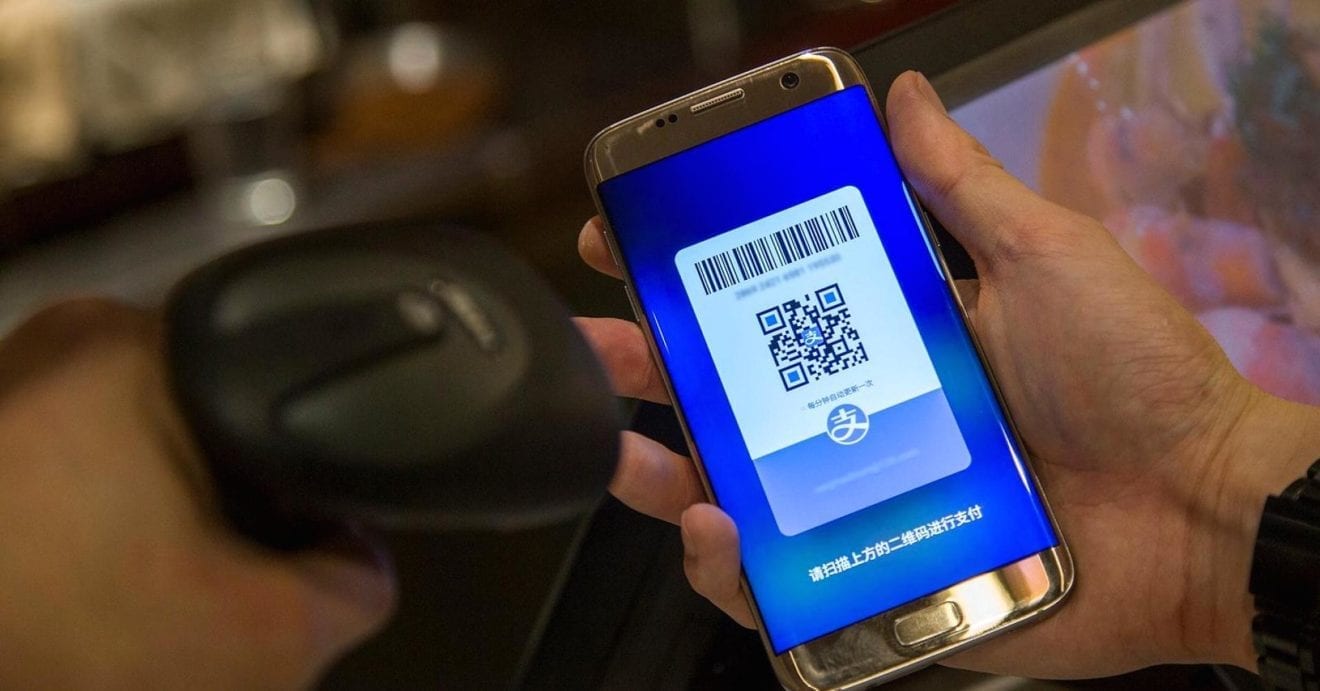
    International travelers can now use mobile payments in China as Alipay has launched a new version of its payment app designed for short-term overseas visitors.

    After installing the Alipay app, international visitors can register with their overseas mobile phone number to access the “Tour Pass” mini-program through which they can use the “Prepaid Card” service provided by the Bank of Shanghai.

    The minimum top-up for each card is CNY100, with balance capped at CNY2000. The card is valid for 90 days, after which any remaining funds will be refunded automatically.

    With the new Alipay service, visitors can pay through QR code or make online purchases through the app.

  • Singapore Fintech Ditches Plans for Digital Bank License

    Singapore Fintech Ditches Plans for Digital Bank License

    Singapore cross-border startup InstaReM has withdrawn from the contest for a digital wholesale banking license, preferring to focus on its global business-to-business payments instead. It is the first firm to declare its withdrawal.

    InstaReM, which recently rebranded to Nium, has backed down from its application for a digital wholesale license because the banking landscape in the city-state looks rather crowded.

    Singaporean banks are extremely well entrenched in that ecosystem. Our strengths lie elsewhere and we have decided to consolidate and focus on those areas,» said Nium’s chief executive Prajit Nanu, who was quoted in «The Business Times.»

    Nanu said his company will focus on serving businesses in more than 40 markets. It holds regulatory licenses including in the European Union, Hong Kong, Indonesia, and Japan and is seeking new electronic money institution licenses for card issuing and stored value facilities in Mexico and Brazil. With $41 million raised earlier this year, it is one of the best-funded fintech startups in South-east Asia.

    Backed by investors including Temasek Holdings unit Vertex Ventures and Rocket Internet, Nium previously said it was interested in the digital bank license offered. Other companies that expressed a desire to apply included SingTel, Grab and Razer.

  • DBS Launches Virtual Wealth Manager With Celebrities

    DBS Launches Virtual Wealth Manager With Celebrities

    DBS introduced its fully virtual wealth management capabilities in Hong Kong in grand fashion, accompanying the launch with renowned local celebrities.

    The bank recently launched its new virtual wealth manager which can enable users to undergo the entire experience digitally from account-opening to transacting. The suite of capabilities also includes general banking, investments, FX trading, remittance and others.

    We are the first bank that has a fully digitized journey from onboarding to all wealth management products, said Sebastian Paredes, DBS Hong Kong CEO. This is not an app. This is the launch of a new virtual bank.

    Then DBS began its planning exercise two years ago to launch the virtual solution, it wanted to significantly reduce the time required to open accounts, after repeatedly hearing clients express how busy they are and how laborious it is to fill out application forms.

    This is something on our mind for a long time,» explained Ajay Mathur, managing director and head of consumer bank gin and wealth management, DBS. With this fully virtual wealth management account onboarding, you can open an account in just a few minutes.

    Joined by renowned local celebrities, Louis Koo Tin-lok and Jessica Hsuan, the bank made a live demonstration to showcase the ease of opening an account. In addition to mandatory documents, the system was able to use facial recognition technology to verify the user simply by matching an image of an official ID and a selfie image.

  • Shake Shack Singapore planning a second Restaurant

    Shake Shack Singapore planning a second Restaurant

    Shake Shack Singapore is considering opening a new outlet in the territory following better-than-expected business at its Jewel Changi Airport location.

    The brand’s culinary director Mark Rosati said in an interview with Channel News Asia that long queues to the existing location have persisted several months into trading, underscoring Shake Shack’s popularity with Singaporeans.

    The brand has expanded from a roadside burger stand to operate in more than 12 countries, based on a consistent menu along with exclusive items designed for local tastes.

    “We keep looking at each outlet as, ‘This is the only Shake Shack in the world’,” said Rosati. “So, when we opened Singapore, we weren’t thinking to ourselves that we needed to open the one that’s going to be the blueprint for opening a few more – in terms of look and taste – in this region.

    “We knew we needed to go to Singapore, spend time on the street figuring out what the food was like, how it makes it super special and how we fit into that. We knew that we needed to do something that is definitely part of our New York heritage but also what we do that’s a little different for Singapore.”

    The brand has yet to settle on a location for the second outlet.

  • Vietcombank to pull out of BNP Paribas insurance joint venture

    Vietcombank to pull out of BNP Paribas insurance joint venture

    Vietcombank is selling its stake in a JV with French life insurance firm BNP Paribas as part of a possible bancassurance deal with a foreign buyer.

    Its board of directors passed a resolution approving the divestment of an unspecified stake in Vietcombank – Cardiff Life Insurance Co., Ltd (VCLI), the state-owned lender said in a release last Thursday.

    VCLI is a 45:55 joint venture between Vietcombank, Vietnam’s largest lender by market capitalization, and BNP Paribas Cardif, part of France’s BNP Paribas banking group.

    Although Vietcombank’s announcement did not identify a buyer, Bloomberg reported in late September that Hong Kong-based insurer FWD Group Ltd. was nearing an agreement to pay around $400 million for VCLI as part of a long-term bancassurance agreement with the bank.

    A bancassurance transaction is typically an arrangement between a bank and an insurance company in which the latter pays an upfront amount for exclusive rights to sell its products to the bank’s clientele.

    FWD Group, owned by Hong Kong billionaire Richard Li, had outbid several firms, including British insurance giant Prudential, which had been vying to obtain exclusive rights to distribute life insurance products through Vietcombank’s branch network, Bloomberg quoted sources as saying.

    According to VCLI’s latest financial statements, as of the end of 2017 it had VND950 billion ($40.79 million) in assets and accumulated losses of nearly VND3 billion ($128,800).

    Recently major international life insurance companies have been expressing interest in entering the growing Vietnamese market through bancassurance and acquisition deals.

    German insurer Allianz and Japanese insurers Nippon Life and MS&AD Insurance were among several vying to buy the Singapore and Vietnam businesses of Britain’s Aviva in a deal estimated to be worth $2-2.5 billion.

    Earlier Prudential had signed an agreement with South Korea’s Shinhan Bank Vietnam to distribute its insurance products through its network and Canada’s Manulife struck a similar deal with local lender ACB.

    Phung Ngoc Khanh, general director of the Insurance Supervisory Authority (ISA), said the country’s insurance market has huge potential due to the low penetration and people’s rising incomes and awareness.

    In the first half of this year the industry’s premium income was VND71.15 trillion ($3.06 billion), up 24.4 percent year-on-year. Last year’s growth was also around 24 percent, according to the ISA.

  • European Factories At Risk In Peugeot-Fiat Merger

    European Factories At Risk In Peugeot-Fiat Merger

    Fiat Chrysler and Peugeot owner PSA’s pledge not to close factories if they merge is likely to come under heavy strain as the combined group would have spare production capacity of almost six million vehicles in a slowing autos market. The companies last week unveiled plans to create a $50 billion group that would leapfrog Hyundai, General Motors, Ford and Honda to become the world’s No.4 automaker, based on their combined 8.7 million vehicles sold last year.

    The new car and truck making giant would have a potential manufacturing capacity of 14 million vehicles, forecasters LMC Automotive told Reuters. But the industry has entered a downturn and the European small car market in particular – where both PSA and Fiat Chrysler (FCA) are heavily exposed – is under pressure.

    “The utilization rate would be low at 58%, which would leave the group with almost six million units of spare capacity worldwide,” LMC Automotive said. “Europe is likely to bear the brunt of any potential plant closures.”

    Labour unions and politicians have already voiced concerns about job losses, and both France-based PSA and Italian-American FCA have ruled out factory closures in an attempt to quell fears. But a deadline to meet 2021 and 2025 emissions goals in Europe adds pressure on FCA to adopt PSA’s more efficient engines, calling into question some of FCA’s engine plants in Europe – mainly in Italy, as well as in Poland – in particular.

    “The focus will be Europe, where sub-scale product lines, powertrains and future EV (electric vehicle) investments could be combined,” Bernstein Research analyst Max Warburton, said in a recent note.

    A combined PSA-FCA would have a market share of 22% in Europe, September registration data from auto industry association ACEA shows, leapfrogging Volkswagen which, with a market share of 20%, has been the largest carmaker in Europe.

    PSA has already helped Opel, bought from General Motors in 2017, to make progress with emissions targets by rolling out the group’s small car platform and engines to the Opel factory in Zaragossa, Spain, where it builds the Opel Corsa.

    The CMP platform is now used in factories in Poissy, France, Trnava, Slovakia, and Kenitra, Morocco to build Peugeot, Citroen and DS branded vehicles and could be extended to fit FCA’s Lancia, Alfa Romeo and Fiat models to boost economies of scale.

    The market for small cars is under pressure because emissions rules are forcing entry-level cars to add complex catalytic converters, making them less affordable.

    “Under the new CO2 targets these cars will need to get several updates that will be expensive. This will force some players to drop some of these models as the level of investment is very high,” according to Felipe Munoz, global analyst at JATO Dynamics, a forecasting firm.

    PSA has already axed the Opel Adam and Karl models because it became uneconomical to make these entry-level vehicles emissions compliant. Meanwhile, Ford has dropped its Ka model, which shared a platform with FCA’s Fiat 500.

    Overall, the market share of cars in the so-called A and B small car segments is expected to shrink to 38% in Europe by 2021, down from 40% last year, whereas demand for sports utility vehicles is expected to hold up well, LMC’s Sammy Chan said.

    As a result, low volume manufacturing plants in Europe are increasingly vulnerable, such as Fiat’s Kragujevac factory in Serbia and PSA’s Vauxhall plants in Ellesmere Port and Luton in Britain, LMC said.

    In terms of engine plants, PSA has major operations in Tremery and Douvrin in France, and has also retooled the former General Motors Szentgotthard factory in Hungary.

    FCA’s Fiat, Lancia and Alfa Romeo brands currently source their engines from plants in Termoli and Pratola Serra in Italy, as well as the Bielsko-Biala plant in Poland.

    “In terms of engine plants, it is likely that in the long term, one or two FCA plants in Europe would no longer be needed,” LMC said.

  • AirAsia India plots growth to 100 aircraft by 2025

    AirAsia India plots growth to 100 aircraft by 2025

    AirAsia India is planning to accelerate its growth and hopes to increase its fleet fourfold to 100 aircraft in the next five years, an unnamed company source told industry publication TravelBiz Monitor.

    “We have firmed up plans to add 14-15 planes every year starting next year for the next five years. We have remained a small player in the Indian market till now with just 23 planes, which will increase to 29 planes by the end of December,” the executive said.

    According to the ch-aviation fleets advanced module, the Indian LCC, a 51/49 joint venture between Tata Sons and AirAsia Group, currently operates twenty-three A320-200s and is in the process of adding the twenty-fourth unit.

    The airline will be adding aircraft both transferred from other AirAsia Group units and directly from lessors. Out of its current 23-strong fleet, 11 aircraft were previously operated by AirAsia, while the remaining 12 came from other carriers.

    The carrier said earlier this year that its growth plans for 2020 include the addition of the first A320-200neo.

    AirAsia India will focus its growth on existing routes as it plans to add more frequencies rather than launch new, low-frequency routes.

    “There is no point staying a marginal airline on various routes. The focus will rather be on strengthening our position on routes that we are in,” the executive said.

    According to the ch-aviation capacities module, AirAsia India has a 6.8% market share by capacity on the Indian domestic market, compared to 46.4%, 16.0%, and 10.5% shares of its LCC rivals IndiGo Airlines, SpiceJet, and GoAir.

    Meanwhile, the carrier’s Malaysian parent said it will add capacity on its Kuala Lumpur Int’l-Singapore Changi route, using A330-300s operated by AirAsia X to launch an additional two daily services between the cities. According to the ch-aviation schedules module, AirAsia currently operates 59x weekly between Kuala Lumpur and Singapore with all flights operated by A320-200s.

    The carrier’s A320s seat up to 180 passengers, while AirAsia X’s A330-300s have 365 economy class seats and 12 premium class seats. AirAsia has a 21.6% market share by capacity on the Kuala Lumpur Int’l-Singapore Changi market.

  • Harvey Norman first to launch Microsoft Synchronized Shopping software

    Harvey Norman first to launch Microsoft Synchronized Shopping software

    Harvey Norman has become the world’s first retailer to launch a new AI-powered retail software concept the Microsoft Synchronized Shopping solution.

    Microsoft says its system, accessible via the retailer’s website, “empowers consumers to make informed purchase decisions amidst the myriad of options available online and offline”.

    Visitors to the Harvey Nomran website can use a customized, conversational AI-driven product advisor that asks a series of questions to identify the shopper’s needs, then recommends devices that best suits them. That might feature such as long battery life or storage capacity.

    Microsoft says product advisor results reflect devices that are on display in Harvey Norman, where customers can go to try them out.

    “The immersive and engaging experience starts when the shortlisted device(s) on the website creates a shopper pass on the mobile device with embedded geo-location services. When shoppers are in proximity of the store where the specific PCs are available, they get a phone notification, and once they enter the store are guided to the exact PCs that were recommended by the online advisor,” says Microsoft in a statement.

    “This simplifies the in-store experience, eliminating the need for shoppers to spend time navigating through all the choices in the PC aisle. In addition, it provides a seamless online-offline purchase journey tailored to their needs which is highly secure (and with no footprint of the user on any of the interacting devices).”

    Harvey Norman CEO Katie Page says she believes customers must be able to make decisions holistically, especially in a digitally connected world.

    “This has always guided how we curate our assortment of offerings, and it now shapes how we look at connecting online and offline channels seamlessly for our customers. Microsoft Synchronized Shopping is a major step in the right direction to help all of us live this ‘connected life’.”

    Microsoft says it created the solution to address the challenge faced by consumers of an online proliferation of options and the anywhere/anytime nature of shopping via mobile devices.

    Its research showed that 80 percent of consumers now begin their shopping journey online, and many end up delaying a purchase because they are overwhelmed by the number of choices.

    “Second, they find it difficult to choose the product that best meets their needs, without conducting extensive research, and often ends up buying a less-than-satisfactory device. This ‘choice paralysis’ inspired the design of Microsoft Synchronized Shopping.”

    Microsoft says its Synchronized Shopping solution is part of a broader “retail-reimagined strategy aimed at simplifying the consumer journey” by using intelligent cloud technology.

    It was developed in partnership with Microsoft Gold partner Popcornapps and is built on Azure cloud services, progressive web-apps and geo-location-based services.

  • Asia Pacific to drive global travel-retail sales

    Asia Pacific to drive global travel-retail sales

    A new report has shown that the Asia Pacific region will continue to be a major driver of global duty-free and travel retail sales.

    According to the study, titled ‘Economic Impact Report of Duty Free and Travel Retail in Asia Pacific,’ the Asia Pacific travel retail industry generated an estimated US$36.2 billion in 2017 which accounted for 45 per cent of total global duty free and travel retail sales, and is projected to maintain its global market leadership at an estimated 8.7 per cent annual growth rate between 2017 to 2022.

    The report identifies several key trends in the industry across Asia Pacific. It finds that East Asian markets are driving growth, with South Korea being the world’s largest duty-free market accounting for nearly US$12 billion in sales. China and Japan are also globally significant markets, with Mainland China anticipated to strengthen its position as the second biggest player in the region.

    Findings also show a growing diversity in product demand and observe that duty-free is becoming increasingly digital with shoppers in the Asia Pacific region increasingly looking to digital platforms to facilitate their purchases. There is also a marked channel diversification beyond aviation – downtown duty-free in Asia Pacific comprises a significant portion of sales for all land channels, and ocean cruising is an emerging sector in Asia.

    The study was commissioned by the Duty-Free World Council (DFWC) and the Asia Pacific Travel Retail Association (APTRA).

    Amid increased regulations, the report aims to highlight the impact of duty free and travel retail sales in real economic terms, while also calling out the trends affecting the increases.

    “Asia Pacific is registering exceptional growth in duty-free and travel retail sales. We are also seeing the regulatory landscape become more complex and dynamic across the various product categories,” said, Duty-Free World Council president Frank O’Connell. “This report is an important investment on the part of DFWC and APTRA in getting the data that will help us engage policymakers and regulators in protecting the sustainable growth of our industry.”

    “The report highlights the significance of the Asia Pacific region to global duty-free and travel retail, and on a macro level to economies in the region through job creation and contribution to GDP,” said the president of APTRA Grant Fleming. “As the industry body that supports, protects and nurtures the growth of the travel retail industry, we are encouraged by the positive trends indicated by the report findings.

    “Understanding the industry’s size and its impact on the regional economy as well as the underlying impetus for emerging travel retail trends is critical to ensuring industry relevance and long-term growth. As the travel retail landscape evolves, the regulatory environment is evolving too. APTRA looks forward to applying the report findings and working with regional stakeholders to help frame and develop policies that will contribute to the sustainable growth of the industry in years to come.”

  • First Uniqlo Store opening in Baguio

    First Uniqlo Store opening in Baguio

    Japanese retailer Uniqlo is opening its first store in Baguio City on November 29.

    The 859sqm Uniqlo Baguio store at SM City is the brand’s first in the Cordillera region. It will carry its concept ‘Lifewear apparel’, which, according to the company, “comes from the Japanese values of simplicity, high-quality and longevity, made for everyone, everywhere”.

    Uniqlo debuted in the Philippines in 2012 when it opened its first location at SM Mall of Asia in Metro Manila. And in February this year, it began expanding outside Metro Manila, opening at Robinsons Place in Tuguegarao City. The retailer now has around 60 locations nationwide.

    Uniqlo says, it will quadruple its store network in Southeast Asia in the next decade as it recognizes great potential especially in countries including the Philippines and Vietnam, where it is also opening its first store in the country this month.

  • Alibaba revenue surges

    Alibaba revenue surges

    Chinese e-commerce giant Alibaba enjoyed a 40 percent rise in sales during its second financial quarter, performing beyond expectations.

    Alibaba revenue rose to RMB119.02 billion (US$16.91 billion) in the September quarter, 40 percent above the RMB85.15 billion ($12.1 billion) during the same period last year, and ahead of projected revenues of RMB116.8 billion ($16.6 billion).

    The results reflected leaps in both of the firm’s core businesses – a roughly 40-per-cent jump in e-commerce and a 64-per-cent leap in cloud computing.

    Alibaba’s net income attributable to ordinary shareholders hit RMB72.54 billion ($10.32 billion).

    Alibaba has been focusing on building its business in lower-tier Chinese cities to counter the effects of saturated markets and the US-Sino trade war.

    “Average revenue per user in lower-tier cities is not as low as people imagine,” said Alibaba CFO Maggie Wu. “I think we have addressed very well in our Taobao apps different demands and levels of consumers.”

  • E-commerce platform Suning.com boosts sales

    E-commerce platform Suning.com boosts sales

    Chinese O2O retailer Suning.com says sales from its online platforms and physical stores rose by 24.27 percent in the third quarter, reaching RMB 171.43 billion (US$24.4 billion).

    The company closed the quarter with 470 million registered members and the number of active monthly users rose by 48 percent. Suning.com now hosts 8407 self-operated and franchised stores.

    Net income attributed to shareholders was RMB 11.9 billion ($1.7 billion)

    The company expects to receive a significant boost from the acquisition of an 80-per-cent share in the Carrefour China operations in late September, adding to the previously acquired Wanda department store network. It describes the move as part of a mission to create a multi-platform retail business for China, spanning third-party marketplaces, its own physical stores and its own online offer.

    Following the Carrefour deal, Suning.com has now formed a network comprising Suning supermarkets, offline Carrefour supermarkets, SuFresh boutique supermarkets and Suning Xiaodian (neighborhood convenience stores). More than 200 Carrefour stores will launch a full upgrade by the end of the year.

    “The introduction of Carrefour’s supply-chain capabilities will effectively leverage the advantages of large-scale procurement, and help establish an efficient warehouse allocation system to promote the rapid development of Suning.com’s FMCG categories,” the company said in a statement.

    In the prior three quarters, Suning.com increased investment in logistics, technology and in building out other core capacities to lay a solid foundation for growth over the next decade.

  • Payments Platform PPRO Partners with Grab

    Payments Platform PPRO Partners with Grab

    Payments platform PPRO adds GrabPay to its list of partners in a bid to tap into a Southeast Asia market estimated to be worth $600 billion this year alone.

    GrabPay, developed by cab-hailing app giant Grab, joins a list of 150 local payment methods (LPMs), such as Alipay, WeChat Pay and UnionPay, which will leverage PPRO’s capabilities. The firm is able to reduce digital payment complexities through a «unified offering of LPMs, as well as processing, collecting, reconciling and settling funds – all through one contract and one integration», according to a release.

    The GrabPay partnership includes two phases which will be rolled out separately. Firstly, PPRO will support GrabPay’s one-time payment solutions in Singapore and its recently launched e-commerce payment capabilities. Secondly, it will support GrabPay’s tokenized payment option and expand market

    PPRO highlights its commitment to the Asia Pacific region not only through the new partnership but it also expects to triple its Singapore staff headcount by 2020 and open additional offices in the region in the coming years. Its Asia head of partnerships, Tristan Chiappini, underlines Singapore’s «well-developed fintech pedigree» as a key enabler of an LPM business for the firm to tap the region’s estimated 115 million users – or 8 out of 10 digital consumers globally.

    This will enable us to continue to broaden our LPM service offering, payment expertise, and customer support across the APAC region quickly, and position us as the unifying force of today’s fragmented payments landscape, Chiappini said. «Our partnership with GrabPay is a testament to this vision.»

    London-headquartered PPRO support LPMs across more than 100 countries with around 130 payment presence provider partners and around 100,000 merchants on its platform.

  • DBS Inks Fintech Degree MoU with Chinese University of Hong Kong

    DBS Inks Fintech Degree MoU with Chinese University of Hong Kong

    DBS signed a memorandum of understanding with the Chinese University of Hong Kong for the inaugural fintech masters degree to further innovation and academic strength in the emerging field.

    The MoU was signed by Martin Wong, the university’s dean of engineering, and Brit Blakeney, DBS Hong Kong’s head of innovation & ecosystems. In addition to expressing commitment, students will gain first-hand experience in fintech projects including «digital customer journey, API application, big data analytics, blockchain, artificial intelligence, machine learning and sustainability» alongside internship opportunities and sharing sessions from DBS Hong Kong mentors.

    Our MSc FinTech program is committed to nurturing technologically adept and business savvy talents who can offer innovative solutions to finance-related industries, Wong said. This collaboration is beneficial to both sides as we firmly believe that extending and strengthening academic and corporate relationships is crucial to the development of financial technologists.

    Banks can no longer work in silos and can only be successful by materially transforming the way they work and by collaborating with fintechs, Blakeney added, highlighting the bank’s commitment to talent development in Hong Kong.

  • OCBC May Partner Keppel, Validus, For License

    OCBC May Partner Keppel, Validus, For License

    OCBC Bank is in talks with Keppel Corporation, peer-to-peer lender Validus Capital, and Vertex Ventures, to form a digital-bank consortium.

    OCBC is likely to take an equity stake in the consortium rather than open up its balance sheet. With a track record of being active in the small- and medium-enterprise (SME) lending space, this move could augment the bank’s share in this segment.

    If the Singapore lender opts to enter the digital banking scene, the bank will face direct competition from its own virtual entity. We have to accept that there will be cannibalization. But on the other hand, the mothership should also be in a position to go out and compete, said OCBC’s chief operating office

    In August, the lender has indicated that it is looking for partners ahead of the introduction of virtual bank licenses in Singapore.

    Among the three local banks, DBS and UOB have rolled out standalone digital banks in regional markets and have stepped up their efforts in digitalizing processes, said  CGS-CIMB analyst Andrea Choong in the report.  OCBC is a laggard in this respect, but we strongly believe it will be part of a consortium in the run for a license come end-2019.