Tag: asia

  • Vietnamese operators to begin 5G testing as of 2019

    Vietnamese operators to begin 5G testing as of 2019

    Starting from the capital, Hanoi, the country aims to upgrade its mobile network along with the southern commercial hub of Ho Chi Minh City.

    “Vietnam should be among the first nations to launch 5G services in order to move up in global telecom rankings,” said Nguyen Manh Hung, the country’s minister of Information and Communications.

    Hung, previously the chairman and general director of Viettel Group, wants to reacquire Vietnam’s rank among the top countries worldwide in terms of major exporter of 5G gear through boosting the development of local equipment. He also plans to make the licensing and approval process easier for Vietnam’s IT sector.

    Several partnerships have been made in order to facilitate the procedures: VNPT has teamed up with Nokia on 5G, while MobiFone signed an agreement with Samsung Electronics to cooperate on 4G and 5G networks earlier this year.

    In 2017, Ericsson held the first 5G demonstration in the country in partnership with the Vietnam Authority of Radio Frequency Management.

    While MobiFone and VNPT are on the list of state-owned companies slated for privatization by 2020, Viettel is to remain in government hands.

  • Bharti Airtel meets growing data consumption with new independent fiber company

    Bharti Airtel meets growing data consumption with new independent fiber company

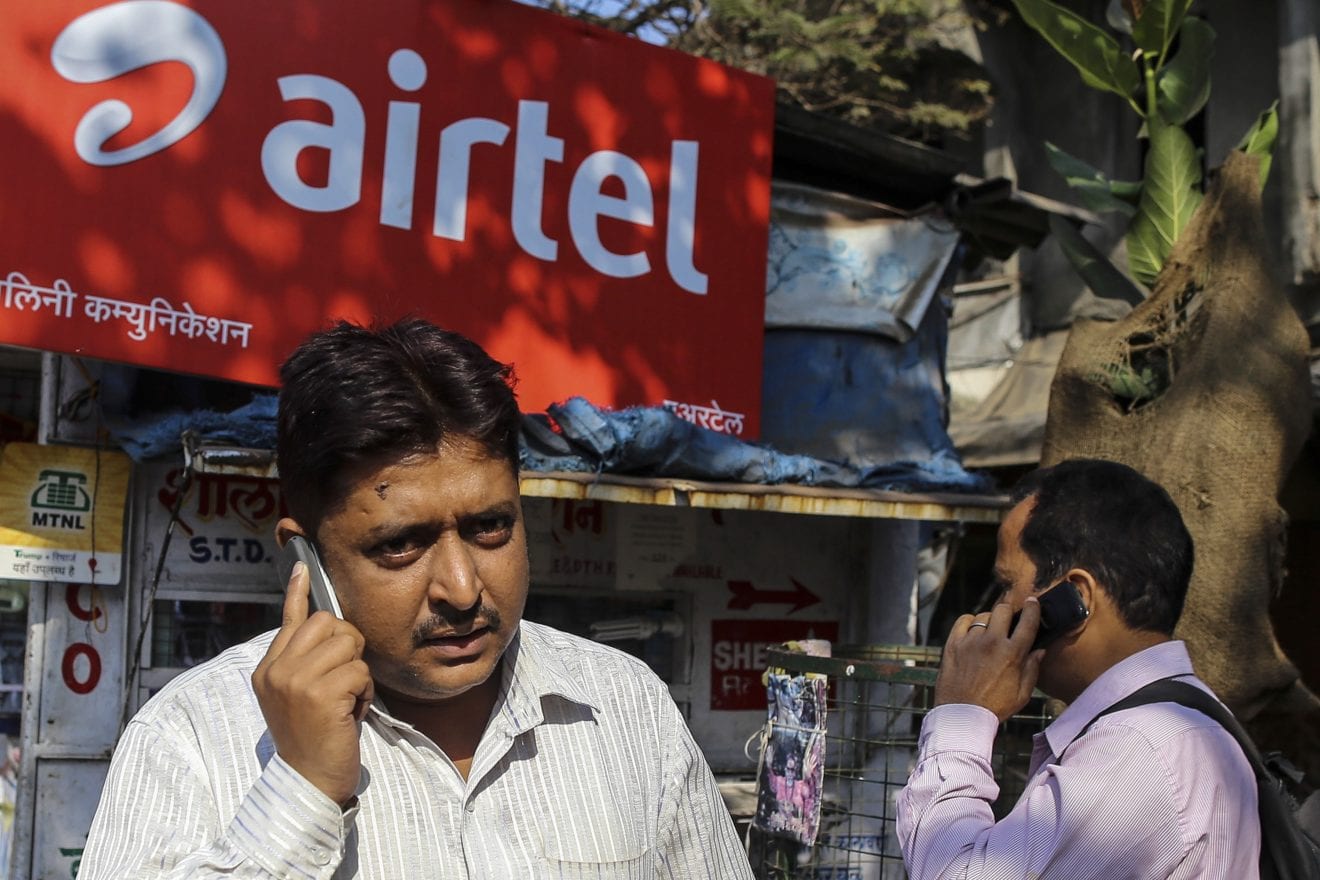
    The owner of the telecom company, Sunil Bharti Mittal, announced the appointment of Savargaonkar and acknowledged his new role. Savargaonkar was previously the company’s director of networks, equivalent to chief technology officer, and today, he will continue to report to Gopal Vittal, Bharti Airtel’s CEO.

    “Given the significant growth in data consumption in recent years, we believe a robust and independent infrastructure company that serves the growing need of fiber in the telecom industry is critical,” Vittal announced.

    Bharti Airtel is about to transfer its fiber optic cable network to a wholly-owned subsidiary, Telesonic Networks Ltd, through low sales. The company manages 246,000 km of fiber optics, which is aggressively rising to meet increasing data growth. “Fiber assets from Telesonic may eventually be transferred to this new subsidiary,” a source commented.

    Not surprisingly, Nitin Soni, director, Asian corporates, at Fitch Ratings, found that it was of common sense to have an independent company that owns fiber since Airtel had previously formed a telecom tower joint venture – Indus Towers – with Vodafone India and Idea Cellular.

    “There is no point of duplication on capex spending like tower infrastructure. India is one of those countries where price competitiveness is so high that most telcos are taking the rational decision to make independent companies,” he said.

    But in order to become a true independent company, Airtel would have to well play its cards and sell a majority stake. This way, it will attract other players to use the assets, not so far of what it’s doing with its tower business, Soni said.

    “If you keep having stake, it won’t be regarded as truly independent by competitors like Reliance Jio, and would continue to build its own fiber. Unless assets are leased by Jio, these independent companies can’t grow,” he added.

    Airtel also appointed Randeep Singh Sekhon as the new chief of technology for its India and South Asia operations, replacing Savargaonkar. Sekhon, who will also report to Vittal, has a previous experience in various senior leadership roles with telcos in Malaysia and Indonesia being earlier CEO of Hutchison 3 Indonesia.

    These new appointments were announced following several events that happened in the company such as the exit of Airtel’s chief technology officer for mobile networks, Shyam Mardikar, who is widely speculated to be joining a rival telco and the departure of Airtel’s enterprise business head Ashok Ganapathy replaced by Ajay Chitkara, who now oversees both the domestic and global enterprise operations.

    Forming the new independent fiber company coincides with the preparation for another battle with Reliance Jio on the fiber optic network–the country’s wired broadband market. Airtel and Jio are having an intense price war in the wireless segment.

    It is expected that Jio will offer a mass-market wired-broadband product bundled with Internet-based television programming starting at about Rs 500 a month, almost half the current market rates for similar services.

    According to Soni, Airtel will benefit from the expansion of the market as Jio enters, but there will be pressure on the ARPUs which will decline by 30-50%. “In the short-term, Airtel will face revenue EBITDA declines in the home broadband segment and we are sure that in the medium term, they will benefit from the expansion of the market,” he added.

    According to analysts, Airtel should also consider the competitiveness of the combined Vodafone-Idea Cellular company, which will have a comparatively strong fiber business through the recently acquired YOU Broadband business.

    Homes in 89 cities pan-India benefit from Airtel’s fixed-line telephone and broadband (DSL) services. The number is set to reach to least 100 key cities from 89 now with Airtel planning to set aside a sizeable portion of its Rs 24,000 crore capital expenditure plan for FY19 to expand its broadband network. Another 10 million-plus homes will be covered by FY21, t
  • Amazon Music finally arrives on Apple TV

    Amazon Music finally arrives on Apple TV

    Amazon has announced that its music streaming service is finally available on Apple TV 4K and Apple TV HD running tvOS 12.0 and later. If you’re an Amazon Music subscriber, you can now download the Amazon Music app from the App Store for Apple TV.

    If you’re not a subscriber, you can still download the app and try out the service for 30 days before deciding whether or not it’s worth a monthly fee. The app allows listeners to browse and search for music from their favorite artists, access all purchased and imported music in their “My Music” library, and follow along with scrolling lyrics to their favorite music within the app.

    To get started say “Amazon Music” into the Apple TV Siri Remote or find the Amazon Music app in the Apple TV app store. The app should then display a 6-letter pairing code, which you must enter at https://amazon.com.code via your mobile browser or computer.

    Once that’s done, you’ll be able to stream millions of songs and thousands of playlists and stations on your Apple TV 4K and Apple TV HD. You’ll also get access to a host of global playlists like Pop Culture, which include some of the popular songs across the current pop music landscape.

    Currently, the Amazon Music app for Apple TV is available to customers in the U.S., UK, Australia, New Zealand, Brazil, Canada, France, Italy, Spain, Germany, Mexico, Japan, and India.

  • YouTube TV subscribers can now offer 2 weeks of free service to friends

    YouTube TV subscribers can now offer 2 weeks of free service to friends

    It looks like YouTube TV is running a promotion aimed at its subscribers to bring more people under its umbrella. Many YouTube TV subscribers received a free trial code that they can share with friends and family who’d like to check out the service for the first time.

    The code is sent via email and contains a shareable link or code (or both) to make it easier for potential subscribers to redeem the offer. To offer the two weeks extended free trial code, you’ll have to forward the email to whoever you wish to benefit from the offer, or you could share the link directly.

    We can’t confirm if these 2-week free trial codes are given to all YouTube TV subscribers in the US, but if you get one, make sure to share it with whomever you want fast. The promotion will only last until October 16, so those who are given these codes have five more days to redeem them.

    Currently, YouTube TV offers access to more than 70 TV channels, including ABC, CBS, NBC, Fox, AMC, CNN, Discovery, and ESPN. A cloud-based DVR service with unlimited storage that saves recordings for nine months is included in the $50 monthly subscription, which can be shared among six accounts.

  • Kasikorn Bank announced the nine-month period of 2019 net profit of Baht 29,924 Million

    Kasikorn Bank announced the nine-month period of 2019 net profit of Baht 29,924 Million

    MsKattiya Indaravijaya, President of KASIKORNBANK, said Thai economic activity in the third quarter of 2019 continued to see few supports, after growing by 2.30% in the second quarter of 2019The Thai economy showed signs of strength in the third quarter of 2019, due mostly to the low base effect of the same period last year, especially in the tourism sectorHowever, exports and private investment – two major economic drivers – continued to slow in line with the sluggish global economy and trade volume amid the protracted USChina trade negotiations and concerns over Brexit risksFor the final quarter of this year, a brighter outlook seems to be in store for the Thai economy, thanks to the governments stimulus measures.

    Operating performance for the ninemonth period of 2019, KBank and its subsidiaries reported net profit of Baht 29,924 Million, and reported net profit of Baht 9,951 Million, for the third quarter of 2019.

    Operating performance for the ninemonth period of 2019 compared with the same period of 2018, KBank and its subsidiaries reported net profit of Baht 29,924 Million, a decrease of Baht 1,502 Million or 4.78over the same period of 2018Net interest income increased by Baht 4,051 Million or 5.54mainly due to interest income from loans to customers and investments.  NIM stood at 3.34%.  Noninterest income decreased by Baht 2,753 Million or 6.20mainly due to a decrease in net premiums earned – net and fees waive for money transfers through digital channels, while revenue from sale of securities increased.  Moreover, other operating expenses increased by Baht 2,684 Million or 5.49%, resulting in the cost to income ratio that stood at 43.41%.  KBank has set aside higher allowance for impairment loss on loans from the preceding quarter, with prudent consideration on factors in line with uncertainties from continued economic slowdown.

    Operating performance for the third quarter of 2019 compared with the second quarter of 2019, KBank and its subsidiaries reported net profit of Baht 9,951 Million, a slight increase from the preceding quarter of Baht 22 Million or 0.23mainly due to an increase in net interest income increased by Baht 326 Million or 1.27%.  NIM stood at 3.34%.  Moreover, non – interest income increased by Baht 2,139 Million or 15.68due mostly to revenue from sale of securities increased.  In addition, other operating expenses was approximate to the previous quarter.  In this quarter, cost to income ratio stood at 42.52%.  However, KBank has set aside higher allowance for impairment loss on loans from the preceding quarter, with prudent consideration on factors in line with uncertainties from continued economic slowdown.

    As of 30 September 2019, KBank and its subsidiaries’ total assets were Baht 3,240,134 Million, an increase of Baht 85,043 Million or 2.70over the end of 2018.  The majority came from an increase in investments – net and loans.  NPL gross to total loans as of 30 September 2019 stood at 3.53while at the end of 2018 this stood at 3.34%.  Coverage ratio as of 30 September 2019 stood at 153.58%, while at the end of 2018 this stood at 160.60%.  In addition, as of 30 September 2019, KASIKORNBANK FINANCIAL CONGLOMERATEs Capital Adequacy Ratio (CARaccording to the Basel III Accord was 19.10%, with a Tier1 Capital ratio of 16.76%.

  • 7-Eleven parent cuts staff an store closings

    7-Eleven parent cuts staff an store closings

    Japanese 7-Eleven parent Seven & I Holdings is preparing to cut 3000 jobs in its 2022 fiscal year.

    The move will be the firm’s largest payroll cut since it opened and reflects increasing competition from e-commerce and shopping malls, as well as chronic shortages in labor.

    The firm is planning a structural reform initiative to rebuild customer support, including the shedding and downsizing of some of its less profitable Sogo, Seibu and Ito-Yokado branded stores.

    “The stores we’re keeping have the ability to attract customers,” Seven & I president Ryuichi Isaka told Nikkei. “We’ll focus our investment there and do more to revitalize them.”

  • Zalora Partners with FarEye to Enhance the Customer Shopping Experience

    Zalora Partners with FarEye to Enhance the Customer Shopping Experience

    Zalora, Asia’s leading online fashion destination partnered with FarEye, a SaaS platform for visibility, to improve its logistics operations and help ZALORA achieve cost-effective deliveries. As one of the region’s largest and fastest-growing fashion e-commerce companies, it is important for ZALORA to optimize its operations to satisfy the growing volume of orders in the region and continue to delight consumers with a reliable delivery service.

    By using the FarEye tool, ZALORA was able to automate logistics processes and refine the delivery operations with complete visibility. FarEye ensures that once parcels are scanned, job orders get created automatically and are sent to delivery executives through an easy-to-use mobile application. It is seamlessly integrated with ZALORA’s in-house warehouse technology infrastructure and digitized delivery processes including generating run-sheets and allocating tasks for operations team members, ensuring seamless transportation of products from warehouses and distribution centers to end customers.

    This enables ZALORA customers to get real-time updates on delivery status along with the details of the courier, allowing personalization of deliveries, leading to an improved overall Delivery Happiness Score and a much-reduced Customer Anxiety Index.

    Silvia Thom, ZALORA Group’s Chief Technology Officer shared, “FarEye’s platform is flexible, easily configurable, scalable, and future-ready. It’s helping us provide delightful delivery experiences to our customers by making delivery processes transparent and personalized. FarEye improved the number of successful deliveries that we do in a day while reducing overall logistics expenses.”

    “Southeast Asia is one of the fastest-growing eCommerce markets in the world. As per a recent report, the online retail market in the region is expected to reach $53 billion in 2023. On-time and in good condition deliveries become essential in such a hyper-growth market as deliveries are the first brand touchpoint for customers. We see that businesses globally are having a tough time keeping up with evolving customer expectations. In such a competitive landscape, we are thrilled to partner with Zalora and empower them to achieve exceptional levels of operational efficiencies and provide delightful customer experience,” said Kushal Nahata, CEO & co-founder, FarEye.

    FarEye is also enabling Zalora to enhance hub-to-hub logistics operations to ensure ZALORA Marketplace sellers can receive returned products without any hassle. It also helps create a customer-friendly delivery journey, for example, to guarantee that in cases of failure during the first delivery attempt, an approval process is immediately set-up before the second delivery attempt is triggered. FarEye created intelligent processes, helping ZALORA improve cash reconciliation, reduce dependency on paperwork and shrink their carbon footprint.

  • Vietnam coffee chains ready for a marketshare battle

    Vietnam coffee chains ready for a marketshare battle

    Major Vietnam coffee chains are targeting new customers by adopting take-away business models on city streets.

    In Ho Chi Minh City, the largest of the local Vietnam coffee chains, Highlands Coffee, which is majority-owned by Jollibee Foods, has been selling its product in coffee booths set up at roadsides from 7am – 9am when traffic is at its busiest.

    According to Highland’s staff, the company will be building more sidewalk trolleys to serve the increasing needs of customers on the road, most of whom drive motorcycles. Instead of going into the coffee shops, customers now can just stop on the roadside and grab a coffee to go.

    Other major coffee brands, including Passio and Vinacafe, set up morning coffee booths on some busy streets a few months ago. As the new model is easy to run and needs low-cost investment, the Vietnam coffee chains have been able to lower their prices to attract more customers.

    Targeting low- and middle-income customers, Vietnamese coffee company Trung Nguyen has recently launched a small-scale coffee franchise called E-Coffee. According to Vo Thi Ha, communications director of Trung Nguyen Group, the takeaway coffee model only costs around one-eighth of a normal store’s investment.

    “As the mid and high-end segments become increasingly saturated, the affordable and low-income groups are increasingly seen as potential revenue generators. This consumer segment is large and easy to serve, so could generate big profits because of low investment costs, as long as businesses find the right model,” a marketing expert in Ho Chi Minh City told local newspaper VN Express.

    However, Coffee Bike director, Do Quoc Anh, described the current street-trolley coffee business model as unprofessional and unsustainable. He said if it was not developed properly and carefully, it would die out as a trend.

  • Myntra hires tailors as delivery agents to reduce returns

    Myntra hires tailors as delivery agents to reduce returns

    Myntra, a Flipkart-owned Indian fashion platform has roped in local tailors to pick up packages from warehouses and deliver to customers to mend the sales gap caused by the return of ill-fitting clothes.

    The move is set to minimize business losses by cutting down on the return of clothes and refunds, says GlobalData, a data and analytics company.

    Tying up with local tailors in apparel delivery is not a new concept and companies such as Raymond and Birla-owned Abof.com took initiatives to partner with local tailors as the last-mile delivery agent.

    Shagun Sachdeva, a consumer insights analyst at GlobalData, says Myntra started offering alteration services in Bengaluru back in 2016.

    “The company is now looking to address the discomfort of consumers in searching for tailors for altering purposes. This is aimed at mending the sales gap and at the same time improving customer satisfaction by fixing fitting flaws on the doorstep.”

    According to GlobalData, online retail in India accounted for US$17.2 billion in 2017 and is projected to reach $69.9 billion by 2022.

    In line with this growth, the online retailing of clothing in India grew exponentially in the last few years, reaching $5 billion last year, owing to increasing penetration of the internet and discounts offered by online retailers.

    The market is currently fragmented, with market leader Amazon commanding just 5 percent market share across all categories. Therefore, in order to break the clutter, companies such as Myntra are finding innovative ways to please the customers.

    Sachdeva says Myntra has reduced its losses from $96 million in 2017 to $22 million last year and aims to turn itself profitable down the line.

    “Such loss-reducing measures might be helpful.”

  • Burberry Hong Kong targets sales hit

    Burberry Hong Kong targets sales hit

    Analysts are warning that Burberry Hong Kong is bracing for a £100 million hit on sales from the city’s ongoing disorder.

    Burberry has declined to comment on the research note issued by Jefferies and reported by The Telegraph newspaper in London, and further by Retail Gazette.

    As Hong Kong’s protests continue, retail sales have plummeted due to falling visitor numbers. The luxury sector has been hardest hit with sales down between 40 percent and 50 percent brand by brand.

    The Jefferies analysts have projected that Burberry Hong Kong sales are likely to be £100 million lower in the year to next April. However, they added that as much as 50 percent of that shortfall could be mitigated by increased sales in Europe and other parts of Asia.

    Burberry Hong Kong has 10 stores and the city accounts for about 8 percent of group sales.

    Flavio Cereda, a Jefferies analyst, said the seasonal nature of Burberry’s offer exposed it to challenges not faced by other luxury brands, such as, for example, watch houses.

    “The problem with having ready-to-wear in stores which are not shifting is that the stock is seasonal so it’s a pressing problem because it will hit markdowns pretty soon,” Cereda said.

    “You’ve got two issues; you’ve got to divert deliveries and then you’ve got to think about what to do with all the stock in the stores because it’s not selling.

    “The simple solution is don’t deliver stuff to Hong Kong anymore, there’s no point. Or if you’re going to deliver 500 jackets, then deliver 50 instead and ship the rest of them off to Mainland China.”

  • Big C opens first store in Cambodia

    Big C opens first store in Cambodia

    Supermarket chain Big C has opened its first store in Cambodia.

    The firm has opened on a more-than 2ha site in Poipet, a booming town on the Thai/Cambodian border, with a reported investment of US$6.8 million and offering more than 1200 jobs.

    A statement on the firm’s Facebook page reported by the Khmer Times read: “A soft opening for the Poipet Hypermarket was held under our vision to be the leading Thai retailer with customers at heart.”

    Cambodia is now the fourth country Big C operates in, following Thailand, Vietnam and Laos.

  • Uniqlo ready to open 60th store in Philippines

    Uniqlo ready to open 60th store in Philippines

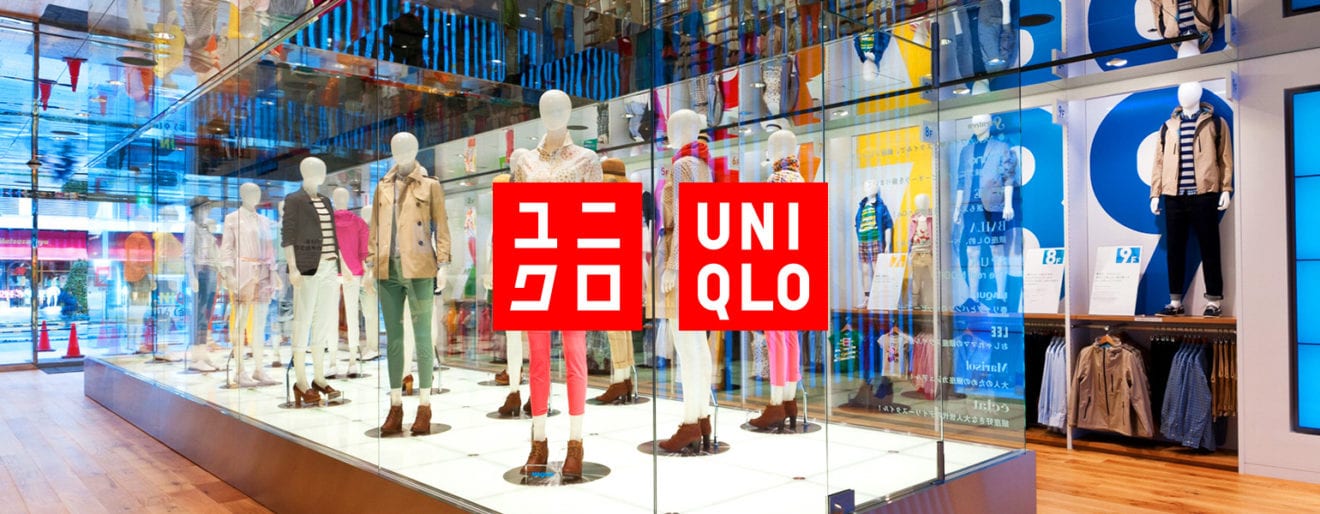
    Uniqlo Philippines will open its 60th store next week, at Ayala Malls Capitol Central in Bacolod.

    The Japanese fast-fashion brand has been undertaking a rapid rollout of stores in the country with the latest store – to open on October 18 – the ninth in the Visayas region and the second in Bacolod. Its global flagship store in Glorietta 5, Makati City is the biggest store in the Philippines and in Southeast Asia.

    “We really see and feel the warm reception of the people from your community,” Uniqlo Philippines marketing head Camille Pacis told the Philippine News Agency. “That’s why we are expanding more. We recognize the growth and the potential of Bacolod.

    “(This) marks the growing commitment of Uniqlo to provide simple, innovative, and high-quality clothing to the Filipinos. In all our existing stores, the reception of our customers has been very good.”

    Uniqlo Philippines will partner with the Negrense Volunteers for Change (NVC) Foundation in a charitable outreach to donate clothing to two communities within the city.

  • India has world’s cheapest mobile data rates

    India has world’s cheapest mobile data rates

    Cable.co.uk analyzed 6,313 mobile data plans from 230 different countries from October to November 2018.

    For India’s market, 57 mobile data plans were analyzed and found that the lowest rate per 1GB in the country was 1.41 Rupees ($0.02) while the highest was at 98.83 Rupees ($1.41).

    “A country whose young population has a particularly high technological awareness, India offers a vibrant smartphone market, with strong adoption and many competitors. Data, therefore, is quite staggeringly cheap,” the report mentioned.

    India is home to more than 430 million smartphone users and is the second-largest smartphone market in the world, with China being the first.

    Other countries with cheap mobile data packages include Kyrgyzstan at $0.27, Kazakhstan at $0.49, Ukraine at $0.51, and Rwanda at $0.56.

  • SK Telecom signs series of MoUs for greater smart city solutions

    SK Telecom signs series of MoUs for greater smart city solutions

    The South Korean Telecommunications operator announced the signing of the Memorandums of understanding (MoUs) with the Incheon Free Economic Zone (IFEZ) Authority and some others who are planning to build smart infrastructure with 5G and self-driving elements.

    The deals are meant to strengthen the country’s position in smart city development with regards to 5G network deployment, autonomous vehicles, and connected hospitals.

    “We will work closely with the IFEZ Authority to accelerate the IFEZ’s transition to a smart city powered by SK Telecom’s 5G network and mobility technologies,” said Park Jin-hyo, the operator’s CTO.

    As part of the deal, SK Telecom is expected to create a machine-readable HD map of the IFEZ area (which is comprised of Yeongjong, Cheongna, and Songdo) with information to help support autonomous vehicles. This information includes road conditions, lanes, and speed limits.

    “The HD map will b built with Dynamic Data Platform, a 5G-based real-time update solution for HD maps. Dynamic Data Platform automatically updates HD maps upon receiving road observation data from Advanced Driver Assistance Systems (ADAS) over 5G network,” said Jin-hyo.

    He added, “SK Telecom plans to install ADAS and 5G communication modules to public transport vehicles and official government cars in the IFEZ area to detect all changes in the road environment.”

    Both parties aim to work together to achieve smarter and safer transportation by taking into account the policies that will be put in place. In order to do this, they aim to build a data hub that will enable them to oversee the floating population.

    Another deal that was devised, was between SK Telecom and Yonsei University Health System which will provide 5G network solutions and smart technology to hospitals. The smart hospital that is in the making is forecasted to be opened by the beginning of 2020.

    “The 5G-powered digital hospital will be equipped with SK Telecom’s Ai speaker- NUGU- to enable patients with physical difficulties to easily control their beds, lighting, and TV with their voice. They can even use NUGU Call service to get medical assistance in case of emergencies,” SK Telecom stated.

    The hospital is also expected to have AR-powered indoor navigated which will use 3D mapping technologies to “enhance the convenience of patients and visitors”.

    This will allow patients in isolation wards to receive visitors through holographic projections. Additionally, facial recognition will be used on medical worker to ensure greater safety and security for the patients. “Unlike other access control systems that require some kind of contact – fingerprint, pass, etc- the face recognition system allows contact-free entry to help reduce the risk of infection”.

    They also plan to create an incubator for startups called Venturepolis which will be based in Songdo. Venturepolis will support startups that work with smart office solutions.

  • Vincom Retail unveils three shopping centre plans

    Vincom Retail unveils three shopping centre plans

    Vietnam’s Vincom Retail has announced three new Vincom Mega Mall shopping centres.

    Two of the new properties will be located in Hanoi and the third in Ho Chi Minh City, the country’s commercial capital.

    Located in one of the largest real estate projects in Hanoi, Vincom Mega Mall Ocean Park will occupy 56,000sqm, and serve up to 1.5 million customers annually. Vincom says the mall’s design was influenced by “subterranean movements” and the blue waterfront.

    Also in Hanoi, Vincom Mega Mall Smart City will feature a design concept inspired by future technology trends. The new shopping centre will cover 68,000sqm and has a catchment of 1.8 million potential customers, primarily millennials.

    The third shopping centre, Vincom Mega Mall Grand Park, will open in District 9 of Ho Chi Minh City. The mall will occupy 48,000sqm of commercial space, over five floors and one basement level.

    Vincom Retail’s deputy director of sales and marketing, Tran Thu Hien, said there are four key elements the company believes will secure Vincom Mega Mall’s success: the product structure, customer base, tenancy partnerships and inspirational marketing.

    According to real estate company CBRE, Hanoi and Ho Chi Minh City will potentially become on the top three retail markets in Asia-Pacific.