Tag: asia

  • Nescafe and Arnott’s launch White Choc Tim Tam-inspired coffee

    Nescafe and Arnott’s launch White Choc Tim Tam-inspired coffee

    Nescafe and Arnott’s have teamed up to launch another Tim Tam-inspired drink, Nescafe White Choc Mocha.

    The new flavour combines creamy coffee with the white chocolate taste of Tim Tam biscuits.

    “Nescafe is always looking for ways to delight and surprise our consumers,” said Olga Starus, head of marketing – coffee, at Nestle.

    “Following the overwhelmingly positive response to the Nescafe Mocha inspired by Tim Tam range, we decided to take this collaboration of two iconic brands up a notch with this rich, velvety white chocolate twist.”

    Nescafe White Choc Mocha inspired by Tim Tam will be available with an RRP of $7.60 for a box of eight sachets at Woolworths stores nationwide.

  • Puma to launch compostable shoes after a two-year pilot project

    Puma to launch compostable shoes after a two-year pilot project

    After two years of testing, sports giant Puma is ready to launch its compostable shoes dubbed Re:suede 2.0.

    Puma will create 500 pairs of the commercial version of the sneaker, which went online available for purchase on puma.com/eu and Zalando Plus this week. The commercial version was created to reflect the experiment’s findings and the volunteers’ feedback.

    Puma produced 500 special pairs of its Suede trainers using materials such as Zeology-tanned Suede – chosen for their propensity to degrade – as part of the project, which was completed late last year.

    Volunteers wore the Re:suede trainers for six months before returning them to Puma, where they were transformed into compost at Puma’s composting partner’s specially equipped industrial composting facility.

    “Re:suede 2.0 is an important step towards finding viable end-of-life solutions for our footwear,” said Anne-Laure Descours, Puma’s chief sourcing officer.

    “While we are excited about this progress, we will continue to innovate with our partners to determine the infrastructure needed for a scalable long-term solution, essential for achieving meaningful impact in waste reduction.”

    The Re:suede project and the polyester recycling programme Re:fibre were developed as part of Puma’s “Circular Lab,” an innovation hub directed by the company’s innovation and design professionals that aims to shape the company’s circularity programs for the future.

  • Coffee chain Single O expanding Japanese footprint after early success

    Coffee chain Single O expanding Japanese footprint after early success

    Sydney-based coffee roaster Single O will open Ryogoku Roastworks, its second cafe in Japan on Friday, replacing the brand’s existing roastery.

    In a further sign of ongoing expansion in Japan, Single O will launch its Shibuya coffee bar in July.

    The new roastery and cafe will serve Single O’s signature coffee Reservoir and will feature self-serve batch brew taps, and a breakfast and lunch menu.

    It will also have four times the current production capacity, accommodating the company’s growing Japanese customer base.

    “We hit the ground running in Japan a decade ago, and the response we’ve had since then has honestly blown us away – we’re now roasting for 130 wholesale partners across Japan,” said Single O co-founder Dion Cohen.

    “Moving the roastery into a bigger and better space is really an opportunity to double down in support of those partners and grow our offering.”

    Single O Japan GM Yu Yamamoto, who has been an integral part of the brand for 15 years, will spearhead the opening.

    Yamamoto joined Single O Surry Hills on an overseas exchange and eventually led the team’s expansion in Japan, heading the launch of the original roastery in 2014 and the Hamacho cafe in 2021.

  • FPT and Nvidia to build $200M AI factory in Vietnam

    FPT and Nvidia to build $200M AI factory in Vietnam

    Vietnam IT giant FPT Corp will spend $200 million building an AI Factory that incorporates technology from U.S. chipmaker Nvidia.

    The factory, which will serve as a sovereign cloud, will not produce hardware but instead will focus on AI research and development using Nvidia’s latest technologies, including Nvidia AI Enterprise software and frameworks and Nvidia H100 Tensor Core Graphic Processing Units, FPT said in an press release Tuesday as its leaders sign the partnership with their Nvidia counterparts in Hanoi.

    The factory will create applications and solutions on generative AI (a type of AI that can create new content and ideas), autonomous driving and green transformation.

    “This empowers FPT to realize the vision of transforming Vietnam into an AI nation and accelerating the adoption of AI applications in Asia, including but not limited to Vietnam, Japan, and Korea.”

    FPT chairman Truong Gia Binh said that the company’s vision is to “turn Vietnam into an AI hub of the world.”

    Nvidia vice president of worldwide AI Initiative Keith Strier said: “By accelerating innovation in healthcare, agriculture, climate, manufacturing, and more, AI has the potential to improve lives and strengthen the economies of every nation.”

    “FPT is working with Nvidia to empower organizations across Vietnam to drive transformation, helping the country become an AI nation,” he added.

    FPT plans to incorporate Nvidia’s training content into university and high school curricula to develop high-tech human resources. The corporation wants to have at least 30,000 students in the program within five years.

    As part of the collaboration, FPT has joined the Nvidia Partner Network as a Service Delivery Partner and aims to become a Global Systems Integrator, leveraging the full potential of Nvidia’s cutting-edge products and technologies to develop bespoke cloud services, hardware, software, and most importantly, generative AI solutions.

    The two companies will develop cloud gamming in Vietnam through Nvidia’s service GeForce Now.

    Strier on Monday had a meeting with the Minister of Planning and Investment, Nguyen Chi Dung, which reinforced the efforts in building and developing Vietnam’s semiconductor and AI ecosystem.

    A source said that Nvidia’s purpose for this visit to Vietnam is to work with parties to establish a research, development, and training center for AI, install supercomputers, and possibly relocate a portion of graphic processing units production for supercomputers to Vietnam.

    Nvidia CEO Jensen Huang in December last year visited Japan, Singapore, Malaysia and Vietnam to look for potential partners. He emphasized that Asia is the new global tech hub and wants to expand his company’s presence here.


  • Google Meet now lets users make annotations during presentations

    Google recently updated its Meet app with the ability to make annotations during presentations. The new feature will be enabled by default when users start presenting.

    A new annotations menu where users can access various tools such as a pen, disappearing ink, sticker, text box, and more is now available in the Meet app. In addition to bringing this feature to Meet, Google also made it possible to assign a co-annotator.

    To add a co-annotator, simply head to the people panel or hover over a user’s video tile, select more options (three-dot icon) and choose the “add as co-annotator” option.

    According to Google, both annotating and co-annotating features are available for the following Google Workspace editions:

    • Business Starter, Standard, and Plus
    • Enterprise Starter, Standard, and Plus
    • Frontline Starter and Standard
    • Essentials, Enterprise Essentials, and Enterprise Essentials Plus
    • Education Standard, Plus, the Teaching & Learning Upgrade
    • Workspace Individual subscribers

    It’s important to mention that at the time of launch, Android users can use annotations when they present their screen and select the Entire Screen option. Unfortunately, the co-annotation feature is not available for Android users, but it will be added in a future update.

    On the other hand, iOS users can’t use annotations when presenting. However, they can use annotations if they are appointed a co-annotator by a web user.

    As far as availability goes, Rapid Release domains should get the new feature in the next two weeks, while Scheduled Release domains will have to wait until April 25 for the rollout to begin, which should take up to 15 days.

  • WhatsApp testing scheduling feature for easier event management in Communities

    WhatsApp testing scheduling feature for easier event management in Communities

    A long-awaited WhatsApp feature that was in the headlines from October of last year seems to be finally making its way to beta testers, reports Android Police. We’re talking about a feature that allows you to schedule events within a WhatsApp CommunityThe feature seems to be available for some beta testers on the Android version of WhatsApp. The folks over at WABetaInfo have uncovered that the feature has finally made its way to testing. Usually, WhatsApp Communities could consist of tens or even hundreds of people, and the event scheduling feature will bring the organization to the next level.

    The option is found in WhatsApp’s attachment menu within a Community chat. You will also be able to generate and attach a WhatsApp call link, and you can select whether it will be a video or voice call.

    Community members will receive a notification about the event automatically, and, as such features usually work, each person will be able to review and accept the invite. The event creator can modify the event details later, and all invitees will receive a notification about the changes.

    On top of that, all Community events will be visible from the group info and the community pages. To wrap the feature in a little bow, WhatsApp will be sending you reminders for events, and you can add an event to your calendar with the Add to Calendar button.

    WhatsApp seems to also be looking into event scheduling for regular groups as well.

    For now, the feature is available for some WhatsApp beta testers with version 2.24.9.20 of the Android app. It seems to be a limited release at this point, and you may not have the feature yet even if you’re a beta tester on the required version. However, we expect it will soon propagate to more people before becoming official.

  • EU set to approve Apple’s plan to open its NFC technology for rivals

    EU set to approve Apple’s plan to open its NFC technology for rivals

    Apple is gradually opening its ecosystem to competitors in the European Union. Just last week, the first third-party app store became officially available. Now, it appears that it’s time for Apple to open up its mobile wallet.

    The EU Commission is poised to greenlight Apple’s previously announced policy changes regarding access to the NFC chip on the iPhone. This move aims to foster competition in the contactless payments market. The commission’s decision is expected to be officially announced in the coming weeks.
    These changes mean that third-party apps can be the default wallet app that pops up when users double-click the side button and hold their phone near a payment terminal. Apple’s tap-and-go technology, called near-field communication (NFC), lets you make contactless payments with mobile wallets.

    Until now, Apple has tightly controlled access to the NFC contactless chip on the iPhone, citing concerns about user experience, privacy, and security. This has made Apple Pay the dominant contactless payment option on the iPhone, with virtually no competition.

    Two years ago, the European Commission accused Apple of stifling competition for its Apple Pay mobile wallet by blocking rival mobile wallet app developers from accessing its tap-and-go technology.

    Apple’s attempt to settle the investigation by altering its policies would enable it to avoid a finding of wrongdoing and fend off a potential significant fine, which could amount to as much as 10% of its global annual turnover.

    And the Cupertino tech giant likely wants to avoid further fines, especially considering that just last month, the company received a hefty €1.84 billion (around $2 billion directly converted) fine, its first EU antitrust penalty. This fine was imposed for hindering competition from Spotify and other music streaming rivals through restrictions on its App Store.

    That being said, the inclusion of alternative contactless payment apps won’t be a completely unrestricted free-for-all. App developers will need to request entitlement from Apple to gain these privileges. They’ll also need to adhere to various industry standards and possess the necessary licenses to handle consumer payments to qualify.

  • Tinder wants your mom to know when and where you go on dates

    Tinder wants your mom to know when and where you go on dates

    According to Tinder, around 51 percent of users under 30 share date details with their friends, while 19 percent of users do so with their mom. The company wants to streamline the process with a new feature that will allow users to quickly and easily share details about their upcoming date through a single link.

    The new feature is called Share My Date, and it generates a link pointing to details about your planned date. These include the date, time, and location of the event, along with a picture of the person you’re meeting and a link to their profile. You can also add personal notes, such as “this could be the one” or “call the police if I’m not back by 8 p.m.”

    All (mom) jokes aside, this obviously aims to give Tinder users an extra layer of safety. It’s good to let somebody know that you’re going to meet a stranger. For the players out there, there’s no limit on the number of shareable URLs you can create with the new feature, and you can set these in the app up to 30 days in advance

    This isn’t the first feature of this kind on a dating app or service. Back in 2020, the site Match.com introduced a similar “check-in” feature that let users send details about their date to designated emergency contacts if things were going south.

    But it’s not dating apps alone that care about your whereabouts. Back in 2022, Google introduced a location sharing feature in Maps, notifying you when a friend or family member has shown up or left a place.

    The new Share My Date feature will be rolled out over the coming months. It’ll be available in the US, UK, Australia, Canada, Singapore, India, Ireland, Germany, France, Spain, Japan, Brazil, Switzerland, Mexico, the Netherlands, Italy, Korea, Vietnam, and Thailand. What do you think about it? Would you use it just to be extra safe? And since we’re talking about it, can you share the weirdest Tinder date experience you’ve had?

  • Thailand targets $3.5B durian exports in 2024

    Thailand targets $3.5B durian exports in 2024

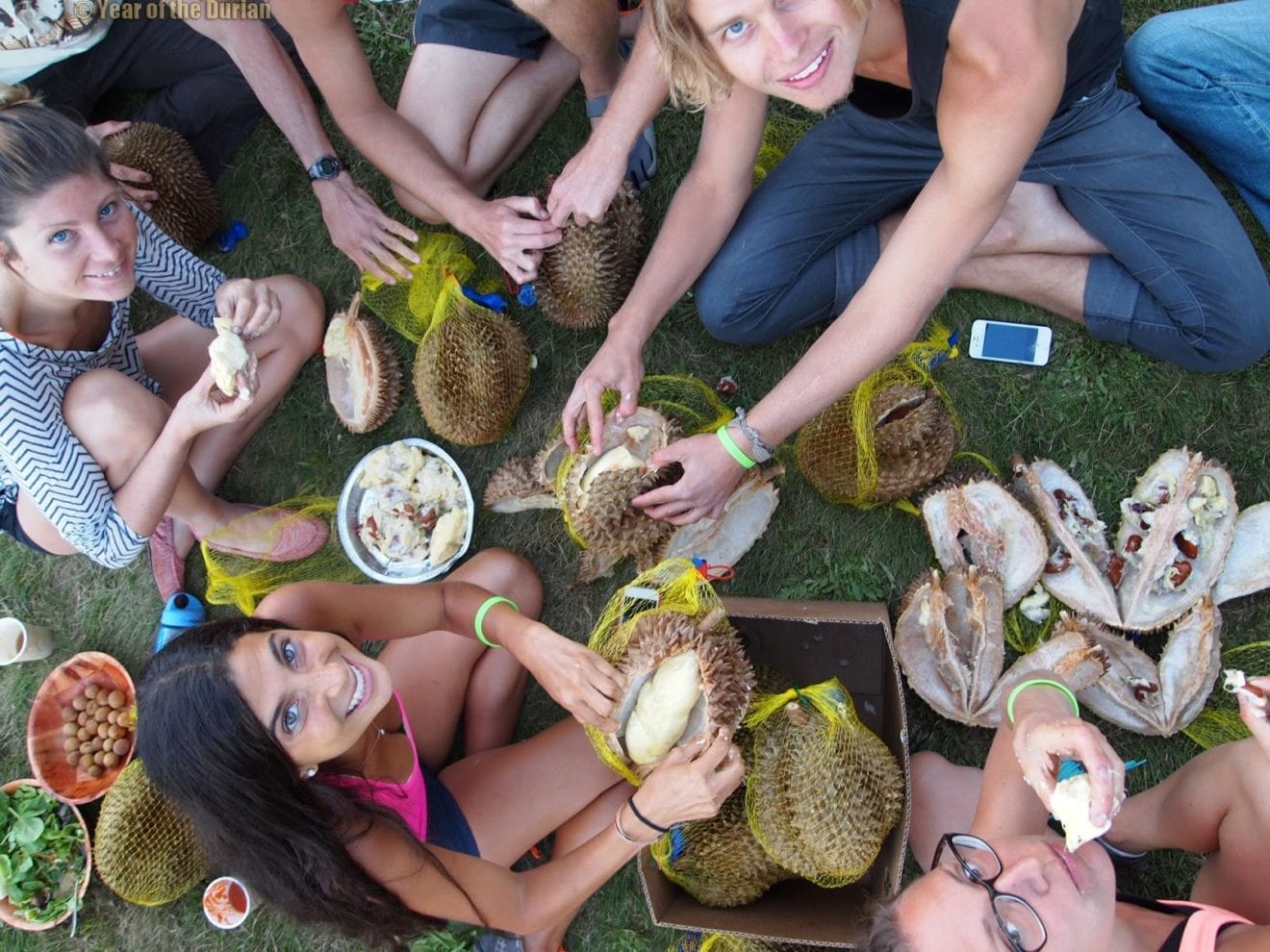
    Thailand is poised to export approximately one million tonnes of durian, valued at an estimated 130 billion baht ($3.5 billion) this year, according to Thai PBS World.<

    In line with Thai Prime Minister Srettha Thavisin’s directives, the Ministry of Agriculture and Cooperatives is tasked with drafting regulations to prevent the sale of unripe or inferior durians.

    This includes setting dry weight standards for various durian varieties: 32% for Monthong, 30% for Chanee, and 28% for Kra Dum, as detailed by Chai Wacharonke, a spokesperson for Srettha.

    The initiative aims to discourage the premature harvesting and selling of durians, thereby improving the fruit’s quality and export competitiveness, said Chai.

    Furthering its commitment to quality and market stability, Thailand recently signed a memorandum of understanding with China to promote and secure stable prices for tropical fruit exports from Thailand to China, the English platform of the Chinese state news agency China News Service, reports.

    This agreement facilitates the importation of approximately 20,000 tons of durians and mangosteens, worth over 3 billion baht ($82.44 million), by China from Thailand from April to June this year.

    Durian export, generating 120 billion baht in revenue last year, plays an increasingly crucial role in Thailand’s economy.

    Thailand, producing 900,000 tons of durian annually, exports nearly two-thirds of this output primarily to China.

  • Lufthansa Cargo presents commitment to transforming the aviation industry

    Lufthansa Cargo presents commitment to transforming the aviation industry

    Air freight remains essential for the German economy. No other mode of transportation offers the necessary speed to transport time-critical, temperature-sensitive, and valuable goods. Whether it’s urgent spare parts, vaccines, relief supplies, or animals on their way to a new home – when speed, safety, and care are paramount, shipping by air freight is the best choice for freight forwarders, industrial and private customers.

    On Supply Chain Day, 18 April, Lufthansa Cargo highlights the importance of air freight and how the company facilitates global trade. Lufthansa Cargo invites interested parties for a behind-the-scenes look at the Lufthansa Cargo Center in Frankfurt, the airline’s primary hub for cargo.

    Frankfurt Airport plays a crucial role as a major hub in Europe: With a handling capacity of 20,000 tons per week, Lufthansa Cargo operates its largest logistics center worldwide at Frankfurt Airport. To continue supporting companies in participating in global trade amid growing industry demands, Lufthansa Cargo primarily relies on digitalization and innovative measures.

    “Air freight remains a growth market, and the stable supply chains we can provide are indispensable,” explains Thomas Rohrmeier, Head of Handling Frankfurt at Lufthansa Cargo. “This is especially essential in times of global tensions and changing customer needs. For this, we need innovative solutions that meet our requirements, those of our customers, and society.”

    However, these can only work with a modern infrastructure. For this purpose, the cargo airline is investing around 500 million Euros in construction and modernization measures in the Cargo City North.

    “With a handling share of approximately 80 percent of Lufthansa Cargo’s global cargo volume, the Frankfurt hub significantly determines the operational stability of Lufthansa Cargo,” says Rohrmeier. The modernization will enable increased handling speed, smooth transportation processes, and supply chains, and an improvement in service quality. Thus, the company reaffirms its commitment to the Frankfurt location and contributes to its attractiveness as a business hub.

    Furthermore, Lufthansa Cargo is further advancing the reduction of its carbon footprint and aims for a neutral CO2 balance by 2050. By 2030, the company aims to halve net CO2 emissions through reduction and compensation measures compared to 2019. “A large portion of our emissions occur during flying,” says Brian Kowalke, Environmental Manager at Lufthansa Cargo. “Therefore, Sustainable Aviation Fuels (SAF) are an important lever for reduction, which we already use and which already enable more sustainable flying today, reducing CO2 emissions by up to 80 percent compared to fossil fuels.” In addition, the airline’s freighter fleet is gradually being equipped with AeroSHARK technology. This involves applying a surface film specially developed by Lufthansa Technik and BASF to the aircraft, which reduces friction resistance and thus reduces the fuel consumption of the machines.

  • Food exports beginning to recover

    Food exports beginning to recover

    Food exporters are seeing a recovery in orders though admittedly they have yet to climb back to the levels of past years.

    “We have gotten orders worth tens of millions of dollars so far this year,” Le Thi Giau, chairwoman of instant noodle exporter Binh Tay Food, said at a trade promotion forum earlier this month in HCMC.

    Minh Phu Seafood reported a 30% increase year-on-year in processed seafood exports in the first quarter, having received more orders from the U.S. and EU after a two-year slump in demand.

    It hopes to boost revenues by 50% this year.

    Ly Kim Chi, chairwoman of the HCMC Food and Foodstuff Association, said exports of food products have increased by over 30% this year.

    Businesses have received enough orders to maintain steady production though volumes remain lower than in previous years, and need to expand to new markets and get more customers, she said.

    According to the Vietnam Association of Seafood Exporters and Producers, Vietnam’s seafood exports were worth nearly US$2 billion in the first quarter, up 8% year over Year.

    The figure is set to grow in the coming months as businesses get more orders, the association said.

    Chi said though exports have improved, firms are not making much profits due to high costs.

    “We have to keep prices steady to achieve sales, but both local and imported inputs have become more expensive, eating away at profits.”

    Vietnam’s export competitiveness has taken a hit due to high transportation costs caused by geopolitical conflicts, she added.

    Maritime research consultancy Drewry’s World Container Index, which provides a weekly assessment of container freight rates on 11 major trade routes, was at $2,795 per 40-foot container last week, up 64% year-on-year.

    In the long term food exporters would also face challenges in complying with increasingly strict sustainability regulations in large markets like Europe, experts said.

    The regulations require businesses to meet standards regarding energy and water consumption, greenhouse gas emissions and other environmental and social indicators.

    Nguyen Thi Thanh Phuong, environmental services manager at food testing laboratory Eurofins Sac Ky Hai Dang, said meeting these requirements helps businesses access foreign capital and expand into new markets.

  • Apple CEO Tim Cook says it is considering a manufacturing facility in Indonesia

    Apple CEO Tim Cook says it is considering a manufacturing facility in Indonesia

    Apple will look into building a manufacturing facility in Indonesia, its CEO said on Wednesday after meeting President Joko Widodo, who hoped the tech giant would increase its local content by partnering with domestic firms.

    Apple chief executive Tim Cook arrived in Jakarta on Tuesday after visiting Vietnam. He met with Jokowi, as the president is popularly known, and will inaugurate its fourth developer academy on the island of Bali.

    “We talked about the president’s desire to see manufacturing in the country, and it is something that we will look at,” Cook told reporters after the meeting.

    Apple has no manufacturing facilities in Indonesia, but since 2018 it has been setting up app developer academies, which including the new academy have a total cost of 1.6 trillion rupiah ($99 million).Indonesia’s industry minister, Agus Gumiwang Kartasasmita, who also attended the meeting, told reporters that if Apple decided to build manufacturing facility in Indonesia, it would have the capacity to produce for export.

    “We will discuss how Apple’s facility in Indonesia could become a global supply chain,” he said, adding that the government said that even if Apple didn’t built a factory, it could partner with Indonesian companies to obtain components.

    Apple has met Indonesia’s 35% local content requirement to sell its products by investing in developer academies, Agus said, but the government hoped that number could be pushed higher with a manufacturing facility.

    Apple has based much of its key manufacturing of iPads, AirPods and Apple Watches in Vietnam; suppliers for MacBooks are also investing in the country.

    Indonesia has a huge, tech-savvy population, making the Southeast Asian nation a key target market for tech-related investment.

  • Google Maps to show alternate transit and walking directions along with driving routes

    Google Maps to show alternate transit and walking directions along with driving routes

    In an effort to get users to take a bus or train to get to their destinations instead of driving or better yet, use their own two feet, Google Maps is going to have a new feature. Next to the app’s driving routes, Google Maps will show users public transit and walking alternatives that will get the user to his destination without having to grip a steering wheel. These alternatives will appear “if travel times are comparable and practical.” Google announced this today in a blog post.< The alternative public transit and walking suggestions will appear on the bottom of the screen in a card that says, "Also consider" which will include a preview of the alternative actions recommended. The card will also let the user know if any of these alternatives are faster than driving. The goal is to find alternatives that use lower amounts of carbon. The feature will be available in 15 cities around the world over the next few weeks including Amsterdam, Barcelona, London, Montreal, Paris, Rome, and Sydney. Google Maps is also getting a feature that will, in Search, help users find more information about long distance train and bus routes. For example, if you search for "Boston to Philadelphia train," schedules and ticket prices will appear on the results page along with links that you can tap on to book your trip. This feature can be accessed for trains in 38 countries and for bus routes in 15 countries. Last year, Google added train route suggestions when you look for flights on Search. In the upcoming months, you'll see train route suggestions when you search for a flight using Google Flights. With the latter, you'll also see the estimated emissions for almost every flight and you can filter the results to show you the flights with the lowest emissions first. Google is trying to give people the information they need to choose the low-carbon alternative when traveling.

  • Southeast Asia emerges as top growth market for APAC region, according to new FedEx survey

    Southeast Asia emerges as top growth market for APAC region, according to new FedEx survey

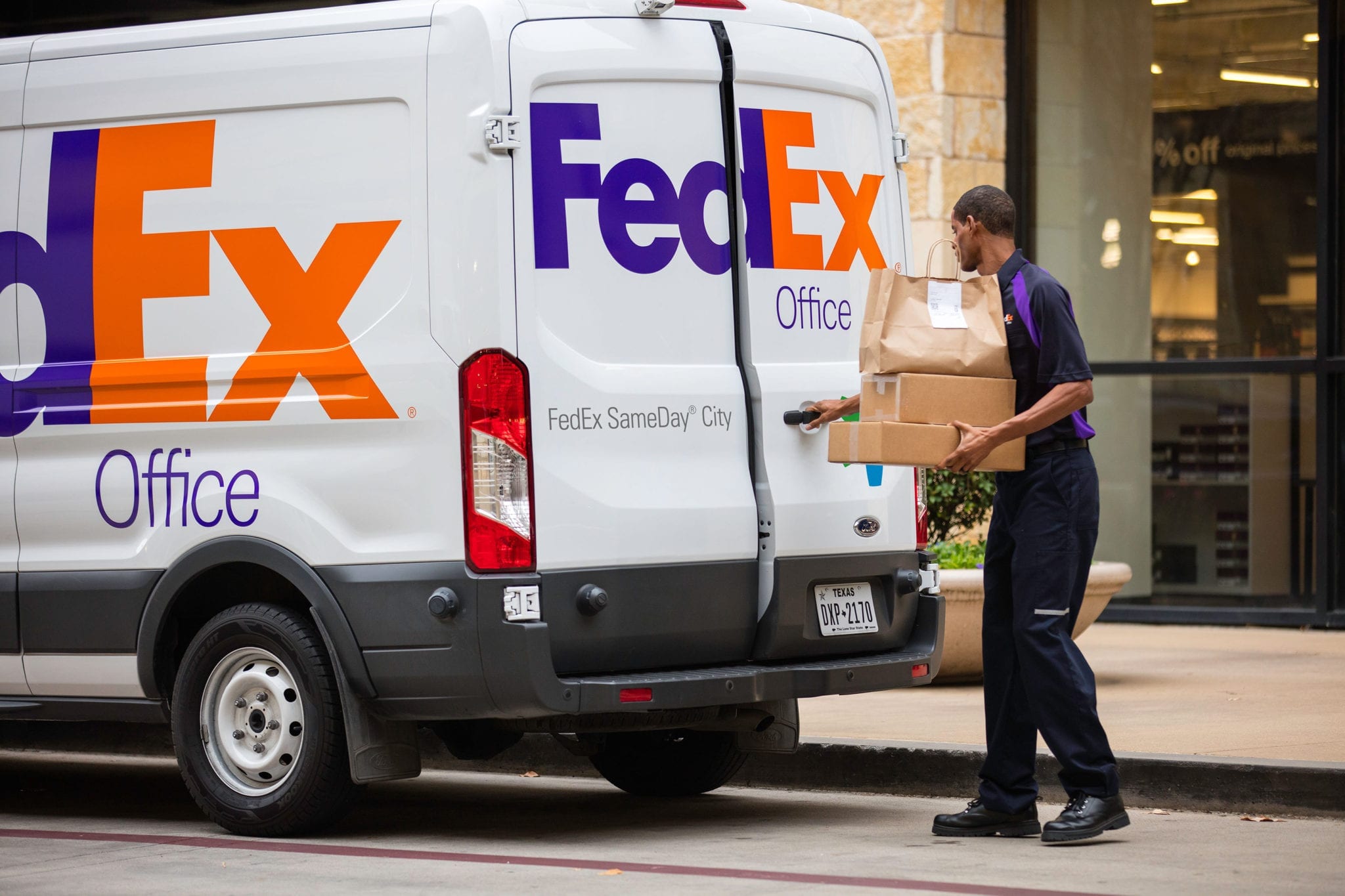
    FedEx Express, a subsidiary of FedEx and one of the world’s largest express transportation companies, today released findings from its latest research report conducted in partnership with Forbes Insights. The report aimed to identify key international growth trends for small and medium-sized enterprises (SMEs) in the Asia Pacific region over the next three years. The survey identified growth opportunities for small businesses as well as challenges to international cross-border commerce.

    The survey polled 250 small and mid-sized business leaders, including founders and C-suite executives, across a range of industry sectors in the Asia Pacific region.

    A key finding was that 68 percent of respondents see the greatest potential for growth in Southeast Asian countries such as Thailand, Vietnam, and Indonesia. Economic growth, cultural affinities, and improved regional trade deals are fuelling optimism around ASEAN markets, according to the report. While 88 percent of those surveyed said that they were planning customer base expansions globally over the next three years, APAC business leaders find it harder to do business with partners, suppliers, and customers in markets like Europe and North and South America.

    Challenges remain for truly realizing cross-border opportunities even within the APAC region. When asked about barriers to international expansion, half of the respondents cited complex customs requirements and documentation as their primary hurdles ahead of finding new customers (45%) and finding partners or suppliers in global markets (42%). With limited in-house trade compliance expertise, navigating different customs regulations across markets remains complicated, according to those surveyed.

    “Our data shows that economic headwinds and global competition are seen as the most pressing business challenges for Asia’s SMEs today. Southeast Asian markets are currently growing faster than in many other parts of the world, so it makes sense for them to focus on intra-Asia trade,” said Kawal Preet, president of Asia Pacific, Middle East & Africa region, FedEx Express. “Yet there remains work to do in surmounting barriers to entry into international markets despite the rising number of regional and bilateral trade agreements. Understanding how to navigate complex customs regulations is where expert partners like FedEx can add value allowing SMEs to concentrate on their core strengths.”

    According to Ross Gagnon, Executive Director of Research, Forbes Insights, “the findings provide valuable insights into high-growth areas and the continuing barriers facing export-driven SMEs. Collaborations focused on unlocking border compliance and bridging digital divides will be key to realizing their international ambitions.”

    Enhancing the customer experience was the most highly ranked business priority for SMEs (57%). While small businesses typically invest only five percent of the total revenue of their annual IT budget on digital transaction capabilities, digital technology was seen as instrumental in tackling customer experience challenges by applying analytics, machine learning, AI, real-time tracking and visibility solutions and technology training to upskill employees. Although the potential of technology is clear, nearly three-quarters (71%) of respondents stated that developing or implementing a digital strategy was their biggest challenge, followed by mitigating security threats (65%) and the cost of upgrading existing systems (64%).

    Where specialized skills and costs are prohibitive, digital transformation can be simplified by choosing partners that have their own digital tools and platforms they can use or incorporate into their own.

    The full FedEx research report is available at fedex.com and offers more data on trends to guide Asian SME strategies for success.

  • Levi’s opens its largest store in Bangkok

    Levi’s opens its largest store in Bangkok

    Levi Strauss & Co has reopened its 364 sqm store at CentralWorld in Bangkok, marking the brand’s largest location in Thailand.

    Located on the second floor of Bangkok’s mall district Chidlom, the store is home to the country’s second Levi’s Tailor Shop, an alteration, restoration and customisation station helmed by skilled tailoring professionals.

    “Thailand is an important strategic market for Levi Strauss & Co within Southeast Asia, and Bangkok is one of the world’s most popular destinations for international tourists,” said Sameer Koul, general manager for Southeast Asia and country manager for Levi Strauss & Co in Thailand.

    “Levi’s CentralWorld store opens as our largest store in Southeast Asia to date, and represents our commitment to this dynamic market as we continue to build deeper direct connections with both local and international shoppers in Thailand,” he added.

    The expanded store also houses collections that collaborated with key cultural figures from Thai artists, even seasonal exclusives, displayed on the opening day in the Beacon Zone.

    Levi Strauss & Co reopened its Levi’s store in Japan’s Kyoto last month, which features the brand’s NextGen format designed to elevate the shopping experience.