Tag: asia

  • Google Messages will soon start to warn you when tapping on links sent by unknown senders

    Google Messages will soon start to warn you when tapping on links sent by unknown senders

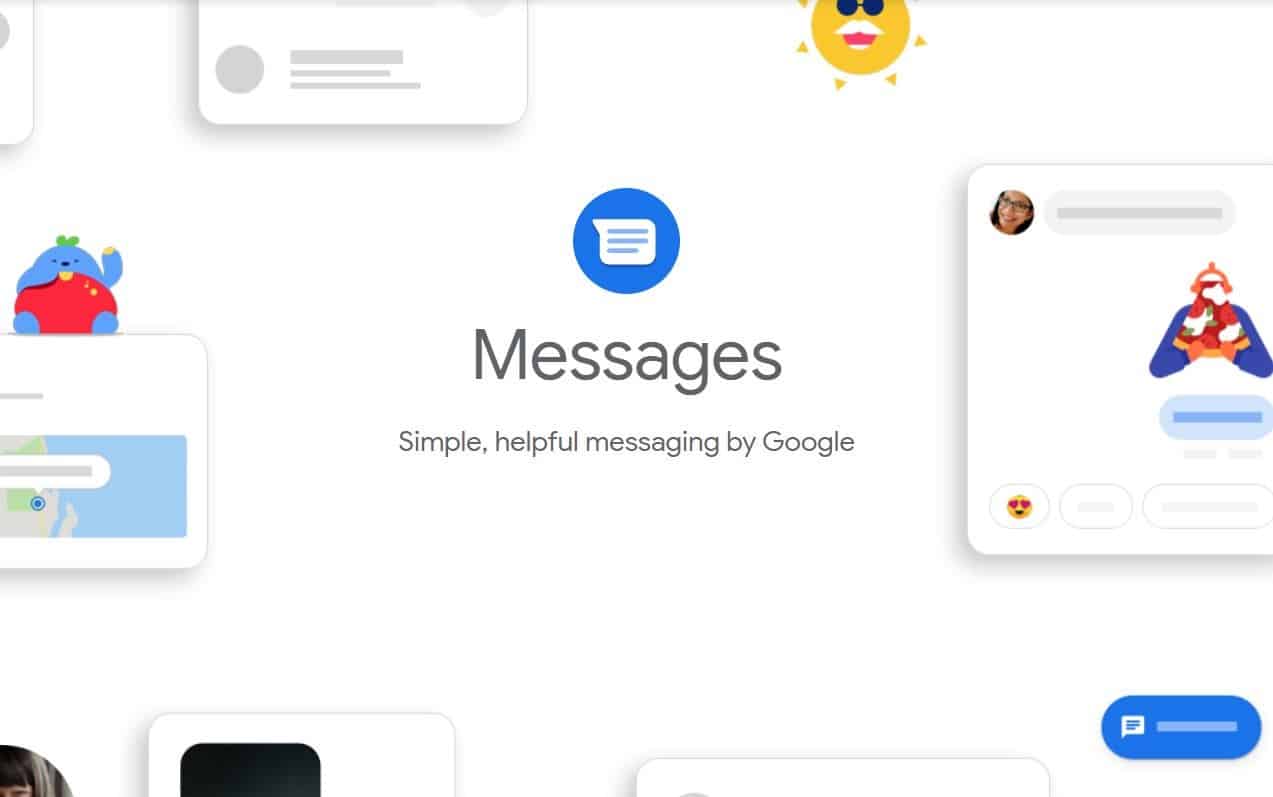
    If you’re getting tired of annoying spam texts and shady links that often try to lure you into clicking them on your Messages app, you may be in luck. Found hidden in the code are signs that Google is stepping up security in its Messages app to give users an extra layer of protection.

    A new pop-up warning system could be coming soon to Messages. This feature is designed to make you think twice before clicking on links in messages from people you don’t know, whether they’re coming through RCS or standard old SMS.

    Imagine this: you get a text from an unknown number with some enticing link. Curiosity takes over, and you go to tap it. This new feature will immediately pop up a warning that says something like this: “Caution: this sender isn’t one of your contacts.” To open that link, you have to check a box acknowledging that there could be risks and then hit “Continue.”

    The idea is to make you think twice before clicking on links sent by senders you don’t know. This would hopefully snap us out of autopilot mode and make us consider twice whether those links are worth exploring.

    Google Messages already has some link warnings, but this new feature looks more robust. Currently, it’s easy to breeze past those messages. This new system adds a little friction, forcing you to stop and think before taking a potentially risky action.

    This feature popped up in a beta version of Google Messages, so we might see it rolling out to testers before landing in the main app. It’s yet another sign, on top of Google recently blocking RCS on rooted phones, that they’re taking security in the Messages app more seriously — and just in time for RCS to roll out for iOS devices, potentially giving the Google Messages app on Android a boost over third party solutions like WhatsApp.

  • Siri might end up King in the realm of digital assistants after iOS 18 AI makeover

    Siri might end up King in the realm of digital assistants after iOS 18 AI makeover

    On June 10th at WWDC 2024, iPhone users might finally hear about improvements to one lagging feature that has frustrated them for years. Ever since Apple introduced its digital assistant Siri in 2011 with the iPhone 4s, iPhone users have had lofty ideas about how Siri was going to help them. When it comes to asking for a timer or alarm to be set, no assistant-even Google Assistant-is faster than Siri. But when you have a question that you need an answer to, Siri really drops the ball.

    For example, ask Siri the release date for the first iPhone and instead of seeing one specific date, you see excerpts from three websites and only the last one has the correct date of  June 29, 2007. Of course, you can read each of the three articles, but this is not quick or easy. Ask Google Assistant and you will instantly receive the correct date.

    Just so you understand, ask Siri a question about Apple’s most important product ever and you have to spend time reading through three websites to get your question answered. Use the iOS version of the Google Assistant app and you see very clearly the date that the first iPhone was released along with a photo showing it on display after being unveiled by Steve Jobs on January 9th of that year.

    Forget for a moment that Siri doesn’t seem to be too knowledgeable about Apple’s history, or at least as knowledgeable as Google Assistant. Getting an answer from Siri often means digging through websites for the correct answer while Google Assistant will show an easy to find response. That is why I always suggest that outside of setting clocks, and alarms, opening apps, and making vocal requests about your iPhone, iOS users should download and use the iOS Google Assistant app which can be installed from the App Store.

    According to Windows Central, Apple is working on a Large Language Model called Reference Resolution As Language Modeling (ReALM) which would allow Siri to understand the context of a conversation and even understand the content that is on screen. Researchers recently published a paper noting Apple’s plans to use AI to improve Siri.

    The smallest AI model that Apple might ship with iOS 18 met performance benchmarks achieved by OpenAI’s GPT-4. Apple’s larger AI model outperformed it by a large margin.

    None of the AI improvements might help us get quicker and to-the-point answers from Siri, but that doesn’t mean we can’t hope it does.

  • Vietnam’s overseas graduates face job-finding struggles at home

    Vietnam’s overseas graduates face job-finding struggles at home

    Holding a high school diploma from Canada and a university degree in Chinese commerce language from China, Tat Dat has faced difficulties securing a fulfilling job upon his return to Vietnam.

    After moving back to his hometown of northern Quang Ninh province in 2022, it took him four months and over 20 job applications to land a position in e-commerce, with a starting salary of VND8 million ($320) per month – less than he hoped for.

    “I diligently monitored job platforms every hour, in search of an e-commerce trade position, hoping for a monthly salary of VND12 million to VND20 million,” Dat said. “Upon eventually securing such a position, the employers informed me that what they could offer me would be VND8 million, a figure not open to negotiation.”

    Dat said he believed that the salary he was offered would never compensate for the VND15 billion invested in his education, yet he remained at the position for six months.

    However, the unsatisfactory salary was merely one of several challenges he encountered in the Vietnamese job market, including difficulties adjusting to workplace culture, being tasked with duties not outlined in his contract, and frequently working overtime without additional compensation.

    “In practice, although the company’s policy stated an eight-hour workday, the actual hours frequently extended to 10-12 hours a day, with no additional overtime compensation,” Dat said. “This was a stark contrast to my previous experiences where an eight-hour workday strictly meant eight hours, nothing more.”

    Dat discovered that being bilingual was no longer a distinctive advantage, facing competition from peers fluent in three or four languages.

    “Encountering peers fluent in English, Chinese, Korean, and French made me feel less competent,” he admitted.

    Dat’s experience aligns with the results of a survey conducted by recruitment agency SHD involving 350 Vietnamese graduates of foreign institutions. The study revealed that 87% experienced cultural and workplace adaptation challenges within Vietnamese corporations, while 83% were dissatisfied with their salary and benefits.

    Ngo Thi Ngoc Lan of headhunt service Navigos Search observed that although graduates returning from abroad bring confidence, language skills, and open-mindedness, they often face difficulties adjusting to Vietnam’s distinct workplace culture. Such graduates require additional time to acclimate compared to their domestically-educated peers, due to the substantial differences in business practices between Vietnam and other countries.

    Ha Vy, a U.S. taxation degree holder, had experiences similar to Dat. After investing VND6 billion in her degree, Vy returned to Vietnam confident in her ability to get a well-paying position. Nonetheless, her lack of practical work experience meant it took her up to four months to find employment offering a monthly salary of VND10 million.

    “My expectations were set on a starting salary of at least VND20 million, but such opportunities proved elusive,” she said.

    After enduring over a year of dissatisfaction due to the mismatch between her efforts and remuneration, the 27-year-old embarked on a job search in Malaysia, driven by her frustration with the undervaluation of her degree in Vietnam.

    “I had anticipated that my degree would garner greater appreciation and financial reward in Vietnam,” Vy said.

    She further explained that despite her proficiency in English, the absence of practical experience posed a significant barrier. Consequently, she said that she now deems it unrealistic for overseas-educated graduates to expect salaries ranging between US$2,000-$3,000 upon their return to Vietnam.

    Le Thanh Ngan, the Head of Recruitment at FPT Education, said that foreign degree holders frequently aspire to high-ranking positions straight out of college, overlooking entry-level opportunities despite their lack of experience, which further complicates their job search in relation to salary expectations.

    But there are more reasons than that for graduates returning from abroad’s challenging job seeking journeys. Vu Hanh Hoa, CEO of a leadership training institute in Hanoi, pointed out that the ongoing economic downturn has been an additional hurdle for this group. As companies streamline operations, they favor experienced employees over those with overseas degrees who necessitate comprehensive training.

    “Major corporations are also facing challenges and have been compelled to reduce expenses to optimize their functions,” she commented. “They prioritize retaining efficient, versatile staff capable of delivering immediate value.”

    Hoa noted that many graduates returning from abroad come from affluent backgrounds, thus lacking the resilience and perseverance deemed essential in the challenging Vietnamese job market. Only a small fraction exhibit the endurance and tenacity valued by employers in today’s global economic climate, she added.

    Another challenge for holders of foreign degrees is their limited experience in communication and building connections within the Vietnamese context.

    “Students who have spent significant time abroad tend to understand foreigners better than their own compatriots, necessitating a considerable period to re-acclimatize to Vietnamese society, its people, attitudes, and work culture,” Hoa explained.

    Thus, many employers estimate that international graduates require six to 12 months to adapt, during which they incur significant training expenses without providing immediate benefits to the company. This in turn leads to employer’s reluctance to offer high initial salaries.

    Hoa advised that instead of focusing solely on the prestige of their foreign degrees, graduates returning from abroad should pursue opportunities to gain practical work experience to alleviate their employment challenges.

    “Often, these graduates return with the expectation that their “higher” qualifications merit positions at renowned, large companies with substantial salaries,” she said. “This expectation creates a barrier to employment.”

    Hoa thus encouraged returning graduates to adjust their expectations and recognize that a foreign degree serves merely as an additional credential. In the face of the economic downturn, as companies increasingly prioritize actual work performance over academic qualifications, Hoa said the ability to “genuinely contribute” was the key factor in getting hired.

    Thus, overseas degree holders should consider the importance of accruing work experience and evaluate how they can add value to a company based on their strengths. Hoa advised against holding out for positions in their preferred fields that meet their salary expectations.

    “Set aside your degrees and avoid becoming ensnared in delusions of grandeur,” she counseled. “Don’t become overly fixated on your foreign education.”

    Otherwise, such graduates risk enduring continuous challenges similar to those faced by Dat.

    Disheartened by his comparatively lower earnings in relation to his domestically-educated counterparts, he opted to take out loans from his parents and other sources to launch a homestay business.

    “The overwhelming financial pressure left me with no choice but to venture into entrepreneurship,” he said. “Starting this business has put me in debt of VND7 billion.”

    Although the financial success of his new business remains uncertain, the venture’s costs have accumulated to the total amount Dat has spent on his education and business startup, making it even more difficult for him to earn back what he has invested.
  • Car imports see recovery in March

    Car imports see recovery in March

    Import turnover of completely built-up (CBU) cars in March increased by 55.4% in volume and 41.4% in value compared to the previous month.

    A preliminary report from the General Statistics Office (GSO) said that Vietnam imported about 15,000 CBU cars in March with a value of US$287 million.

    However, this import decreased slightly by 1.7% in volume and 18.8% in value compared to the figures in March 2023.

    The strong recovery in CBU car import in March was due to the car import in February falling sharply when businesses stopped all import-export activities during the seven-day Tet (Lunar New Year) holiday.

    Those numbers in February reached 9,650 units in volume and $203 million in value.

    Thus, CBU car import turnover in March had a strong recovery despite the market situation not showing clear positive signals.

    Positive signals from the economic recovery are bringing back higher expectations of domestic car demand.

    The CBU car import is expected to continuously recover in the second quarter of 2024.

    After the Lunar New Year holiday in February, the Vietnamese auto market welcomed many new car models, mainly imported cars.

    GSO also reported that the total import of CBU cars in the first three months of 2024 was estimated at 31,452 units worth $632 million, down 25.1% in volume and 31.7% in value year on year.

    This was still a very low turnover compared to 2023, before the market fell into a period of deep decline in demand.

  • Google’s “Find My Device” network reportedly launching in 3 days

    Google’s “Find My Device” network reportedly launching in 3 days

    Following the leak that Google’s “Find My Device” network settings were already appearing for some Android users, it looks like Google is ready to move to the next step. A small subset of users has already received an email that lets the cat out of the bag on when exactly the service would be officially launching.

    An email blast was sent last night to some users which included some official information on when the “Find My Device” network would be launching to the masses. Although the settings began to appear yesterday on Android devices for some users with the beta version of Google Play Services installed, the settings weren’t actually working. Now, it looks like we have a more accurate timeline on when the switch will be flipped.

    The email contained the following verbiage: “You’ll get a notification on your Android devices when this feature is turned on in 3 days. Until then, you can opt out of the network through Find My Device on the web.” Based on the date the email was sent, it’s looking like the service will likely launch on Monday, April 8th, as it is unlikely for Google to launch a new service over the weekend.

    In case you are out of the loop, last year, Google unveiled the Android Find My Device network to assist users in locating lost or stolen smartphones. However, concerns about stalking using tracking devices such as AirTags prompted Google and Apple to collaborate on a solution, delaying the launch of the Find My Device network. Now, with Apple getting ready to deliver these new anti-stalking features with the iOS 17.5 update, Google no longer has to wait.

    Considering that this email was only received by a very small number of users, it is possible it was never meant to be sent out. We don’t know if this means that the launch date on the email is incorrect, or if someone just pressed “send” by mistake. Either way, we are excited to see this finally come to pass and a proper “Find My Device” network finally be put in place for Android users.

  • Instagram, Facebook, Whatsapp users are reporting a “Major Disruption” worldwide

    Instagram, Facebook, Whatsapp users are reporting a “Major Disruption” worldwide

    Meta is having big-time problems today. As of 3:40 pm EDT, Downdetector lists Instagram, Whatsapp, Facebook, and Facebook Messenger as the top four apps/websites that are having issues based on the number of complaints received from users. For example, the number of Instagram users telling Downdetector about a problem with the app and website soared from 31 to over 5,700 in about 30 minutes. Meta is reporting this outage as a “Major Disruption” on its Business API Status page.

    Most of the complaints on Downdetector from Instagram users were from subscribers unable to see Stories that they had just posted. One user said that she had been trying to post a Reel on Instagram for over an hour. 67% of the complaints focused on the app, 28% had a problem with their feed, and 5% could not log in.

    Meta’s core four apps are down and dominate on the Downdetector website – Instagram, Facebook, Whatsapp users are reporting a “Major Disruption” worldwide

    A huge number of Whatsapp users, nearly 25,000, reported that they were having an issue with the app and website at around 2:22 pm. 68% of the complaints were about issues with the app, 26% were not able to receive messages, and 6% were having problems with the website. Users in countries are far apart as New York and Romania were complaining about the messaging platform being down.

    Meta is calling this a major disruption – Instagram, Facebook, Whatsapp users are reporting a “Major Disruption” worldwide (UPDATE)
    Meta is calling this a major disruption

    A far fewer number of Facebook users, 1,689, submitted a complaint to Downdetector by 2:27 pm EDT. 59% of those included a complaint about the app, 29% cited issues with the website, and 12% had problems signing in. As for Facebook Messenger, the number of complaints soared from 7 to 891 during a 45-minute period that ended at 2:19 pm EDT. Most of the platform’s users said that their messages were not going through.

    The outage is taking place worldwide with Meta saying that the issues began at 2:11 pm EDT. The company adds, “Our engineering teams are investigating the issue. We will provide another update within 4 hours or sooner if additional information is available.”

    When we learn more about the outage, we will update this story.

  • Your Spotify subscription may be about to go up in price

    Your Spotify subscription may be about to go up in price

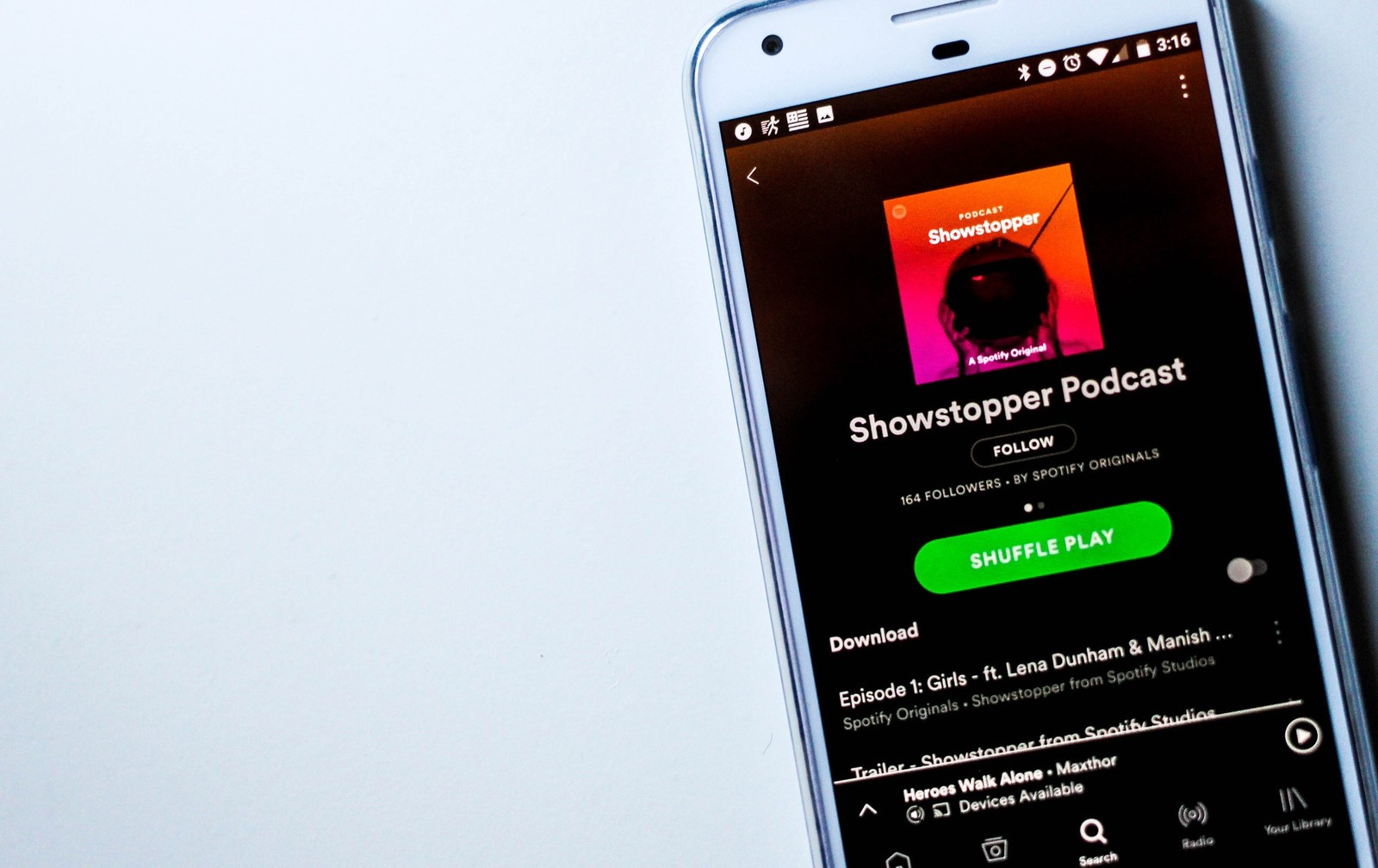
    Spotify, the music streaming giant, is shaking things up with price hikes and a new subscription plan. If you love Spotify but hate ads, get ready to dig a little deeper into those pockets.

    Bloomberg reports that Spotify will raise prices soon. By the end of April, those premium subscriptions in places like the UK, Australia, and Pakistan will go Spotify, the music streaming giant, is shaking things up with price hikes and a new subscription plan. If you love Spotify but hate ads, get ready to dig a little deeper into those pockets.

    Bloomberg reports that Spotify will raise prices soon. By the end of April, those premium subscriptions in places like the UK, Australia, and Pakistan will go up – $1 more for individuals and $2 for couples and families. The U.S. will not be an exception to this, only the price hike will be coming later in the year.

    Here’s where it gets interesting: Spotify is reportedly adding a new $11/month tier – the same price as the current Premium plan. This one gets you ad-free music and podcasts, but audiobooks are off the table. Simply, if you want audiobooks, you’ll have to pay extra.

    This is intriguing considering that Spotify just launched its $9.99 audiobooks plan last month. In addition, it bundled in 15 free hours of audiobook content to the premium plan in the U.S. Spotify has been pretty consistent with prices until last year’s hike. So why are they enacting a price hike now? There are two big reasons I can think of:

    Audiobooks cost money: Adding audiobooks meant making deals with publishers. Spotify needs cash to cover those costs on top of what they already pay for music.
    Record labels want their cut: Spotify hoped audiobooks would lessen their dependence on music deals. But record labels weren’t happy about potentially getting paid less, so they pushed for higher prices to make up for it.

    The question now is whether users will consider having audiobooks a good enough reason to warrant a $1/month price hike, or if they will switch plans to stay at the same price point as before. It’s also hard to say if people will jump ship over this.

    Last year’s hike didn’t scare away users, considering that Spotify actually gained subscriptions afterward. However, only time will tell how this latest round will impact their loyal listeners.up – $1 more for individuals and $2 for couples and families. The U.S. will not be an exception to this, only the price hike will be coming later in the year.

    Here’s where it gets interesting: Spotify is reportedly adding a new $11/month tier – the same price as the current Premium plan. This one gets you ad-free music and podcasts, but audiobooks are off the table. Simply, if you want audiobooks, you’ll have to pay extra.

    This is intriguing considering that Spotify just launched its $9.99 audiobooks plan last month. In addition, it bundled in 15 free hours of audiobook content to the premium plan in the U.S. Spotify has been pretty consistent with prices until last year’s hike. So why are they enacting a price hike now? There are two big reasons I can think of:

    Audiobooks cost money: Adding audiobooks meant making deals with publishers. Spotify needs cash to cover those costs on top of what they already pay for music.
    Record labels want their cut: Spotify hoped audiobooks would lessen their dependence on music deals. But record labels weren’t happy about potentially getting paid less, so they pushed for higher prices to make up for it.

    Your Spotify subscription may be about to go up in price
    Credit: Spotify

    The question now is whether users will consider having audiobooks a good enough reason to warrant a $1/month price hike, or if they will switch plans to stay at the same price point as before. It’s also hard to say if people will jump ship over this.

    Last year’s hike didn’t scare away users, considering that Spotify actually gained subscriptions afterward. However, only time will tell how this latest round will impact their loyal listeners.

  • Strategies for Supply Chain Resilience in the Global Permacrisis Era

    Strategies for Supply Chain Resilience in the Global Permacrisis Era

    In recent years, the concept of ‘Permacrisis’—a term denoting prolonged periods of instability and insecurity, sparked by concurrent catastrophic events—has gained prominence. This term not only encapsulated the essence of 2022 but continues to hold relevance in 2024, affecting global supply chains and subsequently, the retail sector. The ongoing challenges underscore the critical need for robust strategies that enhance both supply chain resilience and retail operations.

    Recent disruptions in global trade routes, notably through key passages like the Red Sea, have highlighted the fragile nature of international supply chains. Last year’s statistics revealed that nearly 24,000 vessels navigated the corridor between the Mediterranean and Red Sea, a route integral to facilitating around 12% of global trade. This passage, crucial for the transport of a significant portion of Asia-Europe trade, underscores the global economy’s dependency on secure and efficient supply chain routes. However, a 1.3% decline in global trade between November and December, attributed to militant attacks on merchant vessels in the Red Sea, serves as a stark reminder of the vulnerabilities that global supply chains face. Such incidents spotlight the imperative for supply chain resilience in the face of geopolitical tensions and regional conflicts, directly impacting retail by leading to stock shortages, delayed deliveries, and increased costs.

    Against this backdrop, supply chain directors and retail managers are urged to prioritise strategic considerations and consider the following strategies to shield their operations, employees, and brands from the adverse effects and ramifications of the Permacrisis.

    1. Customer-Centric Commerce

    In the competitive retail environment, the bar for customer expectations is constantly being raised. The advent of new capabilities by one retailer sets a benchmark for others, necessitating quick adaptation to similar consumer experiences. Achieving a cohesive customer journey across online, mobile, and in-store channels is vital. Implementing comprehensive software solutions that offer unified commerce capabilities is essential for providing teams with enhanced visibility into inventory, sales data, and customer preferences. This approach not only enriches the customer and associate experience but also fosters a more agile and responsive retail environment.

    1. Strategic Inventory Optimisation

    The saying “perfect planning prevents poor performance” is particularly relevant in the context of supply chain management. In an era where every channel of sale is a critical touchpoint for brand interaction, leveraging insights to devise robust inventory strategies is crucial. This involves not only aligning inventory with consumer demand across multiple channels but also employing predictive analytics and autonomous optimisation technologies. Such strategies not only aim to maximise profitability but also minimise waste in all its forms—be it time, resources, or environmental impact. The dual benefit of enhancing the bottom line while contributing positively to the planet exemplifies strategic inventory management’s importance.

    1. Consolidation for Effective Execution

    The digital transformation era demands a cohesive approach to technology integration within supply chains. The complexities of today’s digital ecosystem require a unified platform that encompasses all aspects of supply chain management—from distribution and labour to automation, transportation, and yard management. Adopting a cloud-native solution that consolidates these functions ensures that supply chain execution is not only efficient and adaptable but also capable of scaling in response to evolving business needs and challenges.

    Adapt and Innovate

    The dual challenges of technological advancement and global volatility present a complex scenario for supply chain leaders. Today, more than ever, there is a pressing need for leaders to adopt roles akin to futurists and macroeconomic analysts, anticipating trends and preparing for unforeseen challenges. The strategies outlined above—enhancing customer experience through unified commerce, strategic inventory optimisation, and technology consolidation—are critical for embedding agility and resilience into supply chain operations. As businesses navigate the intricacies of geopolitical, technological, and environmental challenges, the ability to adapt and innovate within supply chain management is not just advantageous but essential for sustained efficiency, profitability, and business continuity in the face of the global Permacrisis.

    Written by Richard Wright, Managing Director, SEA, at Manhattan Associates

    For more information on how your retail outlet can adapt to the global permacrisis era, visit the Manhattan Associates Singapore website.


  • TikTok is among the things Biden and Xi discussed on the phone

    TikTok is among the things Biden and Xi discussed on the phone

    During a phone call on Tuesday, President Joe Biden and Chinese leader Xi Jinping discussed the push for TikTok Inc.’s divestment in the US.

    Following the call, the first direct discussion between the two leaders since November, White House spokesperson John Kirby confirmed that TikTok was indeed a topic of conversation.

    Biden reiterated to Xi his concerns about Chinese ownership of the popular video-sharing app.
    “This was not about a ban of the application, but rather our interest in divestiture, so that the national security interests and the data security of the American people can be protected,” Kirby explained.

    Last month, the US House approved legislation that would prohibit the operation of the video-sharing platform if ByteDance, its Chinese parent company, fails to sell its interest. President Biden has indicated he would ratify the bill, though its prospects in the US Senate remain uncertain.

    ByteDance aims to sell its interests in the viral short video app, or face a ban in the US. If everything goes to plan (the bill passes and Joe Biden signs it), ByteDance will have a 165-day deadline to divest from TikTok. Should it not pass the control of TikTok to an American-based company, US app stores (like Apple’s, Google’s and Samsung’s) would be prohibited from offering TikTok in the country.

    It all started when the Energy and Commerce Committee cast a unanimous 50-0 vote (highly unusual) in favor of the TikTok/ByteDance measure.

    Prior to that, members of Congress were flooded with calls and emails (some of which containing no-no words) from angry TikTok users who were scared that TikTok is coming to an end.

  • New Shazam Wear OS update gives the app independence from your phone

    New Shazam Wear OS update gives the app independence from your phone

    Music lovers who are also the owners of a Wear OS watch will be pleased to know that there is a new version of Shazam for you. Shazam for Wear OS just got a major upgrade that will pretty much make the app independent of your phone and work completely on its own on your smartwatch. This means you can now identify songs directly from your wrist without needing to have your phone nearby.

    With this update (version 14.18) of Shazam, you won’t need to fumble around to connect with your phone app. In fact, you won’t even need the Shazam app installed on your Android phone anymore. Even offline, your smartwatch Shazam will now record a snippet, and then once you’re back online, it’ll work its magic and tell you the song’s name. This will make it so much easier to identify songs on the go.

    Furthermore, if you happen to have more than one device, songs you Shazam on your smartwatch will now instantly sync to your other devices. This functionality does require you to be logged into the app in order to work, though.

    This new feature will make it even more convenient for users to quickly identify songs on the go without having to rely on their phone. It also adds a seamless experience for those who use multiple devices within the Shazam ecosystem.

    This new version of Shazam for Wear OS is widely available now via the Google Play Store. Apple acquired Shazam back in 2017, so it is good to see the app continue to be supported on Android and Wear OS devices. This update shows that Shazam is committed to providing a user-friendly experience across various platforms, as users can now easily access the app’s features on their smartwatches, regardless of the operating system they use.

  • Google Chat may borrow this popular WhatsApp feature

    Google Chat may borrow this popular WhatsApp feature

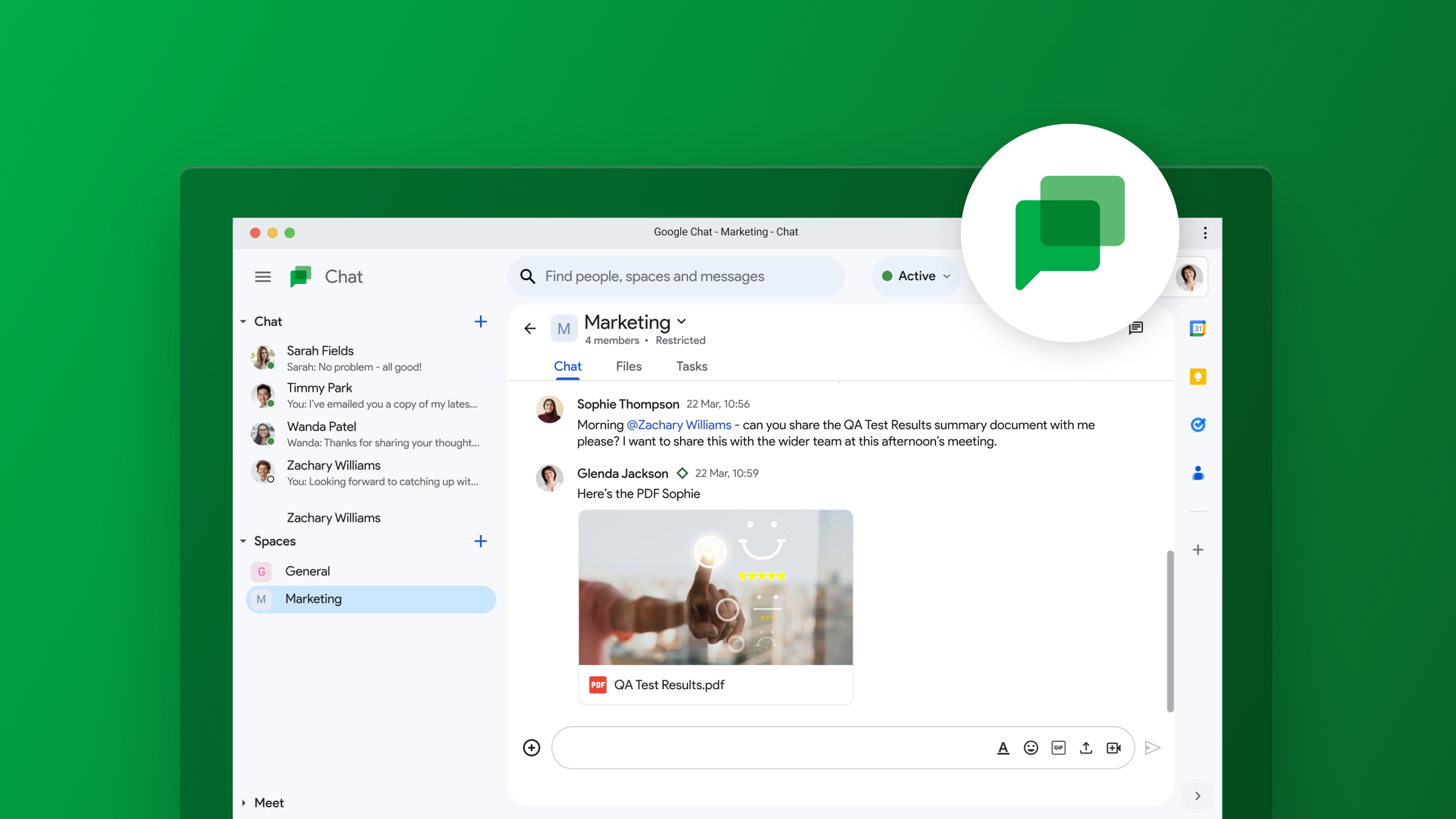
    We all know the feeling – group chats can get crazy. That constant stream of messages can be distracting, especially when you’re juggling multiple projects. Well, it looks like Google Chat is taking on the chaos with a rumored new feature called “Announcements”.

    This sounds a lot like what we’ve seen on WhatsApp Channels and those X/Twitter Spaces. If you haven’t tried them, these features let a select few send messages to a big audience, kind of like a one-way megaphone.Looks like Google Chat spaces may soon have two flavors: the classic collaborative kind, and the new broadcast-focused “Announcements” stylIt looks like it will work this way: regular spaces are for brainstorming and teamwork, whereas the “Announcements” option is all about delivering updates without getting lost in a storm of replies

    The big question now is who gets to hold that ‘megaphone’ in an Announcement space? Will it be just the creator of the space, or maybe a few designated announcers? To really compete with all the broadcast messaging tools out there, Google Chat will probably need to offer some flexibility on this.

    When it comes to this feature, Google’s got some serious contenders to think about. WhatsApp, Discord, Telegram – they’ve all got this broadcast thing down. Then there’s the workplace side: heavyweights like Slack and Microsoft Teams could be in Google’s crosshairs. However, it does make sense for Google to implement this into Google Chat as it would have everything under one roof, especially with their business-focused Workspace tools.

    It sounds promising, but we’ll have to wait for the official launch to see if this “Announcements” idea really takes off. Will it be the tool that adds a bit of order to Google Chat messaging? And will it be enough to sway users to use Chat instead of other solutions already available? Only time will tell.

  • Google reveals when Apple will add RCS support to iPhone

    Google reveals when Apple will add RCS support to iPhone

    Back in November, Apple announced that it would add RCS (Rich Communication Services) support to the iPhone later this year. With this support, iPhone users will be able to view images and videos sent to them by Android users over RCS without having to deal with low-quality pictures and videos. Once Apple adds RCS support to the iPhone, iPhone users will be able to get read receipts when communicating with Android users, and see typing indicators. Messages will still be protected thanks to end-to-end encryption.

    Currently, when an iPhone user messages an Android user and vice versa, the chat takes place over the old-school SMS/MMS platform which is why videos shared look like crap as do  shared images. Because RCS and iMessage have almost the same features, iPhone users should have no problem using RCS when Apple does add support for it.

    The question is, when will this take place? When will Apple start supporting RCS? On the Android.com website, Google has published an updated landing page that reads, “Apple has announced it will be adopting RCS in the fall of 2024.” Apple actually said in November 2023 that the support would come “later next year” which means that we can call this “news.”

    The first day of fall this year will be September 22nd, 2024 which would dovetail with a possible release date for the iPhone 16 line and iOS 18. So there is a strong possibility that if Apple does say that support for RCS will take place in the fall, it will mean that RCS support for the iPhone will debut with the release of iOS 18 in September. If Apple adds it to the iOS 18 Developer Beta, iPhone support for RCS could be available to those installing the iOS 18 developer beta right after Apple unveils iOS 18 during the WWDC 2024 Keynote on June 10th.

    When Apple does add RCS support to the iPhone, you should be able to see whether you have an RCS connection by looking at the text field before you start typing a message. For example, after you tap on the name of the Android-using recipient you are sending a message to and you see RCS in the text field, it means that you will be chatting with the recipient using Rich Communication Services. On the other hand, if the text field says Text Message, you are messaging an Android user who doesn’t use RCS, or an RCS signal is not available. Thus, you’ll be chatting using SMS/MMS.

    Apple will no doubt make a big deal about adding RCS support as it gets closer to September, so stay tuned. We can tell you that Apple’s support for RCS will not add the blue bubble/green bubble rift.

  • LinkedIn goes TikTok

    LinkedIn goes TikTok

    Thanks to the soaring popularity of platforms like TikTok, short-form videos have become an integral part of our digital landscape. Following TikTok’s meteoric rise, other big players like Instagram, Facebook, YouTube, and Snapchat have all jumped on the short-video bandwagon. Now, LinkedIn is gearing up to join the fray.

    TechCrunch reports that LinkedIn confirmed it is experimenting with a new short-video feed, taking a page from TikTok’s playbook. The news first surfaced when Austin Null, a strategy director at an influencer agency, shared a sneak peek (later shared on X) of the new feed on LinkedIn.

    The new feed resides in the app’s navigation bar under a fresh “Video” tab. Once you tap into the Video tab, you’re greeted with a vertical feed of bite-sized videos that you can easily swipe through. Users can engage with the content by liking, commenting, or sharing. Details on how the feed curates content remain undisclosed.

    Unlike the eclectic mix found in other apps, LinkedIn’s focus remains squarely on careers and professionalism. While video content has long been a part of the platform, this dedicated feed aims to elevate engagement and discovery by curating relevant, easily digestible videos.

    According to LinkedIn, users increasingly turn to video content to learn from industry professionals. Hence, the platform is exploring new avenues to surface such valuable content. However, the feature is still in its early testing phase, meaning it’s not widely available yet.

    For content creators, LinkedIn’s new feed might present an opportunity to expand their reach and share video content with a professional audience. There’s talk that LinkedIn might explore monetization options down the line, which could encourage creators to get on board.

    However, not everyone may welcome this change with open arms. LinkedIn has long been valued for its professional and informational content, free from the distractions of typical short-form video feeds. Feel free to share what you think about it in the comments below.

  • Google rolls out new tool for online shopping that recommends clothes to match your style

    Google rolls out new tool for online shopping that recommends clothes to match your style

    Ready for some help with online shopping? Google’s got you covered with a new experimental personalized shopping experience for some users in the U.S. If you use a mobile browser or the Google app to shop for accessories or apparel, you’ll now have a new section called “style recommendations”.

    Users in the United States who have opted for Search Generative Experience (SGE) on Search Labs will have access to the feature. The new section will recommend different clothes or accessories, and you can rate the suggestions with a thumbs down or thumbs up.

    You are also able to swipe right or left to see personalized results. On top of that, more options will be provided if you don’t find what you need.

    Additionally, Google will remember your preferences, and next time you search for the same set of accessories or apparel, you will get personalized results based on saved preferences. You can also tap on the three dots next to the Search result and look for personalization options – they will be under the “About this result” panel.

    But that’s not all! You can specify brands you like – on mobile, desktop, and the Google app. Once you choose your brands, the search results will prioritize results from these brands. As with anything, you’re allowed to change your preferences.

    If you like something from the results, you can also use a virtual try-on (VTO) tool. The tool was first introduced to U.S. users last year.

  • Coffee prices soar to record high as supply shrinks

    Coffee prices soar to record high as supply shrinks

    Coffee prices surged 11.3% to a historic high of VND98,100 (US$3.95) per kilogram on Wednesday as inventories dwindle and production is forecast to decline.

    The price represented a 110% increase from a year ago. On online coffee business forums, many farmers and traders have expressed surprise at the unprecedented prices, which were around VND70,800 at the beginning of the year.

    Prices also rose globally, with the May robusta LRCc2 futures contract rising to an all-time high of $5,999 per ton and the May Arabica KCc1 to $4,186.5. According to Nguyen Hai Nam, chairman of the Vietnam Coffee Cocoa Association, the sharp increase in prices is due to a decline in production and record low inventories.

    He said droughts in coffee-growing countries caused by climate change and the El Nino phenomenon have declined global production. His association expects coffee harvests to be 10% lower this year since farmers have shifted to other crops due to low prices in recent years. Shipping disruptions and freight hikes due to the Red Sea tensions also contribute to higher global prices, he added.

    The skyrocketing prices have heavily impacted traders. Nguyen Loan, a coffee merchant in Dak Lak Province, said she is cutting back on purchases due to the record prices, pointing out that even large traders are hesitant to stock up on coffee.

    “I previously agreed to sell 1,000 tons of coffee to an exporter at VND70,000 per kilogram. At the current prices, I cannot procure enough stock to deliver.”

    Phan Minh Thong, chairman of agricultural products exporter Phuc Sinh Group, said coffee merchants are demanding as much as VND99,000 per kilogram.

    The company had to make some small purchases and bear the losses to maintain its operations.

    “The company has faced huge losses recently. We will incur bigger losses if we buy more.”

    According to traders, importers are now buying coffee from India and Brazil instead of Vietnam because of its high prices.

    With Brazil’s coffee crop set to harvest in April, prices in the global market might soon cool down.

    In the first two months of the year Vietnam exported 438,000 tons of coffee for $1.4 billion, according to data from the General Department of Customs.

    They represented increases of 28% and 85% year-on-year.