Tag: asia

  • WhatsApp on Android may soon be getting voice message transcription like on iOS

    WhatsApp on Android may soon be getting voice message transcription like on iOS

    For nearly a year, iOS users have enjoyed the convenience of transcribing WhatsApp voice messages. Now, it’s looking like WhatsApp is working to bring the same functionality to Android, and its users may soon get the same time-saving feature.

    TheSpAndroid‘s @AssembleDebug completed an APK breakdown that reveals there is code in WhatsApp Beta for Android (version 2.24.7.7) that indicates this feature is in development. Furthermore, the code also reveals that enabling transcription will require a 150MB download, suggesting that the feature relies on your device’s speech recognition software.

    The feature is expected to be located within the Settings > Chats menu, mirroring the feature’s location on iOS devices. End-to-end encryption will also apply to voice transcripts, meaning that your privacy will remain intact even when your voice messages are turned into text.

    The feature could not be activated yet, leaving only the strings in the code to go off of. This means that screenshots could not be gathered, which strongly suggests that this feature is still in its very early stages. However, WhatsApp’s timeline for new features can often be unpredictable, so while there is no specific date for when this feature will become widely available, it could appear in future WhatsApp beta releases at any time.

    Once released, this move will put WhatsApp on a more even footing with rivals like Telegram and Google Messages, which already offer transcription tools on Android. However, it is unclear if there will be limitations on the use of this feature. While Google Messages has a free transcription service, Telegram limits non-premium users to a few transcripts per week.

    It will be interesting to see how WhatsApp decides to implement this feature and if they will follow a similar model or offer it without restrictions. This could potentially impact the user experience and determine how successful the feature will be in attracting new users to the platform.
  • Apple in talks to license Google’s Gemini AI to improve Siri, add new iOS features

    Apple in talks to license Google’s Gemini AI to improve Siri, add new iOS features

    The upcoming iOS 18 update is expected to be one of the biggest-if not the biggest-in iOS history. Part of that is due to the myriad AI features that Apple will be adding to the operating system including possible improvements to digital assistant Siri. While the date has not yet been announced, many iPhone users are looking forward to this June’s WWDC 2024 developer conference to see what changes Apple plans for its digital assistant.

    When Siri first hit the scene in 2011 with the introduction of the iPhone 4s, it appeared that Apple was on to something big. But eventually, Siri’s capabilities and performance were surpassed by Google Assistant and Amazon’s Alexa and a shot of AI could be the cure for what ails the old gal. Apple is talking with Google about licensing the latter’s Gemini AI. The talks between the two tech giants have progressed to the negotiating stage.

    Besides improving Siri, Apple hopes to use Gemini to add new AI-based features to iOS 18. Apple and Google already have an agreement to make Google the default search engine on Safari, a deal that reportedly pays Apple nearly $20 billion annually. Because the DOJ is investigating this deal, any deal involving Apple and Google, including one that would allow Apple to use Gemini, would probably have to be agreed to by the Justice Department or some other regulatory agency in the U.S.

    On Android, users can install the Gemini app and opt-in to have Gemini replace the Google Assistant although some features, such as reminders, controlling media, and routines will not work with Gemini. If you opted in to replace Google Assistant with Gemini and want to switch back, go to the Gemini app, tap the profile icon, go to settings, tap on “Digital assistants from Google” at the bottom, and select Google Assistant. On iOS, Gemini can be accessed from the Gemini tap in the top center of the Google app, right under the digital assistant.

    Should Apple and Google agree to license Gemini, we should see a greatly improved Siri, which is what all iPhone users have been hoping for.

  • Google Wallet is rolling out support for Apple Wallet pass files

    Google Wallet is rolling out support for Apple Wallet pass files

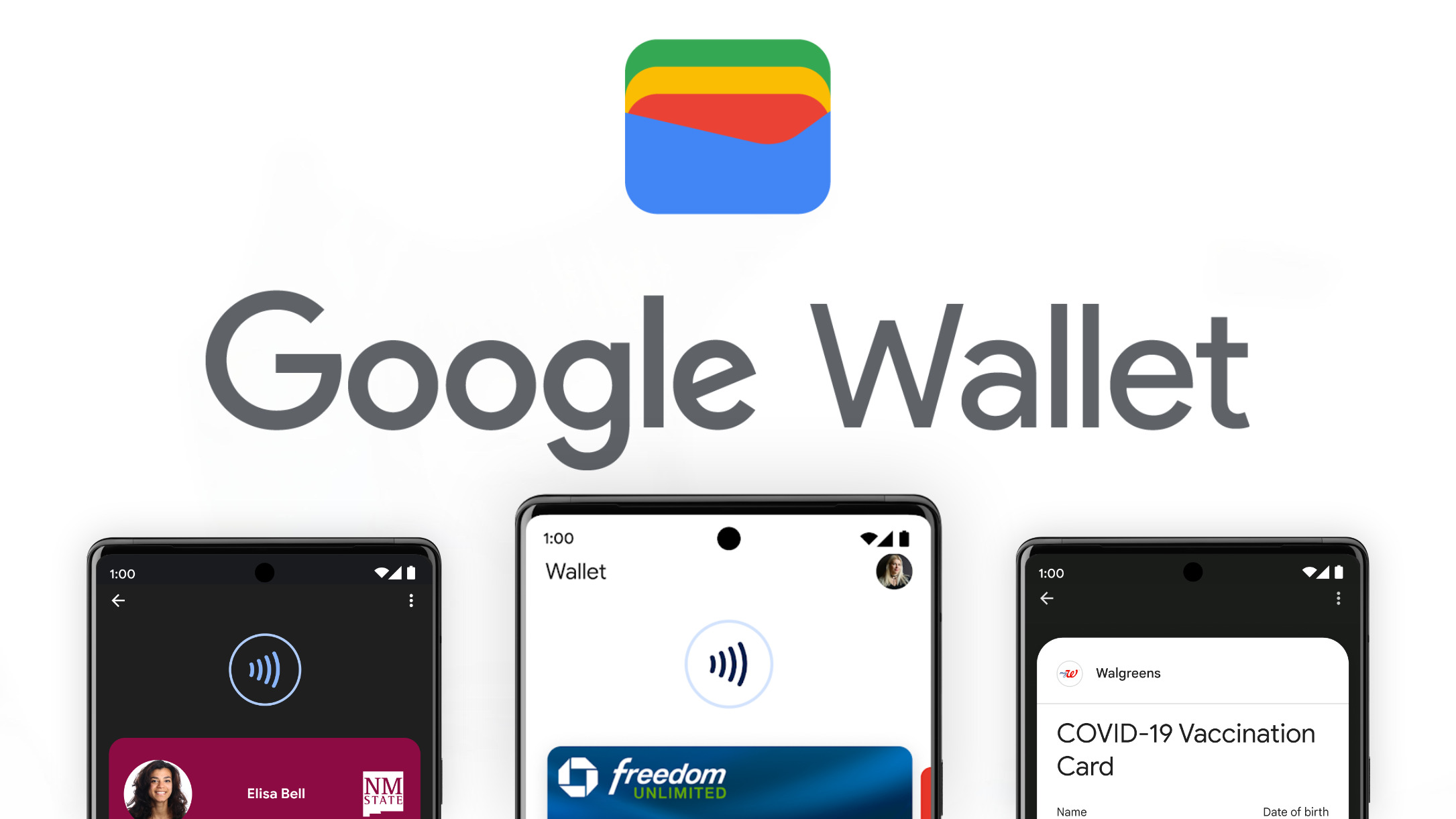
    Last year, Google Wallet rolled out a new feature that allowed users to share boarding passes and event tickets with others via a link. This feature was designed as a convenient way to share passes with friends and family, but mostly for those who didn’t actually have the Google Wallet app installed on their devices, such as iOS users. Now, a new update is rolling out that expands on this and now allows Apple Wallet passes to be used in Google Wallet as well.

    This update, which Android expert Mishaal Rahman documented, aims to narrow the disparity with Apple Wallet. Apple currently holds an advantage in this area due to its wide use among apps and services that distribute digital tickets and passes on iPhones. Additionally, it provides a more streamlined and integrated experience for users, as it most often provides the “Add to Apple Wallet” option.

    This hasn’t always been the case with Android devices, as “Add to Google Wallet” isn’t as universally available and recognized. However, with Google Wallet adopting support for “pkpass” files, which are used to add passes to Apple Wallet on the iPhone, this can quickly change and help standardize the process across both Android and iPhone devices.

    By expanding support for “pkpass” files, Android devices can now offer a similar level of convenience and integration when it comes to adding tickets and passes. This move by Google Wallet could potentially bridge the gap between the two platforms in terms of digital ticketing services.

    As promised over a year ago by Google, this support is now beginning to reach some Android users. However, despite some users confirming that “pkpass” files are opening in Wallet and importing to the app successfully, the functionality remains a server-side update on Google’s end. It will be interesting to see how this change impacts the user experience and convenience for consumers using Google Wallet on Android devices.

  • Chrome for Android will soon allow you to use your preferred password manager

    Chrome for Android will soon allow you to use your preferred password manager

    Google Chrome might be the default browser on many Android phones, but that doesn’t mean it’s the only – or even the best – option. Browsers like Firefox, with its expanded extension support, and privacy-focused browsers loaded with anti-tracking features, offer compelling reasons to switch. Now, Chrome is making a change that lessens one major reason for users to jump ship.

    Historically, if you wanted to use a password manager on Chrome for Android, you were stuck with Google’s solution. However, a new hidden setting finally lets you choose your preferred password manager. This means if you use a service like LastPass, Bitwarden, or 1Password, you can now integrate it seamlessly into Chrome on Android.

    This was spotted by Leopeva64 on X who shared his discovery while going through the code. According to him, this can be enabled right now on the Stable, Beta, and Canary builds of Chrome on Android, but the experimental flag “enable-autofill-virtual-view-structure” will need to be enabled first before the setting can show up. Once enabled, a new autofill option will appear within settings that will allow you to decide between the default (Google Password Manager) or other providers.

    This new feature is currently in development and not yet working as it should. For instance, attempts to save a new password after entering one failed, indicating that there is still work to do before the public can use it. The feature will likely undergo further testing and improvements before it no longer needs an experimental flag.

    Chrome’s lack of flexibility in this respect was a point of frustration for those who preferred a dedicated password manager. This integration, when released, will streamline your browsing and give you greater control over the password services you use. While a little more polish is needed, users now have more reasons to consider sticking with Chrome on Android.

  • How The Body Shop Vietnam does business

    How The Body Shop Vietnam does business

    Operated by a Malaysian firm in some Southeast Asian locations, cosmetics retail chain The Body Shop Vietnam posted its first loss last year after three years of declining profits.

    InNature Berhad, which owns The Body Shop Vietnam, said that the company has been unaffected by the shutdown of The Body Shop U.S. operations last week. The company also operates The Body Shop in Malysia and Cambodia.

    The Body Shop, a 50-year-old brand founded in the U.K, has been scaling down its operations in the U.K. and Canada.

    The first The Body Shop store in Ho Chi Minh City opened in 2009. After 15 years, it now has 41 outlets nationwide.

    Revenues before Covid-19 were on the rise from VND112 billion in 2018 to VND162 billion in 2020. Its annual growth rate of over 20% were higher than InNature Berhad’s revenue, which dropped 8.8%.

  • UBS Asia Job Cuts Show What Switzerland Faces

    UBS Asia Job Cuts Show What Switzerland Faces

    It is a year since the government and regulators forced UBS to rescue Credit Suisse. The recent news of job cuts in Asia makes it very clear what could be just around the corner for the domestic financial hubs.

    UBS is cutting about 70 jobs in Asia, according to various media reports on Thursday. Most of the redundancies are taking place in Singapore and Hong Kong.

    The step also ostensibly affects the bank’s core Global Wealth Management (GWM) business even though the number of employees has been growing steadily in that region since 2022. But as UBS reported in February, the Asia Pacific made significantly less money in the fourth quarter of last year. Pre-tax profit fell by 46 percent to $97 million compared to the same period a year earlier. At the same time, the cost-income ratio rose to 87.7 percent.

    That is in itself remarkable. Besides the US, Asia is a strategic growth market for the bank. Both regions are integral to its future financial success and key to its investment growth story with UBS making large investments in both markets in recent years. The results are there for everyone to see, particularly after integrating Credit Suisse’s business. There is no other bank in Asia that has such a large wealth management business with such high levels of invested assets.

    At the end of 2022, before the forced takeover of Credit Suisse, about 16,500 individuals worked at UBS in Asia Pacific. At the time, that was 22 percent of the group’s entire workforce.

    The current job cuts are likely due to plain economics. But they also have to be seen in the context of a wider restructuring. This has now started just about a year after the government and regulators forced UBS to take over its former rival and Switzerland’s second-largest bank. That is also exactly what the bank announced in February.

    Singapore, Hong Kong, and Luxembourg come first, followed by Switzerland afterward, an order of events that is expected to hold up over the next few years.

    We got a taste of that this year. In April, the bank will start consolidating its branch network with that of Credit Suisse’s domestic business. About 85 branches belonging to both will be impacted by the consolidation. What is currently happening in Singapore and Hong Kong shows what can be expected in Switzerland very soon.

    Moreover, when following the UBS schedule step-by-step, it is clear that the domestic market is to see very significant disruption.

    The integration of the franchises of the country’s two largest banks will change the financial hub sustainably and substantively. And it will be on a scale that we can’t yet really imagine. With that, the fact that UBS’s management is not wasting any time should be welcomed. The sooner the process is completed, the sooner the bank can concentrate on its actual job. Focusing on doing business with clients.

    As part of that, it will be this exact core business experiencing the current round of cuts that will determine the success of its efforts to become a wealth management powerhouse – both in Asia and Switzerland.

  • Google Messages gets new Camera UI for users to access during a chat

    Google Messages gets new Camera UI for users to access during a chat

    Google is adding a new camera UI for Google Messages that Android users can employ instead of relying on their phones’ default viewfinder. The camera UI can be accessed from within a Google Messages conversation using the camera icon inside the text field. Before Google started to push out this change, those using the Google Messages app would have to use the system camera app for a preview.

    Before the update, Pixel users accessing the system camera app could customize the White Balance, and exposure, and set a timer if they so desired. The new viewfinder for Google Messages users is built using the Compose toolkit that Google recommends for building Android user interfaces, and it is stripped down more than the system camera app UI used now. The controls will allow users to adjust the zoom using three default settings and pinch-to-zoom. There is also a button to enable or disable flash, found in the upper right corner, and a button to switch between using the rear and front-facing cameras.

    A new feature added to the Google Messages camera UI appears on the bottom of the screen and allows users to switch between taking a photograph and recording a video. With this new feature, you can choose between capturing an image or recording a video after opening the camera app. Previously, the user had to make this decision before opening the Google Messages camera UI.

    The new Google Messages camera UI is being disseminated today via a server-side update and appears on beta version 20240312_00_RC00 of the Google Messages app. To see which version of the Google Messages app you’re running on your Android phone, go to Settings > Apps and tap on “See all xxx apps.” Scroll down to Messages and tap on it. That takes you to the Google Messages App info page. Scroll all the way to the bottom to see which version of the app you’re running.

    On my Pixel 6 Pro running Android 14 QPR3 beta 2, the version of Messages I have is 20240126_04_RC00 which means that I do not have the new Messages camera UI at this time. You can see if the update with the latest version is in your app update queue by opening the Play Store and tapping on the profile icon in the upper right corner. From the menu that appears, click on Manage apps & device, and under Updating apps, tap the blue link to Update all and hope that the new feature is part of an update pushed out to Google Messages that was waiting to be installed.

  • Singaporean women earn 14.3% less than men

    Singaporean women earn 14.3% less than men

    The median income difference between women and men working in Singapore was 14.3% last year, down from 16.3% in 2018, according to the Ministry of Manpower’s study.

    Differences in occupation between men and women remained the key factor influencing the gender pay gap. Men are overrepresented in higher-paying occupations, according to a study examining the incomes of full-time employees aged 25 to 54, who are either Singaporean or permanent residents.

    Women often receive lower pay than men, even when they share the same job title, work in the same industry, and have similar age and education levels.

    In 2023, 75% of women were employed in professional, managerial, executive, and technician (PMET) roles, marking an 8.8 percentage point rise from 2018. Meanwhile, the proportion of men in PMET positions climbed by 6.3 percentage points, reaching 79.4% in 2023.

  • South Korean burger chain Mom’s Touch enters Japan

    South Korean burger chain Mom’s Touch enters Japan

    Korean burger and chicken fast food chain Mom’s Touch is set to open its first directly managed Japanese store in Shibuya, Tokyo.

    Scheduled to open on April 16, the new 418 sqm Shibuya store will sit in a location that used to be occupied by McDonald’s and have a seating capacity of 200 people. According to local media, the new store will be adjacent to Shibuya Scramble Square where the daily floating population reaches about 3 million people.

    “We believe this is an important first step for Mom’s Touch to make the leap to become a global brand and make full-fledged overseas expansion,” the company said in a statement.

    As part of the expansion plan, Mom’s Touch has participated in the Tokyo Franchise Show as it seeks to further expand internationally and promote its Korean burger in the country, which has a burger market estimated at US$5.3 billion.

    The company launched a pop-up store in Shibuya last October, luring about 33,000 visitors. As of February, Mom’s Touch operates 1420 stores in its home market.

    The Japan expansion follows the chain’s launch into Mongolia last year.

  • Coupang launches overseas direct purchase service in Japan

    Coupang launches overseas direct purchase service in Japan

    Coupang customers in South Korea can now directly purchase products from Japan, thanks to the e-commerce platform’s expansion of its overseas direct purchase service.

    With Japanese products now available through the Rocket Jikgu direct purchase service, customers can now purchase food from brands such as Nissin, Meiji, LeTao, and AGF, and beauty items from brands such as Senka, Bioré, Fino, Tsubaki and P&G Japan.

    The platform will also offer home improvement brands Ishida and Joseph Joseph and stationery products from Zebra, Mitsubishi, and Pentel.

    The company first launched Rocket Jikgu in the US in 2017 and has expanded the direct purchase service since.

    The South Korean online retailing giant has then added China to its Rocket Jikgu network in 2021 and Hong Kong in 2022.

    Last year, the Japanese overseas direct purchase market grew by 11 percent, with food purchases surging about 45 percent.

  • Chip Apple developed for the Apple Car reportedly carried a whopping 536 billion transistors

    Chip Apple developed for the Apple Car reportedly carried a whopping 536 billion transistors

    Last month, Apple put an end to the development of the Apple Car after spending ten years and ten billion dollars to create an autonomous vehicle. One of the components that Apple built for the car was a new chip that supposedly had the same performance capabilities as four M2 Ultra chips! Considering that each M2 Ultra chip is equipped with 134 billion transistors, a 24-core CPU, a 76-core GPU, and a 32-core Neural Engine, stitching together four of these components creates an extremely powerful chip.
    Imagine a chip carrying 536 billion transistors with a 96-core CPU and a 304-core GPU. While there is no definitive proof that the chip Apple was planning to use to power the Apple Car was perfectly equivalent to four M2 Ultra chips, consider that the number of transistors inside a chip determines how powerful and/or energy efficient that chip is. Using the “UltraFusion” technology that helped Apple combine two M1 Max chips to become the M1 Ultra, and combine two M2 Max chips to become the M2 Ultra, Apple might have been hoping to create an incredibly powerful silicon component from four M2 Ultra chips.
    Let’s do a simple comparison. The A17 Pro application processor (AP) that powers the iPhone 15 Pro and iPhone 15 Pro Max contains 19 billion transistors, only 3.5% of the number of transistors that might have been placed inside the chip Apple would have used to “drive” the Apple Car. Wccftech says that the new chip that Apple was developing for the Apple Car was “nearly done” before Apple put the kibosh on the project. Could that chip have been the M3 Ultra?
    When Apple introduces the M3 Ultra, it will be interesting to see whether any of that chip’s specs match the rumored powerhouse chip that would have been used on the Apple Car. One thing that we can be sure of, this chip would have been built by TSMC, the world’s largest foundry.
  • Spotify to launch new Audiobooks feature in April

    Spotify to launch new Audiobooks feature in April

    After bringing music videos to Premium users in select markets, Spotify announced a brand-new feature coming to Audiobooks in April: Countdown Pages.

    This is the same feature that’s been successful for music releases. It allows Spotify users to “pre-save” audiobooks prior to a book’s release date, while authors and publishers can promote their new titles ahead of launch.

    Once an audiobook is pre-saved, a timer countdown will be visible above it until its launch. When the book is actually released, Spotify will notify users so they know they can start listening to it.

    Thanks to Countdown Pages, Spotify users can search for titles on the streaming service as soon as they’re announced. After next month’s update, a “Pre-save” CTA on pages of the books that haven’t been released yet. Additionally, a “More like this” tab will show users similar released book that they can start listening to straight away.

    Countdown Pages for Spotify will be available in all markets where Audiobooks are available beginning in mid-April.

    Since it was released back in 2023, users have played more than 150,000 unique titles through Spotify’s premium service. With a catalog of over 200,000 titles, Spotify believes that there’s room for improvement when it comes to the number of listeners engaging with audiobooks, especially considering that the streaming service has a user base of over 600 million.

  • TIDAL launches Circles, a safe space dedicated to artists

    TIDAL launches Circles, a safe space dedicated to artists

    TIDAL is trying to turn itself into a comfy home for artists. Circles is the latest new feature introduced by the music service, an artist-to-artist forum that allows artists to discuss their career experiences and connect with their peers on how to navigate the music industry.

    Although it’s not available to everyone, TIDAL announced that it’s giving select artists early access to use Circles, which is available in TIDAL Artist Home.

    According TIDAL, Circles is secure and safe, so if you’re an artist seeking guidance or insight from peers who may have gone through similar career experiences, this might be the right space for you.

    As artists, we have a tendency to feel like we’re on an island, which is why I love having artist friends because hearing about another artist experiencing this niche thing.

    If you’re interested in Circles, you can start using it directly within TIDAL Artist Home where you can also browse discussions on the home feed, as well as dive deeper into key topics using the search feature.

    TIDAL also confirmed that only verified artists on TIDAL Artist Home will be allowed to participate in conversations. Moreover, artists who can access TIDAL Circles have the option to post publicly in forums or anonymously to encourage a safe space for artists.

  • Gold heads up after plunge

    Gold heads up after plunge

    Saigon Jewelry Company gold bar price rose 0.75% to VND81.1 million ($3,283.73) per tael Thursday.

    Gold bar plunged 2.42% Wednesday after reaching a new historic peak of VND82.5 million.

    The gold ring price increased VND0.88% to VND69 million per tael on Thursday. A tael equals 37.5 grams or 1.2 ounces.

    Globally gold prices traded flat in early Asian trade hours on Thursday, within close range of record-high levels on a broadly weaker dollar, as traders awaited more economic data that could steer hopes for a mid-year rate cut by the U.S. Federal Reserve.

    Spot gold was flat at $2,173.89 per ounce. U.S. gold futures dipped 0.1% to $2,178.20.

    The Fed is expected to hold rates steady at its policy meeting next week, but the focus will be on the ‘dot plot’ projections. The U.S. central bank in its December meeting pencilled three-quarter-point rate cuts for 2024.

  • YouTube reveals new design for its TV app

    YouTube reveals new design for its TV app

    YouTube has just announced a new design for its TV app that will be rolled out to all users over the next few weeks. The new design is supposed to bring familiar YouTube features and interactivity to the living room while maintaining the same experience that fans of the service know and love.

    The main change is the reduced size of the video player, which is meant to simplify interactions. In addition to the visual changes, the new design will include a broad range of new experiences such as shopping and viewing live scores, as well as improvements to existing functionality like accessing video descriptions and comments.

    Before deciding what to actually change and what to keep in the new design, YouTube tapped into user feedback provided by long-time users, and here what the service learned:

    • The new design works for features that require equal or more attention than the video itself (e.g. comments, description, live chat) but obscuring the video would be detrimental to the viewing experience.
    • We need to continue to prioritize simplicity over the introduction of additional lightweight controls.
    • A one size fits all solution may not be the best approach, as features such as live chat and video description benefit from different levels of immersion.

    The end result “keeps the video front and center, but layers in the ability to access the features that make YouTube unique – all without interrupting the viewing experience.

    The bottom line is the new experience focuses on the ability to read through comments and video description while still having the video player in front of your eyes. It’s an interesting concept that will allow YouTube TV subscribers to explore Views without disrupting what they’re watching.