Tag: asia

  • Apple further loosens grip on iPhone apps in the EU by allowing direct downloads

    Apple further loosens grip on iPhone apps in the EU by allowing direct downloads

    Just recently, Apple rolled out iOS 17.4, introducing big changes to the App Store landscape in the European Union. Why? To comply with the newly adopted Digital Markets Act (DMA). These changes include support for alternative app marketplaces, new business terms, in-app purchase options, and more.

    Now, in response to developers’ feedback, Apple has announced a few additional tweaks. Notably, the Cupertino tech giant will introduce a new Web Distribution feature this spring, allowing developers to offer their apps for direct download from their websites.

    For developers in the EU who have agreed to the Alternative Terms Addendum for Apps, the new options include the ability for app marketplaces to exclusively offer apps from the marketplace developer. This change allows a company to run an app marketplace and provide only its own apps for download.

    Additionally, when guiding users to complete transactions on external web pages, developers can now choose how to design promotions, discounts, and deals, with Apple’s design templates becoming optional.

    As mentioned earlier, Apple is introducing a Web Distribution feature, set to launch later this spring. This feature will allow developers to distribute their iOS apps directly from their websites. iPhone users in the EU will have the freedom to download apps without relying on the App Store or any alternative marketplace.

    However, apps distributed through the web must adhere to Apple’s notarization guidelines, restricting installations to registered website domains in App Store Connect.

    For EU iPhone users, this could mean a broader array of apps to choose from, potentially leading to increased competition and, thus, lower prices. Nonetheless, users may need to pay more attention when downloading apps from sources outside the App Store, and managing these apps and updates might be less convenient.

    The recent changes in digital practices, including those made by Apple, are a response to the EU’s Digital Markets Act. This law targets big tech companies like Apple, Google, Microsoft, Meta, TikTok, and Amazon, instructing them to follow new rules to encourage competition and offer users more options. Apple, adapting to comply with these regulations, is even working on a tool to make it easier for iPhone users to switch to Android.

  • Apple doubles down on China R&D amid iPhone sales slowdown

    Apple doubles down on China R&D amid iPhone sales slowdown

    As iPhone sales face a slowdown in the largest smartphone market globally, aka China, Apple is expanding its applied research operations in the country. With stiff competition from Huawei and other prominent domestic smartphone makers, Apple is doubling down on its research operations to stay ahead in the game.

    In a statement provided to the South China Morning Post, Apple revealed its intentions to bolster its research center in Shanghai, with a focus on supporting all its product lines.

    Additionally, the tech giant plans to open a new lab in Shenzhen by the latter half of 2024. This new facility will be dedicated to testing and research, focusing on key products such as the iPhone, iPad, and Vision Pro headset.

    The company underscored that the upcoming facility in Shenzhen will enhance its collaboration with local suppliers and provide support for local employees. Apple’s vice president and managing director of Greater China, Isabel Ge Mahe, expressed pride in fostering stronger connections in China and expanding the company’s footprint there. She remarked:

    We have already invested 1 billion yuan (US$139.2 million) into the existing applied research lab in China.

    These recent moves come on the heels of a commitment by Apple to ramp up capital spending in Greater China, the company’s third-largest market globally, following the Americas and Europe.

    This strategic shift follows a decline of 24 percent in iPhone sales in mainland China during the first six weeks of 2024. Apple faced formidable competition from a resurgent Huawei at the high end of the market, coupled with pricing pressures in the mid-range from Chinese smartphone heavyweights such as Oppo, Vivo, and Xiaomi.

    Recently, the Cupertino tech giant took action in response to sluggish sales and intensified competition from Huawei by offering discounts on the iPhone 15 line in China.

  • Australian job hunt increasingly difficult for international graduates

    Australian job hunt increasingly difficult for international graduates

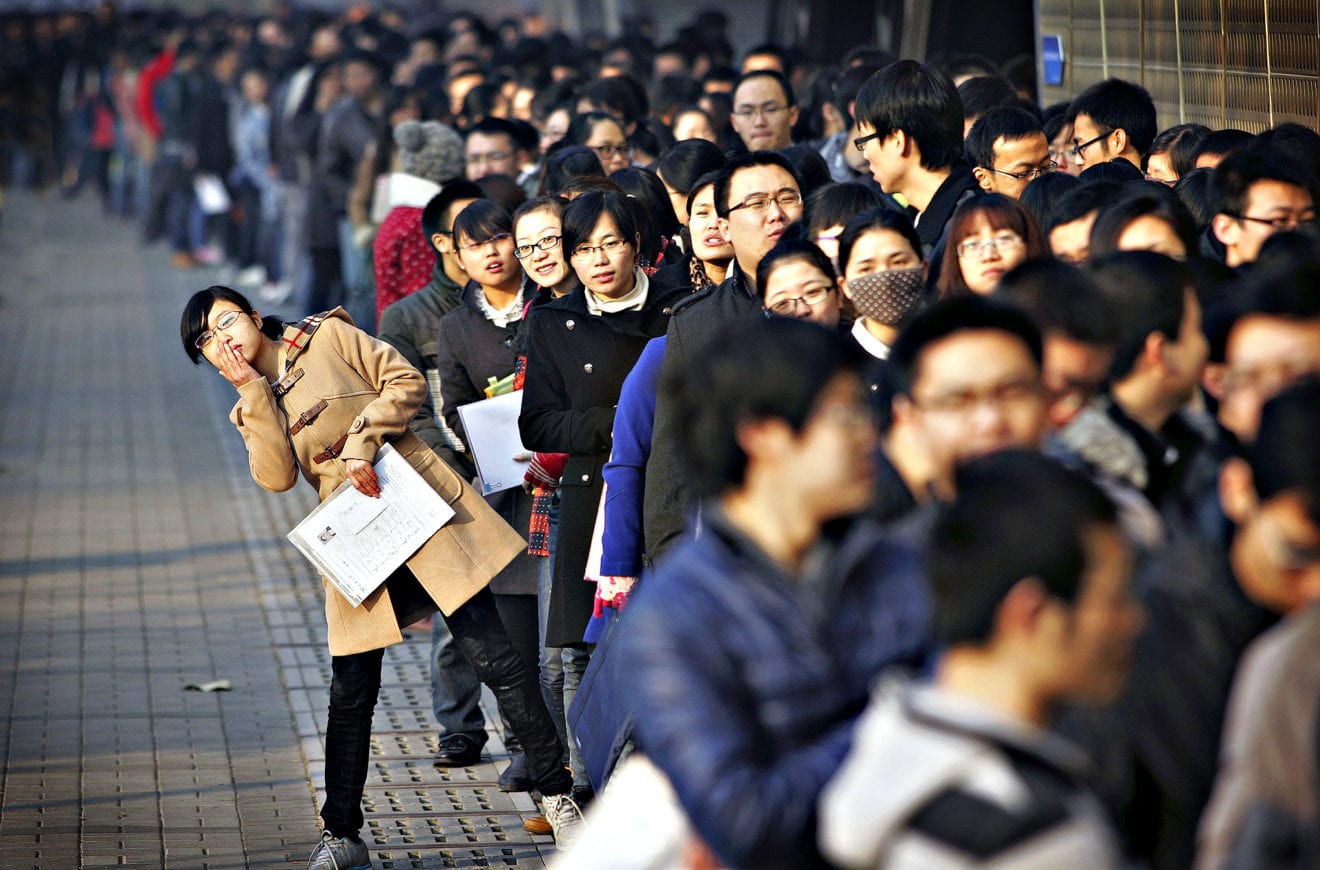
    When she began pursuing her master’s degree at Melbourne University, Tran Thi Phuong did not anticipate how challenging it would be for her to secure a job after graduation.

    The 27-year-old Vietnamese woman has now lost track of the number of job applications she has submitted. Her two years of experience at the auditing firm EY Vietnam, along with a master’s degree in a globally respected field (Information Systems) from a prestigious university appear to have done little to aid her job search in Australia.

    “I have never experienced such panic,” Phuong said “At certain points, I’ve doubted whether or not I’ll ever secure employment here.”

    Ever since receiving her diploma in June 2023, it’s been 9 months of persistent effort. Phuong was finally offered a position as a strategy analyst at a land consulting firm associated with the Western Australian state government in Perth, a small city located 3,419 km from Melbourne.

    Phuong’s experience underscores the wider challenges faced by temporary graduate visa holders in Australia as they pursue employment in the country following their studies.

    The 2022 Graduate Outcomes Survey, which was carried out by the Australian government’s Quality Indicators of Learning and Teaching suite, found that 28.5% of international students with undergraduate degrees in Australia had remained jobless for at least six months following graduation. For those with international postgraduate research degrees, the percentage was 14.4%.

    To put it another way, roughly two out of every seven international undergraduates and one out of every seven international postgraduate research graduates in Australia found themselves without employment six months after graduation.

    Moin Rahman, a 28-year-old Bangladeshi graduate from the University of Queensland, found himself in this exact situation. Despite submitting applications for over 80 job openings, he struggled to secure a full-time role in civil engineering, his field of study at university.

    “That takes a psychological toll,” the Australian Broadcasting Corporation (ABC) quoted him as saying.

    Despite being on a temporary graduate visa, Rahman said he encountered “friction” that held him back from progressing beyond casual and part-time jobs.

    “If I somehow miraculously made my way through to an interview stage, I would be asked about my visa status,” he said.

    “When I would say that I am an international student but I have full-time work rights there was a shrug of shoulders and all of the preceding qualities that actually made the employer interested in me was overtaken by this one fact.”

    The struggle has persisted for some international graduates even after obtaining employment, as they have often settled for positions at lower salaries than their local counterparts.

    A report from the Grattan Institute titled “Graduates in limbo: International student visa pathways after graduation,” which was unveiled in October 2023, pointed out that “only half [of international graduates in Australia] secure full-time employment, most work in low-skilled jobs, and half earn less than A$53,300 (US$34,964) a year.”

    This income is significantly below that of domestic graduates, essentially aligning more closely with the earnings of working holiday makers, most of whom come to Australia to travel.

    The report also revealed that almost 75% of those holding a temporary graduate visas had incomes below the median for Australian workers in 2021.

    Specifically, international graduates possessing postgraduate coursework degrees in business management were found to earn approximately A$58,000 annually less than their domestic counterparts holding the same qualifications.

    Similarly, those with postgraduate coursework degrees in computing and engineering faced a yearly income deficit of about A$40,000 compared to domestic graduates.

    International students who graduated with an undergraduate degree in engineering or computing were found earning A$12,000 less annually than their Australian peers, according to the report. The gap for business undergraduates was roughly A$10,000 a year.

    In discussions with her colleagues from India, Thailand, and the Philippines, Phuong learned that achieving a salary comparable to that of Australians is “difficult and uncommon” for them.

    In addition to being underpaid, international graduates in Australia often find themselves accepting jobs that neither require tertiary education nor match their academic fields of expertise.

    A joint study conducted by the Australian Financial Review (AFR), Deakin University and University of Adelaide demonstrated that merely 36% of 1,156 international graduates polled from 35 universities secured full-time jobs in their studied field upon completing their education.

    Some 40% of international graduates in Australia actually found themselves in roles considered low-skilled, notably in sectors such as retail, hospitality, or in positions like cleaning or driving.

    Ruva Muranda, who graduated with a bachelor’s degree in biomedical science in 2018, said she had to work in a warehouse until the early months of 2020.

    “I got really depressed,” she said. “It made me feel like I wasn’t good enough. It made me feel very ‘othered.’”

    As she observed her colleagues advancing in their careers, securing employment, climbing the professional hierarchy, acquiring vehicles, purchasing homes, and achieving their vocational aspirations, her sense of stagnation intensified.

    “It feels like you’re held back at the starting line.”

    With her options constrained, Swastika Samanta, who possesses a master’s degree in environmental management, said she worked casual and part-time jobs for the length of her temporary graduate visa.

    “Beggars can’t be choosers. You take the best job that comes to you,” she said.

    Fear of quick replacement.

    Lack of English language proficiency is a roadblock for many foreign graduates seeking jobs in Australia.

    The situation is evident as even in Victoria, the state with the largest proportion of laborers from non-main English-speaking countries, where these individuals still make up only 28.8% of the total labor force, according to the Australian Labour Market for Migrants report released by the Australian Government in October 2023.

    Visa uncertainties also have employers reluctant in hiring foreign graduates.

    According to the “Australian international graduates and the transition to employment” report by Deakin University and University of Technology Sydney (UTS) researchers, almost every interviewed employer expressed a preference for hiring graduates holding permanent residency visa status.

    Dr. Thanh Pham, a researcher from Monash University said: “They employers make the assumption that international students cannot stay in Australia for long and are unaware of other visa pathways like bridging and residency visas … When I interviewed them, they explained that if they hire an international student, they will have to employ someone new to replace them in a couple of years.”

    This policy was precisely the obstacle Phuong encountered during her job search, a realization that dawned on her only after accumulating significant time and experience.

    -Phuong pursued job openings in the oil and gas industry, as it’s an area she is passionate about and has experience in. “However, employers tend to favor local candidates for positions in this sector within Australia, attributing their preference to the job’s involvement with highly confidential information regarding mineral and gas resources — commodities Australia is renowned for and deems highly sensitive,” she said.

    In some cases, Pham said she found employers discriminated against international students on the basis of what she called “fit-in” culture.

    The report by Deakin University and UTS also showed that employers hesitate to hire international graduates because of higher costs and this necessitates additional on-the-job training to acclimate them to the Australian work environment.

    Consequently, in the absence of an immediate skill shortage, employers show a preference for local graduates, aiming to avoid the perceived lengthy, expensive, and frequently exasperating sponsorship procedure.

    Individuals arriving from nations with little representation in Australia face additional challenges, notably in forging connections within their ethnic communities.

    According to the Australian Department of Education, as of last October, the country hosted about 768,000 international students, with the largest groups from China, India, and Nepal.

    Harder future

    Given changed economic environment and additional considerations, Australia, from mid-2024, will adjust its post-study work rights policy for international students, reducing the duration international graduates can stay in the country for work purposes.

    Previously, the Australian government had extended the post-study work visa durations for undergraduates, master’s, and PhD students in selected programs, allowing them to stay for up to 4-6 years depending on their level of study.

    These durations will now revert to the original 2-3 years, according to the announcement made by the Australia’s Department of Education.

    Additionally, the age limit for applicants has been lowered from 50 to 35 years, and there will be no further opportunities for the extension of post-study work rights, except for those who have completed their education in a regional area. Roughly 350,000 individuals now hold graduate visas in Australia.

    In the context that many employers hesitate to employ foreign graduates due to fear of their perceived visa status uncertainties, this policy could cut employment opportunities for international graduates in the country.

    However, according to the views of some people, this also has positive aspects, which are ensuring more sustainable development for students and for Australia itself.

    Policy analyst Andrew Norton from Australian National University expressed his general support for the reforms to the Times Higher Education: “This is a better, fairer system for the students themselves and it gives better results for Australia overall.”

    He added: “If you’re relatively young and have a good career start, the prospects will be reasonably good.”

    This positive view resonated with Phuong, even amidst the challenges she has faced. She maintains a hopeful outlook about the job-hunting process in Australia for international students.

    “I consider myself luckier than many others I have encountered,” she said. “And while the future remains uncertain, I am resolved to do whatever it takes to surmount any further hurdles that come my way.”


  • Vietnam Airlines to launch new routes to Europe

    Vietnam Airlines to launch new routes to Europe

    Vietnam Airlines will launch two new routes connecting Hanoi and Ho Chi Minh City with Germany’s Munich starting October.

    The state-owned carrier said Tuesday that it will use the wide-body Boeing 787 aircraft for the routes.

    The Hanoi-Munich route will have two flights per week, departing on Friday and Sunday and returning on Monday and Saturday.

    The HCMC-Munich route will have one flight per week, leaving on Monday and returning on Tuesday. Starting in December, another flight will be added every Wednesday.

    Vietnam Airlines is the only Vietnamese airline to have direct routes to Europe.

    Private carrier Bamboo Airways used to operate flights to Germany and the U.K. but had shut them down since the end of last year as part of its business strategy change.

    Munich is the third-largest city in Germany and an economic, cultural, and transport hub. It is also famous for its mix of ancient and modern architectural structures and for the Oktoberfest beer festival, which is held every October.

    With the new routes Vietnam Airlines will have four routes from Vietnam to Germany, including the Hanoi and HCMC routes to Frankfurt. It also has flights from Vietnam’s two biggest cities to Paris and London.

    The carrier’s chairman Dang Ngoc Hoa said in January that it would open more international routes this year, with possible destinations being Milan, Copenhagen, Seattle and Vancouver.

  • Love, Bonito unveils new brand identity, revamped assortment strategy

    Love, Bonito unveils new brand identity, revamped assortment strategy

    Southeast Asian omnichannel fashion brand Love, Bonito has unveiled its new brand identity after 13 years of operation, introducing a change in its assortment strategy as part of the campaign.

    The brand’s name was redesigned with a cleaner font, while the clean bold logo was complemented by a heart-shaped monogram that was formed by the brand’s initials ‘LB’. While the brand is commonly known for its signature peach tone, the brand has expanded its colour palette with Bold Brown, Cool Pink and Heart Red.

    The company said its new image reflects the maturity and sophistication alongside its loyal community. The new look will be rolled out in physical stores in key markets such as Singapore, Malaysia, Indonesia and Hong Kong, with the flagship in Tun Razak Exchange Mall being the first location to be fully rebranded. The brand will also shift to a sassier tone of voice.

    “While many of our Asian cultures have been known to be more conservative, we want the world to see who the multifaceted Asian women are in this 21st century,” said Dione Song, CEO of Love, Bonito. “By doing so, we too want to let Asian women know that it is perfectly alright to be unabashedly ourselves while keeping to our roots and heritage.

    “Our consistent double-digit year-on-year growth since 2020 has been an encouraging sign,” Song added. “The vision of being the go-to destination for Asian women is big, and we are just getting started.”

    Love, Bonito said it will reduce the number of styles produced by 60 percent, streamlining its assortment to three key lines: Signatures, Staples, and capsule collections.

    “Our assortment overhaul was born out of the desire to create a resilient business as we continuously widen our global footprint,” said Pat Achakulwisut, chief commercial officer at Love, Bonito. “We want to make smarter strategic investments across various business functions, from design, production, merchandising to supply chain as well as overall operations.”

    The campaign follows the brand’s expansion into the US and the Philippines last year. Love, Bonito ships to 20 countries worldwide.

  • Indian jeweller makes Chicago debut

    Indian jeweller makes Chicago debut

    Tata Group’s jewellery brand Tanishq has increased its presence in Chicago by opening a store at 4300 East New York Street.

    The Chicago store will feature a specialised and exclusive workwear selection targeting the different demands of women on professional and casual occasions.

    Additionally, collections including Tales of Mystique and Rhythms of Rain feature worldwide and contemporary jewellery influenced by the cultural riches of Jodhpur, Rajasthan, and Kerala.

    “Having already captured the imagination of the discerning consumer in New Jersey and Texas, Tanishq is excited to be entering another iconic American city with a diverse customer base who can now enjoy our unrivaled offering right at their doorstep,” said Kuruvilla Markose, CEO of Titan International Business.

    “Our stunning Chicago store plays a pivotal role in Tanishq’s global expansion, aiming to cater not only to the Indian diaspora but also to the broader American and international communities residing in the city, with an unrivalled offering of more than 2000 unique designs.”

    Tanishq, which had previously established a presence in New Jersey and Texas, now has 420 outlets in India and is expanding internationally into Dubai, the UAE, Qatar, Singapore, and the US.

  • Google Messages rolls out custom RCS conversation color themes more widely

    Google Messages rolls out custom RCS conversation color themes more widely

    Back in November, Google announced some new features for its Messages app as part of its celebration of reaching the one billion monthly active RCS users milestone. Many of these promised features, such as animated emoji, Photomoji, and screen effects, have already been rolled out to users. However, one feature has taken quite a while to roll out widely: custom themes.

    Custom themes were announced as a customization feature allowing users to change the bubble and background colors of individual conversations. Presumably, this feature was to help eliminate the limitations of blue versus green bubbles and to aid users with differentiating conversations.

    It appears that this feature is currently receiving a wider rollout. Although some users started seeing this option with the latest version of the Google Messages app in beta (v20240308), I received the update myself without updating my app (still in beta version 20240228), suggesting that this is a server-side push.

    To check if the feature is available to you, you will first make sure you are in an RCS chat, as this feature does not work with SMS/MMS conversations. Once inside any chat thread, tap on the three dot menu and select “Change colors.” This will then open the UI for changing themes, showing you all the color options available, including the default.

    It should be noted that this works slightly differently on Pixel devices that use Material You dynamic theming. When I tested on a Pixel, the theme affected the conversation’s background and the bubble color. On a Samsung Galaxy device, though, it only altered the bubble color.

    Additionally, when you successfully change the theme, you receive a small notification at the bottom that reads “You changed the theme,” which also gives you a quick shortcut to change the theme again. Happy theming!

  • The Apple Car could have changed the face of the auto industry

    The Apple Car could have changed the face of the auto industry

    Last month, Apple calmly went around to the back of company headquarters in Cupertino carrying the self-driving Apple Car files and put a bullet through the project. Apple spent a decade and a ton of money on what would have turned out to be an amazing game-changing vehicle according to the description of what Apple was working on written by Bloomberg’s Mark Gurman in his latest Power On newsletter.

    Gurman said that the design Apple was working on around 2020 was similar to the rounded Canoo Lifestyle Vehicle. This is a van that at the time, looks the same in the front and back so that it always appears that the vehicle is moving forward. Gurman says that the vehicle resembled no other vehicle mass-produced at the time and was designed for full Level 5 autonomous driving.

    While Apple changed the looks of the car’s interior a few times, the look was a minimalist one with seats that looked like those seen in a limo or private jet; the vehicle would accommodate four people. Some versions of the interior featured a big television set in the center to show videos and FaceTime video chats. From the roof of the vehicle, multiple iPad-sized screens were suspended to give passengers access to certain controls. A special air-conditioning system pushed the air along the sides of the interior instead of blowing it right at the passengers’ faces.

    Two previous designs for the Apple Car included the first one which resembled the 1950s Volkswagen microbus; inside Apple, this design was known as the Bread Loaf. The second design for the vehicle looked like the 2017 Volkswagen ID Buzz prototype before VW showed off its concept. The fourth design, the one that looked like the Canoo Lifestyle Vehicle, had CEO Tim Cook and COO Jeff Williams excited.

    But the most recent design also included a less ambitious Level 2 autonomy forcing Apple to add a steering wheel and pedals. The sliding van doors were replaced by gull-wing doors. Nonetheless, it’s all moot at this point anyway and while Apple might have changed the face of the automobile similar to what it did with the smartphone, the company decided to stick to its knitting since the project still had a long way to go and a lot more red ink to spill before it would be ready to be launched.

  • Google Wallet will now automatically add your tickets and passes from Gmail

    Google Wallet will now automatically add your tickets and passes from Gmail

    Google Wallet is receiving a set of small quality of life updates designed to enhance the user experience and make it your go-to digital home for essential passes, tickets, and more. The updates include tighter integration with Gmail to eliminate the extra step of manually adding passes and movie tickets to your wallet.

    If you’ve ever purchased a movie ticket or booked a flight online, you’ve likely encountered the inconvenience of having to scramble through your Gmail in order to find the confirmation. Only to find out that the cellular signal is very weak, and your email won’t load. This is a perfect use case for Google Wallet, which Google just announced now directly integrates with Gmail, automatically surfacing movie tickets and boarding passes from participating airlines and movie chains.

    Google states that this feature is currently available with select global chains, but that the company is working hard to expand its reach. This will likely save you some time and fuss, as you can now have your tickets and passes readily available in one spot with you need them.

    Managing your collection of passes within Google Wallet just got more convenient. You now have the ability to manually archive most passes. Archiving a pass places it in the “Archived Passes” section of the app.

    If you ever need to unarchive any of these previous passes, you can do so as well by tapping on the pass and selecting “Unarchive Pass.” Furthermore, the ability to archive passes extends to your Wear OS devices for more efficient organization, no matter where you are.

    Google Wallet is further blurring the lines between your digital life and the real world. For US-based users, there’s a new beta feature out: loyalty cards saved in Wallet are now cleverly linked with Google Search and Shopping. This means that your membership benefits can be highlighted as you browse for products online, potentially unlocking special offers and discounts. Businesses interested in taking part in this beta test will need to reach out to Google support in order to enroll.

    Lastly, Google Wallet is becoming more accessible around the globe. Back in November, Google Wallet became available to residents of the Dominican Republic, Monaco, and Peru. This means that Google Wallet is now available in 74 countries worldwide for both Android and Wear OS.

  • Apple to add new accessibility features to the iPhone with iOS 18

    Apple to add new accessibility features to the iPhone with iOS 18

    We already know that iOS 18 is going to be one of the biggest updates in Apple’s history. New AI features including a revised Siri have many iPhone users looking forward to June when Apple previews iOS 18 during WWDC 2024. Other changes will be coming to the operating system’s accessibility features. These are features designed for those with “vision, mobility, hearing, speech, and cognitive needs” and can be found in the Accessibility app.

    MacRumors spoke with industry sources who told them about some new accessibility features expected to be added to iOS 18. Traditionally, these are announced before WWDC which makes it quite possible that Apple is wrapping up the development of these new features now which could be why they have leaked at this point in time.

    Voice Shortcuts would allow an iPhone user to connect a phrase to start a particular accessibility feature. Unlike Siri Shortcuts, no wake phrase, such as “Hey Siri,” would need to be spoken first. The rumor says that Voice Shortcuts would work with accessibility features such as VoiceOver and Voice Control. The former reads the content on an iPhone, while the latter allows you to use vocal commands to “perform gestures, interact with screen elements, dictate and edit text, and more.”

    Another change will have Apple adding font size control throughout the system. Currently, users can change the font size of an app but only if this is supported by the app, and some of Apple’s system apps do not offer such support; all of them will in iOS 18. The company also previously announced Personal Voice for Live Speech which uses AI to create a digital version of a user’s voice after running through 15 minutes of “training” with often-used phrases recorded. If someone has a disease that will cost them their speech, this feature will allow them to “talk” once he/she can no longer do so.

    We should see iOS 18 released this coming September.

  • Blend business and pleasure on the same phone with Verizon’s dirt-cheap new Second Number feature

    Blend business and pleasure on the same phone with Verizon’s dirt-cheap new Second Number feature

    Have you ever felt the need to use two different phone numbers for various business or, well, personal reasons? Instead of carrying two mobile devices with you all the time, which can be a bit of a hassle, Verizon will let you activate an aptly named Second Number feature on your account for just $10 a month until June 5.

    That sounds far more convenient than the traditional alternative and it also looks way less suspicious to anyone who might want to pry into your secret… business. Of course, you don’t have to be a double agent or a Tinder addict to find this new service useful, as Big Red points out a second phone number can greatly help folks operating side gigs as well as frequent sellers on online marketplaces keep their primary and secondary activities separate with little effort and minimal costs.

    Speaking of costs, it’s important to point out that the aforementioned June 5 cutoff date refers to how long you have to “lock in” the promotional $10 a month price, which should then go unchanged in perpetuity (or until Verizon changes its mind). If you don’t sign up by that date, you can obviously still do so at a later time, but only at a raised monthly cost of $15.

    Either way, this looks like a pretty affordable method to get an extra wireless service line with unlimited talk and text. There will be no data on it, however, which is what allows the plan to be so extremely cheap. You’ll need to take care of all data-related business on your primary line, mind you, which presents a series of… challenges you can only overcome using good old fashioned text messaging.

    To get started, you’ll have to be an existing Verizon customer (well, duh!) with a dual SIM smartphone in your possession. While the nation-leading carrier has an extensive support webpage dedicated to explaining how you can use two numbers on a compatible handset, there doesn’t seem to be a list anywhere containing all such devices (or at least some of them), which makes today’s launch feel a little incomplete and confusing.

  • WhatsApp calls log could soon be integrated into Google’s Phone app

    WhatsApp calls log could soon be integrated into Google’s Phone app

    Staying connected with friends and family on WhatsApp is about to get even easier as the popular messaging app looks to integrate call logs with Google’s native Phone app on Android. This change would put WhatsApp’s voice and video calls on equal footing with regular phone calls, allowing you to see all your call history in one place.

    Currently, WhatsApp calls only show up within the app itself. This upcoming integration would streamline the process, especially if you primarily use WhatsApp for calls. The fact that @Kishore9196 on X noticed this suggests that the feature might already be rolling out in a limited beta test.

    In the screenshot provided, you can see WhatsApp calls appearing within the Google Phone app’s call log, conveniently marked with a “WhatsApp” tag to differentiate them from standard cell carrier calls. Once the feature is fully rolled out, it would make sense if tapping on one of these entries would give you the option to quickly initiate another WhatsApp call with that contact. It’s also likely that this integration won’t be limited to just WhatsApp, as other VoIP apps such as Telegram could follow suit as well, giving you a unified call log experience on your Android phone.

    However, this feature isn’t entirely new. As the source pointed out, iOS already has this feature, which displays third-party VoIP calls in the iPhone’s native call history. Android users have been missing out on this convenience, although hopefully not for much longer.

    Having this kind of interconnectivity between apps is a benefit that European users will soon enjoy in more areas, such as messaging, as the DMCA has ordered. Because of this, WhatsApp will also have the added benefit of including other messaging platforms within its own app, bringing about cross-platform usability. This is not to say that the integrated call log on the Phone app is a result of this, but it is a nice touch so that users won’t have to switch back and forth between apps as often.

    This change will be a welcomed quality-of-life improvement for those who regularly use WhatsApp for calling. With the seamless integration of your call logs, staying connected within WhatsApp is about to get a whole lot smoother.

  • Steelmaker Hoa Phat’s sales surge 32% in two months

    Steelmaker Hoa Phat’s sales surge 32% in two months

    Vietnamese steel giant Hoa Phat Group saw a 32% rise in sales volume of steel products in the first two months of this year, the firm reported.

    In the January-February period, Hoa Phat sold 1.15 million tonnes of hot rolled steel products (HRC), construction steel, high quality steel and steel billets. Meanwhile, the firm produced 1.38 tonnes of crude steel, an increase of 71% over the same period last year.

    However, in February, the firm saw a considerable drop in steel sales volume compared to that in January, mostly due to the long Lunar New Year holiday. In the month, Hoa Phat produced 690,000 tonnes of crude steel, a similar output as January.

    In the month, its sales volume of hot rolled steel products, construction steel, high quality steel and steel billets was 518,000 tonnes, down 19% compared to the first month of the year.

    Meanwhile, the firm sold 212,000 tonnes of construction steel and high quality steel, down 42% compared to January, along with 266,000 tonnes of HRC products, 41,000 tonnes of steel pipes, and 32,000 tonnes of galvanized steel.

  • Gasoline prices fall

    Gasoline prices fall

    Gasoline and diesel prices dropped Thursday afternoon.

    The popular fuel RON95 gasoline fell 1.55% from a week ago to VND23,550 ($0.95) per liter.

    Biofuel E5 RON92 declined by 1.05% to VND22,510.

    Diesel dropped 1.44% to VND20,470.

    In the last seven days fuel prices swinged due to concerns that China would struggle to regain growth momentum, a rise in gold and cryptocurrency investment, and a reduction in OPEC production.

    Globally gasoline prices dropped by 1.8-2.1% per barrel while oils dropped 1.1-1.9%.

  • Singapore retail sales down in January

    Singapore retail sales down in January

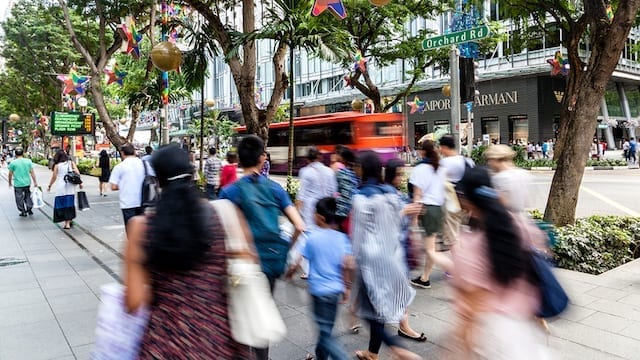
    Singapore retail sales – after excluding motor vehicles from the data – dropped 2.1 percent year-on-year in January, following the 2.8 percent decrease in December.

    According to the Department of Statistics, January retail sales edged up 0.5 percent on a seasonally adjusted basis compared to the previous month.

    The estimated total retail sales value was SG$3.7 billion (US$2.75 billion), of which 12.9 percent was online.

    There were mixed performances within the retail trade sector, highlighted by an 11.8 percent decline in sales of wearing apparel and footwear. Supermarkets and hypermarkets and recreational goods recorded decreases of 6.5 percent and 4.9 percent, respectively.

    Meanwhile, sales of food and alcohol and watches and jewelry increased by 8.5 percent and 5.3 percent, respectively.

    Sales of food and beverage services fell 5.6 percent in January, following the 0.4 percent growth in December. The lower sales were partly attributed to the Chinese New Year being celebrated at the end of January 2023 rather than in February this year.

    The total sales value of F&B services was estimated at SG$ 942 million (US$700 million), of which 23.1 percent was from online sales.