Tag: asia

  • Nitori to launch in the Philippines

    Nitori to launch in the Philippines

    Japanese furniture retailer Nitori will launch its first presence in the Philippines with a store planned to open next month, as part of its plan to push growth in Asia countries.

    The 1100sqm facility will be at the Mitsukoshi BGC shopping area in Manila. The company plans to operate 50 outlets in the Philippines by 2032.

    Nitori unveiled its plan to expand in Asia last year after opening stores in Malaysia and Singapore in 2022. The plan included the Philippines, Thailand, Vietnam, Indonesia and South Korea.

    Headquartered in Japan’s Tokyo, Nitori operates across the globe with stores mainly in Japan and China.

    Based on the goal statement “to enrich the homes of people all over the world”, Nitori’s vision is to open 3000 stores and reach sales of 3 trillion yen (US$20 million) by 2032.

  • Coach opens first cafe and fine-dining experience in Indonesia

    Coach opens first cafe and fine-dining experience in Indonesia

    Coach is expanding into the food and beverage business by launching its first concept dining experience in Jakarta, Indonesia.

    The destination comprises The Coach Restaurant and Coach Coffee Shop at Grand Indonesia Mall.

    The Coach Restaurant, designed by Coach creative director Stuart Vevers and William Sofield of Studio Sofield, serves traditional New York steakhouse cuisine.

    It reportedly incorporates natural and industrial materials in its architectural aspects, a nod to Coach’s craftsmanship and New York roots.

    Meanwhile, the Coach Coffee Shop contains New York cityscape wallpaper and industrial design elements.

    Coach and Brawn & Brains Coffee collaborated to open the world’s first cafe in Singapore last year. A month later, the luxury retailer opened Coach Airways, an aviation travel-themed store at the Freeport A’Famosa Outlet in Malacca, Malaysia.

  • SM Prime to add 440,000sqm of retail space with four new malls

    SM Prime Holdings Inc (SMPH), one of the largest property developers in the Philippines, is set to open four shopping malls this year, adding 440,000sqm of retail space.

    The company plans to open SM City Caloocan, with 94,000sqm of gross floor area, in the first half of this year. In the second half, it intends to open SM City J Mall in Mandaue City, Cebu, SM City San Fernando La Union, and SM City Laoag, each spanning 111,000 to 123,000sqm.

    Aside from the new shopping malls, the property developer said it will refurbish and extend existing malls.

    “It’s an ongoing thing with SM Prime’s malls,” said Timothy Daniels, consultant for investor relations and sustainability at SM Investments Corp, the parent company of SMPH.

    “They always do it. They come back every few years, and they renovate and expand.”

    In 2023, SMPH reported a 33 per cent increase in net income to AU$1.09 billion from $826.16 million in 2022, as consolidated revenues jumped 21 per cent.

    Mall business accounted for 56 per cent of total sales, followed by residential business with 34 per cent, and other business segments, which include hotels, offices, and convention centres, with 10 per cent.

    Mall revenues totalled $1.97 billion last year, up 30 per cent from $1.5 billion in 2022. Operating income rose 28 percent to $1.03 from $801 million.

    In line with its expansion plan, SMPH has earmarked $3.3 billion for 2024 capital expenditures as it continues to explore acquisition opportunities and investments.

    Frederic DyBuncio, president and CEO of SM Investments, attributed the company’s success to Filipino consumers’ healthy spending patterns, particularly in fashion, dining, and entertainment.

    “SM’s performance as a group last year reflected our ability to stay close to our customers and address their needs regardless of uncertain economic conditions,” he added.

    SMPH currently operates 85 malls in the Philippines with 9.2 million sqm of gross floor area and eight malls in China with 1.6 million sqm of gross floor area.

  • Flipkart invests US$54 million into Myntra

    Flipkart invests US$54 million into Myntra

    Myntra has secured a US$54 million investment from parent company Flipkart amid its tough competition with Reliance’s Ajio and Tata Cliq.

    This is Flipkart’s second investment in Myntra following $105 million in March last year.

    The new investment came as Walmart, Flipkart’s largest shareholder, committed $600 million to the India-headquartered parent company as part of a $1 billion funding round.

    Last July, Myntra commenced a restructuring program that included prioritising private labels over a wide range of in-house brands.

    Myntra currently has more than 420 global brands on its platform, up from 280 two years ago.

  • Hermes unveils expanded Kuala Lumpur store

    Hermes unveils expanded Kuala Lumpur store

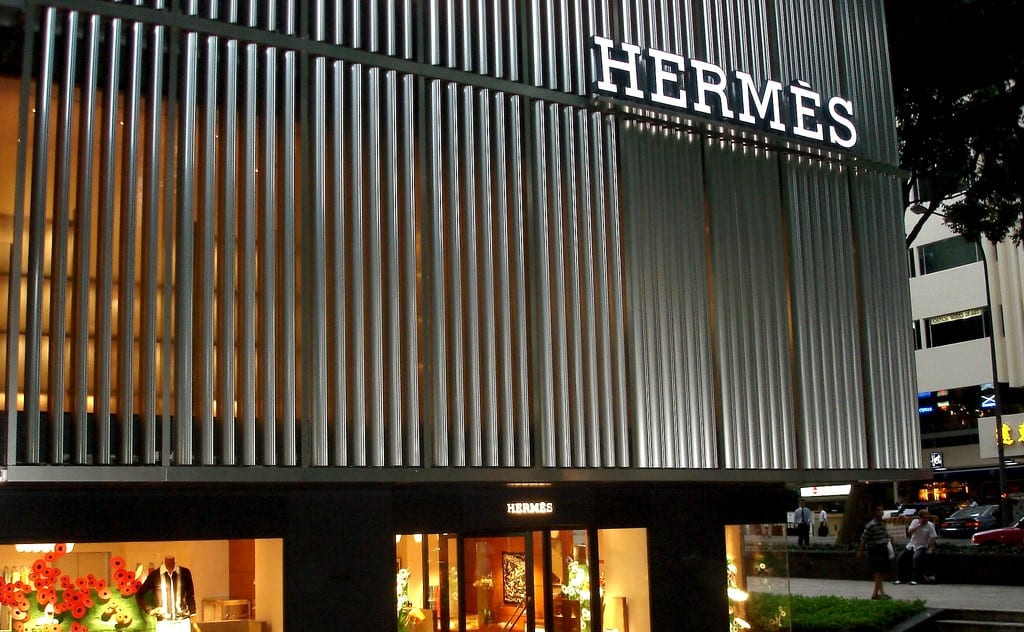
    Hermes has opened an expanded store in The Gardens Mall in Kuala Lumpur, which first opened nearly a decade ago.

    The new store, designed by the architectural firm RDAI in Paris, was designed with a contemporary theme and includes elements of local culture and locally produced crafts.

    The store occupies a ground-floor space at Gardens Mall, with a facade assembled with bamboo and cane to reflect traditional, regional weaving techniques. More bamboo features inside along with textured batik print rugs and a lacquered wood backdrop.

    A perfume and beauty area is located on the left side, adjacent to a home goods display. A central lounge links the leather products and equestrian accessories displays with the jewellery area. At the back of the store, is the ready-to-wear zone with two fitting rooms clad in silk panelling.

    The collection of Émile Hermès, including Paul Fleury’s paintings, sits alongside the artworks of the French photographer Thierry Ardouin and the Polish illustrator Jan Bajtlik. A window showcase of hand-made puppets evokes the traditional Malaysian theatre “Wayang Kulit” with a modern turn to this year’s theme, “Spirit of the Faubourg.”

  • Google Fi Wireless increases pricing for those with more than three lines on “Simply Unlimited” plan

    Google Fi Wireless increases pricing for those with more than three lines on “Simply Unlimited” plan

    Google Fi Wireless, the MVNO wireless phone plan brought to you by Google, has announced changes to the pricing of its “Simply Unlimited” plan. Starting today for new customers, and rolling out to existing customers after April 4th, 2024, the prices for plans with three or more lines will be increasing as follows:

    • Three lines: The cost for three lines on the Simply Unlimited plan will increase from $80 to $90 per month.
    • Four lines: Accounts with four lines will go up from $80 to $100 per month.
    • Five and six lines: There are also increases for five-line accounts (going up to $125/month) and six-line accounts (going up to $150/month)

    If you have one or two lines active on the Simply Unlimited plan, not to worry, your pricing will remain unchanged. Additionally, Google Fi Wireless is not changing the core features of the Simply Unlimited plan, which still include unlimited high-speed data (which slows down after 35GB), unlimited calls and texts in the US, Canada, and Mexico, 5GB of hotspot tethering, connectivity for select smartwatches, automatic encryption of your data using a virtual private network (VPN), as well as some family safety features such as spam blocking, location sharing, and contact controls.

    These pricing adjustments begin for new customers starting today, March 5th, 2024. Existing customers will see the change reflected on their first bill after April 4th, 2024. Google Fi Wireless also clarifies that existing accounts with long-term promotions or device financing agreements activated before March 5th, 2024, will maintain their original pricing until those commitments end. Pricing will also not change on the Flexible or Unlimited Plus plans.

    Google Fi Wireless states this change in pricing is necessary “to continue delivering high-quality product offerings and features.” This marks the first price increase for the almost three year old “Simply Unlimited” plan since the service was rebranded from “Google Fi” to “Google Fi Wireless” last year.

  • Tidal lowers pricing of its HiFi lossless music subscription to match Spotify

    Tidal lowers pricing of its HiFi lossless music subscription to match Spotify

    While every other video and audio streaming company is either battling it out or raising its subscription costs sans ads, Tidal today made a surprising move: slashing the price of its high-quality lossless audio plan. This bold change positions Tidal as a truly compelling option alongside streaming giants like Spotify and Apple Music.

    Previously, Tidal’s HiFi lossless subscription cost $20 per month—almost double the price of Spotify’s popular $10.99 plan. Now, Tidal is dropping the price to match Spotify’s exact cost. With the HiFi and HiFi Plus tiers gone and combined into one TIDAL tier, the service will now cost you $10.99 USD a month for an individual subscription.

    Families will be transitioned to the new TIDAL Family plan, which will cost $16.99 USD a month. Additionally, Tidal will offer its DJ Extension as an add-on for individual plans, which will cost an additional $9 USD a month and allow users to access, stream, and mix music from the service’s DJ partners.

    But it’s not all great news, particularly for those that were on TIDAL’s free tier, which will no longer exist. As per the company announcement, anyone on the free tier will now need to sign up for a paid plan in order to continue using the service. You gain some. You lose some.

    It is important to note that, while both TIDAL and Spotify now share a price point, their offerings differ. Spotify boasts a huge music catalog and excellent music discovery features. It’s a crowd favorite, especially for casual listeners who love finding new tunes. However, Tidal’s edge lies in its superior lossless audio quality, making it irresistible for serious audiophiles with high-end equipment.

    Until recently, music lovers wanting lossless quality had a clear choice: Tidal or Apple Music. Spotify’s continued delays in rolling out their promised lossless tier have left users frustrated. Tidal’s pricing shift, effective April 10th, puts serious pressure on Spotify to step up.

  • Vietnam encourages Australian airlines to establish routes to its cities

    Vietnam encourages Australian airlines to establish routes to its cities

    The Vietnamese Government creates favourable conditions for airlines to develop and compete healthily, and encourages Australian carriers to fly to Vietnam, according to Prime Minister Pham Minh Chinh.

    This statement was made during a ceremony commemorating 30 years of direct air travel between Vietnam and Australia in Melbourne city on Tuesday morning. The event was part of activities in the Prime Minister’s trip to attend the ASEAN – Australia Special Summit and his official visit to Australia.

    He expressed his hope that Vietnam’s airlines will cooperate and compete fairly, especially in the current context – when the two countries will upgrade to a comprehensive strategic partnership.

    Currently, Vietnamese airlines do not use domestically trained pilots, engineers, and mechanics, so he hoped Australia to support the training of pilots, mechanics, aviation managers.

    He also urged Australian banks, investment funds, and investors to invest indirectly in Vietnamese airlines, saying that the Vietnamese ministries and sectors will strengthen their role in state management, remove difficulties, and proactively support airlines to overcome challenges and promote rapid and sustainable development.

    The PM took the occasion to thank Australia, specifically Australian citizens who choose Vietnamese airlines such as Vietnam Airlines and Vietjet, to visit Vietnam, saying that this has contributed to boosting cultural connections and aviation economic development of the two countries.

    Vietnam Airlines has been strengthening cooperation with partners in Australia to develop products and diversify services, thereby continuously bringing benefits to passengers.

    It has paid attention to coordinating with agencies, travel companies and Australian partners to strengthen tourism promotion and promote destinations of both countries.

  • VIB introduces easy, secure, private payment via Apple Pay

    VIB introduces easy, secure, private payment via Apple Pay

    Apple Pay is now available with the VIB Mastercards, bringing to card holders an easier, safer and more secure way to pay.

    Each Apple Pay transaction takes a few seconds and is done in just three simple steps. Beyond that, facial recognition (FaceID) technology will enhance security and privacy for cardholders.

    “Now, customer can easily pay for everything you love, from everyday purchases like groceries and coffee, to online shopping and travel, using just your Apple devices,” a VIB’s representative said.

    Apple Pay leverages tokenization to safeguard credit and debit card information. Upon adding a credit or debit card to Apple Pay, the actual card number remains undisclosed; it is neither retained on the device nor Apple’s servers.

    A distinct device account number is created, encrypted, and safely stored on the user’s device. Each transaction is authorized using a unique, dynamic security code.

    With Apple Pay now available on VIB Mastercard, users can expect a multitude of benefits, most notably the top-tier easy, secure, and private payment features that Apple provides, ensuring the protection of personal information, transaction data, and credit/debit card details.

    Tuong Nguyen, Head of the Card Strategy and Operation Center at VIB, said that they bring contactless payment methods via Apple Pay to customers based on their understanding, grasping the needs of customers, and offering financial solutions that suit their modern lifestyle.

    “With Apple Pay, VIB Mastercard cardholders enjoy a seamless and trustworthy payment experience every day,” she said.

    VIB Mastercard cardholders can now easily add Apple Pay to their Apple devices, such as the iPhone, iPad, MacBook, and Apple Watch. This can be done by adding their VIB Mastercard through either the Apple Wallet app on their devices or the MyVIB app, and enjoying the ease of paying anytime, anywhere.

    Getting started takes just a few simple steps. First, customers should open the Apple Wallet app on their Apple devices, tap the “+” icon on the top right corner, or access their Mastercard card on the MyVIB app, and click the “Add to Apple Wallet” button right below the card image.

    Then, they should scan or enter the VIB Mastercard information. They will not to go through this if they start via MyVIB in Step 1.

    Next step is to follow the on-screen instructions, make the VIB card the default card, and they are all set to use Apple Pay.

    VIB is now offering a VND50,000 cashback for the first Apple Pay transaction of at least VND100,000. The promotion is valid until May 5.

  • Comparing Malaysia’s Gambling Scene to the Rest of Southeast Asia

    Comparing Malaysia’s Gambling Scene to the Rest of Southeast Asia

    Southeast Asia is home to many traditional, conservative countries, meaning their stances toward gambling are a bit sterner than those of most countries in the Western hemisphere. However, this region is far from homogenous. The situation differs from country to country, while online and offshore gambling are a story of their own. 

    Still, where does Malaysia fit into all this? Perhaps even more importantly, how does it fare against some of its neighbors regarding the gambling scene?

    source

    What form of gambling is legal in Malaysia?

    The only legal forms of gambling in Malaysia are betting on horse races (since 1961) and playing lotteries (since 1952). Sports betting, however, is illegal (both retail and online).

    Now, while online sites are illegal as long as they’re hosted in Malaysia, locals are not prohibited from offshore betting. For instance, a Malaysian can choose some of the apps in this list and legally play one of many typical casino games online or bet on their favourite sporting events. 

    The same thing goes for the majority of countries in Southeast Asia, with a few exceptions. For instance, in Singapore, there’s a sort of state monopoly on online betting, while in the Philippines, everything is legal.

    Overall, online betting is hard to regulate, so local authorities usually ignore offshore betting, making it a very popular option.  

    Casinos

    While betting is mostly illegal in Malaysia, casinos are regulated (under some rules that we’ll discuss later). So, it’s home to Genting Resort Malaysia. Sure, it’s just this one casino, but it’s a behemoth with over 3,000 slot machines and over 400 gaming tables. 

    In fact, in the whole of South East Asia, there are only three countries that directly ban casinos:

    • Thailand
    • Indonesia
    • Brunei

    Given the royal family’s proclivity for gambling, some find the last part particularly interesting. 

    In Laos, casinos are legal in special economic zones only. Still, locals are not accepted. The same thing goes for betting, in general.

    Also, remember that Southeast Asia is relatively close to Macau (the Vegas of the East). Needless to say, it’s hard for anyone to deal with such competition in gambling.

    Is Malaysia a popular destination for gamblers?

    Not exactly!

    As we’ve already explained, outside of one casino (albeit gigantic) and the national lottery, there’s not much legal gambling in Malaysia.

    Tourists who are interested in gambling destinations in Southeast Asia are more likely to visit:

    • Sihanoukville in Cambodia
    • Entertainment City in the Philippines

    While it’s hard to pinpoint the exact numbers (due to flawed methodology), it’s widely believed that these two countries have the region’s highest number of gamblers per capita. Now, there’s a reason why this is so hard to determine. Namely, in most countries in Southeast Asia, gambling is illegal for locals either way. So, it’s hard to find someone who openly admits (even anonymously) that they’ve partaken in this activity.

    For instance, in Cambodia, while casinos are regulated, all other forms of gambling are illegal. Moreover, betting in these casinos is only legal for visitors, while locals are not accepted.

    Most countries in Southeast Asia have similar rules where they regulate casinos but don’t allow locals. In Malaysia, for instance, while casinos are regulated, Muslims are prohibited from participating. In this scenario, the prohibition is based on one’s religion, not regionality. 

  • Gatorade enters new beverage category with ‘unflavoured’ water

    Gatorade enters new beverage category with ‘unflavoured’ water

    Sports drink brand Gatorade has introduced its first-ever ‘unflavored water’, Gatorade Water, entering a new category in the beverage market.

    While the idea of unflavoured water may sound amusing (because water has always been flavourless), the company said its product aims to meet the hydration needs of active people.

    Gatorade Water has a pH of 7.5 and is infused with electrolytes to provide a “refreshing and crisp taste”. Its bottles are also made from 100 per cent recycled plastic.

    “Today’s athletes are more wellness-minded than ever, and they expect Gatorade to meet all their hydration needs, 24/7,” said Anuj Bhasin, chief brand officer, of Gatorade.

    “Gatorade Water is an all-day hydration option for all active people, no matter who they are or how they move, from the leader in sports fuel that they know and trust.”

    Gatorade Water is available in the US currently, via Amazon or at gatorade.com.

  • Fruit, vegetable exports rise 38%

    Fruit, vegetable exports rise 38%

    Vietnam’s fruit and vegetable exports surged 38% to about $749.7 million in the first two months and is expected to peak at nearly US$7 billion this year.

    Durian alone would will bring in $3.5 billion after the Vietnamese Ministry of Agriculture and Rural Development and the General Administration of Customs of China signed a protocol on phytosanitary requirements for the Vietnamese fruit exported to the neighboring country last year, said Dang Phuc Nguyen, General Secretary of the Vietnam Fruit and Vegetable Association.

    Although shipments to Europe and the U.S. are forecast to be hindered by the Red Sea tension in the time ahead, exports to China will be boosted, driven by durian, dragon fruit, jackfruit, banana, and mango, he added.

    Deputy Minister of Agriculture and Rural Development Phung Duc Tien said four more Vietnamese products will be shipped to China via the official channel in the time ahead, comprising medicinal herb, coconut, frozen fruit, and watermelon, thus contributing greatly to Vietnam’s agricultural export revenue.

    According to statistics from the General Department of Customs, Vietnam’s fruit and vegetable export turnover hit an estimated $5.6 billion last year, up 66% year-on-year. Surpassing dragon fruit, durian recorded the highest export value.

    The largest importers of Vietnamese fruits and vegetables included China, the U.S., the Republic of Korea, Japan, Thailand, the Netherlands, Australia, the United Arab Emirates, and Russia.

    China remained the biggest buyer, with the import turnover reaching $3.7 billion in the year, up nearly 250% in value and 65% in market share compared to 2022.

  • TikToking increasingly a full-time job for young people

    TikToking increasingly a full-time job for young people

    Tran Manh Duc, 30, decided to quit his office job to pursue a career as a TikToker four years ago despite opposition and skepticism among family and friends.

    At first he used TikTok only as a tool to advertise his company’s products, but when his first restaurant review video unexpectedly went viral, he started Saigon food review channel Anh Bung Mo. It managed to attract over 100,000 followers in the very first month.

    “At the time they did not comprehend that TikToking could be a job,” he says.

    “Most people only told me I would fail and feel embarrassed and disappointed. For months my family and friends constantly advised me against pursuing such a career.”

    Within a year his income increased nearly 10-fold, and it was at this time he decided to quit his job and dedicate all his time to developing his TikTok channel.

    “As a TikToker, my daily income is as much as my earlier monthly salary.”

    Duc then employed a few dozen staff to help him put out content on TikTok.

    “TikTok changed the lives of many people, including mine.”

    Duc is hardly alone in making a living off TikTok and other online platforms, and considering it a career.

    Le Phuong Oanh, a TikToker with nearly 900,000 followers, has made it her profession for the past two years.

    When she was unemployed during the Covid-19 outbreak, she turned to TikTok as a lifeline.

    After garnering 100,000 followers in just three months she decided to recruit a team to professionalize her content.

    “I have always viewed it as a profession,” Oanh says.

    “My 14 employees have always worked professionally and are divided into separate units like quality control, accounting, video shooting, and script writing.

    “We work on a clear schedule and have specific strategies for each aspect of the TikTok channel.

    Tran Thi Thu Phuong, senior recruitment manager at headhunting firm 40HRS Vietnam, said creative content creation for social media has become a new career option in recent years.

    According to software firm Adobe’s Future of Creativity study, 77% of non-professional content creators said they started monetizing their online content in the past year, with 48% of them saying these earnings accounted for more than half their total income.

    In 2022 nearly 20,000 Vietnamese earned a total of VND1.5 trillion (US$60.8 million) from social media platforms, according to a report presented at a conference last March.

    Professional TikTok training facilities report a rise in the number of young people enrolling for their courses.

    At CMT Academy in HCMC’s District 3, the number of students doubled since the Lunar New Year holidays in mid-February, with many reportedly planning to quit their jobs in the next six to 12 months to pursue it as a career.

    Nguyen Cong Minh Tri, who teaches livestream hosting there, says the desire to quit boring office jobs and the recent rise in unemployment have caused many young people to take up TikToking as a career.

    “These people are usually office workers, students, fresh marketing graduates, or new mothers who are looking for a flexible job without the eight-hour work schedule, attendance check or KPIs.”

    But with the rush comes competition.

    Several professional TikTokers, even those with millions of followers, speak about their unstable income and immense pressure and negative impacts on their health.

    The job is highly stressful because TikTok changes very often, Duc explains.

    “A friend of mine had a channel that made billions of VND, but it declined as soon as he became complacent.”

    Oanh says: “This job has unstable income. Some months are great while some are bad. Because the work is all about creativity, when you run out of ideas or hit a creative block, you cannot produce any content to earn money.”

    Having seen many people quitting their jobs but failing to make it on TikTok, Duc says young people who come to this profession should first get training from specialists or have a secondary job alongside their channel.

    To have a successful career on the platform requires serious dedication and should not be thought of as a fun project, he stresses.

    He says new TikTokers should put more effort into their camerawork, script and background.

    To be able to work with large brands, content creators have to learn about marketing, writing and working through email, English, and several other skills, he adds.

    Oanh says the job requires a lot of brainstorming and efforts by all team members and not the TikToker alone.

  • Indonesian coffee chain Tomoro Coffee expands into Singapore

    Indonesian coffee chain Tomoro Coffee expands into Singapore

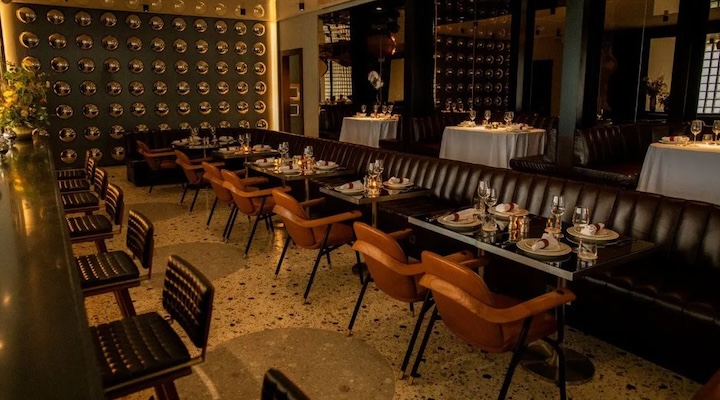
    Tomoro Coffee has opened its first location in Singapore as part of its ambition to become Southeast Asia’s largest coffee chain.

    The location is inside the Hon Sui Sen Memorial Library at NUS Business School, aiming to convey the brand’s dedication to quality and affordability.

    “In today’s coffee culture, we’ve noticed a growing trend where many, especially the younger generation, enjoy caffeine multiple times a day,” said CEO Star Yuan.

    “Whether savouring a single cup or seeking a refill, Tomoro Coffee aims to be the ultimate destination for all your caffeine cravings. We invite coffee enthusiasts of all ages to join the Tomoro experience.”

    The brand intends to further grow its footprint throughout the city-state and into the Philippines. Tomoro Coffee currently runs more than 400 locations in Indonesia and China.

  • Motorbike dealerships offer steep discounts in post-Tet sales

    Motorbike dealerships offer steep discounts in post-Tet sales

    Dealerships are slashing the prices of numerous motorbike models to stimulate demand in the quiet post-Tet (Lunar New Year) season.

    Standard Honda Vision models are on sale for VND30 million (US$1,218.2) at some dealerships, down VND1-2 million from before the Tet holiday, which ran from February 8 to 14.

    Notably, all versions of the Honda Winner X have had their prices cut by VND3-5 million to VND31-36 million, nearly 35% lower than their suggested retail price of VND46-50 million.

    The 2023 Yamaha Exciter 155 VVA is currently subject to a VND5 million discount, while the Suzuki Raider and Satria have had their prices reduced by VND3-5 million at some showrooms.

    Dealerships are eager to offer more discount to boost sales and get rid of remaining inventory.

    The steep price cuts are necessary to spur demand as the motorbike market is usually inactive in the first quarter, especially after the Tet holiday.

    The market has also slowed in general as sales of motorbike decreased by 16.21% from 2022 to 2.51 million units last year, according to the Vietnam Association of Motorbike Manufacturers.

    The downtrend continued in January, with Honda Vietnam reporting motorbike sales of 227.560 units, down 0.8% from the previous month.

    Despite the slumping sales, Vietnam is still the second largest motorbike consumer in Southeast Asia, according to data recently published by market intelligence firm MotorCycles Data.