Tag: asia

  • Nestle’s Smithtown factory gets a $32 million overhaul

    Nestle’s Smithtown factory gets a $32 million overhaul

    Food and beverage giant Nestle has invested $32 million in its Smithtown factory, aiming to boost the site’s manufacturing line.

    The funding will also introduce state-of-the-art technology and support an increased production capacity.

    James Garley, the site’s factory manager, said the investment reflects Nestlé’s commitment to support local manufacturing.

    “Over the next 12 months, the project will inject an estimated $20 million into the local economy and support almost 200 jobs as we construct a new building to house Milo production,” explained Garley.

    The Smithtown factory – which has been operating for over 100 years – manufactures Milo, Nesquik, Malted milk, and Nescafe mixes.

    “It’s a complex project, but the team will work to ensure the facilities continue to deliver the choc-malt crunch of Milo Australians have loved for generations,” Garley concluded.

    The upgrade is due to be completed by the end of this year.

  • NZ haircare company Monday expands US presence with second brand

    NZ haircare company Monday expands US presence with second brand

    New Zealand haircare brand Monday Haircare is expanding its footprint in the US with a second brand Osana Naturals.

    Osana Naturals offers skin and hair care formulas with six functional fragrances. Its formulas promote skin and hair health through moisturizing chemicals and replenishing botanical extracts.

    Jaimee Lupton, a beauty entrepreneur from Auckland, New Zealand, started her first brand, Monday Haircare, in February 2020, to make high-quality hair care more affordable. Monday is now stocked with more than 100 retailers in 50,000 doors across 33 countries and is ranked as the number one haircare brand on TikTok.

    “I’m a firm believer that everyone should be able to enjoy luxurious beauty products, and an accessible price point or shopping experience shouldn’t equal sacrificing modern values or efficacy,” said Lupton.

    “There is a gap in the mass market when it comes to modern, beautiful and effective personal care, and we’re excited to give shoppers the kind of products they crave finally – and deserve – with Osana Naturals.”

    Cruelty Free International’s Leaping Bunny certification recognises Osana Naturals as a cruelty-free beauty brand that meets the criteria for product development, supply chain, and distribution.

    Osana Naturals products are free from common ingredients including sulphates, phthalates, parabens, BHA, BHT, mineral oils, and aluminium. They are also dermatologically tested, pH-balanced, and suited to all skin and hair types.

  • Google Photos adding option to tailor your memories based on your activity

    Google Photos adding option to tailor your memories based on your activity

    Google Photos is adding another feature intended to make your cherished memories more easily accessible and enjoyable. In addition to the recently expanded rollout of automatic Stacks (which organize similar photos together), Google has unveiled a new setting called “Activity-based personalization.” This powerful feature enhances the app’s “Memories” section.

    The “Memories” section, which you might recognize as that carousel of photos and videos at the top of the Google Photos app, can now be set to learn from your actions within it. Activity-based personalization learns about the way you engage with Memories — those you linger on and those you may skip — and uses that information to make them more relevant.

    Activity-based personalization is by default enabled, ensuring that you get the most out of Memories right away. However, you can easily disable this setting at any time. If you do, data about your Memories interactions from the last 18 months will be deleted. Don’t worry, though; this won’t affect your photo library, other Memories, or the Creations that Google Photos generates.

    For now, it appears that setting can only be accessed from the web version of Google Photos, although it isn’t appearing for everyone yet. That said, the Memories carousel is present on both the web and mobile (Android and iOS) versions of the app, so whatever setting you choose for it will affect your experience throughout.

    To check if the feature has rolled out to you and to tweak it, you’ll need to head to photos.google.com on your computer, then click on “Settings” at the top right of the page. From there, you’ll need to scroll down to the “Memories” sub-section to find the “Activity-based personalization” toggle, which should be grouped with the “Time-based memories” and “Themed memories” toggles for featured memories.

    Google Photos is a great app for backing up and enjoying photos and videos, and this new feature joins a range of options already available to personalize your experience. It’s great to see that the app continues to get better and offer more options to those who choose it as the keeper of their previous memories.

  • Chilean cherries 10% costlier than last year on lower imports

    Chilean cherries 10% costlier than last year on lower imports

    The prices of Chilean cherries are 10% higher this year at VND600,000 (US$24.4) due to lower import volumes.

    Size 3JD cherries, which have a diameter of 30-32mm, are sold at VND599,000 per kilogram and VND580,000 if bought in bulk, at a fruit store on Phan Xich Long Street, Phu Nhuan District.

    2JD cherries measuring 28-30mm cost VND569,000 and smaller ones sell at around VND250,000-300,000.

    In Hanoi too, large cherries are being sold at VND600,000.

    Smaller cherries cost less because they are of lower quality and prone to bruising.

    The prices are 5-10% higher than at the same time last year.

    The store manager on Phan Xich Long Street said: “This year’s supply is lower than previous years. Coupled with increased shipping costs, the prices are up 10%.”

    Last year Chile exported 800-1,000 tons of cherries to Vietnam, up 16% from the 688 tons in 2022, according to the Chilean Fruit Exporters Association.

    As a result their prices dropped to as low as VND200,000-300,000 last year.

  • Google TV gets design tweak that makes your favorite apps more accessible

    Google TV gets design tweak that makes your favorite apps more accessible

    Google TV is once again getting a design tweak. Following the addition of new landing pages last year aimed at simplifying navigation, the “For you” screen is now tackling the “Your apps” row, introducing several updates to make navigation easier and your overall viewing experience more enjoyable.

    The app icons on your Google TV are sporting a brand new look, with the old squares and rectangles gone and circular app icons replacing them. This change aims to give your home screen a more modern feel while also making it easier to locate your favorite applications.

    The update also adds a new shortcut that gives you direct access to free TV channels on Google TV. The platform added over 800 new fully-integrated free channels last year that included hit TV shows, game shows, music channels, various entertainment shows, and more — all without downloading additional apps or paying for a subscription.

    Now, you’ll have yet another way to access these channels, without having to click away from the “For you” section. For your convenience, a new shortcut to free channels will now be added to the “Your apps” row.

    Now that the app icons will be circular, they will take up less space. This opened the door for Google TV to expand the number of app icons visible in the “Your apps” row. You can quickly jump into more of your most-used apps without scrolling.

    You have always been able to rearrange the order of your apps, however, the process wasn’t exactly very user-friendly. Now, Google TV will feature “reorder” and “add app” buttons at the end of the “Your apps” row. This will allow you to take control of your app layout by moving your favorites to the front and seamlessly discovering and installing new apps to enhance your entertainment setup.

    These updates are rolling out over the next few months, so watch your Google TV screen for the transformation. With a sleeker design, easier access to content, and more user control, Google TV is continuously improving at putting your entertainment experience first.

  • Google Contacts could soon get a home screen widget that displays text messages

    Google Contacts could soon get a home screen widget that displays text messages

    Aside from the occasionally added new functionality, Google Contacts isn’t an app that is known for getting frequent updates. However, there is one update that is possibly on the way, which will add a nifty new home screen widget and a fresh user interface.

    By flipping a few developer flags in the app’s version 4.26, @AssembleDebug from TheSPAndroid was able to identify these changes. While these features are currently in the testing phase and there is no timeline currently available for deployment, we can get a sneak peek at what was found hidden in the code.

    The first noticeable change is the design change on the main Contacts screen. The familiar phone, email, and company icons will now be tucked away behind a three-dot menu. This change clears space for a brand new “+” icon in the search bar, allowing users to add contacts easier when on the go.

    Additionally, interacting with contact details like email and labels now opens a convenient bottom sheet for options instead of the traditional sidebar accessed by the hamburger menu. This new approach offers a cleaner, more intuitive way to navigate your contacts.

    But perhaps the most noticeable change is the addition of a widget that will allow users to see text conversations from selected contacts directly on their home screen. When the feature is rolled out to your device, you will need to grant the Contacts app the necessary permission to fully display your messages, since they will now be more easily accessible to prying eyes.

    As with many Google updates, especially ones that are still being tested and have yet to be announced, the rollout schedule is very TBD. Usually, updates such as these are reserved for Pixel feature drops. If all goes well and no significant bugs are found while testing, it is possible that we could see this roll out around April, but that is just some good old speculation on our part.

  • Apple has started designing 2nm chips for future iPhone models

    Apple has started designing 2nm chips for future iPhone models

    An Apple employee on Linked In  is supposedly the source of a new report that claims Apple has started designing chips that will be built using TSMC’s next-gen 2nm process node. Leaked slides published on the Korean website gamma0burst and posted via a tweet on “X” by leaker Revegnus the heavily redacted Apple slide refers to older 5nm chips such as the A15 Bionic, 3nm chips such as the A17 Pro, and a future 2nm chipset.

    As the process node used to build a chip “shrinks” in size, the features of the chip get smaller including the transistors allowing more of them to fit inside a chip. That is important because the higher a chip’s transistor count, the more powerful and/or energy-efficient that chip is. The iPhone 15 Pro and iPhone 15 Pro Max are currently the only smartphones powered by a 3nm chip.

    Later this year, Apple is expected to use 3nm application processors (AP) for all four iPhone 16 models. The iPhone 16 and iPhone 16 Plus could be powered by the 3nm A18 Bionic AP while the iPhone 16 Pro and iPhone 16 Pro Max will sport the more capable A18 Pro AP. Both components will be built using TSMC’s second-generation N3E 3nm node.

    SMC is supposedly planning to start production of 2nm chips during the second half of 2025 with the foundry churning out 1.4nm chips in 2027. Apple is expected to be the first company to obtain 2nm chips. The latter should deliver 10% to 15% performance upgrades at the same power or use 25% to 30% less power running at the same speed when compared to 3nm chips.

    Apple is TSMC’s top customer which is why it is usually able to be the first to receive chips made by TSMC using its latest process node. Apple will need to make some design changes in order to take advantage of TSMC’s 2nm node which will feature Gate-all-around (GAA) transistors instead of the currently used FinFET transistors.

    Using horizontal nanosheets placed vertically, GAA transistors allow the gate to surround the channel on all four sides reducing current leak and increasing the drive current. This results in stronger electrical signals between the transistors improving the performance of the chip. Back in December, TSMC showed off a prototype 2nm chip to both Apple and Nvidia.

  • Google Chat adds helpful feature to help you pinpoint conversations relevant to you

    Google Chat adds helpful feature to help you pinpoint conversations relevant to you

    Google Chat is launching a new update that will make it even easier to navigate conversations within its in-line threaded spaces. Following last year’s transition to in-line threading, the latest update continues to improve on that functionality in order to boost productivity and efficiency for its users.

    With multiple threads running across different spaces, it can be time-consuming to figure out which messages need your immediate attention. The latest update from Google Chat makes it easier to keep track of conversations by showing participant avatars alongside unread threads in the conversation view.

    This feature allows you to quickly identify the participants in the conversation and determine if their comments are pertinent to you. You can now efficiently prioritize important threads without having to click on them for additional details.

    Google states that it recognizes that dealing with numerous threads across multiple spaces can be overwhelming and that this feature was introduced in order to give you more context upfront. The goal is that it will make it easier for you to prioritize and stay on top of the conversations that matter the most to you. This will ultimately help you stay organized and focused on what’s important.

    This feature is rolling out automatically and gradually for up to two weeks, starting today. For all Google Workspace users, including those with free personal Google accounts, it will be by default enabled on the web, Android, and iOS.

    Google has been steadily introducing improvements to Chat as it continues to compete with other established messaging platforms, such as Slack and Microsoft Teams, and aims to make Chat a more attractive option for businesses looking to improve collaboration and efficiency within their teams. The company hopes that this new feature will enhance productivity and streamline communication for users across all platforms.

  • Another Pokémon game for Android, iOS coming in 2024

    Another Pokémon game for Android, iOS coming in 2024

    Remember the Pokémon GO craze that got people all over the planet to go haywire? Well, another Pokémon game is coming to your mobile phone this year: the Pokémon Trading Game Card.

    Shares in Japan’s developer DeNA jumped 24% in Tokyo trading after the gaming company said it will launch a mobile version of the PTGC (Pokémon Trading Game Card). This 24% jump shows investors think the game will become a hit.

    Coming in 2024 to iOS and Android devices!

    There’s an official announcement on the Pokémon Trading Game Card Pocket site that reads:

    Experience the fun of collecting Pokémon Trading Card Game (TCG) cards with Pokémon Trading Card Game Pocket, an upcoming game for iOS and Android devices from Creatures Inc., the original developers of the Pokémon TCG, and DeNA Co., Ltd.In this game, you will be able to open two booster packs every day at no cost. You can collect digital cards featuring nostalgic artwork from the past and brand-new cards exclusive to Pokémon Trading Card Game Pocket.

    The Pokémon trading card game, itself based on the popular Nintendo video game franchise, launched in 1996 in Japan and later gained popularity in the United States, with more than 50 billion cards printed.

    The business model, pioneered by American designer Richard Garfield in the 1990s, sees players battle head-to-head with decks of character cards aided by buying sealed booster packs containing various designs and with degrees of rarity.

    In recent years, trading cards have gained greater attention, with rare cards in pristine condition attaining frothy valuations in the volatile market for alternative assets, the report reads and adds that digital collectible card games have also become well-established with popular titles including versions of “Magic”, “Yu-Gi-Oh!” and “Hearthstone”, which is based on the “Warcraft” franchise.

  • Inside the first made-in-China jet to arrive in Vietnam

    Inside the first made-in-China jet to arrive in Vietnam

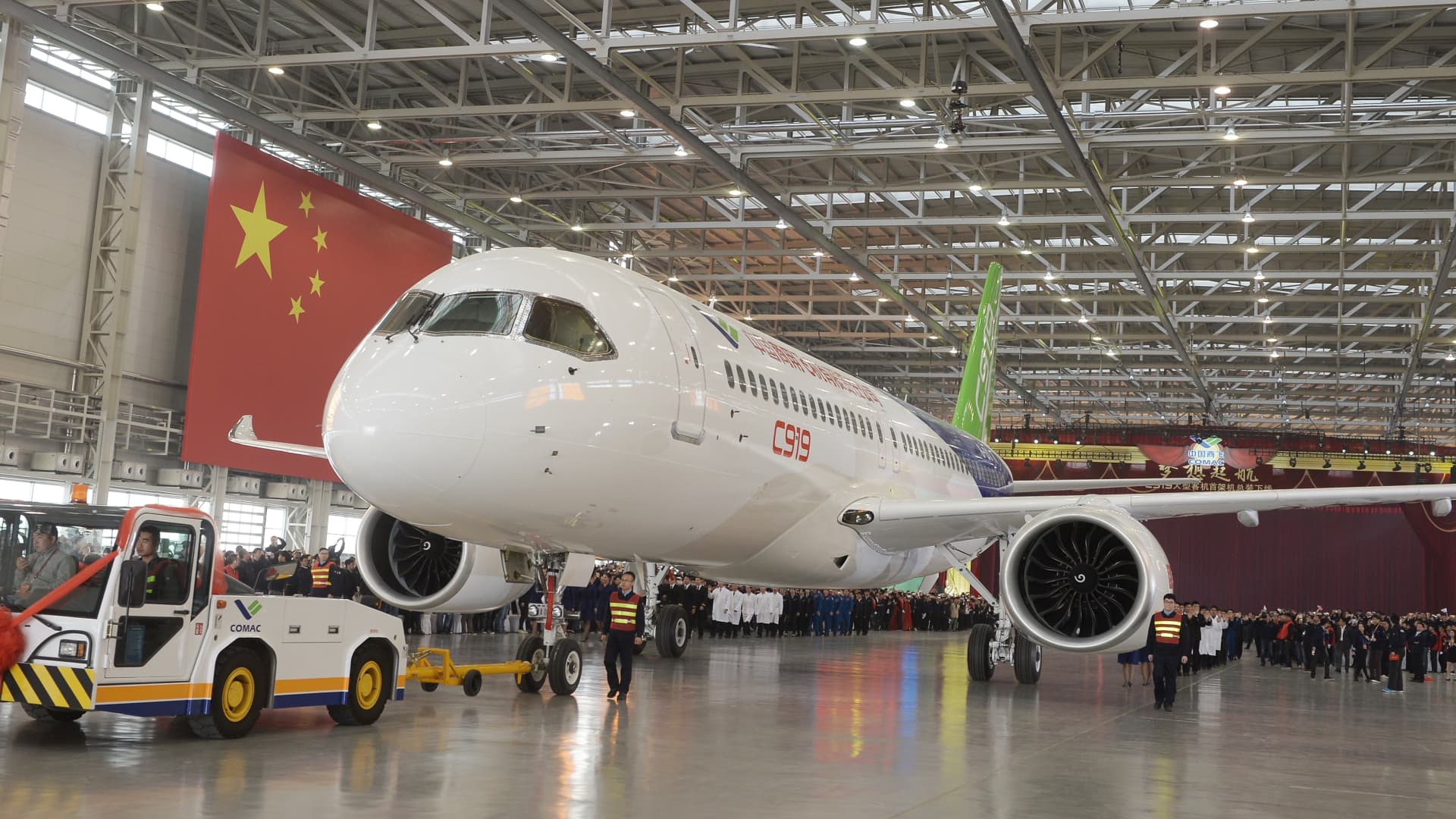
    At 10 a.m. Van Don International Airport in the northern province of Quang Ninh opened its doors for any visitors to look inside the C919 and another Comac aircraft ARJ21 in an exhibition of the company.

    Comac showcased its jets at Singapore last week but limited entry to only some business representatives.

    Comac chairman He Dongfeng said at the exhibition opening ceremony that the appearance of Comac at Van Don is an important step for its jets to reach the global market.

    C919 is a narrow-body jet with a capacity of 168 passengers and flight range of over 4,000 kilometers. The aircraft’s seat configuration is similar to the Boeing 737 Max and A320/321 models. With the jet China eyes to break the domnance of the U.S. and France in making passenger aircraft.
    A C919 costs around $99 million, cheaper than Airbus A320neo and Boeing 737.

    It is 2.25 meters from floor to ceiling, and the lighting color can be changed between 10 presets.

    The aisle is more spacious than other passenger jets of the same category. Behind each seat is a safety instruction written in Chinese and English.

    The communication and navigation system uses parts from U.S. manufacturer Rockwell Collins.

    Some other parts are made by U.S. companies. Tires and brakes are manufactured by Honewell, the aluminum body by Acronic, and the black box by GE Aerospace.

    The two engines were covered during the exhibition. Comac has announced earlier that it uses the LEAP turbofan engines produced by CFM International, a joint venture between American GE Aerospace and French Safran Aircraft Engines. The same engines are used on the Airbus A320neo.

    The ARJ21 jet, the first to be designed and manufactured by Comac, was placed nearby. It uses two engines made by an U.S. company and other key equipment from a German firm.

    ARJ21 seats up to 97 passengers and can fly 3,700 kilometers. Chinese airlines have used the aircraft on many domestic routes and have served 13 million passengers. Comac delivered the first ARJ21 to an international buyer in Indonesia in 2022.

    ARJ21 has similar luggage design as other medium-range jets such as ATR72 and Embraer 190. It can also be modified as a private jet.

  • Thai AirAsia flight faces panic following power bank explosion

    Thai AirAsia flight faces panic following power bank explosion

    The Bangkok Post reported that the incident, which occurred on Saturday, led to a united effort by passengers and crew to extinguish the flames that broke out mid-flight.

    Despite the chaos, the 186 passengers on board remained unharmed, and the flight landed safely at its destination in Nakhon Si Thammarat Airport on schedule.

    An immediate probe into the event identified burn marks on the seat near the explosion site, and it was determined that the exploded device belonged to a family traveling on vacation.

    A Feb. 19 Royal Air Philippines flight from Boracay to Shanghai underwent a similar incident when a passenger’s power bank exploded mid-air, forcing the plane to divert to Hong Kong and resulting in a three-hour delay in reaching the Chinese city.

  • Laos wind farms offer Vietnam 4,150 MW of electricity

    Laos wind farms offer Vietnam 4,150 MW of electricity

    According to national utility Vietnam Electricity, seven Lao wind energy plants want to sell a total of 4,150 MW to Vietnam. It will be done in phases, with 682MW supplied before 2025 and the rest gradually after that.

    Vietnam will be keen on accepting the offer.

    If the National Energy Master Plan is carried out on schedule, the central and southern regions would have enough power until 2030, but the north is likely to face shortages from 2025, especially during the dry season from May to July, EVN said.

    Importing energy from Laos would help alleviate the shortfall, it said.

    Affordability is also a factor, with wind energy from Laos currently costing 6.95 cents per kilowatt-hour compared to Vietnam’s 8.5-9.8 cents, depending on whether the plant is on land or offshore.

    Vietnam has been importing energy, mainly hydroelectricity, from Laos since 2016 through intergovernmental agreements.

    Increasing electricity purchases from neighbors is in the trade ministry’s power plans for this year.

    However, there are certain challenges.

    Electricity from Laos is expected to pass through transmission lines in Quang Tri Province, meaning the quantity of purchase will largely depend on infrastructure in this area.

    EVN’s calculations show that the proposed 4,149 MW exceeds the capacity of the local power grid.

    Most of its 200 kV and 110 kV lines operate at 80-100% of capacity. The region can only manage a maximum of 300 MW of transmission during the dry season and even less at other times.

    “Before the Lao Bao 500 kV substation is put into operation, this area [Quang Tri Province] can hardly take in more electricity from Laos because all the existing 220 kV lines are operating at high loads,” EVN said.

    Once the grid infrastructure is improved, such as with the construction of the Huong Hoa 500 kV substation and connecting lines in late 2027, Vietnam can get 2,500 MW from Laos, which will still be 1,650 MW short of the quantity it is seeking to sell.

    Furthermore, adding more renewable energy to the national grid will throw plans out if kilter. Domestic renewable energy accounted for 27% of grid capacity at the end of 2023 and is only expected to grow to 34% by 2030, according to the National Energy Master Plan.

    So, to ensure grid stability, EVN said the trade ministry should only buy a maximum of 300 MW of wind power from Laos before 2025, and only during the peak demand season.

    From 2026 to 2030 a maximum of 2,500 MW could be bought, it said.

    It also urged the government to import more hydroelectricity to increase flexibility.

    More grid infrastructure and transmission lines, including 220 kV and 500 kV dual-circuit lines from the border to the Lao Bao substation, should be added to the national master plan, it added.


  • South Korean hypermarket Emart to launch in Laos

    South Korean hypermarket Emart to launch in Laos

    Emart, the South Korean hypermarket retailer, will expand into Laos this year through a master franchise deal with U-Dee, an investment entity owned by LVMC Holdings.

    The move follows the company’s announcement earlier this month that it would expand into Cambodia in June.

    The agreement includes opening one Emart discount retail outlet and three hard-discount outlets under the brand name No Brand – Emart’s house label – in Laos later this year.

    Emart operates three Emart stores in Vietnam, four in Mongolia, and 17 No Brand stores in the Philippines.

    The firm intends to open 20 E-Mart locations and 70 No Brand stores in Southeast Asia during the next 10 years.

    LVMC Holdings, originally known as Kolao Group, was founded in 1997 by South Korean businessman Oh Se-young. The group debuted its footprint in the retail market with a local hypermarket chain dubbed Kok Mega Mart in Laos last year.

  • Christian Dior postpones show in Hong Kong indefinitely

    Christian Dior postpones show in Hong Kong indefinitely

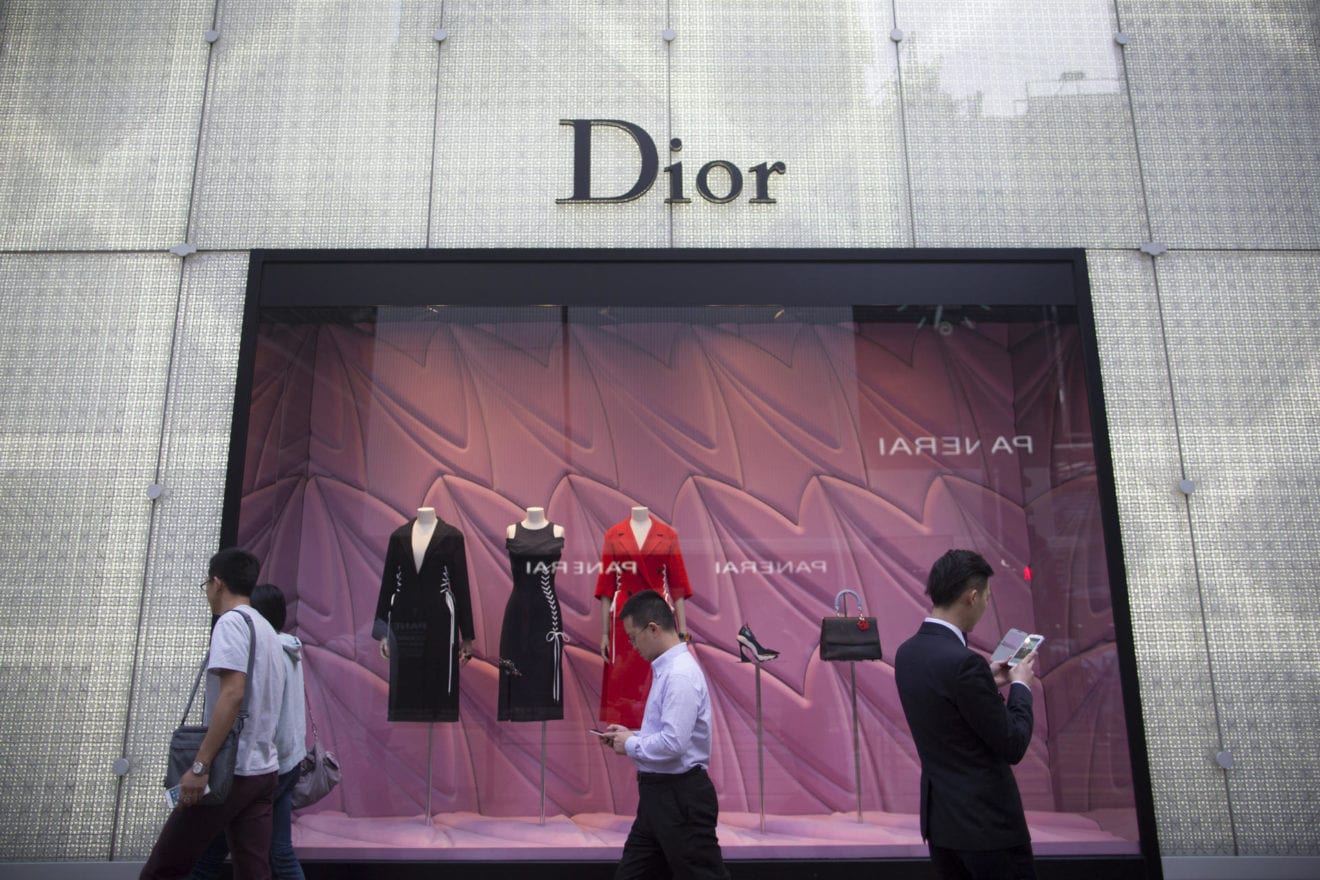
    French fashion label Christian Dior has postponed its planned mega fashion show in Hong Kong due to be held in March, the government said on Monday, without giving a reason for the decision.

    The event was widely anticipated by many in the luxury sector after a high profile show from Louis Vuitton helmed by singer Pharrell Williams last November, which was an attempt to put the Chinese city back on the luxury map and attract wealthy spenders.

    Dior did not immediately respond to Reuters requests for comment on why it postponed the show.

    “We have just received notification from the organiser that the event will be postponed. In fact, postponements of large-scale events often happen. We continue to welcome large-scale events to be held in Hong Kong,” the government said in an email.

    Hong Kong’s luxury retailers are adapting to fewer wealthy Chinese shoppers visiting the city and a shift towards tourists flocking to Instagram-coveted spots in trendy districts rather than splashing out on pricey branded gear.

    Before the pandemic, the Chinese special administrative region had bucked global trends of declining demand for multi-brand department stores and ultra-luxury brands largely due to its attractiveness to high-spending mainland visitors.

    But the rise of competing shopping hubs like China’s Hainan island, changing consumer preferences and a rise in online shopping have fundamentally changed demand for luxury goods in Hong Kong and are starting to reshape the city’s visitor economy, according to industry experts.