Tag: asia

  • Amazon helps with Deliveroo funding round

    Amazon helps with Deliveroo funding round

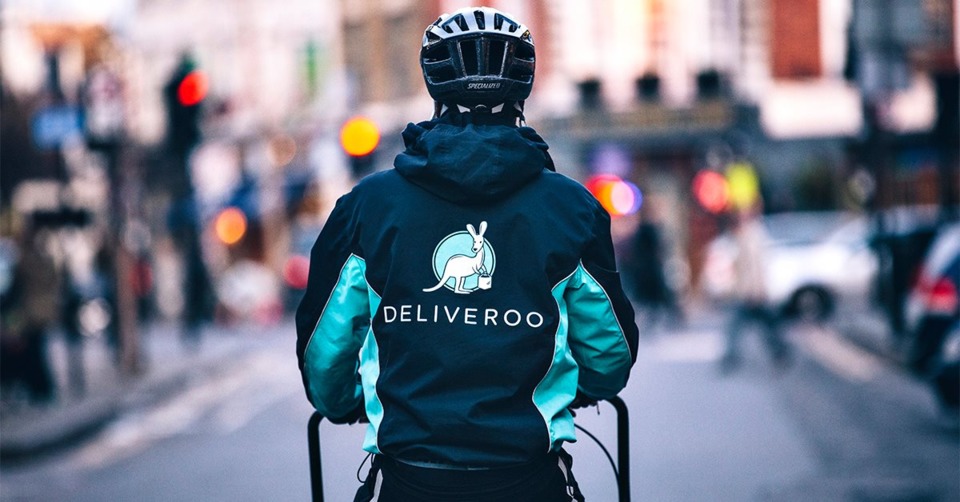
    Amazon is leading another funding round in international food-delivery startup Deliveroo.

    The US online retailer and existing shareholders including T Rowe Price, Fidelity Management and Research Company, and Greenoaks will invest US$575 million in the company, taking the cumulative total raised to date to $1.53 billion.

    “With this funding, Deliveroo will continue to build its world-class service – bringing customers the food they want whenever and wherever they want it, offering even more work for riders, and helping restaurants to grow their businesses by reaching new customers,” the company said in a statement.

    The funds will be deployed to growing Deliveroo’s London-based engineering team, expanding Deliveroo’s delivery reach, innovations such as the company’s delivery-only super kitchens called Editions and the development of new products providing customers with a more personalized experience.

    “This new investment will help Deliveroo to grow and to offer customers even more choice, tailored to their personal tastes, offer restaurants greater opportunities to grow and expand their businesses, and to create more flexible, well-paid work for riders,” said Will Shu, founder, and CEO of Deliveroo.

    “Amazon has been an inspiration to me personally and to the company, and we look forward to working with such a customer-obsessed organization. This is great news for the tech and restaurant sectors, and it will help to create jobs in all of the countries in which we operate.”

    Amazon UK country manager Doug Gurr said the company was impressed with Deliveroo’s approach and its innovation in delivery options.

    “Will and his team have built an innovative technology and service, and we’re excited to see what they do next.”

  • Cisco expects 5G windfalls in the future

    Cisco expects 5G windfalls in the future

    Cisco is primarily known for its switches and routers for service providers and enterprises. It has not been a big competitor in the radio access networking space against vendors such as Ericsson and Nokia. But on its fiscal third-quarter 2019 earnings call this week, Cisco CEO Chuck Robbins mentioned “wired and wireless” networking a few times.

    “We are moving into an era of truly immersive and pervasive wireless connectivity, which generates demand for high density, low latency performance, for real-time experiences over both wired and wireless networks,” said Robbins, according to a Seeking Alpha transcript. “Our guys like to say behind every great wireless network is a great wired network,”

    In fact, the company has been hired by Rakuten to help it build its new greenfield mobile network in Japan. Cisco is building Rakuten’s network functions virtualization infrastructure (NFVi) with 4,000 edge nodes. In addition to software, Cisco is delivering routing and switching hardware. And Cisco is also the primary systems integrator for Rakuten’s virtualized telco cloud.

    On its earnings call, Robbins said, “With our newest Catalyst 9000 family additions, we have completed the most comprehensive enterprise networking portfolio refresh in our history. We have rebuilt our entire access portfolio with intent-based networking across wired and wireless.”

    Robbins also mentioned 5G, saying Cisco is helping telcos build out their core networks ahead of large-scale 5G rollouts. Although Cisco is already selling packet core technology to carriers for their new 5G networks, “the big play for us is when they begin to evolve their networks to accommodate the traffic,” he said. “And we’ve always said we felt like that would be sometime in calendar 2020.”

    Carriers are leveraging their existing core networks to run the early trials on 5G. “We believe that sometime in the future when the number of connections increases and the capacity gets to a point, then they’re obviously going to begin to build out these new backbones dedicated to the 5G infrastructure, where we will generally come into play,” he said.

    Although Robbins focused on telcos’ core networks in the earnings call, the company has investments in Altiostar, a startup that has developed RAN virtualization technology. Altiostar is also working with Rakuten.

    Finally, Robbins talked a bit on the earnings call about Wi-Fi 6. Cisco recently announced new Wi-Fi 6 access points across its Catalyst and Meraki portfolios, as well as the Catalyst 9600 core switch family.

    “Wi-Fi 6 is effectively what used to be called 802.11ax,” said Robbins. “And, what’s happening now is when you get these high-performance access points into the organizations and you get the low latency immersive experience possibilities, then it’s also going to drive the need to upgrade the backbones.”

  • DoT aims to issue trial 5G spectrum in June

    DoT aims to issue trial 5G spectrum in June

    India’s Department of Telecom has reportedly put facilitating 5G technology trials at the top of the agenda within its 100-day action plan for whichever party wins the upcoming Lok Sabha (lower house) elections.

    The allocation of 5G trial licenses could take place as soon as the new government takes over, which could be in June.

    The 100-day action plan also includes developing policy on trial spectrum and technology testing, standardization, regulatory policy and the establishment of use case labs, the report states.

    Areas of focus include simplifying the process of obtaining experimental licenses as well as approvals for experimental products and services.

    Depending on their readiness, operators could commence 5G network trials in June. The telecom ministry has recommended that the trial run for a three month period, with options to expand this to up to a year if operators need more time to prepare.

    Samsung, Nokia and Ericsson have been approved to participate in the trials with incumbent operators Reliance Jio Infocomm, Bharti Airtel and Vodafone Idea. The government has not yet decided whether to allow the participation of Chinese vendors including Huawei.

  • Update to Gboard makes it more Attractive

    Update to Gboard makes it more Attractive

    Google is pushing out an update to the Gboard virtual keyboard app for Android users. This includes support for Emoji 12.0, but only for those whose phones are running on Android Q. Some of the new emoji available includes an Otter, a service dog, a falafel, both a manual and a motorized wheelchair, and a stick of butter. Those in the healthcare industry will surely use the stethoscope and drop of blood emojis. The Unicode Consortium, which includes members such as Apple, Huawei, and Microsoft, unveiled Emoji 12.0 last February

    The other new features mentioned in the update include the ability to delete search history with a long press, vertical scrolling for emoji and expression stickers (although some have already had this feature for some time now), quick access to the clipboard, sticky preferences for emoji skin tone and gender, and the ability to import/export custom words for the dictionary.

    One new feature not mentioned in the changelist now matches the color of the Gboard navigation bar with the theme that you’ve selected for the virtual QWERTY. Previously the bar could only be black or white so those using Gboard might find this to be an improvement visually.

    We received this update literally minutes before starting to type out this article. You check to see if it has arrived on your phone by opening the Google Play Store. Once that task is completed, tap on the hamburger menu on the left side of the search bar. Click on My apps & games and check out the apps that are in queue to be updated. If Gboard is among them, tap the update box on the right, wait for it to be installed, and the next time you are ready to do some typing you can see the changes.

  • 10 Corso Como Leaving Shanghai

    10 Corso Como Leaving Shanghai

    Italian fashion concept store 10 Corso Como is withdrawing from China.

    The firm’s Shanghai retail outlet, which has been open since 2013, will be shuttered late this month in the absence of interest in a license and lease renewal from its local partner Trendy Group.

    The Milanese brand launched its early version of the concept store format at the beginning of the 90s, leading to global popularity and continuing global expansion – its New York location opened just late last year.

    Trendy Group is a late 90s fashion conglomerate that operates more than 3000 retail locations in almost 300 cities worldwide, and holds brands such as Ochirly, Five Plus, Coven Garden, Trendiano and Miss Sixty.

  • Missguided First Vietnam’s Store Opening

    Missguided First Vietnam’s Store Opening

    UK-based fashion brand Missguided Vietnam has opened its first store.

    Located on Level 2 of Ho Chi Minh City’s Saigon Centre, the new store is a part of the brand’s expansion internationally, which follows rationalization in its home market. The label has also opened its first franchised store in Dubai Mall, under a partnership with retail group Azadea.

    More stores are poised to open in the UAE, Qatar, Saudi Arabia, Kuwait, Bahrain, Jordan, Lebanon, and Egypt.

    Early February, Missguided closed its flagship in London’s Westfield Stratford City, which was also its first brick-and-mortar store, after three years of operating.

    The loss-making 20,000sqft store reportedly had two years left on the lease but Missguided negotiated to exit early.

    The brand now has only one store in the UK, at Bluewater shopping center in Kent.

  • DFS and Bally Partnership Launches Deng Lun capsule collection

    DFS and Bally Partnership Launches Deng Lun capsule collection

    Luxury travel retailer DFS Group and Swiss luxury brand Bally have released an exclusive capsule collection featuring new ambassador Deng Lun.

    The Fall Winter 2019 ready-to-wear DFS and Bally collection features Bally’s best-selling silhouettes with some exclusive details. Inspired by the joy and freedom of travel, the collection explores these emotions through mountaineering and other forms of discovery. The unisex series of ready-to-wear and leather goods also echoes Bally’s sportswear design DNA.

    “We are thrilled to be partnering with Bally in debuting an exclusive capsule collection, and to introduce yet another assortment that our discerning customers can only find at DFS stores worldwide,” said DFS Group senior VP fashion Magali Ginsburg.

    “DFS represents the ultimate luxury shopping experience in the travel retail channel. We are pleased to serve customers in this important network with a unique collection that reflects the sense of adventure rooted in Bally’s history. Our partnership with pioneering actor Deng Lun aptly celebrates this capsule debut,” said Bally Group CEO Nicolas Girotto.

    The exclusive capsule collection includes three men’s large leather goods and three ready-to-wear pieces as well as two unisex caps.

    The DFS x Bally capsule collection will be available at select DFS downtown T Gallerias and airport stores until May 30.

  • China driving global cellular IoT adoption

    China driving global cellular IoT adoption

    An “exceptional adoption” in China has lifted the global number of cellular IoT subscribers by 70% to reach 1.2 billion in 2018, says a report released by Berg Insight.

    The research firm predicts that there will be 9 billion IoT devices connected to cellular networks worldwide by 2023.

    China, which accounted for 63% of the global installed base in 2018, is expected to continue to be the key driver for IoT adoption, as the Chinese government is actively driving adoption as a tool for achieving domestic and economic policy goals.

    “China is deploying cellular IoT technology at a monumental scale”, said Tobias Ryberg, principal analyst and author of the report.

    According to data from the Chinese mobile operators, the installed base in the country increased by 124% year-on-year to reach 767 million at the end of 2018.

    China has overtaken Europe and North America in penetration rate with 54.7 IoT connections per 100 inhabitants, Ryberg said.

    He said the role of the government is the main explanation for why China is ahead of the rest of the world in the adoption of IoT.

    “The most distinctive characteristic of the Chinese IoT market is however the way that the government is systematically using new technology to implement its vision for urban life in the 21st century,” Ryberg said.

    “At the same time the private sector also implements IoT technology to improve efficiency and drive innovation.”

    China has witnessed widespread adoption of connected cars, fleet management, smart metering, asset monitoring and as well as new consumer services like bike sharing.

    The report also analyses the IoT business KPIs released by mobile operators in different parts of the world and found significant regional differences.

    While China has the world’s highest IoT penetration rate, Europe seems is doing better job in terms of monetizing the IoT business.

    According to the report, the monthly ARPU for cellular IoT connectivity services in China was only €0.22 ($0.25), compared to € 0.70 in Europe.

    Global revenues from cellular IoT connectivity services increased by 19% in 2018 to reach €6.7 billion. The ten largest players had a combined revenue share of around 80%.

  • China Mobile is world’s most valuable telco brand

    China Mobile is world’s most valuable telco brand

    China Mobile is the most valuable telecoms brand in Asia-Pacific, and the third most valuable in the world, according to Brand Finance’s latest Telecoms 300 brand value report.

    China Mobile’s brand value has increased 4.6% in 2019 to $53.22 billion, cementing its position behind AT&T ($87 billion) and Verizon ($71.15 billion) on the top 20 leaderboards.

    Other Asia-Pacific operators in the top 20 include Japan’s NTT Group (5th with a brand value of $41.67 billion), China Telecom (9th, $20.63 billion), Japan’s SoftBank (10th, $19.29 billion) and au (11th, $16.62 billion), Australia’s Telstra (14th, $10.5 billion), and China Unicom (16th, $10.23 billion).

    But with the exception of China Mobile and au, whose position on the leaderboard remained unchanged, all the Asia-Pacific operators in the list fell either one or two places.

    Further down the list, Vietnam’s Viettel had a strong performance, with its brand value increasing by 36% to $4.3 billion, while Ooredoo increased to 41st on the top 50 rankings with a 12% increase in brand value to $3.78 billion.

    The report also ranked telecoms brands by relative strength based on metrics including marketing investment, stakeholder equity, and business performance.

    By these criteria, Thailand’s AIS was named the world’s strongest telecoms brand, overtaking China Mobile. Malaysia’s Digi was ranked as the third largest brand, while relative newcomer Reliance Jio Infocomm from India was named fifth. Telkom Indonesia (8th) and Singtel (9th) also made the top 10.

  • Taco Bell India eyes 600 store Openings

    Taco Bell India eyes 600 store Openings

    Taco Bell India plans to expand to more than 600 stores before sub-licensing to local operators.

    The US-headquartered QSR chain has appointed its existing local partner since 2015 Burman Hospitality,  as master franchise holder for the country.

    Following nine years in the territory, the brand now seeks to open 600 locations in India within 10 years, a target that if achieved will make India Taco’s largest foreign market, reflecting the popularity of its menu in the region extending beyond its parent company’s core offerings of its sister brands’ chicken, burgers and pizzas.

    The appointment makes Burman the largest Taco Bell franchise globally in terms of store count. “If you look at chicken and pizza, they are two very familiar categories to the consumer and that helped both KFC and Pizza Hut with their explosive growth, not only in India, but all over the world,” said Taco Bell International president Liz Williams. “The Mexican category is a relatively new category for consumers and I think the Indian consumer has shown us they are ready for it.”

    Research conducted last year showed that the vast majority of food ordered in the Indian territory is North Indian, followed by Chinese and South Indian. The market for other cuisines is shown to be expanding.

    Burman is currently seeking to keep tight control over store launches before seeking sub-franchisees and then expanding into new formats such as food court kiosks.

  • Sandro IFC store Opens with Fresh Feel

    Sandro IFC store Opens with Fresh Feel

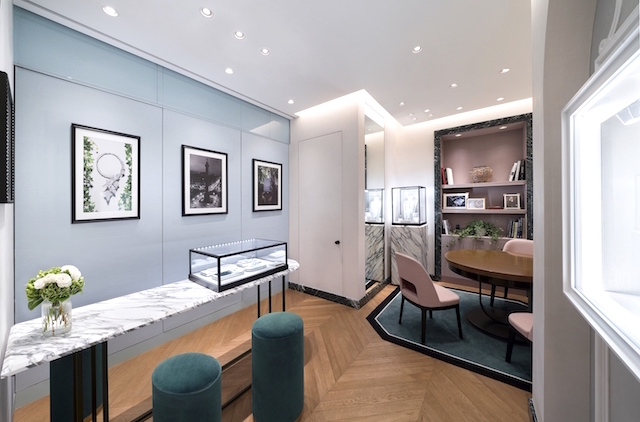
    The Sandro IFC Mall store has been expanded and relocated, the design upgraded design to introduce the French affordable luxury brand’s newest retail design concept.

    The 139sqm store features both menswear and womenswear collections and is the first boutique in Asia to present the brand’s new interior style.

    Accented by a contemporary design and modern decor, the boutique showcases the most diverse range from the brand in an understated setting with Marimorino texture finish walls and Herringbone wooden floors, complete with wooden furniture and an LED video panel showcasing the latest digital content and materials from the brand.

    Sandro operates more than 600 points of sales worldwide, almost a third of which are located in Asia.

  • Replay opens first Denim store in India

    Replay opens first Denim store in India

    Italian denim brand Replay has opened its first store in India.

    The new store has been launched in the capital in a partnership with Reliance Brands. The large retail outlet in Ambience Mall, it focuses on the brand’s core elements using signature design features in store.

    “I am confident that our constant striving to deliver qualitative and innovative products will be in line with the consumers’ appetite for the highest standards in denim,” said Fashion Box Spa CEO Matteo Sinigaglia. “Furthermore, it is a real pleasure to join forces with Reliance Brands Limited, and I truly believe we are starting a wonderful journey together.”

    Replay is planning to launch three stores in Mumbai and New Delhi as well as a flagship store in Maker Maxity, Mumbai later this year.

    The store will offer denim wear, casual wear, footwear, and accessories.

  • ViewQwest to offer services over TM’s HSBB network

    ViewQwest to offer services over TM’s HSBB network

    Singapore-based fiber operator ViewQwest is expanding its footprint in Malaysia through a new partnership with Telekom Malaysia.

    ViewQwest, which currently has its own fiber network in parts of the Klang Valley and Johor, plans to use Telekom Malaysia’s HSBB network to significantly enhance its availability.

    Through the network reselling agreement, ViewQwest will offer services anywhere Telekom Malaysia offers its Unifi fiber service.

    According to the report, ViewQwest plans to introduce new broadband plans under the agreement in June or July. Speed and pricing will depend on available bandwidth and last mile infrastructure.

    The company will bundle Mesh WiFi products to new subscribers to ensure optimal Wi-Fi experiences, as well as value-added services including a geoblock circumventing Freedom DNS service.

    ViewQwest has revealed it is open to pursuing more joint ventures, acquisitions or network sharing partnerships aimed at allowing it to continue expanding in Malaysia.

  • BoConcept Asia continues Expansion

    BoConcept Asia continues Expansion

    Furniture and homewares retailer BoConcept has opened new stores in three Asian countries in recent months as it continues to expand its footprint in the region.

    The new stores are in Kyoto, Japan, Zhengzhou, China; and Ho Chi Minh City, Vietnam.

    BoConcept already has about 300 stores in more than 65 countries and is seeking to more than double its network within the next few years.

    The Kyoto store, which opened in March, is the brand’s 16th store in Japan and its 71st in Asia.

    The Zhengzhou store, in Henan Province, marks its 24th in China and the Vietnamese stores it’s sixth in the market. Both opened last month.

    The store is located in the suburb of Thao Dien, a popular area for expats.

  • ZTE opens first cybersecurity lab in China

    ZTE opens first cybersecurity lab in China

    ZTE has launched the first in a series of planned dedicated cybersecurity labs aimed at reassuring customers of the security of its solutions, and developing end-to-end security products and services.

    The new lab in Nanjing, China will help ZTE provide customers with end-to-end security products and services.

    It also aims to help ZTE increase transparency and enhance trust with all third parties, including customers and global regulators, in light of the national security concerns that are prompting several countries to ban the use of equipment from Chinese vendors in 5G rollouts.

    The lab will provide security assessment and audit services such as source code review on ZTE products including 4G and 5G solutions.

    It will also offer security design audit, procedural document review, black box testing and penetration testing services, and facilitate research and development collaborations with other industry stakeholders and academia.

    Moving forward, the company plans to collaborate with major security organizations to jointly conduct security assessment, certification, training and consulting.

    Following the establishment of the Nanjing lab, ZTE plans to also launch cybersecurity labs in Italy and Belgium respectively in the near future as it builds out a global network.

    “The security lab is an open and cooperative platform for the industry,”  ZTE CSO Zhong Hong said during a speech at the opening of the new lab.

    “ZTE plans to gradually achieve the cybersecurity goals through three steps: first, meeting the requirements of cybersecurity laws, regulations and industry standards as well as certification schemes; second, conducting an open dialogue to enhance transparency and establishing cooperation with customers as well as regulatory agencies; and third, sustaining the open cooperation mechanism to contribute to cybersecurity standardization.”