Tag: asia

  • B&O’s refreshed Beoplay H9 headphones come with Killer Features

    B&O’s refreshed Beoplay H9 headphones come with Killer Features

    After (narrowly) beating Apple to the punch with super-expensive “truly wireless” earbuds supporting wireless charging functionality, Bang & Olufsen is shifting its attention to the premium Beoplay line of wireless over-ear headphones to release a refreshed H9 model. This is already available in the US at the same price as its H9i predecessor, bringing a couple of important upgrades to the table.

    First, there’s a new dedicated button allowing B&O Beoplay H9 users to summon Google Assistant and get it to do stuff by voice commands. The built-in digital assistant does not replace touch controls altogether, though, so you can still use gestures directly on the ear cups to seamlessly navigate your listening experience.
    The other major improvement comes in the battery life department, where the Beoplay H9 headphones are making a pretty ambitious promise. Namely, you should be able to squeeze up to a whopping 25 hours of uninterrupted play time from these bad boys, compared to the “modest” 18-hour maximum endurance advertised for the H9i. What’s impressive is that Bang & Olufsen has somehow managed to make this leap while retaining the exact dimensions and weight of the H9i.
    Speaking of things retained, the Beoplay H9 features the same old (and great) active noise cancellation technology, “expertly tuned” acoustics performance, and Transparency Mode functionality for when you don’t want to feel isolated from your surroundings. Available in Matte Black and Argilla Bright colors with the super-premium build quality and a self-proclaimed focus on craft, the H9 headphones are priced at $500, which is certainly not affordable… but also not shocking.
    Just like the H9i, the Google Assistant-enabled H9 have a pretty clear target audience that cares more about B&O brand recognition and stature than objectively comparing the value for money delivered by these headphones with those of the cheaper Bose QuietComfort 35 II or Sony WH1000XM3.
  • Goodbaby opens Chengdu Flagshop Store

    Goodbaby opens Chengdu Flagshop Store

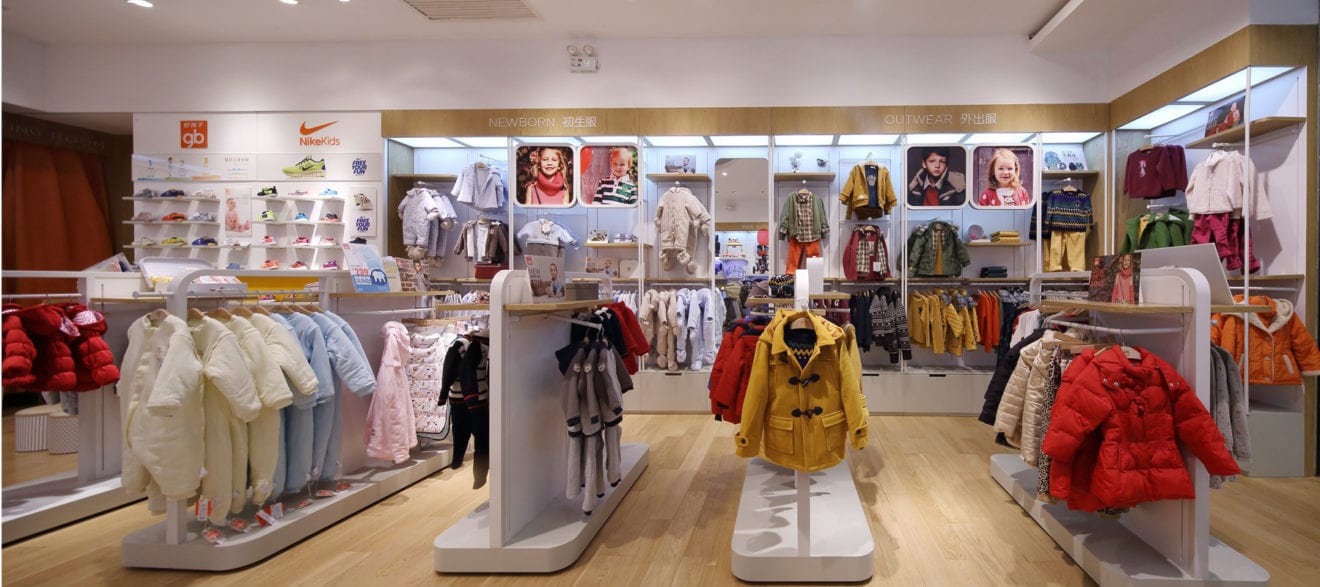
    Goodbaby International has opened two flagship stores in Chengdu, China.

    One of the new stores is located at International Finance Square (IFS), the other at Chengdu Joy City. Both opened last Saturday.

    The stores represent the parenting-products retailer newest offline store model and were designed by an unnamed “well-known designer” who has previously cooperated with many globally renowned luxury concept stores.

    “The key to mom-and-child products lies in experience,” said Goodbaby China CEO Jiang Rongfen.

    “The new global flagship stores are designed with both the sensitive and sensible factors of the consumers’ shopping behaviors in mind.”

    The designer aimed to create an immersive, scenario-based smart lifestyle environment for parenting families, where consumers can experience and interact with the products to make better shopping decisions with the help of AI, VR and AR technologies, as well as making one-stop shopping convenient.

    “Our goal is to make every customer willing to share their satisfactory experience with their friends,” Jiang said.

    With Chengdu considered an up and coming fashion hub in China, Goodbaby decided to launch its new Hey Box smart products at the two flagship stores.

    “It is usually said that winning Chengdu’s consumers is a big step towards winning China’s consumers,” said Jiang.

    Goodbaby was set up in China 1989 as a global company with local operations in China, Germany and the US. At the core of its range are baby carriages and child car seats.

  • Shiseido launches art installation at Changi Airport

    Shiseido launches art installation at Changi Airport

    Shiseido Travel Retail has teamed up with Jewel Changi Airport and TeamLab to launch an art installation called Sense. Located at ‘Shiseido Forest Valley’ in the mall, the installation engages the senses through sound, smell, sight, and touch.

    “We know that consumers are now looking for stories and brands that can represent their mission in a manner that resonates with their individual narratives,” said Philippe Lesne, President and CEO of Shiseido Travel Retail.

    “Together with our partners, Jewel Changi Airport and TeamLab, we are excited to unveil this immersive experience to take our consumers and travelers from around the world beyond the realms of traditional retail.”

    The installation transforms as visitors progress further into the forest’s depths, honing their sense of sight as lights dance and flicker.

    Composer and musician Yota Morimoto have created a soundtrack especially for the feature, designed to “reignite visitors’ aural senses along with this sensory exploration” and recreate “the breathing sound” of a natural forest.

    A blend of natural elements, as well as Japanese and Western instruments,  create tones aimed at relieving stress and tension.

    As night falls and the resonating forest by TeamLab comes alive, another musical arrangement takes its place, aimed at creating a sense of balance and harmony.

    The ‘Ultimune’ scent, created by Shiseido’s Dr Tomonori Ueda for the installation is also aimed at relieving stress and creating a calming effect.

    To enhance the experience, visitors can interact with their surroundings, by downloading the Jewel Changi Airport app on iTunes or Google Play to access Shiseido’s Sense app.

    After that, they can conclude the experience by a message on the virtual Shiseido Tree.

    “The collaboration with Shiseido and TeamLab will showcase another facet of the unique Jewel experience that is co-curated with our partnership to delight visitors,” said Hung Jean, CEO of Jewel Changi Airport Devt.

  • Bharti Infratel-Indus Towers merger due to close in June

    Bharti Infratel-Indus Towers merger due to close in June

    The mega-merger between Indian operator Bharti Airtel’s infrastructure company Bharti Infratel and independent tower company Indus Towers is reportedly now expected to close in June.

    The planned merger, which has been in the making for around a year, is at an advanced stage of completion, according to the prospective parent companies of the merged company Bharti Airtel and Vodafone Group.

    In a stock exchange filing, the companies also announced that they have proposed to appoint current Indus Towers CEO Bimal Dayal and CFO Hemant Ruia to the posts of CEO and CFO respectively of the combined company.

    Merging Bharti Infratel with Indus Towers will create a pan-India tower company with over 163,000 towers in operation and a valuation of around $10 billion.

    The combined company will continue to serve Indian operators on a non-discriminatory basis and help support the expansion of 4G and 5G wireless broadband services across India.

    Indus Towers was established in 2007 as a joint venture between Bharti Airtel and what is now Vodafone Idea. Prior to the in-progress merger, the company was around 53% owned by Vodafone Idea, 42% owned by Bharti Infratel and 5% owned by Providence Equity Partners.

    “The Shareholder groups look forward to early completion of the merger and move towards successful integration,” the joint statement reads.

  • Sprint/T-Mobile deal may get FCC approval

    Sprint/T-Mobile deal may get FCC approval

    In a move that was looking increasingly unlikely over the past few months, FCC Chairman Ajit Pai has signaled that he will recommend that Sprint/T-Mobile merger be approved. The $26.5 billion mergers aren’t necessarily out of the woods yet as no vote has been taken and the other four commissioners have not been heard from yet and there is still the DOJ to persuade. But nevertheless, the deal has crossed a threshold and may now be back on track to close in the coming months.

    In order to get past the FCC’s concerns, Sprint and T-Mobile had to make a few concessions. The Boost prepaid business will be sold off, a 5G network will be built out over 3 years, and pricing will not be raised during that construction. Promises were made to ensure ‘robust’ infrastructure in rural areas and to work on in-home broadband offerings.

    The markets liked the move, and all four US wireless giants saw their stocks surge in response, Sprint and T-Mobile for obvious reasons and Verizon and AT&T due to the prospect of a reduction in the competition overall. Infrastructure providers, however, saw the opposite given the consolidation synergies that will inevitably come at their expense.

    The news comes just over a year since the deal was announced after years of dancing. I think we’re all tired of the dance at this point. I wonder though if a tweet will send things the other way in the next 24 hours.

  • Danish fashion label Hummel Opening in India

    Danish fashion label Hummel Opening in India

    Hummel India has signed up a Bollywood actor to help promote its launch in the country.

    Kartik Aaryan, described by one local media outlet as “the nation’s heartthrob and nation’s crush” has been appointed Hummel’s chief ambassador in India for the Danish sportswear label.

    Founded in 1932, Hummel produces clothing ranging from swimwear to casual streetwear and sneakers. It has already opened five stores in India and plans another 10 by the end of the financial year.

    The first five stores are franchised and have opened in Bengaluru, Pune, Chennai, Surat and Amritsar.

    Aaryan made his debut for the brand at a recent launch event in Bangalore.

    “In Hummel, I see a perfect fit. Hummel appeals to my style sensibilities, it is bold, fashionable, creative and youthful,” the actor told the audience.

    “I am excited that Hummel has entered the retail space and I am sure that the Indian audience will love the designs that Hummel has brought to India.”

    Soumava Naskar, MD of Hummel India, says the brand’s merchandise was available on Jabong and Myntra in 2016 but the company stopped selling directly to both the platforms in 2017 because it had no pricing control.

    “Three months ago, we listed our merchandise on Amazon and Flipkart via our partner ND Commerce, which manages our online stores and handles pricing control too. Which means, if customers receive discounts on our end-of-season products on Amazon or Flipkart, they will receive the same discounts in our physical stores as well. This is our first promise to Indian customers.”

    Hummel, owned by Thornico Group, is currently sold in more than 35 countries. It has more than 250 mono-brand stores and expects to achieve US$1.5 billion in turnover this calendar year.

  • Prada to cull wholesale sales channels

    Prada to cull wholesale sales channels

    Italian luxury fashion label Prada is to cull its wholesale distributor list, in order to take more direct control of pricing.

    In a short filing with the Hong Kong stock exchange (where the company is listed), Prada said that its board has analyzed in detail the structure of its wholesale channels “and noted the growing complexity and fragmentation of the wholesale market”.

    Consequently, the board has resolved in favor of additional rationalization of its network of independent partners.

    “The Prada Group considers it essential to ensure greater consistency in pricing policies across retail and digital channels,” said chairman Carlo Mazzi in the filing.

    “This strategic review is intended to further strengthen the Prada Group brands with the aim of supporting sustainable long-term growth.”

    The statement offered no further details of how the rationalization would be undertaken or how many wholesalers would be culled, although it is apparent online distribution may be most affected.

    Like many luxury brands, Prada wants to maintain relative product pricing between wholesalers and its own stores, in much the same way Apple has succeeded globally.

  • Naiise Iconic store opens at Changi Airport

    Naiise Iconic store opens at Changi Airport

    A Naiise Iconic store has opened at Jewel Changi Airport. Spanning almost 9500sqft across a two-story space, Naiise Iconic store brings new creative brands and ‘experience stations’ to customers.

    The first one is a tea bar run by homegrown tea marketplace Teapasar, which hosts more than 30 tea brands and 100 types of tea. Customers can get their teas roasted on the spot for the freshest possible brew.

    The airport store – a new concept for the homewares-and-gifts retailer – also hosts Naiise’s first cafe, featuring foods and beverages from local brands. At an ‘open-source’ communal pantry, customers can enjoy Joe & Dough, Bettr Barista, superfood juice maker Doki Doki, or breakfasts from Udders.

    There is also a stationery corner, where customers can design their own notebooks, picking out a cover, selecting a combination of papers, then choosing binding rings and elastic bands.

    On the second floor, there is a section for local fashion and beauty brands, ranging ladies’ and kids’ fashion, accessories, fragrances and grooming. Beauty brand Alche{me} has a mini lab there to help customers find products that work for their unique skin types.

    To support local entrepreneurs, the store introduces Launchpad, an area where brands can display their products and ideas to test customer demand and perception.

  • App development industry facing massive disruption

    App development industry facing massive disruption

    OutSystems has published its sixth annual research report on the state of application development and the challenges faced by development and delivery teams.

    The State of Application Development, 2019: Is IT Ready for Disruption report unveils detailed survey results from over 3,300 IT professionals in all industries across the world, 17% of which are from Asia Pacific (APAC).

    “Our 2019 survey shows that many IT departments are facing a multitude of disruptive forces when it comes to digital transformation and application development,” said Steve Rotter, CMO for OutSystems.

    “The threat of digital disruption and the need for digital transformation has been a driver of IT strategy for years. Add to that the current uncertain global economic outlook, and it becomes obvious why business leaders are so concerned about agility today.”

    The new research report provides in-depth insights from IT managers, enterprise architects, and developers addressing a wide range of issues. Digital transformation dominates business strategy today, which is why web and mobile development demand is booming. Moreover, speed and agility are more important than ever before, Rotter explained.

    This OutSystems report explores the priorities and challenges of application development and delivery, and the strategies that IT teams are using to try to speed up delivery.

    Six key findings that impact every IT professional:

    • Demand for app dev soars: The number of applications slated for delivery in 2019 has increased 60%, according to respondents globally, 38% of whom plan to deliver 25 or more apps this year. In APAC, 69% of respondents planned to deliver 10 or more applications in 2019, with 52% of APAC respondents targeting to deliver 50 or more applications in the year ahead.
    • Steep development time: 46% of respondents in APAC said the average time to deliver a web or mobile application is five months or more.
    • Backlogs remain: 63% of IT professionals in APAC said they have an app dev backlog, with 16% of these respondents having a backlog of more than 10 applications.
    • Development talent hard to find and keep: Most respondents have hired developers, 75% of respondents globally described app dev talent as scarce, and only 36% of organizations in APAC have larger app dev teams than a year ago. The numbers appear to show retention of app dev talent is an equally grave concern.
    • Agile practices are still slow to mature: 69% of organizations in APAC have invested in agile tools and services in the past year. However, the average agile-maturity score was a lackluster 2.76 out of 5, meaning most organizations in the region are still in the process of defining agile processes.
    • Customer-centricity continues to rise: Over 69% of organizations in APAC have invested in customer-centric practices in the past year, including customer journey mapping, design thinking, and lean UX. For the new apps slated for development in 2019, those that will be used directly by customers or business partners were identified as most important.

    Low-code has become mainstream

    Another key research finding was that low-code is no longer just for innovators and early adopters.

    43% of APAC respondents said that their organization was already using a low-code platform, and a further 12% said that their organization was planning to start using one soon.

    The analysis in the report identified that organizations using low-code are:

    • 26% more likely to describe their organization as satisfied or somewhat satisfied with the speed of application development
    • 11% more likely to deliver web applications in four months or less
    • 15% more likely to deliver mobile applications in four months or less
    • 20% more likely to score their agile maturity as level 3, 4 or 5
    • 12% more likely to say that their app dev backlog has improved since last year
    • Reporting a 16% higher self-assessment score for digital transformation maturity

    “Our findings in the 2019 State of Application Development Report crystallize a trend we have been observing in recent years – the uptake of low-code development platforms supporting innovation, continuous delivery, and better talent resource management in enterprises,” said Mark Weaser, Regional Vice-President, APAC, OutSystems.

    “No longer reserved for innovators and early adopters, low-code development platforms have definitely crossed the chasm and are well on the way to widespread adoption in Asia Pacific by the early majority.”

  • Thaicom to offer 5G satellite backhaul

    Thaicom to offer 5G satellite backhaul

    Thai satellite operator Thaicom aims to carve out a new revenue stream by offering satellite backhaul capacity to the nation’s operators for their upcoming 5G networks.

    Thaicom chief commercial officer Patompob Suwansiri said that satellite will be critical to the future of 5G networks.

    According to the executive, Thaicom is currently working with operator AIS, an affiliate of its parent company InTouch Holdings, to prepare for the transition. The company already provides transponder capacity for backhaul for AIS, as well as TrueMove and operators in several other Asian nations.

    The company is looking to replace the revenue that will be lost as a result of the exit of seven Thai digital TV channels in August.

    Thaicom’s concession to operate three of its five satellites will also expire in 2021, but the company is planning to bid to obtain the operating rights to the satellite under a public-private partnership model for after the rights expire.

    While satellite will not be able to deliver the low latencies expected for 5G networks, Patompob said around 80% of data traffic usage in the 5G era will be from applications that do not require low latency and will, therefore, be suited to satellite backhaul.

  • Tata Intra Compact Truck Launched

    Tata Intra Compact Truck Launched

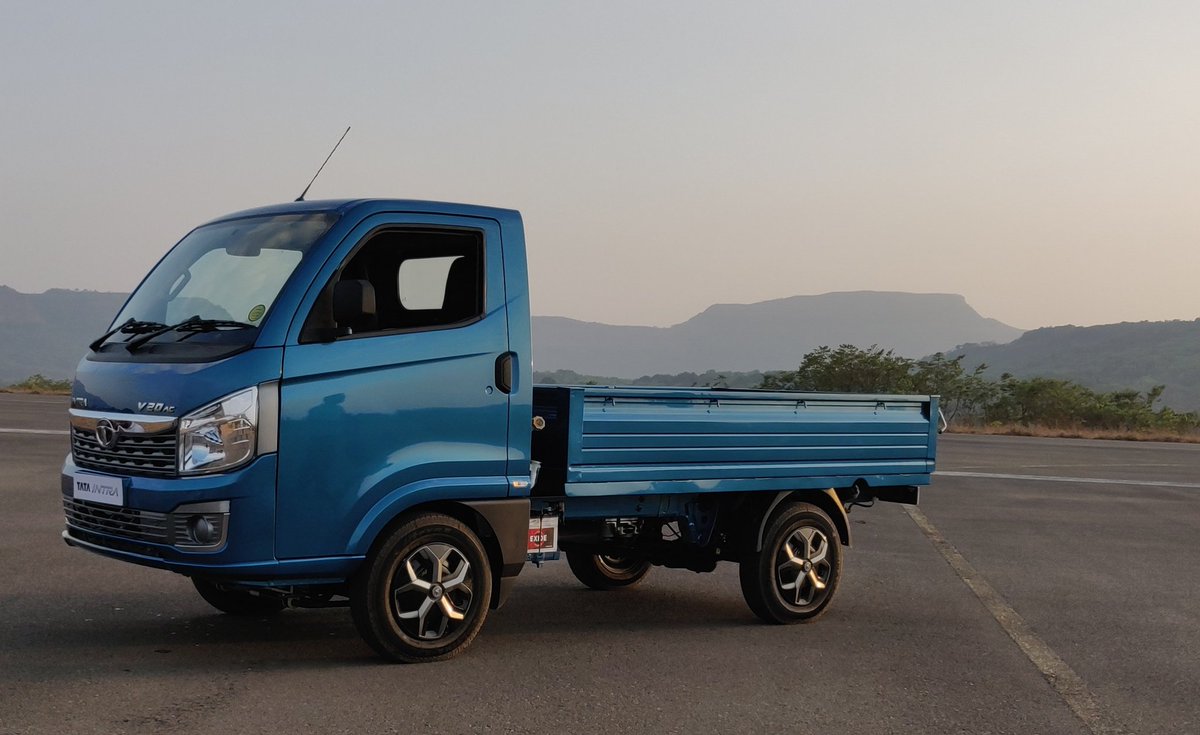
    Tata Intra, the all-new small commercial vehicle (SCV) from Tata Motors today officially went on sale in India. The new compact trucks will be available in two variants – V10 and V20, priced at ₹ 5.35 lakh and  ₹ 5.85 lakh (ex-showroom India) respectively. The new Tata Intra compact truck is a premium offering and will be positioned in India above the company’s existing range of Ace mini trucks, which will also continue to be on sale. Compared to the Tata Ace, the new Intra SCV comes with a host of first-in-segment features to justify the premium price tag.

    Tata says that the new Intra is targeted towards customers who are looking for a commercial vehicle that can be both, a workhorse as well as a stylish and comfortable personal vehicle. Someone who is looking to upgrade from the Tata Ace. Thus, you’ll see that the new Tata Intra comes with a bunch of passenger car-like elements both outside as well as inside. The exterior bit includes – a large front grille with a chrome slat flanked by a set of nice-looking clear glass headlamps with halogen lights and integrated turn indicators. The Intra also gets a bold and busy-looking bumper with a wide central air dam and provision to install fog lamps. The new compact truck runs on a set of 14-inch steel wheels with the option of smart-looking dual tone wheel covers, which are truly good-looking and well-designed. The vehicle also gets large manually operable ORVMs and dual wipers, which in addition to these subtle character lines, add to the style quotient of the Intra.

    The Tata Intra also comes with a well-laid-out cabin, featuring a neat dashboard that comes with contrast bezels around the center console and air-con vents. Furthermore, because the gear lever is positioned on the dashboard, resulting in a flat walk-through-floor. Other features include a charging socket, lockable glovebox, a standard music system with Radio, AUX-IN and USB connectivity, and a fully digital instrument cluster, offering read-outs for speedometer, odometer, time, fuel gauge, and a segment-first gear shift indicator, or as Tata calls it Gear Shift Advisor (GSA).

    In terms of dimensions, the new Tata Intra is at par with the larger Tata Ace on offer, the Ace Mega XL, with a total length of 4316 mm, a width of 1639 mm and a height of 1918 mm. Having said that, the Intra does come with one of the largest loading bay areas in the segment, with a 2512 mm long load deck that is 1602 mm wide and comes with a standard depth of 463 mm. In fact, the Intra also comes with a segment-best payload capacity of 1100 kg, 100 kg more than what the Ace Mega XL offers. In fact, the vehicle also offers best-in-class gradeability of 45 percent for easily negotiating steep hilly roads & flyovers, compared to the Ace’s 30 percent gradeability. Furthermore, the Intra also gets semi-elliptical leaf spring suspension setup with 6 leaves at front and 7 leaves at the rear, offering heavy duty performance.

    The new Tata Intra V20 is powered by a brand new 1.4-litre Direct Injection (DI) diesel engine. The new 1396 cc engine is tuned to churn out 69 bhp at 4000 rpm and develop a peak torque of 140 Nm at 1800-3000 rpm. The engine comes mated to a 5-speed manual gearbox with cable shift mechanism. The Tata Intra V10 is powered by an 800 cc, two-cylinder motor which develops 39 bhp at 3750 rpm and 90 Nm at 1750 – 2500 rpm and is mated to a four-speed gearbox. In terms of rivals, the new Tata Intra has been designed to compete with both, the LCVs like the Piaggio Porter 1000 and Mahindra Supro, and the pickup trucks like the Mahindra Bolero Pickup.

  • Spotify unveils its first-ever hardware device

    Spotify unveils its first-ever hardware device

    Spotify has been the unrivaled champion of the thriving music streaming industry for a number of years now, but relying entirely on a service under siege by tech giants including Apple and Amazon seems like decidedly risky business. As such, it’s certainly not shocking to see the 2006-founded Swedish company dip its toes into the consumer hardware world with an aptly titled Car Thing device.

    This “thing” does pretty much what you expect, reportedly plugging into your car’s 12-volt power outlet/cigarette lighter to allow Spotify users to control their smartphone playlists and podcasts on the road in complete safety with voice commands only. The Car Thing is essentially a less versatile Anker Roav Bolt powered by an unnamed Google Assistant rival… that’s unlikely to ever see daylight on anything resembling a wide scale.

    That’s right, you can’t actually purchase Spotify’s first-ever piece of hardware, which will instead be offered for free to a “small group” of invited Premium subscribers to help the company “learn more about how people listen to music and podcasts.” While this is all explicitly and repeatedly billed as a test, set to be conducted in the US only in the near future, Spotify is leaving the door open to an eventual expansion of the limited experiment.

    For the time being, the focus is squarely on “becoming the world’s number one audio platform” rather than creating consumer-oriented hardware, but the way future experiences will be developed depends on the “learnings” from this test. In other words, if invited users declare themselves pleased with the Spotify Car Thing, you shouldn’t rule out it becoming a commercial… thing someday.

    Obviously, we don’t have a full spec sheet or list of features for the Car Thing, but we do know it comes with a circular screen, a number of physical buttons, and a “Hey, Spotify” wake word. Intriguingly, Spotify is also teasing upcoming “Voice Thing” and “Home Thing” tests purportedly designed to assess the living room listening habits of the platform’s Premium users.

  • Crumpler expands Stores Network in Hong Kong and the Philippines

    Crumpler expands Stores Network in Hong Kong and the Philippines

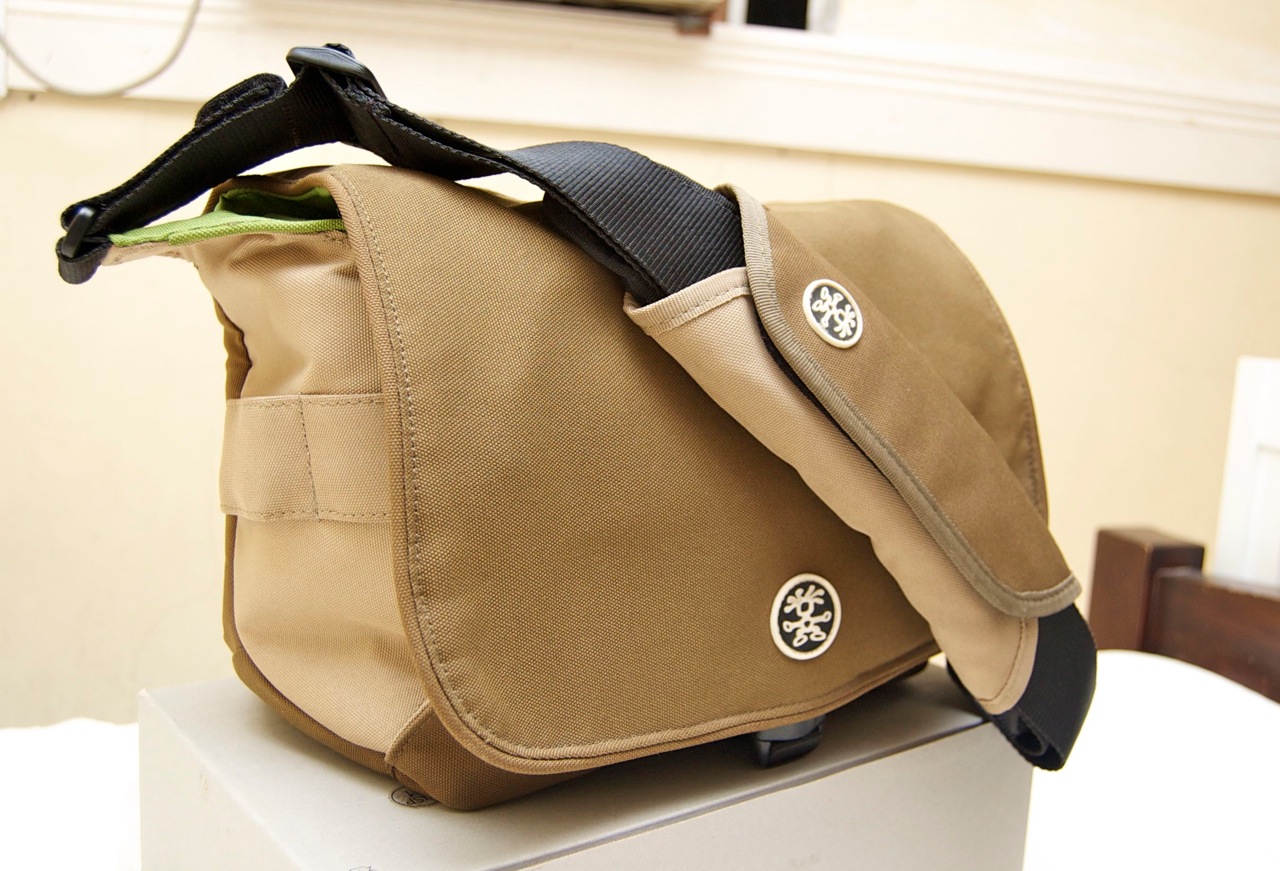
    Crumpler expands its distribution network in Hong Kong and the Philippines; plans pop-ups. Australian bag manufacturer Crumpler has taken on two new distribution partners in Asia.

    With the introduction of new partners Bauhaus Holdings in Hong Kong and Shoemakers Shop in the Philippines, the brand is now supported by seven distributors across seven countries in the region, has a presence in 10 retailers, and will unveil three new pop-up stores and one concession store in the coming months.

    Crumpler is now stocked at four Bauhaus outlets in Hong Kong, and two stores in Macau. It has also opened its first fully ranged standalone store in Hanguang department store, Beijing, in partnership with Sea To Summit China.

    In the Philippines, Shoemaker’s Shop will relaunch Crumpler this summer with three pop-up stores opening in Alabang Town Center, Trinoma and the Duty Free Philippines Fiesta Mall. This is only the beginning for Crumpler in the Philippines, with local e-commerce in the works.

    Crumpler is meanwhile continuously building its physical store and online presence in Australia, the US and Asia with more than 27 storefronts and distribution across 37 key department store and online retailers worldwide.

  • Chemists are top choice for Aussie makeup purchases

    Chemists are top choice for Aussie makeup purchases

    Chemists have come out on top in the latest Australian beauty sales data, with 70 per cent of shoppers choosing to purchase makeup at this retailer.

    A report from Field Agent on Women and Makeup found that Priceline was the retailer of choice, with 32 per cent of women choosing it as their number one makeup retailer. Range, price and convenience were the top three reasons customers choose Priceline.

    Chemist Warehouse came in at number two in the top five makeup retailers, followed by Mecca, Myer and Sephora.

    Supermarkets are the fourth most popular retailer when it comes to makeup, with 26 per cent of women choosing to shop there, behind department stores at 29 per cent and specialty beauty stores at 27 percent.

    The figure for online makeup shopping is surprisingly low, with just 10 per cent of shoppers choosing this platform only. Shoppers revealed that having no color test (76 per cent) and being unable to feel the product (55 percent) were the main reasons they don’t buy more makeup online. Physical stores currently have the advantage here, as 61 per cent of shoppers said it is very important to be able test the product before buying. Shoppers also cited shipping costs and delivery times among the reasons they don’t shop makeup online more often.

    Just 5 per cent of those surveyed use online makeup subscriptions, with 8 per cent saying they have before but don’t use the service ongoing.

    The average monthly makeup spend for shoppers is $43. Mac shoppers have the highest average spend, coming in at $48 a month, followed by L’Oreal at $44 and Estee Lauder at $42. More affordable makeup lines Maybelline ($35), Revlon ($26) and Rimmel ($25)come in at below average monthly spends.

    Mac came out on top as the favoured makeup brand, followed by Maybelline, Revlon, L’Oreal and Rimmel.

  • Global footwear brands lobby Trump

    Global footwear brands lobby Trump

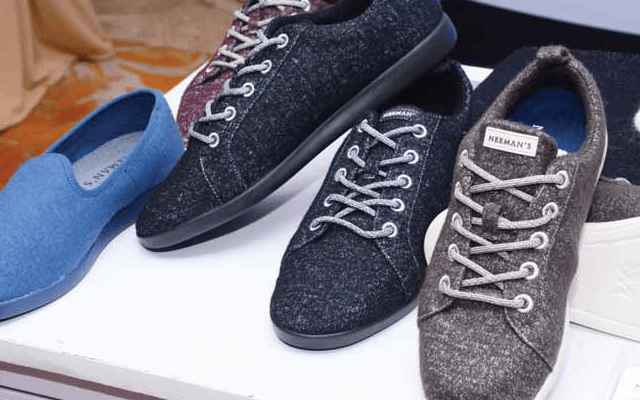
    A group of 173 footwear companies, including Adidas, Converse, Foot Locker, Hush Puppies, Nike, Puma, Reebok, Ugg and Under Armour, have requested US President Donald Trump immediately remove footwear from the list of imported products to be tariffed from China.

    According to a joint statement released by the businesses, Trump’s additional 25 per cent tariff on footwear would be “catastrophic” for consumers, companies in the industry and the American economy as a whole.

    “Any increase in the cost of importing shoes has a direct impact on the American footwear consumer,” the statement reads.

    “It is an unavoidable fact that as prices go up at the border due to transportation costs, labor rate increases, or additional duties, the consumer pays more for the product.”

    The Footwear Distributors and Retailers of America (FDRA) association estimated that the proposed change in import costs would add US$7 billion in additional costs to be picked up by the consumer per year.

    According to the statement, the proposed tariffs would be placed atop of tariffs that already affect the industry, in some cases causing some customers to pay nearly 100 per cent duty on their shoes.

    “This is unfathomable,” the statement reads.

    “On behalf of our hundreds of millions of footwear consumers and hundreds of thousands of employees, we ask that you immediately stop this action to increase tax burden… It is time to bring this trade war to an end.”

    Footwear retailers and brands are not the only ones making statements about the effect Trump’s tariffs are having on their businesses. Walmart last week warned the tariffs are already hurting its furniture segment, and will hit its clothing and accessories segment next.

    Macy’s also warned that its furniture category has been impacted by the trade war.

    Morgan Stanley analysts have warned that a collapse of the ongoing trade talks between China and the US, and longer lasting tariffs on trade between the two countries, would “mean that we might not be able to avert the tightening of financial conditions and a full-blown recession.”