Tag: asia

  • LVMH Acquires of Italian jeweller Repossi

    LVMH Acquires of Italian jeweller Repossi

    French luxury house LVMH has taken a controlling interest in Italian jeweller Repossi.

    The group quietly increased its 42-per-cent stake in the heritage jewellery brand to 69 per cent last year, and has since focused on expanding Repossi’s retail network, with openings in Tokyo and New York in the works for later this year. The brand recently launched at the Peninsula Hotel in Hong Kong.

    “The goal is to finance the brand’s international expansion,” said Repossi CEO Benjamin Comar.

    While the hard-luxury category only contributes a modest amount to the brand’s overall takings, LVMH’s investment signals a continuing interest in the potential of the hard-luxury market, thought to be rapidly expanding among young Asian consumers in particular.

  • HMV’s Heroes walk away

    HMV’s Heroes walk away

    Two prospective saviors of the HMV Hong Kong business have walked away after it became clear they would be unlikely to be allowed to use the historic brand name.

    A liquidation sale may now be held for stock stored since the retailer entered provisional liquidation last December, said to include about 70,000 DVDs, 20,000 CDS and 9000 vinyl records.

    “Two potential white knights, one a mainland company, the other a Hong Kong firm, had been very keen on rebooting the HMV business in the mainland and Hong Kong,” liquidator Wong Sun-keung, a partner at accounting firm Vision AS said.

    “There is some legal issue that the HMV licences here are considered to be ended with the liquidation. It is a shame,” he said.

    Citing the trademark issue, Wong says he will no longer be seeking a buyer for the business and will now work with the company’s creditors to find alternative ways of recovering about HK$40 million (US$5.1 million) in debts.

    A committee comprising seven representatives of the company’s 340 creditors will vote before month’s end on the next step, most likely a massive liquidation sale.

    “It may include the option of selling the stock to some music collectors. Or we may host a big liquidation sale for a few days,” Wong told the SCMP.

    “We are negotiating with a landlord for a potential location in Causeway Bay. Another possible location will be in Mong Kok.”

    While the stock, currently stored in shipping containers, has a book value of $9 million, given the discounts applicable in a liquidation sale, it may have a realisable value of less than $1 million.

  • Free Ice creams at Tiffany Singapore

    Free Ice creams at Tiffany Singapore

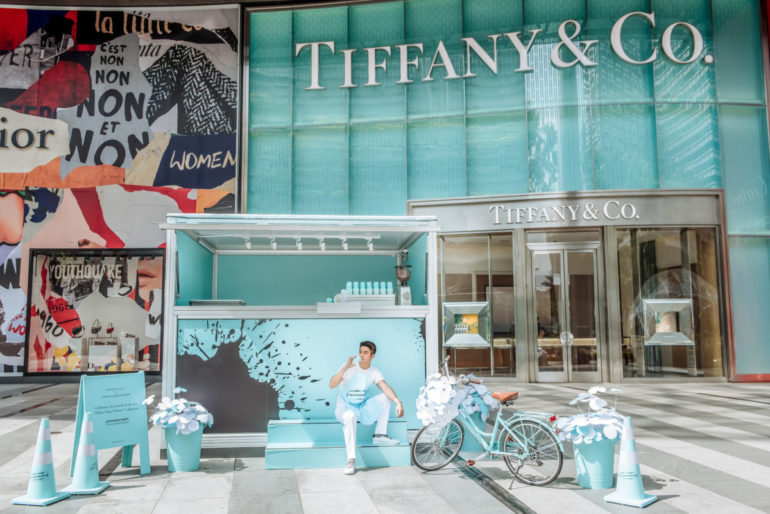
    Tiffany Singapore celebrates the launch of Tiffany True collection with Tiffany Blue benches in front of its stores.

    Tiffany Ion Orchard is its first location and other venues include Clifford Square, Ngee Ann City, Gardens by the Bay, Marina Bay Sands, Singapore River and Sentosa Cove.

    Visitors who post a creative photo with any of the benches and include the hashtags #TiffanySingapore #BelieveInLove on their social media will get a free rose ice-cream cone.

    Customized love poems are also available to all visitors.

    Tiffany True is described as “a more modern interpretation of the same ultimate expression of commitment”.

    “Tiffany True is a next-generation symbol of love and commitment, the next chapter into the future,” said Reed Krakoff, Tiffany & Co’s chief artistic officer.

    “It gives people a different choice that’s equally inspired and equally special.”

    Last year, Tiffany & Co partnered with local bakery brand Tiong Bahru Bakery to offer free coffee and croissants outside its Ion Orchard store.

  • KDDI, Sumitomo to enter Myanmar mobile game market

    KDDI, Sumitomo to enter Myanmar mobile game market

    Japanese operator KDDI and conglomerate Sumitomo have revealed plans to jointly enter Myanmar’s mobile game industry through newly created joint venture Funcreate Myanmar.

    Funcreate Myanmar, a subsidiary of the companies’ Singapore-based joint venture Funcreate, will localize and distribute mobile games from Japan and other countries throughout Myanmar.

    Funcreate was established in November last year and has been a joint venture since April. It is 51% owned by KDDI and 49% owned by Sumitomo.

    The companies aim to attract more than 1 million downloads for each game title offered. Myanmar’s mobile games market is projected to grow at a CAGR of 52% due to the nation’s rapidly developing mobile phone market.

    KDDI has meanwhile established a strategic partnership with Singapore-based mobile game service provider goGame to take advantage of the latter’s expertise in game procurement, development, operation and marketing for the Asian market.

    Sumitomo, which launched a mobile game sales operation in North America in 2018, will meanwhile provide strategic marketing proposals for the new mobile game business operation, tailored to the Myanmar market.

    KDDI and Sumitomo were selected in 2014 to partner with state-owned Myanmar Posts and Telecom to operate a joint venture providing fixed and mobile services in the rapidly developing local telecoms market.

  • 5G will hit the IoT market in late 2020

    5G will hit the IoT market in late 2020

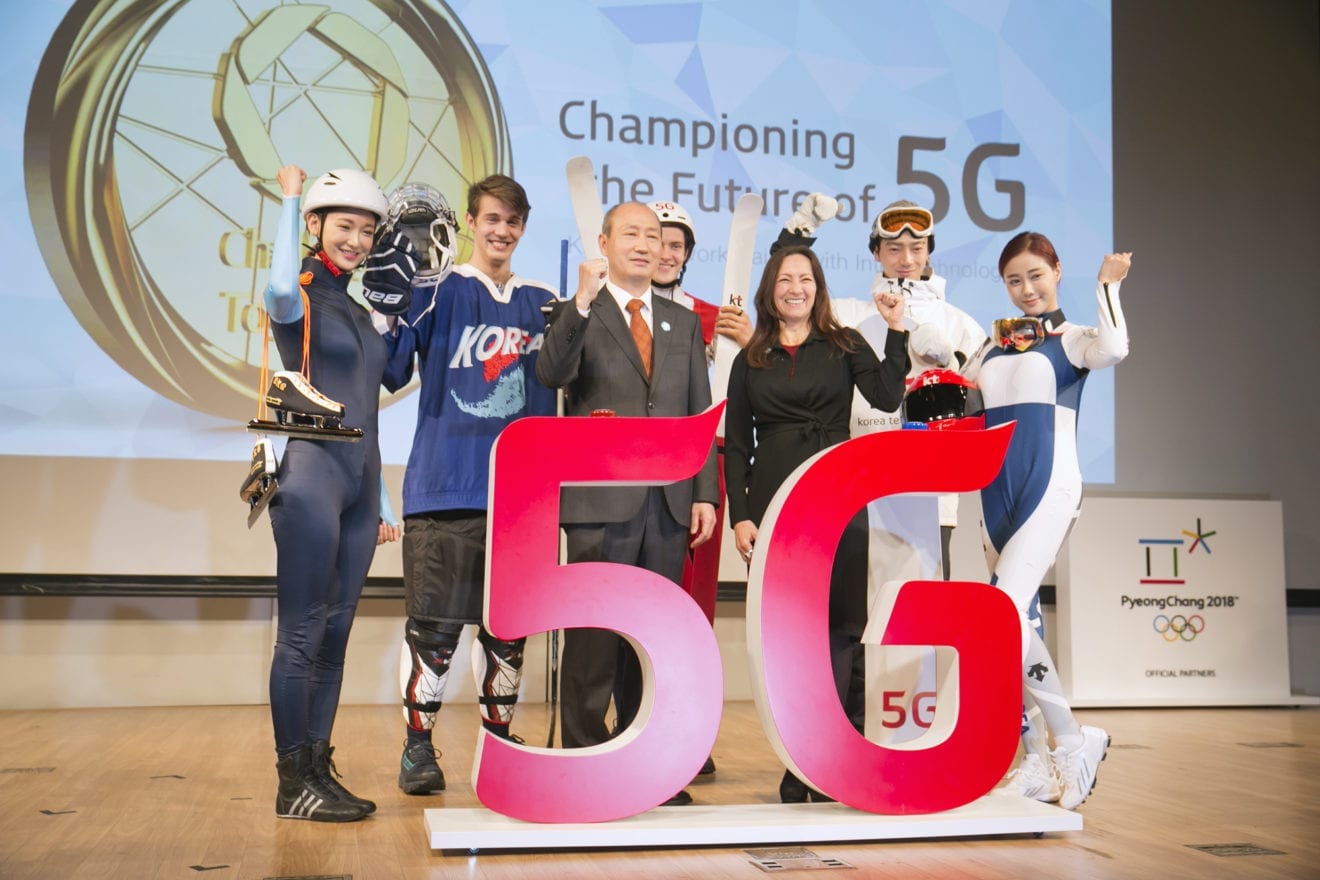
    5G will make its first appearance in the IoT market in late 2020 and struggle for years before it can become a mainstream technology, says a new report from Berg Insight.

    According to the IoT analyst firm, the first 5G cellular IoT modules will become available for developers this year.

    While this allows early adopters to create the first IoT devices based on the 5G standard, the report also states that it will take some times for 5G to become popular in the context of IoT.

    The technology will account for just 3% of the total installed base of cellular IoT devices by 2023, predicts Berg Insight.

    “5G still has some way to go before it can become a mainstream technology for cellular IoT”, said Tobias Ryberg, principal analyst and author of the report.

    Just like 4G when it was first introduced, the initial version of 5G is mostly about improving network performance and data capacity, he added.

    “This is only relevant for a smaller subset of high-bandwidth cellular IoT applications like connected cars, security cameras and industrial routers. The real commercial breakthrough will not happen until the massive machine type communication (mMTC) use case has been implemented in the standard,” explained Ryberg.

    The report also identifies homeland security as an area where 5G cellular IoT can have a major impact already in the early 2020s.

    “5G enables the deployment of high-density networks of AI-supported security cameras to monitor anything form security-classified facilities to national borders or entire cities”, said Ryberg.

    “How this technology is used and by whom is likely to become one of the most controversial issues in the next decade.”

    In a separate report, Berg Insight predicts the global number of cellular IoT subscribers will reach to 9 billion in 2023 from 1.2 billion in 2018, largely driven by the “momentum scale” of deployment in China.

  • Lyft is vastly improving rider safety with in-app emergency assistance

    Lyft is vastly improving rider safety with in-app emergency assistance

    Ridesharing apps like Uber and Lyft can be incredibly convenient in this day and age, but unfortunately, using these services is not always 100 percent safe, as proven by multiple reports of sexual abuse in the past few years committed by improperly vetted drivers and even the shocking recent murder of a college student who got into the wrong car.

    Fortunately, both Uber and Lyft are ramping up their efforts to improve rider safety and peace of mind, at least when they’re not busy making it easy for people to tell drivers to keep their mouth shut. Lyft’s latest “investment in safety” includes several new features and programs designed to educate all members of this ridesharing “community”, as well as prevent vehicle mix-ups, and most importantly, help users in danger get quick emergency assistance.

    The latter goal will be achieved (hopefully) with an in-app option providing direct 911 access without actually having to type the numbers or exit Lyft. This emergency assistance, or panic, button should have long been a thing for riders, rolling out to the drivers app first last year. Uber has had the safety-enhancing feature for about a year too, so Lyft is a little late to the party with today’s announcement of a public launch in the “coming weeks.”

    Meanwhile, license plate visibility has already been increased in the Lyft app for “many riders”, with availability set to expand in the “coming months” to ensure that gruesome recent incident that indirectly brought Uber loads of negative publicity will not repeat itself on the rival platform.

    Aside from paying more attention to the license plate of your Lyft, you should really provide additional information and context for your bad driver ratings. To make sure that will be the case going forward, the company is implementing mandatory secondary feedback. In other words, you will no longer be allowed to rate your ride under 4 stars without also leaving a comment explaining your grade.

    Lastly, Lyft is planning to make sexual harassment prevention education available to all users sometime “this year” with an aim of ensuring a “welcoming, inclusive, comfortable, and safe” environment for everyone. That’s certainly a noble goal… unlikely to be achieved anytime soon.

  • SES Networks to provide connectivity luxury cruise ships

    SES Networks to provide connectivity luxury cruise ships

    SES Networks has won a deal to provide high-speed satellite broadband services for a fleet of luxury cruise ships in the Asian market.

    The Luxembourg-based satellite operator has signed a contract to provide its Signature Cruise Solution to Dream Cruises, a subsidiary of Hong Kong’s Genting Cruise Lines.

    Dream Cruises will use the connectivity solution for its cruise ship fleet, consisting of the World Dream, Genting Dream and newly-launched Explorer Dream.

    The solution has already been implemented onboard World Dream and Explorer Dream, and will be introduced on Genting Dream in September.

    It uses SES Networks’ O3b constellation of medium earth orbit (MEO) satellites, with backup from its geostationary fleet for added network resilience, as well as a suite of managed services.

    “Today’s cruise passengers demand excellent connectivity even when they are traveling on the high seas,” Dream Cruises president Thatcher Brown said.

    “As part of our efforts to provide our guests with the best possible services and amenities on board our ships, we partnered with SES Networks because of their high-speed capability to deliver a terrestrial broadband-like internet experience in some of the most challenging of conditions.”

  • Japanese, Taiwanese cellcos suspend Huawei device sales

    Japanese, Taiwanese cellcos suspend Huawei device sales

    The first crop of Asian operators have responded to the US trade ban on Huawei and its implication for Huawei’s access to the Android OS by freezing sales of new Huawei devices.

    Japan’s KDDI and SoftBank have both revealed plans to postpone the planned launch of Huawei’s new range of smartphones, which had initially been scheduled to launch this month.

    Meanwhile NTT Docomo has announced it will stop taking orders for the new devices, but has not yet announced plans to suspend the scheduled launch of a new high-end Huawei handset.

    But Huawei has insisted it will continue offering services and support for its existing products in Japan without disruption despite the decision.

    Meanwhile, in Taiwan, Chunghwa Telecom and Taiwan Mobile have both revealed they plan to stop selling Huawei devices after their current stocks sell out. The operators no longer intend to launch the latest crop of Huawei devices.

    The US Commerce Department last week officially added Huawei to the list of companies covered by president Donald Trump’s executive order declaring a state of emergency. The presidential declaration gave the government powers to regulate commerce by prohibiting US companies from trading with foreign companies deemed to present a national security threat.

    This decision has prompted a number of key Huawei suppliers to announce they will stop trading with the vendor – including Google, which said it will comply with the order and cut off Huawei’s access to Android.

    The Commerce Department has subsequently issued a 90-day reprieve allowing companies to continue trading with Huawei, but only to provide products and services required to maintain existing solutions.

    But Huawei will still be prohibited from using all but the open source version of Android in new devices and risks losing access to Google’s suite of services for even its existing devices after the 90-day window.

    Huawei has contingency plans in place such as its own operating system, which it has been developing for some time and promises at least some compatibility with Android apps, as well as its own app store.

    The Chinese vendor has repeatedly denied any suggestion that the Chinese government could use its equipment to spy on foreign nationals.

  • BukaGlobal boosts its regional expansion Growth

    BukaGlobal boosts its regional expansion Growth

    Indonesian e-commerce platform BukaGlobal has launched in Singapore, Malaysia, Brunei, Hong Kong and Taiwan.

    Developed by Bukalapak, the platform will connect 4 million Indonesian sellers to the global market. At the moment, products sold on the site include health and beauty items, pantry lines and handicrafts from only qualified sellers in Jakarta and Tangerang. More sellers are set to join progressively.

    Customers in five countries can order products starting from 500gm with delivery time usually six to 11 days, depending on the destination.

    “We want to break down barriers that hinder young and small entrepreneurs from competing on a global playing field, primarily on access, infrastructure, and connectivity,” said Fajrin Rasyid, Bukalapak’s co-founder and president.

    “With BukaGlobal, Indonesian products are readily accessible by consumers anywhere in the world through a fast and reliable platform.”

    Fajrin said Bukalapak chose Singapore and the other four markets as there are many Indonesians there and the people in these countries understand Indonesian culture.

    The firm is working with Singapore startup Janio for end-to-end cross-border logistics.

  • Natura and Avon announce Major merger

    Natura and Avon announce Major merger

    Brazilian parent of Aesop and the Body Shop to take over 130-year-old Avon business.

    Cosmetics firm Natura is acquiring Avon Products in an all-share transaction, creating one of the world’s largest “pure-play” beauty groups.

    The combination of Natura and Avon will create as a multi-brand and multi-channel beauty group with direct connections to consumers on a daily basis. Going forward, the group will hold a strengthened hand in relationship selling through Avon’s and Natura’s more than 6.3 million consultants and representatives; a global footprint through 3200 stores, as well as an expanded digital presence across all companies.

    The combined group is expected to have annual gross revenues of more than US$10 billion, more than 40,000 associates, and a presence in 100 countries.

    “We have always looked at Avon with respect and admiration,” said Natura cofounder Luiz Seabra. “Natura was founded on its passion for beauty and relationships, and today’s transaction creates a major force in the direct-to-consumer space. Direct selling was a social network before the word even existed, and the arrival of technology and globalization only multiplied opportunities to connect with consumers in a meaningful way.

    “The peer-to-peer sales model is evolving towards social selling and the power of digital allows the group to go beyond providing products and advice, and advances women’s empowerment, through financial independence and enhanced self-esteem. We believe that business can be a force for good and together with Avon, we will amplify our pioneering efforts to bring social, environmental and economic value to an ever-expanding network,” said Seabra.

    Avon and Natura both reach customers through a force of independent, primarily female micro-entrepreneurs, who act as brand ambassadors and beauty advisors.

    Natura expects the combination to result in target synergies estimated at $150 million to $250 million annually, some of which will be reinvested to further enhance capabilities in digital and social selling, research and development and brand initiatives and to continue to grow the group’s geographic footprint.

    “Following the acquisitions of Aesop in 2013 and The Body Shop in 2017, Natura is taking another exciting, decisive step to build a global, multi-brand, multi-channel, purpose-driven group,” said Natura executive chairman Roberto Marques. “Together we will enhance our growing digital capabilities, our social network of consultants and representatives and leverage our global store footprint and distinctive brands, connecting, touching and influencing millions of consumers with different profiles daily, making our group unique and creating a formidable platform for growth.”

    “This combination is the start of an exciting new chapter in Avon’s 130-year history,” said Avon CEO Jan Zijderveld. “It stands as a testament to the progress of our efforts to ‘Open Up Avon’, and we believe it will allow us to significantly accelerate our strategy and further expand into the online channel. Over the past year, we have started a transformation to strengthen Avon’s competitiveness by renewing our focus on Her, simplifying our operations, and modernizing and digitizing our brand. Together with Natura, we will have broader access to innovation and a portfolio of products, stronger e-commerce, and digital platform, and improved data and tools for representatives to drive growth and enhance value for shareholders.”


  • DBS launches digital payments Singapore pre-schools

    DBS launches digital payments Singapore pre-schools

    Singapore bank DBS has developed a mobile payment platform that aims to allow parents in Singapore to purchase uniforms, pay for field trips and sign up for extra-curricular classes for their pre-school children.

    DBS has partnered EduTech company, LittleLives, to enhance the latter’s app-based pre-school management system with real-time payment features. The app is used by one in three pre-schools in Singapore to update parents on their child’s development.

    In Singapore, the early childhood education sector is still dependent on cash despite school fees being paid via GIRO or Child Development Accounts (CDA). For example, when paying for excursions, school uniforms or learning resources, parents often make payments using cash or checks and the school then makes arrangements to pay third-party vendors.

    With payment functions built into the LittleLives app, pre-school operators can save up to 40 manhours per month on administrative tasks such as payments reconciliation, allowing them more time to engage with parents and their children. This addresses a recent DBS survey that revealed that one in four SMEs are looking to develop their digital business capabilities to improve productivity.

    The LittleLives app is used by over 750 pre-schools in Singapore. The app can now enable pre-schools to generate invoices and parents to make payments through PayNow and DBS PayLah. Receipts will be generated automatically after payments are made. With access to real-time payment reports such as daily settlement and auto-reconciliation, pre-schools can better manage their finances more accurately and securely.

    “Many young parents are time-strapped and juggling multiple responsibilities at work and at home. By enabling parents to conduct payments on the go, quickly and safely, they have more time to nurture and care for their children,” said Sun Ho (pictured, right), founder of LittleLives.

    “Partnering a powerhouse like DBS will help us create a super app that will transform how pre-schools are managed. LittleLives can then create an amazing childhood education experience for both children and parents,” she said.

    DBS and LittleLives have plans to roll out this payments gateway to other markets such as Brunei, Cambodia, China, Malaysia and Vietnam. This is made possible with DBS IDEAL RAPID, an API-enabled solution, that allows the bank and its partners to scale their services quickly and seamlessly.

  • Verizon Media unveils Hong Kong expansion plans

    Verizon Media unveils Hong Kong expansion plans

    Verizon Media has announced an aggressive expansion program for Hong Kong for the next 180 days and the year ahead, including the expansion of its Yahoo Studio in the market.

    The studio will be equipped with audio-visual production equipment for creating HD videos with virtual settings and advanced motion capture capabilities to deliver broadcaster grade production.

    The studio produces Yahoo TV live programs including celebrity talk shows and Engadget Updates.

    “The new studio can unleash video creativity, enabling us to produce more live programs, HD videos with 3D virtual settings, and e-commerce shows,” said Lorraine Cheung, head of audience at Verizon Media. Live programs include finance, tech, lifestyle, and entertainment programs.

    Cheung said the company will unveil its first virtual character this July. The virtual character will not only be a Yahoo KOL but also a co-host of Yahoo’s homegrown TV programs. “The character aims to enhance overall user experience via more fun interaction, turning media into a two-way conversation.”

    In addition, Verizon Media is bringing its new Yahoo Rewards membership program to Hong Kong. The program will allow users to earn points with their daily online engagement such as polling, following groups, e-shopping, and content consumption on Yahoo App.

    The company plans to roll out a Good Deeds Good Life campaign to the app, which will allow users to earn points by engaging in social causes that benefit the community.

    Verizon Media recently unveiled a first-of-its-kind virtual reality advertising offering for demand-side platform users, which aims to help advertisers seamlessly extend existing display and video assets into VR environments.

    “We see huge potential in AR and VR technology on improving engagement of ad and branded content. Our focus is to introduce the technology and facilitate the market adoption.” Verizon Media Hong Kong senior director for APAC ad creative technology Roger Li said.

    Verizon Media, a division of Verizon, was renamed from Oath in 2019. “The purpose of Verizon Media is to transform how people stay informed and entertained, communicate, and transact,” said Rico Chan, managing director of Verizon Media Hong Kong, Japan and INSEA. “The company’s priorities include growing our member-centric ecosystem, building brands B2B customers love and trust, as well as videofy our brands and platforms.”

  • U Mobile contracts Nokia for Single RAN deployment

    U Mobile contracts Nokia for Single RAN deployment

    Malaysia’s U Mobile has contracted Nokia to help the operator expand the delivery of mobile data services across the nation.

    Under the three year agreement, U Mobile will deploy a Nokia Single RAN network at greenfield locations across Malaysia, as well as microwave and IP-based mobile transport technologies.

    The deployment will enable U Mobile to end its reliance on RAN sharing agreements by extending its own footprint across Malaysia.

    Both companies also plan to collaborate on a live 5G network trial later this year aimed at demonstrating enhanced mobile broadband capabilities, as well as 5G use cases such as VR streaming and e-sports.

    “U Mobile has been aggressively expanding our network across Malaysia in our drive to bring our customers a superior experience. We are delighted to be able to leverage on Nokia’s expertise in our network expansion journey,” U Mobile CTO Woon Ooi Yuen said.

    “We are of course also looking forward to working with Nokia as part of our Road To 5G Strategy. We have in our plan to conduct several 5G live trials with Nokia later this year for various use cases. Currently, we already have in place Nokia’s AirScale base stations which are 5G-ready and hence, ready for trials.”

  • Spar International to expand into China

    Spar International to expand into China

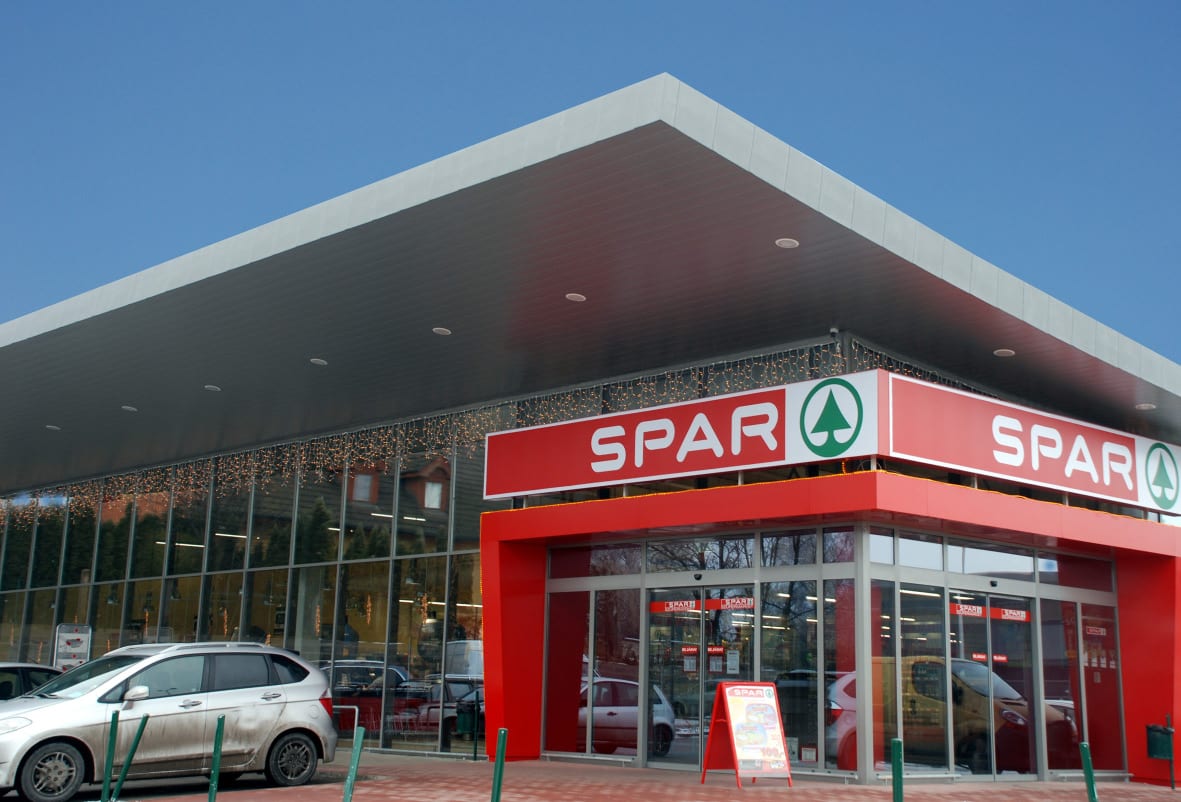
    Grocery retail franchise Spar International will open more than 150,000sqm of retail sales space in China this year.

    The firm’s store-development plans include compact hypermarkets and a “new generation” of supermarkets in Northern and Southern China.

    Spar International, which operates more than 13,000 stores in 48 countries worldwide, is coming off a strong financial year with global sales of €35.8 billion (US$40 billion). The group launched 335 new locations last year, and entered four new countries.

    “Our strong network of Spar partners and supply chains across four continents gives the brand a competitive advantage in an increasingly global marketplace,” said Spar CEO Tobias Wasmuht, “while our multi-format strategy allows us to respond to changing customer needs.

    “Our continuous compound annual growth of 5.2 per cent over the last three years creates a strong platform to build from for the future and indicates that our ‘Better Together’ strategy, launched in 2016, continues to deliver for the organisation, our partners and our customers.”

    The Spar brand is present in seven Asia Pacific territories, with €1.96 billion ($2.2 billion) in sales achieved from 573 stores last year. Spar China’s footprint accounted for 830,043sqm and sales of €1.5 billion ($1.67 billion) during the financial year, with particularly strong growth in the Shandong and Guangdong provinces. The firm’s Thailand operations expanded to 45 stores and recorded a sales growth of 96.2 per cent.

  • Android Q will support wide-color gamuts

    Android Q will support wide-color gamuts

    Google announced that Android will be gaining system-wide support for wide color gamut images starting with Android 10 Q. The next version of Android will allow you to capture, view, and easily share pictures with wide color gamuts. This will introduce more richness in terms of color reproduction compared to the standard sRGB color space.

    All things considered, Android’s adoption of wide color gamuts comes across as a rather logical move that reflects on the advancements we’ve witnessed in imaging technology, in terms of both camera and display improvements. As more and more devices these days come along with screens excellently-calibrated to the sRGB standard, but also support wider gamuts, supporting these more realistic color spaces right off the bat in stock Android signals an important milestone for Android as an operating system and its gradual shift towards quality-of-life enhancements.

    At Android, we have been working to make wide color photography happen end-to-end, e.g. more bits and bigger gamuts. This means, eventually users will be able to capture the richness of the scenes, share wide color pictures with friends and view wide color pictures on their phones.

    What color spaces are we talking about? Android Q will most certainly support Display P3 and Adobe RGB, with the door being left ajar for other wide-color gamuts as well.  Of course, developers will have to update their apps and make sure they support wide-color gamut content once Android Q launches this summer, and in order to ease up this change, the company has rounded up a few do’s and don’ts of adapting to wide color gamuts. Probably the most important requirement is that apps should never assume an sRGB color profile of any external image it gets and should check the ICC color profile embedded in the image file.

    Of course, not every app would end up adopting wide-color gamuts, and Google advises that developers at least be color-correct, meaning that they should take the necessary steps to decode wide-color images to sRGB.

    You can test if your device is Display P3 compatible by opening out this image – if you see a faint Android logo, your display supports the Display P3 color space; otherwise, if you see a solid red square, then either your device or your browser is not compatible. Some devices that should display the image correctly are Apple’s latest iPhones, which will do that straight in the browser, while others like Samsung’s Galaxy S10 series will only do that if you download the image and view it in the stock gallery. You can also check out this website for more comparison images.