Tag: asia

  • Google faces a huge fine for violating privacy rules

    Google faces a huge fine for violating privacy rules

    Last year, the European Union adopted the General Data Protection Regulation (GDPR) designed to boost privacy rights in the union. Under this regulation, companies in the EU cannot use a consumer’s personal data without informed, explicit consent. A company found to have violated the GDPR can be socked with a fine as large as 4% of the company’s prior year global revenue.

    With Google’s European headquarters based in Ireland, the company is now being investigated for GDPR violations by the Irish Data Protection Commissioner (DPC). The genesis of the complaint is interesting. The developers of an app called Brave Browser were among those claiming that Google is not playing by GDPR rules when it collects personal data for advertisers. When someone using the Browser visits a website, the app’s developers state that personal information belonging to the user is sent out to hundreds of companies without the user’s knowledge. These companies use this data in order to place bids to place targeted ads.

    “We will engage fully with the DPC’s investigation and welcome the opportunity for further clarification of Europe’s data protection rules for real-time bidding. Authorized buyers using our systems are subject to stringent policies and standards.”-Google

    If Google is found to have violated the GDPR, it could be fined as much as $5.52 billion based on the company’s 2018 global revenue of $138 billion. And Google is not the only tech firm under investigation by the DPC. As it turns out, Ireland is where many tech giants hang their hats in Europe and 17 tech firms are under investigation there for possible GDPR violations. Among them are Apple, Twitter, LinkedIn, Facebook and some of its units including WhatsApp.

  • WhatsAp will start having ads starting next year

    WhatsAp will start having ads starting next year

    Facebook is a for-profit organization and some form of ads inside WhatsApp has been inevitable since the day it bought the messaging platform. Now, after previously confirming plans for monetization, the social media giant has announced that WhatsApp ads will begin rolling out in 2020.

    Corroborating previous information, it was confirmed during the annual Facebook Marketing Summit that the first ads will be implemented into the Instagram Stories-like Status feature. Like regular posts, the ads will occupy the entire screen, but rather than displaying the contact’s name WhatsApp will showcase the name of the company. Also, a swipe uplink will be included.

    It’s unclear at this point if Facebook has any further plans for advertisements within WhatsApp, but eventually, the company could introduce smaller alternatives that display between chats on the conversations list.

    In order to boost the usefulness of WhatsApp Business, it was also announced that new ads which link directly to these accounts will soon be making their way over to both Facebook and Instagram. While on this topic, it’s also worth pointing out that WhatsApp Business users will soon be able to benefit from “richer message formats” which involve pairing images or PDF files with a short piece of text. Eventually, when messaging about products, users will also be able to view the product within WhatsApp and then access the entire catalog.

  • Hyundai Kona Electric India Launch Details Out

    Hyundai Kona Electric India Launch Details Out

    After bringing in its contender for the subcompact SUV segment – the Venue, Hyundai India is all set to bring in another SUV into the country and this time around it will a product that will launch the company’s electric product offensive. Yes, the Kona Electric all set to be launched in India on July 9, 2019 and the Korean carmaker will have its widest SUV product line-up in India with the addition of two new models this year. Hyundai’s SUV line-up in India will include Venue, Creta, Kona ev, and the Tucson which is scheduled to get a facelift in the second half of this year. Hyundai has already confirmed that it will be manufacturing its upcoming Kona electric locally in India at its Chennai plant. The latest development is the upshot of the company’s plans to invest in India a part of which will go towards the development of an assembly line for the Kona Electric.

    The main purpose of producing the Kona Electric locally is to keep the pricing aggressive in a bid to make it a viable offering for the prospective customers. Hyundai had earlier shared that it wants to keep the Kona comparatively affordable for car buyers. Hyundai will channel the rest of the investment in the manufacturing of other car models and development of new technologies and machinery. Moreover, the investment will add 1500 more jobs in India.

    The Hyundai Kona electric can go up to 350 km on a single charge which takes about 30 minutes through fast charging. Globally, the Kona Electric is offered in two iterations- one which is equipped with a 100 kW motor and the other with a 150 kW motor. While the former motor produces 134 bhp, the latter churns out 201 bhp. Both the motors are mated to electronic transmission. Moreover, it is equipped with upmarket features like an 8.0-inch infotainment system which supports smartphone connectivity, auto-headlamps rain sensing wipers and more.

  • After World Car Of The Year, Jaguar I-Pace Wins Powertrain Awards

    After World Car Of The Year, Jaguar I-Pace Wins Powertrain Awards

    Jaguar has been riding a wave of success at car award shows all across the globe with its all-electric offering the I-Pace. It was the only car that won three categories at the World Car Awards 2019 and now has won three more at The International Engine + Powertrain Of The Year Award. It has won the best electric powertrain, best new engine and the 345 bhp to 444 bhp category awards. A panel of 70 expert motoring journalists from 31 countries evaluated the powertrain on several parameters including performance, driveability, energy efficiency and refinement.

    Speaking about the achievement, Ian Hoban, Powertrain Director, Jaguar Land Rover, said, “We’ve used all the benefits of state-of-the-art battery and motor technology to create a world-class electric vehicle. As well as zero emissions, the all-electric powertrain delivers an ideal balance of performance, refinement, and range, together with outstanding responsiveness, agility and day-to-day usability. I-PACE is a true driver’s car and above all a true Jaguar. We set out to make the world’s best all-electric performance SUV: these awards reflect that, and are fitting recognition for what the engineering team has achieved.”

    The Jaguar I-Pace is powered by a 90 kWh lithium-ion battery that delivers a range of 470 km (WLTP) and can charge from 0-80 percent in 40 minutes using a 100 kW DC charger. It is driven by two electric motors mounted on each axle which puts out 394 bhp and 696 Nm of peak torque. The motors are compact and light and along with the transmission weigh just 78 kg. This favors the I-Pace lightweight which in-turn helps it to clock triple digit speeds in just 4.5 seconds.

    It has won 66 global awards since it was revealed little more than a year ago, including the 2019 World Car of the Year, World Car Design of the Year, World Green Car, European Car of the Year, and German, Norwegian and UK Car of the Year.

  • Prosecutors Fine Bosch 90 Million Euros For Illicit Emissions Software

    Prosecutors Fine Bosch 90 Million Euros For Illicit Emissions Software

    Automotive supplier Bosch has agreed to pay a 90 million euros ($100.21 million) fine for lapses in supervisory duties which enabled carmakers to engage in emissions cheating, German prosecutors in the city of Stuttgart said on Friday.

    Privately-held Bosch, the world’s biggest automotive supplier, delivered around 17 million technical devices equipped with engine management software, including tools that allowed carmakers to manipulate emissions tests, prosecutors said in a statement.

    Bosch has accepted the fine and will not appeal the decision, they added.

    Volkswagen used the software provided by Bosch to help the carmaker mask illegal pollution in diesel-engined vehicles.

    Volkswagen has borne the brunt of penalties and fines for emissions cheating since carmakers, rather than suppliers are responsible for certifying that cars meet clean air rules

  • Renault Clio Based On The CMF-B Platform Bags Five-Star Ratings In Euro NCAP

    Renault Clio Based On The CMF-B Platform Bags Five-Star Ratings In Euro NCAP

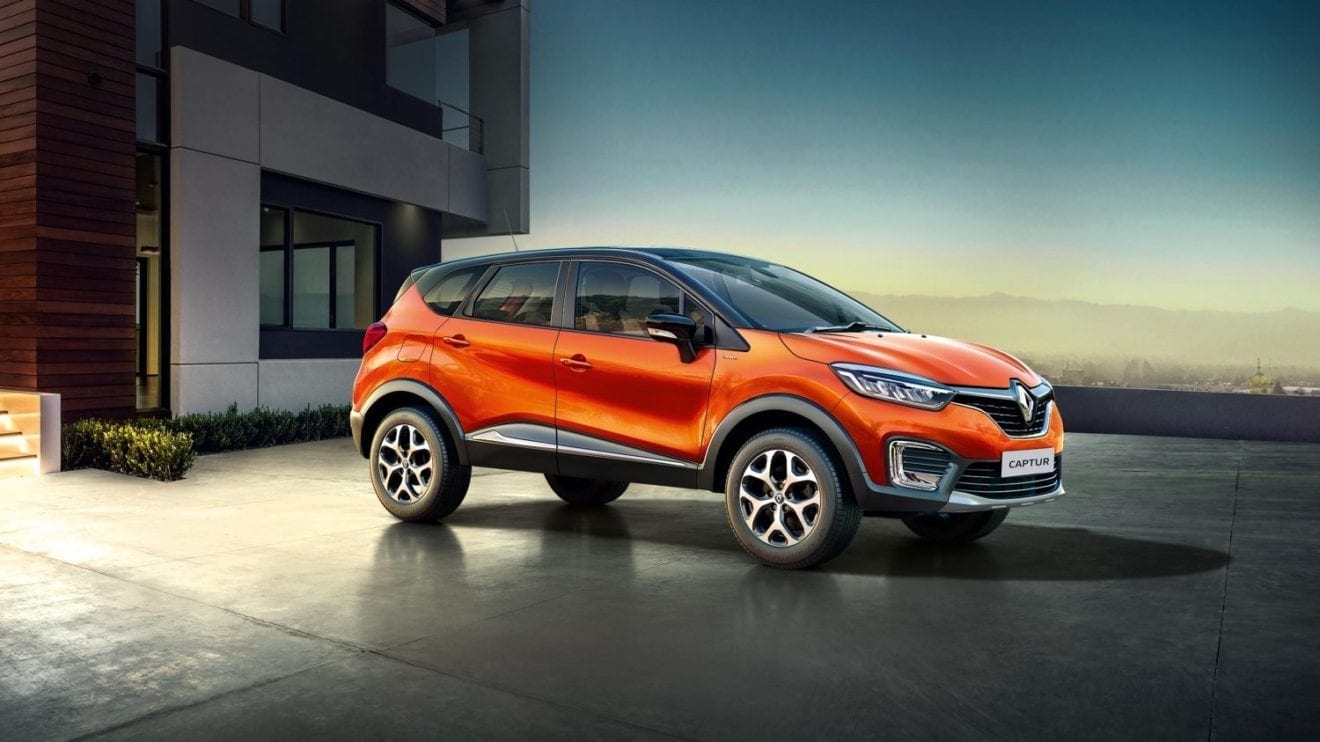
    The all-new Renault Clio which is spawned by the CMF-B platform has bagged five-star ratings in the global NCAP crash test and this news stands even more crucial for the India market given the onset of the Bharat New Vehicle Safety Assessment Program  (BNVSAP) which is set to roll out next year. The CMF-B platform is an advanced and elongated version of the CMF-A platform which spawns the Renault Kwid and Datsun Go range. The CMF-B platform has been developed in alliance with Mitsubishi to underpin a slew of compact and mid-size models from both the carmakers globally.

    We know that Renault and Nissan are also in an agreement and share a range of cross badged models in India. The MO platform underpins all the compact models of both carmakers like the Duster, Terrano, Captur and Kicks among others. The platform was developed by Renault and both carmakers have been using it for long. The CMF-B platform is more rigid and lighter and can spawn next-generation models of these models other models like the next-gen Nissan Sunny which will help the brands to comply with the upcoming crash test and fuel efficiency norms. Renault is also gearing up to launch the seven-seater version based of the Kwid which has been developed on an advanced version of the CMF-A platform and is expected to meet the safety standards.

    Moreover, the CMF-B platform is also a silver lining for the India business of both carmakers. It may help them fill white spaces and introduce the next-generation of some previous models which were discontinued, like the Renault Scala. Uncertainty also hovers over the Renault Kwid which future depends on it clearing the crash test norms. The company can also use the learning to develop a high-tensile CMF-A platform which can underpin the next-generation Kwid or it can be entirely shifted to the CMF-B platform which is scalable and can be moderated for the model. However, the Kwid will likely witness a price hike in any of the cases.

  • First Burger & Lobster Store to open in Singapore

    First Burger & Lobster Store to open in Singapore

    Burger & Lobster Singapore will open its first outlet, at Jewel Changi tomorrow.

    The 81-seat Jewel Changi store is the 16th Burger & Lobster’s outlet internationally. Others are in locations including New York, Bangkok, Dubai, Genting Highlands in Malaysia, London and Kuwait City.

    “Singapore is an extremely important market as we see Singaporeans in our outlets particularly in London, Bangkok and Malaysia,” said Riccardo LaMonica, Burger &Lobster’s regional head of operations.

    “There is no immediate plan for another Burger & Lobster Singapore outlet,” he said. “We will have to see how people respond.”

    The new eatery’s menu offers Original Lobster with live lobsters from Nova Scotia, Canada, and Original Roll with tender lobster meat rolls.

    There will be a Singapore twist – items available exclusively at Jewel Changi – such as the Sambal Glazed Lobster, and Chocolate Jewels, a dessert of dark chocolate spheres topped with housemade caramel sauce.

    A bar operates from 9am until midnight daily, offering a selection of cocktails, beer and wine.

  • Showpo loses Important Mangement Executive

    Showpo loses Important Mangement Executive

    Jane Lu’s right-hand woman, Alex Durkin, is leaving Showpo after seven years to start her own business.

    One of the first outsides hires to join Showpo in 2012, Durkin saw the retailer evolve from a physical store selling party outfits under the name Show Pony, to an online-only fashion brand with a team of more than 150 people and annual sales approaching $100 million.

    During her tenure, Durkin helped manage three major website rebuilds, introduced a new warehouse management operations system, oversaw a complete rebrand of the business and was eventually named general manager of the fast-growing company.

    But now she is looking to pursue a venture of her own.

    “I’ve always had an entrepreneurial spirit and I am currently in the process of working through different business models for my next venture which will not necessarily be in fashion, or a physical product for that matter – so watch this space,” Durkin said.

    Durkin has been preparing to depart Showpo for the past year to ensure she leaves the business in as strong a position as possible. She discussed her plans with Lu along the way.

    “It’s been a busy year aligning strategy and ensuring that the key people were in place,” she said.

    Showpo will not immediately replace Durkin, who plans to leave next month, though Lu said she is currently working through some options.

    “They’re big shoes to fill,” Lu said.

    “She has not only helped grow the team and the business, but she has also been an incredible mentor and friend that has helped me develop personally and professionally as well.”

    Lu credited Durkin with putting the systems and processes in place that have enabled Showpo to grow to the size it is today, while Durkin said she has learned many valuable lessons from Lu’s leadership.

    “One of the biggest lessons I’ve learned through the business is a success is all about people. Getting the right people, doing the right things at the right time,” she said.

    Durkin and Lu announced the change on Thursday in posts on the company’s blog.

  • Vans and China drive strong Profit

    Vans and China drive strong Profit

    Outdoor apparel giant VF Corporation says sales from continuing operations surged 12 percent last financial year, to US$13.8 billion.

    Vans proved a standout brand for the group, with sales rising 24 percent on a constant-currency basis, while geographically, China proved a powerhouse, sales there up 22 percent.

    The North Face brand achieved a 9 percent increase in sales year on year.

    “Fiscal 2019 marked one of the most significant periods of transformation in VF’s 120-year history, highlighted by our announcement to spin off our jeans business as an independent, publicly traded company,” said Steve Rendle, chairman, president and CEO. “Despite the tremendous workload, we remained sharply focused and delivered another year of strong financial results and top quartile returns to our shareholders.”

    Rendle said the company’s portfolio is well positioned heading into the 2020 financial year, with growth and momentum strong, fuelled by investments made in support of the company’s long-term strategy.

    “The bold decisions we continue to make to evolve our company underpins the transformational journey we’re on to deliver on our commitment to be a purpose-led, performance-driven and value-creating enterprise capable of delivering sustainable long-term shareholder value,” he said.

    The company projects full 2020 fiscal-year revenue to be between $11.7 billion and $11.8 billion, reflecting growth of approximately 5 per cent to 6 per cent compared to historical results excluding Kontoor Brands, or about 7 per cent to 8 per cent on a constant dollar basis, excluding the impact of acquisitions net of divestments.

  • Incheon Airport duty-free tenders to be Launched soon

    Incheon Airport duty-free tenders to be Launched soon

    Incheon Airport duty-free tenders will be released in the fourth quarter of this year.

    The airport, thought to be the world’s most lucrative for retail, has committed to a fair-tender process for both international and local retailers seeking spots in its Terminal 1 building. Almost all Terminal 1 duty-free concessions are scheduled to expire in August next year.

    The 12 duty-free concessions at the terminal are now run by seven Korean firms, including general duty-free retailers Lotte, The Shilla, and Shinsegae, although the airport’s management is encouraging foreign participation in the upcoming tender.

    “The door is always open,” said Incheon Airport’s director of concessions planning Dong-ik Shin. “There is no discrimination against any foreign duty-free operators. Our bidding process is very fair and transparent; the whole bidding process is done in public.”

    Incheon Airport is offering a new arrangement for the duty-free concessions that doubles the previous contract length to ten years and adopts a concession fee based on passenger growth rather than the current minimum annual guarantee model (MAG).

    According to Shin, the new 10-year contract makes it “a very significant and nice opportunity” considering the lucrative sales revenues available at IIA.

  • Global food e-commerce sales forecasted to Triple

    Global food e-commerce sales forecasted to Triple

    A new report has forecasted global food e-commerce sales to nearly triple through 2023, rising to US$321 billion and accounting for nearly 5 percent of total e-commerce revenues.

    The Global Food E-Commerce report, released by market research firm Packaged Facts, projects the Asia Pacific region will account for the majority of absolute growth, primarily due to the rapidly expanding Chinese market.

    China dominates regional e-grocery activity in part because of the country’s large urban population and rapidly expanding the middle class. In addition, much of China’s large population has access to high-tech devices and the ability to shop online, due to the country’s position at the forefront of technological development and electronics.

    Last year, more than 75 percent of global food e-commerce sales were concentrated in the top five markets: China, the US, Japan, the UK, and South Korea. In each of these countries, e-grocery spending is highest in large urban centers, where many retailers have focused their marketing efforts for home delivery or click-and-collect services.

    The report states that through 2023, demand growth in these countries will be driven by five key factors: increasing comfort among existing online shoppers in making routine grocery purchases online; growing use of subscriptions and memberships with online retailers; greater penetration of broadband internet in rural and remote areas; greater acceptance of (and investment in) home delivery, click-and-collect, and drive order fulfillment formats in an increasingly omnichannel retail environment; and improvements to data security that ease consumer fears about having their personal information stolen while shopping online.

  • Inclusive design could help retailers o make more Profits

    Inclusive design could help retailers o make more Profits

    Businesses could generate an extra $4 billion in revenue and reach more consumers if they built products and services with an inclusive design in mind.

    That is according to new research from Adobe, Microsoft, PwC and Australia’s Centre for Inclusive Design released this week in PwC’s report, The Benefit of Designing for Everyone.

    The report reveals that five million Australians are unable to access products and services because of poor design, and yet they possess over $40 billion in annual disposable income.

    This number includes people living with a disability and seniors, however, there are millions of Australians who are also vulnerable to exclusion due to location, gender, ethnicity or financial status.

    Within the retail products sector, up to 20 percent of Australians are unable to access and use goods appropriately, the PwC report states. Retailers could promote accessibility and improve the user experience for more consumers by using inclusive design.

    This means keeping in mind the needs of people who have disabilities when designing products. Last year, for instance, Coles introduced an autism spectrum-friendly low-sensory “Quiet Hour” experience in 173 of its stores.

    “The initiative has not only impacted shoppers with autism but also shoppers who want peace and quiet while they shop,” the report states.

    The benefit of inclusive design is that the products ultimately cater to a wide audience, not simply those with special needs. As the report noted, various retail products that were originally designed with edge users in mind are now used by a wide majority of consumers.

    “Electric toothbrushes were created for patients with limited motor skills but have also become popular with consumers who don’t have this issue,” PwC said.

    “Design that considers the full range of human diversity with respect to ability, language, culture, gender, age and other forms of human difference means more people are included,” said Dr Manisha Amin, CEO of the Centre for Inclusive Design.

    “We commissioned the research to identify and determine the necessary means by which Australia can act to reduce these gaps.”

  • The Reject Shop downgrades guidance

    The Reject Shop downgrades guidance

    The Reject Shop on Thursday announced that chief executive Ross Sudano will depart the business in the near term. The news came as the discount retailer downgraded its profit guidance for the year from $3.1 million in the black to a loss of between $1 million and $2 million.

    Sudano has led the business through a period of rapid change since he was appointed CEO in 2014.

    “After a period of consolidation of the significant growth undertaken by the company, the board, in conjunction with Ross, has determined that this is an appropriate juncture to seek a new chief executive to guide the company through the next phase of its growth and bring renewed energy and vigor to the role,” The Reject Shop chairman Bill Stevens said.

    “Notwithstanding the current challenges facing the business, we continue to have confidence in the company’s long-term prospects and the opportunities for a new CEO to deliver a refreshed product range that will appeal to a broader customer base.”

    In the short term, Sudano will be temporarily replaced by the general manager of the supply chain, strategy, and innovation Dani Aquilina, who will lead the company as acting chief executive.

    Aquilina has been with the business for 12 years and has overseen a number of key supply chain transformations, including optimizing its international network, and the construction of new distribution centers.

    In addition to Sudano’s departure, The Reject Shop’s board has also appointed two new directors to its board.

    Zac Midalia will represent the company’s largest shareholder, Allensford Pty Ltd, which failed to acquire the struggling discount chain but gained an 18.99 percent voting power as a result of its takeover attempt, while Steven Fisher will act as an independent board member.

    Both will join the board on June 14, which will see a significant board renewal completed – with four out of six members having joined in the last nine months.

    The reduced guidance is a result of a difficult trading environment, the retailer said in a statement to the Australian Securities Exchange, in which low consumer confidence, flat wages, increases in the cost of living and a rapidly falling housing sector have driven sales well below expectations.

    As a result, comparable sales are down 2.7 percent – slightly above the year to date figure, which is down 2.9 percent.

    Gross margins in the second half are “well below expectations”, exacerbated by the competitive pricing pressure being placed on the business from both supermarket and department store rivals – forcing price roll-backs across a number of key lines as the business seeks to maintain its price gap in the market.

  • Countdown stores more accessible for New Zealanders

    Countdown stores more accessible for New Zealanders

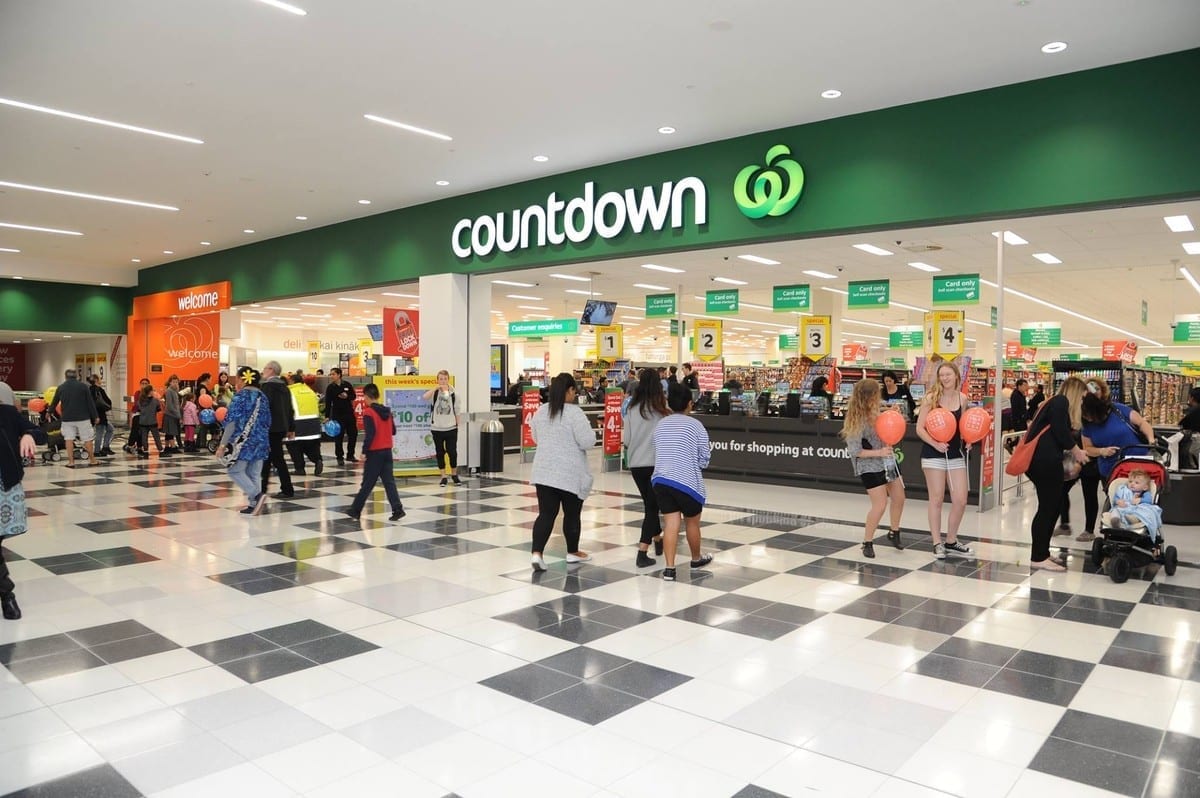
    Countdown is taking steps to make the supermarket chain more accessible to people with different needs, opening the doors to the country’s first accredited ‘Be. Accessible’ supermarket in Hawera, and testing a new car park monitoring app to ensure mobility car parks are kept free for the people who need them most.

    Reopening earlier this month after a significant refurbishment, Countdown’s Hawera store has a number of new features that make it more comfortable and accessible for people.

    They include a visual alarm system for emergencies, and an EVAC chair for wheelchairs at the emergency exit, contrasting colors for doors and reduced natural light in the entry area to avoid glare for visually impaired customers, wider aisles for wheelchairs, mobility scooters and prams and team areas that have been designed for people with a range of mobility needs, to name just a few.

    “Sometimes the smallest changes can make a huge difference, like light switches that aren’t too high to reach if you’re in a wheelchair or mobility scooter, or a fire alarm that flashes lights instead of just a siren so that hearing impaired customers know they need to exit,” Kiri Hannifin, Countdown’s general manager of corporate affairs, safety and sustainability, said in a statement at the time of the launch.

    “It’s really important to us that all New Zealanders feel welcome when they shop with us, and we’re proud to have worked alongside Be. Accessible to help guide us to make our Hawera store more user-friendly. We’ll now be taking these learnings to our future store designs.”

    Countdown is also planning to offer Quiet Hours in its Hawera store future, which will support a low-sensory shopping experience, beneficial to people with Autism in particular.

    The supermarket chain this month has also started trialing a new app at its Dunedin stores, which enables users to upload photos of cars parked in mobility car parks that don’t display a valid permit.

    The Access Aware app, from CCS Disability Action, alerts the relevant store team, which enables them to relay a message over the store’s PA to ask the car owner to move their vehicle to another spot.

    “Having mobility car parks as close to our store entrance as possible is incredibly important for any of our customers with mobility needs,” Hannifin said.

    “While the vast majority of New Zealanders are respectful of ensuring mobility parks are available for customers with the right permits, introducing the Access Aware app is an opportunity to reiterate that these car parks are there for a purpose, to help someone get in and out of our stores more easily,” says Kiri Hannifin.

    Countdown is trialing the app for three months in its four Dunedin stores – Dunedin Central, Dunedin South, Mailer Street and Andersons Bay – and will look at the customer and team feedback, as well as the number of reports,  received before it considers rolling out the technology across other stores.

    Countdown is also making its mobility car parks across the country wider, and revamping them with new blue, non-slip paint to make it easier for the customers who need them to use them.

    “Together with improving signage and road markings for mobility car parks across our network, we want to make it clear for any customer with mobility needs that these car parks are here for you,” Hannifin said.

  • Richemont watch Sales Drops

    Richemont watch Sales Drops

    Richemont has brushed aside the gloom and doom of the global watch market, reporting sales of its watches and jewelry grew by 10 percent in the year to March.

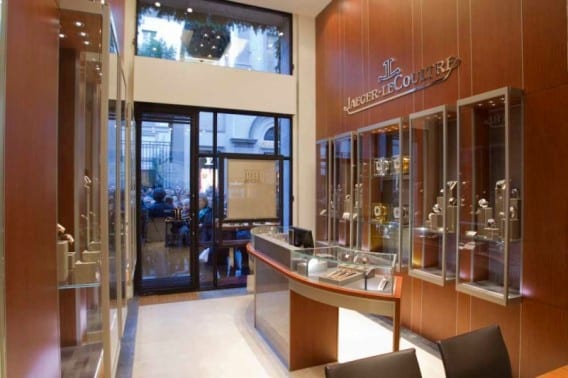
    While figures for Swiss watch exports show sluggish sales to Hong Kong and the US this year, Richemont’s brands, which include Baume & Mercier, IWC Schaffhausen, Jaeger-LeCoultre, and Officine Panerai, seem to have some degree of collective immunity.

    The company says jewelry and watch sales did very well in both the US and Asian markets.

    Richemont has reported net more than doubled to €2.79 billion euros (US$3.12 billion) for the full year, largely driven by a one-off gain of €1.38 billion euros relating to its acquisition of Yoox Net-A-Porter Group (YNAP).

    Sales reached €13.99 billion, 27 percent up on last year when including the recently acquired online businesses YNAP and Watchfinder, and up 8 per cent with those companies excluded.

    By brand, the growth was led by jewelry brands Cartier and Van Cleef & Arpels, with IWC and Jaeger LeCoultre, also posting higher growth.