Tag: asia

  • Pandora switches to 100 per cent recycled gold and silver

    Pandora switches to 100 per cent recycled gold and silver

    Pandora has shifted to using recycled silver and gold for all of its jewelry, a move it said will avoid significant greenhouse gas emissions.

    The new strategy aims to reduce 58,000 tons of carbon dioxide every year. According to the company, the carbon footprint of recycled silver is one-third compared to mined silver, while recycling gold emits less than 1 per cent of the carbon emissions from mining new gold.

    The target was previously set for 2025, but has been achieved early thanks to the strong commitment from the firm’s suppliers.

    Suppliers have had to switch their operations to only source materials that are certified recycled according to the Responsible Jewelry Council Chain of Custody.

    Pandora currently produces its jewelry with 97 per cent recycled silver and gold and is expected to increase to 100 per cent from this year’s second half.

    “Precious metals can be recycled forever without any loss of quality. Silver originally mined centuries ago is just as good as new, and improved recycling can significantly reduce the climate footprint of the jewelry industry,” said CEO Alexander Lacik.

    The Copenhagen-based company sells its products in more than 100 countries through more than 6500 points of sale, including some 2500 concept stores.

  • Huawei to take on iPhone 16 line in China with the Mate 70 series this coming September

    Huawei to take on iPhone 16 line in China with the Mate 70 series this coming September

    Huawei shocked everyone last August when it announced the Mate 60 series, powered by the first 5G Kirin chipset in over three years. The component was produced by China’s largest foundry, SMIC, using its dated 7nm process node. Chinese consumers took the announcement as a sign that somehow Huawei and SMIC were able to defeat the sanctions placed on Huawei by the U.S. and this nationalism helped Huawei sell 30 million units of the series.

    The Mate 70 series will be released next September, timed to go up head-to-head with the iPhone 16 line, at least in China. Back in October, the iPhone 15 Pro Max was the best-selling smartphone in China with a 5% share of the market compared with the 4% share earned by the Mate 60 Pro and the iPhone 15 Pro. For the entire fourth quarter of 2023, Apple owned a leading 20.2% of the Chinese smartphone market while Huawei was third at 15.2% following a 71.1% year-over-year hike thanks to the Mate 60 series.

    For the whole year, Apple led with 17.3% of smartphone sales in the world’s top smartphone-buying country. Former Huawei sub-brand Honor was second with a 17.1% share. Huawei was not in the top five. Weibo blogger @SmartPikachu says that the Mate 70 line could be the most powerful handset series in the market later this year. That seems impossible unless Huawei is able to get access to cutting-edge application processors built using a 3nm process node. Currently, SMIC isn’t able to produce chips with a node under 7nm.

    Lower process nodes mean smaller transistors, meaning more can fit inside a chip. The higher a chip’s transistor count, the more powerful and/or energy-efficient a chip is. We could see a new Kirin chip power the Mate 70 line, but with SMIC unable to buy an extreme ultraviolet lithography machine from ASML, breaking the 7nm barrier will be extremely difficult for SMIC and Huawei.

    The next flagship series due from Huawei is the photography-based P70 line. Huawei is also said to be working on the Pocket S2, the second-generation clamshell foldable from the company. As for the Mate 70, @SmartPikachu says that the Mate 70 could sport a quad-curved display. It could also debut 5.5G technology and include a 1-inch type camera sensor, and a display with thinner and more uniform bezels.

  • The iOS stopwatch gets Live Activities support in iOS 17.4

    The iOS stopwatch gets Live Activities support in iOS 17.4

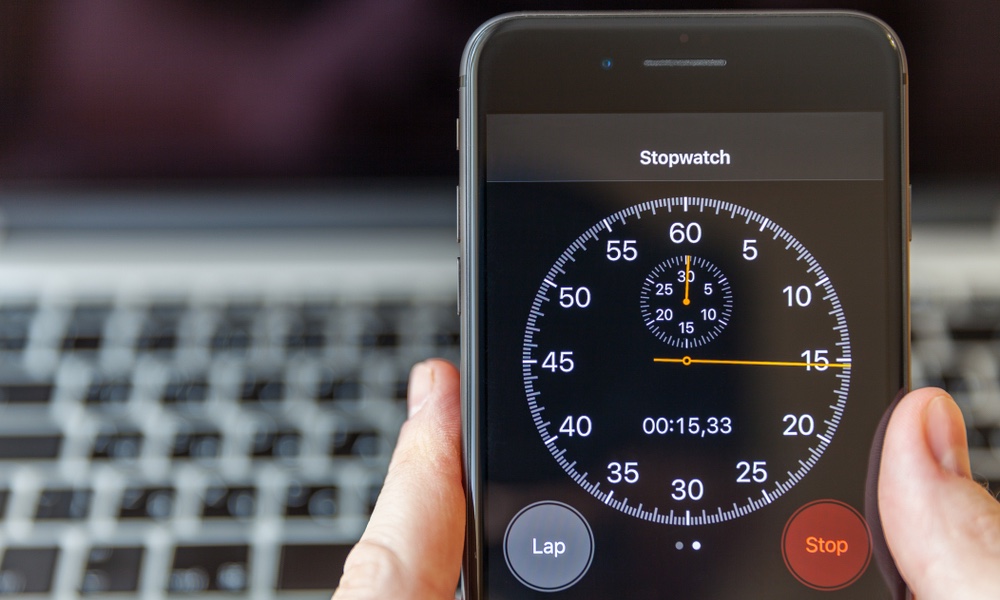
    The iOS 17.4 beta update that was recently released by Apple includes a new feature for the Clock app’s Stopwatch. Once iOS 17.4 is installed on your iPhone, (we expect the update to be released as soon as March 4th), you’ll be able to start the Stopwatch from the clock app and watch it count the seconds, minutes, and hours on the Dynamic Island and the Lock Screen.

    The Dynamic Island will display an up-to-the-second look at the Stopwatch and tapping on it will give the user an option to pause the timer, or start a new lap. The same controls are all available for the Stopwatch on the Lock Screen. After pausing the Stopwatch on the Dynamic Island, you can clear it by tapping on the “X” button. On the Lock Screen, you can clear the Stopwatch by pausing it and swiping it off the screen.

    While timers have worked with Live Activities since the feature was introduced with iOS 16, the Stopwatch could only be viewed in the Clock app. But with iOS 17.4, that is going to change. And with an active Stopwatch running on the iPhone showing up front and center, you will no longer forget that you have one running.

    Because iOS 17.4 will bring major changes to iOS, Safari, and the App Store in the EU thanks to the Digital Markets Act (DMA). The DMA mandates that Apple make these changes by March 8th which is why we expect the update to arrive on Monday, March 4th. As we noted the other day, iOS 17.4 will also add a switch to the Stolen Device Protection feature allowing users to have the feature work everywhere. Currently, users can arrange to have the feature work at unfamiliar locations or they can disable it.

    Stolen Device Protection requests that Face ID and Touch ID verify your identity to complete certain actions. More sensitive tasks, such as changing your iPhone passcode, changing your Apple ID password, resetting Face ID or Touch ID, and disabling the Find My app, require that an hour pass before the requested changes take place. And even then, after an hour, you must verify your identity via Face ID or Touch ID.

  • Beeper halts iMessage integration after reported user bans on Macs

    Beeper halts iMessage integration after reported user bans on Macs

    In its ongoing dispute with Apple for access to iMessages, Beeper, the universal messaging app, appears to have given up. In a recent announcement, the company revealed their decision to disable new iMessage connections on their main app, Beeper Cloud. This move effectively marks the complete shutdown of the service, at least for now.

    Following user reports, it came to light that Beeper users that were using the workaround method of the connecting the “Cloud” or “Mini” app to iMessage via their Mac computers, were somehow being banned from using iMessage altogether. Despite this only affecting a minority of Beeper users (about 30 out of 3,500), the bans were enough to spark worries about Apple’s aggressive approach when it comes to unauthorized third-party access to its messaging service.

    According to Beeper, the bans began shortly after the app pushed an update last month, which coincided with the company’s transition from relying on its own servers and instead having users seek authorization using their owned Macs. This worked for a little while, but apparently Apple eventually caught on and reportedly banned some of these connections.

    Beeper effectively reached out to Apple directly, but never received a response or any explanation for the bans. Nevertheless, after receiving media attention from The New York Times, Apple seemingly quickly resolved the issue and lifted the ban on affected users within a span of two days. This was documented in great detail on an X/Twitter post the company published.

    Apple claimed that the bans were due to “spam,” but Beeper and the affected users argue that they did not receive any warnings or notice any suspicious behavior. As a result, Beeper has decided to disable new iMessage connections on its platform completely. While the company does not completely rule out the possibility of reactivating iMessage accessibility through Beeper in the future, the current situation effectively puts an end to it.

    Beeper had previously announced its intentions to refocus its efforts into improving their desktop and mobile apps, as well as adding support for more messaging services down the line. Beeper’s desktop and mobile apps (except Beeper Mini) remain fully operational, offering a convenient solution for multiple messaging services, and currently supporting an impressive range of 14 different platforms. This is what Beeper will become from now on, a universal messaging app, without iMessage, of course.

  • Ukiyo Spirits unveils Tokyo Dry Gin

    Ukiyo Spirits unveils Tokyo Dry Gin

    Drinkslogy Kirker Greer subsidiary Ukiyo Spirits has launched a new small-batch classic dry gin that celebrates Japanese flavours and fragrances.

    The range includes three variants: Ukiyo Tokyo Dry Gin, Ukiyo Blossom Gin , and Ukiyo Yuzu (citrus dry gin). Ukiyo Tokyo Dry Gin will be offered to on- and off-trade merchants in Australia, the UK and the Netherlands beginning next month.

    According to the company, the products are traditionally distilled and made using high-quality Japanese ingredients. The components include indigenous rice farmed in the surrounding regions as well as five native Japanese botanicals: yuzu peel, mikan peel, sakura flower, sakura leaf, and sansho pepper.

    “These carefully chosen ingredients combine to express the diverse terroir and tastes of Japan – resulting in an elegant and delicately aromatic classic dry gin offering warm and well-balanced citrus and spice notes, and a smooth finish,” said Ali Pickering, chief marketing officer at DKG.

    “Tokyo Dry Gin is beautifully presented in Ukiyo’s iconic two–colour graduated bottle, a world-first design offering a stylish and uniquely Japanese aesthetic that reflects Ukiyo’s home by mirroring the mountains and oceans of Japan.”

    The range is aimed at city livers aged 25 to 50 who enjoy travelling and visiting high-end cocktail bars.

  • Ministry wants another electricity price hike

    Ministry wants another electricity price hike

    The Ministry of Industry and Trade has proposed a hike in electricity prices this year after pushing it up 7.5% last year to narrow down the loss of national utility Vietnam Electricity (EVN).

    The ministry eyes increasing prices in May this year to cover rising costs and help the state-owned EVN to pay for power generators. Vietnam allows an electricity price hike once every six months if production costs rise 3% or more. The last increase was in November last year, and before that, May.

    EVN recorded a combined loss of VND37 trillion ($1.5 billion) in 2022 and 2023. It also has VND14 trillion in debt incurred from previous years due to currency exchange rate changes.

    Last year, prices were raised 7.5% to VND2,092.78 per kilowatt-hour after years of staying flat.

    Analysts of Vietcobank Securities have recently anticipated an electricity price hike as the El Nino effect causes low water level at northern hydropower plants.

    Dinh Trong Thinh, an analyst from the Academy of Finance, said that raising prices was necessary to cover increasing costs but EVN needed to be transparent in its financial situation to avoid raising controversy among the public.

    Analyst Ngo Duc Lam, former head of the Energy Institution under the Ministry of Industry and Trade, said that Vietnam needed to be “very cautious” in raising electricity prices as it would push up the prices of transport and many essential goods.

    Phan The Cong, an analyst from Thuongmai University, said that two hikes last year have already had an impact on the economy and inflation, and therefore the timing of another hike needs to be considered carefully.

    Thinh added that in the long run electricity retail price needs to be regulated under market principles, which means it will rise when costs increase and fall when costs decrease. Changes in retail price therefore will become a normal part of people’s lives and will not have a major impact.

  • Pernod Ricard launches zero alcohol Beefeater 0.0%

    Pernod Ricard launches zero alcohol Beefeater 0.0%

    Liquor company Pernod Ricard has launched Beefeater 0.0% to join its zero alcohol portfolio.

    Beefeater 0.0% is produced by adding the essence of Beefeater London Dry Gin’s recipe to the base, keeping the latter’s taste – minus the alcohol.

    “Beefeater 0.0% is our very first zero alcohol expression, which captures the energy of our timeless London classic but without the alcohol,” said Murielle Dessenis, global VP for marketing gins at The Absolut Group, a company under Pernod Ricard.

    “We are proud to be bringing to the no-alcohol category an elevated option, removing the need for consumers to compromise or miss out on the occasion.”

    Pernod Ricard will initially launch Beefeater 0.0% in Spain, complementing Beefeater’s existing moderated drinking range.

    Last year, the company opened a production line in Thuir, France, for non-alcoholic drinks production, research and development, and innovation.

  • Apple announces big changes coming in March to iOS, Safari, and the App Store in the EU

    Apple announces big changes coming in March to iOS, Safari, and the App Store in the EU

    Apple is making big changes in the European Union, which will allow, among other things, iPhone users to sideload apps from third-party app stores. From the start, the late Steve Jobs intended to prevent iPhone users from sideloading apps on the iPhone for security reasons. Apps from third-party app stores are installed without Apple checking them out to see if they are security risks; apps downloaded from the App Store have been vetted for malware and other malicious behavior, although sometimes developers with evil intentions can get an app through.

    Developers will also be able to choose alternative payment platforms to handle in-app transactions in the EU across all of Apple’s operating systems including, including iOS, iPadOS, macOS, watchOS, and tvOS. The commission that Apple will take on in-app purchases that it processes through its own in-app payment platform, the so-called Apple Tax, will be reduced in the EU from the 15%-30% range seen in the rest of the world, to 10%-17%. Apple won’t see a dime from in-app transactions completed through alternative payment platforms.

    The 27 member countries of the EU benefit from the EU’s Digital Markets Act (DMA) which forces Apple to make these changes in this market. Another change being made by Apple will show users a new “choice screen” the first time they open Safari in iOS 17.4 or later. While EU iPhone users can already change their default browser away from Safari, the new “choice page” will bring to their attention that they can choose a default browser and include a list of third-party browsers to help them make that change immediately.

    Apple makes it clear that it doesn’t like being forced to put up the “choice screen” because it means “that EU users will be confronted with a list of default browsers before they have the opportunity to understand the options available to them. The screen also interrupts EU users’ experience the first time they open Safari intending to navigate to a webpage.”

    The company also said, “Inevitably, the new options for developers’ EU apps create new risks to Apple users and their devices. Apple can’t eliminate those risks, but within the DMA’s constraints, the company will take steps to reduce them. These safeguards will be in place when users download iOS 17.4 or later, beginning in March…” One of the changes Apple is making in the EU will bring additional malware protections that will prevent iOS apps from launching if they are discovered to contain malware after being installed on a user’s device.

    Changes are coming to iOS in the EU as well. EU iPhone users can choose a third-party contactless payment app to replace Apple Pay and select an alternative app marketplace as their default to replace the App Store.

    Apple Fellow Phil Schiller said, “The changes we’re announcing today comply with the Digital Markets Act’s requirements in the European Union, while helping to protect EU users from the unavoidable increased privacy and security threats this regulation brings. Our priority remains creating the best, most secure possible experience for our users in the EU and worldwide. Developers can now learn about the new tools and terms available for alternative app distribution and alternative payment processing, new capabilities for alternative browser engines and contactless payments, and more. Importantly, developers can choose to remain on the same business terms in place today if they prefer.”

    Apple says that all of these changes will take place in March with the release of iOS 17.4 in the region.

  • iOS 17.4 beta released with App sideloading and alternative browser engines in the EU

    iOS 17.4 beta released with App sideloading and alternative browser engines in the EU

    Apple has just released the iOS 17.4 beta developer beta 1. Following the wide public release of iOS 17.3 just a few days ago, the writing was on the wall for a new developer build. And it’s here for all those adventurous enough to test out a developer beta, which are these days free to test-drive.

    An earlier beta of iOS 17.3 served as a stark reminder that betas are nothing to scoff at and shouldn’t be used on daily drivers without an adequately recent backup. In particular, that ill-fated beta caused some iPhones with the Back Tap feature enabled to get stuck in a bootloop, which is never a good thing to experience.

    What’s major here, however, is Apple complying with the EU’s Digital Markets Act (DMA) and adopting tons of changes to Safari, the App Store, and iOS itself. The directive, which essentially allows iPhone users in the EU to benefit from sideloading apps from third-party app stores, enjoy non-WebKit-based browsers, and additional safeguards to tone down risks for users will arrive with the public release of iOS 17.4.

    Essentially, iOS 17.4 will allow users in the EU to:

    • sideload apps from third-party app stores (currently only developers can sideload apps)
    • use browsers based on another engine (all iOS browsers right now rely on Apple’s WebKit engine)
    • choose their default browsers the first time they launch Safari after iOS 17.4 (currently not available in the beta)

    Apple says that it has included more than 600 new APIs as well as expanded app analytics but doesn’t miss the opportunity to once again voice concerns about “new avenues for malware, fraud and scams, illicit and harmful content, and other privacy and security threats.” One way to combat this is a new safeguard protection dubbed Notarization for iOS apps, which aims to reduce risks by authorizing marketplace developers can peddle apps or take alternative payments.

    Still, the word “risk” appears some 22 times in the press release, revealing that Apple is adopting this EU-mandated change very casually.

    Some developer-intended new iOS features that will arrive with iOS 17.4 but aren’t necessarily part of the newest beta include:

    • New options for distributing iOS apps from alternative app marketplaces
    • New framework and APIs for creating alternative app marketplaces
    • New frameworks and APIs for alternative browser engines
    • Interoperability request form
    • Notarization for iOS apps
    • App installation sheets
    • Authorization for marketplace developers
    • Additional malware protections

    When sideloading, iOS users in the EU won’t be able to benefit from some of the regular perks. For example, purchases of app ouside of the App Store won’t be detailed in the latter and Apple won’t be able to issue a refund. Family Purchase Sharing and Ask to Buy also won’t be compatible with apps downloaded and/or purchased outside of the App Store.

    However, App Tracking Transparency will still work with apps coming from alternative stores, so users will be able to forbid apps from sharing tracking their data and sending it to the respective app developer.

    Apple says that all of these changes will come into effect in March, so we should most certainly expect iOS 17.4 to go out of beta and arrive as a public release to all iPhone users before March. Of course, non-EU iOS users needn’t worry as seemingly nothing will change for them. No sideloading and no alternative app stores and browser engines are to be expected in the US.

  • Nvidia chief visits China for first time in years

    Nvidia chief visits China for first time in years

    Jensen Huang, President and CEO of California-based artificial intelligence chip designer Nvidia, recently visited China for the first time in years, to attend the company’s new year party with local employees.

    Last week, Huang traveled to Beijing, Shanghai, and Shenzhen in Guangdong province in a low-key manner, according to a report by China Daily, which cited sources with knowledge of the matter.

    Social media videos captured Huang dressed in a traditional outfit, dancing at Nvidia’s new year party in Shanghai.

    Huang’s trip did not include meetings with government officials, as it was primarily focused on spending time with Nvidia’s employees in China, Yicai Global reported.

    Major Chinese cloud companies are favoring domestic chips, like those from Huawei, over Nvidia’s less advanced AI chips. This development is linked to U.S. restrictions on exporting Nvidia’s most advanced AI chips to China.

    In October, the U.S. revised export controls on advanced AI chips to China. As a result, Nvidia’s RTX 4090 chipset, a top-performing graphics card in the consumer market, is now banned from export to China.

    “Huang’s trip may have been in response to US government restrictions on Nvidia’s exports of chips to China. Nvidia may need to seek cooperation with local Chinese players to ensure that its products have access to the Chinese market,” Zhang Xiaorong, director of the Beijing-based Cutting-Edge Technology Research Institute said.

  • Pernod Ricard launches zero alcohol Beefeater 0.0%

    Pernod Ricard launches zero alcohol Beefeater 0.0%

    Liquor company Pernod Ricard has launched Beefeater 0.0% to join its zero alcohol portfolio.

    Beefeater 0.0% is produced by adding the essence of Beefeater London Dry Gin’s recipe to the base, keeping the latter’s taste – minus the alcohol.

    “Beefeater 0.0% is our very first zero alcohol expression, which captures the energy of our timeless London classic but without the alcohol,” said Murielle Dessenis, global VP for marketing gins at The Absolut Group, a company under Pernod Ricard.

    “We are proud to introduce an elevated option to the non-alcohol category, removing the need for consumers to compromise or miss out on the occasion.”

    Pernod Ricard will initially launch Beefeater 0.0% in Spain, complementing Beefeater’s existing moderated drinking range.

    Last year, the company opened a production line in Thuir, France, for the production of non-alcoholic drinks, research and development, and innovation.

  • Viber launches a unique Business Calls service

    Viber launches a unique Business Calls service

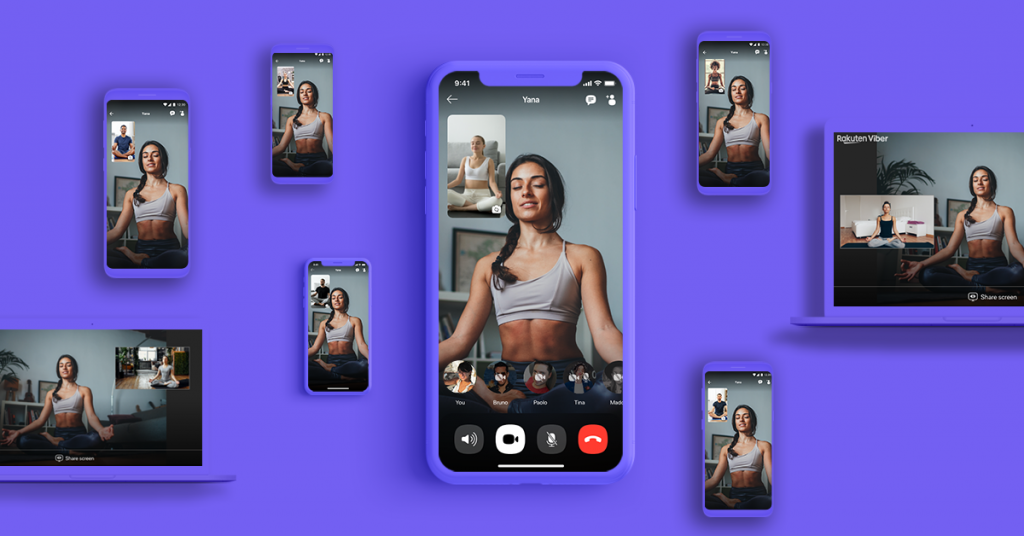
    Viber announced a unique service that allows users to make free international calls to landline numbers directly through its Business Calls app. The new tool makes it easier for Viber users to track their orders, get support in the retail and delivery sectors, or simply assist them with product inquiries.

    Specifically designed for businesses, the new service allows early adopters to create searchable business accounts with an embedded Viber Business Call button or add the tool to their existing accounts in the app.

    “Nine years ago, Rakuten Viber was the first messaging app to offer business messaging, revolutionizing how businesses communicate with their customers. Since then, we have developed a robust business messaging ecosystem and are now taking a significant step forward by introducing in-app Business Calls, a distinctive offering in the market,” says Cristina Constandache, Chief Revenue Officer at Rakuten Viber.

    Additionally, users can initiate a call directly from a chat with a business. At the same time, brands can include a Viber call link on their websites to make it easier for customers to get in touch with them.

    More importantly, all business calls will be free for customers, regardless of where they’re calling from. It’s also important to add that businesses can designate a specific number for Viber or continue using their regular call center number.

    According to Viber, the new Business Calls service is now available globally. If you’re a business, you’re advised to contact the Viber team to learn how to get started.

  • Fruit, vegetable exports rise by 89%

    Fruit, vegetable exports rise by 89%

    According to the Vietnam Fruit and Vegetable Association, fruit and vegetable exports have risen by 89.2% this year to US$459 million due to a surge in demand from China.

    China has imported large volumes of durian, bananas and dragon fruit.

    Cold snaps in many places in that country have limited domestic banana supply since the fruit turns black when the temperature drops.

    China harvested dragon fruit in abundance last year, but the season is over, and Vietnam is able to export the fruit from January to May.

    Chinese use dragon fruit as an item of worship during the Lunar New Year, and so demand for imports from Vietnamese has skyrocketed.

    During President Xi Jinping’s recent visit to Vietnam, the Chinese side said it would open its market to many Vietnamese agricultural products, including fresh coconuts, frozen fruit products, citrus fruits, avocados, custard apples, and water apples.

    The two sides also signed a protocol for watermelon export.

    In addition to China, the U.S., the EU and some Asian countries are also set to open their doors to more Vietnamese fruits.

    The U.S. and Australia plan to import passion fruit, Japan, South Korea, Australia, and India want to buy grapefruit with India also eyeing durian imports.

  • Gold prices gain

    Gold prices gain

    Saigon Jewelry Company gold bar price went up 0.26% to VND76.65 million ($3,113.95) per tael Wednesday morning.

    Gold ring price was stable at VND64.05 million per tael. A tael equals 37.5 grams or 1.2 ounces.

    Globally gold prices inched lower on Wednesday, as hawkish comments from Federal Reserve officials and strong U.S. data doused hopes for early interest rate cuts, while investors awaited a slew of economic reports this week for more clarity on rate trajectory.

    Spot gold fell 0.2% to $2,024.46 per ounce. U.S. gold futures were unchanged at $2,025.50.

    “Recent economic data out of the U.S. has called for some recalibration in dovish market rate expectations, with some pushback on the timeline for Fed rate cut weighing on gold’s appeal,” said IG market strategist Yeap Jun Rong.

  • AirAsia launches new route to Ahmedabad

    AirAsia launches new route to Ahmedabad

    AirAsia is set to launch a new route from Kuala Lumpur to Ahmedabad, India’s first UNESCO World Heritage City.

    This move, scheduled for 1 May 2024, expands AirAsia’s network and solidifies its presence in South Asia.

    The latest network addition will become the airline’s eleventh route to India and the third new route in 2024 alone.

    Ahmedabad, also known as Amdavad, has a rich tapestry of history and culture. Home to one of India’s largest cotton textile hubs, serene lakes, and ancient mosques dating back to the 15th century, the city attracts history enthusiasts and travelers alike.

    Its vibrant streets offer some of the world’s best street food, and it stands as a hub for sought-after jewellery markets.

    To celebrate this milestone, AirAsia is extending a special promotional fare. Travel enthusiasts can book flights from Kuala Lumpur to Ahmedabad starting at just RM209 and from Ahmedabad to Kuala Lumpur from only INR7,999.

    This exclusive offer is available for booking until 28 January 2024, with travel valid from 1 May 2024 to 19 March 2025. You can secure seats through the airasia Superapp or the website.

    He highlighted the significance of this expansion, considering the recent Malaysian government initiative for visa-free entry into Malaysia for Indian nationals.

    Lingam shared, “When we launched our very first flight into India in 2008, our vision and mission had always been to enhance affordable connectivity between our two nations.”