Tag: asia

  • iOs Facebook, Instagram apps to charge Apple service fee for boosted posts

    iOs Facebook, Instagram apps to charge Apple service fee for boosted posts

    Meta is about to implement a 30% fee for those who wish to boost (enhance) the visibility of their posts on the Facebook and Instagram iOS apps, a response to Apple’s 2022 App Store update that mandates a 30% cut from such digital transactions.

    This charge targets ads or “boosted posts” designed to expand content reach, necessitating that boosts purchased on iOS be processed through Apple, thereby incurring the 30% service charge before taxes.

    “The change, which goes into effect later this month, stems from a 2022 App Store update where Apple extended its typical 30 percent cut of digital purchases to boosted posts, which are essentially ads. The change particularly targeted Meta and other social apps that let people pay in-app to increase the reach of their content”, and adds that Meta notes in a statement that small business owners and influencers who want to purchase a boost on iOS will now be billed through Apple, “which retains a 30% service charge on the total ad payment, before any applicable taxes.”

    Meta says purchasing boosts via Facebook and Instagram’s desktop or mobile websites is how to get around the Apple fee that is being passed on to iOS users. The alternative imposes significant constraints on iOS app users, who must now preload funds with an additional 30% fee to cover Apple’s transaction costs. This new payment method will debut in the US, with plans to expand to other markets later.

    “We are required to either comply with Apple’s guidelines or remove boosted posts from our apps,” Meta says. “We do not want to remove the ability to boost posts, as this would hurt small businesses by making the feature less discoverable and potentially deprive them of a valuable way to promote their business.”

    Meanwhile, Apple defends its policy, asserting that digital goods and services within apps must utilize In-App Purchase, including boosted posts.

  • Apple is compelled to remove Home Screen web apps from iOS in the EU due to the DMA

    Apple is compelled to remove Home Screen web apps from iOS in the EU due to the DMA

    What many thought was a bug has turned out to be a move made on purpose by Apple as the latter will not allow web apps on the iOS Home Screen in the European Union. On its Developer support page, Apple notes that the EU’s Digital Market Act (DMA) requires it to allow users to select a browser that doesn’t use Apple’s WebKit browser engine for the first time. Because of this, Apple said that it had to remove the Home Screen web apps.

    Apple says Home Screen web apps on iOS are built on WebKit and they “align with the privacy and security model for native apps on iOS.” This is important and Apple goes on to say, “That integration means Home Screen web apps are managed to align with the security and privacy model for native apps on iOS, including isolation of storage and enforcement of system prompts to access privacy impacting capabilities on a per-site basis.

    However, without this isolation and enforcement, malicious web apps could read data from other web apps and even use their permissions to access the user’s camera and microphone without his or her consent. Browsers could also install web apps without the consent or awareness of the user.

    Apple adds, “Addressing the complex security and privacy concerns associated with web apps using alternative browser engines would require building an entirely new integration architecture that does not currently exist in iOS and was not practical to undertake given the other demands of the DMA and the very low user adoption of Home Screen web apps. And so, to comply with the DMA’s requirements, we had to remove the Home Screen web apps feature in the EU.”

    Apple adds, “EU users will be able to continue accessing websites directly from their Home Screen through a bookmark with minimal impact to their functionality.” The tech giant also was forced to remove support for Home Screen web apps on Safari in the EU because the DMA requires equality for all browsers. Since third-party browsers can’t have Home Screen web apps, neither can Safari.

    The absence of Home Screen web apps in the EU was first noticed with the release of iOS 17.4 beta 2. The changes will come to all iOS users in the 27 member EU states once iOS 17.4 is released in the first week of March.

  • Google Messages cool animated background “Screen Effects” now available to the app’s beta testers

    Google Messages cool animated background “Screen Effects” now available to the app’s beta testers

    A new feature has been added to Google Messages that really drives home the point that you’re trying to make with a text message. Called Screen Effects, it delivers animation in the background of a message when certain phrases are sent or received. The animation takes up the entire background, and while the feature has only a small number of trigger phrases at the moment, you can only see this in action if you are a beta tester for the Google Messages app.

    Luckily, I am a beta tester for Google Messages so Screen Effects works for me. For example, I texted the phrase “I Love You” and hearts appeared in the background until a dove flew north leaving a white trail which became the regular background for the app. The entire animated effect ran for about 10 seconds. If you type “Sounds good,” multiple giant thumbs up appear all over the background.

    Google says that there are more than 15 phrases that trigger a Screen Effect on Google Messages and they work whether you are messaging another Android-toting RCS user, or an Android user connected to the SMS platform using a non-RCS messaging app. If Screen Effects is too much for you (and granted, they are not for everyone), we’d love to tell you how to disable it on the app. Except that you cannot disable the feature.

    If Google is still accepting users to be beta testers for Google Messages, go to the Play Store listing for the Google Messages app, choose “Become a Tester,” and follow the instructions. Back in the day when I used Android as my daily driver 99% of the time, I made sure to become a beta tester for core Google apps because you’re sure to get a head start on receiving new features like Screen Effects.

    The Play Store listing for Google Messages will also let you know if you’re already a beta tester for the app. On the listing, if you are already registered as a beta tester for Google Messages, you’ll see a paragraph with the heading, “You’re a beta tester.”

  • Louis Vuitton launches chocolate store in Singapore

    Louis Vuitton launches chocolate store in Singapore

    Luxury fashion house Louis Vuitton has launched its first chocolate store outside France, in Singapore.

    The chocolates, offered at Marina Bay Sands’ Louis Vuitton Island Maison boutique, are inspired by award-winning pastry chef Maxime Frédéric and prepared with ingredients including hazelnuts harvested on his farm in Normandy.

    The store’s design features yellow as the main colour tone. It also offers chocolate-based cakes and pastries with LV’s monogram logos.

  • Hermes beats rivals with record sales growth and net profit

    Hermes beats rivals with record sales growth and net profit

    French luxury house Hermes has reported a 16 percent growth in revenue to $14.46 billion for last year, with net profit surging 28 percent to $4.64 billion despite global demand for luxury goods slowing down.

    Sales in the fourth quarter ended December 30 reached $3.56 billion, up 13 percent.

    “These solid results reflect the strong desirability of our collections and the commitment and talent of the house’s women and men,” said Axel Dumas, executive chairman of Hermes.

    The group’s sales in America and Europe increased by 21 percent and 20 percent, respectively, and in Asia (excluding Japan), by 19 percent, with sales growth in all the region’s markets. Sales in Japan surged 26 percent.

    “In the medium-term, despite the economic, geopolitical, and monetary uncertainties around the world, the group confirms an ambitious goal for revenue growth at constant exchange rates,” the company said in a statement.

    Further reading, Gucci’s parent company, Kering Group, reported a revenue of $21 billion for last year, down 4 percent against 2022.

  • Vietnam records second largest drop in auto sales across Southeast Asia

    Vietnam records second largest drop in auto sales across Southeast Asia

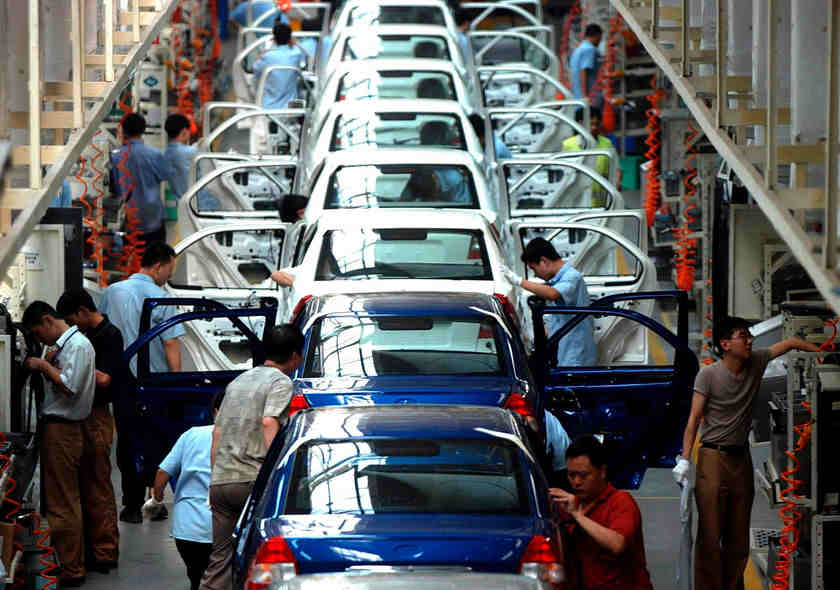
    Vietnam saw the second sharpest decrease, of 25%, in automobile sales in Southeast Asia last year behind only minuscule market Myanmar.

    According to the ASEAN Automotive Federation (AAF), in the region’s seven main markets, Indonesia, Thailand, Malaysia, the Philippines, Vietnam, Singapore, and Myanmar, 3.35 million vehicles were sold, a 2.1% decline from 2022.

    But the data, compiled from AAF’s members in various countries, does not include sales of Vietnamese firm Hyundai Thanh Cong.

    The leaders, Indonesia and Thailand, saw sales drop by 4% and 8.1%. In Myanmar, automobile sales fell to less than 4,000 in 2023, a decrease of 52.5% compared to 2022.

    The number of cars sold in Vietnam was 369,431, the fifth highest after Indonesia, Malaysia, Thailand, and the Philippines after falling one place from last year. The Philippines went past it in 2023.

    In 2022 Vietnam achieved its highest ever sales of more than 500,000.

    But last year the economic downturn, high bank interest rates and the slump in the real estate and securities markets sent demand for cars plummeting.

    In July the Government halved the automobile registration fee for domestically assembled vehicles, but it failed to revive demand.

    Demand fell in Thailand as banks tightened credit for buying pickup trucks, the most popular segment, according to Thailand Business News.

    Production too fell, but at more than 1.8 million vehicles, Thailand remained the biggest manufacturer in the region.

    Indonesia remained the largest market and also the only country to exceed the million sales mark. Indonesia wants to become an auto production hub, especially for electric vehicles.

    In 2023 it churned out nearly 1.4 million cars, including some of Vietnam’s best-selling vehicles like the Mitsubishi Xpander, which topped the sales chart.

  • Gen Z grapples with shrinking job market

    Gen Z grapples with shrinking job market

    Many Gen Z people are struggling to find jobs as businesses scale down operations amid the economic downturn.

    Ho Chi Minh City has over 300,000 businesses, but none of them were willing to hire Thanh Nga, 25, last year.

    “I have experience in customer service but was not able to find a job after submitting CVs to over 50 businesses in HCMC, Da Lat and Binh Duong,” she says.

    She looked for a job on online platforms and social media groups.

    “In 2018 usually somebody would call me soon after I submitted my CV, but last year I received no call most of the time.”

    Nga is among an increasing number of Gen Z people, or those born between 1997 and 2012, who are struggling to find jobs in the post-Covid economy.

    Youths accounted for 41.3% of unemployed people last year, up from 37.6% from 2022. This meant 437,300 people aged between 15 and 24 had no jobs, according to the Ministry of Labor, Invalids and Social Affairs.

    Nguyen Hoang Ha, an officer in the International Labour Organization, says people who graduated since Covid-19 are among the “quarantined generation” who had to go through disruptions in the labor market and in education and training.

    Another HCMC local, Thu Thuy, 24, had struggled to find a job in 2022 when the economy reopened after two years of the pandemic.

    She submitted 30 CVs and went to more than a dozen interviews but failed to find a job since most companies asked for months of experience, which she could not get due to Covid travel restrictions.

    She says: “Employers often want at least six months of experience but I did not have that. I used to think that having a college degree would guarantee a job but turns out that is not the case.”

    Economist Nguyen Minh Phong said the unemployment among youths is a global trend as companies often lay off the most inexperienced staff when the situation becomes difficult.

    Many urban Vietnamese youths have high expectations about salaries and will rather wait for a good opportunity than work for low pay, he adds.

    Thuy says some companies offered her a job for VND6 million ($244), but she declined, saying she needed at least VND7 million to pay the bills in expensive HCMC.

    Embarrassed, she lied to her family in the countryside that she was still working.

    But the economy alone is not to blame.

    Ha of ILO advises people in the 15-24 age group to educate themselves in technology and soft skills such as group collaboration and problem solving to meet the increasing demands on the labor market.

  • Expert claims 90% of honey in Malaysia is artificial

    Expert claims 90% of honey in Malaysia is artificial

    According to Zulkifli Mustafa, a senior lecturer at Universiti Sains Malaysia (USM), up to 90% of honey available in Malaysia is not genuine.

    “The biggest challenge of the honey industry now is the presence of artificial honey, which reaches 90% in the market,” honey expert Mustafa was quoted.

    The fake product includes stingless bee honey. Mustafa’s research emphasizes the nutritional value of honey produced by stingless bees, noting its potential health benefits. This variety of bees employs biting as a means of defense rather than stinging.

    Following these revelations, the Domestic Trade and Cost of Living Ministry has announced plans to investigate the allegations that a significant portion of honey products sold in the country are counterfeit/

    Datuk Armizan Mohd Ali, the Minister for Domestic Trade and Cost of Living,has directed the ministry’s enforcement division to examine these claims thoroughly.

    This news emerges amidst a broader context of food adulteration concerns. The European Commission’s recent study found that nearly half of the honey samples tested were suspected to be adulterated with inexpensive sugar syrups, as reported by The Guardian in March 2023.

  • WhatsApp continues to test feature to use a username instead of phone numbers

    WhatsApp continues to test feature to use a username instead of phone numbers

    WhatsApp, the Meta-owned global messaging app, has been working on a feature for some time now where you will be able to give out a username instead of your phone number to those you want to message with. This has been a highly requested feature that has seemingly taken very long to implement since it was spotted last year in a beta build. However, it now appears that more work is being done to test this feature, indicating that it is still on the table.

    Unlike in the United States, where Apple’s iMessage and old school SMS have a stronghold on messaging, the rest of the world uses other solutions. WhatsApp is one of them in places like India, Latin America, and some parts of Europe, which subsequently translates to users in those living in the United States who have friends and family in those locations.

    For users everywhere, the WhatsApp team has been working on introducing the option to generate usernames. News on the progress of this feature was quiet for a while, but based on the newest WhatsApp beta for iOS 24.3.10.72 version, it appears like this feature is about to take off.

    In this version, the section within the app where users can choose a username is once again present. This time, though, the app will initiate a validation process to ensure the username chosen is valid. The validation includes ensuring the username is unique and only allows for alphanumeric characters (a-z and 0-9). This provides the option to keep your phone number hidden, providing numerous privacy benefits.

    Currently, exchanging contact information for WhatsApp involves revealing your phone number, which can be concerning for those that prefer certain anonymity, be it for security or personal reasons. While users will probably still need a number to set up an account, having the option of a username allows them to be more selective about who sees it.

    Additionally, this feature could be useful to those that want a username that is much easier for friends and family to remember, rather than a series of numbers. Unfortunately, WhatsApp has yet to provide an official timeline for when usernames will be available to all users, but we hope this becomes a focus for the app’s developers this year.

  • Vietnamese durian and coffee farmers see unprecedented profits in 2023

    Vietnamese durian and coffee farmers see unprecedented profits in 2023

    The record prices of durian, coffee, and rice in 2023 brought significant profits to farmers in the Central Highlands and the Mekong Delta.

    Thoai, a garden owner in the Mekong Delta province of Can Tho, stated that durian farmers had never had a bumper harvest like last year.

    The price of this fruit remained high during the peak season, reaching up to VND140,000 (US$5.73) per kilogram at times. For the first time in over a decade, he earned a profit of several billion dong from selling durians.

    The high demand is continuing through 2024. In the days leading up to this year’s Lunar New Year holiday, which lasts from Feb. 8-14, many gardens in the Mekong Delta were busy harvesting off-season durians for export to China, where many people use durians as gifts for the holiday.

    Each five-kilogram durian could be sold for nearly VND1 million ($41), equivalent to about VND200,000 per kilogram.Not only in the Mekong Delta, but durian farmers in the Central Highlands also made a large profits last year due to the continuously peaking prices of this fruit.

    Cuong, a garden owner in the region’s Dak Lak province, reported earning VND120 billion after harvesting 40 hectares of durians.

    2023 was a bumper year for the key agricultural crops of Dak Lak Province, according to Vu Duc Con, deputy director of the Dak Lak Department of Agriculture & Rural Development.

    Specifically, thanks to good prices of durians, the province earned about VND12,000 billion after harvesting 200,000 tons.

    Another agricultural product that brought in huge revenue and helped farmers “change their lives” last year was coffee.

    Hoa, from the Central Highlands province of Kon Tum, said her family harvested seven tons of coffee beans in 2023.

    With a highest-ever selling price of VND76 million per ton, her family earned more than VND530 million last year. After deducting costs, she made a profit of over VND200 million, she said.

    Thoai, Cuong, and Hoa are not the only farmers who had a year with “never-seen-before profit.”

    “2023 was the brightest year for the export picture of the agricultural sector,” said Dang Phuc Nguyen, Secretary-General of the Vietnam Fruit and Vegetable Association.

    According to him, agriculture continued to affirm its position as a pillar of Vietnam’s economy, with the export value of agriculture, forestry, and fisheries exceeding US$53 billion.

    Some agricultural products set historic peaks, including fruits and vegetables exports, which surged 70% year-on-year, bringing in more than $5.6 billion, with durians, bananas, jackfruits, longans, and watermelons recording an increase of up to four times compared to the same period.

    Rice exports also increased by more than 36% in value.

    “Vietnamese agricultural products broke through in export turnover and price, even as the domestic and global economy declined,” said Nguyen.

    The high global demand for food, along with many fruits being officially exported to the vast market of China, helped Vietnamese agricultural products increase in value and quality, he said.

    China is also the largest import market for many Vietnamese agricultural products, at $11.5 billion last year, of which durians alone accounted for more than $2 billion.

    Besides durians, 13 other agricultural products have been officially exported to this market, such as bird’s nests and their products, sweet potatoes, dragon fruits, longans, rambutans, mangoes, jackfruits, and watermelons.

    Similarly, rice also brought a bumper harvest to farmers.

    In previous years, countries like Indonesia, Chile, Ghana bought Vietnamese rice in dribs and drabs, but increased their purchases several times over in 2023. Indonesia moved from the eighth- to the second-largest buyer of Vietnamese rice, after the Philippines last year.

    The Ministry of Agriculture & Rural Development’s 2024 forecast suggests that Vietnamese agricultural products will continue to achieve many successes since the U.S., China, and many Middle Eastern countries favor Vietnamese agricultural products.

    The impact of El Nino is expected to reduce the global food supply, presenting an opportunity for Vietnamese agricultural products like rice, durian, and coffee.

    For instance, China continued to purchase Vietnamese durians at high prices as Vietnam is the only country with off-season fruits. For rice, seven Vietnamese enterprises won bids to supply 300,000 tons of rice, accounting for 60% of the amount of rice Indonesia wants to import in early-2024, earlier this month.

    However, the export of agricultural products also poses many challenges that require solutions from authorities.

    “Agriculture is still developing sporadically, small-scale, and spontaneously in Vietnam,” said Minister of Agriculture & Rural Development Le Minh Hoan.

    “So, authorities, associations, and businesses need to engage with farmers from the beginning to provide them with enough information, so that they can adjust production.”

    Minister Hoan also mentioned that the implementation of planting area codes has only been at a promotional level currently. The ministry will make it mandatory for farmers to comply soon.

    “Everything must meet standards and regulations to avoid the situation of spontaneous agricultural development,” he said.

  • DB Schenker names new Asia Pacific chief

    DB Schenker names new Asia Pacific chief

    DB Schenker has named Vishal Sharma as its new CEO for the Asia Pacific Region, taking over the duties of Dr. Niklas Wilmking who will now represent the contract logistics and supply chain management division as board member.

    The 52-year-old brings more than 30 years of experience in the logistics sector and has been serving as CEO for DB Schenker’s Greater China cluster since 2021. He joined the German forwarder in 2018 as the CEO of the Indian subcontinent cluster.

    Before joining DB Schenker, Vishal has held various executive leadership positions in several forwarding companies in the US, Singapore, India and Denmark. He assumed the new role on 1 February.

  • Getting ready to embrace AI, Grammarly lays off 230 employees

    Getting ready to embrace AI, Grammarly lays off 230 employees

    If you write for a living, or you’re a student, Grammarly is probably one of your best friends online. Grammarly will help you find and correct grammatical and spelling mistakes and the paid version of the app and website will give you real-time writing suggestions to improve your report. For $12 a month, the paid version of Grammarly will even alert you to accidental plagiarism.

    With many analysts talking about a future where generative AI bots replace human writers, it makes sense for Grammarly to use AI to help subscribers improve their writing skills. This week, Grammarly announced that it is laying off 230 employees to focus on “the AI-enabled workplace of the future,” according to the company. Grammarly said, “This decision supports Grammarly’s vision of bringing responsible AI writing assistance to people and workplaces everywhere. Millions of people and thousands of businesses use Grammarly to achieve more through better writing.”

    In a memo to employees shared in a blog post, Grammarly CEO Rahul Roy-Chowdhury wrote, “As we strengthen our focus toward driving the AI-enabled workplace and deepen our technical investments in AI, we will need a different mix of capabilities and skillsets. We also need to redesign our organization to improve the quality and speed of collaboration — and that means, among other things, restructuring roles and co-locating certain teams.”

    The executive made it clear that the layoffs were not a cost-cutting measure and said that Grammarly’s financial position remains “strong.” Instead, reducing the headcount is being done to get Grammarly prepared for the coming AI future. Those leaving the company will receive a minimum of 3 months’ base pay. That increases for team members who have been with the company longer. U.S.-based team members leaving the company will have an option to continue receiving their health insurance benefits for up to six months.

    Grammarly is also helping those leaving the firm find a new position by offering “stipends or access to services for individualized career coaching, resume review, and other transition services.” The company will also create an “available talent” list that the public will be able to see. The list will include names, specialties, and “key results” that future employees can view. And those leaving Grammarly can keep their company-issued laptop for personal use.

    Looking ahead, it’s easy to see that Grammarly is hanging its hat on AI. CEO Roy-Chowdhury wrote, “We see massive opportunity as every individual and business begins to harness the power of AI. For nearly 15 years, we’ve been building a product that helps millions of people every day, makes teams measurably more productive, and is already used by employees in 96% of the Fortune 500. We’ll build on this foundation to bring even more value to our customers. AI will fundamentally change the workplace for the better—and Grammarly will play a leading role in driving that change.”

  • Vietnam’s coffee export value doubles in January

    Vietnam’s coffee export value doubles in January

    Vietnam shipped 230,000 tonnes of coffee abroad in January, earning $623 million, up 61.6% in volume and 100.3% in value year-on-year, according to the Ministry of Agriculture and Rural Development.

    In the last days of the Year of the Cat, the average coffee price in the Central Highland provinces continued to increase compared to the previous week. Coffee is being purchased at prices ranging from VND78,200 – 79,400 ($3.2-3.25) per kg in some localities. With the current upward trend, domestic coffee prices are likely to exceed VND80,000 per kg soon.

    A surge in domestic coffee prices was attributed to the fact that traders actively purchased coffee before the Lunar New Year (Tet) holiday while exporters were afraid of supply shortages like last year so they tended to buy more.

    The coffee output of the 2023-2034 crop in Dak Lak province is forecast to reach 580,000 tonnes, thus the coffee export volume is estimated at 330,000 tonnes. If prices stay as high as they are now and fluctuate slightly in the near future, the province’s coffee export turnover could hit $900 million.

    Lam Dong province has about 175,700 ha of coffee and the output for 2023-2024 crop is expected to hit 535,000 tonnes.

    In 2023, Vietnam exported over 1.6 million tonnes, down 8.7% in quantity but up 4.6% in value compared to last year, reaching a record turnover of $4.24 billion.

    According to the Vietnam Coffee-Cocoa Association (Vicofa), Vietnam’s coffee production in the 2023-2024 crop will be 1.6-1.7 million tonnes, lower than 1.78 million tonnes in 2022-2023.

  • Federal judge is forcing Musk to talk with the SEC again over his purchase of Twitter

    Federal judge is forcing Musk to talk with the SEC again over his purchase of Twitter

    Elon Musk has been ordered by a federal judge to testify once again as the Securities and Exchange Commission (SEC) continues its investigation of Musk’s $44 billion acquisition of Twitter. The court gave Musk and the SEC one week to come up with a date and location for both sides to meet. If neither side can agree to a date and time for the interview, the judge said that she would hear from both parties and come up with a date and time for them.

    The SEC sued Musk last October in an attempt to force the multi-billionaire to testify about the purchase of Twitter which he made in 2022. Musk, who famously renamed Twitter “X,” had failed to show up during a scheduled meeting with the SEC in September which was related to the agency’s probe of the transaction. Twitter was a publicly-traded company before Musk took it private which means that any deep dive into the transaction by the government would start with an SEC investigation. In filling out the required paperwork for his purchase of Twitter, the question is whether Musk followed the letter of the law or included misleading statements with his submissions.

    Musk accused the SEC of harassment as he attempted to prevent the regulatory agency from interviewing him again about the Twitter acquisition. He complained that the SEC had already spoken with him twice. Judge Beeler said that the SEC, seeking relevant information from Musk, did have the authority to subpoena him.

    The SEC and Musk have battled before. In 2018, Musk posted a tweet that said, “Am considering taking Tesla private at $420. Funding secured.” The tweet led Tesla’s shares to soar 11% that day, but no deal was ever announced. The SEC, Musk, and Tesla agreed to a settlement. Musk and Tesla paid $20 million in fines, and Musk had to leave his post as Tesla chairman although he retained the CEO job. The settlement also required that any tweet Musk sent out with material information about Tesla had to be approved by the SEC in advance.