Tag: asia

  • Lotte Duty Free expands, Australia and New Zealand are next

    Lotte Duty Free expands, Australia and New Zealand are next

    South Korean travel retailer Lotte Duty Free is expanding into Oceania with the ambition to be the leading operator in Australia and New Zealand by 2023.

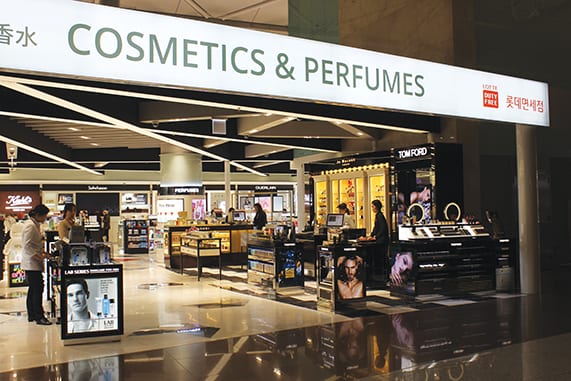
    The firm’s entry into the territory began with a grand opening ceremony at one of its new Australian stores at Brisbane Airport. The second biggest travel retailer in the world, Lotte Duty Free is targeting sales of US$200 million in the region during its first year.

    “Successfully entering Oceania is the next step in Lotte Duty Free becoming the world’s number one travel retailer and the most influential in the region,” said Lotte Duty Free CEO Kap Lee. “We have almost 40 years of retail excellence that is being introduced to Australia and New Zealand, working side-by-side with our local colleagues to better understand the unique wants and needs of people travelling through the region from all nationalities.”

    Australia has demonstrated significant growth of more than 10 per cent in incoming Chinese tourists – representing some of the biggest spenders globally – in recent years. The 2019 Spring Tourism Trend Forecast published by Ctrip, the largest online travel agency in China, states Australia is one of the most favorable international travel destinations for Chinese tourists during the New Year period.

    In response, Lotte Duty Free is acquiring five JR/Duty Free stores in the region; four in Australia and one in New Zealand.

    With this launch, Lotte Duty Free now operates in seven countries outside of Korea.

  • Liam Gallagher’s fashion brand Pretty Green about to close down

    Liam Gallagher’s fashion brand Pretty Green about to close down

    Liam Gallagher’s fashion brand Pretty Green is preparing to undergo insolvency proceedings.

    The mod-inspired fashion label, set up by the former Oasis lead singer, will appoint administrators this week, enlisting Moorfields Advisory to handle the process.

    A report by Sky News said the filing allows a certain time period for Pretty Green to secure a buyer. Commentators with knowledge of the transaction have revealed Moorfields to have been floating the label to potential purchasers throughout this month.

    Pretty Green’s turnover rose to £38.2 million (US$50.33 million) in the 16 months to January last year, with pre-tax losses narrowing to £1.5 million ($1.98 million) from a £5.6 million ($7.38 million) loss.

    The brand has suffered under the flailing retail environment in the UK. A spokesperson for the brand said “Pretty Green is not immune to the challenges facing the UK high street as customers migrate from purchasing in store to online”.

  • Octopus inks partnership with JD.com providing retail innovations

    Octopus inks partnership with JD.com providing retail innovations

    Octopus Retail Management (Octopus), a Singapore-based company and a pioneer in offering a holistic suite of retail management solutions, today announced that it has partnered with JD.com for its cutting-edge Point of Sales (POS) suite of solutions which has benefitted a variety of businesses spanning the retail, F&B and ecommerce sectors.

    With Octopus’ partnership with China’s largest retailer, JD.com, Octopus will be the first B2B software provider for the retail industry and will have access to more than 300 million active customers that shop on JD.com. This strategic alliance is in light of Octopus’ vision to digitally transform the retail industry.

    Octopus is a Cloud-Based Retail Management Company that offers a comprehensive Point of Sale solution to brick and mortar SMEs. With a presence across 7 countries — Singapore, Malaysia, Philippines, China, Sri Lanka, Indonesia and the USA, Octopus generates around $2 billion of GMV on their platform from over 20,000 retail points across 3000 customers.

    Ong Whee Shiong, Founder and Managing Director, Octopus said, “The digital age has thrown several challenges at businesses today. It has become critical for retailers to have an efficient retail management system to enhance their business productivity. Our products aim to empower the retailers to embrace digitalisation and streamline their online business.”

    The company’s cloud-based retail management solution helps firms to leverage social media interactions to curate personalised offerings based on consumer’s shopping and dining behaviours. The solutions can also synchronise inventory, support customer promotions, and offer loyalty points to add more value propositions to their customers. The solutions also allow its customers to onboard a mobile platform through its cloud offering. This enables real-time visibility over the network to monitor sales, the performance of staff, and inventory which leads to efficiency and better decision-making.

    According to an article citing joint research by Google and Temasek in 2017, more than half of Southeast Asia’s population is a millennial and of that, 70 per cent are under the age of 40. The retail space per capita remains low, indicating limited access to offline stores and products. Whilst the report shows that consumers in the region show the interest and willingness to shop online, there have been emerging trends focussing on omnichannel and online-to-offline solutions.

    “We believe online and offline need to go hand in hand today. Through our integrated solutions, our clients are able to offer their customers enhanced seamless shopping experience and create more value,” he added.

  • A.S. Watson Group Opens its Worldwide 15,000th Storein Kuala Lumpur

    A.S. Watson Group Opens its Worldwide 15,000th Storein Kuala Lumpur

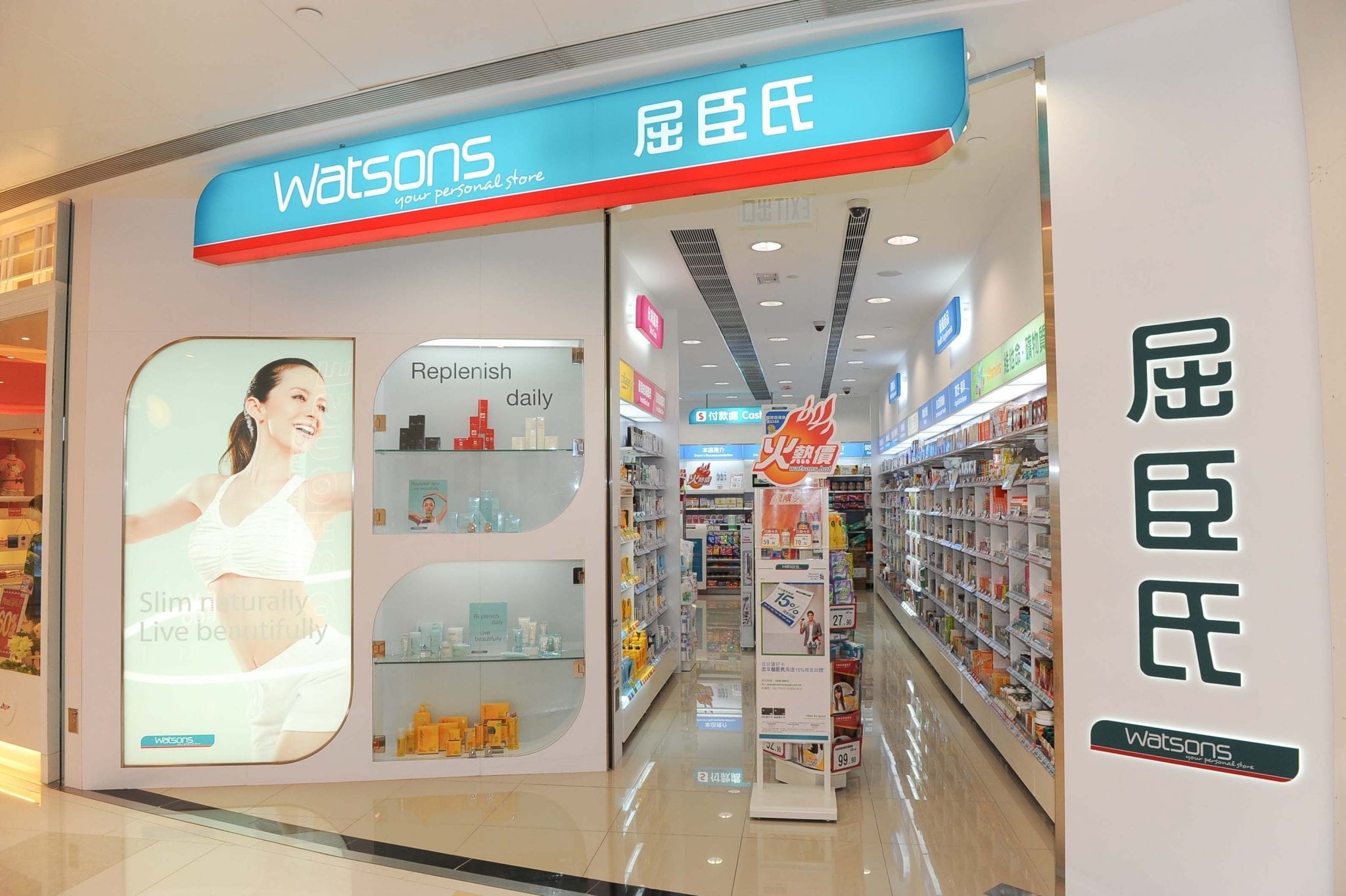
    The world’s largest and fastest growing international health & beauty retailer A.S. Watson Group celebrates an important milestone today as it opens its 15,000th store.

    Growth Continues at Record Rate

    For the fourth year in a row, A.S. Watson’s new store opening continues to be at an average speed of one store every seven hours across its 25 markets in Asia and Europe.

    The worldwide 15,000th store opening of A.S. Watson coincides with its 500th store opening of Watsons in Malaysia, one of the fastest growing countries for beauty and wellness products. Watsons is the flagship retail brand of A.S. Watson with over 7,200 stores in 13 markets in Asia and Eastern Europe.

    The new store is located in Central i-City, a new shopping mall in Malaysia, and it uses technology to enhance customer experience and connect offline and online. The 4,200 square-feet G8 design store is equipped with StyleMe, AR (Augmented Reality) technology, to showcase the latest fashionable product, in a fun and engaging way for customers. Watsons’ Hi Mirror skin analysis device is also available for customers to assess their skin conditions at the store. G8 represents the 8th Generation of the Watsons store design incorporating extensive customer and store team feedback, as well as market research of latest trends on shopping experience.  It will roll out across the region in Hong Kong, Taiwan, Singapore, Thailand, Indonesia, Vietnam and Turkey later this year.

    O+O Strategy – Strengthening Customer Connectivity Online and Offline

    Mr Dominic Lai, Group Managing Director of A.S. Watson Group is very excited at the celebration event of this important milestone, “The continued success of our business is about customer connectivity – our ability to connect customers with products, trends and experience they want in beauty, personal care, health and wellness. Our O+O (Online and Offline) strategy focuses on providing an extensive store network, excellent in-store customer service, most relevant health and beauty assortment, combined with seamless digital experience and loyalty schemes that help to put smiles on customers’ faces.”

    Globally A.S. Watson has over 135 million loyalty members and has been investing HK$1 billion (approx.US$128 million) in digital since 2012 to enhance customer experience and enable the business to build data-driven approach to stay closer to customers’ needs.

    A Thankful Celebration

    Mr Lai continues, “We are one of the longest standing companies in the world with 178 years of history.  To be able to reach yet another critical milestone, this is only possible with the love from our customers, passion and commitment from our 140,000 colleagues around the world, and the unfailing support from our business partners.”

    From one dispensary in Hong Kong to 15,000 stores worldwide, A.S. Watson has built close relationship with customers and a strong team of 140,000 colleagues.  The celebration activities in every market will be about thanking customers and showing appreciation to colleagues.  There will be campaigns in every market to celebrate, including member-exclusive benefits and special offers, both offline and online.

  • Tan Mujiang opens a new flagship store in Toronto

    Tan Mujiang opens a new flagship store in Toronto

    Mainland Chinese retailer Tan Mujiang has opened its first flagship store in Canada.

    Tan Mujiang is the only listed company in the world making wooden combs. It has created more than 40 processes to improve its products, which are made from natural materials of traditional Chinese handicrafts, integrating traditional culture with modern fashion.

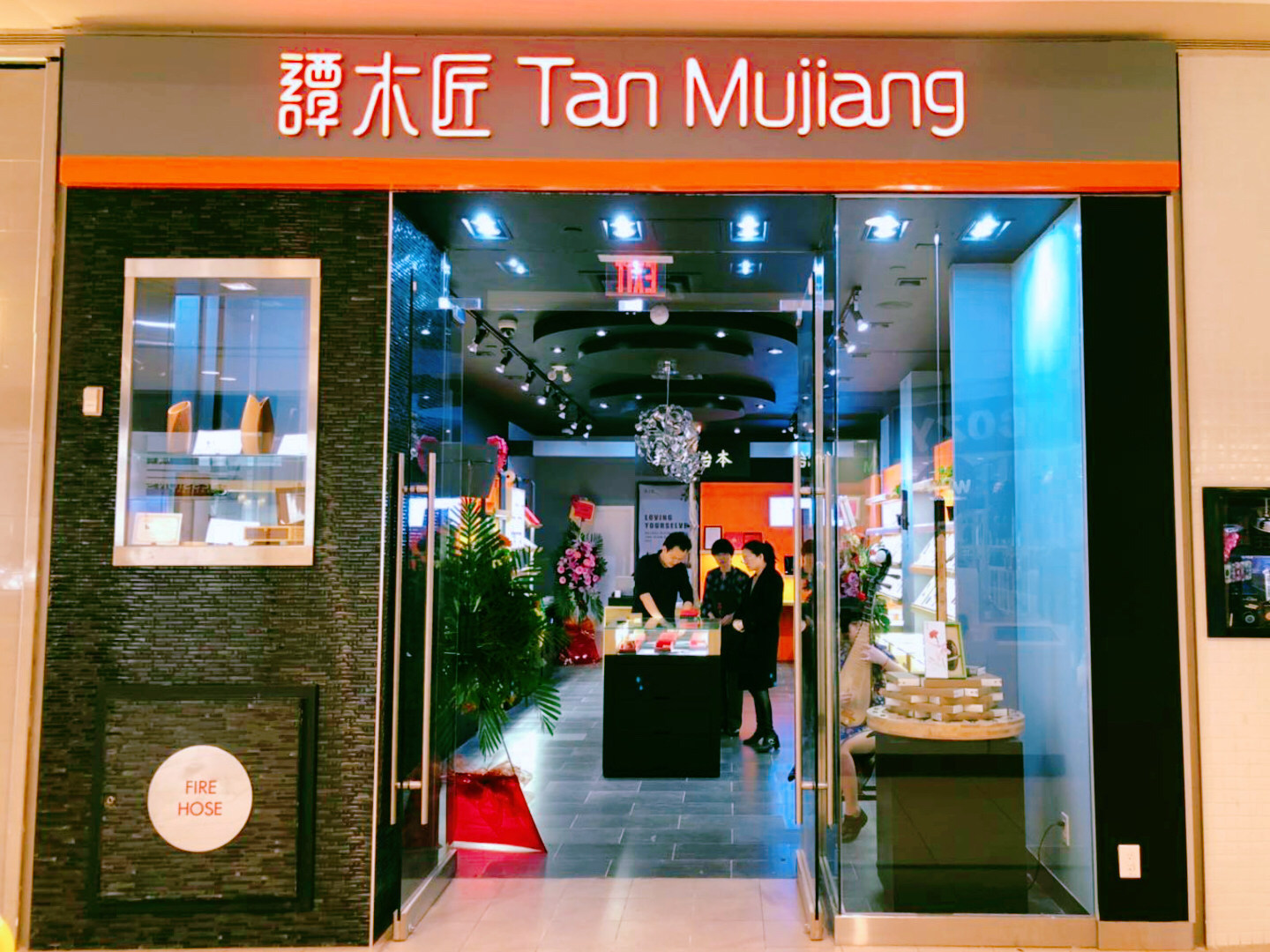
    The company opened at Toronto’s Scarborough shopping centre earlier this month, taking space right next to jeweller Pandora.

    Dubbed H002, the Canadian store is Tan Mujiang’s second overseas, following one opened at Hong Kong’s Telford Plaza. Twelve more overseas stores are planned this year.

    Zhang Chuanjin, Tan Mujiang’s offline market director, said the company’s goal is to popularise the brand by operating its own franchise shops all over the world.

    Since December 2013, Tan Mujiang has acquired more than 80 patents and supplies more than 1200 shops all over Mainland China, four in Hong Kong, one in Singapore, and some online stores, such as Amazon and eBay.

    Chuanjin said that on the Toronto store’s opening day, Tan Mujiang attracted many customers with its eye-catching Chinese logo and a lute performance.

    “Many Chinese were surprised to see traditional Chinese wooden combs abroad, and many locals were impressed by the oriental charm and exquisite craftsmanship of the combs. They found that besides just combing their hair, the exquisite combs could also be a great gift for family and friends.”

    Tan Mujiang has set up a national general franchising model and hopes to find franchisees interested in their brand.

    Tan Mujiang says it plans to increase its investment in overseas market promotion. In addition to participating in grand international exhibitions, the company will release its brand and product information on popular social media platforms and organise promotional activities for overseas stores.

  • Majority of online shoppers check brands on Amazon

    Majority of online shoppers check brands on Amazon

    Most online shoppers compare a brand or retailer’s site to Amazon before purchasing something, according to a study released by Episerver.

    Episerver’s third annual Global Consumer Study shows that 87 per cent of online shoppers compare what they find on a brand or retailer’s site to Amazon before completing a purchase. Ninety-seven per cent won’t complete a purchase if they see incorrect or incomplete content on a brand’s website and/or mobile app.

    “Product education, personalised content and site search, purchasing ease, promotions on multiple channels, peer reviews and performance of the site itself can all make a difference,” said Ed Kennedy, senior director of Commerce at Episerver.

    According to Episerver, marketplaces like Amazon reign supreme due to their wide variety of price options, product selections and shipping features.

    The study, which surveyed 4500 online shoppers in eight countries, also showed that nearly half of online consumers, 46 per cent, said having too many options online has prevented them from making any purchase at all.

    Almost half of the people surveyed start their online purchase journey at an online marketplace, Amazon included, Kennedy said.

    Sixty per cent of consumer prefer marketplaces for their price options and over half, 58 per cent, for their product selections.

    “Knowing only a small fraction of customers do not use Amazon to compare products can certainly be a cloud over a retail operation seeking engagement and conversions on their digital properties,” Kennedy said.

    “However, knowing consumers’ mindsets that casual swiping can turn into committed shopping, retailers can drive interest and ultimately, sales, by lessening the burden of choice and doubling down on experience-driven commerce.”

  • Singtel targets Millennials with all-digital mobile plan

    Singtel targets Millennials with all-digital mobile plan

    Singtel has announced the launch of an all-digital mobile service plan targeted at technology-savvy Millennial customers.

    The new product, GOMO Mobile, offers functionality including immediate online sign up and same-day SIM card delivery, 24/7 live chat for customer service inquiries and a dedicated customer care app.

    The S$20 GOMO Mobile plan includes 20GB of data, 200 minutes of talktime and 200 SMS. The no-contract plan is based on a 30-day payment cycle, and additional allocations can be instantly purchased using a debit or credit card.

    As part of its strategy of targeting Millennials, Singtel is also offering lifestyle rewards such as discounts at selected hipster restaurants and cafes, and plans to expand these rewards to include ride hailing, entertainment events and activities and travel promotions.

    Singtel is also offering a GOMO Travel SIM that provides 3GB of data for 10 days across eight overseas destinations – Australia, Hong Kong, Macau, Taiwan, Indonesia, Malaysia, Thailand and Philippines.

  • 211 operators globally investing in 5G

    211 operators globally investing in 5G

    At least 211 operators across 87 countries are investing in 5G, according to statistics compiled by consultancy company Hadden Telecoms.

    Operators investing in 5G are at a variety of stages, ranging from network deployments, to technology testing, demonstrations and pilot trials.

    To date, 15 operators have commercially launched 5G services, including Telstra and Optus in Australia, which are offering fixed wireless 5G services on the 3.6-GHz band. Vodafone Australia and the market’s national broadband network operator NBN Co are also investing in 5G.

    South Korea’s KT, LG U+ and SK Telecom meanwhile switched on their 3.5-GHz 5G networks last year, initially for enterprise customers only, and are planning to simultaneously launch commercial services for consumers shortly.

    The list of operators investing in 5G in Asia Pacific also includes China’s big three operators China Mobile, China Telecom and China Unicom, Hong Kong’s 3 Hong Kong, China Mobile Hong Kong, HKT and SmarTone, and India’s Bharti Airtel, BSNL and Reliance Jio Infocomm.

    In Japan, KDDI, NTT Docomo, Rakuten Mobile and Softbank are spending heavily on 5G, while Malaysia’s Celcom, DiGi, Maxis, Telekom Malaysia and U Mobile and the Philippines’ Globe and PLDT are also trialing the technology.

    Singapore’s M1, Singtel and StarHub, Sri Lanka’s Dialog Axiata and Mobitel, Taiwan’s APT, Chunghwa Telecom, Far EasTone and Taiwan Mobile, Thailand’s AIS, Dtac, TOT and TrueMove and Vietnam’s Viettel are also at various stages of 5G development.

    “Operators globally are preparing for the large-scale introduction of 5G, the first services have launched, and the devices ecosystem is rapidly building and poised for the imminent scale availability of a range of smartphone models,” Hadden Telecoms director Alan Hadden said.

    “Dozens more operators are expected to launch their respective 5G services in the coming 12 months.”

  • 5G crucial to Vietnam’s development

    5G crucial to Vietnam’s development

    Vietnam’s deputy prime minister Vu Duc Dam has thrown his support behind the adoption of 5G in the nation, stating that 5G will be crucial to Vietnam’s development.

    During the recent ASEAN Conference on 5G, the deputy prime minister acknowledged that the government will need to proactively support businesses to ensure they are more confident in investing in 5G, the official newsletter of the Communist Party of Vietnam.

    During the conference, Dam said the technology will not only provide major speeds improvements but involve changes in global production methods. He suggested that participants use the Vietnam-organized conference to discuss the pathway to 5G development in the ASEAN region.

    Vietnam aims to become one of the world’s early adopters of 5G. Several Vietnamese operators have been allocated licenses to trial the technology in Hanoi and Ho Chi Minh City ahead of a commercial launch.

    Also at the event, Vietnam’s ICT minister Nguyen Manh Hung also stated that 5G will be the most vital part of the infrastructure required for the future digital economy.

  • Broadband access equipment revenue hits $3.4b in Q4

    Broadband access equipment revenue hits $3.4b in Q4

    The market was bullish in last year’s fourth quarter for broadband access equipment revenue, according to a report, but Converged Cable Access Platform (CCAP) spending declined.

    Dell’Oro Group announced on Monday that broadband access equipment revenue hit $3.4 billion, growing 8% year over year in last year’s fourth quarter compared to the same quarter in 2017.

    Increased shipments of GPON optical line terminals (OLTs) and DOCSIS 3.1 customer premises equipment (CPE) counteracted a decline in CCAP spending.

    “FTTH deployments globally continue to show strength,” said Dell’Oro’s Jeff Heynen, research director, broadband access and home networking, in a prepared statement.  “Both 2.5 Gbps GPON and 10 Gbps EPON equipment marked year over year increases, particularly in China. The gains on the telco side helped to offset surprising weakness in cable CCAP spending, as MSOs delay new capacity purchases while they determine how to move forward with distributed access architectures (DAA).”

    Among other capabilities, DAA will give the cable industry a better starting point for virtualized networks and software-defined networking. At last year’s SCTE Cable-Tec Expo, SCTE President and CEO Mark Dzuban said during a panel discussion that the cable industry needed to do a better job of defining DAA in order to launch it at scale.

    Total cable access concentrator revenue was down 18% year over year, mainly due to a slowdown in CCAP license purchases in North America. Cisco, Arris, Casa Systems and Harmonic are among the leading CCAP vendors.

    The total number of DSL port shipments grew 16% year over year with VDSL ports increasing 13% and G.fast ports increasing by a whopping 232%, according to Dell’Oro.

    PON OTL shipments grew 6% over the same timeframe, driven by strong demand for 2.5 Gbps GPON units in China and across the entire Asia-Pacific region.

    Overall, Dell’Oro’s fourth-quarter 2018 Broadband Access Quarterly report said that 2.5 Gbps GPON, 10 Gbps EPON and Gfast equipment all saw increased spending in the quarter.

  • Oboz delivers profit growth for Kathmandu

    Oboz delivers profit growth for Kathmandu

    Kathmandu saw strong sales and profit growth in its recently acquired footwear business, Oboz, in the first half of FY19.

    The US-based footwear brand, which the outdoor retailer acquired in April 2018, generated NZ$29.2 million (A$28.4 million) in sales in the six months to January 31, 2019, a 38.6 per cent increase on the previous corresponding period. This led to a 77.1 per cent increase in earnings before interest and tax to NZ$4.7 million (A$4.6 million).

    In a statement about its first-half earnings, Kathmandu said Oboz was the fastest growing footwear brand in its stores and the fastest growing major hike footwear brand at REI, the biggest outdoor retail chain in the US.

    The Christchurch-based retailer reported NZ$3.7 million (A$3.6 million) in group EBIT from its North American business for the first half of FY19, after accounting for consolidation adjustments and Kathmandu’s initial wholesale costs.

    “[We] are beginning to build international Kathmandu brand equity through authentic outdoor wholesale channels,” Kathmandu’s chief executive Xavier Simonet, said in a statement.

    “International growth remains a very important priority.”

    Across the group, the retailer reported a 13 per cent increase in sales in the period to NZ$232 million (A$225.5 million), and a 9.4 per cent increase in gross profit to NZ$141.9 million (A$137.9 million).

    Excluding NZ$1.1 million abnormal income relating to the GST treatment of reword vouchers, normalised EBIT increased 10 per cent on the previous corresponding period to NZ$19.8 million (A$19.2 million), and net profit after tax increased 7.3 per cent to NZ$13.2 million (A$12.8 million).

    While Kathmandu saw strong same-store sales at the start of FY19, it experienced softer trading conditions in Australia and New Zealand over the Christmas and Boxing Day period.

    However, a focus on less promotional discounting, resulted in an increase in gross profit margin from 63.4 per cent in the first half of FY18, to 64.2 per cent in the first half of FY19.

    “Despite sales being below expectation, it was pleasing to see an improvement in retail gross margin,” Simonet said.

    The outdoor retailer  saw operating expenses increase 4.3 per cent at constant exchange rates in the half, with incremental expenses arising from Oboz and Kathmandu’s North American business totalling NZ$7.3 million (A$7.1 million).

    Kathmandu had NZ$130.1 million ($126.5 million) in inventory at January 31, 2019, which includes NZ$6 million  (A$5.8 million) to support its international business and early deliveries of core styles for the Autumn and Winter seasons. Clearance stock is in line with last year.

    Simonet noted that the full-year result is dependent on the key promotions to come, referencing the retailer’s successful second half last year.

    “Kathmandu is on a journey of transformation,” he said, adding that the company aims to shift from being a  leading Australasian retailer to a brand-led, global, multi-channel business.

    Profit growth in the core Australasian business will be used to fund investment for future growth.

    “While we are focused on driving growth for our core Kathmandu business in Australia and New Zealand, we are also step by step diversifying our channels, brand and markets, particularly through Oboz which has delivered strong growth,” Simonet said.

  • Apple introduces Apple Card: Daily Cash, no fees

    Apple introduces Apple Card: Daily Cash, no fees

    Apple has announced a brand new service: Apple Card. Starting this summer in the US, users will be able to sign up for a real Apple credit card that’s going to reside within the Wallet app. Requesting a virtual Apple Card living in your iPhone will be very easy, as you’ll be able to do it straight from your device. Issuing a new Apple Card shouldn’t take more than a few minutes. Once issued, your Apple Card should be right there in your Wallet app.
    What’s even cooler is that users will also be able to request a physical credit card, which will be made of titanium and have the user’s name laser-etched. No card numbers, CVV, or expiration dates will be printed on the card, making it that much more secure.
    Apple is creating Apple Card in partnership with Goldman Sachs. As it’ll be using the Mastercard payment network, the card will be accepted worldwide. Card support is going to be handled by Apple directly in a delightful new way: through Apple Messages. Just text Apple with your questions or requests, and the company will respond right there, in Messages. Apple Card will be available this summer in the US. Unfortunately, the company isn’t revealing any details regarding a future international rollout of the service.

    Daily Cash

    With Card, Apple is introducing a welcome new take on the cash back program. It’s called Daily Cash for a reason: you’ll be receiving your cash back amount daily, and you’ll be free to spend it again through Apple Pay, put it towards your Apple Card balance, or send it to family or friends through Apple Messages.
    Customers will be receiving Daily Cash to the tune of 2% on all of their Apple Card payments outside of Apple’s ecosystem. When it comes to Apple’s own stores, like Apple Stores, iTunes or the App Store, the Daily Cash amount will be 3%. And for purchases made using the physical Apple Card, the Daily Cash amount will be 1% of the purchase value.

    Apple helping you have a better financial culture

    Apple is building a number of new features around Apple Card, designed to help you have a better understanding of your spending. For starters, it’ll help you track your purchases more easily by using machine learning and Apple Maps in order to ‘translate’ the names of merchants in your purchases log. You are probably familiar with how merchant names often appear fairly cryptic when you view then through your bank’s web portal or mobile app; with Apple Card, Apple will make sure to have them all clearly labeled so that you’ll immediately know which transaction was made with whom.
    Color coding will also help with the organization of your transactions: products from distinct categories such as Food and Drinks or Shopping and Entertainment will be assigned a different color so that you can immediately find the ones you’re looking for. This, in tandem with the new weekly and monthly spending summaries, Apple hopes will give you a better vantage point over your overall expenditures.
    What’s more, Apple Card will include a tool to help users pay less interest by making their options more transparent. It’ll be suggesting a range of payment options and a handy calculator that estimates the interest cost on different amounts, so that each users can pick the option that suits their budget the best.

    Physical Apple credit card made of titanium

    Apple knows that for customers to fully embrace its payment service, it needs to be universally accepted. So, to let you deal with those merchants that don’t support Apple Pay yet, the company is creating a real, physical credit card with the signature Apple minimalist design. The company hasn’t released some of the technicalities, such as if it’s going to charge you for issuing such a card, but at least we know how it’s going to look like.
    No card numbers, expiration dates, or CVV numbers will be present on the card, making for an extremely clean look, with only the Apple logo and the holder’s name laser-etched onto the titanium piece. Your card’s numbers are, of course, still available: you’ll just have to look them up in the Wallet app on your iPhone.
    Thy physical Apple Card seems like a very appropriate product for international users, where Apple Pay support is still widely lacking, but the company seemingly has no immediate plans to launch Apple Card in markets other than the US at this time.
  • Apple takes on Netflix and cable with TV+ streaming service

    Apple takes on Netflix and cable with TV+ streaming service

    Hours before the “It’s show time” event, Apple began streaming a Car Play footage of someone driving from Los Angeles to Cupertino, in a not-so-subtle hint that we are about to see a lot of Hollywood honchos arriving for the announcement of its new Apple TV+ video service against formidable competition. Existing cable packs plus original content – it marks the first time Apple is jumping into a new and established industry in, well, forever. –

    The Apple-goes-Hollywood move is just the next in a long line of reorientations of Apple as a service company, concocted a few years back when CEO Tim Cook started to prepare for the inevitable commoditization of the bread-and-butter iPhone product. Apple’s CEO Tim Cook loves to brag at conference calls with investors that the revenue and profits from its “services” business is growing leaps and bounds, far outstripping the revenue growth in the iPhone department. The App Store alone is now a Fortune 100 company by itself, raking in more than, say, the whole McDonalds franchise.

    On the hook for billions of losses, however, after streaming services like Netflix or Spotify balked or circumvented the 15%-30% cut Apple takes from subscriptions sold via the App Store, the team from Cupertino decided to futureproof its revenue stream from services by taking the fight directly to the competition. Last year, streaming subscriptions outpaced cable, and Apple just went in, announcing its own TV+ video service.

    Apple TV+ streaming and Channels service price, features, markets, and platforms

    Instead of outing an actual TV set, Apple now aims to become an alternative to cable by mixing shows from renowned names like HBO or Showtime with dozens of its own TV+ original series, all from the comfort of the new Apple TV app, online or offline. With the new Channels service there, Apple will bundle your existing subscriptions, and personalize and curate the shows you might like, gleaning from the subscriptions or preferences you already have shown by renting iTunes movies and TV shows. Those will now also be folded into the new Apple TV app, coming in May.
    The Apple TV channels will sport such juggernauts like HBO, Starz, SHOWTIME, CBS All Access, Smithsonian Channel, EPIX, Tastemade, Noggin and some new ones as MTV Hits, with more down the pipe. All of this can be accessed within one app – Apple TV – no separate logins any more.
    The service would be reaching 100+ global markets and will be available not only on Apple iOS devices but also coming to the Mac, Roku streamers, and even Samsung, LG, Sony or Vizio smart TVs. How much? Well, separate subscriptions for HBO or Showtime will run you $9.99/month each, and you can subscribe with a single click. The Apple TV+ release date is scheduled for some time in the fall, with an “ad-free” price yet to be announced.

    With an installed base of more than a billion potential viewers who are used to paying for media, Apple could immediately become the next big thing on the trendy “what to watch” block. Unlike Netflix, however, whose stratospheric rise is fueled by copious amounts of debt, Apple reportedly took a more measured approach, earmarking “just” a billion for testing the original content streaming waters. Eddy Cue, Apple’s senior vice president of Internet Software and Services, piled on today:

    That’s not to say that the team from Cupertino is not ambitious, though – Eddy Cue is on record saying that they want to acquire or produce shows on the level of Game of Thrones, and, knowing Apple’s money, they could very well do so. For comparison, HBO spends two billion on original programming, and Apple could easily double or triple the amount invested if the shoe fits.

    Netflix is way ahead with $11 billion earmarked for spending on own shows and content this year, though there is a lot of fluff in it, while Apple usually takes a more targeted approach when it comes to quality, regardless of what one might think about shows like Planet of the Apps. In any case, it will have way fewer movies and TV shows than the rest of the competition at launch, though, as you can see from the stats below, having the most content doesn’t make for the most popular such service.

    Apple TV+ new original shows list at launch

    Apple has already poached plenty of entertainment industry names, too, so it finally seems bent on building a proper media empire. Here are all the shows Apple said its streaming service will be launching with:
  • Coles scores exclusive deal with the world leader

    Coles scores exclusive deal with the world leader

    Supermarket giant Coles has entered into an exclusive services agreement with the world’s leading online grocery platform, Ocado, to double its home delivery capacity in Australia by the end of the 2023 financial year.

    Over the next four years, the supermarket will spend $130 million to $150 million on the construction and development of the project, which will give the retailer access to Ocado’s online grocery website, automated single-pick fulfilment technology and home delivery solution.

    As part of the deal Ocado will install and maintain equipment for Coles in new automated customer fulfilment centres outside Sydney and Melbourne, which are expected to be operational by the 2023 financial year.

    Each centre has an estimated sales capacity of between approximately $500 million and $750 million per annum.

    The new deal is expected to offer customers a seamless digital customer experience, greater range, improved product availability and freshness, as well as more regular delivery windows. The partnership means increased network capacity at a lower cost to serve and is expected to double Coles’ current home delivery capacity.

    “Ocado is singularly focused on online grocery shopping, and as a result, has become the leading solution provider in the world. We are delighted to be partnering with them to make life easier for Coles’ customers here in Australia. Ocado’s ongoing investment and retail partnerships around the world will help us continue to improve our offer into the future,” Coles CEO Steven Cain said.

    Customers outside of metropolitan Melbourne and Sydney will have access to Ocado’s website, whereby orders will continue to be fulfilled by the existing store-based network, which will continue to evolve over the coming years.

    “We are delighted to partner with Coles,” Luke Jensen, CEO of Ocado Solutions, said. “Already a leading player in online grocery retailing in Australia, we are proud that they have chosen the Ocado Smart Platform to take them to the next level. Our flexible, scalable and modular solution will help them bring new levels of convenience, choice and value to Australian consumers. The Australian market is changing as consumer needs evolve and our platform will enable Coles to lead this transformation in a profitable and sustainable way.”

    Ocado CEO Tim Steiner said he is delighted to be working with Coles “to reshape the food retail landscape in Australia”.

    Ocado has over 15 years’ experience in grocery market innovation and recently signed a deal with British retailer Marks and Spencer to boost its online grocery experience.

  • Shanghai La Chapelle Fashion seeking profitability

    Shanghai La Chapelle Fashion seeking profitability

    Shanghai La Chapelle Fashion warns it will report an operating loss for last year, for the first time in its trading history.

    In an update to a profit warning issued last December, the company says total revenue dropped by about 2.5 per cent last year and costs accelerated.

    “Revenue from La Chapelle and Puella, which are our main women’s wear brands, is estimated to have decreased by approximately 11.94 per cent and 13.35 per cent year-on-year, respectively, and the growth in sales of the women’s wear brand Candie’s and that of children’s wear and men’s wear brands could not make up for the decrease in sales of La Chapelle and Puella,” the company said in a regulatory filing.

    With a slowdown in consumption growth and a decline in customer flow at physical stores, La Chapelle’s sales at brick-and-mortar stores in the second half of last year were lower than expected. As a result, revenue in the third and fourth quarters decreased by 7 per cent and 6 per cent, respectively, year on year.

    The company also reported a continuing decline in revenue from concessions at department stores. Last year, that revenue was estimated at about RMB4.893 billion (US$729 million), down 7 per cent, and department stores’ share of total sales fell from 50.4 per cent to 48 per cent year on year.

    In the second half of last year, the company closed down 179 loss-making and inefficient stores, and launched a joint-venture “franchise and trusteeship cooperation business model”. It ended the year with 9269 stores.

    The company estimates it will post a net loss attributable to shareholders of about RMB156 million, representing a decrease in net profit attributable to shareholders of the company of RMB654 million (US$23.256 million).