Tag: asia

  • Meta implements new restrictions for teen accounts on Instagram and Facebook

    Meta implements new restrictions for teen accounts on Instagram and Facebook

    Meta announced it will start hiding harmful content for Instagram and Facebook teen accounts. The company confirmed that it will automatically place all teens accounts into “the most restrictive control settings” on both its social networks, Instagram and Facebook.

    Besides that, Meta will restrict additional terms in Search on Instagram. Harmful and other types of age-inappropriate content aren’t usually recommended to teens in places like Reels and Explore, but once these changes are implemented, Meta will no longer show it too teens in Feed and Stories, even if it’s shared by someone they follow.
    New teens who join Instagram and Facebook will now have their accounts placed into the most restrictive content control setting by default. In the future, this will expand to teens who are already using both Meta’s social apps.

    Another important change involves content about suicide, self-harm and eating disorders. While these topics are very serious and must be treated accordingly, Meta will start hiding related results when teens search for these specific terms.

    Instead, teens will be directed to expert resources for help. According to Meta, this specific update will roll out for everyone over the coming weeks.
    Last but not least, Meta will start sending new notifications encouraging teens to update their settings to a more private experience. If they choose to “Turn on recommended settings,” Meta will automatically change their settings to restrict who can repost their content, tag or mention them, as well as include their content in Reels Remixes. Also, only their followers will be able to message them.


  • Motorbike sales decline in 2023

    Motorbike sales decline in 2023

    Vietnam Association of Motorcycle Manufacturers members sold 2.5 million vehicles in the domestic market last year, down 16.2% from 2022.

    Its five members are Honda, Yamaha, Piaggio, Suzuki, and SYM. They sold 634,688 motorcycles in Q1 of last year, 588,926 in Q2, 610,635 in Q3, and 681,963 in Q4.

    The Vietnamese motorcycle market also has other brands such as VinFast, Kymco, BMW Motorrad, Ducati, Triumph, Kawasaki, Royal Enfield, Harley-Davidson, KTM and Yadea.

    Within Southeast Asia, Vietnam has the highest motorcycle ownership rate at 72.8%, while Singapore has the lowest rate, at 2.4%, according to Seasia Stats, an integral part of the Seasia.co platform that provides statistical data and infographics.

  • Wi-Fi 7 is introduced with five times faster transfer speeds and less interference

    Wi-Fi 7 is introduced with five times faster transfer speeds and less interference

    Earlier this week the Wi-Fi Alliance unveiled Wi-Fi 7 which brings faster transfer speeds and lower latency, a couple of things that will be tailor-made for a device like Apple’s Vision Pro. Let’s take a deeper look at the numbers. The current standard is Wi-Fi 6E which is essentially Wi-Fi 6 with additional support for the 6GHz band. But check out how much faster Wi-Fi 7 will be compared to Wi-Fi 6E.

    While Wi-Fi 6E has a maximum transfer speed of 9Gbps, Wi-Fi 7 supports a maximum transfer speed of up to 46Gbps. That makes Wi-Fi 7 five times faster than current Wi-Fi. In countries where Wi-Fi has access to the 6GHz band, Wi-Fi 7 will double the channel size meaning support for more traffic leading to less interference. 4K QAM means that transmissions carry 20% more bits than they can with the 1024 QAM currently being used with Wi-Fi 6E. In other words, more data can be transmitted at one time.

    Kevin Robinson, president and CEO of Wi-Fi Alliance, said, “The introduction of Wi-Fi CERTIFIED 7 marks the emergence of the latest generation of Wi-Fi and will be an accelerant to mass adoption of Wi-Fi 7. This certification underscores our relentless commitment to delivering cutting-edge technology that redefines the way users experience Wi-Fi, providing faster speeds, improved efficiency, and increased reliability which expand the horizons of what is possible through Wi-Fi.”

    It will take some time before you see smartphones support the new Wi-Fi standard. Haitung Securities analyst Jeff Pu told clients a few months ago that the iPhone 16 Pro and the iPhone 16 Pro Max will be the first Apple devices to work with Wi-Fi 7 in 2024. Those phones should be released this coming September. But as we pointed out earlier, Wi-Fi 7 is perfect for mixed reality devices like the Vision Pro which makes us wonder whether Apple will be able to have its $3,499 spatial computer ready to support Wi-Fi 7 in time for its February 2nd launch.

    Considering that there is speculation that the Samsung Galaxy S24 Ultra will support Wi-Fi 7, we could see Vision Pro do the same.

  • Lego reveals new Apac leadership

    Lego reveals new Apac leadership

    The Lego Group has appointed Claus Kristensen as its new senior VP for Asia Pacific (Apac) to oversee the region and newly reshuffled business units.

    Kristensen will succeed Eric Maugein, who stepped down after nearly 20 years at the company to begin a new chapter in his career.

    An 11-year veteran of Lego, Kristensen previously worked in the region as VP of Marketing and B2B e-commerce.  His earlier roles include VP and GM of Australia & New Zealand and head of executive strategy at the Lego Group’s headquarters.

    He brings commercial and marketing experience to the role, together with his strategic mindset and inclusive leadership style.

    “I am so proud to be part of this company and will be focused on working with the team to deliver a step-up in business performance as we empower more kids and adults around Asia Pacific to unlock the power of creative play,” Kristensen said of his appointment.

    In his new position, he will report to chief commercial officer Colette Burke and be part of the markets & channels leadership team.

    The Lego Group has also implemented a new organisational structure in line with its ambitions in Apac and to serve high-growth markets. The company introduced two new business units: India & Emerging Asia (IEA), and Singapore, Malaysia and Travel Retail (SMTR).

    “This change deepens our commitment to these markets and sets us up to accelerate growth by unlocking new possibilities with dedicated resources, synergies in tackling similar challenges, and continuous innovation to enhance our ongoing relationships with our partners,” Kristensen elaborated.

  • Thailand’s wine tax reform could be opportune for Aussie winemakers

    Thailand’s wine tax reform could be opportune for Aussie winemakers

    A new wine tax regime in Thailand – where wine drinkers have always been taxed higher than those who prefer beer or spirits – could open the way for higher exports from Australia winemakers.

    The move comes after the government introduced a series of relaxations on liquor sales. Last year, the Thai government lifted a 50-year-old ban on the sale of alcoholic beverages in the afternoon, from 2 pm to 5 pm, and extended the operating hours of entertainment venues such as nightclubs and bars to boost the tourism industry.

    According to government spokesperson Chai Wacharonke, the steep import tariffs on wines, which currently stand at 54 per cent and 60 per cent of declared value, will be abolished indefinitely.

    Moreover, the excise tax on wine will be reduced from 10 per cent to 5 per cent and on spirits from 10 per cent to zero to help small-scale producers.

    The tax cuts are expected to considerably lower the cost of imported wines in Thailand. The country has been known for imposing an average tax of around 250 per cent on wine, which includes import tariffs, excise tax, municipal tax, and 7 per cent VAT.

    However, the change in tariffs could impact the country’s revenue.

    In the previous year, the government generated as much as A$7.6 billion in tax coffers from alcohol, beer, and other beverages, including $2.8 billion from alcoholic drinks.

    The new tax measures will take effect shortly, added Wacharonke.

  • Pepper exports rise in volume, fall in value

    Pepper exports rise in volume, fall in value

    While Vietnam’s pepper export volumes soared by 16.6% to 267,000 tons in 2023, the value dropped by 6% to US$912 million, according to the Vietnam Customs.

    The average export price of Vietnamese pepper, which constitutes 60% of global supply, dropped by 19.4% from the previous year, to US$3,420 per ton.

    Black pepper made up 71.2% of Vietnam’s exports, and white pepper comprised the remainder.

    The U.S. remained the top purchaser of Vietnamese pepper, accounting for 23.5% of the total export value, followed by China 14.1%, India 5.4% and Germany 4.3%.

    The U.S. decreased its pepper imports from India in favor of Vietnamese pepper, which is recognized for its favorable pricing and improving quality.

    The Vietnam Pepper and Spice Association notes that Vietnamese pepper holds a competitive edge over other pepper-exporting nations such as Indonesia and India, bolstered by the European Union-Vietnam Free Trade Agreement, which has slashed the import tax on ground and crushed pepper to the EU to zero.

    It is forecast Vietnam’s pepper export slow down because domestic supply is no longer abundant. The pepper inventory in 2024 will be at its lowest in many years.

    This year’s pepper crop is projected to decrease by 10-15% to around 165,000 tons due to smaller cultivation areas and unfavorable weather conditions.

  • Central bank reveals investor interest in restructuring troubled lender SCB

    Central bank reveals investor interest in restructuring troubled lender SCB

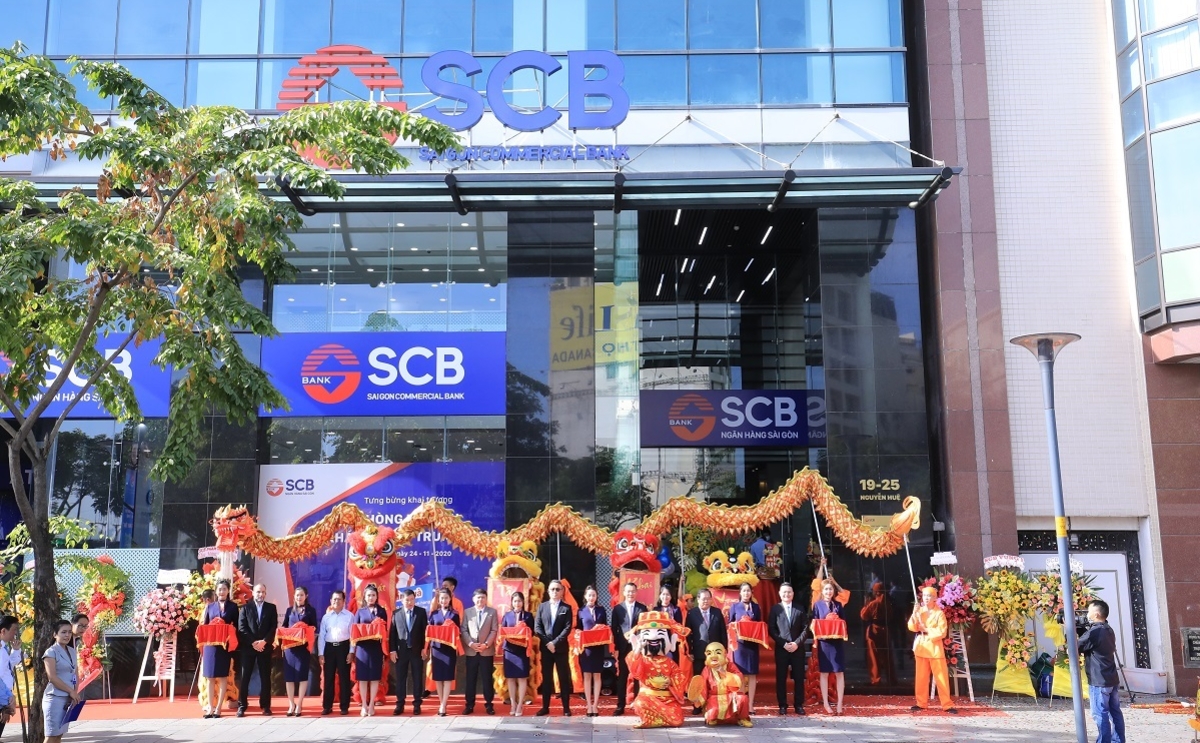
    The State Bank of Vietnam (SBV) is considering proposals from investors to restructure the Saigon Commercial Bank (SCB), a bank experiencing financial difficulties.

    After SCB faced a run in October 2022, the central bank put the private lender under special control to limit negative impacts on it and credit institutions in general.

    Historically, several banks under special control have successfully recovered and prospered.

    The SBV is also formulating plans to restructure other struggling banks, including CBBank, OceanBank, GP Bank, and DongABank.

    While plans to restructure these banks are being considered and prepared for approval, progress is lagging behind the anticipated schedule.

    The government has previously indicated the challenge of finding financially healthy commercial banks willing to merge with these ailing institutions.

    Additionally, banks require time to persuade shareholders, particularly major and foreign strategic shareholders, to agree to mandatory transfers.

    In mid-December, meeting with the leaders of Mizuho, one of the three largest banks in Japan, Prime Minister Pham Minh Chinh asked them to participate in restructuring Vietnam’s weak banks.

  • Carmaker Thaco eyes $4.1B circular bauxite complex project

    Carmaker Thaco eyes $4.1B circular bauxite complex project

    Carmaker THACO has proposed a circular economy complex for mining and processing bauxite worth VND103 trillion (US$4.1 billion) in Lam Dong Province.

    The project, called Lam Dong 2 Aluminum Complex, will be carried out in Bao Lam, Da Huoai and Da Teh districts and Bao Loc City.

    It will encompass the entire process of mining bauxite ores, processing them into aluminum, restoring the surrounding environment, planting crops and developing ecotourism in the area.

    Almost one-third of the project’s capital will come from THACO while the remainder will come from loans.

    The complex is divided into three stages, which will be carried out over 10 years, and is expected to produce four tons of aluminum per year once it is put into operation in 2034.

    During the project’s 50-year duration, it will mine bauxite ores to manufacture aluminum in the first 20 years then switch to external bauxite supply in the remaining 30 years, says THACO.

    The carmaker is asking to have a meeting with Lam Dong People’s Committee this month to present its research results and implementation plan for the project.

    It aims to complete the report on the project’s feasibility quickly and submit it to regulators within the first quarter of 2024.

    THACO is a multi-industry corporation that currently operates in automobiles, agriculture, mechanics, logistics, construction, and commerce.

    The firm’s profit after tax was just over VND1 billion for the first six months of 2023, which is barely 25% of the profit it earned in the same period in 2022 when the car industry was mired in difficulties.

    Lam Dong Province has one of the largest bauxite reserves in the Central Highlands region, and there are currently two bauxite plants in the province.

  • Metcash appoints Kylie Wallbridge as liquor division CEO

    Metcash appoints Kylie Wallbridge as liquor division CEO

    Wholesaler Metcash has appointed Kylie Wallbridge as the new CEO of its liquor division, effective in March.

    Metcash’s liquor segment includes the Cellarbrations, IGA Liquor, and The Bottle-O brands.

    Wallbridge will replace John Barakat, who has been the acting liquor CEO since the early retirement of Chris Baddock due to health reasons.

    Currently, Wallbridge serves as the MD of Diageo in the UK. She previously served as the MD of Diageo in Japan.

    “Kylie is a proven business leader with a track record for delivering results. Her alignment to our purpose of Championing Successful Independents and her passion for people is evident through her strong relationships with both retailers and suppliers,” said Metcash CEO Doug Jones.

    “I have no doubt Kylie will be a great asset to the Liquor pillar and Metcash more broadly. We warmly welcome her to Metcash. I would also like to sincerely thank John for acting in the role following the retirement of Chris last October.”

  • Global energy drinks market reaches $62.89 billion in FY23

    Global energy drinks market reaches $62.89 billion in FY23

    The global energy drinks market’s value reached $62.89 billion in 2023, posting a 7.5 percent compound annual growth rate (CAGR), with the strategic addition of new flavours emerging as a key trend.

    According to The Business Research Company, the increased demand on emerging distribution channels, notably e-commerce, is driving the growth of the energy drinks market.

    The research firm forecasts that the market, dominated by Red Bull, Monster Beverage Corporation, PepsiCo, and Coca-Cola Company, will further increase to $83.83 billion in 2027 at a sustained CAGR of 7.5 per cent.

    It noted that introducing new flavours is an emerging trend, such as Red Bull’s launching of Coconut Edition Sugar-free energy drinks in 2021, a mix of coconut and B-group vitamins, taurine, and acesulfame-K as a sweetening agent.

    Such innovations, which seek to attract new customers and boost sales, demonstrate the dynamism of the energy drinks industry.

  • Paradox Coffee unveils its first limited-edition single-origin coffee

    Paradox Coffee unveils its first limited-edition single-origin coffee

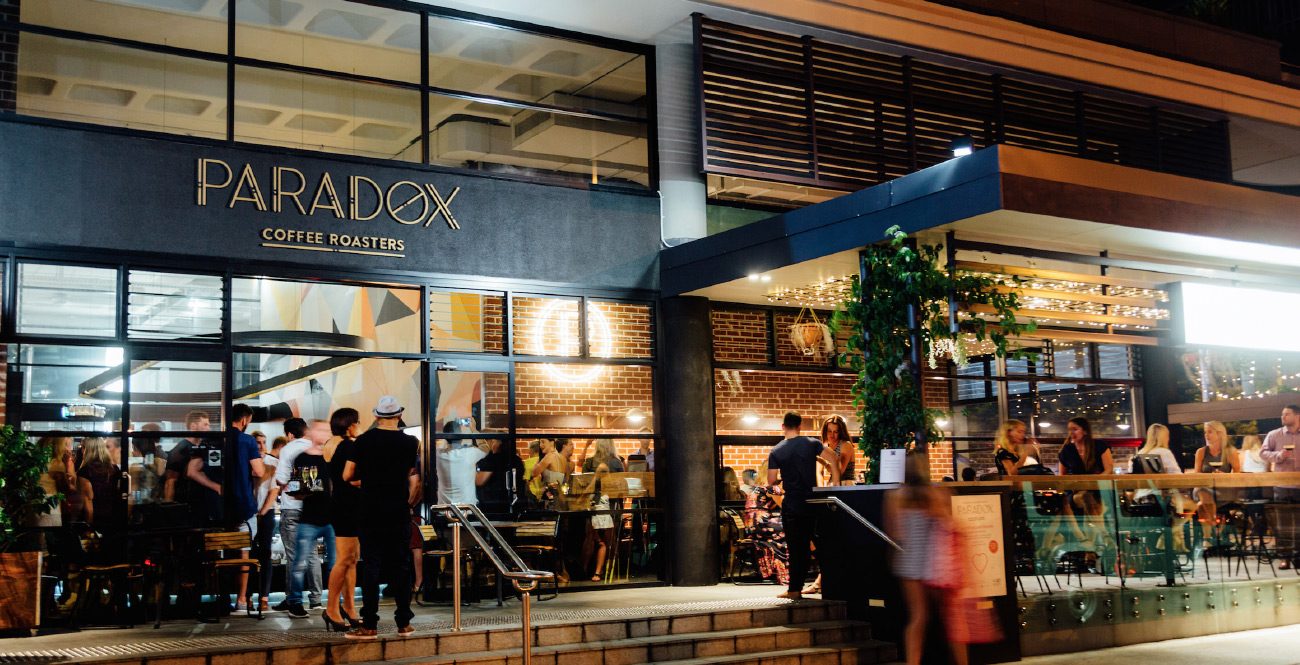
    Paradox Coffee Roasters has introduced Los Contares Panama Geisha Natural, the brand’s first limited edition single-origin coffee, with only 100 tins produced and roasted to order.

    But it is not for the budget-conscious: Los Cantares Panama Geisha Natural comes in a 100gm numbered tin and sells for $65. It is only available to purchase online at paradoxroasters.com.

    The specialty fine filter coffee originates from Panama, Central America, and Paradox says it boasts “complex-tasting notes of strawberries, soft floral jasmine, nashi pear’s sweet acidity, and a gentle clean finish”.

    “It is not every day you come across a coffee with such a symphony of flavours,” says Yogesh, head coffee roaster, Paradox Coffee Roasters.

    “Every sip highlights how precious this coffee is and I am sure you will enjoy it as much as I do.”

    The tins also contain information on the coffee estate owned by coffee producer Marie Jackie Mercer, a brew recipe, coffee tasting notes, and a personalised invitation to a virtual coffee tasting session led by the brand’s training managers and head roaster.

    “Our virtual tasting session is designed as a journey of discovery,” says Nicole Saleh, MD at Paradox Coffee Roasters.

    “People who purchase this exceptional coffee can join our Paradox team online for an interactive coffee experience to learn more about the coffee origin and farm, how the coffee is roasted, how to brew this exceptional filter coffee, a discussion of the characteristics in the cup and what makes this Los Cantres Natural Panama Geisha so special”.

  • McDonald’s Malaysia files $1M lawsuit against Israel boycott movement

    McDonald’s Malaysia files $1M lawsuit against Israel boycott movement

    McDonald’s Malaysia has filed a lawsuit seeking US$1.31 million in damages from a movement promoting boycotts against Israel for “false and defamatory statements.”

    Gerbang Alaf Restaurants Sdn Bhd (GAR), which is the licensee of McDonald’s in Malaysia, is suing the Boycott, Divestment and Sanctions (BDS) Malaysia movement, claiming that BDS had made a series of social media posts linking the fast-food franchise with Israel’s military offensive in Gaza?

    It said the BDS campaign has encouraged a public boycott of McDonald’s Malaysia, resulting in financial losses, employment reductions and other adverse effects due to the shutdown and reduced operational hours of its establishments.

    In response, BDS Malaysia said it “categorically denies” defaming the fast-food company and would leave the matter to the court.

    “Boycotting companies like these is a personal choice and it is up to that individual consumer,quoted social media user Sheryl Ho as saying.

    “That being said, anyone in their right frame of mind who wasn’t boycotting [McDonald’s] before this, sure would be doing it now.

    “They terminated their staff to save cost and they are making other people pay for it?” X user Syafiq Fadli asked.

  • Air India reveals new livery on its first A350

    Air India reveals new livery on its first A350

    Air India welcomed the first of 20 Airbus A350-900 aircraft on 23 December sporting the airline’s latest livery.

    The widebody aircraft, registered VT-JRA, arrived in New Delhi at 13:46 (local time) after the delivery flight from the Airbus facility in Toulouse.

    With the latest delivery, Air India is now the first carrier in the country to operate the A350. The aircraft will enter commercial service in January 2024 and will initially be operated domestically for crew familiarisation.

    Air India has 20 Airbus A350-900 on order, with five more scheduled for deliveries through March 2024. The airline’s firm orders with Airbus this year amounting to 250 aircraft also include 20 A350-1000.

    “This moment marks a red-letter day for all of us at Air India,” said Campbell Wilson, CEO and managing director at Air India.

    “The A350 is not just metal and engines; it’s the flying embodiment of the relentless efforts of all Air India employees towards our airline’s continuing transformation and of our commitment to setting new benchmarks. It is also, in many ways, a declaration of Indian aviation’s resurgence on the world stage.”

  • Samsung Wallet rolls out mobile driver’s licenses

    Samsung Wallet rolls out mobile driver’s licenses

    Samsung Wallet, the app that lets users store and manage their cards, tickets, and coupons on their Samsung Galaxy smartphones, has added a new feature: mobile driver’s licenses and state IDs. The company announced back in October that it will bring this feature to Arizona and Iowa, however, other than “coming later this year,” no specific date was given for when it would exactly go live.

    Now, it looks like the wait is over as the feature is live in Arizona, according to the Arizona Department of Transportation announcement. Samsung Wallet users who are Arizona residents can now store a digital version of their physical cards on their phones and use them at places that accept digital IDs, such as TSA checkpoints at select airports.

    This feature offers more convenience and security for users, as they don’t have to carry their physical cards with them and risk losing or damaging them. The digital IDs are also encrypted and protected by fingerprint or PIN authentication, so only the authorized user can access them.

    To add a mobile driver’s license or state ID to Samsung Wallet, users just need to open the app, go to the Quick access tab, and click on the ‘+’ button. Select ‘Digital IDs’ from there, and click on the ‘Driver’s License/State ID’ option. At that point, users will need to scan the front and back of their ID card and verify their identity with a face scan.

    Samsung says the face scan is only for verification purposes and does not store any biometric data. After submitting the scan, users need to authenticate with their fingerprint or PIN to complete the process.

    This convenience isn’t just limited to air travel, though. Samsung envisions a future where digital IDs can be used for age verification, entering age-restricted establishments, and even renting a car. While Arizona is the first to experience this revolution, Samsung promises to add more states and functionalities in the near future.

  • Amazon tells its Prime Video subscribers that ads are coming on January 29th

    Amazon tells its Prime Video subscribers that ads are coming on January 29th

    Get ready for a dose of reality (and advertisements) between your binge sessions: Amazon Prime Video officially joins the ad-fueled streaming party. After announcing what was coming a few months back, Amazon has now confirmed via an email sent to its Prime members, that their favorite movies and shows will be punctuated by ads starting January 29, 2024.

    This shift significantly departs from Prime Video’s ad-free haven, a perk previously bundled with the $139/year (or $14.99/month) Prime subscription, known primarily for its free two-day shipping. But for those averse to mid-episode interruptions, Amazon is offering an option that will cost you: an ad-free tier for an additional $2.99/month, plus applicable taxes.

    Justifying the move, Amazon cites the need to fuel its ever-expanding content library. “This will allow us to continue investing in compelling content and keep increasing that investment over a long time,” their email reads, assuring us of “meaningfully fewer ads” compared to traditional TV.

    Interestingly, Amazon is already pre-selling the ad-free tier, giving Prime members a head start on securing uninterrupted viewing. This change, of course, does not apply to rented or purchased content from the streaming service. However, note that certain types of content, such as sports or Freevee titles, will continue to include ads even when the viewer is subscribed to the ad-free tier.

    While some appreciate the “investment in compelling content” reasoning, reactions by long time Prime subscribers show that they feel betrayed by the broken promise of ad-free streaming. The price hike adds fuel to the fire, leaving members questioning the true value proposition of Prime Video.

    Will Amazon’s ad-spiked strategy pay off? Only time will tell. But one thing’s certain: the golden age of ad-free streaming seems to be fading, leaving viewers with a choice – pay more, pay less with ads, or seek greener (and ad-free) pastures elsewhere.