Tag: asia

  • Ho Say Liao, Singapore! Shake Shack’s First Southeast Asia Restaurant Lands at Jewel Changi Airport

    Ho Say Liao, Singapore! Shake Shack’s First Southeast Asia Restaurant Lands at Jewel Changi Airport

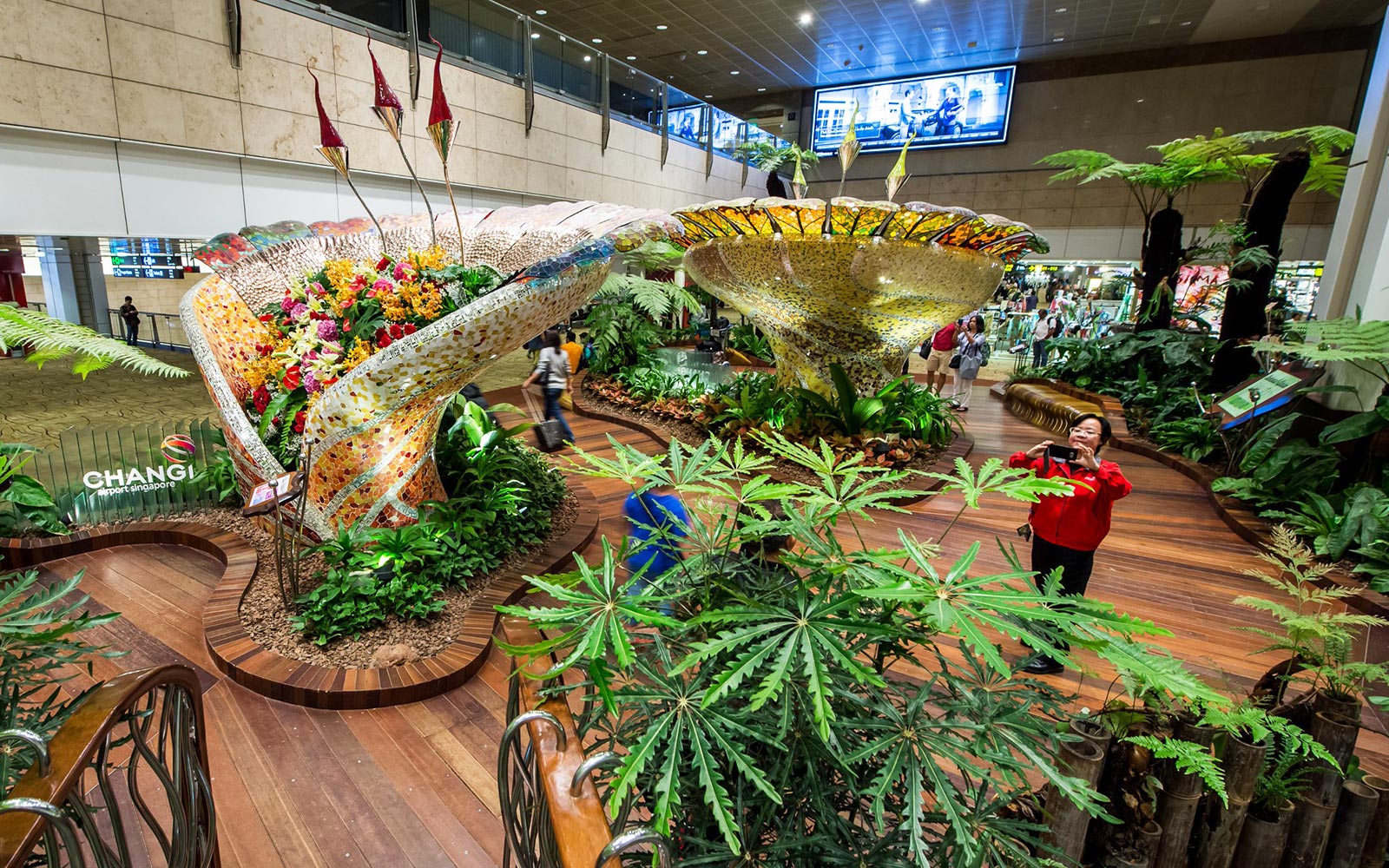
    Singaporeans, the wait is finally over! Shake Shack is set to make its highly anticipated debut in Singapore (and in Southeast Asia!) at Jewel Changi Airport on 17 April 2019. The Singapore menu will feature Shake Shack’s signature items including the ShackBurger®, Shack-cago
    Dog™, classic crinkle-cut fries, craft beer, wine and frozen custard ice-cream. Shake Shack will also partner with local food purveyors and producers to create one-of-a-kind items for the Singapore community. Stay tuned to @shakeshacksg for details on the exclusive menu! Shake Shack has partnered with SPC Group, a leading global food company based in the Republic of Korea to bring Shake Shack to the Lion City. The SPC Group is a 74-year-old food company with 51 subsidiaries and 35 brands around the world including USA, France, China and Singapore. In 2016, SPC Group launched the first Shake Shack in Korea and is currently operating 8 Shake Shack restaurants across Seoul.

    Shake Shack is a critically acclaimed, modern day “roadside” burger stand known for its 100% all-natural Angus beef burgers (no hormones or antibiotics – ever), griddled flat-top beef hotdogs, fresh-made frozen custard, crispy crinkle cut fries and more. A fun and lively community gathering place with widespread appeal, Shake Shack has earned a cult-like following around the world. In its fifteen-year history, Shake Shack has been recognized with countless accolades, including Bon Appétit’s “The 20 Most Important Restaurants in America” (ranked #16), TIME Magazine’s “17 Most Influential Burgers of All Time” (ranked #7 for the ShackBurger) and winning “Best Burger” in 2007 and 2014 at the South Beach Wine and Food Festival’s Burger Bash.

    Shake Shack started as a hot dog cart in Madison Square Park, created by Danny Meyer’s Union Square Hospitality Group to support the Madison Square Park Conservancy’s first public art project. After three summers of fans lining up daily for the cart, Shake Shack opened a permanent kiosk in the park, and Shake Shack was officially born. An instant neighbourhood fixture, Shake Shack welcomed people from all over the city, country and world who gathered together to enjoy fresh, simple, high quality versions of the classics in a majestic setting.

    Fine dining roots are a unique part of Shake Shack’s beginnings. For its first three summers, Shake Shack operated out of Eleven Madison Park’s private dining-room kitchen (voted #1 restaurant in the world in 2018) and continued to work closely with the restaurant for years. That fine dining heritage remains a core tenant of Shake Shack today – from its premium ingredients to its sourcing practices to the acclaimed chefs Shake Shack collaborates with around the world like Dominique Ansel, Missy Robbins, Rosio Sanchez, Chef Zaiyu Hasegawa, Daniel Boulud, David Chang, and more. Shake Shack sources only high quality, premium ingredients from the best ranchers, farmers, bakers and food purveyors.

    The beef patty is 100% all-natural Angus, vegetarian fed, humanely raised and source verified with no hormones or antibiotics. The fries are crinkle cut with zero artificial ingredients and the vanilla and chocolate frozen custards use only real sugar, no corn syrup, and milk from dairy farmers who pledge not to use artificial growth hormones. Shake Shack’s fine dining heritage and commitment to community building, hospitality and the sourcing of premium ingredients have helped pioneer a new “fine casual” restaurant category. Fine Casual couples the ease, value and convenience of fast casual with the high standards of excellence grounded in fine dining heritage: thoughtful ingredient sourcing and preparation, hospitality and quality. As a pioneer in this new category, Shake Shack strives to maintain the culinary traditions of the classic American burger stand, while providing guests with a menu of inspired food and drinks, made with carefully sourced and quality ingredients, and always cooked to order


  • Save More and Enjoy Delicious Food with OpenRice and Mastercard

    Save More and Enjoy Delicious Food with OpenRice and Mastercard

    Hungry? Dreading that lunch queue? Busy Hong Kong foodies never have to worry about waiting in line for food ever again! Pre-order and collect takeaways straight away with special discounts from OpenRice app using Mastercard!

    From now until June 30, 2019, Mastercard cardholders who register for the OpenRice takeaway service cansave up to HK$50 through discounts while having the best food options in Hong Kong at the palm of their hands1!

    • Upon registration using an eligible Mastercard, a HK$20 instant discount can be enjoyed by OpenRice members in their first transaction in the preorder takeaway service when paying with Mastercard.
    • The successful registrants can enjoy HK$15 discounts in both their second and third transactions, with orders above HK$40 under their OpenRice accounts, when selecting their registered Mastercard as payment method.

    Hurry! Fill yourself up with your favorite food and beverages from all over Hong Kong via Mastercard!

  • Asian firms are better prepared than European peers to comply with data-privacy regulations, according to new EIU study

    Asian firms are better prepared than European peers to comply with data-privacy regulations, according to new EIU study

    The collection and use of personal data for commercial purposes are on the rise, but concerns over privacy and cyber-security breaches are causing concern among consumers, companies and regulators alike. The report, The transparent business barometer: Preparing for the end of easy data, written by The Economist Intelligence Unit (EIU) and sponsored by Ant Financial, assesses companies’ level of preparedness to face a more privacy-conscious world. It is largely based on a survey of 250 executives across China, the US, Western Europe and South-east Asia.

    Nearly 100% of respondents agree that data privacy is important to their organisation, with a majority (54%) saying it will be much more so in three years’ time. One reason for this is the perceived importance of data privacy to good corporate governance, which is something that 88% of executives across the surveyed regions and almost all Chinese executives (98%) believe to be true.

    Many firms are waking up to the fact that stricter laws in the mould of the EU’s General Data Protection Regulation may be in the offing. In a barometer constructed for this study, companies were asked to rank their preparedness to face various data-privacy regulations, such as that which might restrict their ability to gather data directly from consumers, on a one-to-ten scale. Overall, they are relatively well prepared, although they are less willing to take different measures, such as changing business models to reduce reliance on consumer data, in response to such regulations. Compared with bullish Americans, executives in Europe are the least prepared to face regulations and least likely to try new approaches in response to them, while the sentiment in China and South-east Asia falls between those two extremes.

    Transparent business barometer aggregate scores, by region

    (Scores out of 10)

      China US Western Europe South-east Asia Total
    Readiness 7.35 8.04 6.69 7.42 7.36
    Likelihood 6.58 7.16 5.67 6.56 6.47
    Overall 7.06 7.71 6.31 7.10 7.02

    Smaller companies are also less ready to face regulations than their larger counterparts, even as some large firms, including tech heavyweights like Apple and Google, are now beginning to call for regulators to create greater clarity—a step that will hopefully lessen uncertainty going forward.

    Michael Gold, editor of the report, says: “Businesses need to be aware that playing fast and loose with consumer data can lead to major repercussions down the road. Smart, well-co-ordinated regulations can make the business world more transparent and trustworthy amid a growing realisation that data is truly the ‘new oil’ in today’s economy.”

    Full report can be downloaded here.

  • Furla Exceeds 500 Million

    Furla Exceeds 500 Million

    Turnover of the storied Italian leather goods brand increased to 513 million euros. Over the course of the fiscal year, the company made significant investments to strengthen its supply chain and technology – and began 2019 with the launch of its new sneaker collection

    Furla Group continues to grow: over the past four fiscal years, it has doubled its turnover, hitting 513 million euros in 2018, a 5.2% increase at constant exchange over 2017 (or a 2.8% increase at current exchange).

    Analyzing sales by geographic area and at constant exchange, the Asia Pacific region shines, with an 18.2% year-on-year increase in 2018; it now accounts for 26% of total turnover. The United States, meanwhile, saw an increase of 13.2%, and now accounts for 8% of total turnover. Japan remains the brand’s leading market (22% of total sales), and sales there were up 3.6% compared to 2017. The EMEA region, which represents 44% of global turnover, maintains its market position.

    Furla Group continues to seek direct control of its brand distribution through a strengthening of its mono-brand stores, which produced 70% of turnover in 2018. Direct distribution, combined with multi-brand sales points and franchising, allows Furla to have a far-reaching presence in 98 countries worldwide: its 490 mono-brands (285 directly owned, 163 franchisees and 42 travel retail doors) are in the most prestigious international shopping locations. Over 1,200 select multi-brands and department store corners complete the company’s distribution network.

    Of particular note is the travel retail sector, which is in continuous evolution and in 2018 registered a 16.2% increase over 2017, accounting for 7.3% of the Group’s turnover through its sales at 293 doors, from boutiques, corners, shop-in-shops, aircraft and cruise ships, across 64 countries.

    The company paid special attention to its direct e-commerce platform, where, thanks to repeated investments, there was a substantial turnover increase in 2018: 45.7% over the previous year, at constant exchange.

    Furla Group is focused on solidifying the wild growth it has experienced over the past several years. The company has directed major resources toward strengthening the supply chain, as well as systemically integrating countries with direct and indirect distribution networks into Furla’s corporate culture and technology.

    The supply chain, which is key to guaranteeing the quality and timeliness of manufacturing, has recently benefited from the company’s adoption of a more evolved and high-performing computer system, as well as financial tools that free up resources so that suppliers can invest in bettering the manufacturing cycle.

    After years of geographic expansion across the globe, the Group is now focused on a more selective development and on categories of merchandise that are complementary to its core business: in February of this year, during Milan fashion week, Furla introduced its new sneaker collection, supported by a series of important 360° marketing activities.

    Furla has further strengthened investment in its marketing operations, underlining its particular attention to digital communication and social channels, which have shown an important increase of followers (+64% versus 2017 on Instagram and WeChat), while maintaining one of the highest engagement rates (1,59%) within the fashion luxury category.

    Furla Group’s continuing investments in human resources have long allowed it not only to add jobs, but also to provide a better quality work life at the company and incentivize employees through its corporate welfare system “Furla for You.” This initiative has been recognized two years in a row for its excellence, with Furla listed among Italy’s Top Employers.

    “We are highly satisfied with these financial results, which we achieved at a challenging time for the international market,” said Alberto Camerlengo, Chief Executive Officer of Furla Group.  “We’ve invested significant financial resources in managing the unrestrained growth the company has experienced over the last several years, from acquiring total control of our retail distribution network in China, Hong Kong,Macau and Singapore, to strengthening our supply chain. Our single, fundamental goal has always been to guarantee continuity and excellence in all of Furla’s creations.”

  • Telenor Pakistan, is celebrating its 14th anniversary with a renewed commitment to empowering Pakistan

    Telenor Pakistan, is celebrating its 14th anniversary with a renewed commitment to empowering Pakistan

    Pakistan’s leading telecom and digital services provider, Telenor Pakistan, is celebrating its 14th anniversary with a renewed commitment to empowering Pakistan. Since the beginning of its commercial operations in 2005, the company has emerged as the second largest cellular operator in the country with 44 million strong and growing customer base and 28% share in the Pakistani telecom market. Telenor Pakistan has also become the leader of ICT-powered digital transformation in the country.

    Telenor Pakistan’s journey comprises many industry first initiatives and benchmarks including the country’s first and foremost mobile banking service, Easypaisa, best-in-class data and broadband services, multiple-award winning digital solutions for agriculture and civic rights, Voice Over LTE (VoLTE) enabled network, and the industry’s first and only 4.5G service, to name a few. The company recently established its new headquarters in Islamabad that is built to induce innovation and creativity into solutions for the customers. Since its inception, Telenor Pakistan has taken a frontrunner position in building and developing a digital ecosystem in Pakistan and is a key enabler of the country’s national digital agenda.

    Throughout its operations, Telenor Pakistan has ensured that its purpose of ‘connecting people to what matters most to them’ is fully integrated to its products and services along with ways of doing business. Keeping sustainability a priority in all business processes and policies, Telenor Pakistan’s solutions are enabling socioeconomic growth and development in the country which is reflective of the company’s commitment towards giving more power to its customers through innovative digital connectivity.

    “Since the beginning, Telenor Pakistan has been a strong proponent of technology being the answer to socioeconomic challenges,” said Irfan Wahab Khan, CEO Telenor Pakistan. “We have always been on the lookout for new ways to extend the benefits of technology not only to our customers, but to millions of Pakistanis who are yet to be digitally and financially included. With proliferation of mobile phones, we realized there’s no better way to empower them than leveraging the strong tele-density in the Pakistani market. That is when our digital interventions to empower our society shifted gears and today we lead the industry with disruptive solutions in agriculture, civic rights, IoT, emerging solutions in entertainment, and more. This is only the start of an exciting journey ahead,” he added.

    During the past 14 years, Telenor Pakistan has powered the country’s digital ecosystem using a multilateral approach that includes continuous increase in network footprint, innovative products & services, and making connectivity affordable. Besides ensuring best-in-class services and expanding our network to underserved and unserved areas, Telenor Pakistan’s portfolio of affordable data devices and services is enabling accelerated digital uptake in the country. Initiatives like Telenor Velocity, Youth Forum (TYF) and Ignite encourage a sustainable entrepreneurial mindset across the country and within Telenor Pakistan.

    Telenor Pakistan has made substantial contributions in the form of investment in the country that include over $3.5 billion in spectrum and infrastructure, over $2.5 billion in the national exchequer, and over $70 million in the new Islamabad HQ. Telenor Pakistan’s impact on the society has also been significant with over 1,600 direct jobs, enablement of the wider economy, and measures for sustainability in the supply chain. The impact that the company’s digital interventions are making in areas like financial services, agriculture, and ensuring easy access of civic rights through digital birth registration is redefining sustainability and setting new standards.

    “We thank Pakistan and millions of Pakistanis for choosing us as their preferred telecom and digital solutions provider,” said Irfan Wahab Khan, CEO Telenor Pakistan. “On our 14th anniversary, we pledge to continue serving Pakistan by supporting our national inclusion agenda, being a gateway to the latest technological innovations and creative solutions to meet our customers’ needs, and giving them more reasons to love Telenor. We are here to stay and our commitment to empowering Pakistan only gets stronger with each passing year. With continued support from the government and our cherished customers, we are on the road to achieving greater milestones in the coming times.”

  • Telenor Myanmar extends non-stop roaming to Malaysia, Singapore

    Telenor Myanmar extends non-stop roaming to Malaysia, Singapore

    Telenor Myanmar has expanded its unlimited international data roaming service to Malaysia and Singapore, one month after the launch of the new service in Thailand.

    The company’s non-stop data roaming pack offers unlimited data in the three international markets for total fees of 999 kyats ($0.65) for three days of service. Speeds are uncapped for the first 1GB per day, and then shaped to 512kbps.

    Prepaid and postpaid customers can activate the service on the MyTelenor APP, sending a message to a dedicated number, or dialing a different number.

    “We are amazed by the support we have seen on our latest roaming product for visitors to Thailand. So we decided to extend this popular service to Malaysia and Singapore which we know as the other two most frequently visited countries in Southeast Asia,” Telenor Myanmar CMO Amaresh Kumar said.

    “We have made international roaming affordable for everyone and we welcome our customers to experience the only worry-free data roaming packs that users can get in Myanmar.”

    Thanks to the connections of parent company Telenor from Norway, Telenor Myanmar now offers roaming services with 171 partner operators in 125 countries, with its 4G roaming service currently available in China, Thailand, Malaysia, Singapore, Japan, UAE, Canada, Macau, Taiwan, New Zealand, Sweden, Belgium and Norway.

    Meanwhile subscribers to 227 operators from 134 countries can use their overseas SIMs with the Telenor network in Myanmar.

  • SK Telecom builds 5G mobile edge computing open platform

    SK Telecom builds 5G mobile edge computing open platform

    SK Telecom unveiled its mobile edge computing (MEC) open platform, which it says can enhance response times in 5G data communications. The operator plans to open up its MEC platform to enterprise customers to enable them to offer new services.

    MEC, which will be used in 5G networks to deliver ultra-low latency data, enables operators to cut down on latency by installing tiny data centers at 5G base stations. SK Telecom says MEC can cut latency by 60%. Applications such as AR/VR services, cloud gaming services, autonomous driving and fleet management, and real-time live broadcasting will all make use of MEC in 5G networks.

    “By opening up the ‘5G Mobile Edge Computing Platform’, SK Telecom will secure the basis for expanding the MEC-related ecosystem and accelerating the release of 5G services,” said Park Jin-hyo, CTO of SK Telecom, in a statement. “SK Telecom will join hands with diverse companies throughout the globe to boost the adoption of MEC-based services.”

    SK Telecom is releasing an API that enterprise customers can use to develop MEC-based 5G services. The company is betting enterprise customers can use the platform to improve efficiency and QoE by reducing latency in communications. A smart factory, for example, can use the MEC platform and a 5G network to increase response time of manufacturing robots.

    At Mobile World Congress this year, the operator teamed up with MobiledgeX to demo a MEC-based industrial AR service. SK Telecom is also working with the Telecom Infra Project (TIP), the Facebook-backed tech initiative, to build out an ecosystem for MEC developers.

    SK Telecom also successfully conducted a 4G-5G network dual connectivity test with Samsung, using Samsung’s E-UTRAN New Radio Dual Connectivity (EN-DC) tech, which is based on the 3GPP 5G NR standard.

    The test checked network device interoperability using dual connectivity technology on 4G and 5G networks using Samsung’s Galaxy S10 5G smartphone and its virtual core (vCore) product that supports 4G and 5G simultaneously. The companies were able to achieve data rates of 2.65 Gbps on a 5G smartphone, with 1.5 Gbps coming from 5G using 3.5-GHz frequency and 1.15 Gbps coming from LTE using 1.8-GHz, 2.1-GHz, and 2.6-GHz frequencies.

    SK Telecom says the technology can be used to improve transmission data speed by 80% by leveraging the 4G and 5G dual connectivity.

  • AirAsia to launch Mumbai-Kolkata daily flight from Mid-April

    AirAsia to launch Mumbai-Kolkata daily flight from Mid-April

    Low cost carrier, AirAsia India Friday announced the launch of its flight services to Kolkata from the city next month. This would be airline’s second destination from Mumbai after it started operating daily services to Bengaluru from the country’s financial capital.  AirAsia India will now fly connecting Kolkata and Mumbai, with one daily flight, effective April 15, the airline said in a release Friday.

    The introduction of Mumbai-Kolkata route comes close on the heels of AirAsia India adding eighth additional flights to its network of 19 destinations.

    “We recently introduced the first connection between Bengaluru and Mumbai and are now adding a new connection between Mumbai and Kolkata. It’s a key market for AirAsia and this flight will strengthen our operations in East. This new route is a manifestation of our future growth plan in these key and important business markets, said Sunil Bhaskaran, managing director and chief executive officer, AirAsia India.

    AirAsia India, a joint venture between Tata Sons and Malaysian airlines’ group AirAsia, currently operates to 19 domestic destinations with a fleet of 20 Airbus A320 planes. The group made its first entry in the Mumbai market with the launch of AirAsia Berhad services to here from Kuala Lumpur in May 2010.

    However, in 2012 it withdrew the route citing high airport charges. But came back again with its subsidiary Indonesian AirAsia X in May 2017, which was again discontinued in April last year.

  • BMW Blames Trade Headwinds with Emissions Tests

    BMW Blames Trade Headwinds with Emissions Tests

    Profits at German high-end carmaker BMW tumbled in 2018, the firm said Friday, with trade headwinds and tough new EU emissions tests’ drag on performance set to last into this year.

    “Challenges facing the entire sector are unlikely to diminish in the coming months,” chief executive Harald Krueger said in a statement. Net profit at BMW slumped 16.9 percent to 7.2 billion euros ($8.2 billion), the group said.

    The Munich-based firm pointed to “political uncertainty, a cooling global economy… rising production costs to meet regulatory requirements, exchange rate effects and rising raw materials prices” as weights on its earnings.

    Operating, or underlying, profits fell less sharply, shedding 7.9 percent to 9.1 billion euros. Revenues were less strongly affected, falling 0.8 percent to 97.5 billion. Other carmakers’ scramble to sell cars not certified under the so-called WLTP test cycle before its introduction in September led to “unexpectedly intense competition”, BMW said, penalising the group for its decision to adopt the new procedure early.

    Meanwhile the group’s bottom line also suffered as it was ordered to recall over a million diesel cars to replace faulty components. BMW boosted unit sales at its flagship brand slightly, to 2.1 million cars, but deliveries of Minis fell back 2.8 percent, to 361,500. Luxury subsidiary Rolls-Royce lifted shipments 22 percent, to 4,107. Looking to different world regions, sales in Europe were flat while the Americas and Asia recorded slight growth.

    “Volumes grew signficantly” in China as BMW ramped production of X3 SUVs locally, the group said.

    Bosses said they would offer shareholders their second-highest dividend payout ever, at 3.50 euros per share. Looking ahead to 2019, BMW expects a “slight increase” in unit sales, in part thanks to new models. Investors offered a mildly positive reaction to the news, with BMW stock gaining 1.1 percent to trade at 74.59 euros around 11:30 am in Frankfurt (1030 GMT).

  • China Unicom profit spikes 457.8% in 2018

    China Unicom profit spikes 457.8% in 2018

    China Unicom has reported a more than five fold growth in net profit for 2018 as a result of strong data revenue growth and benefits from the company’s mixed ownership reform program.

    The annual results show a 457.8% spike in net profit to 10.19 billion yuan, contributing to what the operator called a “V-shaped rebound in profit” following its financial woes in 2016, when the operator’s annual profit shrank by nearly 95%.

    Operating revenue grew 5.8% to 290.88 billion yuan, with service revenue up 5.9% to 260.68 billion yuan.

    Mobile service revenue for the year grew 5.5% from the prior year to 165.1 billion yuan, with mobile data revenue jumping 13.7% to 104.8 billion yuan.

    China Unicom meanwhile recorded total 4G net additions of 45.05 million for the year, taking its total 4G subscriber base to 220 million. This represents 70% of the operator’s total mobile customer base, an eight percentage point increase from 2017.

    Total fixed broadband subscribers meanwhile increased by 4.3 million to more than 80 million, but fixed broadband revenue declined to 42.3 billion yuan due to intense competition and ongoing mobile substitution.

    The operator’s results represent the first full year of implementation of the mixed ownership reform program, which has involved opening up investment in a Chinese mobile operator to private investors for the first time.

    As part of the program, at the direction of the Chinese government, Unicom sold a 35% stake in the company to a group of 14 investors in 2017.

    “Looking ahead, the mixed-ownership reform has powered up the company with differentiated advantages, bringing invaluable opportunities for development,” China Unicom chairman and CEO Wang Xiaochu said.

    He said the company plans to continue to pursue growth based on its “Five New” operating strategy.

    “We intend to unleash more institutional benefits brought by New Governance, activate greater internal vibrancy with New DNA, achieve better efficiency and returns with New Operation, tap into the broader blue ocean with New Energy, and put together greater synergetic advantages with New Ecology.”

  • Audi Seeks Closer Ties To Porsche In Cost-Cutting Drive

    Audi Seeks Closer Ties To Porsche In Cost-Cutting Drive

    Audi will make greater use of vehicle platforms and technologies developed with Porsche and Volkswagen as it embarks on a 15 billion euro cost cutting and efficiency drive, Chief Executive Bram Schot said on Thursday. Audi, whose slogan is Vorsprung Durch Technik or Advantage Through Technology, was a key research hub within Volkswagen Group until its engineers were caught developing the engine software which masked excessive pollution levels.

    Now new Chief Executive Schot is tasked with overhauling Audi and refocusing research efforts after senior engineers were forced out by the dieselgate scandal, which has cost parent company Volkswagen more than 28 billion euros.

    “We are discussing what we do ourselves and where we share resources with other parts of Volkswagen. We ask ourselves: Do we need to do this in-house, is it standardised technology, and is it unique from the customer point of view,” Schot said.

    As part of group-wide savings efforts at Volkswagen, Audi has surrendered responsibility for developing driverless cars to engineers at VW in Hanover, Schot said, adding that Audi still retains responsibility for making semi-autonomous cars which still require drivers. Sources told Reuters in November that Audi may surrender its leadership in the area of developing self-driving cars as Volkswagen Group seeks to save costs. Further savings could come from deepening a research alliance with Porsche, another premium brand owned by parent company Volkswagen.

    “We can intensify our collaboration with Porsche,” Schot said. Porsche and Audi are already developing vehicle underpinnings for a premium electric sportscar, known as PPE. This vehicle platform will spawn a raft of premium electric cars, the company said.

    Audi will offer about 30 electric models by 2025, the company said. The customer response to these vehicles will help determine the scale of possible job cuts, the carmaker said. Audi workers have a job guarantee until 2025 but electric cars require fewer parts and fewer workers to assemble so Audi is working on a job cuts scheme which relies on voluntary redundancies through early retirement.

    The carmaker declined to provide a figure for possible headcount reductions citing ongoing negotiations with labour representatives at Audi.

    Audi, the premium brand owned by Volkswagen, said it expects to deliver an operating return on sales between 7 percent and 8.5 percent, below its long-term target, as costs for developing electric cars weigh on profits.

    Audi aims to deliver an operating return on sales of between 9 and 11 percent in the long term, the carmaker said on Thursday.

  • AirAsia’s Tony Fernandes quits Facebook, citing social media ‘hate’

    AirAsia’s Tony Fernandes quits Facebook, citing social media ‘hate’

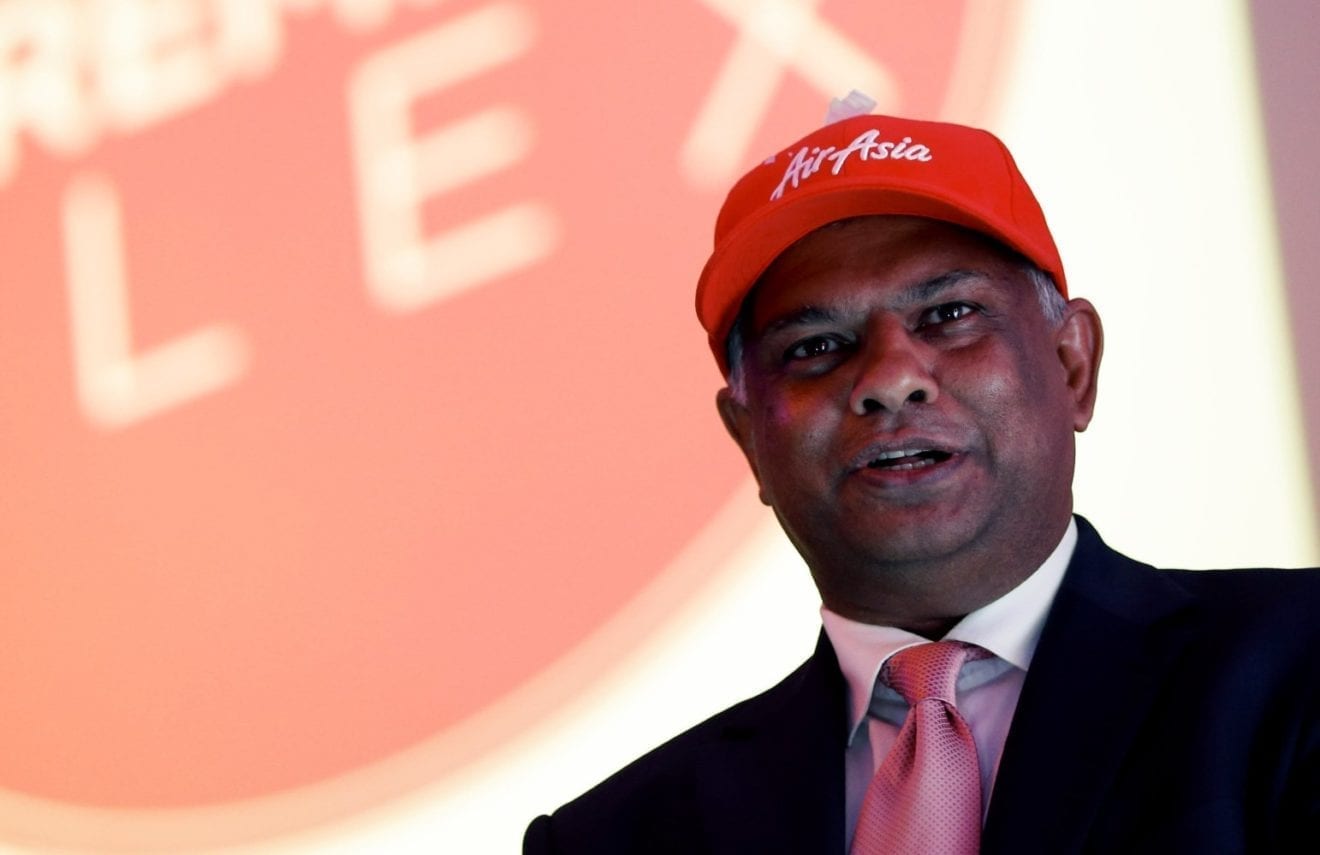
    AirAsia Group chief executive officer Tony Fernandes closed his Facebook account and said he may shut his Twitter page, citing “hate” being transmitted on the networks after the live-streaming of the terror attack on two mosques in New Zealand.

    “The amount of hate that goes on in social media sometimes outweighs the good,” Mr Fernandes said in a Twitter post on Sunday (March 17).

    “But on Twitter, I think the battle for me goes on.”

    Mr Fernandes said his Facebook account had 670,000 followers. He said in a Twitter post on Saturday that while he is “a big fan” of social media, he had to think hard about whether to remain on Facebook after Friday’s mass shooting that claimed 50 lives in New Zealand’s second-largest city of Christchurch.

    Mr Fernandes has about 1.29 million followers on Twitter and has tweeted more than 20,200 times since joining in 2008, commenting often on the performance of his companies and sports teams.

    He is the co-owner of English football club Queens Park Rangers. AirAsia is one of the region’s biggest discount carriers.

  • RCS and OTT to fuel A2P business messages to 3.5tr by 2023

    RCS and OTT to fuel A2P business messages to 3.5tr by 2023

    A new study from Juniper Research found that 3.5 trillion business A2P (Application-to-Person) messages will be delivered by 2023, up from an estimated 2.5 trillion in 2019, a 40% growth.

    The new Juniper Research paper, A2P Messaging: SMS, RCS & OTT Business Messaging 2019-2023, forecast that the rich media interactivity of RCS (Rich Communications Suite) would make the emerging messaging technology popular for retail and marketing business use cases.

    It claimed that this enhanced functionality will drive RCS traffic to an average annual growth of 290% over the next 4 years, to help the growth of operators’ total messaging revenues.

    Not enough

    However, despite strong growth, RCS will account for only 2% of all A2P traffic by 2023, reaching 56 billion A2P messages. The research suggested that A2P messaging users will continue to use SMS owing to the familiarity of the protocol. As a result, it claimed that the growth of RCS will be mostly driven by new traffic, rather than the migration of existing traffic from SMS.

    Research author Sam Barker remarked, “Future growth of RCS traffic will be driven by users migrating away from dedicated mobile apps. The technology will develop to become the first point of contact for RCS users to engage with brands over mobile devices within 5 years”.

    OTT business messages future slowed by fragmentation

    The research also found that OTT business messaging platforms, such as WhatsApp for Business, will deliver 236 billion messages by 2023. However, they will continue to suffer from a fragmented user base across multiple messaging applications.

    The research cited the use of CPaaS (Communications-Platform-as-a-Service) solutions as essential to enable fallback onto the ubiquitous SMS protocol to ensure message termination. Additionally, it found these platforms will allow the collection of insightful data, including contact preferences, to enable A2P business users to optimize messaging campaigns.

  • Toyota To Increase Prices Of Its Cars From April

    Toyota To Increase Prices Of Its Cars From April

    Toyota Kirloskar Motors today announced that it will be hiking the prices of some of its models from April 1, 2019. The company said that till now it had been absorbing the additional costs through refinement in its production process, but the increase in the price of raw materials and the sky rocketing input costs has made it difficult for the company to contain the costs of its vehicles.

    N. Raja, Deputy Managing Director, Toyota Kirloskar Motor, said “Toyota Kirloskar Motor will increase the prices of some of its products effective 1st April 2019. We have been absorbing additional costs through a bouquet of cost reduction measures including refinement in production process. However, considering the trend of continuous increase, we are constrained to pass on a small portion to the customers. The company will continue its efforts to contain costs and offer the best value to our loyal customers.”

    The company has, however, not indicated the quantum hike of the increase in the costs of its cars and neither has it indicated on the models which are covered under this price hike.

  • Mass-production of a key component for 5G Apple iPhone about to Start

    Mass-production of a key component for 5G Apple iPhone about to Start

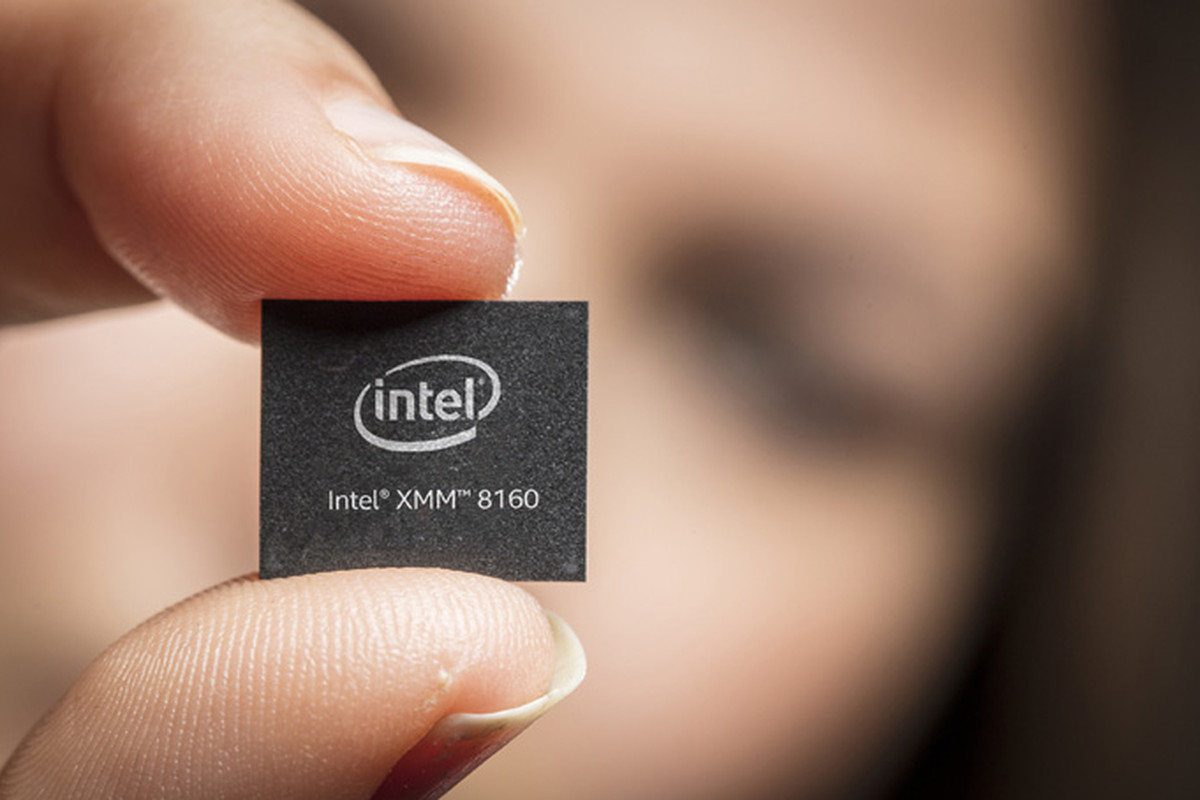
    Since Apple is expected to use Intel’s modem chips for its first batch of 5G compatible phones, we know not to expect 5G iPhones to be unveiled until 2020. That’s because Intel won’t have its modem chip for the next generation of wireless connectivity ready until next year. The chip maker will start work next quarter on the engineering projects it needs to finish in order to begin volume production of its 5G modem.

    Once Intel starts producing its 5G modem chip in 2020, it will compete with Qualcomm’s recently introduced Snapdragon X55 5G modem, the sequel to the Snapdragon X50 5G modem. The latter will be used on most 5G Android phones this year. It also will go up against the 5G modem chip designed by MediaTek. All three firms could still be in play to become the source of Apple’s 5G modem chips, although previous reports state that Intel has already won this battle. Sources cited in yesterday’s report say that Intel will also continue to generate revenue from selling its 4G modem chips to Apple for older iPhone 7 and iPhone 8 models.

    Apple currently has a contentious relationship with Qualcomm; over the last few months both sides have squared off in court on issues ranging from patent infringement to royalty payments. Just yesterday, one judge ruled that Qualcomm owed Apple close to a billion dollars in royalty payments it promised to rebate to the company (the actual figure is much. much higher says FOSS Patents). Meanwhile, a jury in San Diego yesterday ordered Apple to pay Qualcomm $31 million after it found Apple liable of infringing on a trio of patents. On March 26th, the International Trade Commission will rule on Qualcomm’s request for an exclusion order to be imposed on the iPhone in the U.S. Such an order would result in a sales and import ban of certain iPhone models in the states.

    Intel is now the exclusive source of modem chips for the iPhone

    During yet another trial held earlier this year (FTC v. Qualcomm), the plaintiffs called Apple supply chain executive Tony Blevins to the stand. Blevins testified that Apple had looked at sourcing 5G modems from Samsung and MediaTek. There is also speculation that Apple will design its own 5G modem chip, like it does for the A-series chipset that powers the iPhone and iPad. But Apple isn’t expected to deliver an in-house 5G modem design until 2021 at the earliest.

    From 2011 to 2015, Qualcomm was the exclusive provider of modem chips for the iPhone. That changed in 2016 when both Qualcomm and Intel were responsible for the modems used on the iPhone. That continued in 2017, and last year Apple sourced all of the modem chips used on the latest iPhone models from Intel.

    Apple is expected to be among the last major phone manufacturers to produce a 5G phone. Samsung has already unveiled its first 5G phone, which will debut on Verizon this summer. Huawei, LG and Oppo should also release 5G phones this year, and the 5G Moto Mod will allow the Motorola Z3 to support the faster data speeds as soon as Verizon flips the switch to turn on its new service. Once 5G service becomes more mainstream and less a curiosity, the faster data speeds will allow new services and businesses to be created. With 5G, a television series that takes 10 minutes to 15 minutes to download over 4G, will take only seconds to complete the task.

    When the industry transitioned from 3G to 4G LTE, Apple was one of the last major manufacturers to deliver a phone that supported the then-new technology. While a number of Android phones were launched with support for 4G LTE in 2011, Apple didn’t release a 4G LTE enabled handset until 2012’s iPhone 5.