Tag: asia

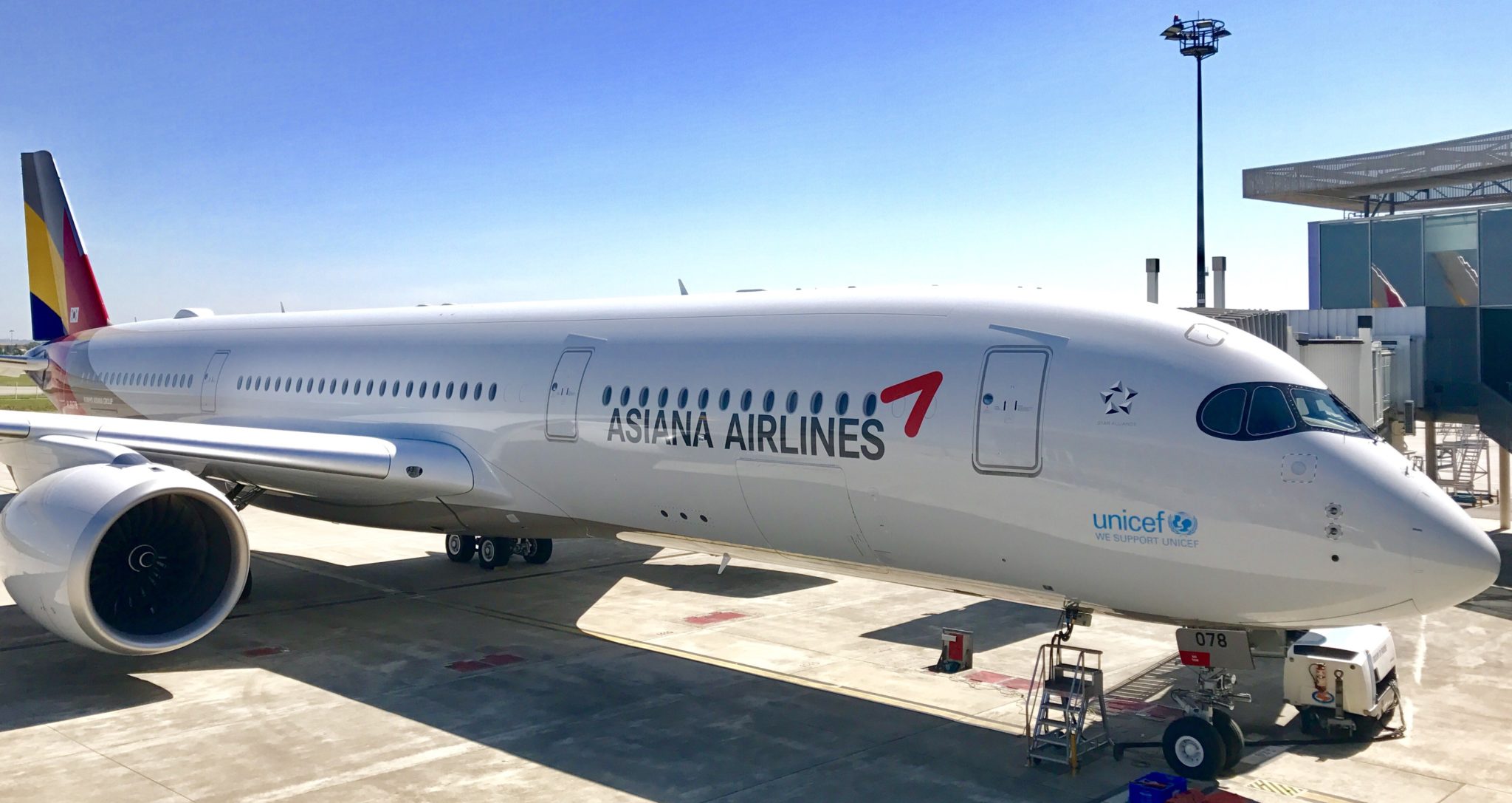
  • Asiana and pilots reach safe operations agreement

    Asiana and pilots reach safe operations agreement

    Asiana Airlines and its pilot labor union jointly announced their vision for safe airline operations, the airline said Friday. During a ceremony held for the announcement Thursday, they vowed to strengthen communications for safe flight operations and cooperate in enhancing airline sustainability. The ceremony was held at the company headquarters in Gangseo District, western Seoul.

    Asiana Airlines CEO Han Chang-soo and Asiana Pilot Union head Kim Young-gone attended.

    The union requested the company establish a new team that will make sure there are no obstacles to safe flight and improve pilot rights and interests. The company agreed to fully support safe and secure flight operations.

    The two parties completed wage negotiations in September and have since worked toward cooperation.

  • H&M launches collection with artist Nathalie Lete

    H&M launches collection with artist Nathalie Lete

    H&M has unveiled a collaboration with Paris-based artist Nathalie Lete on a children’s clothing and accessories capsule collection. The collection, which will be available online and in selected stores worldwide from March 7, features several of Lete’s fantasy-land-inspired artworks as prints.

    The H&M collaboration is a childrenswear collection for babies and children with a wide range of t-shirts, jackets, jeans, dresses, jumpsuits, shorts and swimsuits. The colourful animal and floral prints created by artist Nathalie Lete start with paintings in acrylics by hand, which are then artfully arranged together to create an imaginative story. For this collaboration, Lete brought a tropical jungle to life with chameleons and tigers, along with her iconic representation of flowers with cats, birds and rabbits.

    “In my work, I create a fantasy land for myself,” said Lete. “A land that I want to share with other people to make them dream. It’s all about flowers, animals, birds, naivety and colors. I want to create a cocoon that brings happiness and harmony all around. The relationships between the different elements tells stories, stories that create a beautiful atmosphere. I ‘m happy to share my world through this collaboration, all around the world, together with H&M.”

    “Natalie Lete and her work is something we have admired for a long time, and we are thrilled to be collaborating with her for this kids’ collection,” said H&M kids’ division designer Jennifer Helmer.

    “The collection is playful and inviting and the pieces truly makes you feel like you’re in a botanical dream. We cannot wait to share this collection with our youngest fans.”

  • Puma pips rivals, becomes top sportswear brand in India

    Puma pips rivals, becomes top sportswear brand in India

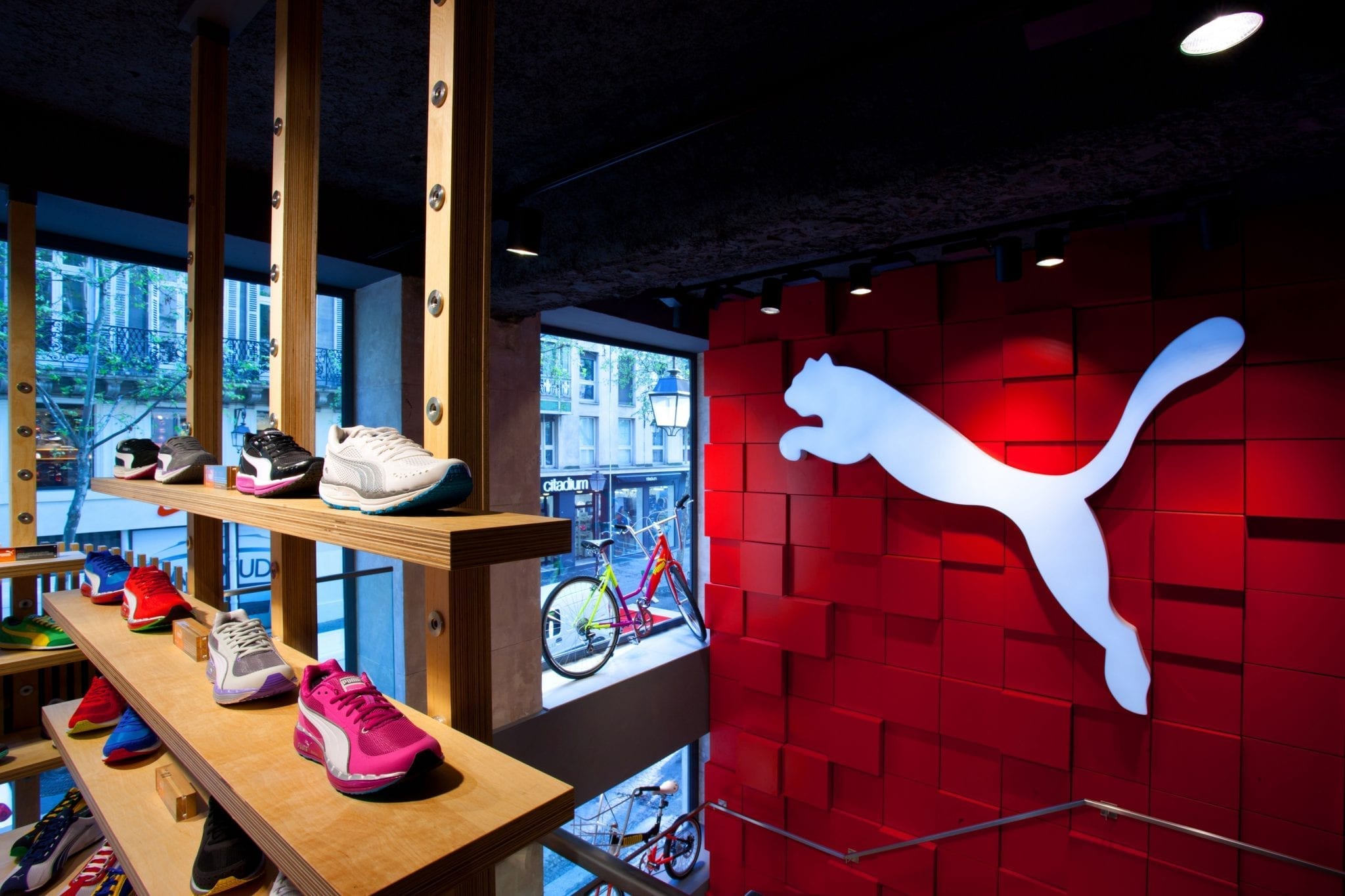
    German sportswear major Puma on Monday claimed that it has become the top sportswear retailer in India, surpassing rivals such as Nike, Adidas, Skechers and Reebok in terms of yearly sales. Puma, the third-largest sportswear manufacturer in the world, has reported sales of Rs 1,157 crore for the 12-month period ending December 2018 against Rs 958 crore reported in the year ago period.

    The company follows the January-December calendar year, while its Nike, Adidas, Skechers and Reebok go by the April-March financial year (FY) cycle.

    In FY 2017-18, Puma’s compatriot Adidas had registered sales of Rs 1,132 crore, up from Rs 1,100 crore reported in FY 2016-17.

    During the same period, American sportswear giant Nike reported sales of Rs 828 crore against Rs 807 crore reported in the previous fiscal.

    Reebok, which is owned by Adidas, saw its sales drop from Rs 416 crore in FY 2016-17 to Rs 391 crore in FY 2017-18.

    Another American brand Skechers, which is relatively new in the Indian market, reported sales of Rs 440 crore in FY 2018-19, up from Rs 282 crore reported in FY2016-17.

    “We are making strong progress in both sports performance and sport style categories,” Puma India Managing Director Abhishek Ganguly was quoted as saying.

    Interestingly, India is the only country where Puma’s sales have crossed the sales of other sportswear giants such as Adidas and Nike.

    Over the past few years, India has rapidly caught up with the wider global fitness trends. From 2015 to 2016, the Indian sportswear market grew 22 per cent, outpacing the segment’s global increase of 7 per cent, according to Euromonitor International. By 2020, it is expected to grow an additional 12 per cent CAGR (compound annual growth rate) with sales expected to reach $8 billion.

    The bitter rivalry between Puma and Adidas goes beyond mere corporate competition. It was in fact a sibling fallout that created two of the world’s biggest sportswear brands.

    In the 1920s, German brothers Adolf and Rudolf Dassler launched a shoe company together. Their business picked up after Dassler shoes were used by medal-winning Olympians through out the 1930s.

    But along with sales, tension also spiked between the Dassler brothers, which reached a boiling point during World War II. While it was not clear what exactly caused the rift, it was said to be a result of miscommunication.

    The brothers eventually split in 1947 with Rudolf forming a new firm that he called Ruda – from Rudolf Dassler – later rebranded Puma, while Adolf, who preferred to be called Adi, named his business Adidas.

  • The largest jewellery marketplace in the world opens in Hong Kong

    The largest jewellery marketplace in the world opens in Hong Kong

    Two major jewellery shows organised by the Hong Kong Trade Development Council (HKTDC) will open next week. The sixth HKTDC Hong Kong International Diamond, Gem & Pearl Show, which showcases jewellery raw materials, will take place at AsiaWorld-Expo from 26 Feb to 2 March, while the 36th HKTDC Hong Kong International Jewellery Show, which specialises in finished fine jewellery, will be held at the Hong Kong Convention and Exhibition Centre (HKCEC) in Wan Chai from 28 Feb to 4 March.

    This year, the two shows will feature a record of more than 4,600 exhibitors from 48 countries and regions, once again forming the world’s largest jewellery marketplace.

    Jewellery exports grow 13.3% in 2018, but challenging year ahead
    HKTDC Acting Executive Director Benjamin Chau said: “Though the Sino-US trade conflict has been looming large over all sectors and industries, Hong Kong exports of fine jewellery showed healthy growth of 13.3% year on year to reach HK$57 billion in 2018. Exports to the United States, Hong Kong’s largest jewellery export market, were particularly robust, growing by 18.1%.” However, Mr Chau pointed out that the single-month figure for December showed the total value of fine jewellery exports falling 12% year on year, indicating that the impact of the Sino-US trade conflict on exports is beginning to be felt. Compounded by other unfavourable factors such as escalating geopolitical conflicts, Mr Chau reminded businesses to be ready for a potential slowdown in global economic growth in 2019.

    Buying missions organised to help address economic uncertainty

    Mr Chau added that economic uncertainties led to the total value of Hong Kong’s exports of jewellery raw materials, including pearls, gems and semi-gems, declining by 17.6% in 2018, although there was still satisfactory growth in some major markets, including Mainland China (+8%), Belgium (+19.2%) and Israel (+24.4%). “To help the industry grasp more business opportunities, the HKTDC will organise 120 buying missions, comprising more than 8,200 companies from 75 countries and regions, to visit the shows this year,” Mr Chau explained. “These companies will consist of department stores, speciality shops, chain stores and online stores, with 700 coming from the US and 5,700 companies visiting from emerging markets. This will help the industry expand into emerging markets to deal with the unstable global economy.”

    Worldwide support from industry bodies and jewellery associations

    The two shows continue to receive support from industry organisations and jewellery associations from around the world. A total of 38 pavilions, including those from Australia, Mainland China, France, Germany, Italy, Myanmar, India and the US, will set up group pavilions at the shows. Various jewellery organisations will continue to set up their own pavilions, including ACODES from Colombia, the Antwerp World Diamond Centre, International Coloured Gems Association, Israel Diamond Institute, New York Diamond Dealers Club, Tanzanite Foundation and the Gem & Jewellery Trade Association of Thailand, among others.

    The Avenue of Jewellery Creators will be set up at the Jewellery Show by the Asia Pacific Creator Association for the first time, introducing jewellery designs created by Hong Kong and mainland designers. Also new at the Jewellery Show are pavilions from Mexico and Indonesia, while groups from Donghai in Jiangsu province and Dongguan in Guangdong province will debut as exhibitors. The Diamond, Gem & Pearl Show will welcome the participation of the Australian Opal Association and the Beihai Bureau of Commerce from the mainland for the first time, broadening the show’s international outlook.

    Japan as first-time partner country to showcase rare pearls

    With support from the Japan External Trade Organisation and the Consulate-General of Japan in Hong Kong, the HKTDC is collaborating with the Japan Pearl Exporters’ Association and the Japan Pearl Promotion Society to invite Japan as this year’s partner country for the first time. A Japan Pearl Jewellery Pavilion and a Japan Pearl Pavilion will be set up at the Jewellery Show and the Diamond, Gem & Pearl Show respectively, featuring some 130 exhibitors. The two major Japanese pearl organisations will also host a media event on the first day of the Jewellery Show (28 Feb) to introduce exquisite pearl jewellery from Japan.

    Diamond, Gem & Pearl Show runs from 26 February to 2 March

    This is the sixth straight year that the HKTDC has run the two shows in parallel in separate venues. The Diamond, Gem & Pearl Show, which specialises in the raw materials used in the jewellery industry, will be held at AsiaWorld-Expo. The show is organised into different themed zones, including the Hall of Fine Diamonds, which showcases prime quality diamonds of different shapes, cuts, grades and rare colours. The Treasures of Nature zone displays various glittering precious gemstones, semi-precious gems and other natural raw materials, while the Treasures of Ocean zone houses the highest quality pearls from Tahiti, the South Seas and other pearl-producing areas around the world.

    Among the impressively large number of special exhibits on display are:

    Hong Kong company Novel Collection Ltd (Booth No: AWE 2-Q01) will feature a pear-shaped, pink-coloured 5.01-carat diamond with unique cutting valued at HK$46.8 million.

    Swiss exhibitor Theilkas GmbH (Booth No: AWE 1-A05) will present pearls from Caribbean queen conches. Characterised by a unique flame effect, pink conch pearls are one of the world’s most precious pearl types.

    Shaun Gems International (Booth No: AWE 1-A16) from the United States will display a matched pair of natural sapphires of vivid blue colour, weighing a total of 27.76 carats and valued at more than HK$3 million.

    Jewellery Show runs from 28 Feb to 4 March

    The Jewellery Show, which opens on Thursday (28 Feb), will feature a wide array of finished jewellery and exquisite craftsmanship. A total of 38 renowned jewellery brands will converge at the Hall of Fame to showcase their collections. Returning brand names include Lao Feng Xiang from the mainland, Japan’s Kuwayama and Italy’s Giorgio Visconti, while new exhibitors include Hong Kong’s Asia Star, Japan’s Kawamura, Russia’s Kabarovsky and the UK’s JT Jewellery Theatre.

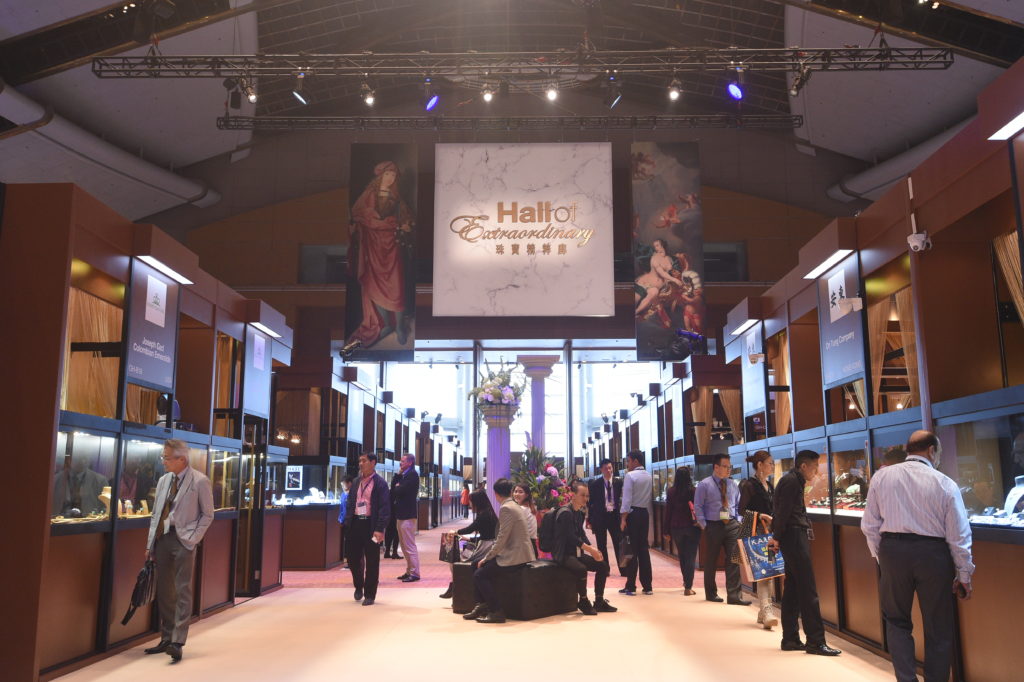
    The Hall of Extraordinary will display skillfully crafted, valuable and unique jewellery pieces from some 100 companies, including:

    Hong Kong’s Jadmily Jewelery (Booth No: CEC GH-B05) will feature a jade necklace valued at HK$64 million. The oval centre stone of the necklace is a jadeite cabochon extracted from a top-tier ancient mine in Myanmar. The warm, smooth touch of elegance is illuminated with dazzling diamonds. The centre stone weighs 51.48g.

    Foo Hang Jewellery of Hong Kong (Booth No: CEC GH-D16) will showcase a diamond jewellery set worth more than HK$13 million. The centrepiece of the set is a marquise shaped diamond of 10.04 carats valued at over HK$8 million. The rare marquise cut is testament to the superb craftsmanship that makes the diamond even more dazzling.

    One of the exhibits of Hong Kong company Belford Jewellery (Booth No: CEC CH-L01) is its “Lava Collection”. One of the jewellery pieces in this collection is an orange-red Mexican fire opal that is uniquely set against a number of coloured diamonds to imitate flowing lava. The piece is valued at HK$345,000.

    Another Hong Kong company, Famous Group Ltd (Booth No: CEC GH-G05), will display a sapphire diamond set valued at over HK$10 million. The sapphire stones, with a total weight of more than 180 carats, are adorned with 128 carats of diamonds to bring out the elegance.

    The IT Solutions for Jewellery zone that debuted last year will return to help buyers boost their competitiveness by tapping into the latest technologies for use in the designing, manufacturing, quality monitoring and selling of jewellery. The new Amber Jewellery zone is introduced to address the growing market demand, while other themed zones include Antique & Vintage Jewellery Galleria, Designer Galleria, Hall of Jade Jewellery, Treasures of Craftsmanship, Hall of Time, Wedding Bijoux and World of Glamour. In the Hall 3E entrance of the Jewellery Show, supported by Chow Tai Fook Jewellery Group, the “ARTRIUM” will showcase the company’s unique collection of precious jewellery.

    Networking activities to facilitate business exchange

    A host of activities and events, including jewellery parades, networking sessions, buyer/exhibitor forums and seminars, will be held during the shows to facilitate business exchange. One key event is the cocktail reception and Jewellery Gala Dinner held on the first day of the Jewellery Show (28 Feb). The theme for the gala dinner will be “Dionysus”, after the Greek god of wine, with a menu personally prepared by Edward Voon, Executive Chef of French restaurant LE PAN. The dinner will be attended by actresses Carat Cheung and Toby Chan. The award presentation ceremony for the biennial International Jewellery Design Excellence Award − often referred to as the “Oscars of the jewellery industry” − will be held during the cocktail reception, with the “Champion of the Champions” being announced.

    During the show period, the HKTDC will stage demonstrations of jewellery craftsmanship and themed seminars to update industry players on the latest market trends, production technologies and product styles. For example, experts from the Gemological Institute of America (GIA) will conduct a seminar on “Fancy-coloured Melee Diamonds and their Identification” (26 Feb). The HKTDC will also hold a jewellery industry forum on 1 March covering topics such as the forecasting of jewellery trends, how jewellery design software will revolutionise the design of jewellery products, and insights into the impact of 4K 3D printing technologies and mobile commerce, with a representative from Tencent explaining how artificial intelligence and big data can be used to increase sales. Other seminar topics include the latest developments in the internationalisation of the Fei Cui standard (2 March), observations on sapphires from Mogok, Myanmar (3 March), and gemology studies and market analysis of Myanmar rubies (3 March). Details can be found on the show websites.

    In addition, to identify design talents for the industry and demonstrate the high calibre of Hong Kong jewellery designers to international buyers, the HKTDC has joined hands with four local jewellery industry bodies to organise the 20th Hong Kong Jewellery Design Competition. The theme of the competition this year is “Be Connected, Be United”, attracting around 200 quality entries. The finalists’ designs will be on display in the Hall 1D lobby of the HKCEC during the show period.

    To make it convenient for buyers to visit both shows, a complimentary shuttle bus service will be provided by the HKTDC between AsiaWorld-Expo and downtown (including the HKCEC in Wan Chai). Please visit the show websites for details.
  • Bamboo Airways to sign deal for 10 Boeing planes during Trump-Kim summit

    Bamboo Airways to sign deal for 10 Boeing planes during Trump-Kim summit

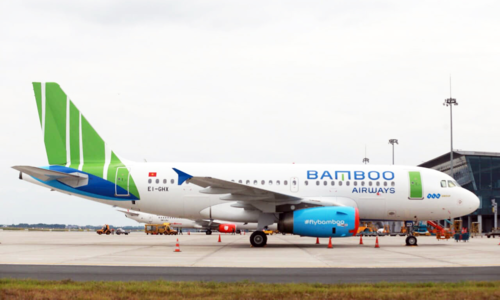
    Vietnam’s newest carrier, Bamboo Airways, which began flying last month, is set to sign a deal with Boeing to buy 10 aircraft. The signing will take place on the sidelines of the second summit between U.S. President Donald Trump and North Korean leader Kim Jong-un in Hanoi on Wednesday and Thursday, an unnamed airline executive said. In July last year the airline had signed a provisional deal to buy 20 Boeing 787-9 wide-body jets worth $5.6 billion at list prices.

    “We will sign with Boeing a deal to buy 10 Boeing 787s,” the executive said. “This is different from the deal signed earlier for 20 Boeing planes.”

    The U.S. Federal Aviation Administration (FAA) recently allowed Vietnam to operate direct flights to the U.S.

    Bamboo Airways and other Vietnamese airlines have expressed interest in operating direct flights to that country.

    Bamboo was set up by private conglomerate FLC in 2017 with a charter capital of VND700 billion ($30 million), which it recently increased to VND1.3 trillion ($55.68 million).

    Budget airline Vietjet also plans to sign on the sidelines of the summit a deal to buy 100 narrow-body Boeing aircraft.

    Vietnam’s aviation industry is booming demand. The country welcomed 12.5 million air passengers last year, up 14.4 percent from 2017, according to the General Statistics Office.

  • Sands China mall sales increase when land-based visitors return

    Sands China mall sales increase when land-based visitors return

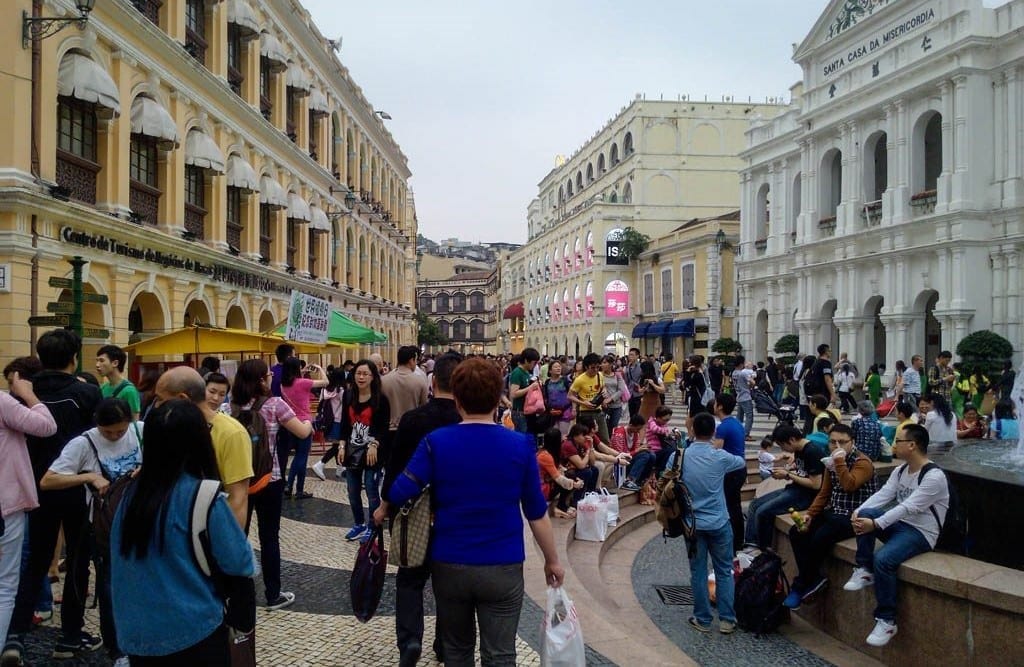
    Sands China mall revenue rose 5.8 per cent last year as Mainland China visitor numbers rebounded. Sands China owns The Venetian Macao, Sands Cotai Central, The Parisian Macao and The Plaza Macao shopping centres which boast a combined 1.87 million sqft of retail-mall space. They form a key part of the company’s giant gaming and resorts business in the territory, which combined posted US$8.67 billion in sales last year, up more than 14 per cent, and achieved a post-tax profit of $1.87 billion, up 17 per cent.

    The company says mall revenues for the year increased 5.8 per cent overall to $507 million, compared to $479 million the previous year.

    The increase was primarily driven by higher turnover fees from Shoppes at Four Seasons, Shoppes at Venetian and Shoppes at Cotai Central, and from additional retail space becoming available at Cotai Central.

    The strongest-performing mall complex was the smallest of the four, The Plaza Macao, which has the 241,548sqft gross leasable area (GLA). It achieved 99 per cent occupancy with a base rent of $460 per sqft and tenant sales of $4373 per sqft, contributing $145 million in revenue, up 10.7 per cent year on year.

    The weakest-performing mall was The Parisian Macao, with 89.8 per cent occupancy of its 295,915sqft GLA. Base rent per sqft was $156 and tenant sales per sqft $649. Revenue there fell 13.6 per cent year on year to just $57 million.

    The company’s largest Macau property, and its first, The Venetian Macao, has 813,376sqft of GLA. It achieved total mall revenues of $233 million last year – up 6.4 per cent – with 90.3 per cent occupancy, a base rent of $263 and tenant sales of $1746.

    Sands Cotai Central, with 519,681sqft GLA, achieved $69 million in revenue – up 9.5 per cent – and achieved 91.5 per cent occupancy. Base rent was $108 and tenant sales $892.

    Sands China said its food and beverage revenues rose 4.1 per cent last year to $304 million, driven primarily by increased foot traffic.

    Chairman Sheldon G Adelson said Macao’s development and evolution as Asia’s leading tourism destination accelerated during the year, with market-wide visitation from China reaching a record 25.2 million visits, an increase of 14 per cent compared to last year.

  • CaratLane: 10 years of transforming jewellery in India

    CaratLane: 10 years of transforming jewellery in India

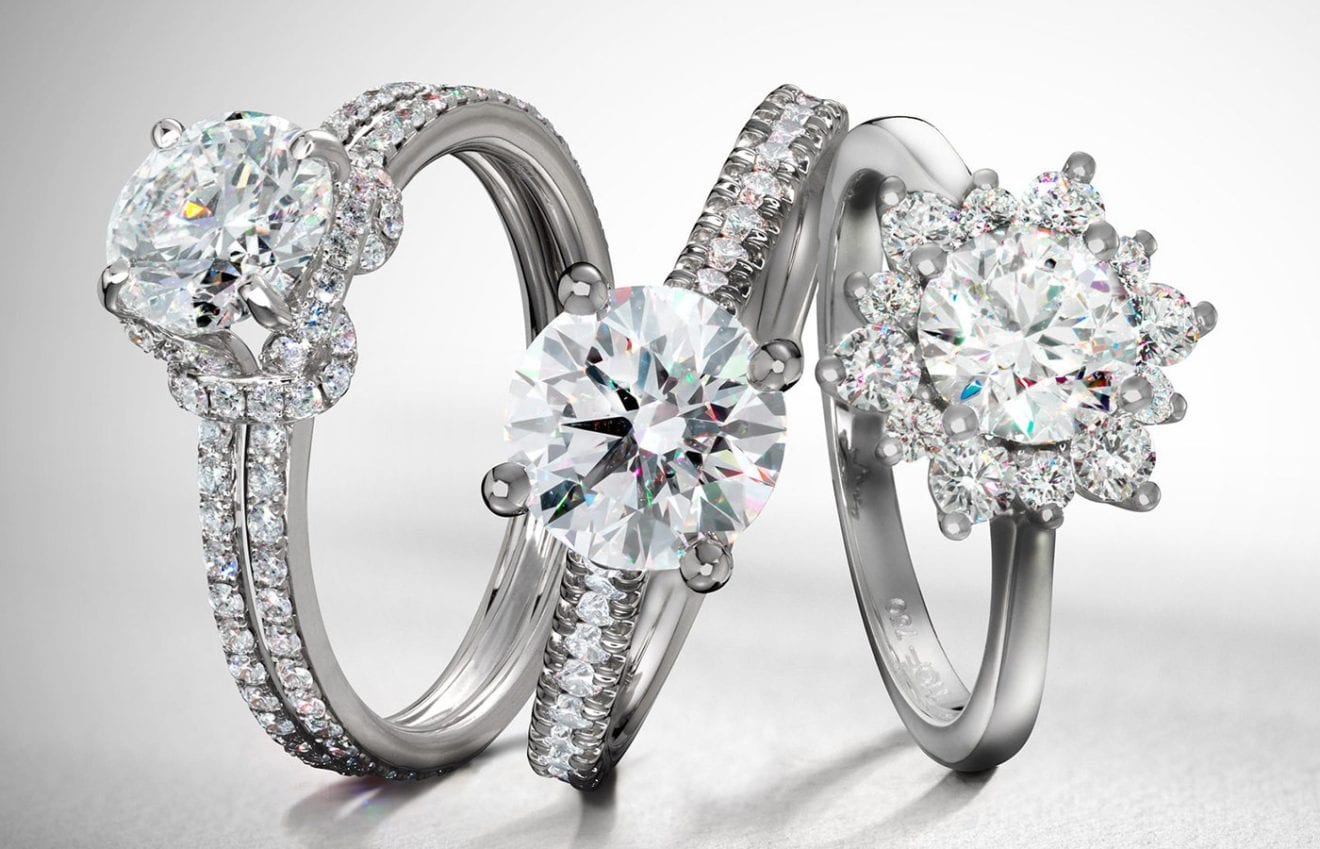
    When Mithun Sacheti founded CaratLane 10 years ago, e-commerce was at its infancy in India and no one could have imagined that Indian consumers would be ready to buy jewellery online. CaratLane was founded with a mission to democratise jewellery – to make beautiful jewellery accessible and affordable and with designs that are modern and wearable. A refreshing and courageous objective at the time, especially since the avenues for an online business weren’t as wide open then as they are today.

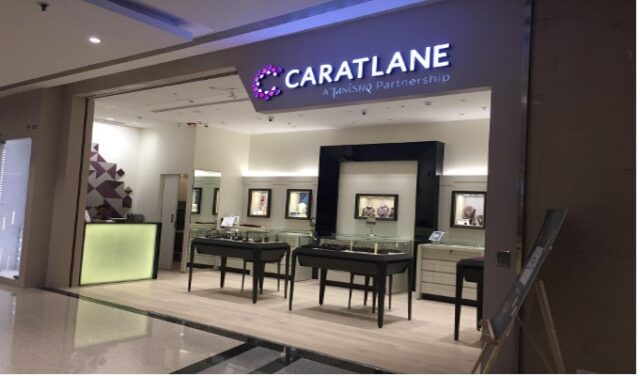
    CaratLane hasn’t looked back since then. It has grown from being one of India’s first online jewellery brands to being one of India’s largest new age jewellery brands now with 50 stores across the country.

    On the special occasion of CaratLane’s 10th birthday, Mithun said “The world has indeed changed in the past ten years. And while e-commerce has now become widely accepted in India, it has taken steady and sustained focus to democratise jewellery-buying online. From a website for easy shopping to allowing women to explore jewellery through apps to discovering interactive mirrors and providing a no-barrier access to precious jewellery in stores, CaratLane has transformed jewellery-buying in India.”

    “Our strong online footprint is now complemented by our growing store presence. With 50 stores across the country, we are now perhaps the world’s first truly omni-channel jewellery brand. It wouldn’t have been possible without our extremely valuable and loyal customers and an extremely dedicated team who would stop at nothing,” he added.

    As a part of the celebrations, CaratLane has added limited edition jewellery to three of its bestselling collections – Butterfly, Aaranya and Gold Lace. It has also launched its biggest sale ever with flat 20 percent off on all diamond jewellery but that’s not all, there are many more exciting offers for CaratLane customers.

    CaratLane, has also launched an upbeat film to create buzz around its 10th birthday celebrations. The campaign rolled out nationally with a combination of TV, digital and CaratLane’s social media channels. The film is targeted towards creating FOMO (fear of missing out) on its celebrations, among its audience.

    Talking about the campaign Atul Sinha, Senior Vice President Marketing, CaratLane said, “We’ve come a long way since our inception and we wanted to celebrate this milestone with the people who made it all possible – Our customers. The ‘10th birthday’ campaign film beautifully captures our excitement as well as the cheerful emotion that we’re trying to build around the occasion through our biggest sale ever.”

  • New Zealand bans Huawei from 5G mobile network

    New Zealand bans Huawei from 5G mobile network

    From offering mobile payment services such as WePay and Alipay to hiring front-desk staff proficient in Mandarin, the New Zealand Chinese Travel and Tourism Association was not short of advice for Kiwi tourism operators on how to benefit from an influx of mainland Chinese visitors to New Zealand this year.

    “Chinese tourists enjoy spontaneous travel so there are a lot of last minute bookings. For businesses who’d like to attract Chinese tourists, this is the major challenge for them,” association chairman Simon Cheung said in a promotional video.

    But preparations for the 2019 China-New Zealand Year of Tourism – a campaign by both governments to strengthen economic and bilateral ties – were cast in doubt when China postponed the launch event, which was expected to take place in Wellington next week. Huawei is banned, but where is the backlash in New Zealand?

    New Zealand Prime Minister Jacinda Ardern on Tuesday acknowledged that the country’s relationship was complex and not without challenges, but dismissed talk there was a rift. But she revealed that dates for her first official trip to China, planned for the end of last year, still had not been finalised.

    “I have been issued with an invitation to visit China, that has not changed. We continue to find dates that would work,” she said.

    Her admission fuelled concerns from opposition parties and the media that ties, already tense after Ardern’s government blocked Chinese telecom giant Huawei from the nationwide roll-out of a 5G data network over “significant national security concerns”, were deteriorating further.

    Last weekend, an Air New Zealand flight en route to Shanghai was turned back to Auckland, with some reports suggesting it was due to how paperwork on board the plane had referred to Taiwan. According to Bloomberg, the airline said the Boeing 787-9 Dreamliner was not yet certified to fly to China, but had been “unfortunately assigned” the flight.

    The Civil Aviation Administration of China last year told foreign firms and airlines not to refer to Taiwan as anything other than a Chinese territory on their websites.

    Former New Zealand government trade consultant Robert Scollay said from the point of view of those in the country, China’s latest actions “raised the question of whether this is a temporary expression of displeasure or if it means something more significant”.

    After Wellington’s decision on Huawei, which it took in support of its fellow members in the Five Eyes intelligence alliance, there was a debate on whether it had finally chosen a side in its long-running balancing act between the United States and China – its two most important economic partners.

    But Chinese foreign ministry spokesman Geng Shuang on Friday dismissed the suggestion, saying both countries had a common interest in ensuring healthy and stable ties. “China is willing to work with New Zealand on the basis of mutual respect, equality and mutual benefit to promote the continued development of China-New Zealand relations,” Geng said.

    Noakes from the University of Auckland said he was not convinced ties had deteriorated, despite recent events. “The really unlucky thing is that the perceived souring of ties dovetails with commonly held misperceptions of what China is and what engagement with China means for New Zealanders.”

    Jason Young, director of New Zealand Contemporary China Research Centre at the Victoria University of Wellington, had a more ominous take.

    “This can become a self-fulfilling prophecy,” he said. “We talk ourselves into having a bad relationship with China, and that’s quite dangerous.”

  • Nintendo makes comeback in Korea with Switch

    Nintendo makes comeback in Korea with Switch

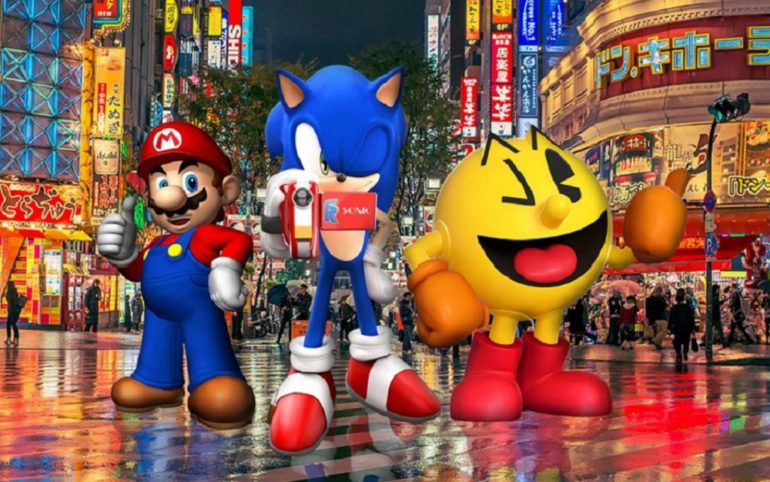
    Nintendo, the Kyoto-based game company, returned to Korea. After almost disappearing over the past decade in the storm of mobile and online games, it is returning to the market with Switch, a retro console that marries the latest technology with old favorites, like Pokemon. A 41-year-old surnamed Kim, a father of three, recently found his new favorite hobby: playing Switch. His two favorite games are Diablo 3 and Legend of Zelda: Breath of the Wild, both of which he used to enjoy years ago at attending university.

    He now plays the latest versions.

    “To advance to a higher level on smartphone games, I have to spend a lot of time and money, so I lost interest,” said Kim. “As for Switch, it’s like the games I played when I was younger. Just like arcade games, I can save the game and can continue playing it where it ended whenever I want. Also, the game itself is not too difficult.”

    Plenty of people seem to agree with Kim.

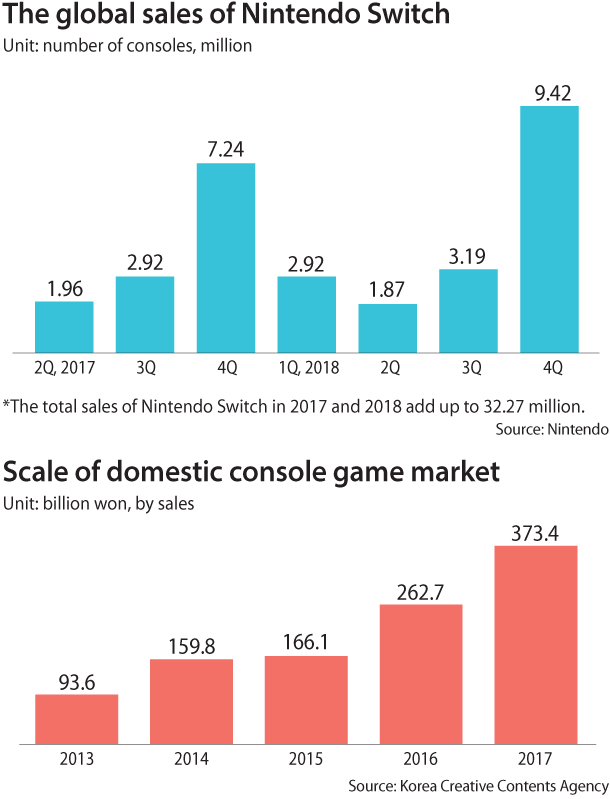
    Global sales of Switch from its introduction in March 2017 through late 2018 totaled 32.27 million units, according to a report from Nintendo. On average, 33.5 Switch consoles have been sold per minute. A total of 163.61 million Switch titles were bought during the same period.

    The Switch ended 2018 as the year’s best-selling hardware platform both in unit and in dollar sales terms, according to a report from NPD Group, a U.S.-based market-research company. Both in units and dollars, the Switch was the best-selling game since Sony PlayStation 4 in 2015.

    The Switch boom is evident in Korea, where consoles are not generally very popular. The product has been generating 51 percent of game sales at Emart, the main marketing channel for Switch.

    According to a report from Korea Creative Content Agency (Kocca), the size of the console game market in Korea grew by 42.2 percent from 2016 to 2017. Sales of Switch – which totaled more than 110,000 units in the first month of its release in Korea in December 2017 – and the rise of the related software sales were major contributors to the game market expansion, the report argues.

    Revival of Retro

    Nintendo, which was founded in 1889 as a playing-card company, most recently became an icon of innovation around year 2000 when it introduced Nintendo DS and Wii. Each sold more than 100 million units, and the strong sales in Korea led to the development of similar games locally.

    The success was short lived. The market began to change around 2010 as smartphone games started to develop and lead the market. In 2011, Nintendo experienced its first annual earnings loss since it was listed on the stock exchange in 1983.

    The company sought a rebound the following year with the Wii U, but only 13 million units were sold.

    Nintendo suffered losses for three years, and its presence in the console game market gradually waned with the dominance of the Sony PlayStation 4 and Microsoft’s Xbox. Nintendo’s share price dipped to as low as 8,060 yen ($73) from its November 2007 peak of 70,500 yen. The company’s weak performance continued until 2016, when Nintendo shook the game world with Pokemon Go, its wildly popular augmented-reality smartphone game.

    The comeback was confirmed with the release of Switch the following year.

    Popular with young and old

    Nintendo’s timing couldn’t have been better. It released Switch just as the newtro trend was gaining ground. Newtro, a portmanteau of new and retro, is reviving many long-dormant styles and products.

    The most popular titles in the early days of Switch – Super Mario Odyssey, Legend of Zelda and Pokemon: Let’s Go, Pikachu! – are the latest versions of classic games that people now in 30s and 40s used to enjoy when younger.

    “Switch looks very similar to the portable arcade games that people now in 30s and 40s first used in their childhood,” said researcher Jang Min-ji from Kocca. “As the generation that grew up with these games now has purchasing power, similar games are bought by people in that generation.”

    “Even younger people – those in their teens and 20s – who have never experienced these games, are finding Switch refreshing in that unlike smartphone and traditional console games, users can carry it around and play it while in bed, not to mention connect the games to television. Such charms of Switch have captivated people across age groups,” Jang said.

    The global newtro trend was evident at Consumer Electronics Show (CES), held in Las Vegas in early January. Though many people gathered to experience Sony’s state-of-the-art games with virtual reality and augmented reality, bigger crowds gathered at booths for classic games, like Street Fighter II and Double Dragon.

    “It has become a new trend for people in their 30s and 40s to reminisce about their past, while the younger generation fulfills their fascination for the newtro style,” said Kim Gyeong-geun, a merchandiser at a local toy seller, Toy Friends.

    Growing tired of mobile games

    Another key contributor to the growing demand for classic games is the gradual loss of interest in mobile games, which dominated the local market over the past several years. Players are growing tired of the free-to-play model, which is employed by the majority of mobile massively multiplayer online role-playing games (Mmorpg).

    With free-to-play mobile games, players can download the game either for free or at a low price, but they are compelled to spend more to improve the gaming experience.

    In a report on the success of Switch, Lee Taek-su from KB Research wrote, “In the past, most people did not agree with the idea of spending money on console game software that costs between 50,000 won [$44.40] and 60,000 won, since they could easily play mobile games for free or for around 1,000 won to 2,000 won. But as a growing number of players start to have the experience of spending much more cash on mobile games, their perceptions have started to change.”

    The diversity of games that could be interesting to people of different ages and gender, and the fact that these games can be enjoyed by multiple people at once through the connection of hardware, are few reasons Switch is gaining popularity.

  • Fosun Fashion Group launches company to help brands launch in China

    Fosun Fashion Group launches company to help brands launch in China

    Hong Kong-listed Chinese trading group Fosun has launched Fosun Fashion Brand Management Company (FFBM) to serve brands with ambitions to expand in the Greater China market. The new firm is offering full brand management services, covering retail and wholesale operations, merchandising, marketing and communications management, human resources and complete back office support. With an average of more than 15 years of operational experience in China, the FFBM team has successfully grown a number of fashion brands in China over the past two decades.

    “We are excited about FFBM. This is a major milestone for us at this critical stage in FFG’s development as we continue to expand our in-house operating capabilities,” said Joann Cheng, Fosun Fashion Group’s chairman. “The FFBM team brings a comprehensive set of operational experience spanning retail and digital in fashion, which will be invaluable as we enter this new phase of execution. This new platform provides FFG with a wider scope of competencies, and allow us to maximise control over brands’ performance in our own backyard enabling us to create incremental value for brands outside of their home markets.”

    FFBM’s CEO James Chen said that in recent years, China has become one of the core markets for many brands, and it will continue to thrive to become one of world’s top consumer markets.

    “Having lived and worked in China for the last 20 plus years, I am excited, now more than ever for the vision of Fosun Fashion Group as well as the fashion landscape in China.”

    The news comes less than a week after Fosun’s announcement of a takeover bid for German-listed fashion retailer Tom Tailor.

  • Foreign e-tailers must have registered entity in India: Draft policy

    Foreign e-tailers must have registered entity in India: Draft policy

    E-commerce sites or apps available for download in India must have a registered business entity in the country, according to latest draft e-commerce policy, which also proposes regulation of cross-border flow of data collected by sector players in India.

    According to analysts, the move to make it mandatory for foreign online retailers to register entities in India follows the relatively recent spread and expansion in the country of Chinese e-commerce platforms which do not have an Indian presence.

    These include Chinese portals such as Shein, Romwe and AliExpress and the proposed registration norms come after complaints made to the government by traders’ bodies like the All India Online Vendor Association about Chinese online operators shipping cheaper products to Indian customers as gifts in order to avoid customs duty.

    As per the proposed norms, all foreign e-commerce sites must have a registered business entity in India as the importer on record or as the entity through which all sales in India are transacted.

    The draft policy has also proposed a ban on all parcels designated as gifts, with the exception of life-saving drugs.

    Moreover, as per the draft policy, all data collected by e-tailers in India and stored abroad should not be made available to other business entities outside the country, for any purpose, even with customer consent.

    However, the government will have the right to access the data of Indian consumers stored abroad.

    Restrictions on cross-border flows of data would not apply to data which is not collected in India, business-to-business (B2B) data sent to India as part of a commercial contract between a business entity located outside India and an Indian business entity.

    Software and cloud computing services involving technology-related data flows, which have no personal or community implications and multi-national companies, moving data across borders, which is largely internal to the company and its ecosystem, would not have to follow the regulations.

    New foreign direct investment (FDI) norms, which prohibit the e-tailers from selling products of companies in which they have stakes, came into effect on February 1 despite both Amazon and Walmart seeking a six-month delay in their implementation.

    The second e-commerce draft policy has been welcomed by sector players like Snapdeal and trader associations such as the Confederation of All India Traders (CAIT).

    Snapdeal said the draft policy’s rejection of inventory based e-commerce must be followed by effective implementation of FDI norms to ensure marketplaces do not own or control inventory, directly or indirectly.

    “The recognition of data as a strategic national asset is well-timed and will lead to the development of required regulation in this regard,” a Snapdeal spokesperson said.

    US giants Amazon and Walmart, which recently acquired a 77 percent majority stake in the Indian e-retail major Flipkart, said they are reviewing the draft e-commerce policy and will share their inputs on the proposals in course of time.

    Amazon has been forced to remove an array of products from its India website in order to comply with the new FDI regulations in e-commerce.

  • Retail report says holiday sales were disappointing

    Retail report says holiday sales were disappointing

    Shoppers did not spend as much as expected this past holiday season. Holiday sales were up just 2.9 percent in 2018, the National Retail Federation said, on the heels of the Commerce Department announcing retail sales for December fell 1.2 percent, the largest decline since September of 2009. NRF, the retail industry’s trade organization, had been calling for 2018 holiday sales, those from Nov. 1 through Dec. 31, to rise between 4.3 and 4.8 percent.

    “It appears that worries over the trade war and turmoil in the stock markets impacted consumer behavior more than we expected,” NRF President and CEO Matt Shay said in a statement. “There’s also a question of whether the government shutdown and resulting delay in collecting data might have made the results less reliable.”

    NRF said online and other nonstore sales were up 11.5 percent this past holiday season, while the group had been calling for growth of between 11 and 15 percent.

    It said sales, both in stores and online, were down 1.5 percent in November year over year, and in December were up just 0.9 percent. It added that October sales were up 5.7 percent year over year, but spending during that month isn’t included in NRF’s holiday sales tally.

    NRF chief economist Jack Kleinhenz said the sales results were “truly a surprise” and “in contradiction to the consumer spending trends” NRF had been monitoring.

    The fresh retail sales data from the Commerce Department has, meanwhile, raised new concerns about a recession. But economists also say the biggest drop in nine years clashes with other data and may be suspect.

    NRF is still calling for retail sales, excluding automobile dealers, gasoline stations and restaurants, to climb between 3.8 and 4.4 percent this year, amounting to as much as $3.84 trillion.

  • Where Chinese tourists go for shopping

    Where Chinese tourists go for shopping

    Hong Kong, Tokyo, Seoul and Singapore were among the hottest shopping destinations for Chinese tourists last year, according to Ctrip. In the latest big-data report from the Chinese travel-services provider, Edinburgh, Singapore and San Francisco were also among the top 10. Last year, nearly 150 million overseas trips were made by Chinese tourists, who collectively spent US$120 billion.

    London was the city that saw the highest per-capita spending by Chinese tourists – more than US$4428 – followed by Paris, Macau, Dubai, Okinawa, Kyoto, Osaka, Nagoya, Hong Kong, Singapore and Fukuoka.

    Europe is still a hot destination for Chinese luxury goods buyers because prices there are much lower than the global average, and a tax-refund system also facilitates sales.

    Despite the recovery of the British pound last year, the UK remained a popular destination for Chinese tourists, said Ctrip.

    Experts noted that Chinese consumers would still be a focus of competition between shopping destinations this year, and many retailers internationally have upgraded their shopping facilities to lure Chinese tourists.

  • LG skips foldables, opts for two screens instead

    LG skips foldables, opts for two screens instead

    LG Electronics launched the V50 ThinQ on the eve of the MWC 2019 in Barcelona on Sunday, presenting its vision of how the much-hyped 5G network can take a mobile device’s multimedia experience to the next level. The V50 ThinQ is the tech giant’s first 5G smartphone, a direct competitor to Samsung Electronics’ Galaxy Fold and Huawei’s Mate X, both of which are equipped with foldable screens.

    Rather than a foldable screen, LG Electronics has opted for a secondary detachable 6.2-inch screen, slightly smaller than the main 6.4-inch screen.

    When the second screen is attached, users can activate multiple apps at the same time. The screen on the left, for example, can have the YouTube app playing a video, while the second screen on the right can be simultaneously used for chatting to friends.

    Held horizontally, the top screen could be displaying a smartphone game, while the screen on the bottom could be used for a virtual joystick to make the game experience more immersive.

    “We believe in multimedia,” said Kim In-kyung, a senior vice president at LG Electronics in charge of 5G and network technology at the unpack event on Sunday in Barcelona.

    “Creating content and broadcasting live are most relevant to our 5G products today.”

    To help the hardware endure the increased data processing derived from 5G connectivity, its CPU, developed by Qualcomm, has been upgraded to the latest Snapdragon 855 and the battery capacity has been increased by 20 percent compared to the predecessor V40.

    LG Electronics also unveiled the G8 ThinQ on Sunday, which is dedicated to the existing 4G network.

    The G8 ThinQ, however, has been upgraded with what’s called “Time of Flight” sensors in the front camera, which are able to read palm veins in a 3-D image. The “Time of Flight” sensors are developed in partnership with German tech firm Infineon.

    Placing the palm in front of the front camera will unlock the phone, while moving the fingers in specific ways will give various orders to the G8 ThinQ such as taking screenshots, activating music apps and controlling the volume.

    Such functions will come in handy when users’ hands are too busy to actually touch the smartphone screen, such as when cooking or driving, according to the electronics company.

    “Installing vein recognition in a mobile device is [a] first,” said David Montanya, a product evangelist from LG Electronics’ mobile communications team at the unpack event. “It [allows the users] to make more intuitive interaction[s] with the smartphone. It anticipates your moves and intentions and reacts accordingly.”

    Montanya also added that palm veins are a safer way to protect the phone compared to other biometric methods such as fingerprints.

    “The probability of two people having the same vein structure is less than one in a billion,” he said.

    While an innovative feature is always a selling point for mobile devices, an experimental one that doesn’t yet work properly is not a good sign.

    The new palm-reading feature required intensive training in order to get the hang of the specific hand gestures needed to activate the sensors.

    A specific timeline for the two new phones’ launch in Korea hasn’t been revealed.

  • AirAsia unveils plans to begin international flights to Vietnam city

    AirAsia unveils plans to begin international flights to Vietnam city

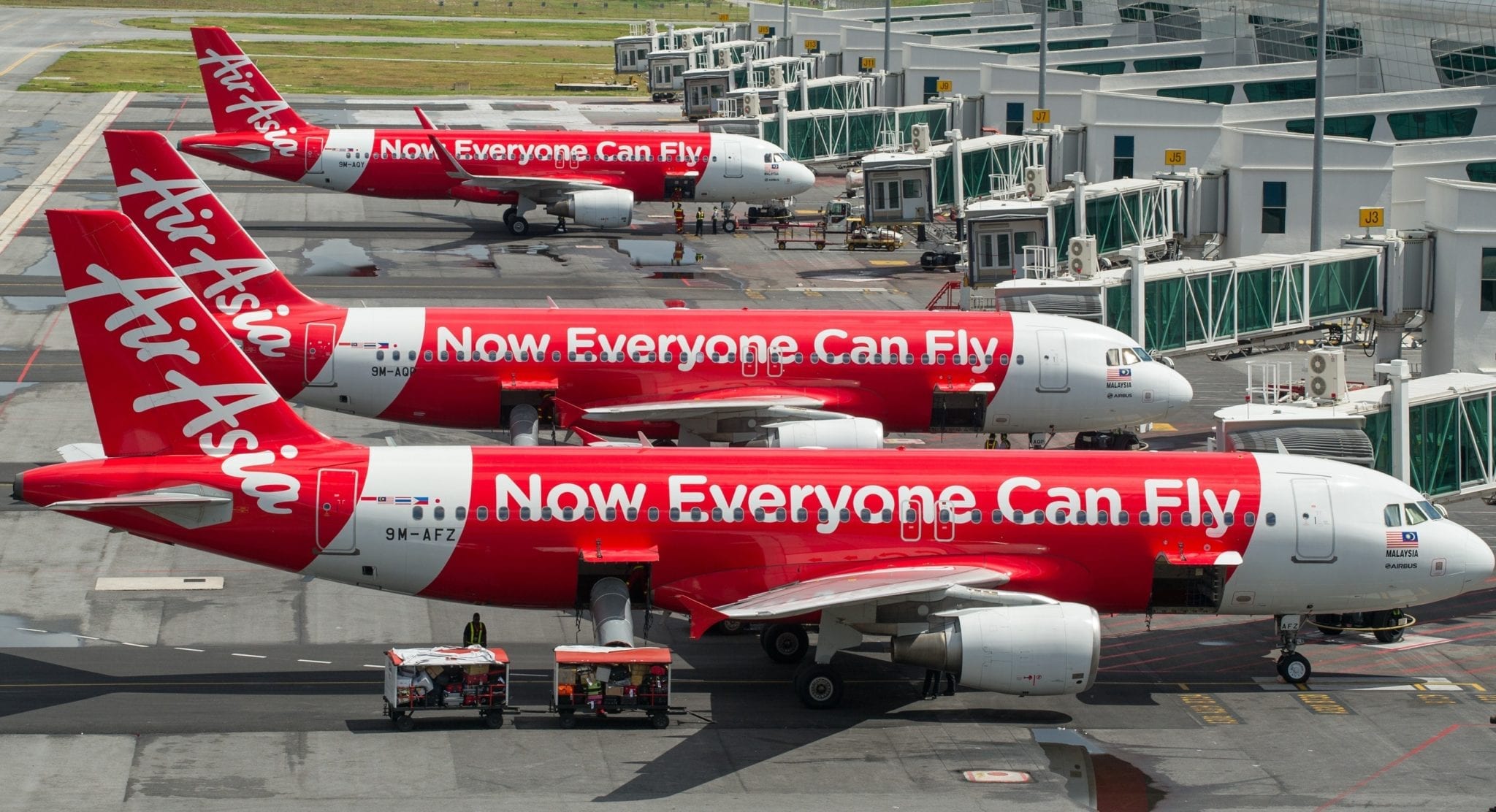
    AirAsia will start flying from Kuala Lumpur and Bangkok to Can Tho in Vietnam’s Mekong Delta in the next few months. The budget carrier has announced it will begin the Kuala Lumpur – Can Tho service on April 8 with four flights a week and the Bangkok – Can Tho service from May 2 with three flights, AirAsia said in a recent statement. Tran Viet Phuong, director of the city’s Department of Culture, Sports and Tourism, told local media that the services would help increase the number of foreign tourists visiting the Mekong Delta.

    He added that visitors from not only Southeast Asia but also from India and Australia would find it easier to reach the city given AirAsia’s network.

    AirAsia Malaysia CEO Riad Asmat said: “We foresee the new route not only contributing to the socio-economic development of the city, but also providing new opportunities for the people in Mekong Delta to connect with ASEAN and beyond through our wide network.”

    According to the Can Tho Tourism Association, 8.48 million tourists visited the city in 2018, a 12.5 percent increase from the previous year.