Tag: asia

  • Puma reports strong sales, profitability in 2018

    Puma reports strong sales, profitability in 2018

    Sportswear giant Puma reported strong annual results in 2018, as the German company witnessed double-digit growth across all geographic zones and product divisions. For the year ending December 31, 2018, the Herzogenaurach-based company said sales increase by 17.6% currency adjusted to €4,648 million (+12.4% reported) with double-digit growth in all regions.

    Asia-Pacific, despite being the smallest of Puma’s three regions after the Americas (+16.9%) and market leader EMEA (+11.4%), was the strongest in growth terms for 2018, up 28.8% to €1,235.5 million. APAC was mainly driven by high growth in China and Korea, while sales in Japan increased at a more moderate mid to high single-digit rate.

    In product terms, Puma highlighted the success of new sneaker styles Thunder, RS-0 and RS-X in 2018, as part of the company’s debut into the “chunky shoe” category.

    Puma also spent 2018 re-entering the basketball category after 20 years, and signed supermodel Adriana Lima as its women’s training ambassador.

    Net earnings increased by 38 % from €135.8 million to €187.4 million, and earnings per share lifted from €9.09 to €12.54.

    “We are very happy with how our business developed in 2018. Sales rose organically by 17.6% to €4,648 million and the operating result (Ebit) improved by 37.9% % to €337 million, which shows our strong momentum,” said Bjørn Gulden, Chief executive officer of Puma.

    “The double-digit growth in all regions is a proof that the we have strengthened the Puma brand globally and the double-digit growth in all product divisions shows that we have enhanced our product portfolio,” added Gulden.

    In 2019, Puma said it expects currency adjusted sales to grow around 10% and operating results to increase to a range between €395 million and €415 million.

    “We still have a lot to improve, but we feel we are moving our brand and company in a good direction,” said Gulden.

  • Takeover bid lodged for struggling Laura Ashley

    Takeover bid lodged for struggling Laura Ashley

    US investment company Flacks is considering making a bid for Malaysian-owned, British fashion retailer Laura Ashley. The firm is in the “very preliminary stages” of a takeover bid for the brand. Any possible takeover offer will be limited to 2.748p in cash per share, resulting in an overall valuation for the retailer at around £20 million (US$26.38 million), according to an announcement by the firm confirming the details.

    If Flacks buys Laura Ashley, it is expected to primarily focus on the US market and other non-European markets.

    “As far as I am concerned, there is no takeover bid because there has been no approach whatsoever,” Laura Ashley chairman Andrew Khoo told investors on Monday, a day prior to Flacks’ announcement. “If and when an approach is made, the board will discharge its duties as always and assess it on its relative merits.

    “I would, however, like to state for the record that as major shareholders of Laura Ashley, we have no intention of divesting our controlling stake,” he continued. “Whilst I understand why potential parties would think we are significantly undervalued, I have complete confidence that we will be able to grow profitably and in a sustainable manner so as to create long-term value for our shareholders.”

    A recent report issued by the firm warned that its full-year profits would “fall short of market expectations” following announced plans to close around 30 of its remaining 120 stores to control costs in the firm’s competitive and sluggish market. The firm filed a £1.5 million ($1.98 million) loss in the final half of last year.

    Laura Ashley’s Australian business collapsed late last year, but in December Khoo said he believed the brand’s future lied in Asia, where he was planning expansion.

  • An Overview on M-commerce in Asia

    An Overview on M-commerce in Asia

    A number of factors have contributed to make Asia a mobile first region. Affordable smartphones and an emerging middle class, coupled with increased network speeds and relative decreases in mobile data costs have lead to a situation where mobile is the internet, as more than 90% of Southeast Asia’s internet users are on smartphones, revealed Google’s e-Conomy SEA Spotlight 2017 report.

    This democratisation of access to technology has extended to other areas like cloud computing, the internet of things (IoT), big data processing capabilities and advanced analytics. These technologies have helped to create vibrant start-up environments around the region that are exploring and exploiting new ways of reaching customers, new businesses and commerce models.

    Global digital platforms, as well as more and more locally founded players, are building their capabilities here for good reason. Increasingly, the unique needs and behaviours of people in this region will shape the product and experience development for global audiences.

    User behaviour and attitudes to things like technology and privacy are different in this region; globally, 27% of people are willing to share their data in exchange for benefits or rewards, revealed in Gfk’s Willingness to Share Personal Data in Exchange for Benefits or Rewards survey. In China, 38% of people are willing to make the same transaction. Globally, 34% of people use a mobile to compare the prices of a product in store, in Asia that percentage rises to 45%.

    7 Asian countries (South Korea, Thailand, Taiwan, Malaysia, Hong Kong, China, Singapore) were ranked in the top 10 countries with the highest m-Commerce penetration rates, We Are Social’s Digital in 2018 report revealed. In Q2 2017, Global Web Index Asia Pacific Region reported 79% of adults in APAC accessing the internet claim to have recently purchased a product.

    Unsurprisingly, given the cultural and economic diversity across APAC and the blistering pace of technology adoption by the emerging middle classes around the region, there are many, many approaches to mCommerce on display here. Here we explore some noteworthy trends and developments:

    Mobile Hero 1 – Go Jek

    Go-Jek had humble beginnings in 2010 as a call centre that enabled riders to order a Gojek (a motorcycle taxi) by phone. In 2014, Go-Jek was launched as a smartphone app.   Anticipating that ride-hailing services alone were insufficient to achieve lift-off and scale, Go-Jek launched Go-Send (a courier service) and Go-Food (food delivery) in the same year.

    Within 14 months, the app registered 100 million transactions. Added services launched in quick succession, including Go-Mart (grocery delivery), Go-Clean (a housekeeping and cleaning service) and even Go-Massage (for booking spa treatments anywhere). Almost anything can be delivered to customers’ doorsteps by Go-Jek drivers, from lunch to home massage services.

    Mobile Hero 2 – Paytm

    Paytm is one of the most successful payment and money transfer apps used in India, allowing users to transfer cash into the integrated wallet via online banking, debit cards, and credit cards, or depositing cash via select banks and partners. Allowing customers to go cash-free and pay merchants with their smartphones, Paytm received a huge surge of user demand following the demonetization of the Indian economy and a cash shortage. Nearly overnight, from villages to cities, small mom-and-pop shops to large retailers, people embraced the new payment method.

    Through Paytm, users are able to recharge mobile phones, metro cards, data cards, as well as make postpaid payments for mobile phones, landline and broadband, electricity, water and gas bills. Users can also book tickets for buses, trains, flights, movies, hotel rooms, and pay for taxi rides using the platform.

    Paytm Mall

    Paytm gradually transformed into an e-marketplace where users can purchase goods on the platform using the wallet, and even make offline payments at selected merchants. According to eMarketer, Paytm Mall has provided customers with access to about 68 million products sold by 140,000 vendors. Cashless payments can be made without internet connectivity, via the use of QR codes or bar codes and a One-time Password.

    Mobile Hero 3 – Tencent

    Tencent and Facebook have spent 2018 in a battle for the title of the world’s most valuable social network company. East versus West has never been more at the fore.

    Starting out as a free PC-based instant messaging service, Tencent capitalised on the increased importance of mobile and launched WeChat in 2011. Since then, Tencent has added official accounts, payment services, a game center and even an office chat app to WeChat, becoming an integral part of modern Chinese life.

    WeChat’s one billion monthly active users provide business opportunities for e-commerce platforms based on social media. And as WeChat targets growth in payments and offline services, the company has leveraged on its social foundations and is moving into the eCommerce sphere in its own unique way. And at the bottom of every transaction on WeChat is WeChat Pay, the app’s digital wallet.

    WeChat Mini Programs

    The WeChat mini program allows stores to sell their product in new ways; such as group purchases facilitated by chat groups. It is a lightweight application that does not require installation, and can include novel services such as car and food delivery on top of shopping. And, owing to the giant social network of WeChat, stores and brands can make the most of the billion active users on the platform.

    Between launching in 2017 to the end of January 2018, a total of 580,000 mini-programs involving one million developers, linking with 2,300 third-party platforms and over 170 million daily active users were already found on the app.

    The WeChat mini programs have also changed how social influencers make money from their fanbase. In the past, influential bloggers were only able to direct their followers to a link at in a blog post. Now, social media influences can embed a store’s mini program directly inside their article. Key opinion leaders are now able to monetize more easily.

    Pinduoduo

    A fine example is the Tencent-backed Pinduoduo having embedded its entire eCommerce platform inside WeChat. This startup leverages on every user’s social network by offering group discounts for purchases. A packet of sweets cost US$3 if you buy it alone – the price drops to about US$2 if you rope in other friends. This offers peer-to-peer marketing as well.

    In 2017, Alibaba had a higher gross market value at $701 billion (to Amazon’s $225 billion) while Amazon had higher revenue ($178 billion to Alibaba’s $34 billion), according to Kleiner, Perkins, Caufield & Byers Partner Mary Meeker’s 2018 Internet Trends Report. In China, the rise of local players will continue to grow and potentially formerly global leaders. Local Mobile Heroes are attuned to the cultural needs and norms of their users and the businesses that want to reach them, which is a strong accelerator of adoption by consumers and brands. As our local audiences look to the East rather than the West for solutions this has never been a more exciting time for the region.

    PART 2: SOCIAL COMMERCE

    Social commerce is the use of social media as a channel to allow customers to purchase products directly from their newsfeed.  Social media as an entity is no longer just one component of a customer’s purchase journey. It’s becoming an eCommerce platform in its own right.

    Social commerce in Southeast Asia has taken a very unique journey. The fragmented market, dominance of mobile and the use of social networks and apps for business communications has created a growth in ‘conversational commerce’ and the rise of  these channels as a purchasing route – consulting firm Bain & Co. estimates that roughly 30% of digital sales in the region took place via a social network in 2016 and is likely to increase.

    Social commerce isn’t just about social media – it is centred around community and trust. In crowded eCommerce spaces, using the positive feedback of others represents a sure-fire way to both signal trust and set a brand apart from its competitors giving consumers an active voice in the marketing ecosystem. KPMG’s 2017 Global Online Consumer Report revealed that Asia has the highest proportion of shoppers who share product feedback online.

    Consumer behaviour is demonstrating clear preferences for ‘real people’ living ‘real lives’.  Therefore, micro-influencers are a rapidly growing trend on platforms like Instagram for good reasons – they are considered more authentic than celebrities, they have more targeted audiences, high engagement rates and are clearing living particular brand ideals.

    In December 2017, Maybelline Philippines used a variety of creative assets designed for mobile and ran their campaign exclusively on Facebook. The campaign yielded 27 times higher returns on ad spend than in the previous year. As a result, Maybelline became the number one health and beauty brand on Lazada during the period of their campaign in the Philippines.

    The concept of social media as a black hole of marketing ROI  is no longer valid. Social commerce is looking to be an extremely effective way to reach an audience today that is largely social media-oriented. A fundamental aspect of social media is the one-to-one connection with users. In 2016, Bain & Company partnered with Google to survey more than 6,000 consumers in Singapore, Thailand, Malaysia, Indonesia, Philippines and Vietnam. While 100 million consumers in Southeast Asia have made a digital purchase, a far larger group — 150 million — has taken the first big step of researching products or engaging with sellers online, reported Bain & Company. As eCommerce sales grow, brands who understand the principles of social commerce will inevitably drive more sales than those who do not engage effectively in social media.

    PART 3: EMERGING TRENDS

    Increasingly, brands are experimenting with Augmented Reality(AR), Virtual Reality (VR) and Gamification to enhance a shopping experience and drive sales both instore and online. Mobile phones are central to delivering these immersive experiences to consumers.

    A Worldpay study of more than 16,000 consumers across eight Asia-Pacific (APAC) markets revealed that 95% of respondents used VR or AR technology in the past three months. This high percentage was partly due to the inclusion of China which is paving the way in these emerging technologies. In Japan, the adoption was much lower, with only 19% in of consumers having ever tried VR technology. Most interestingly for Commerce brands was that only 1% of consumers across 8 APAC markets would never be comfortable making a purchase in a virtual environment.

    Augmented Reality

    eCommerce remains relatively underdeveloped in SEA, contributing to only 3.2% of total retail sales in 2018, revealed Forrester Analytics in their Online Retail Forecast. AR could offer a viable alternative in eCommerce to boost online sales by enabling consumers to try and visualise the products in their environment before buying.

    In the US, eBay is embracing AR to remove the friction against buying and selling online. In March this year, eBay launched a tool running on Google’s new ARCore platform to help sellers find the best sized box to ship items to buyers.

    While the use of AR is considerably nascent in the region, AR is becoming a scalable medium to engage and impress consumers. When done well, it’s an opportunity to redefine how people shop.

    Virtual Reality

    VR is the use of computer technology to create a simulated environment completely different from reality. When Unity and Lionsgate created a virtual room” to promote the release of the horror film Jigsaw, an emotional efficacy study by Isobar compared watching the trailer in VR versus non-VR and saw elevated heart rate of over 24%.

    Many industry experts predict VR to be a major factor in changing how we’ll shop and socialize in the future. Facebook CEO Mark Zuckerberg predicts VR will become the “most social platform” out there. Greenlight Insights, a market research company specialising in VR and AR industries, released results from its Virtual Reality Consumer Report with a majority of respondents claiming that they would be more inclined to purchase from a brand that uses VR than from one that doesn’t.

    VR technology can evoke a powerful response but there are added complexities when bringing to life a VR experience. The development can be timely, costly and often still require a headset for full impact making it less scalable when compared to AR.

    Gamification

    In China, Pinduoduo, a social commerce app has gained immense popularity ranking the 2nd most popular eCommerce app in the country. The shopping app is seamlessly integrated with WeChat, allowing its customers to lock in low-price deals by rounding up a group of friends to purchase the same item. Using simple gamification methods involving discounts, cash back incentives and product giveaways to loyal customers the app has a receipt for success.

    When considering AR, VR or Gamification as part of your mCommerce experience, it’s important to develop something consumer centric that offers genuine value and purpose. How can experimental technology save someone’s time, increase satisfaction or save them money? At the heart of any new technology is a seamless user experience and when compromised, this may negatively impact satisfaction levels.

    PART 4: BEST PRACTICES FOR MCOMMERCE

    Even with the diversity on display across mCommerce in the region there are certain key elements to keep in mind as you develop your own commerce roadmap, whether you’re at the start of the journey or further down the road towards your goal of infinite moments of truth.

    Mobile users typically search for specific information, and are more likely to perform pre-purchase research on mobile devices. According to Google’s Consumer Barometer, 91% of mobile searches in Malaysia lead to further action – whether it’s looking for more information or purchasing a product or service – and in Singapore this figure is 84%.

    It is also important to note that mobile users tend to be more impatient, and tend to leave a website which takes more than three seconds to load, affecting potential leads for brands.

    Location

    Beyond the signals consumers receive, what is truly helping to shape the consumer journey are the signals they send via their mobile devices while connected and on-the-go. Location signals enable marketers to surface relevant messaging to surrounding offers. Contextual signals help brands understand what type of content they are interested in so they can infer and define taste and preference personas to further refine the way media is placed, augmenting relevancy. These signals, coupled with the use of more precise and persistent identifiers such as device IDs, generate richer and deeper graphs of consumer digital behavior and shopper preference.

    Mobile Ready Hero Images

    Mobile Ready Hero Images are images in product listings that contain additional information in the form of copy, badges or icons. Ensuring that these images are built with clear visuals and key product information served (e.g. type, size, number of contents, origin) allow consumers to recognize and make their purchase decisions easily without having to refer to the titles or product cards. This enables marketers to optimize their mobile shopping experience for speed, clarity and ease.

    Titles and descriptions

     Other crucial elements of your mCommerce content are titles and descriptions of your products. With the limitations of a smaller mobile screen, key information has to be delivered with shorter titles and descriptions. For many marketplaces, the capabilities on their desktop and mobile versions are different and solutions offered may be different on mobile web versus app versus desktop.  Assets need to be optimised and fit for use for all platforms.

    User Experience (UX)

    To generate social sales through content, simple social platform solutions allow marketers to create direct commerce channels via Facebook Messenger. Instagram’s direct in-post sales integration allow easy links from product through to check-out. For small and medium-sized enterprises, it reduces the need to invest in technical support and platform maintenance.

    Vendors are now bringing to the digital high street tools that have traditionally been customised enterprise level solutions. Numerous web hosting services on the market can be leveraged on to create a commerce portal that is optimised for desktop and mobile. Many come with the flexibility of adding more sophisticated tools such as inventory management or integration into fulfilment services. Peripheral service plug-ins for loyalty and engagement, gamification, managing payment gateways, review management can be integrated as well.

    The future looks like selecting and integrating a range of complimentary service providers that can complete your own ecosystem without having to invest heavily in bespoke services, with everything optimised and responsive for mobile device use. And to this point, with fundamental infrastructure well taken care of, the onus for effective mCommerce falls on creating excellent user experiences.

    Optimizations to your mCommerce sites should be cross-referenced with behavioural insights related to performance. Businesses are increasingly turning to conversion rate optimisation (CRO) as a practice as integral to success as well executed SEM and SEO. CRO combines research hypothesis with UX optimisation and performance analysis to continually tune mCommerce sites for better conversion results.

    Zooming in further, this can extend to site components such as dynamic checkout buttons which can accelerate mobile conversions by reducing the number of steps to complete a purchase. It is also possible to deliver personalised mobile checkout experiences by serving up your customer’s preferred payment method or wallet.

    Process and experience enablement through accessible technology will increasingly be an automated and high frequency activity, suitably tailored for each customer’s user expectation and behaviour. This is incredibly empowering for businesses who can focus resources on delivering excellent products and services without diverting effort into marketing and platform activity that is has long evaded becoming the commodity that it is.

    This series was contributed by members of IAB SEA+India’s Commerce Committee, comprising local and regional experts from the industry.

    • Anna Trybocka, CEO, CrescoData
    • Annie McNamara, Head of Sales, APAC, LoopMe
    • Divya Acharya, Director, Product, APAC, Xaxis
    • Gosia Rakowska, Head of eMerchandising, Asia Pacific, Publicis Media
    • Pedro Ramirez, Digital Lead, Team Unilever AAR, Mindshare Asia Pacific
    • Rohan Lightfoot, Chief Growth Officer, Mindshare APAC
  • 7-Eleven Taiwan to sell freshly-baked Domino’s Pizza

    7-Eleven Taiwan to sell freshly-baked Domino’s Pizza

    Taiwan 7-Eleven operator President Chain Store Corp is trialling a dual-branded store with Domino’s Pizza in Taipei’s Xinyi District. In doing so, the Taiwanese retail company has created the first convenience store in the country to offer fresh-cooked pizza with groceries and if successful, it will pave the way for a roll-out in selected stores.

    With Taiwan’s convenience-store market penetration the second highest in the world, sitting between South Korea and Japan, operators are seeking ways to achieve growth by means other than opening new stores.

    The trial store will allow customers to watch the pizza-making process. Pizzas will be priced from US$2.90 to $6.80, depending on serving size.

    President Chain Store is targeting busy working people in what is one of the capital city’s more upmarket neighbourhoods. The company hopes pizza will boost sales of complementary items such as beverages and other meal items.

    President Chain Store’s rival Taiwan familyMart has already partnered with companies to offer financial, catering and laundry services and health foods in its stores.

  • Wall St rises after Trump stirs China trade hopes again

    Wall St rises after Trump stirs China trade hopes again

    Wall Street’s three major indexes ended higher on Monday but well below the session’s highs after President Donald Trump said he would delay a planned hike in tariffs on Chinese imports. Postponement of the tariff deadline was seen as the clearest sign yet the two countries were closing in on an agreement to end their prolonged trade spat, which has slowed global growth and disrupted markets.

    But gains were capped after weeks of advances for the S&P 500, the Dow Jones Industrial Average and the Nasdaq, partly due to trade optimism and dovish signals from the Federal Reserve.

    “A lot of the good news related to trade is priced in at this point,“ said R.J. Grant, head of trading at Keefe, Bruyette & Woods in New York.

    “There’s only so much we can rally when somebody says we’re making progress … The trade stuff is a little bit of a sideshow. If you get back to looking at economic growth, it’s clearly slowing.”

    The S&P 500 index ended 4.9% below its late September record closing high after narrowing the gap to 4.3% earlier in the session.

    Investors were also looking ahead to an appearance by Fed Chairman Jerome Powell before a US Senate committee on Tuesday.

    “In the short term trade got taken off the table today so next up on the calendar is Powell speaking to Congress. It’s possible investors are starting to clam up a bit because of what they think Powell may say,“ said Michael Cuggino, portfolio manager at Permanent Portfolio Funds in San Francisco.

    The Dow Jones Industrial Average rose 60.14 points, or 0.23%, to 26,091.95, the S&P 500 gained 3.44 points, or 0.12%, to 2,796.11 and the Nasdaq Composite added 26.92 points, or 0.36%, to 7,554.46.

    Investors were also wary of weakening estimates for current quarter earnings, with Wall Street on Monday expecting a 0.9% decline in S&P first-quarter earnings per share compared with expectations for 5.3% growth on Jan. 1, according to IBES data from Refinitiv.

    “It’s hard to get valuations to continue to rise in the face of falling earnings estimates,” said Jeffrey Kleintop, chief global investment strategist at Charles Schwab in Boston.

    Of the S&P’s 11 major sectors, 7 ended the day with gains.

    After advancing as much as 1.4%, the financials index lost ground late in the day to close up 0.4%.

    The S&P technology index rose 0.5%. The Philadelphia semiconductor index climbed 0.8% as chip companies have a big exposure to China.

    The industrials sector rose 0.4%, getting its biggest boost from General Electric Co, which gained 10.8% after announcing a sale of its biopharma business to Danaher Corp for $21.4 billion. Danaher shares rose 8.2%.

    A flurry of M&A activity also helped the risk-on sentiment.

    The Nasdaq Biotechnology Index rose 2%, its biggest boost coming from shares in Spark Therapeutics Inc, which soared 120% after Swiss drugmaker Roche Holding AG agreed to buy it for $4.3 billion.

    The biggest laggards were the S&P’s defensive sectors – consumer staples, utilities and real estate. The consumer discretionary sector also ended down 0.3%, with the biggest drag from Home Depot, down 1.3%, on concerns about a soft housing market ahead of its quarterly results.

    Advancing issues outnumbered declining ones on the NYSE by a 1.14-to-1 ratio; on Nasdaq, a 1.05-to-1 ratio favoured advancers.

    The S&P 500 posted 58 new 52-week highs and 2 new lows; the Nasdaq Composite recorded 128 new highs and 14 new lows.

    Volume on U.S. exchanges was 7.36 billion shares, compared with the 7.32 billion average for the last 20 trading days.

  • Western Union Debuts New Payment Option for Amazon

    Western Union Debuts New Payment Option for Amazon

    Cross-border, cross-currency money-movement firm Western Union has unveiled a new payment option that allows Amazon customers in Hong Kong and other Asian markets to pay in local currency for their purchases. The service is being offered initially in 10 countries – Chile, Colombia, Hong Kong, Indonesia, Kenya, Malaysia, Peru, the Philippines, Taiwan and Thailand – enabling customers who prefer to pay in cash to shop Amazon.com’s vast product selection.

    The new platform is called Amazon PayCode, which processes the complex foreign exchange, settlement and money movement requirements for international e-commerce transactions. After selecting PayCode on the Amazon.com checkout page, customers will be sent a code along with instructions on how to pay in person at a participating Western Union agent location.

    The move by Western Union and Amazon will provide greater access to online goods for customers who have largely been excluded from e-commerce shopping due to lack of accepted payment methods.

    “We’re helping to unlock access to Amazon.com for customers who need and want items that can only be found online in many parts of the world,” said Khalid Fellahi, SVP and GM of Western Union Digital.

    “This is a great example of two global brands innovating and collaborating to bring customers more convenience and choice. In a world where cross-border buyers and sellers are often located on different continents and in completely different financial ecosystems, our platform is ideally suited to solving the complexity of collecting local currency and converting it into whatever currency merchants need on the other end.”

    “Amazon is committed to enabling customers anywhere in the world to shop on Amazon.com, and a big part of that is to allow customers to pay for their cross-border online purchases in a way that is most convenient for them,” said Ben Volk, director of payment acceptance and experience at Amazon. “Amazon PayCode leverages the reach of Western Union to make cross-border online shopping a reliable and convenient experience for customers who do not have access to international credit cards, or prefer to pay in cash.”

  • Apple appoints former Microsoft executive

    Apple appoints former Microsoft executive

    Apple has appointed Microsoft’s former Corporate Vice President Sam Jadallah to lead the “Home” products category at Apple. Even though Apple has not officially announced the appointment, Jadallah updated his LinkedIn bio to read – “Working on Home at Apple”, reflecting his new role with the iPhone-maker. However, along with Apple, Jadallah has also been tight-lipped over his hiring by the company.

    After Microsoft, Jadallah ran a smart lock start-up called ‘Otto’ that shut down in January 2018.

    “Hiring Jadallah is the latest signal that Apple plans to get serious about its own efforts in the ‘Home’ category,” the report said.

    Apple has a range of “Home’ products including HomeKit — its software service that connects with a variety of third-party products; and HomePod — a smart speaker for the home with voice recognition and music.

    Currently, Apple’s HomePod constitutes a small share of the home products market as compared to Amazon’s Echo and Google Home.

    Recently, Apple acquired a voicetech start-up called Pullstring to strengthen Siri against Amazon’s Alexa.

    “That purchase could help the smartphone-maker become the centre of a connected living room,” the report added.

  • Korea’s Woori Bank partners with Chinese banks on remittance

    Korea’s Woori Bank partners with Chinese banks on remittance

    Woori Bank launched a money-transfer service linked with Chinese banks to allow its customers to readily and easily send money to people holding Chinese bank accounts. On Monday, the bank said the service will be carried out in real time. The partnered entities include the Industrial and Commercial Bank of China, the Bank of China, the Bank of Communications and also Chinese financial services company UnionPay.

    The service will charge 10,000 won ($8.9) in fees for a transaction less than 2 million won. For remittance over 2 million won, the charge will increase to a flat rate of 20,000 won.

    The service was jointly developed by Woori Bank, Woori Card and UnionPay. Once a user sends money, the service will notify the user of the transfer result via text message.

    The sender must send Korean won and the receiver will receive Chinese Yuan.

  • CIMB partners SimplySiti on halal beauty biz

    CIMB partners SimplySiti on halal beauty biz

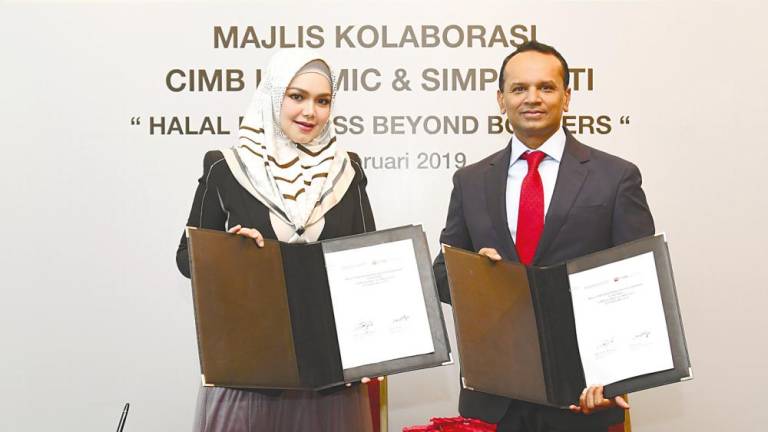
    CIMB Islamic Bank Bhd and local beauty brand SimplySiti have announced a collaboration that will see CIMB Islamic enabling SimplySiti to expand its halal beauty care business beyond Malaysian borders. The homegrown brand will also leverage the end-to-end support of the CIMB-Asean Halal Corridor and CIMB’s strong regional network, to meet the demand for quality halal beauty, cosmetics and skincare products across the region.

    CIMB Group Islamic banking CEO Rafe Haneef said for any homegrown business and SME, opportunities for growth are aplenty but the challenge is always on how to scale up.

    “This is where CIMB Islamic’s expertise, the CIMB-Asean Halal Corridor and CIMB’s regional network provide a strong value proposition to our customers. Through this collaboration, we are excited to facilitate SimplySiti’s move into its next growth phase by reaping the vast halal business opportunities within Asean,” he said.

    The CIMB-Asean Halal Corridor is an enhanced trade network linking halal businesses with trade infrastructure and ecosystems across Asean to take advantage of increasing demand for halal products in the region and beyond.

  • Asia-Pacific the key market for global smartphone sales

    Asia-Pacific the key market for global smartphone sales

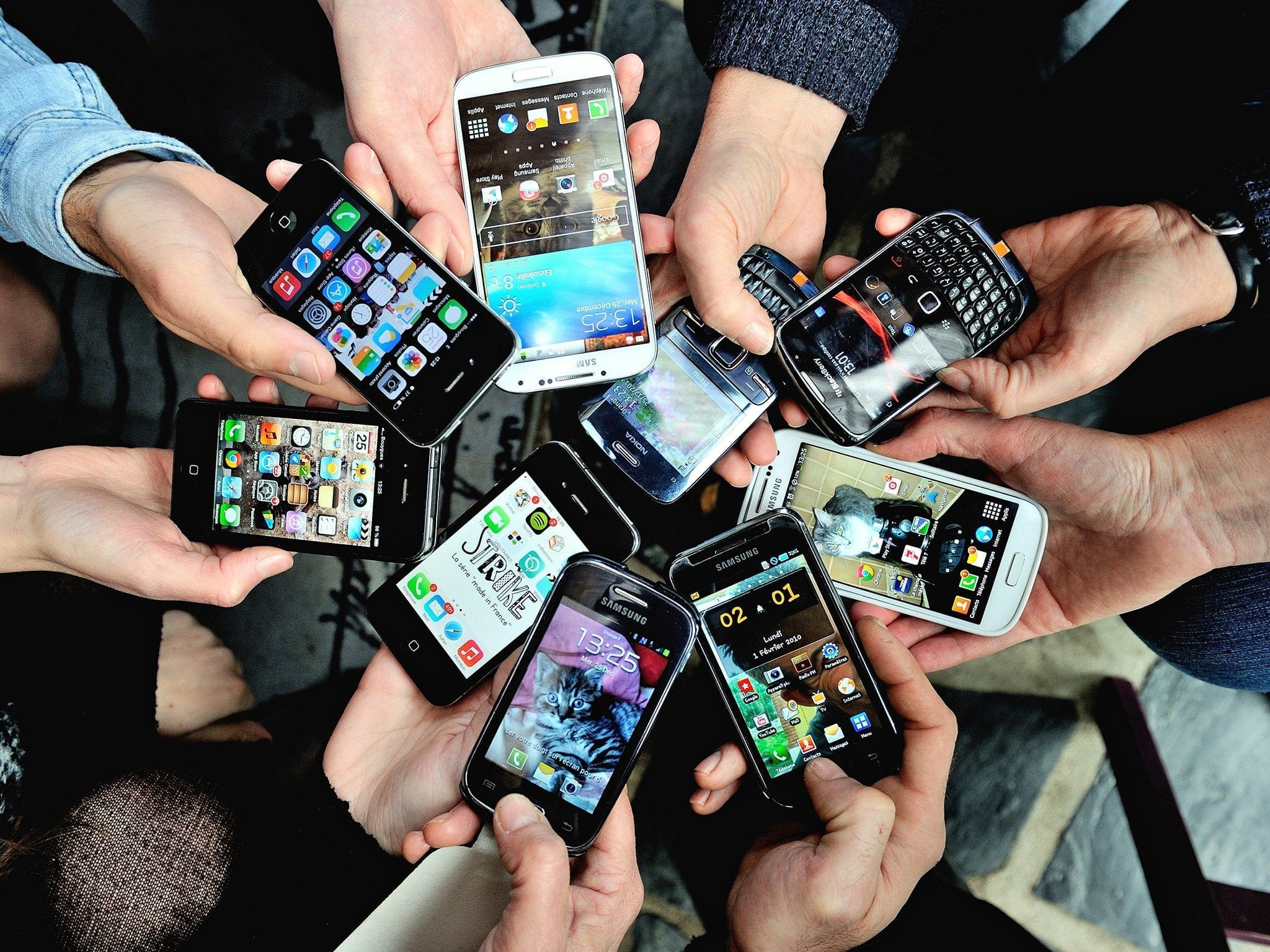
    Global smartphone sales grew 5 per cent to hit US$522 billion last year, with Asia-Pacific accounting for nearly half of those. According to a recent Consumer Life Study by GfK, smartphones, feature phones and wearables accounted for a 44 per cent share of the global $1.2 trillion technical consumer goods (TCG) market. But it warned smartphone sales are expected to grow by just 1 per cent this year.

    Apac the key driver

    More than 732 million smartphone devices were sold last year. Despite a slight decline in demand, overall consumer spend increased by 5 per cent.

    China accounted for 60 per cent of the Apac region’s market value and 54 per cent market volume, making it the largest contributing country to the global smartphone market.

    “The Chinese market consumes the majority of the global smartphone production, as well as being the home of local brands that are becoming increasingly global,” observed Alexander Dehmel, GfK regional senior market insights manager.

    “Some 40 per cent of the Chinese brands’ smartphone production in 2018 was purchased outside of China, up from 31 per cent in 2016.”

    In second position, India bucked the global demand downtrend, reporting growth in both sales volume and value in 2018, by 19 and 21 per cent respectively. More than 161 million smartphones worth more than $28.5 billion were sold last year.

    “In Asia’s emerging markets such as India, a country where feature-phone sales still exceeds half of the total handset market, smartphone market rapid growth is fuelled by the high adoption rate of first-time smartphone users, in addition to the fast replacement cycle and upgrading of existing smartphone users,” said Dehmel.

    Premium models and Chinese brands fuel growth

    Globally, 12 per cent (up from 9 per cent in 2017) of smartphones sold were priced at more than $800 last year. The $150-400 segment continues to be an important competitive battleground accounting for 46 per cent of smartphones sold globally (up 2 per cent from 44 per cent in 2017).

    Within Asia, developed markets drove the take up of high-end smartphones. Last year, every other device (53 per cent) sold in these countries cost more than $800. On the other hand, the most affordable phones priced below $150 accounted for half the total market.

    “Chinese brands have been significantly increasing their presence worldwide, and specifically in emerging Asian markets, their popularity have been largely driven by their affordability and faster model refresh cycles with improved specs,” commented Dehmel.

    “Take the region’s third largest smartphone market of Indonesia for instance; Chinese brands accounted for more than two in every five (42 per cent) smartphones sold in the country in 2018.”

    Looking ahead

    The study shows that consumer trends are changing when it comes to possessions. Not only do consumers “prefer to own fewer but higher quality items” that they will pay premium prices for, but they also “value experiences more than possessions”. If larger memory or screen size and multiple high-megapixel cameras can enhance their overall usage experience, such innovations will likely help ignite consumers’ imagination and stimulate greater demand.

    With rapidly evolving technology, the later part of last year saw new launches in the market which offered consumers features such as larger screen sizes, higher resolutions for both the front and back cameras, along with increased number of camera lens, and more-advanced AI functionalities.

    One of the key observations for last year was the continued popularity of larger screen sized smartphones – a trend consistently reflected across every single Apac market. China and Korea were the top two markets where almost nine in 10 smartphones sold had 5.5 inch or larger screen sizes.

    “From the trends that emerged in the second half of last year, we anticipate the growth of larger display smartphones with high screen-to-body ratios (i.e. slim bezels) to continue developing this year, as well as rising demand for models with stronger camera offerings in both resolutions (megapixels) and the number of lenses, powered by more advanced AI capable chipsets,” concluded Dehmel.

  • Petronas Chemicals share price up on higher profit

    Petronas Chemicals share price up on higher profit

     Petronas Chemicals Group Bhd’s share price up 0.66% or 6 sen this morning, after its net profit jumped 27.9% to RM1.29 billion for the fourth quarter ended Dec 31, 2018 (Q4). As at 11.56am, the stock stood at RM9.22 with 2.93 million shares changing hands. The group said the higher profit was due to lower tax expenses and higher share of profits from joint ventures and associates.

    Its revenue also increased by 6.8% to RM5.06 billion compared with RM4.74 billion in the previous year’s corresponding quarter.

    It has proposed to declare a second interim dividend of 18 sen per share amounting to RM1.44 billion in respect of the financial year ended Dec 31, 2018.

  • Maybank achieves record earnings of RM8.11 billion for 2018

    Maybank achieves record earnings of RM8.11 billion for 2018

     Malayan Banking Bhd’s (Maybank) registered highest ever net profit of RM8.11 billion for the financial year ended December 31, 2018 (FY18) from RM7.52 billion a year ago, mainly underpinned by higher loans growth, lower overhead costs as well as lower provisioning. Its FY18 revenue also rose 3.8% to RM47.32 billion against RM45.58 billion previously.

    Net profit for the fourth quarter, meanwhile, grew 9.1% to RM2.33 billion from RM2.13 billion in the same quarter a year ago, with revenue expanding 3.8% to RM12.23 billion from RM11.79 billion.

    The bank has proposed to declare a final dividend of 32 sen per share for the quarter under review.

    Together with the 25 sen interim dividend declared earlier, the full-year dividend payout of 57 sen per share amounts to RM6.3 billion or 77.3% of net profit.

    The total dividend payout also translates into a higher dividend yield of 6% versus 5.6% in 2017.

    In 2018, Maybank’s achieved a record net operating income which rose 1.7% to RM23.63 billion, on the back of a 3.1% increase in fund based income as a result of higher contributions from all business sectors and key home markets.

    Group gross loans expanded at a faster pace of 4.8% in FY18, compared with 1.7% previously. The Malaysian operations saw loans expanding 4.8%, Singapore 4.5%, Indonesia 7.0% and 10.9% for other international markets.

    Maybank also highlighted that its net impairment losses for the year coming in 20.5% lower than the previous year, lifting operating profit by 9.3% to RM10.8 billion in 2018.

    For Q4 alone, it also saw net impairment losses coming in 58.1% lower than Q3.

    The bank continued to maintain a healthy liquidity position with its liquidity coverage ratio of 132.4% and loan-to-deposit ratio of 92.7%. Total capital ratio was 18.51% while its fully loaded common equity tier 1 ratio stood at 14.51%, both well above the regulatory requirements of 8.0% and 4.5% respectively.

    On its prospects, Maybank said it will maintain its balance sheet expansion in line with forecast economic growth of its three home markets, in tandem with the group’s risk posture, and continue building on its diversified franchise and footprint to expand income streams through cross business collaborations and focusing on diligent pricing of its assets and liabilities.

    Barring any unforeseen circumstances, the group expects its financial performance for 2019 to be satisfactory in line with the expected growth prospects of its key home markets.

    The group has set the headline key performance indicator (KPI) for return on equity (ROE) of approximately 11%.

    At 2.35pm, Maybank’s share price was trading unchanged at RM9.54 on 3,344,100 shares done.

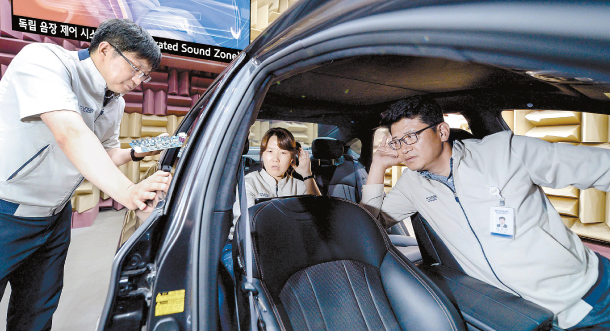
  • Hyundai Korea’s employees to be more casual at office

    Hyundai Korea’s employees to be more casual at office

    Jeans and T-shirts will be allowed at Hyundai Motor offices from March 4 as the auto group’s heir apparent Chung Eui-sun looks for new ways to give the automaker a younger, trendier feel. On Monday morning, Hyundai Motor employees at its headquarters in southern Seoul were told that they are free to dress however they want from next month. Unlike a no-tie day, Hyundai’s new dress code didn’t include any special rules or guidelines.

    The free dress code applies to all Hyundai office workers, according to the company spokesperson, but not for workers at production facilities due to safety issues.

    While some time will be needed for Hyundai employees, who are much more familiar with formal suits, to get used to their new fashion freedom, industry sources say the move is likely to spread to Hyundai affiliates soon.

    Hyundai has long been considered one of most conservative Korean companies, as with most other companies in the traditional manufacturing sector like shipbuilding and steel. However, the automaker has been trying to rebrand itself as a mobility technology company given the growing importance of digital technology in the auto industry.

    Hyundai Motor Group Executive Vice Chairman Chung Eui-sun stressed in his New Year’s message that he will ramp up investment in the sharing economy, artificial intelligence and smart mobility to keep up with the radical paradigm shift.

    LG also started to shift its dress culture earlier last year. LG Electronics and LG Corp. adopted free dress codes from September.

  • Build-A-Bear to open more stores in next 10 years in India

    Build-A-Bear to open more stores in next 10 years in India

    For more than 21 years, U.S. based personalized experiential toy retail brand Build-A-Bear has been sharing hearts and bear hugs globally, and after a long wait, Tablez – the retail arm of LuLu Group International, has launched the first Build-A-Bear store in India, at Toys”R”Us, Phoenix Marketcity in Bangalore. Build-A-Bear is a global customized stuffed-animal retail entertainment brand that aims to reach as many as 9 million households in the top 15 cities in India by 2025. Besides standalone stores, shop-in-shop formats of Build-A-Bear would be launched within Toys“R”Us.

    On this special occasion, Adeeb Ahamed, MD, Tablez said: “The Build-A-Bear concept is a one-of-a-kind retail experience, and we are thrilled to open the first store in Bangalore. Build-A-Bear is synonymous with creativity and novelty for children. I am sure that each child that enters our store will cherish their experience and leave with an indelible memory.

    “From standalone stores to shop-in-shop formats, Build-A-Bear is ready to reach out to families and kids in India and help loved ones create memories and spend more time together. We plan to open 20 standalone stores of Build-A-Bear across key cities in India over the next 10 years, along with shop-in-shop formats across all our Toys”R”Us stores as well.”

    Dorrie Krueger, Build-A-Bear Workshop Chief Strategy Officer, said, “Together with Tablez India, we are excited to open the first Build-A-Bear store in India and continue to expand into this important global market. We look forward to introducing the Build-A-Bear brand and sharing the joy of making a new furry friend with millions of families.”

    Build-A-Bear is a global brand that kids love and parents trust for fantastic family experiences. The ‘Choose Me’ wall at every Build-A-Bear store is where the empowerment journey begins as each guest chooses an unstuffed animal to bring to life. Accessories give customers the freedom to customize their creation. The heart ceremony is where one can add special wishes to their friend. During the stuffing process, a heart is placed in the bear along with special wishes, and the guest promises to care for their new furry friend once they are given the birth certificate. This signature ceremony brings each stuffed animal to life in a personal way, further ensuring a greater attachment.

    Established in 1997, Build-A-Bear has helped millions find their own meaning in a new furry friend. The brand has nearly 500 stores worldwide and more than 180 million furry friends have been made globally in its 21-year history. Build-A-Bear helps guests mark special occasions, start friendships, and inspires people to make their own adventures. At Build-A-Bear, one is empowered to feel that anything is possible.

    Further, a Build-A-Bear shop-in-shop format will follow in Vega City Mall, Bangalore; City Centre Mall, Mangalore and Phoenix Marketcity, Pune. Build-A-Bear plans to expand to as many as 65 shop-in-shop format stores and 20 standalone stores in India over the next 10 years.

  • Men make-up driving K-beauty boom

    Men make-up driving K-beauty boom

    Men wearing makeup – once a practice unique to TV stars and celebrities – is becoming a part of popular culture in South Korea. As an increasing number of South Korean men are purchasing clothes, cosmetics, and other beauty products to take care of their looks, cosmetics goods for men are expanding both in terms of variety and sales. Olive Young, a major South Korean cosmetics store, said sales of cosmetics for men increased by 30 per cent last year compared to the year before.

    Cosmetics for men are going beyond BB creams and cushions to include coloured lip balms, eyebrow products, concealers and eyebrow-hair scissors.

    A coloured lip balm for men, for instance, has seen sales skyrocket 16-fold over the last two years, according to Olive Young. Sales of makeup cushions and BB creams have increased by 30 per cent as the number of men wearing make-up burgeons.

    Drawing eyebrows, once a practice unique to women, is now spreading among men, as seen by the fact that sales of eyebrow products for men have increased by 25 per cent over the last two years.

    An increasing number of eyebrow-hair scissors, nipple bands, and body hair removers are being developed for men as well.

    “Makeup is now becoming a tool to express one’s confidence, leading to increased demand for various cosmetic products for men,” said Olive Young.