Tag: asia

  • Axys Consulting Asia names new chief

    Axys Consulting Asia names new chief

    Axys Consultants (Paris) and Axys Asia (Hong Kong) have named Alexandre Viale-Berthelier as new partner and head of Asia.

    This follows the recent announcement of Axys’s expansion in Northern America (through Axbility Consulting), and two years of business development in Hong Kong.

    Paul Strippe, Axys Consultants group CEO, said the appointment demonstrates the company’s commitment to support its growing portfolio of international clients and to expand the reach of its services in Asia.

    “Alexandre’s mission will be to build a diverse and inclusive team and I trust his ability to help our team and our clients to reach their full potential.”

    Viale-Berthelier has been appointed from within the firm’s digital, marketing & commerce division. Based in Hong Kong since 2011, he previously worked at EY where he served as an advisory director for many of the consultancy’s largest accounts in retail and luxury, transportation, banking and wealth management.

    Viale-Berthelier said Axys has taken a strong international direction, supported by talented consultants. “I am excited to build on this strong foundation and deliver our performance improvement services to a larger set of local and international clients.”

    Founded in 1987 in France, Axys Consultants focuses on procurement, finance & performance management, Digital, marketing and commerce, data, and change management.

  • SoftBank deploying Cisco SRv6 network

    SoftBank deploying Cisco SRv6 network

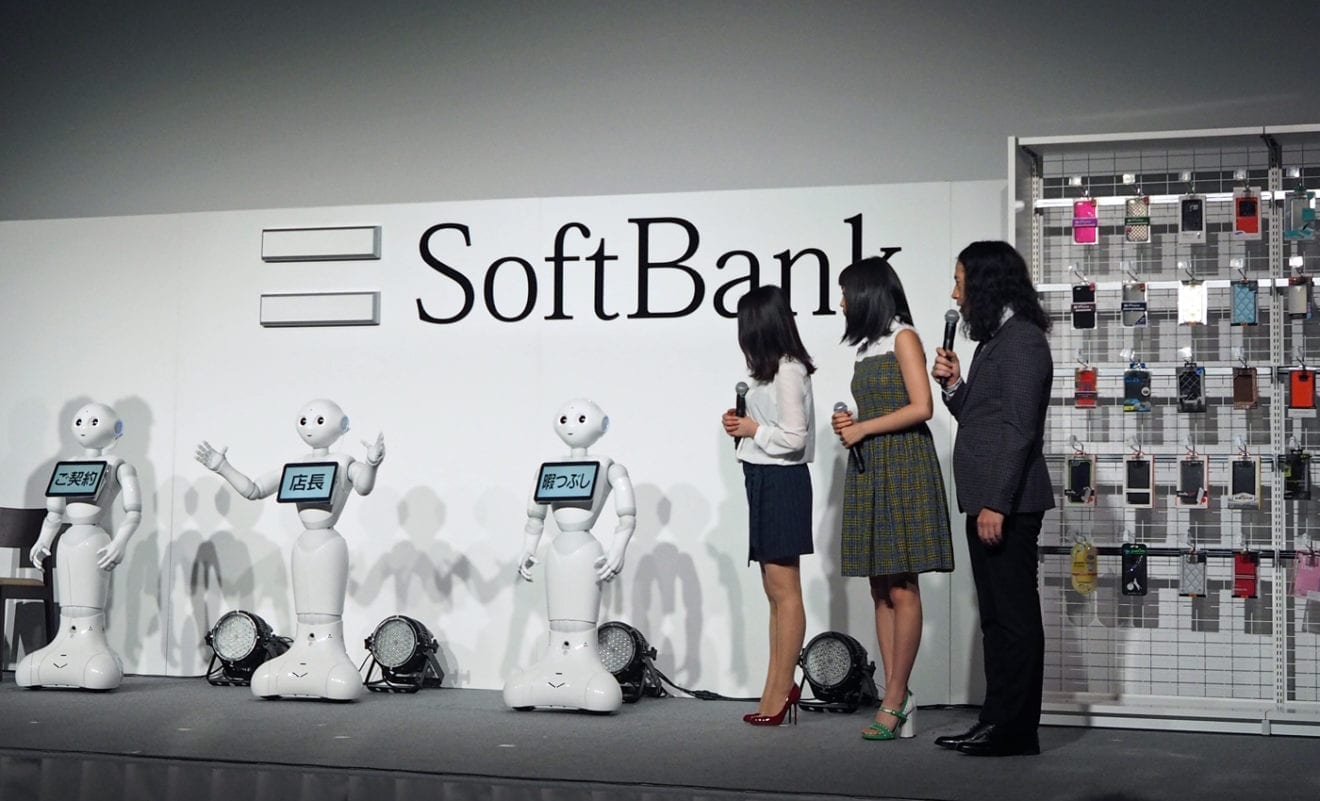
    Cisco is collaborating with SoftBank on the world’s first Segment Routing IPv6 (SRv6) deployment. With the anticipation of the coming 5G era, Cisco has been assisting SoftBank to deploy an SRv6 network nationwide to build a future network architecture that is extremely scalable, with improved reliability, flexibility and agility, all while helping to reduce capex and opex.

    Current mobile networks are deployed as divided networks, with several layers and complicated control plane processing, which makes it difficult to respond to strict quality requirements like in the case of 5G. Deploying SRv6 in a 5G mobile network aims to simplify network layers and integrate user plane functions from end-to-end with only IPv6 protocol.

    “Converging 5G features into the end-to-end IPv6 layer with Segment Routing capabilities, is the key to embodying 5G in a simple, scalable architecture,” SoftBank CTO Junichi Miyakawa said.

    “With the depth of portfolio and strong network knowledge that Cisco brings to the table, we knew together we could bring our vision to life.”

    “SoftBank has kept an intense focus on improving service quality for its customers, which can be challenging when trying to reduce costs,” said Sumeet Arora, Senior Vice President of Service Provider Networks, Cisco. “With the launch of SRv6 network programming, it is pioneering the next phase of IP networking through automation, and championing the needs of its customers.”

    Cisco is leading the disruption in the industry with its technology innovations in routing, 5G, subscriber experience (mobile, cable, fixed), automation, optical and optics. Together with its Customer Experience team of experts, Cisco enables service providers, media and web companies to reduce cost and complexity, helps scale and secure their networks, and grow their revenue.

  • Lancome Bangkok pop up store in a fantasy wonderland

    Lancome Bangkok pop up store in a fantasy wonderland

    Lancome’s fantasy wonderland pop‑up at Bangkok King Power Rangnam, featuring the brand’s first ever interactive LED projection, will come to a close on March 10.

    The Chinese New Year Lancome pop-up was launched on February 4 following the success of Lancome’s festivities at King Power Rangnam the previous year. In keeping with the brand’s stated commitment to “empower women to express their best selves”, Lancome’s “Wish Big” pop-up featured a state-of-the-art LED installation that went up to the atrium ceiling, surrounded by floating lanterns symbolising wishes rising into the heavens.

    Guests enjoy real-time interaction with the retail design as they walk around the 10‑metre-long LED installation. The wonderland-inspired design is fully integrated with the entire retail space, allowing Lancome to completely take over of the Rangnam atrium.

    Every single visible touchpoint and the six‑metre-high chateau structure is branded with Lancome’s signature shade of Parisian rouge, wishing visitors a good start to the New Year and contributing to the festive CNY atmosphere.

    The immersive experience in Lancome’s wonderland continues inside the pop-up with a custom “boomerang photo booth” that allows visitors to virtually interact with Lancome products. All photos and videos can be downloaded so visitors can share them on social media. On the other side of the pop‑up, a large LED installation displays a Parisian cityscape that doubles as an interactive game, giving customers  the chance to “catch” floating Lancome products on screen and exchange them for prizes in store.

    “King Power aims to elevate the experience of duty‑free shopping through the careful curation of our retail offerings,” said King Power Group’s senior executive VP Susan Whelan. “Particularly during this holiday season when more people will be travelling, we want to make our customers feel right at home here with us.”

    “We are committed to bringing greater happiness to each and every one of our customers, and we hope that their experience with Lancome here will create more happy moments and happy memories for a wonderful start to the year ahead,” said Lancome Travel Retail Asia Pacific GM Tao Zhang.

    The pop-up also offers travellers a range of exclusive gift-with-purchase, all styled to reflect the flying pig that Lancome has chosen as its symbol for the new year.

  • Indian telcos call for fiber deployment fund

    Indian telcos call for fiber deployment fund

    Indian operators are calling for the establishment of a fund to help incentivize deployments of fiber across the country ahead of the introduction of 5G.

    The Cellular Operators Association of India (COAI) has urged the government to offer incentives including tax relief, rationalization and reduced red tape on investments in order to encourage the deployment of more fiber.

    The industry body believes a national policy should be established that would include the introduction of uniform and reasonable approval processes and right of way policies.

    As part of the government’s National Digital Communications Policy, the government is considering introducing incentives, and establishing a special purpose vehicle to grant low-interest loans to operators to fund network expansion.

    The policy also calls for the introduction of a new National Fibre Authority to help meet operators’ needs for fiber backhaul. The government aims to increase India’s fiber footprint fivefold by 2022 to around 7.5 million route kilometers. According to the policy, less than a quarter of current telecom towers are connected to a fiber backbone.

  • Dairy Farm Group CEO says restructure will take some years

    Dairy Farm Group CEO says restructure will take some years

    Dairy Farm Group has warned shareholders that its restructure will take five years to complete.

    “There are few ‘quick fixes’ and no ‘silver bullets’,” CEO Ian McLeod told shareholders in the company’s results filing last week. “Continuous improvement against a deliverable, long-term strategic and operational plan is needed.”

    McLeod says the Strategic Review launched soon after his arrival has created a three-step process to restore strong profitability to the Hong Kong-listed, multinational retail business: Building a Solid Foundation, Delivering Consistently Well, and Driving the Dairy Farm Difference.

    “We began the urgent work required to assess and address the significant issues faced by the group, especially those within our food business, to support the changing demands of the customers. While the Strategic Review also highlighted opportunities to improve performance in other parts of the group, the food business is clearly the one requiring the greatest level of focus and short-term action,” he said.

    “It is very clear that the level of change necessary to deliver the required improvements will take at least five years to deliver in a sustainable way.”

    Phase one is now underway with the first step to bring in the right leadership talent with the capability and determination to deliver significant and meaningful transformational change. Seven of the 10-strong leadership team are new to the business, and two have revised responsibilities.

    McLeod said they have already begun to instil the right functional discipline, efficiency and business capabilities to deliver on the turnaround plan.

    A key finding from the Strategic Review was that the company was organised and deployed as multiple business units by banner, country or format – or all of those.

    “While allowing for locally based decision-making, our way of working was to act as a series of small businesses, without shared learning, quality functional specialism, or the consistency of scale and expertise one might expect from one of Asia’s largest retailers. Our businesses have now been centralised into two core trading divisions, covering North Asia and Southeast Asia,” said McLeod.

    No more hypermarkets

    “As new leaders have joined, we have begun to address key areas where we have fallen behind, most notably in store format development and digital expansion. As an example, having used stronger consumer insights and intelligence to analyse our customer offering and product selection, we have decided no longer to build hypermarkets. While some of these stores remain successful and continue to show growth, it is clear that this format has struggled to deliver effective returns across the food retail industry in Southeast Asia and needs to be reshaped.

    “We are now introducing pilot stores, redefining space allocation and trialling new innovations in our formats, to place greater emphasis on fresh food, demographic range optimisation and, where relevant, even repurposing the space altogether.”

    One of the group’s hypermarkets in Indonesia is being repurposed as an Ikea this year, with the prospect of this conversion offering an opportunity to accelerate the expansion of Ikea in that market, while also addressing an underperforming food store.

    “While we have strengthened our digital capability to better respond to expanding opportunities in e-commerce, we are starting from a very low base and are playing catch up,” said McLeod.

    Last financial year, Dairy Farm Group took a US$453 million hit from writedowns relating to restructuring costs, but McLeod says this was the down side of an essential shift towards delivering quality service, value and trust to the company’s customers.

    Five priorities

    The company has set five strategic priorities it says will enable it to grow moving forward:

    • Grow in China.
    • Maintain strength in Hong Kong.
    • Revitalise Southeast Asia.
    • Build capability.
    • Drive digital innovation.

    Grow in China: “China is one of the largest and fastest growing consumer markets in the world, and one where convenience, health and brand trust represent encouraging market potential for our businesses there. While we have been represented in China for more than 25 years with 7-Eleven and 14 years with Mannings, our scale of growth has not fulfilled its potential. With both businesses centred in Guangdong province, which is home to 100 million people, we should be able to pool resources and grow these businesses more successfully.

    “By more effective definition of range, space, store size and location, we believe there are opportunities for both businesses to achieve stronger growth in scale in the coming years. We have developed a strong and growing relationship with Yonghui, which continues to impress, and we anticipate further shared learning and idea generation between the two businesses going forward. We also continue to develop relationships with China’s technology companies, with a series of trials taking place to better understand the changes in customer expectations as regards the use of technology in this market and beyond.”

    Maintain strength in Hong Kong: “We are in the fortunate position that, within our home market of Hong Kong, we have a series of very strong brands with a track record of effective performance. Each of Wellcome, Mannings, 7-Eleven and Ikea have high brand presence, strong brand awareness with consumers and importantly, high degrees of brand trust.

    “We have the further benefit of our long-standing relationship with Maxim’s, which continues to be a thriving business with effective presence in each area of the market and a growing portfolio of renowned international brands such as Starbucks, Genki Sushi, The Cheesecake Factory and the recently added Shake Shack, which has exceeded all performance expectations.

    “Mannings had an exceptional year in 2018, but Wellcome’s performance disappointed. While the underlying business remains strong, substantial cost rises, particularly on rents, have had a material effect on year-on-year profitability. As a result of the Strategic Review, we will reconsider our approach to opening new space, where we open it, and seek to deliver greater range clarity by demographic across the Wellcome portfolio of retail brands.

    “Ikea benefitted from a full year of operation by a fourth store opened in the last quarter of 2017, which cemented our leading position within the home furnishings market in Hong Kong. While we have faced some cost offsets with currency fluctuations on cost of goods and new startup costs, we are very confident about our underlying position for Ikea and its growth potential not only in Hong Kong but also in the other markets where we operate the franchise.

    “We will also drive further innovation with a planned relaunch of e-commerce and building on the recent experience of a pop-up Christmas store in Hong Kong.

    Revitalise Southeast Asia: “We have some serious problems in our food business that require radical solutions and actions. This will necessitate a fundamental re-engineering of our food offer and our customer proposition plus significant rationalisation of space and of our general merchandise offer, converting hypermarkets to large food format stores over time.

    “In Southeast Asia our core issue rests within our Giant brand and particularly hypermarkets in Malaysia, Indonesia and Singapore. We have significantly underinvested in these hypermarkets in the past and they now need a course correction to reshape and resize our offering, to ensure it is fit for purpose to meet the demands of modern-day consumers and keep pace with the rising middle class.

    “We have already begun the process of redesigning our proposition in fresh and grocery and we have pilot propositions already on the ground. Our Malaysian pilot is a redefined hypermarket where we have halved the general merchandise range size and achieved double-digit sales growth. We are also putting more emphasis on fresh food, investing in value on grocery and streamlining general merchandise and apparel to optimise our range and space by category. In another pilot conversion, general merchandise has been reduced by a third while fresh space has been increased by more than 70 per cent.

    “While it remains very early days for the pilots being developed in each key market of Indonesia, Malaysia and Singapore, we have been encouraged by their early performance. The predominant challenges rest within mass-market hypermarkets and supermarkets where locations have been lacking in investment for years, or were simply built in the wrong place, or the competitive landscape has changed. These fundamental retail errors are now being addressed head on.

    “Encouragingly, our upscale stores within these markets are showing signs of recovery as we raise operating standards of quality, freshness, availability and even hygiene. That said, the challenge that we face in right-sizing our food business in Southeast Asia is substantial and will take considerable time to achieve.

    “Our Guardian Health and Beauty business remains a significant opportunity for us in Southeast Asia. Countries which were demonstrating trading difficulties a couple of years ago are beginning to grow, if not thrive, under new leadership and we will more aggressively invest in the expansion and format development of our health and beauty business in the region.”

    Build capability: McLeod says the new management team has brought increased experience and capability “absolutely key” to the success of the work ahead.

    “Embedding their knowledge and expertise right across the group is now the priority. With around 200 years of retail and consumer experience collectively across the leadership team we now have the ability to drive the considerable changes necessary to not only improve Dairy Farm’s performance, but to transform the business to a modern-day retailer focused on delivering what customers want, where and how they want it.”

    The new team is supported by more than 30 new senior management appointments across the group, “adding further experience and energy to the transformation effort”.

    Drive digital innovation: “Retail is seeing rapid change and Dairy Farm has been slow in responding to the pace of digital change. We have significantly underinvested in digital (people and technology) and as a result are behind the curve. Last year, we began to change this.”

    Two new roles have been created: chief digital officer and chief technology officer, both people taking up their appointments in the last quarter of last year.

    “They have already begun to review all our current ad-hoc programmes and initiatives, to reset and reshape our group approach to a badly needed IT infrastructure upgrade and accelerate our core SAP system rollout, as well as carrying out a review of our digital priorities within each business and region. We have made some improvements in developing our digital offer, with numerous initiatives and pilot schemes now in place, as well as developing partnerships with key Chinese technology companies. The reality, though, is that our digital capability is in its infancy; something we believe is vital that we change.”

    Writedowns

    Dairy Farm Group’s $453 million hit in last year’s results comprise a write down for goodwill associated with the Giant business across the region, along with impairing underperforming assets, booking onerous lease provisions relating to underperforming stores, writing off poor-quality stock, and incurring various business correction costs. McLeod said this allows the company to build for the future and draw a line under the weakness of the past.

    Most of the $453 million comprised non-cash items, with the net cash impact estimated at less than $50 million.

    However, this amount was partially offset by a gain from the exchange of Dairy Farm Group’s food business in the Philippines for a share in Robinsons Retail and the exit of its Giant hypermarket in Vietnam which was taken over by Auchan. An an impairment of goodwill was realised relating to Rose Pharmacy in the Philippines while taking full ownership of this business.

    Elsewhere, there were gains on the sale of several food properties which the company did not consider strategic assets to own moving forward.

    These positive factors reduced the overall impact of non-trading items to $332 million for the year.

  • Juniper Networks to buy Mist Systems for $405m

    Juniper Networks to buy Mist Systems for $405m

    Juniper Networks has arranged to acquire Mist Systems, a provider of cloud-managed wireless network solutions powered by artificial intelligence, for $405 million. Juniper Networks plans to use the acquisition to fill wireless gaps in its enterprise networking portfolio through the addition of Mist’s WLAN platform.

    Mist’s AI-driven wireless platform is designed to enhance the reliability of Wi-Fi networks. The company has also developed an AI-driven virtual assistant to simplify wireless troubleshooting.

    The company also uses virtual Bluetooth low energy technology, combined with Wi-Fi and IoT connectivity, to provide location-based wireless services to customers, including indoor wayfinding, proximity notifications, traffic analytics and asset tracking.

    Juniper Networks CEO Rami Rahim said he expects the acquisition to enhance the company’s presence in the cloud-managed segment of the wireless networking market, and to allow it to expand AI-driven network management capabilities across the end-to-end enterprise network.

    “Mist Systems is a great fit for Juniper and for our enterprise customers,” explained Rami Rahim, CEO of Juniper Networks,” he said.

    “Juniper and Mist share a common strategic goal. We believe in the Software-Defined Enterprise and Mist’s focus on bringing AI to IT is consistent with our core belief that we need to simplify operations and improve customer experience while lowering costs.”

    The acquisition still requires regulatory approvals and is expected to close by the end of the second quarter.

  • M1 to be delisted after crossing buyout threshold

    M1 to be delisted after crossing buyout threshold

    Konnectivity Corp has succeeded in its takeover attempt for Singapore’s third largest operator M1 and will now take the company private. Konnectivity, the joint venture established by major M1 shareholders Keppel Corp and Singapore Press Holdings, has announced in a stock exchange filing that its share in M1 has now crossed the 90% threshold.

    With fewer than 10% of shares now owned by the public, M1 now no longer meets the threshold of listing on the Singapore stock exchange and will be delisted.

    Remaining shareholders will have until March 18 to accept the S$2.06 ($1.52) per share buyout offer if they do not want to own shares in a delisted company.

    Keppel and SPH first mounted their buyout offer for M1 in January, after announcing an intention to do so in December. Their joint venture Konnectivity gained majority control of M1 in mid-February.

  • Lego China Flagship Heralds with a renewed focus on the East

    Lego China Flagship Heralds with a renewed focus on the East

    Danish toy brand Lego’s bounce back after a tough financial year has seen new enthusiasm from the brand for expansion into China. The new energy has seen the retailer open its first Lego China flagship in Beijing last weekend.

    A drop in demand for its products during the 2017 financial year – the first since 2004 – saw the brand take a sharp conservative turn last year in order to stabilize the business. Meanwhile, double-digit growth in China brought revenue up 4 per cent to US$5.5 billion with profits of $1.2 billion, accompanied by a degree of sales recovery in the US and western Europe.

    “We are especially encouraged by our progress given the challenges facing the toy industry and the departure of specialist retailers such as Toys R Us that went under last year,” said Lego’s CEO Niels B Christiansen. “These shifts gave us the opportunity to strengthen our partnerships with retailers and find new ways to connect with shoppers and consumers across digital and physical channels.”

    Buoyed by the encouraging results, and on the heels of the Lego China flagship opening, the company will launch 80 new physical outlets in 18 Chinese cities this year.

  • Amorepacific adopts a new eco-friendly packaging

    Amorepacific adopts a new eco-friendly packaging

    Nowadays, products purchased online are typically delivered in a big box with bubble wrap for protection. But once the package is safely delivered, the packaging becomes nothing more than waste. Amorepacific, however, has chosen to make use of eco-friendly packaging, adopting paper materials instead of bubble wrap.

    What seems like a small and insignificant change is the result of hard work, with an eye to the environment.

    The company’s new paper packaging, which was piled up among workers and automatic packaging devices at a logistics centre in Osan, Gyeonggi Province, consists of eco-friendly shock-absorbing packing material called ‘geami’ and ‘papillon’.

    When the product is wrapped with geami and the remaining space is stuffed with papillon, it can withstand most external shocks.

    It took months of research and testing before such materials were put into use. Furthermore, paper packaging is two or three times more expensive than bubble wrap, and its use extends the time required for packaging.

    Despite all of the disadvantages of the new materials, paper packaging was chosen because its value to the environment cannot be calculated and converted into money, the company says.

    Amorepacific needed a pre-emptive response as the problem of over-packing and using plastic is becoming a serious social problem, and as the number of consumers considering the environment increased. The remaining problem was how consumers would react to such change. As expected, some customers complained that they were sent garbage.

    Soon enough, however, the mood turned with positive comments regarding the new packaging surfacing online.

    Amorepacific continues to change to contribute to the environment. It no longer uses vinyl tape on its packages, replacing it instead with paper tape.

    The company has stopped using colour-coated boxes, and also uses smaller and slimmer boxes when possible. Product containers also went through major changes to become more eco-friendly.

    It was a difficult process as many consumers buy cosmetics because of the packaging.

    Since aesthetic standards cannot be ignored, Amorepacific changed the design of containers to reduce the amount of plastic used, made transparent containers for easy recycling, and used paper to make dual-structure containers.

    In addition, last year Amorepacific used paper that was certified with Forest Stewardship Council (FSC), which is given to paper produced in a sustainable way, on boxes for 500 different products.

    Although the company’s packaging materials research team is having difficulty developing new designs, it is continuously developing cosmetics containers that maximise aesthetic effects and at the same time reflect eco-friendly elements without affecting product preservation.

  • Operators not ready to exploit 5G opportunities

    Operators not ready to exploit 5G opportunities

    Syniverse’s global survey of service providers reveals that the industry is banking on driving new revenues from enterprise 5G opportunities, and that many have yet to develop the underlying payment, partnership, and interoperability systems that will allow a 5G ecosystem to monetize itself and flourish.

    Enterprise focus

    The survey highlights the degree to which 5G ecosystems are expected and prepared to play a significant part in an operator’s business model. Nearly 60% of respondents say that 5G will swing their organization’s focus to enterprise ecosystems, 77% of respondents expect their organizations to lead 5G ecosystems and offer advanced enterprise services, such as network slicing.

    Confident in recouping their investment in 5G enterprise plays, 90% of service providers surveyed said they have made progress in identifying vertical market opportunities. However, respondents raised significant concerns about the practical challenges of engaging in a new ecosystem that will entail many new partners, payment mechanisms and security challenges.

    Challenges remain

    Seventy-four percent acknowledged that coordinating multiple partners is somewhat or the most difficult challenge, followed by maintaining service quality (70%), and revenue-sharing mechanisms (65%).

    Where multiple partners require billing and charging, as many as 83% of respondents identified security and immutability of ecosystem transactions as a somewhat or most important feature, followed closely by the ability to allocate revenue between all partners (78%).

    Despite the scale of these specific concerns, as many as 51% say they have not yet identified, or are only just beginning to identify, their technical requirements for multi-party billing, reconciliation, and payment solutions.

    “One of 5G’s defining aspirations is that it offers service providers the capability to expand beyond the traditional consumer boundary by supporting enterprise services brought about by the internet of things (IoT), with such innovations as smart cities, self-driving cars, and robotics,” said Bill Hurley, chief marketing officer, Syniverse.

    “The ability to ensure operators can monetize these ecosystems is a particularly important aspect, along with the ability to ensure that every contributor to those ecosystems gets their fair share of revenue. Without monetization and related financial security, ecosystems just won’t grow.”

    Not ready

    The survey highlighted further concerns about the industry’s readiness to effectively monetize 5G, with just 10% of respondents saying their existing systems are suitable for multi-party billing, reconciliation and payment solutions in 5G. Ecosystem complexity also raises specific challenges around invoicing and paying non-operator partners.

    Seventy-seven percent of respondents see fraudulent activity as somewhat or the biggest challenge in this area, closely followed by revenue assurance for billing, and settlement vs. contract data (71%).

    Blockchain future

    Syniverse affirm development effort around the application of emerging technologies like blockchain as a means to transcend industry silos. This technology will ultimately allow universal payment processing and reconciliation among any company or provider across any technology by securely validating and managing transactions.

    It also sees blockchain as allowing companies to efficiently and securely overcome the inherent 5G challenges associated with security, monetization, and connecting partners.

    Anticipating a future dominated by 5G, Syniverse launched a 5G signaling service that supports cross-network connectivity for the IoT, artificial intelligence (AI), and virtual reality (VR), as well as interoperability with 4G and 3G networks.

    It is also partnering on a virtualized network that is already powering 30 million connected cars in Asia that all need globally accessible cellular connectivity. In addition, challenges around security of transactions in 5G ecosystems are being addressed by firewalls and a private global network that protect data from cyberattacks arising from IoT devices being connected to the internet.

  • AirAsia withdraws flight tickets from Traveloka

    AirAsia withdraws flight tickets from Traveloka

    AirAsia has withdrawn its tickets from Traveloka. The move follows an incident in which the low-cost airline’s flights were unavailable on the sites of several online travel agents, namely Traveloka and Tiket.com.

    “As a group, AirAsia has discontinued the sales of all of our tickets on Traveloka. It’s based on our disappointment with them,” Dendy Kurniawan, president director of AirAsia Indonesia, said in a press conference on March 4 in South Jakarta. In the meantime, AirAsia is still waiting for official clarification from Tiket.com.

    AirAsia flights were missing from Traveloka and Tiket.com from Feb. 14 to 17. At the time, Traveloka told that it was due to the airline’s system upgrades, while Tiket.com had remained silent on the matter. However, Rifai Taberi, AirAsia Indonesia commercial director, wrote on his Facebook account that it was not caused by AirAsia’s system.

    The flights then reappeared on Feb. 18, but have been missing for the second time since March 2 on both sites.

    “We’ve been patient enough waiting for Traveloka’s official explanation – despite rumors that were spread at that time,” said Dendy. “If [they said] it’s because of the system – come on, they should’ve anticipated it. They could’ve contacted us directly.”

    Dendy said he had received reports that Traveloka had not provided a clear explanation about the unavailability to their customers and that the online travel agent had not directed AirAsia customers to the airline’s official website or app to book tickets. “But they suggested that people choose other airlines that were available on their website. We perceive this as something that hurts our good business relations with them,” said Dendy.

    Dendy added that the withdrawal could have a short-term impact on the airlines. “Perhaps [for] less than a month,” he said. “I believe our customers [will] check our website directly.”

    Also present at the press conference, Rifai agreed with Dendy’s statement. “Our sales in February were not affected by it at all,” said Rifai, adding that his side had emailed Traveloka five times since Saturday afternoon but had not received a response.

    Rifai confirmed the statement, but said Traveloka had contacted AirAsia through phone communication. “What we didn’t get was professional communication […] but we already responded to them,” he said.

    In a statement on Monday, Sufinitri Rahayu, public relations director for Traveloka, said the travel site highly prioritized continuous collaboration with all stakeholders and partners. “Since last weekend, we’ve asked for time to talk with AirAsia to come up with the best solutions for both parties,” Sufinitri said.

    Additionally, in February, Rifai once indicated an instruction forcing online travel agents to stop selling AirAsia tickets on his Facebook account, but Dendy said he did not want to make any speculation. “Just let the relevant agencies investigate it. We’re not going to cooperate with parties with the intention of unhealthy competition. That’s none of our business,” Dendy said.

  • Thai telcos to establish telecom CERT

    Thai telcos to establish telecom CERT

    Eight Thai telecom operators have reportedly signed an agreement to establish a dedicated telecom computer emergency response team (CERT).

    The operators, which include incumbents AIS, Dtac and True as well as state-owned operators TOT and CAT, will establish the CERT over the next 12 months.

    The collaboration will initially involve sharing information about cyber threats, as well as collaborating on analytics to deal with threats to state agency websites and e-commerce sites.

    Other signatories include Symphony Communication, CS Loxinfo and United Information Highway.

    The move to establish a dedicated industry CERT is in line with the cybersecurity bill recently passed by Thailand’s National Legislative Assembly. The telecom body will be the second industry CERT to collaborate with the national CERT after the finance industry.

    The telecom CERT will be self-regulated and managed by the Telecommunications Association of Thailand, the report states.

    The association is seeking funding of 20 million baht ($630,000) from telecoms regulator NBTC to help pay for the establishment of the CERT. The full budget has not yet been set, but all members are expected to contribute.

  • VW recycling project targets spent batteries

    VW recycling project targets spent batteries

    The auto industry’s big push into electric vehicles will lead to a big problem down the road: What to do with all those lithium ion batteries once they’ve lost their oomph? It’s the central question behind a pilot recycling project that Volkswagen Group plans to launch at a factory in Salzgitter, Germany, about 30 miles from its global headquarters in Wolfsburg. Beginning in 2020, the plant will accept about 1,200 tons of used automotive lithium ion battery packs a year — the equivalent of what’s in about 3,000 EVs today.

    The battery packs will be analyzed and sorted; those with some life left will be given a second use, such as mobile vehicle charging stations similar to the way a power pack can be used to recharge a cellphone. Batteries that are spent will be shredded and ground to a fine powder, Volkswagen says, so their valuable and rare raw materials — including lithium, cobalt, manganese and nickel — can be extracted and sorted for use in new battery packs.

    Volkswagen believes that, within 10 years, it will be able to recycle up to 97 percent of all the raw materials used in the battery packs driving its upcoming EVs. It expects the pilot project to help it reach 72 percent, up from 53 percent today.

    Thomas Tiedje, Volkswagen’s head of technical planning, said the automaker has spent 10 years researching how best to recapture the valuable minerals used to make modern batteries.

    “We already have sustainable battery expertise in the Group and are developing this further,” Tiedje said in a statement.

    While the pilot plant is ramping up in Germany, the company has not determined plans for battery recycling in North America after it begins selling EVs here this year with the Audi e-tron and in 2020 with the Volkswagen I.D. Crozz. “We are in regular contact with our colleagues in [North America] about recycling,” a spokesman said.

    Today’s lithium ion battery packs have an estimated useful first life of about 150,000 miles, or roughly 10 years, given average driving cycles. In Europe and in China, automakers are required to pursue end-of-life strategies for their products, especially those containing materials that are hazardous to the environment. In the U.S., however, similar recycling research efforts are in their infancy, though the nation’s largest EV maker, Tesla, last year said it is working toward a closed-loop battery recycling process at its Gigafactory battery-production locations.

    Playing catch-up

    Just in February, the U.S. Department of Energy launched a three-year, $15 million effort to industrialize the recycling of lithium ion EV batteries. The ReCell Center, at Argonne National Laboratory in suburban Chicago, will coordinate research with automakers, material and battery suppliers, and several universities with the aim of using recycled materials to drive down the cost of EV batteries by 10 to 30 percent, to a goal of $80 per kilowatt-hour.

    One more spin: Volkswagen’s pilot EV battery recycling plant in Germany will test whether cells are still useful or should be recycled.

    “We’re trailing the other countries,” Jeffrey Spangenberger, the center’s director, told Automotive News. “There aren’t many lithium ion battery recyclers in the U.S., so work needs to be done to catch up.”

    Spangenberger said ReCell’s efforts will be focused on “trying to increase the value of the materials coming out of the battery recycling stream. A lot of the processes that are used currently recover low-value materials. We’re trying to find ways to get the materials back that can make more money,” including cobalt, nickel and lithium.

    Reusing the good stuff: Once a battery is no longer useful, it is shredded and dried, with most of the expensive minerals recovered so that they can be reused to make future cells.

    In addition to guiding battery recycling efforts, the research will focus on three areas:

    1. Direct cathode recycling to develop processes that generate products to go back into new batteries without the need for reprocessing.

    2. Recovery and recycling of other battery materials that can be resold for a second use, providing an additional source of revenue.

    3. Design for future batteries to optimize the recapture and recycling of raw materials.

    A big problem fast

    The scope of global automotive lithium ion battery recycling is expected to grow fairly quickly into a huge issue. The International Energy Agency predicts that the number of EVs on the world’s roads could grow from about 2 million today to as many as 140 million by 2030. Volkswagen believes it will sell as many as 15 million battery-electric vehicles globally by 2025.

    In addition to all those extra EVs, higher-powered fast-charging increases the battery degradation rate by as much as 400 percent, Asad Farid, an analyst at Berenberg Thematics, told the Advanced Automotive Battery Conference in Strasbourg, France, in January. That means all those quick-charging EVs will need new battery packs sooner than 10 years. Berenberg estimates that by just 2022, as many as 262,000 metric tons of automotive lithium ion batteries will need to be recycled.

    “The car manufacturers have an upcoming problem, and one that we are already starting to see — this massive volume of batteries,” Johan Stjernberg, CEO of Box of Energy, a Swedish company working with Porsche and Volvo Cars, told Bloomberg last year.

    “The market will be enormous for second-life applications with storage.”

  • Victoria’s Secret parent to close stores as sales stagnate

    Victoria’s Secret parent to close stores as sales stagnate

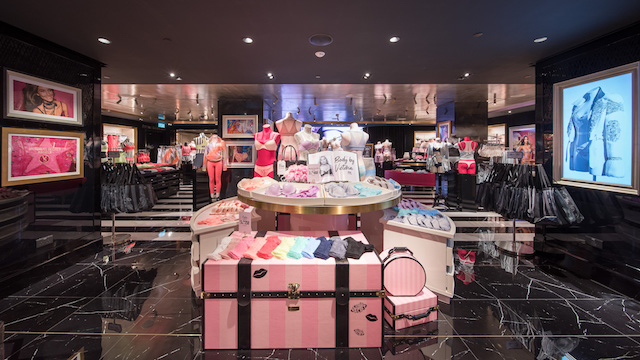
    L Brands, the parent of Victoria’s Secret, saw its share price fall 8 per cent after releasing disappointing results and halving its dividend payout. The US-headquartered company is struggling to arrest declining revenue in its flagship lingerie network, where same-store sales fell 8 per cent in January, contributing to a 1 per cent drop in overall sales. Online sales, however, rose by 8 per cent.

    Overnight, subsequent to releasing its results, the company said it would close 53 stores in North America. Earlier this year it said it would reintroduce swimwear to its range after an absence of several years to increase foot traffic in stores.

    Net sales for the year to February 2 were US$13.237 billion compared to $12.632 billion for the 53 weeks ended February 3 last year. Adjusted to take account of the extra week, sales rose 3 per cent in the latest year.

    But after excluding significant one-off items, the company’s adjusted net income this year was $786.7 million compared to $919.5 million for the 53-week period last year.

    As a result of that decline, L Brands cut its quarterly dividend from 61 cents per share paid last year to just 30 cents.

    Analyst Randal Konik of Jefferies said L Brands’ banners “are not wanted anymore”.

    “Keep in mind that comps remain negative despite very high promos, which means true brand demand is even worse than reported as some consumers buy things when they are given away for free or marked down by more than 50-75 per cent,” he said.

  • Canada Goose revenues surge more than 50%

    Canada Goose revenues surge more than 50%

    Canada Goose Holdings announced its financial results for the third quarter, highlighting a surge in revenues after new store openings both physical and online. For the quarter ended December 31, 2018, the North American outdoorwear company said total revenues increased by 50.2% to $399.3m from $265.9m, or 49% in constant currencies.

    Direct-to-consumer sales totalled $253.3m from $131.7m last year, driven by the strong online and in-store sales. Canada Goose said it opened five new stores during the quarter and an online store.

    Wholesale revenue increased to $164m from $134.2m, on the back of higher order values from existing partners, coupled with earlier shipment timing relative to last year.

    The Toronto-based company reported net income came in at $103.4m, or $0.93 per diluted share, compared to $63m, or $0.56 per diluted share. The 64% increase was due to higher operating income and a lower effective tax rate, said Canada Goose.

    Adjusted EBITDA was $151.1m, compared to $94.7m.

    “Fiscal 2019 is shaping up to be another year of impressive results. In our peak selling season we continued to deliver when and where it matters most, while also strengthening our foundation for future success on the global stage,” said Dani Reiss, Canada Goose President & CEO.

    “We have successfully entered new markets, introduced new product, and increased capacity to meet growing demand in both channels. We remain deeply confident in the long runway we have ahead.”

    Looking ahead for 2019, annual revenue growth is projected to be in the mid-to-high thirties on a percentage basis, compared to at least 30%.

    Annual growth in adjusted net income per diluted share is now predicted to be in the mid-to-high forties on a percentage basis.

    Founded in 1957, Canada Goose is today one of the world’s leading makers of performance luxury apparel. The Made-In-Canada advocate employs more than 3,400 people worldwide.

    In Asia, the Canadian brand has flagships in Tokyo, Beijing and Hong Kong.