Tag: asia

  • SPAR India to partner Himachal Pradesh in promoting fresh sourcing and manufacturing

    SPAR India to partner Himachal Pradesh in promoting fresh sourcing and manufacturing

    As part of ‘The Global Investors Meet’ in Dharamshala, Himachal Pradesh on June 10-11, 2019, which will have the CII as key national partner, a road show was organized in Bangalore recently that saw senior leaders from various industries participate in the event. SPAR was one such participant at the show as a representative of the retail industry.

    At the event, SPAR India’s MD & CEO Rajeev Krishnan and Solai Shakthivel, Senior Vice President – Buying and Merchandising Foods, had the opportunity for a one-on-one interaction with the Chief Minister of Himachal Pradesh Jai Ram Thakur and Industry minister Bikram Singh.

    Himachal Pradesh, known as the ‘Fruit bowl of India’, is famous for its manufacturing and SME development. With its ideal weather conditions, there are different varieties of fruits and vegetables grown in Himachal Pradesh. The state is famed for its abundance of crisp, juicy apples as well as for its pears, peaches, plums, grapes, apricots, mangoes, strawberries and citrus fruits.

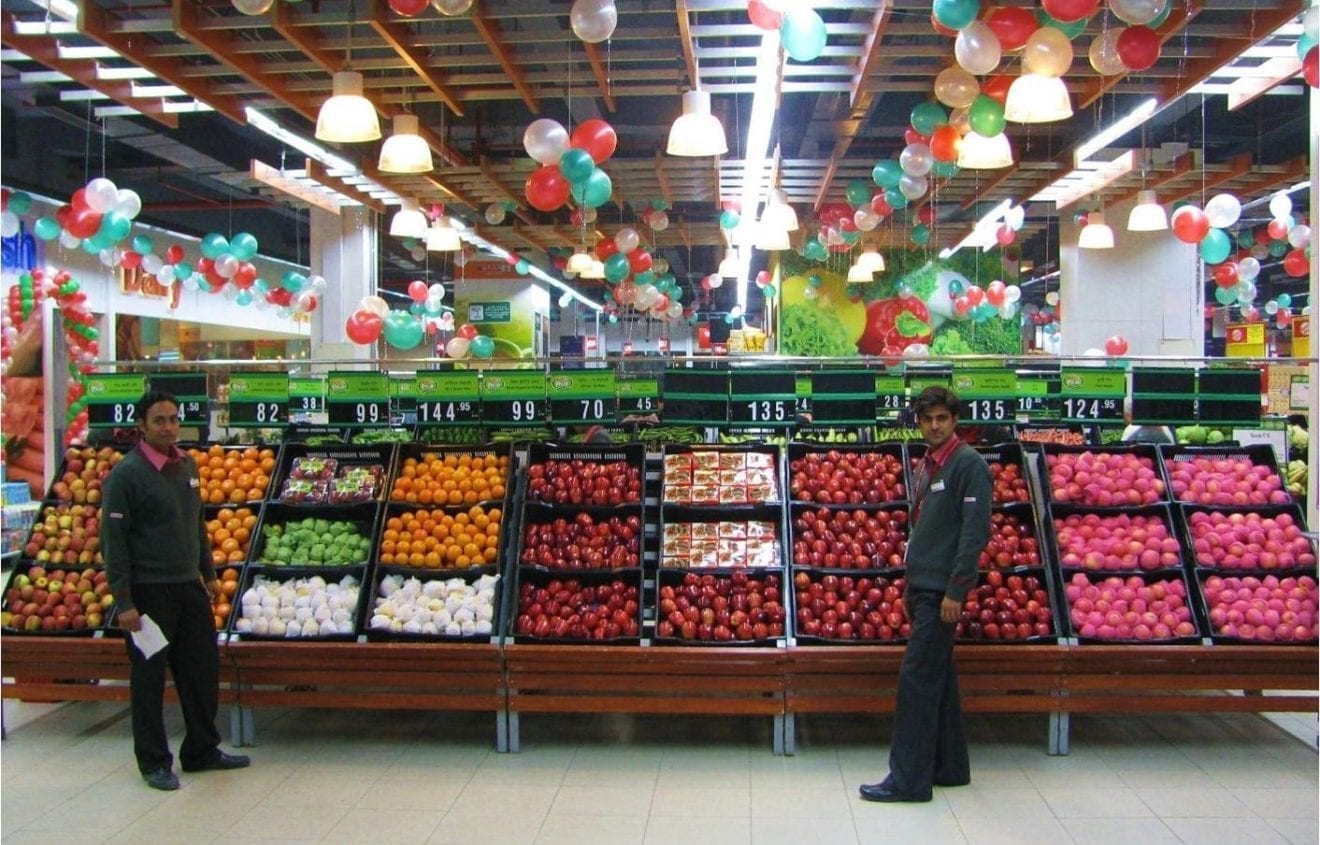
    SPAR India offers a variety of fresh produce to its customers, which are mainly sourced from Himachal Pradesh. These include apples, green peas, oranges, honey, organic produce, among other products.

    According to Krishnan, “SPAR India is committed to continue building strong farm to fork relationships. We will be working jointly with the State on sourcing and developing our private label products – soaps, handicrafts, etc which, in turn, will support the growth of SMEs.”

    In its endeavour to continue making a difference in the lives of farmers, customers and communities, SPAR wants to be a strong partner to Himachal Pradesh in promoting fresh sourcing, manufacturing and tourism in the coming years.

  • Belgian Waffle Co expands to Southeast Asia

    Belgian Waffle Co expands to Southeast Asia

    Indian-headquartered Belgian Waffle Co has partnered with VF Franchise Consulting to expand into Southeast Asia. The chain is operated under small kiosk and cafe models, and is best known for its waffle sandwiches. “The Belgian Waffle Co has seen exponential growth in India in less than three years with unprecedented success,” said Shrey Aggarwal, cofounder of The Belgian Waffle Co.

    “Our vision is to be a Global Player in the QSR segment, being recognised for dessert offerings and our values of affordability, quality and simplicity.”

    Founded in 2015, Belgian Waffle Co now has more than 200 outlets in 55 cities in India, Nepal and Dubai.

    “We are delighted about partnering with The Belgian Waffle Co as the company seeks to expand further into Southeast Asia,” said Sean T Ngo, CEO of VF Franchise Consulting.

    “Belgian waffles have universal appeal amongst Asians and non-Asians alike. They have taken a fork-and-knife approach to eating waffles and turned the industry upside down into a fast, on-the-go food for people who enjoy delicious-tasting breakfasts, snacks and desserts and a business that offers potential fast returns.”

  • Hyundai to focus on customization

    Hyundai to focus on customization

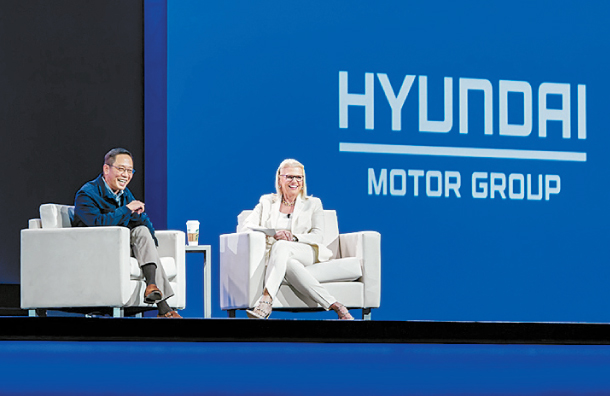
    The chief of Hyundai Motor’s financial affiliates outlined the units’ digital strategy and future vision at IBM’s largest annual conference that ran through Friday in San Francisco. Chung Tae-yong, who heads Hyundai Card, Hyundai Capital and Hyundai Commercial, said that finely-tuning customization will take center stage in Hyundai’s approach to serving financial services’ clients.

    “The existing concept of market customization is irrelevant to the current business environment,” said the CEO, whose English name is Ted Chung, during a session with Ginni Rometty, CEO of IBM.

    “Customization should not be based on widely-held assumptions, like young people might love zombie movies or older people won’t listen to hip-hop music,” Chung said, “If one likes candy, that is just it.”

    He went on to note that Hyundai Card holds a wide range of information that points to clients’ daily lives, preferences and hobbies and that the new services under development will be tailored using that data.

    Chung also cited Buddy, an AI-based chatbot for customer service using machine learning technology from IBM’s Watson.

    “It’s almost impossible to fully understand or memorize the benefits, limits, or conditions of a finance product,” he said.

    “So we introduced IBM Watson and it became a very powerful tool to help our employees and helped us to lower our employee turnover rate to less than 10 percent.”

  • HSBC pre-tax profit up 16% at US$19.9 bn in 2018

    HSBC pre-tax profit up 16% at US$19.9 bn in 2018

    Banking giant HSBC said on Tuesday that pre-tax profit rose 16% to US$19.9 billion last year with growth across its global businesses despite a “challenging external environment in the fourth quarter”. The results capped the first full year at the helm of the Asia-focused bank for chief executive officer John Flint, who has vowed growth while keeping a lid on costs as trade tensions between the United States and China rumble.

    However, earnings in the last three months of 2018 came in below expectations as Washington’s trade war began to bite globally and hammered the stock markets, especially in Hong Kong and China.

    Adjusted pretax profit fell one percent to US$3.39 billion in October-December, missing the US$4.4 billion consensus average by Bloomberg Newsderived from estimates compiled by the bank.

    Global markets adjusted revenue was down US$202 million to US$1.1 billion over the same period, while wealth management dropped 18%, also to US$1.1 billion.

    Overall the year saw strong growth for HSBC with net profit ballooning 30%to US$12.6 billion while adjusted pre-tax profit rose three percent to US$21.7 billion.

    The bank had to lay off tens of thousands of staff as part of a wide-ranging overhaul that also saw it sell its Brazil operations in 2015.

    But it showed a healthy doubling of profits by 2017, a year that also saw it nominate Mark Tucker as chairman, breaking a longstanding tradition of appointing insiders to the post.

    In a statement attached to Tuesday’s earnings, Tucker and Flint said the bank was prepared to weather fallout from both a possible deterioration in the trade talks between Washington and Beijing and Britain’s impending departure from the EU.

    “The fundamentals for growth in Asia remain strong in spite of a softer regional economic outlook,“ Tucker said in a statement attached to the annual report.

    “The system of global trade remains subject to political pressure, and differences between China and the US will likely continue to inform sentiment in 2019,“ he added.

    With Brexit looming, HSBC followed the other major British financial giants in ring-fencing its UK bank.

    “We continue to prepare for the UK’s departure from the EU” Flint said, adding its operations in France “gives us a major advantage in this regard”

  • Smaller duty-free alcohol allowance and GST relief for overseas shopping

    Smaller duty-free alcohol allowance and GST relief for overseas shopping

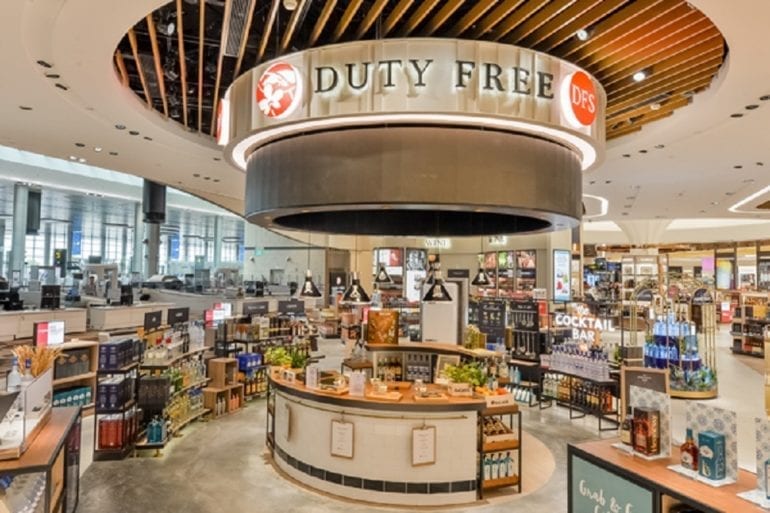
    From midnight tonight, Singapore duty-free allowances will be cut by about a third for returning travellers. Other allowances have also been reduced. Travellers staying outside of Singapore for fewer than 48 hours will be liable for 7 per cent GST on items bought overseas worth more than SG$100 – down from the previous threshold of $150. For travellers outside the country for a period longer than 48 hours, the $600 threshold will similarly be lowered, to $500.

    The changes were announced yesterday by Finance Minister Heng Swee Keat as part of the nation’s new Budget. From April 1, the alcohol concession will also be lowered from three litres of wine or beer to two litres. The spirits cap remains at one litre.

    According to the Inland Revenue Authority of Singapore and Singapore Customs, the cuts to Singapore duty-free allowances are designed to support the city state’s existing tax intake in the face of increasing international travel.

    Returning travellers are required to declare taxable items on arrival, and have been advised to keep purchase receipts to assist in calculating any taxes due. Advance declaration and payment is available via the Customs @ SG mobile app or web portal. Failure to declare or a false declaration can incur a fine of $10,000 as well as up to a year in prison.

  • Vietnam targets $10 bln seafood export

    Vietnam targets $10 bln seafood export

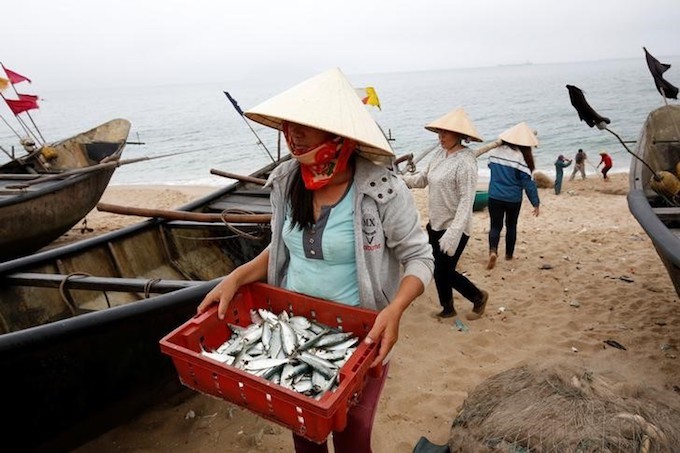
    Vietnam hopes to export $10 billion worth of seafood this year, meeting its 2020 goal a year early. The Vietnam Association of Seafood Exporters and Producers (VASEP) said at a recent conference it would include $4.2 billion worth of shrimp, $2.3 billion worth of pangasius fish and the rest from other products. Minister of Agriculture and Rural Development Nguyen Xuan Cuong said the $10 billion target is high but achievable since Vietnamese seafood is liked in international markets.

    VASEP president Ngo Van Ich said shrimp exported to the U.S. is expected to face a lower anti-dumping tariff this year.

    Vietnam’s recent accession to the Comprehensive and Progressive Agreement for Trans-Pacific Partnership would also help increase exports, he said.

    But there are also challenges.

    Truong Dinh Hoe, VASEP general secretary, said the country faces difficulties like shrinking catches and intense competition from other exporting countries.

    A major hurdle is the ‘yellow card’ restriction slapped by the European Union since 2017 for illegal fishing.

    The European Commission has said it would ban seafood imports from Vietnam unless it does more to tackle illegal fishing by Vietnamese vessels in other countries’ territories.

    After an evaluation done last May the European Commission said it would consider lifting the yellow card in 2019.

    Vietnam ranks among the top ten seafood producers in the world, according to the U.N. Food and Agriculture Organization.

    Last year its exports were worth $9 billion against a target of $9.5 billion.

  • Air purifier sales shoot up as fine dust worries shoppers

    Air purifier sales shoot up as fine dust worries shoppers

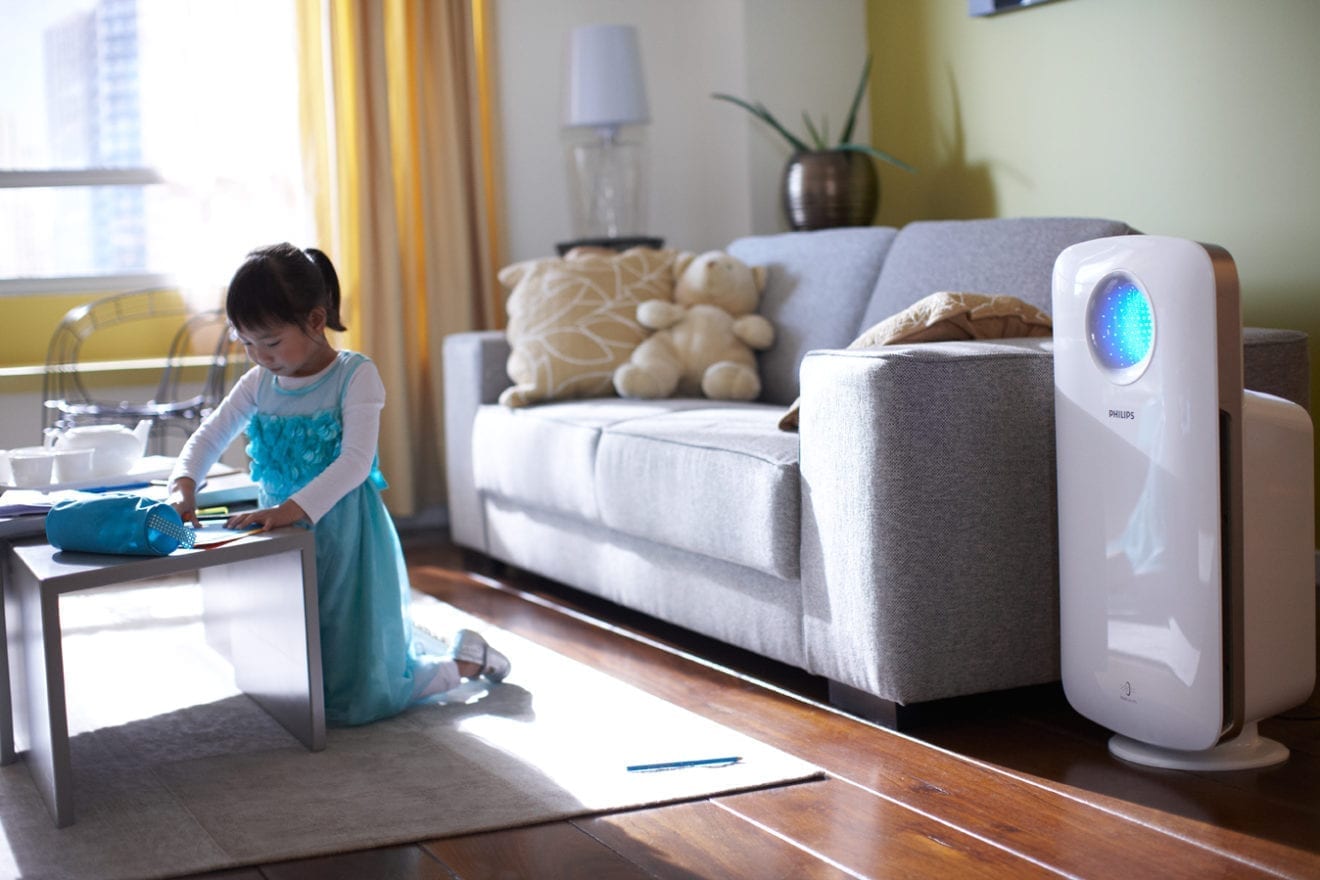
    Korea’s air purifier market has tripled since 2016 thanks to worsening fine-dust pollution levels and growing health concerns. Last year, Koreans bought 1.8 million air purifiers worth around 760 billion won ($676 million), according to market researcher GfK. In 2016, Koreans only purchased 698,000 purifiers for 220 billion won. The research company noted that, unlike previous years, consumers began buying purifiers year-round from 2018.

    The demand for purifiers was highest in March and April last year, when 260,000 and 290,000 appliances were sold. Spring is traditionally the high season for purifiers when pollution from fine dust and yellow dust – dust carried from the deserts of Mongolia and China – is at its worst.

    Throughout the rest of the year excluding August to October, over 180,000 purifiers were bought every month in 2018. In the late summer months, when air quality is usually better, around 50,000 purifiers were still purchased every month. In 2016 by contrast, purifier sales only exceeded 100,000 in April. Sales were considerably lower in other months, with August seeing only 15,000 sales.

    The average purifier price has also increased as consumers are willing to pay more for products that not only do the job, but do it well.

    Various factors like operation method, filter capacity and noise levels played a big role in purifier purchasing. The appliance’s coverage was also an important concern as consumers looked for purifiers that can clean the air in all corners of the home.

    Given the growing popularity of high-end purifiers with advanced functions and technology, the average price of a purifier came to 420,000 won last year, 30 percent higher than the 310,000 won average in 2016, according to GfK.

    The strong demand for purifiers in Korea has made the domestic market very attractive to foreign makers as well. While Korean manufacturers like Samsung and LG Electronics have traditionally been the most popular, overseas brands that offer innovative designs and advanced technology are now making gains.

    Sweden’s Electrolux and Japan’s Balmuda both chose to premier their newest purifiers in Korea last week.

    Electrolux, known for its cordless and robotic vacuum cleaners, launched the “Pure A9,” marketing the product as tested and designed to suit the needs of Korean consumers. The purifier, starting from 749,000 won, has wheels and a handle for improved mobility and is capable of removing 99.98 percent of particles one-eighth the size of ultra fine dust.

    Balmuda CEO Gen Terao introduced his company’s “The Pure” air purifier himself at a press briefing in Seoul last week, calling the Korean purifier market 10 times larger than Japan’s. The Pure, priced at 749,000 won, allows users to see how much dust is being sucked in at the mouth of the product.

  • Japanese fund buys Vietnamese fashion chain Elise

    Japanese fund buys Vietnamese fashion chain Elise

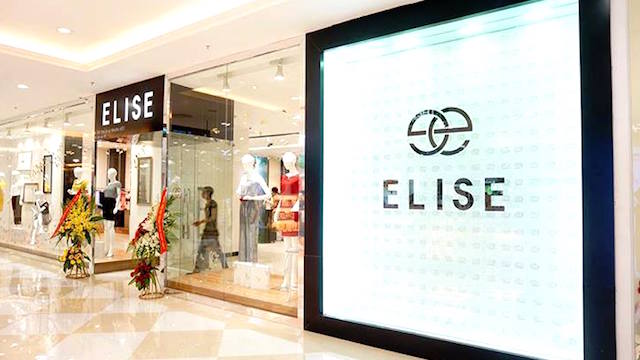
    Japanese investment fund Advantage Partners (AP) is to buy Vietnamese fashion brand Elise and its affiliate companies. This transaction marks AP’s first foray into Vietnam. Going forward, AP will focus on accelerating Elise’s growth, using its experience in women’s fashion investments in other markets. Founded in 2011, Elise is a leading Vietnamese fashion label targeting women aged 20-45. It currently operates 95 stores across the country.

    Last year, Elise was reported to have been acquired by Uniqlo parent Fast Retailing however, the Japanese group has since denied the move.

    Advantage Partners is a private investment firm with asset platforms in Asia, and offices in Tokyo, Hong Kong, Singapore and Shanghai.

  • Hotels in rural Vietnam struggle to recruit staff

    Hotels in rural Vietnam struggle to recruit staff

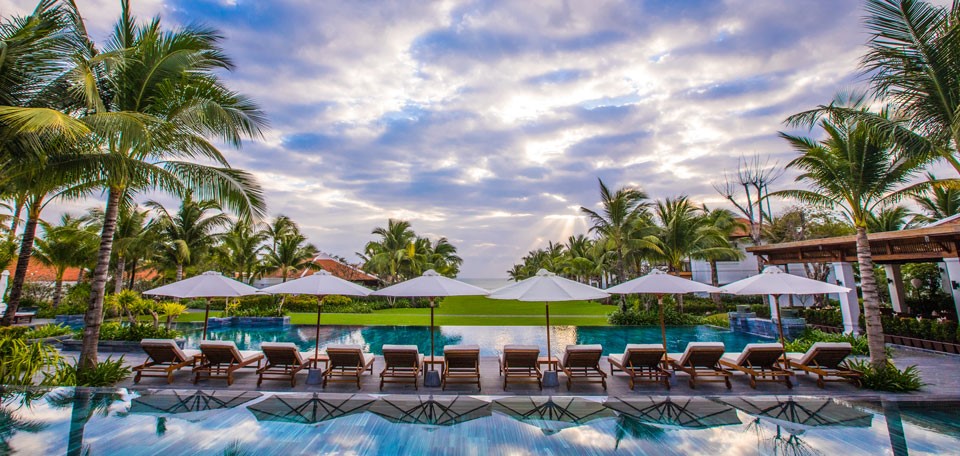
    Vietnam’s Con Dao Islands businesses are unable to hire staff despite flourishing tourism, with people preferring to work on the mainland. Almost a week after Tet, Vietnam’s longest holiday of the year, resorts and hotels in Con Dao, a 16-island archipelago off the country’s southern coast, are looking to hire hundreds of employees for various positions including managers, waitresses and tour guides.

    The Poulo Condor Resort on the island is looking for 33 new employees for 14 positions, while the Saigon Con Dao Resort and the Six Senses Con Dao Resort are looking for seven new staff each.

    Phuong Ly, head of recruitment at Saigon Con Dao Resort, said that more resorts and hotels are being built on the island but there are few experienced staff available to work in them.

    “The local authority does provide training courses, but not many participate. Most staff are young people, so they jump between jobs very often.”

    Smaller businesses are also looking for people. A café on Pham Van Dong Street is looking for 32 staff, offering bonuses, meals, accommodation, social insurance and annual travel to the mainland.

    Thuy, owner of a local seafood restaurant, said businesses start looking for staff in March when tourists start arriving in large number.

    “But this year, many businesses are already short-staffed so we are already searching for people as the number of tourists has been rising. Last year, a tour guide could earn up to VND30 million ($1,296) a month during peak season.”

    Con Dao is 180 kilometers away from the shores of southern Ba Ria- Vung Tau Province, and accessible by air and boat.

    Industry insiders said that attracting people from mainland to Con Dao to work is a challenging task given the long distance from the shores while most people don’t want lower income jobs like serving in restaurants, driving taxis or guiding tours.

    The high cost of living on the island is another reason that people prefer to work on the mainland, they said.

    Con Dao served as prison islands for political prisoners during the French colonial era, and in later years the Saigon regime imprisoned opponents of the regime in the infamous cells known as the “tiger cages”.

    The old prison buildings are still standing and are open to the public as is a small museum tracing Con Dao’s history.

    Con Dao also boasts pristine natural beauty with forested hills, sandy beaches and extensive coral reefs.

    Last year, Con Dao welcomed over 286,000 tourists, up 17.31 percent from 2017.

  • Struggling furniture retailer Otsuka Kagu forms tie-up with Yamada Denki

    Struggling furniture retailer Otsuka Kagu forms tie-up with Yamada Denki

    Struggling Japanese furniture retailer Otsuka Kagu has entered a partnership with electronics retailer Yamada Denki. The two firms have pledged to exchange sales knowledge in their respective industries as well as explore potential corporate sales opportunities. Otsuka Kagu will also sell 13.11 million new shares at ¥290.11 in an effort to raise ¥3.8 billion (US$34.39) in fresh capital. Funds will be earmarked for warehouse automation and optimising stores for e-commerce.

    Otsuka Kagu lost ¥3.24 billion ($29.32 million) last year, its third consecutive year of net losses.

    The company attracted attention over the past decade for its high-profile leadership struggle between brand founder Katsuhisa Otsuka and his eldest daughter Kumiko Otsuka, with their competing visions for the brand’s way forward.

  • The personal care company start using refillable containers

    The personal care company start using refillable containers

    On a trip to Thailand in 2017, serial entrepreneur Brian Bushell went diving for the first time and expected that the water would be pristine. Instead, it was filled with trash. “We were about to dive off the back of the boat, and all of the sudden we’re surrounded by junk plastic containers,” he says. That night, he went back to his hotel room and looked at the products he had sitting on the bathroom counter. “I realized that I was part of the problem.”

    Bushell, who had recently left Baked by Melissa, the chain of successful New York City-area cupcake bakeries he co-founded, started researching the challenge of plastic waste.

    “We learned that a third of all the single-use plastic products in landfills are personal care products,” he says. “So we decided that personal care was really an important nut to crack.”

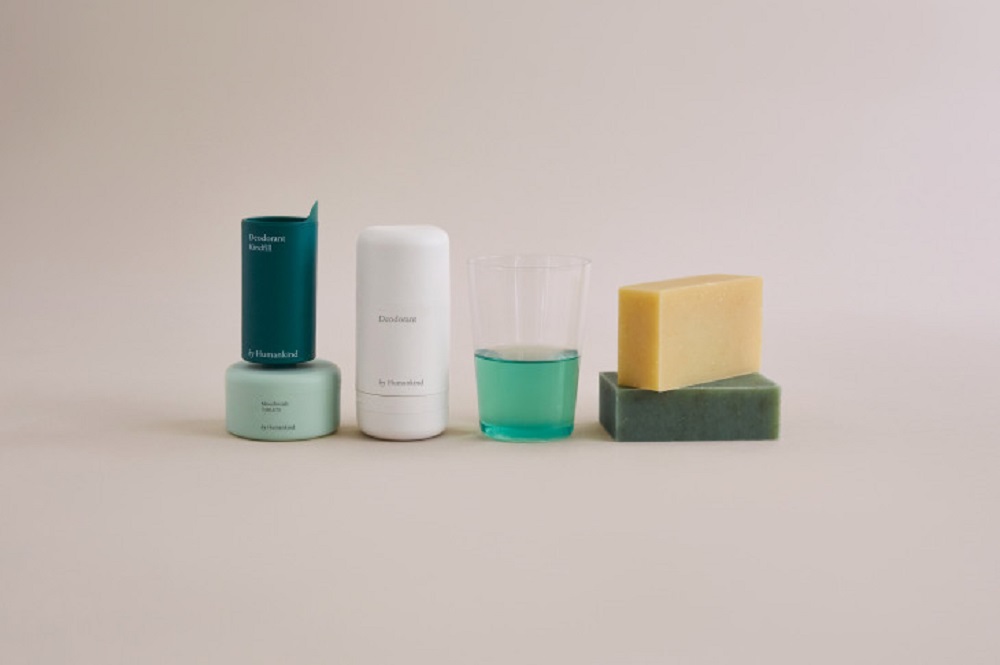
    With co-founder Joshua Goodman, he started working on By Humankind, a new line of personal care products that launched today. Each product eliminates single-use packaging.

    A new type of deodorant, made from natural ingredients that the company says are formulated to kill bacteria more quickly than other natural products, comes in a reusable container the first time you order. (The reusable container is plastic; the founders say they believe that plastic is not inherently bad, but it needs to be designed in a way that it doesn’t immediately land in the trash.)

    In the next order, the product shows up in a paper pod that pops into the original package and then twists out like a typical deodorant. The company’s mouthwash comes in tablets that customers drop in water, eliminating the need for a plastic bottle. Its shampoo comes in a bar form wrapped in paper instead of liquid in a bottle.

    Unlike Loop, a new experiment from major brands that will sell products like deodorant in packaging that is sent back to manufacturers for reuse, the startup thought that it made more sense to make packaging that consumers would keep and reuse themselves.

    “We didn’t think that customers were going to want to do the work to send it back,” Bushell says. “And there’s also an additional cost in that reverse or return logistics.”

    With the first three products, available online, the startup has calculated that in a year, an average American consumer can keep five pounds of plastic out of the environment. The company will also donate $1 for ocean plastic cleanup for each first purchase of a product. It plans to continue adding new personal care products.

    “Our whole thesis is, what if you could help save the world from single-use plastic just by getting ready in the morning?” he says. “And so anything that’s within that morning routine is within our target.”

  • Agoda’s top Chinese New Year 2019 travel rankings

    Agoda’s top Chinese New Year 2019 travel rankings

    Bangkok, Tokyo, and Taipei are the top three most popular destinations for Asia-Pacific travellers over the Lunar New Year period in 2019, according to booking data from Agoda. This year, Osaka, slips from the third spot in 2018 to sixth, while Taiwan scoops three of the top ten destinations, with Taipei in third, and Kaohsiung and Taichung in fifth and seventh respectively. Overall, Japan, Taiwan, and Thailand will benefit the most from travellers celebrating the Lunar New Year.

    Travels during the Spring Festival tend to be reserved for family bonding and indulging in food and leisure activities that the whole family can enjoy. It is thus not surprising that most travellers in the region have chosen gourmet and retail paradise in Bangkok, Tokyo, Taipei, Kuala Lumpur and Singapore among their top ten destinations.

    The Lunar New Year is celebrated in many cities across Asia, but Chinese travellers enjoy the longest holiday. With a week to spare, Chinese tourists are spending the new year in cities such as Hong Kong, Tokyo, and Bangkok.

    This year, HongKongers chose to change things up, travelling to Japan, Thailand, and Taiwan over the previously favoured Korea. In fact, Korea dropped out of the top three destinations altogether to settle at the fifth spot. Staycations have also risen in popularity, and Hong Kong has made its way into the top ten this year as well.

    Singaporeans prefer to travel to neighbouring countries for their relatively short Lunar New Year public holidays. For the first time, staycations have emerged as a popular choice for those who prefer staying behind to celebrate the festival.

    Taiwanese are travelling within the region for Chinese New Year, with Kaohsiung rising up to clinch the top position. For the first time in three years, Kyoto has slipped out of the top ten rankings.

    Malaysians continue to favour travelling within the region to celebrate Lunar New Year. In 2019, domestic destinations take up eight out of the top ten destinations. Thailand remains the only overseas destination in the top ten list for Malaysian travellers over the period.

    Indonesians are venturing further afield this year to celebrate the Lunar New Year, with Kuala Lumpur and Tokyo taking up two out of three of its top travel destinations. Japan is rising in popularity, as the region adds Sapporo – with its winter wonderland – into Indonesia’s top ten destinations.

  • 2018 sales of EV doubled in Korea

    2018 sales of EV doubled in Korea

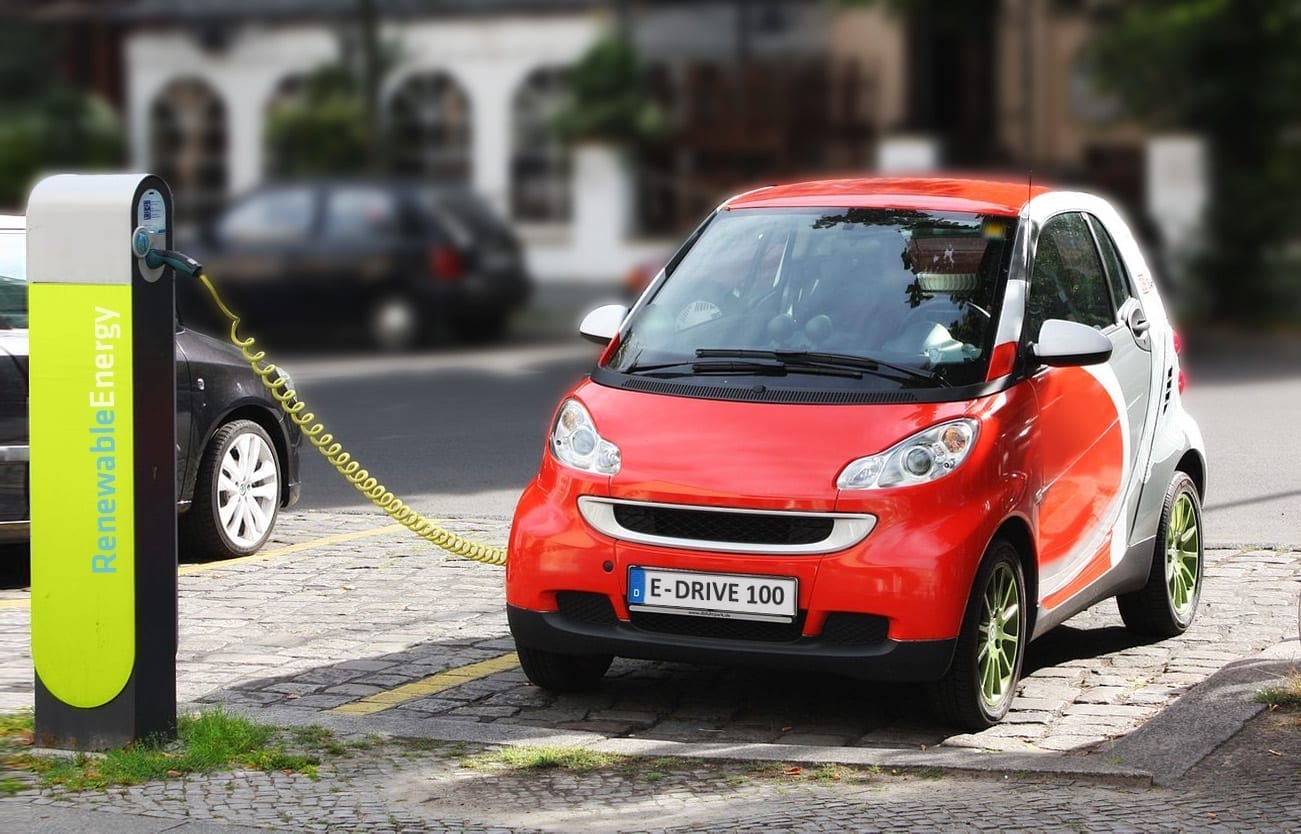
    Hyundai Motor Executive Vice Chairman Chung Eui-sun laid out a plan to develop 44 electric vehicle models (EVs) and sell 1.67 million of the cars by 2025 during his New Year’s message held at the beginning of this year. The goal was a dramatic increase on the 38 models he planned to have by 2025 at the start of 2018. The revised goal is rooted in the fact that EVs are growing at an unprecedented pace in the global auto industry.

    According to U.S. market research firm S&P Global Platts, the number of electric cars sold worldwide exceeded 2 million in 2018 including plug-in hybrids, double the 1 million sold in 2017.

    This achievement came seven years after Tesla rolled out its Model S, opening the era of EVs, and more than two decades since Toyota released the world’s first hybrid, the Prius.

    Among the total number of EV cars sold, battery-electric vehicles sold 1.45 million units last year, followed by plug-in hybrids at 550,000 units.

    The most popular model was Tesla’s Model 3, which started mass production last year. Unlike the Model S and X, which cost over 100 million won ($88,850), the Model 3 was released as a more affordable model with a price tag around 50 to 60 million won. It sold 146,846 units, taking the top spot.

    Four Chinese companies ranked high in the top 10. The EC Series from Beijing Automotive Group ranked second. BYD’s eco-friendly plug-in hybrid, the e5, and JAC Motor’s iEV E/S were also on the list. Among Japanese cars, Nissan’s Leaf placed third while Toyota’s Prius Prime was ninth and Mitsubishi Outlander plug-in hybrid placed 10th.

    Hyundai and Kia both made it to the top 10 list of automakers for the first time. Combined, the two sold 90,860 units last year, taking the eighth spot.

    Tesla sold the most cars, at 245,240, followed by China’s BYD at 229,338. German brands, traditionally strong players in the vehicle market, had BMW at fifth and Volkswagen at ninth.

    Industry analysts project the market for electric cars will expand at an even faster speed. Deloitte, a global consulting firm, expects 4 million EVs to be sold in 2020 and 14 million in 2025. By 2030 it expects EV sales to hit 21 million.

    Considering that 98 million cars are sold worldwide annually, within 20 years one of every five cars purchased will be an EV.

    Experts say that while the United States and China have led the growth of the EV market, that is likely to change in the future.

    Deloitte forecast that cost reductions from technology development will pull down the price of EVs to be on a par with diesel cars by 2022. This means the product sector will gain price competitiveness, no longer relying on government subsidies.

    The market will also get more competitive. Toyota and Volkswagen are both planning to release new electric cars in the near future, with Volkswagen aiming to make 25 percent of the cars it produces EVs by 2025. Its investment in electric cars is already worth 20 billion euros ($2.25 billion).

    According to consulting firm AlixPartners, Volkswagen Group is planning to release 55 EV models by 2022. This accounts for half of all EV models slated for release by then.

    “Government subsidies played a big role in enabling Chinese firms to sell large numbers of EVs, but its finances have hit the limit,” said Kwon Yong-ju, a professor from Kookmin University’s department of automotive & transportation design.

    “With European companies having accumulated technology and capital while waiting for the commercialization of EVs, the future could be quite different from now.”

    “Major countries, like the United States and Europe, have tightened regulations toward environmental pollution more than before,” said Koh Tae-bong, head of research center at Hi Investment & Securities. “For car companies, it is inevitable that they will expand the amount of electric cars they make.”

  • Ikea Malaysia opens new store

    Ikea Malaysia opens new store

    Ikea Malaysia will next month open its first store in the northern region of Peninsular Malaysia – in Batu Kawan, Penang. Due to open on March 14, the brand’s fourth outlet in the country spans 43,600sqm of retail space and will feature more than 8000 products.

    “The store will also have 49 showrooms, a market, restaurants and a bakery. We expect it will attract about 50,000 visitors per week,” said Ikea Malaysia store manager Arumugam Pathmalingam.

    In advance of the grand opening, the store has already attracted excitement among Penangites, mainly on social media.

  • Pandora appoints Alexander Lacik as chief executive officer

    Pandora appoints Alexander Lacik as chief executive officer

    The Board of Directors of Pandora has appointed Alexander Lacik as President and Chief Executive Officer. Mr. Lacik’s strong track-record as a consumer marketer and brand architect will help drive the execution of Programme now and assert Pandora’s position as the world’s largest jewellery brand. He will join Pandora as soon as possible.

    Alexander Lacik (54) brings international experience from growth and brand building in global consumer companies. He joins Pandora from the position as CEO of Britax Ltd., a world leader in child safety products. Prior to this, he was President of North America at RB (Reckitt Benckiser) from 2013-2017 and has held key management positions with the leading global consumer goods company since 2004. Previously, Lacik held positions in sales and marketing with Procter & Gamble from 1992 to 2004.

    At RB, Lacik contributed significantly to the company’s growth turnaround in a competitive global consumer business where brand distinction and brand equity are critical components. He successfully drove strategic brand positioning and above market growth in the group’s largest region with more than USD 3.5 billion in revenue and a full value chain. Lacik has lived and worked in five countries and managed businesses in regions across the world, covering manufacturing, product development, sales, marketing, and retail partnering.

    Peder Tuborgh, Chairman of the Board of Directors says: “I am delighted that we have secured Alexander Lacik as CEO of Pandora. Alexander is a strong match for our recently announced strategic direction and will be instrumental in executing Programme NOW. Alexander is a brilliant marketer and brand architect and has throughout his career shown himself as a great leader and a highly effective executor. His skills and experience will be key to revitalising the Pandora brand.”

    “I am honoured and excited to join Pandora. Pandora is an incredible company that has grown to be the world’s largest jewellery brand at unprecedented speed. I am encouraged by the current direction with a strong focus on brand reignition to restore growth. These are business aspects that I am particularly passionate about, and I look forward to joining and supporting the management team in the execution of Programme NOW”, says Alexander Lacik.

    Following the appointment, The Executive Management team of Pandora will consist of Alexander Lacik (CEO), Anders Boyer (CFO) and Jeremy Schwartz (COO). Until Lacik joins, the joint leadership of Anders Boyer and Jeremy Schwartz will continue unchanged.