Tag: asia

  • Singapore December retail sales drops 3 per cent

    Singapore December retail sales drops 3 per cent

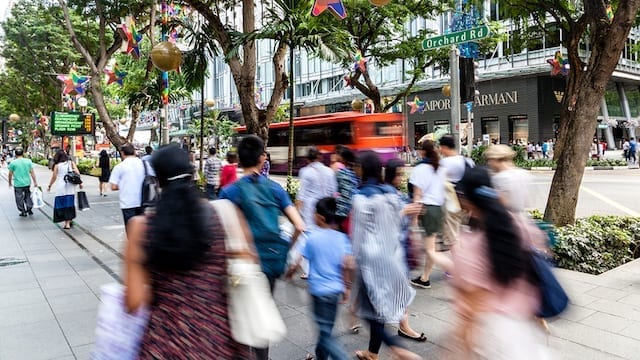
    Singapore retail sales in December slipped 3 per cent year on year. Including motor vehicles in the data, they fell by 6 per cent. There was a month-on-month decline of  4.1 per cent excluding vehicles, largely due to the online-sales boom driven by Singles Day and Black Friday in November.

    Online retailing continues to eat into traditional channels, accounting for 5.5 per cent of total sales in December, which compares favourably with the festivals-driven 6.6 per cent in November.

    The main drivers of change in monthly data was a 20.7 per cent slump in motor vehicle sales, and a 16.8 per cent fall in sales of computer and telecommunications equipment, largely down to  new product releases in December 2017.

    Singapore retail sales in December of recreational goods, watches and jewellery and furniture and household equipment decreased between 3.9 per cent and 5.8 per cent. Statistics Singapore attributed that to lower demand for sporting goods, jewellery and furniture. Conversely, sales of medical goods and toiletries increased 1.8 per cent.

    Sales of food and beverage services increased 4.5 per cent in December, compared to the same month last year.

    Sales by food caterers, fast-food outlets, restaurants and other eating places (such as cafes) all increased, by between 2.5 per cent and 6.6 per cent year on year.

  • Grab-Uber deal comes under fresh antitrust scrutiny in Vietnam

    Grab-Uber deal comes under fresh antitrust scrutiny in Vietnam

    Vietnamese authorities are set to further investigate the merger between Grab and Uber last year for possible violation of antitrust regulations. The Competition Council said after a thorough examination of documents and arguments furnished by both parties it has discovered a number of new details related to possible violation of competition laws by ride-hailing platform Grab’s acquisition of Uber’s business operations last March.

    It has returned the case dossiers to the Ministry of Industry and Trade’s competition and consumer protection department for further investigation. The investigation is expected to go on until April this year.

    Last year Singapore-based Grab acquired Uber in Southeast Asia in return for a 27.5 percent stake.

    Vietnam’s Competition Law requires any merger or acquisition that results in a company gaining a 30 percent market share to be reported to competition authorities.

    If a company gains a 50 percent market share from the deal, it can only be carried out with express permission from the authorities.

    The department’s preliminary investigation found Grab’s market share had exceeded 50 percent since the acquisition.

    But Grab insists it had acted legally and that the competition authorities have misinterpreted the scope of relevant markets when calculating the market share.

    Last October the Philippines’s competition watchdog fined the two companies a cumulative 16 million pesos ($296,873) saying they had completed the deal too soon and that the quality of service had dipped.

    Singapore’s competition authority fined them a total of S$13 million ($9.5 million) and announced other measures to address competition concerns arising from the merger.

  • Asian shares rise as Trump boosts US-China talks

    Asian shares rise as Trump boosts US-China talks

    Asian stocks climbed Wednesday as US President Donald Trump said he could extend the deadline for a trade deal with China, appearing to boost the prospects of an agreement. Trump said “things are going well” at preliminary talks in Beijing, where top economic officials will gather Thursday seeking an accord to stop sharp US tariff hikes that could damage the global economy.

    “If we’re close to a deal, where we think we can make a real deal … I could see myself letting that slide for a little while,” the US president said of his March 1 deadline.

    He added that he expects a meeting with counterpart Xi Jinping to happen “at some point”.

    The comments all improved market sentiment on the likelihood of a deal to prevent US tariffs on $200 billion in Chinese imports more than doubling next month.

    Washington is demanding changes from Beijing on what it says are unfair commercial practices.

    Tokyo added 1.5%, Hong Kong rose 0.4% and Shanghai gained 0.2% on the news, following Wall Street’s lead.

    However, some analysts struck a cautious tone, noting that much work needs to be completed before a framework agreement is in reach.

    “The rally in stocks has been based on hope rather than any concrete agreements overnight,” warned Oanda senior analyst Jeffrey Halley, predicting short-term volatility to come as headlines emerge from Beijing.

    Sydney shed 0.3%, with calls for a snap election amid political tensions over refugees adding to underwhelming corporate earnings and subdued metal prices.

    Nonetheless, renewed global investor confidence saw a movement away from the greenback, which has enjoyed a strong rally in the past week, to riskier currencies.

    The pound moved upwards closer to $1.29, despite no-deal Brexit fears as Prime Minister Theresa May was accused by the opposition of “running down the clock” and “playing chicken” with Brussels over talks.

    Trump’s suggestion that another chaotic US government shutdown was now unlikely following a deal struck in Congress over border security further fuelled risk appetite.

    The deal to offer nearly $1.4 billion for construction of a Mexico border wall, as well as other security measures, fell far short of Trump’s demands but has been presented as a workable compromise.

    “I don’t think you’re going to see a shutdown,” said the president.

    Elsewhere oil continued its climb after heavyweight Saudi Arabia slashed output and exports fell in crisis-hit Venezuela.

  • Asia-Pacific shoppers favour cross-border shopping

    Asia-Pacific shoppers favour cross-border shopping

    Half of online shoppers in Asia-Pacific make purchases cross-border, according to a recent report by yStats. The top two markets for cross-border shopping in the region are Hong Kong and Singapore while Japan shuns the trend, with over nine in 10 online shoppers buying only domestically. The tendency to buy from foreign online sellers also prevails in Australia and New Zealand, where a double-digit share of digital spending is cross-border.

    The top three destinations of cross-border online shoppers in Asia-Pacific are China, the US and Japan. Chinese online shoppers themselves prefer shopping platforms hosted by local providers, such as Tmall Global, Kaola and JD Global.

    Apparel and accessories was the most-in-demand product category. In South Korea, this sector accounted for more than one-third of e-commerce purchases from foreign sellers.

    Handheld connections prefered

    A standout characteristic of cross-border shopping in Asia-Pacific is the high level of mobile usage.

    Digital buyers in China and India were more likely to place orders on foreign websites through smartphones and tablets than through a desktop computer.

    The Asia-Pacific Cross-Border B2C E-Commerce 2018 report covers online retail imports and exports in 10 nations within Asia Pacific.

  • Virgil Abloh’s Off-White launches the Simpsons collection

    Virgil Abloh’s Off-White launches the Simpsons collection

    Virgil Abloh‘s Off-White™ debuted its eagerly-anticipated Spring/Summer 2019 collection at Paris Fashion Week, and devotees will not be disappointed. First seen in our exclusive look backstage, the new collection offered goods both playful and earnest, with references to artist Dondi White and The Simpsons. The Simpsons House T-Shirt highlights 742 Evergreen Terrace in Springfield, USA prominently on the front of the shirt via a vibrant print. The back of the 100 percent cotton T-shirt is emblazoned with the ethos of Off-White™ along with the word “ARCHITECTURE.”

    Featured in unison, the front and back of the piece reference both Virgil’s unique approach to design and obsession with architecture. Priced at $350 USD, the Off-White™ The Simpsons House T-Shirt is available now at MR PORTER.


    For more contemporary fashion, RHUDE draws from an array of influences for FW19.

  • World’s first digital mall launched in India by Digital Mall of Asia

    World’s first digital mall launched in India by Digital Mall of Asia

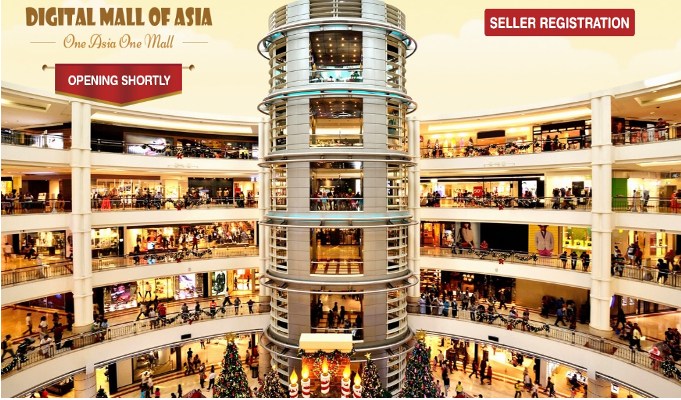
    In a revolutionary development that could potentially redefine the global retail and e-commerce industries, Digital Mall of Asia (DMA), a first-of-its-kind digital e-commerce platform merging the real estate and the digital spaces, has announced the launch of its Noida mall. The launch took place at the company’s registered office in the Film City, Noida, setting an unprecedented example of how online portals and brick-and-mortar retailers can transcend the digital-physical divide to optimize their consumer outreach and revenue generation.

    An initiative by Yokeasia Malls Pvt. Ltd., DMA is a disruptive innovation by an Indian organization recreating the experience of a physical mall in the digital space. In an industry where most of the key names are being run or backed by foreign players, this unique and disruptively innovative initiative by Yokeasia Malls has the potential to put the novelties of Digital India on the world map.

    The Need

    The launch of DMA Noida addresses the challenges that retailers often face and empowers them to maximize their business footprint with innovative digital offerings and an unmatched value proposition. DMA operates on a zero commission model; retailers at DMA don’t have to pay anything apart from the rent, a major revolution in a space where all the major E-commerce players charge somewhere between 5-35 percent of the revenue. Moreover, the organization will provide an immediate settlement of all payments received, ensuring complete transparency and reliability. It is also working towards completely eradicating the issue of the sale of counterfeit or fake merchandise. These unique features, apart from its focus on digital innovation, makes DMA a powerful and pioneering presence in the e-commerce space, both in India and on a global level.

    The Solution

    Going beyond the concept of a typical e-commerce portal, DMA’s Noida mall will have 11 towers with 10 floors each, adding up to a total of more than 5,000 shops and an available inventory currently worth approximately Rs 500 crore. The mall will incorporate visual and sensory elements to offer an immersive, stimulating environment and will have dedicated towers for different categories such as men, women, kids, electronics, home and kitchen, education, financial services, food court, hypermarket, digiplex, and online nightclub. Fundamentally, DMA Noida has all the elements that make up a physical mall, albeit virtually.

    The Value Addition

    By creating a new ‘digital asset’ class providing attractive returns, DMA also envisions to transform the general perception towards the term ‘investment’ while ensuring security, profit, and convenience for investors. The shops in the Noida mall are available for both sale (to investors) and rental (to retailers), whereas the shops in the rest of the 20 cities are available only to rent at present.

    Commenting on the launch and the idea behind, Rishabh Mehra, Managing Director and CEO – Digital Mall of Asia, remarked, “We, at Digital Mall of Asia, are beyond ecstatic to launch our Noida mall and we are certain of its potential to bring about a revolution in the digital and retail space worldwide. This project is aimed at serving many purposes, from an industry-wide transformation to retailer empowerment through our zero-commission model. But most importantly, DMA is our effort against data colonization. I wholeheartedly agree with Mr Mukesh Ambani’s stance on how India’s data must be owned by Indians, and not controlled by global corporations. In this era of data-driven revolution, we hope that DMA’s disruptive innovation sets an example for our contemporaries to follow through and bring the ownership of Indian data back to where it belongs – in our own hands.”

    The launch in Noida also marks DMA’s first step towards a pan-India launch in 20 cities including New Delhi, Mumbai, Bengaluru, Pune, Chandigarh, Jaipur, Lucknow, Coimbatore etc. After a pan-India expansion, DMA plans to expand its operations across the Asian market and has already begun the process of seller registration in China, Japan, South Korea, Malaysia, Thailand, Indonesia, and Singapore.
  • Positive result from anti-plastic campaigns by Starbucks, 7-Eleven

    Positive result from anti-plastic campaigns by Starbucks, 7-Eleven

    Starbucks Korea and 7-Eleven Thailand have announced positive results for their respective anti-plastic campaigns. A report revealed that the local Starbucks subsidiary has seen consumption of single-use straws cut by half in the months since introducing strawless lids on drinks without whipped cream or that do not need stirring. The initiative, introduced last November, has resulted in the monthly average of 15 million straws used across its coffee chain stores drop to 7.5 million per month. The company now only provides straws to customers who request them.

    Aiming to further reduce straw usage by up to 70 per cent, Starbucks Korea is planning an online event to offer rewards to customers who upload pictures of drinks taken without using straws. It has also introduced paper straws for usage in some beverages.

    7-Eleven saves 169 million bags

    Meanwhile, in Thailand, more than 169 million plastic bags have remained unused over the past two months at 7-Eleven stores, according to a report in local news site The Thaiger, the result of a management initiative to phase out their use. The move, which has been supported by local celebrities, encourages shoppers to refuse plastic bags or bring reusable bags to the store.

    The reductions are reported to have saved the chain more than 33 million baht, which operator CP All Public Company will donate to a local hospital.

    All about perception?

    Despite these reports, there have been growing concerns among critics in the media regarding the perceived environmental benefits of similar plastics initiatives worldwide.

    The sippy cup lid adopted in Korea is identical to the design used in North American stores, which was shown in a Reason magazine report last year to use more plastic than the previous lid design and straw put together.

    Plastic shopping bag initiatives similar to the one adopted by 7-Eleven have provoked skepticism among observers who point out that of all single-use plastic packaging used throughout supermarkets and convenience stores, the shopping bag is the only item that tends to be reused in the home.

    A 2017 report in Australia’s journalism hub The Conversation called getting rid of plastic bags a windfall for supermarkets without much perceptible benefit to the environment. It reasoned that most alternatives that were recyclable ended up in landfills anyway.

  • SE Asia Stocks: Most end lower, Vietnam hits near 2-month high

    SE Asia Stocks: Most end lower, Vietnam hits near 2-month high

    Most Southeast Asia stock markets closed lower on Tuesday while Vietnam rallied for the second straight session to its highest level in nearly two months. Washington and Beijing will commence high-level trade talks this week to negotiate an end to their bitter trade dispute. Despite positive responses from both sides, the sailing of two U.S. destroyers near the disputed South China Sea, and China’s subsequent anger over the move appeared detrimental to negotiations.

    The Indonesian index fell the most in the region, closing 1.1 percent lower in its worst session this year, weakened by a slump in financial and telecom stocks.

    The country’s biggest bank by market value, Bank Central Asia, shed 0.6 percent, whereas Telekom Indonesia lost 2.8 percent.

    The Philippine benchmark slipped 0.6 percent, dragged by consumer and industrial stocks. Meanwhile, the country’s trade deficit narrowed in December as imports tumbled for the first time in a year.

    The stock index has outperformed other exchanges in the region so far in 2019, gaining about 7.3 percent.

    “We are mildly concerned about the surprise pullback in capital goods and raw materials. If this continues, this could show that recent aggressive tightening by the BSP (Bangko Sentral ng Pilipinas) is starting to bite into investment appetite, hampering the nascent investment-driven growth story that we have witnessed of late,” ING said in a note.

    Meanwhile, Vietnam benchmark rose for the second straight session and ended up 1.2 percent at its highest level since Dec. 17, with real estate and consumer stocks leading the gains.

    Property developer Vingroup JSC scaled 4.9 percent, while Saigon Beer Alcohol Beverage Corp jumped 1.9 percent.

    Vietnam was also chosen to host this month’s summit between U.S. President Donald Trump and his North Korean counterpart KimJong Un.

  • Malaysia to post 4.4% GDP growth for Q4 2018: StanChart

    Malaysia to post 4.4% GDP growth for Q4 2018: StanChart

    Standard Chartered has projected Malaysia’s gross domestic product (GDP) to remain at 4.4% in the fourth quarter (Q4) of 2018. However, full-year GDP is expected to come in lower at 4.6% compared with 5.9% in 2017. Bank Negara Malaysia will release Q4 GDP data on Thursday.

    “We estimate GDP growth of 4.4% y/y, similar to Q3. Private consumption may have eased from the 9% y/y growth in Q3 as the boost from the tax holiday in June-August 2018 likely faded. Nevertheless, a rebound in mining and agriculture activity may have supported growth,“ Standard Chartered said in a research note.

    It added that private consumption was the main growth driver in 2018, accounting for 92% of GDP growth in the nine months (9M) of 2018 versus 64% for the same period of 2017, benefiting from the “tax-holiday” boost and strong labour market conditions.

    Meanwhile, private investment eased (primarily on lower investment in residential and commercial properties in the first quarter) and public investment extended its decline in 9M 2018.

    “Our GDP growth tracker suggests downside risk to our Q4 GDP growth forecast, with our tracker being reliant on more readily available externally driven activity data, such as IP, and less reflective of strong domestic consumption,” it said.

    Standard Chartered forecast 4.9% GDP growth for 2019, saying that private consumption is likely to remain the main growth pillar.

    “Beyond the consumer sector, we are slightly cautious on growth, especially given weak external demand. However, we see two one-off supportive factors. First, goods and services tax (GST) and income tax refunds amounting to RM37 billion (2.5% of GDP) may support spending (but these refunds have not been disbursed yet, posing downside risk to our growth forecast). Second, resumption of production capacity in the mining sector may also help.”

    On monetary policy, Standard Chartered said the latest meeting of Bank Negara Malaysia’s Monetary Policy Committee in January suggested that it is more dovish on the global outlook but still comfortable on domestic growth, underpinned by private consumption and private investment.

    “We maintain our call for Bank Negara Malaysia to keep rates on hold in 2019, with risks skewed towards a cut, especially if external demand worsens further and affects domestic activity.”

  • Officine Panerai makes debut in Malaysia

    Officine Panerai makes debut in Malaysia

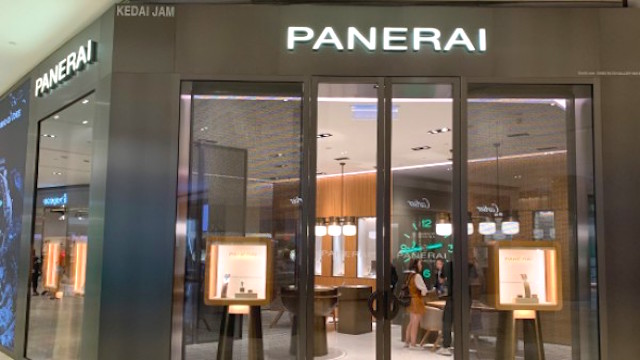
    “Together with partner Swiss Watch Gallery, we look forward to providing an exceptional experience for our clients and conveying our values and Swiss know-how”, said Panerai Southeast Asia and Oceania MD Giacomo Cinelli at the launch.

    “It’s a little exhausting for the local watch collectors here to keep having to travel to a Panerai boutique, so we are here for our existing clients and we provide an entrance and platform for the new ones as well”, he said.

    Submersible timepieces feature prominently in the store’s range, retailing from RM57,700 (US$14,180) to RM168,470 ($41,400).

  • Vietnamese logistics startup raises $5.5 mln in latest funding round

    Vietnamese logistics startup raises $5.5 mln in latest funding round

    Logivan, a web platform that helps trucks connect with potential customers, said it has raised $5.5 million in the latest funding round. The investment comes from two Asian angel investors and Indonesian venture capitalist Alpha JWC Ventures. One of the angel investors is David Su, a founding managing partner at private equity firm Matrix Partners China, who invested through his family office.

    He said: “Vietnam is the next rising star in the growing Southeast Asia region and it is well poised to experience a similar growth trajectory as we witnessed over the past years in China.

    “Vietnam’s logistics industry is highly fragmented, logistics costs make up 23 per cent of Vietnam’s GDP, with 90 per cent of trucks in Vietnam being owned by individuals. Given the success of Manbang (a Chinese truck-hailing firm), we believe that Logivan has the potential to emulate its success.”

    According to e27, an online Tech media platform for Asia, Logivan will be investing in data analysis to optimize user experience, artificial intelligence, truck-matching, and pricing algorithms to minimize empty trips and in human resources.

    Last year, Logivan raised $600,000 in April from Singapore-based Insignia Ventures Partners and $1.75 million in August from Singaporean private equity firms Ethos Partners and Insignia and Vietnamese investment fund VinaCapital Ventures.

    It has raised a total of $7.9 million to date.

    Founded in 2017 by Cambridge graduate Pham Khanh Linh, the company offers a logistics service which optimizes trucks’ routes and minimizes empty return trips.

    She came up with the idea after observing that 60-70 percent of trucks in Vietnam returned empty after dropping off their loads because they could not connect with potential customers.

    In 2018 Logivan claims to have connected more than 22,000 transportation partners with every major commercial truck type. It also has 10,000 shipping companies registered on its system.

  • Uniqlo opens Manchester flagship, expands beyond London

    Uniqlo opens Manchester flagship, expands beyond London

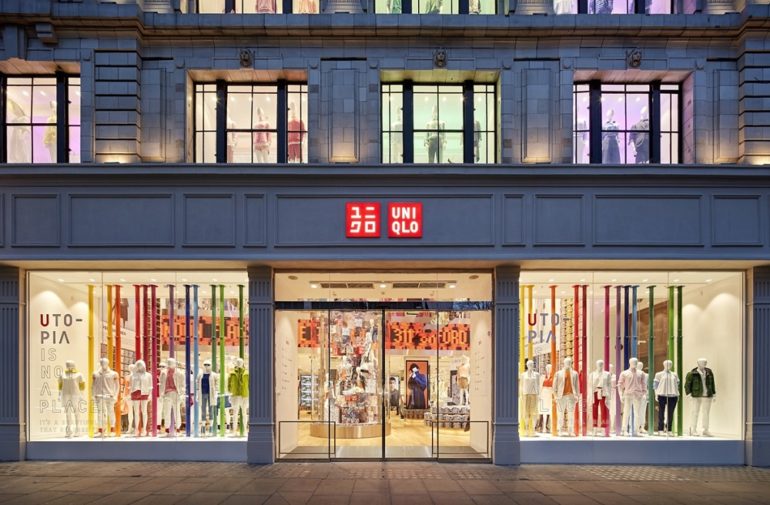
    Japanese retail chain Uniqlo is expanding its store network internationally, announcing the opening of its latest store in the UK. Opening in the city of Manchester, Uniqlo is returning the British city after leaving Manchester back in 2004, not long after it entered the UK market. Uniqlo revealed the news this week on its Instagram: “Uniqlo Manchester – opening spring 2019. Tokyo heads up North. Register for updates on our Manchester store opening at the link in bio.”

    The post also gave location details, revealing the store is slated for Manchester Arnadale at 57 Market Street. The address is the former-space of closed down UK retail chain BHS, which shuttered on Market Street in August 2016, after 35 years of service on the city’s main shopping strip.

    The new store will occupy a 22,690 square feet and will sell Uniqlo’s full range of core items for men, women and kids, as well as jeans and t-shirts.

    The retailer said that the expansion north of London was an important step in its UK growth.

    “The launch of Uniqlo in Manchester represents another major milestone for us in the UK, as we continue to expand our presence in this important market for the company worldwide,” Uniqlo chief executive Taku Morikawa said.

    “We are very excited to be able to offer Uniqlo LifeWear to the people of Manchester and surrounding areas for the first time and show how our high quality, comfortable and functional clothing can help improve their everyday lives.”

    It is hoped that Uniqlo Manchester will fair better than BHS, and in turn compete strongly with fellow fast-fashion brands Primark and H&M, which are currently set up in the millennial-heavy city.

    Uniqlo first launched 20 stores in the UK, but then closed 15 sites outside of London three years later, including two in Manchester.

    It currently operates nine stores across London, one in Kent at Bluewater shopping centre and another in Oxford at Westgate.

    In its most recent earnings update, Uniqlo Europe said that in the year up to August 31, 2018, profits rose from €673,000 to €6.3million on a turnover of €533million, up from €410million.

  • New air purifier from Japan debuts in Korea

    New air purifier from Japan debuts in Korea

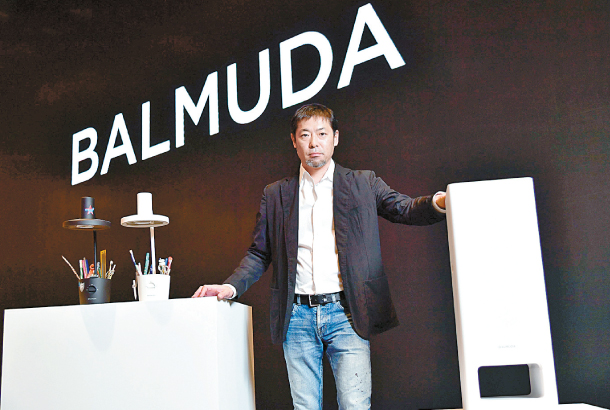
    Balmuda, a Japanese high-end home appliance maker, is introducing a new air purifier in Korea today ahead of the rollout in Japan, where the launch date has not been set. Balmuda CEO Gen Terao emphasized the importance of the Korean market during the company’s first press conference in Korea Tuesday as he unveiled The Pure air purifiers.

    “We chose to unveil our air purifiers in Korea in light of the fine-dust problem and Balmuda’s growing brand awareness here,” Terao said at the conference in Yongsan District, central Seoul.

    “While Japan’s air purifier market is decreasing every year, it’s been growing in Korea. We sell 10 times more air purifiers here.”

    Several new features make it an upgrade from the AirEngine, the company’s older 2013 model.

    One of the key innovations is that The Pure allows users to see how much dust the machine sucks in. The purifier has a rectangular hole cut out in the bottom installed with lighting, making it easy for users to see the dust and particles that go up into the filter above the hole.

    The Pure’s HEPA filters can trap 99.97 percent of particles as small as 0.3 microns and eliminate odors. The machine releases up to 7,000 liters (1,850 gallons) of cleaned air per minute.

    The Pure will be available at department stores and online and offline electronic retailers from today. They are priced at 749,000 won ($666).

    Terao also discussed Balmuda’s The Light, a desk lamp for children launched last December.

    Addressing the growing problem of short-sightedness among children, Terao said he developed advanced light technology together with medical surgery light manufacturers.

    Terao called out Xiaomi’s air purifiers for copying Balmuda’s AirEngine design.

    “When I saw this [Xiaomi] product, I wondered when we had built it because it had the same size, silhouette and structure as the AirEngine,” Terao said. “But the fact that others are copying us is proof that our products are good.”

    Balmuda, founded in 2003, posted over 10 billion yen ($90 million) in annual sales last year. The company currently generates around 30 percent of its total revenue in Korea.

  • Ralph Lauren showing good progress

    Ralph Lauren showing good progress

    After a long run of fairly mediocre performance, Ralph Lauren has finally delivered a solid set of numbers. The 5 per cent net revenue growth announced last week is pleasing as are the various regional outcomes. These were supported by a respectable increase in underlying comparable sales. It would be remiss not to note that the good figures have been delivered off the back of a very weak prior year performance, but this should not take away from the fact that the brand is now headed in the right direction.

    Away from the top line, the bottom line has also strengthened with operating income up by 12.9 per cent over last year. Much of this is down to far lower rates of discounting, especially in the wholesale channel. We also see this as a sign that Ralph Lauren’s more disciplined and focused approach to producing collections is allowing more product to be sold through at a fuller price. All of this suggests that the company is doing a much better job at connecting with consumers.

    Our own data backs this up. Brand affinity to Ralph Lauren was the strongest in over five years this holiday season; brand recall and awareness were also higher, including among younger consumers. Some of this is the result of increased marketing spend but a lot of it also comes down to a more targeted approach. Initiatives like the launch of the Palace label have provided the brand with greater visibility among consumers looking for edgier, contemporary designs. There is clearly more work to be done, but this progress represents a good platform on which to build.

    That said, Ralph Lauren needs to remain disciplined; it should not revert to past form by launching rafts of sub-brands and spin-off labels which create confusion.

    Digital was the star channel this quarter with sales up by 20 per cent over the prior year. Some of this is a consequence of the investment in online platforms which are now much improved and delivering higher conversion. However, traffic to websites has also risen as Ralph Lauren has created more visibility around its products and brands. In North America, the slight downside is the imbalance in growth. Online comparable sales rose by 21 per cent, but store comparables were flat. While this is not necessarily surprising, it underlines that Ralph Lauren has more work to do in persuading customers to visit its shops – something that should, in theory, become easier as it pulls back from the wholesale channel.

    For all of this positivity, we are still cautious about the trajectory of the brand. While there is no doubt that Ralph Lauren is now in a much stronger position, a lot of work remains to be done on carefully defining the various parts of the offer and ensuring they remain targeted.

    Because of the vast array of brand elements, this is a challenging task that could easily falter – especially as the economy tightens and the company laps some tougher comparatives.

    Overall, however, Ralph Lauren is on the right track, it just needs to stay on course as it accelerates.

  • Mobile phone ads gain greater purchase during Tet in Vietnam

    Mobile phone ads gain greater purchase during Tet in Vietnam

    Vietnam recorded the fourth highest mobile in-app ad revenues (eCPM) in the Asia-Pacific region during Tet 2018. It ranked behind China, Singapore and the Philippines, according to a report recently released by Vietnamese digital advertising service company Adsota.

    The report also showed that app downloads were the highest 10 days prior to Tet in 2017, while downloads peaked on the first day of the 2018 Tet, showing that the Lunar New Year holiday was a highly effective period to execute user acquisition campaigns for app developers.

    The number of mobile app ad requests (the number of ads displayed in apps) rose by 32 percent in Vietnam during this holiday compared to other days in January and February, said the report.

    Many Vietnamese mobile app developers have gone global and succeeded in the U.S. or Australia by targeting foreign holidays like Black Friday and Christmas. Overall, the highest downloads of Vietnamese-developed apps came from India and the U.S. at 13 and 11 percent respectively, followed by Brazil and Indonesia at 8 percent and 6 percent respectively.

    In terms of revenue, profits from the U.S. market contribute around 20 percent of overseas revenue generated by Vietnamese applications, followed by other developed markets like Australia at five percent; and Germany, Japan and Korea at three percent each.

    Of some 95 million people in Vietnam, 73 percent use mobile phones, 42 percent use smartphones and 50 million people use mobile social media, according to the report.