Tag: asia

  • Black Thunder pop-up store opens in Japan

    Black Thunder pop-up store opens in Japan

    Yuraku Confectionery has opened a Black Thunder pop-up store in Tokyo, selling chocolate to women for the men they’re not attracted to. The “obligation chocolate” business goes to the Japanese expectation that women should buy chocolate for male coworkers on Valentine’s Day and to express gratitude at other times of the year, without hinting at romantic attraction. The Black Thunder store is designed to save time for women observing the social nicety.

    The Black Thunder chocolate range is designed to be low-cost and sufficiently sweet to please recipients, while avoiding any fancy designs that might be mistaken for signs of hidden passion.

    The Black Thunder Obligation Chocolate Shop is located in the Tokyo Station Ichibangai underground shopping centre, connected to Tokyo Station, so that women can pick up several boxes or a large pack of individually-wrapped chocolates in one visit. It will remain open until Valentine’s Day.

  • Lanvin names Bruno Sialelli as its new creative director

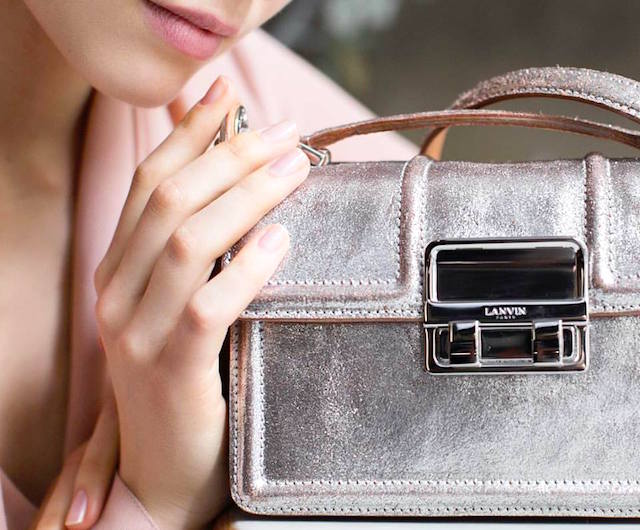
    Lanvin names Bruno Sialelli as its new creative director

    Luxury fashion house Lanvin announced the appointment of Bruno Sialelli to the role of creative director. A relative unknown in the fashion world, Sialelli has worked for other luxury companies including most recently, Loewe, where he was head of menswear, under the guidance of the Spanish company’s creative director, Jonathan Anderson. Chinese conglomerate Fosun, who acquired Lanvin in 2018, said that the 31-year-old Frenchmen was hired to take the company in a “pivotal new direction,” a crucial call for the world’s oldest couture house.

    Lanvin’s chief executive Jean-Philippe Hecquet harmonised the sentiment.

    “We’re thrilled to welcome Bruno as the new creative director of Lanvin,” commented Hecquet. “His singular and very personal vision, his audacity, his culture, his energy and ability to build a strong creative team definitely convinced us. I can’t wait to discover Bruno’s first collections which will fully bring back to life this beautiful and unique fashion house, and once again inspire a passion among our customers.”

    In what has been a rollercoaster of a ride for the high-end French brand, Sialelli will take the top design spot as the fourth creative director to work at Lanvin in just four years.

    In 2015, Lanvin announced the shock departure of the label’s acclaimed designer Alber Elbaz, who was let go after disagreements with its previous owner, Taiwanese media magnate Shaw-Lan Wang. Elbaz had worked as Lanvin’s creative director for 14 years prior.

    Since then, it has been a tough slog for the 130-year-old company, which at its peak in 2012, was reportedly made 235 million euros, but sales have been steadily dropping ever since.

    In 2016, Lanvin reported a massive 18.3 million euro loss, after ten years of profitability.

    Following Elbaz’s departure, Bouchra Jarrar joined Lanvin, but quit as creative director after just a year-and-half, making way for Olivier Lapidus, who also quit, making way for Siaelli, the brand’s ray of hope.

    Before coming to Lanvin, Sialelli has also held design roles at brands like Paco Rabanne and Balenciaga. He is a fashion graduate of Studio Berçot in Paris.

  • Emami India acquires German brand Creme 21

    Emami India acquires German brand Creme 21

    Indian FMCG major Emami Ltd on Friday said it has acquired German brand Creme 21 in the personal care space, having major business in the Middle East and other focus markets. The brand, which offers skin care and body care products such as creams and lotions, shower gels, sun care range and men’s range, has been acquired at less than 1.5 times of its sales.

    With current sales at over eight million euros and a gross margin of over 50 per cent, the city-headquartered company expects to take this brand on an aggressive growth trajectory.

    “The acquisition has a strong business fit as it operates in our focus markets and chosen categories. We plan to leverage our existing network of distribution and infrastructure to grow the brand.

    “It has good potential for growth and we expect it to add value to our growth trajectory. With this acquisition, the company would be able to enjoy economies of scale due to additional business base,” said company Director Harsha V. Agarwal.

    The company said international acquisition is in line with its strategy for growth through inorganic route.

    Over 80 percent of the brand’s business is contributed by MENA (the Middle East and North Africa) region and the balance by Germany and other focused countries. The products are manufactured by a third party in Germany under asset lean model.

    “The acquisition is being funded from internal accruals,” it added.

  • Axiata buys 80% stake in Laos firm

    Axiata buys 80% stake in Laos firm

    Axiata Group Bhd’s 63%-owned subsidiary edotco Investments (Labuan) Ltd (edotco Labuan) is acquiring an 80% stake in Laos’s Mekong Tower Company Ltd (MTCL) for LAK12.8 billion (RM6.08 million) cash. Axiata said in a filing with the stock exchange that edotco Labuan had entered into a share subscription agreement (SSA) with Viphet Sihachakr (VS) and MTCL for the purchase.

    The SSA is subject to, amongst other, procurement of operating licence or other form of authorisation from the Ministry of Post and Telecommunications of the Government of Laos to MTCL for the provision of infrastructure solutions for telecommunications and network operators in Laos; registration of MTCL with the Ministry of Industry and Commerce of the Government of Laos; and procurement by VS of viable business including relevant concessions and/or incentives in Laos.

    Unless waived by the parties, the conditions must be satisfied not later than six months from the date of the SSA.

    “The proposed subscription provides opportunities for edotco group to expand into a new market and grow organically via build-to-suits and inorganically with sizeable sale-and-leaseback prospects,“ Axiata said.

    The Laos tower market is expected to undergo intense growth in tandem with a national drive towards 4G adoption, with an estimated demand of no less than 5,000 towers over the next three years, underscoring the need for an independent tower player to meet the requisite capital expenditure and cost optimisation burdens incumbent on local mobile network operators.

  • Pronovias enters China with Shanghai store opening

    Pronovias enters China with Shanghai store opening

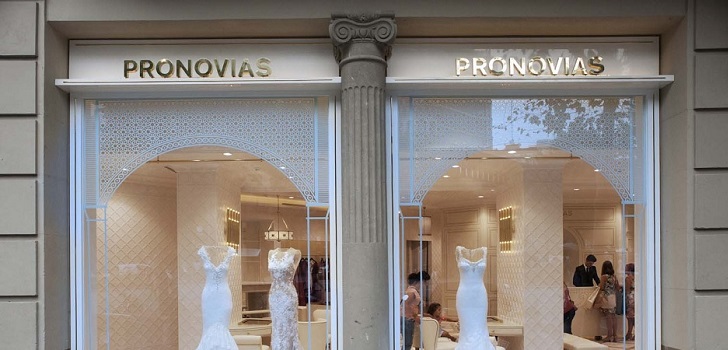
    Spanish bridalwear firm Pronovias has launched its first Chinese location in Shanghai. The 500sqm store is opening in luxury shopping centre Plaza 66, which hosts a range of high-end brands including Chanel and Dior. The move sparks off a greater strategy for the region, in which the Shanghai location will serve as Pronovias’s flagship.

    The brand was founded by BC Partners explicitly to tackle the difficult Chinese and American markets. China is the world’s largest producer of wedding dresses, and local custom is often to hire rather than buy the dress.

    The firm is simultaneously moving to expand in the US, with eight openings planned for the American East Coast.

  • Pernod Ricard Global Travel Retail announces new Vice President Marketing

    Pernod Ricard Global Travel Retail announces new Vice President Marketing

    Craig Johnson, currently Vice President Global Marketing, Absolut Vodka at The Absolut Company, is appointed to the position of Vice President Marketing of Pernod Ricard Global Travel Retail (PR GTR) from January 2019, reporting to Mohit Lal, CEO of Pernod Ricard Global Travel Retail. Johnson will be based in Pernod Ricard Global Travel Retail’s London headquarters and will also become a member of the PR GTR Executive Team.

    This organizational change will continue to build on the strong work achieved so far since the consolidation of the global travel team, by continuing to push category boundaries of what can be achieved within the channel and connect with travelers across the globe at different stages of the Travel Trail through innovative and meaningful communications.

    Craig Johnson, BA Engineering, Rochester Institute of Technology and MBA, The University of Connecticut, started his career at BIC in 1993, where he transitioned from engineering to marketing, before joining Allied Domecq Spirits USA in 1999 as Brand Director, Innovation & Advantage.

    Craig joined the Group at Pernod Ricard USA in 2004 as Brand Director and became Vice President Marketing, Spirits in 2010. He joined The Absolut Company in 2013 as Global Brand Director, Malibu, and was promoted to Global Marketing Director in late 2015.

    From January 2019 Craig is the Global Vice President Marketing for Global Travel Retail.

  • Bursa Malaysia’s Q4 earnings fall 6.2% to RM51.9m

    Bursa Malaysia’s Q4 earnings fall 6.2% to RM51.9m

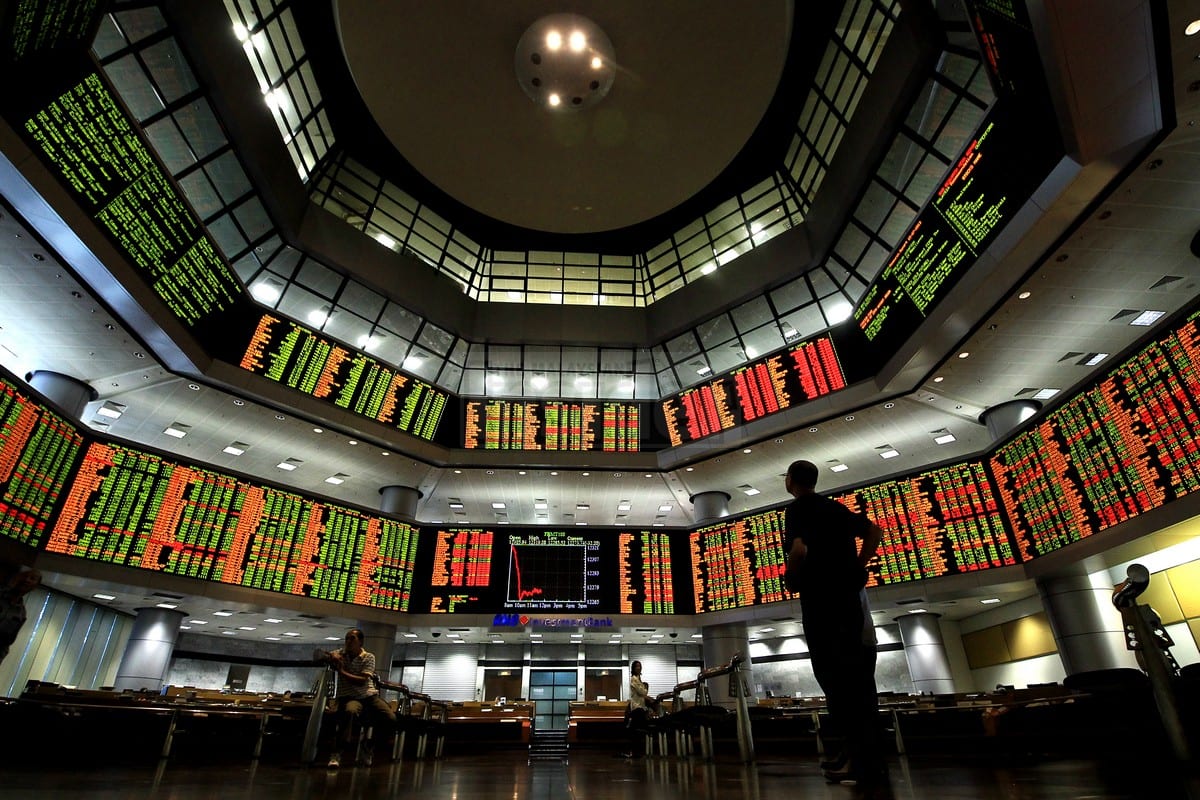
    Bursa Malaysia Bhd’s net profit in the fourth quarter ended Dec 31, 2018 (Q4FY18) was down by 6.2% to RM51.9 million, from RM55.27 million a year ago, mainly due to lower contribution from the securities segment.

    Revenue for the quarter declined 8.7% to RM128.9 million, compared with RM141.2 million in the previous corresponding quarter.

    The exchange has approved a second interim dividend of 11.6 sen per share for FY18, amounting to about RM93.7 million which is payable on Feb 28, 2019. With that, the total dividend (including special dividend) declared for the year amounts to 33.6 sen per share.

    Bursa’s full-year net profit was slightly up by 0.4% to RM224.04 million, from RM223.04 million a year ago, while revenue decreased by 1.2% to RM550 million, against RM556.8 million previously.

    For the year under review, securities market trading revenue increased 2.4% to RM265.8 million from RM259.6 million in FY17, mainly due to higher average daily trading value (ADV) for securities market’s on-market trades (OMT) in FY18.

    However, non-trading revenue saw a marginal decrease of 0.1% to RM165.9 million from RM166.1 million in FY17 due to lower listing and issuer services revenue.

    Bursa CEO Datuk Seri Tajuddin Atan said despite market volatility and challenging global economic environment, the exchange’s financial performance remained resilient.

    “Throughout the year, to create a more facilitative environment, we continued implementing initiatives to further enhance the vibrancy and liquidity of the market,” he added.

    At 2.35pm, Bursa’s share price was trading 7 sen or 0.9% lower at RM7.32 on 751,900 shares done.

  • Diamanti Per Tutti makes debut in Singapore

    Diamanti Per Tutti makes debut in Singapore

    Belgian jewellery brand Diamanti Per Tutti has launched its first standalone store in Singapore at Raffles City Shopping Centre. Positioned as an affordable luxury label, Antwerp-based Diamanti Per Tutti retails 925 Sterling Silver items gilded with 18 carat pink or yellow gold vermeil or white rhodium, set by hand with real, ethically-sourced natural diamonds and gems.

    The brand, which has outlets in Beijing, Shanghai and Hong Kong, plans to open its second Singapore location in March.

  • Why top watch marques no longer need Baselworld, SIHH?

    Why top watch marques no longer need Baselworld, SIHH?

    Dr Bernard Cheong has what he calls a “migration box” – a travel case that holds up to eight timepieces. “I like to say that these are the watches I will take with me if I have to relocate,” says the jovial 61-year-old, one of the world’s most prolific watch collectors. One of his most prized pieces is a S$3.3 million (US$2.4 million) Greubel Forsey Invention Piece 1, numbered 00 in an 11-piece series. Its serial number indicates that it is the watchmaker’s personal prototype. It would not even have been sold, if not for Cheong’s clout. He believes the watch can eventually command up to S$5 million.

    In 2011, he made history when he became the first ambassador for the Geneva-based Fondation de la Haute Horlogerie who was not from the watch industry. He helped formulate the transparent jury system, and an audited and numbered voting system, for the Grand Prix d’Horlogerie de Genève in 2002, a high-end watchmaking contest, before introducing it to Asia.

    His expertise is drawn from decades of experience of watch buying and selling and forging close relationships with watchmakers and retailers. This has also put him in the unique position of being an industry observer with unfiltered, and sometimes contrary, insights.

    For instance, he does not mince words when talking about the recent issues surrounding the industry’s key watch fairs, Baselworld and SIHH. The two fairs recently announced they would be synchronizing their calendars to run back to back, following a fall in the number of Baselworld exhibitors.

    “It is a reality of the industry. The exhibitors do not need to be there any more – why pay so much to exhibit like this?” he says. Cheong notes that watchmakers today can easily bypass industry fairs by offering information about their latest creations directly to consumers via the internet.

    Protecting his beloved industry is something Cheong takes seriously. In China, the recent crackdown on conspicuous consumption has led to a drop in sales and to brands like Richemont buying back unsold stock. “It is smart for the companies to buy back their precious pieces. When times are hard, people will sell watches at any price to put food on the table,” he says. This could lead to a massive undercutting in prices, he adds.

    “They did the right thing to retain control of prices.”

  • Chinese New Year to drive sales for businesses

    Chinese New Year to drive sales for businesses

    Despite lacklustre consumer sentiment, businesses are gearing up for brisk sales as consumers do their Chinese New Year (CNY) shopping for the much celebrated festival next week, with many businesses citing CNY as an important sales contributing season. LG Electronics Malaysia general manager of marketing Kong Mun Keen said festive season campaigns, whether CNY or Hari Raya, contributes bigger sales for LG.

    “We often see a spike in sales whenever festive seasons are fast approaching,” he said, adding that this year, LG Electronics Malaysia has allocated a “substantial amount of budget” for its CNY campaign.

    Although only a month into 2019, he said LG Electronics is “on the right track” in terms of sales.

    By distinguishing itself with its technology and product experience, Kong said LG’s strategy has always focused on reaching out to all Malaysians, evident through its brand store openings in 2018, where it works with partners to drive new consumer touchpoints.

    “Malaysia has always been a priority market, given that LG has secured and maintained a strong position in the home appliances and home entertainment segments here. With our premium and unique positioning coupled with innovative and consumer-centric products line-up, we are confident that there will always be a demand for our products here,” said Kong, adding that it is constantly ensuring that its products can integrate seamlessly into consumers’ lives.

    For big-ticket items like cars, Edaran Tan Chong Motor Sdn Bhd (ETCM) executive director Tan Keng Meng expects its CNY sales to be about the same as last year’s or better.

    “It’s always CNY and Raya. These are the two peak seasons,” said Tan.

    In conjunction with CNY, ETCM added the new imperial red colour to the popular Nissan Serena 2.0L S-Hybrid Premium Highway Star, featuring a two-tone theme. Additionally, ETCM continues the introduction of Nissan X-Trail X-Tremer in passion red and two additional colour options.

    Meanwhile, a Uniqlo Malaysia representative said festive periods are traditionally good opportunities for retailers to grow their sales, adding that it continues to experience healthy sales growth this year.

    “We believe this is due to our commitment to produce high-quality products at accessible prices while keeping with today’s fashion trends. Customer service is also a top priority to ensure that our customers have the best shopping experience possible.”

    As with previous years, it believe that customers are always looking for something new and fresh to start their new year.

    “We are bringing many new items to the store for customers to choose. We will also be launching the Uniqlo U collection on Feb 1 for last minute shoppers to get their new year clothes.”

    The representative said customers are consistently looking for items that are value for money and Uniqlo is well positioned to meet their needs.

    Tohtonku Sdn Bhd head of marketing Vicky Lim said CNY is one of the peak seasons for sales with its back-to-back promotions in December and January.

    But instead of spending on CNY promotional campaigns, Lim said, the company, which markets personal care and household products with brands like Follow Me, Nutox and Nanowhite, still focuses on brand communications.

    A representative for The Body Shop said although CNY is not its largest festive season sales contributor, it dresses up its stores with decorations that symbolise the blooming of spring and the festive mood of CNY.

    “We offer prosperous gifts such as hampers. This year we picked British rose as the main product that appeals to a wider target audience and with its colour of pink, it’s in line with the colour scheme that represents CNY.

    “Our staff are also dressed in mandarin Oriental tops and we play both instrumental and vocal music that reminds you of CNY.”

  • Starbucks China sales grow – with a but

    Starbucks China sales grow – with a but

    Net revenues for Starbucks China and Asia-Pacific region soared 45 per cent in the first quarter to US$1.2 billion. While a change of ownership in the East China business at the end of the first quarter of the previous year boosted the figure, the company says the opening of a net 1010 stores during the 12 months – a 13 per cent increase in the network – and a 3 per cent increase in same-store sales also played a part.

    First-quarter Starbucks China operating income rose 13 per cent to US$225.1 million, from $196.8 million. But the company’s operating margin declined 530 basis points to 18 per cent, primarily due to the impact of the East China ownership change.

    CEO Kevin Johnson said the company delivered solid operating results in the first quarter, demonstrating continued momentum in the business, as it drives a growth-at-scale agenda “with focus and discipline”.

    “Comprehensive efforts to streamline our business have allowed us to focus on three key strategic initiatives that position Starbucks for long-term success: accelerating growth in our targeted markets of the US and China, expanding the global reach of the Starbucks brand through our Global Coffee Alliance with Nestle, and increasing shareholder returns.

    “Combined with our efforts to build and amplify the Starbucks brand, we expect these initiatives will position the company to drive predictable, sustainable growth and shareholder returns for years to come,” concluded Johnson.

    In the 13-week first quarter, which ended December 30, global comparable-store sales increased 4 per cent, driven by a 3 per cent increase in the average sale. Americas and US comparable-store sales increased 4 per cent, with transaction numbers flat.

    China-Asia-Pacific comparable-store sales increased 3 per cent, including 1 per cent transaction growth, with China comparable-store sales up 1 per cent, but the number of transactions down 2 per cent.

  • Apps race to attract customers with sweet deals

    Apps race to attract customers with sweet deals

    E-wallets, food-delivery and online shopping apps are offering a range of Tet (Lunar New Year Festival) promotions to widen their customer base. On January 21, e-wallet cashless payment platform MoMo experienced a temporary freeze of its network shortly after launching a promotion that gives customers a chance to receive gifts when using the app to send money.

    Shortly after the promotion was launched, MoMo recorded an additional 500,000 downloads and registrations of its app, forcing the platform to upgrade its capacity immediately.

    At the time of the freeze, MoMo reported a record of over 1 million customers who had logged on at the same time for a chance to receive something from MoMo’s pool of gifts worth over VND100 billion ($4.32 million).

    About 2 days later, ZaloPay, another e-payment platform also entered the race by encouraging users to make deposits, payments and money transfers to receive bonus points and redeem vouchers from a pool of VND10 billion ($431,995).

    The promotion heat has also spread to the food delivery industry, where Grab, the Singaporean-based ride hailing and food delivery app, has announced its expansion to an additional 12 provinces and cities, to make “food ordering easier during Tet“.

    Tet, or Lunar New Year Festival, will be celebrated from February 2-10 this year.

    Demi Yu, GrabFood regional director for Thailand, Malaysia, Vietnam and Philippines, revealed that the number of GrabFood orders increased has increased 25 times since it was launched in Vietnam last October.

    “With our extensive driver partner network, we’ve been able to lower average delivery time to 20 minutes in central Hanoi and HCMC, making us the fastest food delivery service in Vietnam,” she said.

    A survey published by Vietnamese market research firm GCOMM earlier this month showed that 99 percent of those surveyed said they used online food ordering services at least 2-3 times per month. 39 percent said they ordered through these apps 2-3 times a week.

    According to this survey, the 6 most popular apps are GrabFood, Foody, GoFood, Lala, Vietnammm and Lixi. However, because of the fierceness of competition, just a few days before the study was announced, Lala withdrew from the food delivery market to focus on providing software solutions to restaurants.

    “Demand for delivery is growing in Hanoi and HCMC. I think in the next 5 years, it will thrive in the 10 largest cities. There are about 100,000 delivery orders each day in HCMC and Hanoi combined, whereas there was virtually no demand for this service 3 years ago.

    The delivery market is now worth $500 million, but is expected to grow to $2 billion in 5 years,” said Luong Duy Hoai, founder of GHN, a courier service with over 7,000 staff.

    According to a recent report by South Korean commercial giant Lotte, the number of orders and visits by online shoppers rose by 80 percent and 200 percent respectively in 2018.

    Kim Kyou Sik, general director of Lotte.vn, the group’s online outlet, said: “Late 2019 will be a major battle for all e-commercial sites to establish market share. We aspire to become one of Vietnam’s top 4 e-commerce sites by the end of the year.”

    According to research by Nielsen Vietnam, with 53 percent of the population using the Internet, nearly 50 million numbers registered on smartphones, most online shoppers being from 25-29 years old, the e-commerce market in Vietnam is full of potential despite growing at 22 percent per year.

    The e-Conomy SEA 2018 report by Google and Singaporean investment firm Temasek also revealed that e-commerce, along with three other areas, namely online advertising, online travel and ride hailing dominate Vietnam’s Internet economy.

    In 2018, the Internet economy had an estimated total worth of $9 billion. Earlier this year, the two companies collaborated in a report which revealed that gross merchandise volume of Vietnam’s Internet economy amounted to 4 percent of its GDP.

  • The most expensive place to rent an office in the world

    The most expensive place to rent an office in the world

    Central, Hong Kong’s frenetic business and retail heart, crammed with skyscrapers, swanky malls and luxury hotels, is the most expensive district for renting office around the world. Although the office rent in Hong Kong’s Central district is already the world’s most expensive, and there are more and more companies moving out of the city centre to cheaper locations, prices are likely to remain sky high, or even higher.

    Hong Kong is the key financial centre in Asia, and Central is still the most important financial district in the city. Thus, the office rent in Central district is predicted to increase continuously.

    According to Raymond Chow, the Executive Director for Commercial Property at Hongkong Land, Central’s largest office landlord, “Central is still the home to the city’s most influential institutions, such as the Securities and Futures Commission, The Stock Exchange of Hong Kong and Hong Kong Monetary Authority, the connectivity of Central remains a magnet for leading players” he added,  “It is in a way that other districts cannot compare.”

    In June 2018, Central was ranked the most expensive office location in the world for the third year by global commercial real estate firm CBRE, thanks to the strong demand from mainland tenants, who would like to expand their business outside China and seeking Grade A office space.

    Office space in Central now costs USD $306 per square foot, 30 per cent higher than the second highest area, London’s West End, at US$235 per square foot.

    Of the top 10 most expensive premium rental locations, six were in Asia, including Shenzhen, Beijing, Tokyo, and Delhi.

  • The We Company Debuts Made by We

    The We Company Debuts Made by We

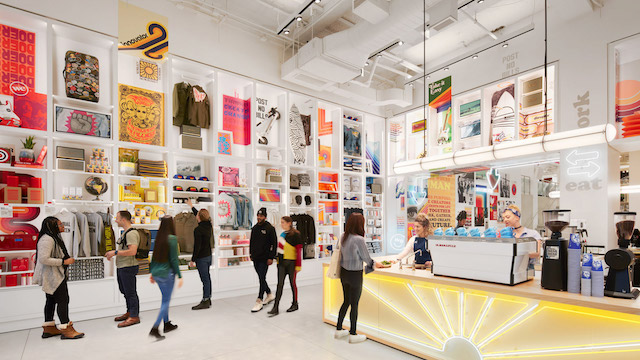
    Co-working firm The We Company (previously WeWork) has opened a retail venture and public workspace in New York. The Made by We retail space, cafe and workplace can be used by anyone without the need for a membership, with workstations and meeting rooms available for rent by the minute. The work space features products made by current WeWork member companies available for sale, from apparel to snacks to audiotech gear. It also houses a Bluestone Lane cafe.

    While headquartered in New York City, The We Company has WeWork shared office spaces in major cities across Mainland China, Japan and India, as well as in Ho Chi Minh City, Singapore, Jakarta, Kuala Lumpur, Manila, Busan, Seoul and Bangkok.

    “Made by We was launched with a vision to connect the We community with the rest of the world, and provide people with the best on-demand workspace, services and products, no membership required”, said company partner Julie Rice.

    “Everything we do at The We Company, from the spaces we curate to the service offerings we provide, is intended to create meaningful human connections.”

    View the gallery below for pictures (7 images) :


  • Keppel to sell 70 pct stake in Vietnam waterfront township

    Keppel to sell 70 pct stake in Vietnam waterfront township

    Singapore-based Keppel Corp will sell 70 percent stake in a waterfront township project to a Vietnamese investor for $100 million. The company said in a release Monday that, pending certain developments, it will sell its stake in the Dong Nai Waterfront City Company (DNWC) to Ho Chi Minh City-based Nam Long Investment Corp for VND2.31 trillion ($99.72 million).

    The DNWC is a company incorporated under Vietnam’s laws that has been granted the right to develop the Dong Nai Waterfront City township project.

    Keppel Land, Keppel’s real estate arm, is currently in the process of taking over complete control of DNWC from an unnamed joint venture partner through a demerger.

    Once the demerger is done, DNWC will become a wholly-owned subsidiary of Keppel with the rights to develop a 170-hectare plot of land.

    DNWC also holds a 28-hectare plot of land which is excluded from the proposed divestment.

    The 70 percent stake sale will depend on demerger going through.

    Dong Nai Waterfront City is a 170-hectare residential township project in Dong Nai Province, located 28 kilometers to the northeast of HCMC.

    It will have about 7,850 homes, including townhouses, villas and high-rise apartments with various commercial facilities.

    Keppel Corp said that the stake sale was in line with Keppel Land’s strategy to recycle assets for higher returns. The funds generated will be used to pursue other opportunities in Vietnam, it said.

    The Dong Nai Waterfront City will be Keppel Land’s second township project in Vietnam after the 64-hectare Saigon Sports City in HCMC’s District 2 which is under construction.