Tag: asia

  • AirPass helps Aussie retailers woo Chinese shoppers

    AirPass helps Aussie retailers woo Chinese shoppers

    Recently, Australia fintech company AirPay Financial Technologies announced its regional collaboration with China leading mobile payment technology company SwiftPass to form a new lifestyle brand “AirPass”. Connecting Australian merchants directly with Chinese consumers, AirPass lets local retailers accept WeChat Pay and Alipay both online and offline, as well as reach overseas markets to make the most of the global Chinese spending boom.

    AirPass is a lifestyle brand backed by Australian fintech startup AirPay Financial Technologies, in partnership with leading Chinese mobile payment provider SwiftPass. The new brand brings China’s most popular ePayment, eStore, eCard, eMarketing and eWallet services to Australia, allowing Chinese tourists, students and migrants to make over the counter purchases by simply scanning a QR code on their smartphone.

    The payment platform can also be integrated into Australian e-commerce websites and mobile apps, taking advantage of AsiaPay’s PayDollar payment gateway. Supporting multiple shopping cart plugins, PayDollar provides a one-stop online payment solution allowing local merchants to accept Alipay, WeChat Pay, Visa, MasterCard, Amex, PayPal and ZipPay

    “AirPass is providing a user-friendly platform for Australian retailers to build their own eStore to facilitate marketing and payment – which is the key to entering the Chinese consumer market,” says SwiftPass Technologies VP Tong Liu.

    Meanwhile, the AirPass app for iOS and Android lets Australian retailers connect directly with Chinese shoppers. AirPass assists Australian retailers and brands with setting up their own WeChat eStore to tap into Chinese social marketing channels. This allows local retailers to sell products via the WeChat ecosystem, reaching new customers in China along with Chinese communities around the globe.

    AirPass’ arrival in Australia comes as Boxing Day saw record high sales to Chinese shoppers across major retailers and shopping centre groups such as Westfield, Chadstone, QVB and Pacific Fair.

    “We are thrilled to announce our regional partnership with SwiftPass and recently launch WeChat Pay and Alipay to Australia’s largest and oldest pearling company Paspaley,” says AirPay Financial Technologies chief executive Jimmy Zhu. “There is huge demand from the market pushing us to deliver more advanced payment and marketing products.”

    Another Australian family-owned luxury retailer, Harrolds recently launched a WeChat Official Account and will soon accept WeChat Pay and Alipay in-store.

    Other luxury brands such as Gucci, Saint Laurent, Bottega Veneta, Balenciaga, Valentino, Mulberry, Givenchy, Off-White, Marais, Furla, Folli Follie and Sneakerboy are also adopting the AirPass platform in order to better reach Chinese shoppers.
  • JD.com has just marked a breakthrough for drone delivery in Southeast Asia

    JD.com has just marked a breakthrough for drone delivery in Southeast Asia

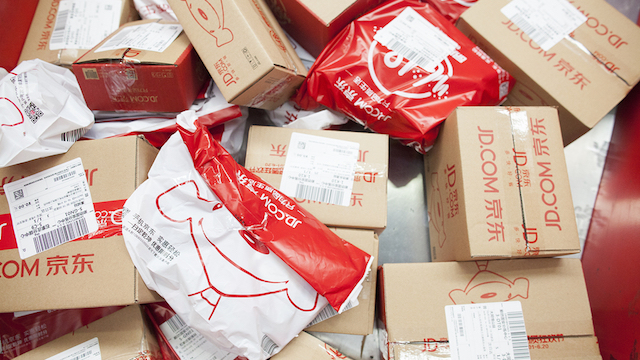
    JD.com announced the completion of Indonesia’s first government approved drone flight – a breakthrough for drone delivery in Southeast Asia. The successful pilot opens the door for future commercial drone use in Indonesia and the Southeast Asia region, subject to further regulatory approvals. Representatives from Indonesia’s Ministry of Transportation, Civil Aviation and Air Navigation were present for the flight. The news was announced during the World Economic Forum Annual Meeting.

    The test flight took place on January 8, 2019, in West Java, Indonesia, where the drone flew from Jagabita Village, Parung Panjang to MIS Nurul Falah Leles Elementary School to deliver backpacks and books to students.


    The items delivered by drone were part of a larger donation of supplies from JD.com to the school. JD has a long history of offering philanthropic support to those in the communities where it operates. The company often taps its technology and nationwide logistics network to provide immediate support for natural disasters such as earthquakes in China.

    JD.com and its JV partner, e-commerce company JD.ID, were early movers in bringing high quality e-commerce to Indonesia. JD.ID, which launched e-commerce operations in 2016, sells 1 million SKUs and serves more than 20 million consumers across the country. Its operations leverage a logistics network consisting of ten warehouses across seven islands, covering 483 cities and 6,500 counties.

    Given the fact that the country is spread out across many islands, the implementation of drones for regular use in e-commerce deliveries, as well as other logistics-related services, will enable citizens in Indonesia to enjoy more efficient and reliable services, and help JD.ID realize its goal of being able to deliver 85% of orders same- or next-day. JD.ID is also committed leveraging its logistics and other resources to support humanitarian efforts like earthquake disaster relief.

    “It is a privilege to have contributed to this important moment in Indonesia’s history,” said Jon Liao, Chief Strategy Officer at JD.com. “We have been using drones for real deliveries in China for over two years now, and have seen the profound impact that the technology can have on people’s lives around the country. We look forward to working closely with WEF and the Indonesian government to realize the full potential of this technology, and provide more convenience to Indonesian citizens.”

    JD.com is a strategic partner of WEF and a partner of WEF’s Centre for the Fourth Industrial Revolution. The C4IR is a global hub for multi-stakeholder cooperation to develop policy frameworks and advance collaborations that accelerate the benefits of science and technology. Leveraging drone technology to deliver supplies to areas in need is a high priority on the C4IR’s agenda. WEF and JD have been working closely together to ensure the success of the pilot in Indonesia.

    “This trial represents the first government approved drone delivery operation in Indonesian history,” said Timothy Reuter, Head of Drones and Tomorrow’s Airspace at the World Economic Forum. “These tests are an opportunity for Indonesia to become a leader in the Southeast Asia region by leveraging drone delivery to improve access to vital medical, humanitarian, and commercial goods in remote areas.”

  • Malaysia may feel bite of China economic slowdown

    Malaysia may feel bite of China economic slowdown

    The slowdown in China may impact Malaysia more given the strong trade linkage with China, according to PublicInvest Research. “China is not only our biggest trade partner in 2018 (YTD 2018: 16.7%) but also our largest export market (YTD 2018: 13.9%) and our second biggest import source after Singapore (YTD 2018:19.8%). This could bring negative ramifications not only to Malaysia but also to other peers like Singapore, Thailand, Indonesia and the Philippines and hence, the growth prospects of Asean-5,“ the research house said in a report.

    In fact, it said, the simmering trade stress has caused noticeable dent to export momentum in November with Singapore, Thailand and Indonesia suffering a contraction in exports. This could be repeated in December.

    PublicInvest Research said unfavourable outcomes to the trade negotiation may see longer times taken for growth to normalise due to demand deficiencies which are always more damaging than supply shocks.

    “Other than this, the pullback in global financial and commodity markets arising from pockets of stress mentioned above can hurt Malaysia as well due to contagion effects. This can bring down the ringgit in addition to putting a cap in the prices of our key commodity exports like crude oil, crude palm oil and rubber,“ it explained.

    The slowdown in China is particularly alarming and shows signs of worsening following the release of its 2018 growth of 6.6% (2017: 6.8%), the slowest since 1990.

    “We don’t see negative surprises in this as it is within the People’s Bank of China’s estimates,“ it said, adding that the International Monetary Fund (IMF) expects China’s slowdown to continue, forecast to ease to 6.2% in 2019 amid firmed commitment to reforms and rebalancing on the back of the trade collision with the US.

    PublicInvest Research said the slew of IMF downgrades could result in negative ramifications not only to global financial markets but also commodities. Risk aversion could heighten, pushing investors to take less risks which may be precursor to elevating demand for safe haven assets particularly bonds.

    “Among all the growth risks mentioned by IMF, we are particularly concerned over China given its extensive trade network and huge economy.”

    PublicInvest Research said unfavourable trade negotiations could be harmful not only to China’s outlook but also emerging economies, particularly Asean, given their strong interdependence on trade. This could lead to inexorable downturns to Asean economies, particularly those that depend on China’s exports (intermediate goods).

    “Over and above all, we think that China still has sufficient tools to support growth should trade negotiations turn unfavourable although the impact could still be there.”

  • Xiaomi opens massive Mi store in Paris

    Xiaomi opens massive Mi store in Paris

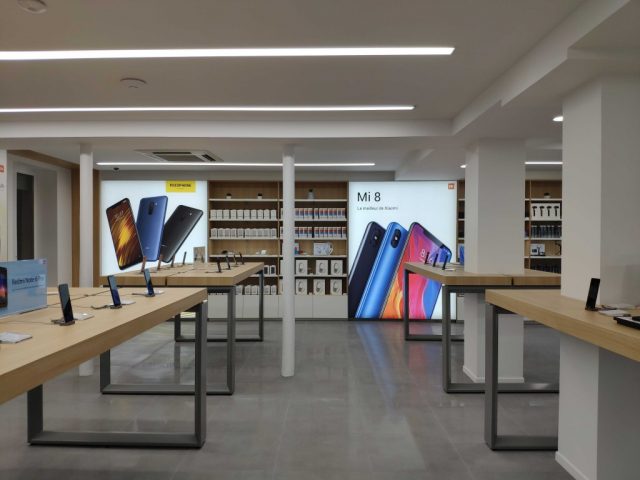
    Chinese electronics firm Xiaomi has opened its largest European Mi Store in Paris. Queues for the January 18 1pm opening started to form at the Champs-Elysees location at sunrise, despite freezing temperatures. The store is hosting a reportedly comprehensive selection of the brand’s full product range, including smartphones, headphones, cameras and home appliances.

    In celebration of the launch, Xiaomi held a three-day sale on its French online store featuring discounts of up to €50. The supersized flagship is Xiaomi’s second location in Paris.

    View the gallery below for images of the stores (11 images) :

  • Xiqu Centre finally opens in Hong Kong

    Xiqu Centre finally opens in Hong Kong

    Hong Kong’s new performing arts venue dedicated to Xiqu (Chinese Opera), has just opened. Located on the Eastern edge of the West Kowloon Cultural District, at the junction of Canton Road and Austin Road, the Xiqu Centre is directly accessible from the Hong Kong West Kowloon Station and Austin MTR station, and easy to reach by public transport from all parts of Hong Kong.

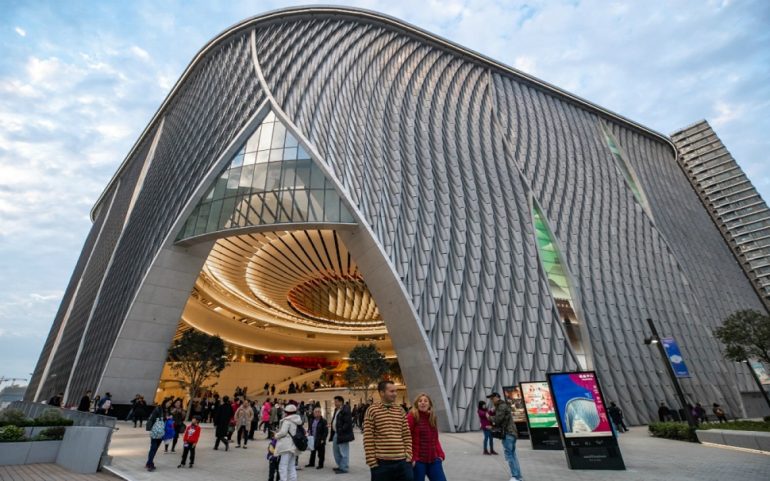
    The building’s striking design, created by Revery Architecture (formerly Bing Thom Architects) and Ronald Lu & Partners, was inspired by traditional Chinese lanterns and blends traditional and contemporary elements to reflect the evolving nature of the art form.

    Stepping through the main entrance, shaped to resemble parted stage curtains, visitors are led directly into a lively atrium with a raised podium and space for presenting the rich and ancient culture of Chinese traditional theatre.

    The eight-storey building has a total area of 28,164 sq m and houses a Grand Theatre, accommodating 1,073 seats, a Tea House Theatre, with a capacity of up to 200 seats, eight professional studios and a seminar hall, all specially designed for different types of xiqu-related functions and activities.

    The design details of each of the facilities have also been created in response to the practical requirements and aesthetic features of the art form. A unique feature of the venue is the location of the Grand Theatre at the top of the building, which allows for a large open atrium below with space for exhibitions, stalls, and xiqu demonstrations and workshops.

    Carrie Lam Cheng Yuet-ngo, the Chief Executive of Hong Kong, gave a speech at the opening ceremony of Xiqu Centre. “The launch of Xiqu Centre is not only a significant international cultural event, but Hong Kong also takes it as a great honor and we all are very proud of it.”

    In fact, Chinese opera has been inscribed in the UNESCO Intangible Cultural Heritage Lists for a decade, Carrie Lam hopes the Xiqu Centres would help promote Hong Kong as an international arts hub and consolidate the city’s position in the development of Cantonese opera.

  • Malaysia’s GDP growth likely to return to 4.6-5.0% range in 2020: UBS economist

    Malaysia’s GDP growth likely to return to 4.6-5.0% range in 2020: UBS economist

    Malaysia’s real gross domestic product (GDP) growth is likely to return to the 4.6-5% trend range in 2020 as economic drag diminishes, said UBS Investment Bank economist Edward Teather. He said the impact of the trade war and the government’s institutional reforms should go from drags on growth to net positive contributions to the country’s economy this year.

    “Pakatan Harapan’s institutional reforms and the Comprehensive and Progressive Agreement for Trans-Pacific Partnership (CPTPP) membership would improve prospects in 2020.

    “Malaysia is also a key potential beneficiary of the CPTPP trade deal,” he said during a conference call on global and Asian 2019 outlook.

    However, he said, Malaysia might lose some potential gains if it decided to pull out of the trade deal and this would impact GDP growth next year.

    “Without CPTPP, there will be less potential to be tapped; but it’s possible without the deal, the government would consider liberalisation, introducing more transparency and level playing field between private companies,” he said.

    Teather said trade war, slower China growth and institutional reform and fiscal consolidation policy initiatives would continue to drive the weakness in growth in the near term.

    Hence, he said, UBS expected Malaysia’s growth to be at 4% this year from the estimated 4.7% in 2018.

    “2019 will likely be a case of pain before gain. First, we expect Malaysia to be impacted by trade war-related disruption, but also to be well placed to subsequently take market share from China in the United States,” he said.

    Meanwhile, Teather expects the ringgit to fall to the RM4.40 level to the US dollar this year before improving in 2020. Malaysia being an open economy, the ringgit was pressured by the lower trade growth, he said.

    “Exports, in dollar terms, rose 10% in 2018 and would only grow 1% in 2019. So it’s quite a strong slowdown and that is partly because of lower oil prices and less demand for products and components,” he added.

    On the Overnight Policy Rate (OPR), he said Bank Negara Malaysia (BNM) may leave interest rates on hold throughout 2019.

    “Soft growth should allow BNM to look at acceleration in inflation driven by the change from the goods and services tax to the sales and service tax in 2018 and fuel subsidy reforms.

    “In early 2020, better growth momentum, confidence in CPTPP and trade war-linked supply-chain adjustments in Malaysia’s favour could lead to a 25-basis point rate hike by BNM,” he said.

    He forecast the US Federal Reserve would raise its benchmark interest rate once this year, in September, and that the Brent crude to hover at US$65 per barrel this year and US$73 per barrel in 2020.

  • Reebonz to use blockchain technology to assure authenticity

    Reebonz to use blockchain technology to assure authenticity

    Southeast Asian online luxury marketplace Reebonz is exploring blockchain technology as part of its strategy to demonstrate the provenance of products. Complementing the firm’s existing in-house team of ateliers who specialise in authenticating leather products, timepieces, gemstones and jewellery, Reebonz intends to incorporate all transactions on a blockchain to ensure the comprehensive traceability of all products sold within its ecosystem. The firm’s goal is to enable buyers to verify the authenticity of products on their own and stamp out losses and distrust generated by the global exchange of counterfeits.

    By establishing end-to-end traceability, customers will also be able sell their items back to Reebonz, which would allow the company to easily identify a customer’s purchase.

    “The Reebonz leadership team is extraordinary and has already developed a cutting-edge technology and platform”, said Tim Draper, senior advisor of Draper Oakwood Technology Acquisition and founding partner of Draper Associates.

    “The authentication of pre-owned luxury items using the blockchain is just one of many high impact innovations Reebonz is pioneering to improve the luxury shopping experience for customers across Asia Pacific.”

    “While we started as an online platform that helps consumers access affordable luxury, we have evolved into an ecosystem that connects buyers and sellers through the widest range of luxury,” added Reebonz CEO and co-founder Samuel Lim.

    “Identifying gaps and opportunities in the luxury e-commerce landscape and spearheading strategies that present innovative ways of redefining luxury consumption has made us a leader in this industry. As we continue to build out a thriving community of buyers, sellers and international boutiques, it will become critical for the industry to evolve, and for us to become a leading innovator of authenticity solutions. We are excited to use the blockchain technology to solve one of the key global issues that impacts our industry.”

  • ​Vietnam’s FastGo eyes US, Brazil expansion

    ​Vietnam’s FastGo eyes US, Brazil expansion

    Vietnamese ride-hailing company FastGo plans to enter the U.S. and Brazil this year as it seeks to quickly expand overseas. Its CEO Nguyen Huu Tuat said that he is keen to compete with other ride-hailing apps in foreign countries. “Our investors are located in the U.S. and Brazil, that’s why we have chosen those places as the next markets,” he said without disclosing who they are.

    The announcement comes a month after it expanded into Myanmar. FastGo now has over 1,000 partner drivers in Yangon and Tuat wants to have 2 million users in Myanmar this year.

    But the company wants to expand even faster to other markets this year, with Indonesia, where ride-hailing Go-Jek is based, being the first location.

    “We plan to start operating in Jakarta in March, and will also expand to Singapore this year,” Tuat said.

    The investors want the company to “go global as soon as possible,” he said to explain the rapid expansion plans.

    The company hopes to raise $50 million in the second round by June this year possibly from investors in South Korea and the U.S., he said.

    “Grab and Uber might have deep pockets, but FastGo wants to grab market share by offering better options to customers.”

    FastGo does not collect commissions from drivers but instead charges them an amount of money if they earn a minimum amount per day. FastGo also claims to not increase fees during rush hour but allows users to tip drivers.

    It became Vietnam’s first home-grown ride-hailing app last June and now has 40,000 drivers in 12 cities and provinces.

    FastGo last August received $3 million from Vietnamese fund VinaCapital Ventures, according to reports.

  • LVMH sues Hong Kong merchant over XLV wine range

    LVMH sues Hong Kong merchant over XLV wine range

    French luxury group LVMH is suing a wine merchant in Hong Kong over an alleged trademark infringement.bThe plaintiffs are suing over a wine range named “XLV”, established in collaboration between Cuvee XLV French Wine and Quentin-Louis, the son of fifth generation family member Xavier-Louis Vuitton.

    During a January 16 hearing in the High Court, LVMH claimed that the wine’s label design deliberately mimics the Louis Vuitton logo to mislead consumers. Cuvee XLV’s owner Wong Sau Ying has previously stated that the range has no relationship with the LV business, although the family connection is a factor in the wine sales.

    “The family is involved and that is important. In China trust is important – there are many imitations, but this brand can be trusted,” said Wong in a 2012 interview.

    Wong is pleading that the font size used on the XLV label differs from that of LV products.

    The case has been pending since 2008 when the label became apparent to the LVMH group.

  • CIMB divests insurance broking business for RM59.6m

    CIMB divests insurance broking business for RM59.6m

    CIMB Group Holdings Bhd’s wholly-owned indirect subsidiary CIG Bhd yesterday entered into a share purchase agreement with HBG Asia Holdings Ltd and HBG Malaysia Sdn Bhd (Howden) to divest its remaining 51% stake in CIMB Howden Insurance Brokers Sdn Bhd (CHIB) to Howden for RM59.6 million.

    The group said approval from Bank Negara Malaysia in relation to the proposed divestment was received by Howden on Nov 27, 2018.

    “CHIB currently operates an insurance broking business and the proposed divestment is in line with CIMB’s aspirations to further streamline and focus on its core banking businesses. As part of the proposed divestment, CHIB will cease to be an associate of CIG,“ CIMB said.

  • Instagram famous Baby Chanco is now a testimonial for Pantene

    Instagram famous Baby Chanco is now a testimonial for Pantene

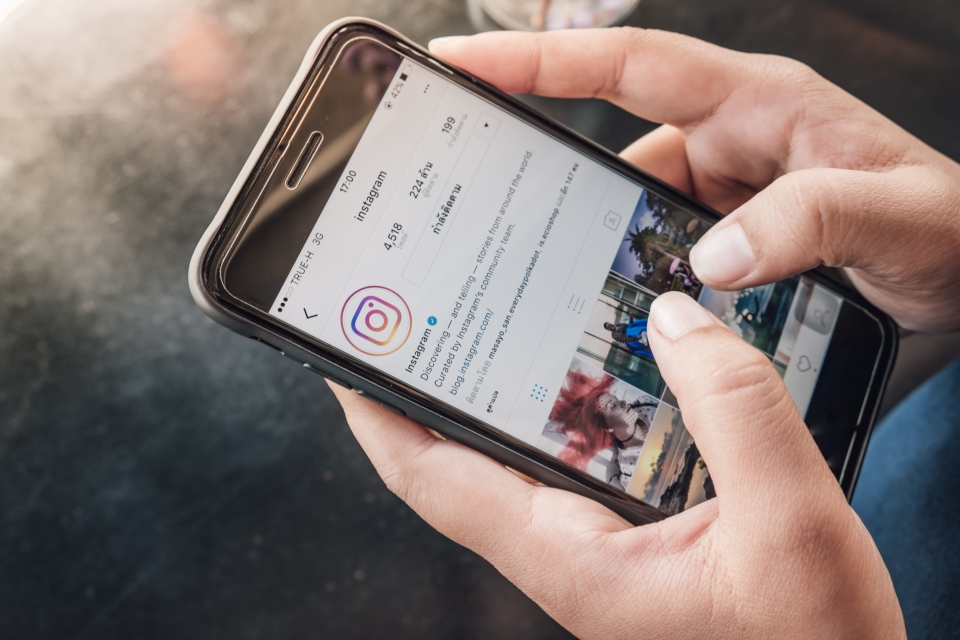
    A one-year-old baby with an incredible mane of hair has been signed by Pantene as one of the faces of the brand in Japan. Instagram starlett Baby Chanco has stunned social media users over the last six months as her mother uploads images of her incredible, thick hair. Baby Chanco, who lives in Japan, was born with a full head of hair in December 2017 and it has continued to sprout as she has grown.

    Chanco’s mother updates her 300,000 followers on the platform with weekly photos of the little girl’s full bouffant. Every photo shared receives around 10,000 likes from her adoring fans.

    In one of the images from the campaign, Baby Chanco, whose Instagram account is managed by her mother, Mani Kano, poses alongside Japanese TV presenter Sato Kondo, known for her grey tresses.

    Fast forward to 2019 and Baby Chanco is following in the footsteps of celebrities such as Selena Gomez as a Pantene spokesperson.

  • Hong Kong Harry Potter-themed cafe sued by Warner Bros

    Hong Kong Harry Potter-themed cafe sued by Warner Bros

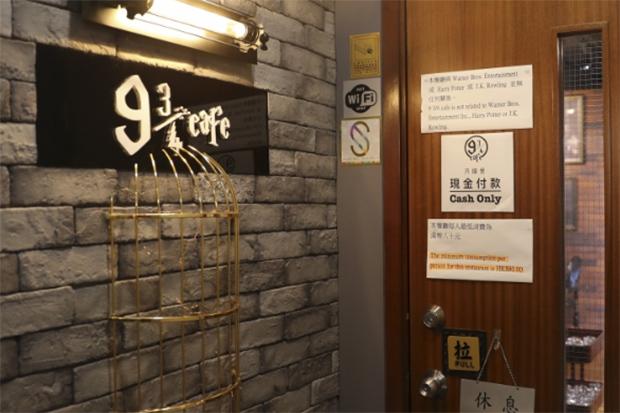
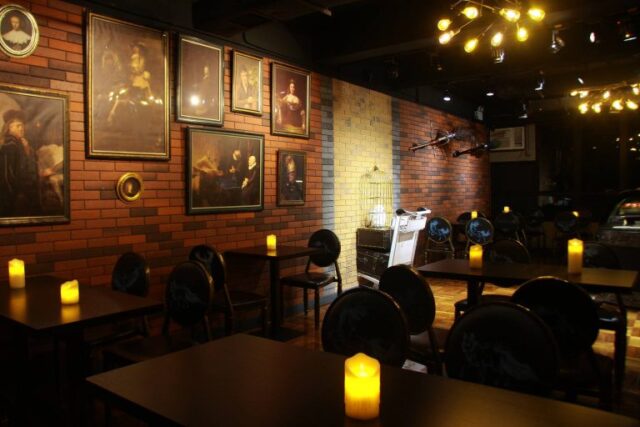
    The 9¾ Harry Potter-themed Hong Kong cafe has been sued by Warner Bros for copyright infringement. The cafe, open since 2017, has never claimed to have a formal relationship with the Harry Potter franchise – although it is festooned with art and props made famous in the popular book and movie series. Trademarks registered by the studio within the territory of Hong Kong, including “Harry Potter”, “quidditch”, “muggles”, “Professor McGonagall” and “dementors” are used liberally at the venue. Iconic features and images from the films are used in the cafe’s interior design, including the Gryffindor coat of arms and the Hogwarts Express train ticket for Platform 9¾.

    Located on Yin Chong Street in Mong Kok, the cafe features wall-mounted wands and broomsticks, stuffed owls, portraits of witches and wizards, and faux candlelight. There is even a half-disappearing luggage trolley, as featured at King’s Cross Station, complete with Hedwig in a cage.

    The drinks menu of the Harry Potter-themed Hong Kong cafe includes some Harry Potter-specific concoctions, such as the Polyjuice Potion, Amortentia love potion, golden Felix Felicis (aka “liquid luck”), and Veritaserum. Visitors 18 years and older can down a pint of Butterbeer.

    For food, the cafe serves Western starters and mains named after mythical creatures and charms from the Harry Potter series, such as the soft-shell crab Aragog salad, Romanian longhorn pumpkin pasta (after one of the dragons from Goblet of Fire), and Prior Incantato cream of mushroom soup.

    Warner Bros is seeking an unspecified sum of damages, a removal order plus multiple injunctions.

  • Singapore telco M1’s suitors say they won’t raise offer price

    Singapore telco M1’s suitors say they won’t raise offer price

    Singapore conglomerate Keppel Corp and Singapore Press Holdings (SPH) said they will not raise their offer price to gain majority control of mobile operator M1 Ltd, a move that could put pressure on Axiata Group, M1’s single largest shareholder. Keppel and SPH, which together control 34.3% of Singapore’s smallest mobile operator, said in September they would offer S$2.06 (RM6.25) per share for majority ownership of M1 in a bid to support its falling share price and restructure the firm to better compete against sector rivals.

    “The offeror wishes to announce that it does not intend to increase the offer price of S$2.06 in cash per offer share under any circumstances whatsoever,” Keppel and SPH said in a regulatory announcement issued by their jointly-owned holding company. The closing date was extended to Feb 18 from Feb 4. M1 has a total market value of S$1.92 billion.

    Malaysia’s Axiata, which holds a 28.3% stake in M1, said in September the offer should reflect the accurate future value of M1, inclusive of an acceptable control premium and consistent with market standards.

    Axiata said at the time it was working with an adviser and was reviewing its options. As quoted, Axiata viewed the offer price as “inadequate”.

    In response to a query, Axiata said it would not comment on a statement. “Axiata will make any necessary announcements as required and in due time,” it said.

    Since the September announcement, M1’s shares have rallied 26% to trade at S$2.05 this week but are little changed over the past two years and have lost 49% from a record high of S$3.99 in early 2015.

    Mobile telecoms competition is heating up in Singapore, with Australia’s TPG Telecom planning to launch a new service after winning a licence to become the city-state’s fourth telecom operator. Analysts consider M1 to be the most vulnerable to new competition.

    In July 2017, Axiata, Keppel and SPH had considered, and then called off a strategic review of their M1 shareholding, which sources said was due to a lower-than-expected offer from external parties.

  • Apple took unfair profits: Korea FTC

    Apple took unfair profits: Korea FTC

    Korea’s corporate watchdog claimed Apple Korea has bargaining power over local mobile carriers and that it has reaped unfair profits from them in a statement Monday. According to the Fair Trade Commission (FTC), experts called in by the antitrust body said Apple Korea exploited its market position to place part of its advertising costs on local telecommunications companies.

    The statement comes after exchanges between the FTC and the iPhone maker during a deliberation on the company’s position on Jan. 16. It was the second round of hearings since the first deliberation in December.

    Apple Korea has been under investigation by the FTC since 2016 on whether it forced carriers to pay advertising and warranty costs.

    Korea’s fair trade law prohibits abuse of one’s position during a transaction.

    Apple Korea claimed through its expert witnesses, which included economists and business experts, that it does not have leverage over local carriers and defended its actions, saying that its advertisement fund was able to help all parties involved.

    The experts also argued that Apple’s involvement in advertisements was justifiable to maintain the iPhone brand.

    Expert witnesses for the FTC responded that Apple Korea can be regarded as being in a position of power over carriers and that the advertisement fund served to collect additional profit from them. They also stated that the company’s activities in taking part of carrier advertisements cannot be seen as part of their branding strategy.

    The FTC’s Economic Analysis Division provided similar analysis to those made by its witnesses.

    The hearings on the investigation will continue, with the third round of deliberations scheduled for Feb. 20.

    The antitrust body said that the third hearing will discuss specific actions made by Apple. It is unclear whether the third hearing will be the last.

    If found to have abused its position, Apple Korea could face fines worth up to two percent of its related sales.

    The iPhone maker has a history of trouble with the FTC.

    The company made corrective measures under the corporate watchdog for its product replacement policy back in 2011 and its services agreements with local companies in 2016.

  • Myntra India taps 9,000 kirana stores to boost last-mile delivery

    Myntra India taps 9,000 kirana stores to boost last-mile delivery

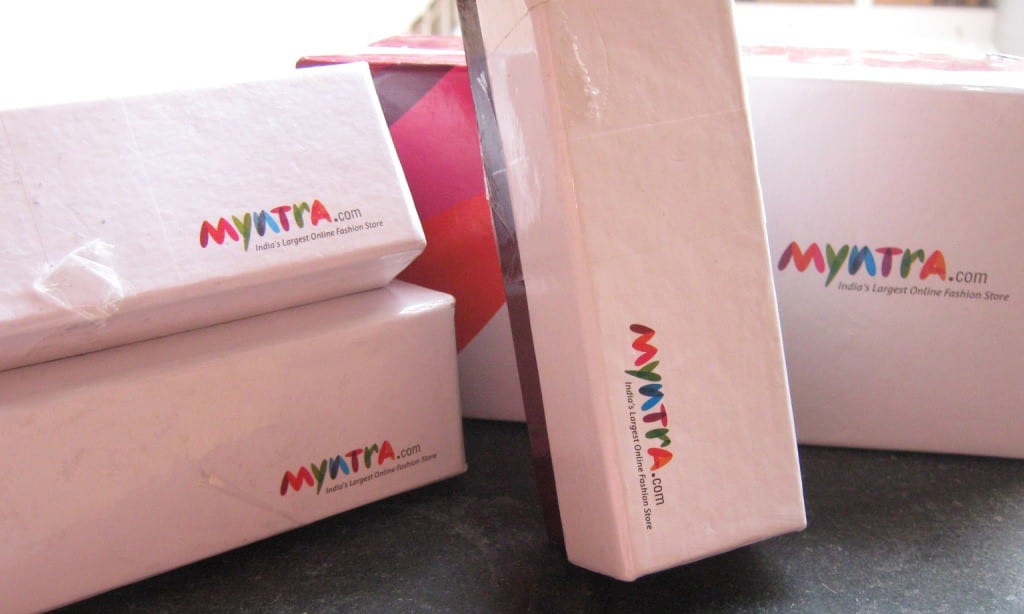
    Flipkart-owned ecommerce platform Myntra that saw 80 percent revenue fall in FY2018 has doubled down on last-mile delivery, tapping into over 9,000 kirana stores across 50 cities to fast deliver packages. Today, nearly 60 percent of all Myntra’s product pick-ups and deliveries happen through its ‘Kirana Delivery Programme’ — helping the company reduce delivery costs, the company said on Tuesday.

    “Myntra’s ‘Kirana Delivery Programme’ is a successful model introduced by the company to accelerate order delivery in the most efficient way possible, while ensuring we provide a good partnership opportunity to our kirana partners,” a company spokesperson said.

    “We will continue to innovate, expand and hope to register more kirana partners in the future as well,” the spokesperson added.

    The ‘Kirana Delivery Programme’ is an ingenious model introduced by the company to accelerate order delivery, while creating a platform for kirana stores to have an additional source of income.

    “A mutually beneficial model, it has helped Myntra achieve greater consumer satisfaction and is enhancing the standard of living of the owners of several ‘mom & pop’ stores across the country,” said the company.

    Several tailors and beauty parlour owners, among others, have also signed up with Myntra for the programme.

    The online fashion retailer narrowed its consolidated losses to Rs 178.7 crore for 2017-18, compared with a loss of Rs 655.8 crore in the previous fiscal.

    According to business intelligence platform Tofler, the company saw its income growing nearly threefold to Rs 427.4 crore in 2017-18 as against Rs 155.6 crore in the previous financial year.

    Ananth Narayanan, Chief Executive of e-tail portals Myntra and Jabong, stepped down from the post on January 14 “to pursue external opportunities”.

    The 11-year-old Flipkart Group, owned by US retail giant Walmart, includes e-tail sites Flipkart, Myntra, Jabong and digital payment platform PhonePe.

    In May last year, Walmart bought a 77 percent equity stake in the company for a whopping US$ 16 billion.