Tag: asia

  • Google was fined for $57 million under the GDPR

    Google was fined for $57 million under the GDPR

    The CNIL, the French data protection watchdog, has issued its first GDPR fine of $57 million (€50 million). The regulatory body claims that Google has failed to comply with the General Data Protection Regulation (GDPR) when new Android users set up a new phone and follow Android’s onboarding process. Two nonprofit organizations called ‘None Of Your Business’ (noyb) and La Quadrature du Net had originally filed a complaint back in May 2018 — noyb originally filed a complaint against Google and Facebook, so let’s see what happens to Facebook next. Under the GDPR, complaints are transferred to local data protection watchdogs.

    While Google’s European HQ is in Dublin, the CNIL first concluded that the team in Dublin doesn’t have the final say when it comes to data processing for new Android users — that decision probably happens in Mountain View. That’s why the investigation continued in Paris.

    The CNIL then concluded that Google fails to comply with the GDPR when it comes to transparency and consent.

    Let’s start with the alleged lack of transparency. “Essential information, such as the data processing purposes, the data storage periods or the categories of personal data used for the ads personalization, are excessively disseminated across several documents, with buttons and links on which it is required to click to access complementary information,” the regulator writes.

    For instance, if a user wants to know how their data is processed to personalize ads, it takes 5 or 6 taps. The CNIL also says that it’s often too hard to understand how your data is being used — Google’s wording is broad and obscure on purpose.

    Second, Google’s consent flow doesn’t comply with the GDPR according to the CNIL. By default, Google really pushes you to sign in or sign up to a Google account. The company tells you that your experience will be worse if you don’t have a Google account. According to the CNIL, Google should separate the action of creating an account from the action of setting up a device — consent bundling is illegal under the GDPR.

    If you choose to sign up to an account, when the company asks you to tick or untick some settings, Google doesn’t explain what it means. For instance, when Google asks you if you want personalized ads, the company doesn’t tell you that it is talking about many different services, from YouTube to Google Maps and Google Photos — this isn’t just about your Android phone.

    In addition to that, Google doesn’t ask for specific and unambiguous consent when you create an account — the option to opt out of personalized ads is hidden behind a “More options” link. That option is pre-ticked by default (it shouldn’t).

    Finally, by default, Google ticks a box that says “I agree to the processing of my information as described above and further explained in the Privacy Policy” when you create your account. Broad consent like this is also forbidden under the GDPR.

    The CNIL also reminds Google that nothing has changed since its investigation in September 2018.
  • Samsung spent $3.12M lobbying in U.S. last year

    Samsung spent $3.12M lobbying in U.S. last year

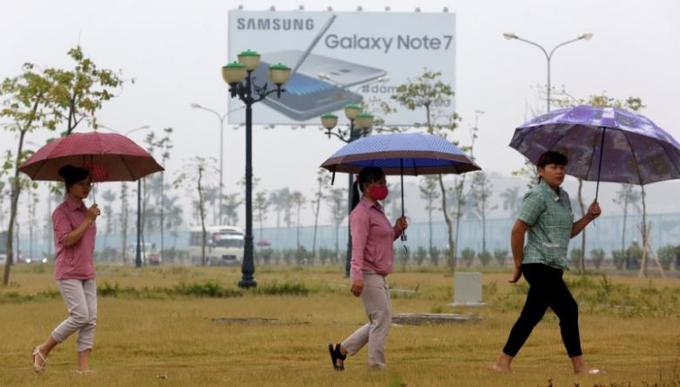
    The American subsidiary of Korean tech giant Samsung Electronics spent $3.12 million on lobbying U.S. politicians and officials last year, the second-largest amount following 2017, data from a Washington-based research group showed Monday. Samsung Electronics’ lobbying expense was the ninth largest among electronics companies operating in the United States, moving up two notches from a year earlier, according to the Center for Responsive Politics (CRP).

    Microsoft spent the most with $7.18 million, followed by Qualcomm with $6 million, Oracle with $5.47 million and Apple with $5.09 million, said the nonprofit research group, which tracks the effects of money and lobbying on elections and public policy.

    Among foreign companies, Samsung Electronics was the second-biggest lobbying spender after German engineering group Siemens.

    The Korean tech conglomerate has been intensifying its lobbying efforts in its key market since U.S. President Donald Trump took office in 2017 and advocated more protectionist trade policies.

    Samsung’s lobbying expenses over the past two years amounted to $6.62 million, far surpassing $6.04 million spent during former President Barack Obama’s second term from 2013-16, data showed.

    Trade-related issues were Samsung’s main lobbying target in the United States last year, with 13 cases out of 81 total in this area.

    The company also made extensive lobbying efforts for the telecommunication sector as it has been exploring ways to expand its foothold in the 5G network equipment market.

    Last month, Samsung and American telecommunication company Verizon announced their plan to launch 5G-compatible smartphones in the U.S. market in the first half of 2019.

  • Starbucks India showcases coffee craft and innovation with ‘Starbucks Barista Pride’

    Starbucks India showcases coffee craft and innovation with ‘Starbucks Barista Pride’

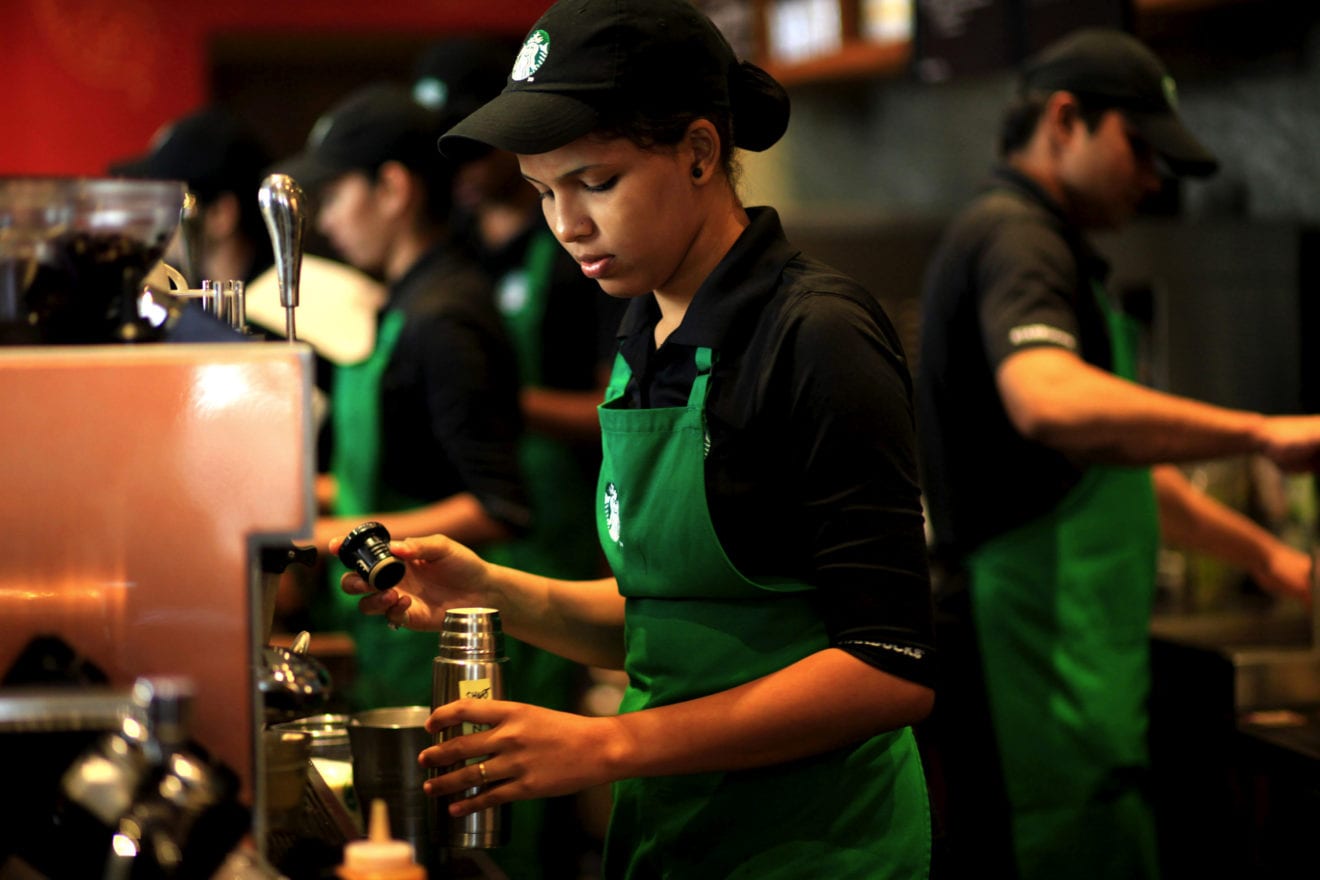
    Starbucks is taking beverage innovation to new heights with the simultaneous launch of 134 new, crafted beverages. Delivering on the iconic ‘Third Place’ experience, while strengthening commitment to innovation and coffee passion, the global coffee chain has introduced a new initiative called Starbucks Barista Pride where baristas from each Starbucks store will feature a beverage unique to their store, conceptualized and created by themselves.

    Till the end of February, all Starbucks stores across India will serve a specially curated beverage, enabling customers to ‘coffee hop’ and try 134 unique beverages across the 134 Starbucks stores in India.

    Based on the idea of customization and personalization, while celebrating the heart and soul of the signature Starbucks Experience, Starbucks Barista Pride is here to showcase the talent and innovation the Starbucks baristas have to offer.

    The wide range of unique beverages includes Turkish Espresso Praline available at the Chapel Road store in Mumbai, Chai White Chocolate Mocha available at the Vega Mall store in Bangalore and Winter Chocolate Cream available at the DLF Hub store in Delhi.

    “Starbucks is committed to delivering an unparalleled, unique experience for every customer. We are delighted to introduce ‘Starbucks Barista Pride’- a new coffee forward initiative which highlights the exemplary coffee skills of our Starbucks baristas and brings to our customers a wide range of artisanal beverages. At Starbucks, we believe in celebrating each customer’s individual coffee preference and profile. For us each cup of coffee is unique and especially suited to the coffee palette of our customer. With a deep understanding of coffee, our Starbucks baristas personalize each cup to perfection,” said Veetika Deoras, Head – Marketing, Category, Digital and Loyalty at Tata Starbucks Pvt. Ltd.

    “We are humbled to lead specialty coffee in India and initiatives like Starbucks Barista Pride are a tribute to our customers and reflect the Starbucks 47-year legacy of sourcing, roasting and serving world’s top Arabica coffee,” she added.

  • Henry Sy passes away at 94

    Henry Sy passes away at 94

    The founding father of Philippine retail, Henry Sy, has passed away. Sy, who has topped the Philippines Rich List for the last seven years, was chairman emeritus of SM Investments, one of the country’s largest business conglomerates. A Chinese immigrant who arrived in the Philippines at the age of 12 with his parents, his introduction to retailing began with helping out in his father’s neighbourhood store. He saved enough money to open a shoe store which he named ShoeMart, and whose initials later became the most recognisable brand name in the nation.

    From a single shoe store, his business expanded into department stores, the first of which opened in 1972, then into malls, with 70 shopping centres bearing the SM brand in the Philippines and more in Mainland China.

    SM Investments also owns supermarkets, BDO Unibank, almost 50 residential developments, six hotels and nine office towers.

    Sy, who died on Saturday, stepped down as chairman of the company in 2017, taking on the title chairman emeritus and leaving the business under the leadership of his family and his long-time business partner Jose Sio, who is now chairman.

    He had six children: Teresita Sy-Coson, Elizabeth, Henry Jr, Hans, Herbert and Harley. Teresita and Henry Jr are vice chairpersons of SM Investments and Harley serves as executive director of SM.

    Forbes last year estimated the 94 year old’s net worth at US$19 billion, ranking him the most wealthy Filipino and 53rd richest man in the world.

  • Vietnam liquor maker makes a loss, 4 years in a row

    Vietnam liquor maker makes a loss, 4 years in a row

    Nation’s leading liquor maker Halico has reported a loss of VND75 billion ($3.22 million) for 2018. With Vietnamese consumers moving towards foreign brands, the 120-year-old liquor maker, in which Vietnam’s second biggest brewery Habeco has 54.29 percent ownership and British multinational Diageo holds a 45.5 percent stake, Halico has reported losses for the fourth year in a row.

    It reported a loss of over VND20 billion ($859,780) in the fourth quarter of 2018, raising the total annual loss to VND75 billion ($3.22 million).

    In its annual statement for 2018, Halico’s board expressed doubts that the company can continue operating, with Vietnamese consumer tastes shifting to imported beer and foreign alcoholic products. It conceded that it has failed to capture younger consumer segments.

    In addition, Diageo has been unable to negotiate any substantial supply contracts with foreign partners, so the company has not been able to do well in exports.

    Furthermore, management costs have risen to over 60 percent of revenue. Despite a 30 percent rise in sales in 2018 (VND155 billion or $6.66 million), the difference was not able to compensate for expenses incurred.

    The Hanoi Liquor Joint Stock Company was originally a Hanoi winery, founded in 1898 and equitized in 2004 with initial charter capital of nearly VND50 billion ($2.15 million).

    In early 2011, Diageo Plc, a British multinational alcoholic beverages company, acquired an 18.67 percent stake in Halico for a total of VND800 billion ($34.4 million) from investment fund VinaCapital.

    Diageo is the world’s biggest liquor company, owning famous brands such as Johnnie Walker, Bailey and Smirnoff. It bought another 26.83 percent stake in 2012, hoping to cash in on the growing consumer market.

    Halico’s accumulated losses at the end of last year topped VND330 billion ($14.19 million), 1.6 times higher than its current charter capital at VND200 billion ($8.6 million).

  • The rise of men’s cosmetics

    The rise of men’s cosmetics

    Chanel is launching a make-up line entirely for men Boy de Chanel collection in 2019, and other brands might follow. Just as Gabrielle ‘Coco’ Chanel rocked the boat by flouting gender dressing rules in order to marry style and comfort in the early 20th century, the iconic fashion house is stirring the waters once again with a male make-up line.

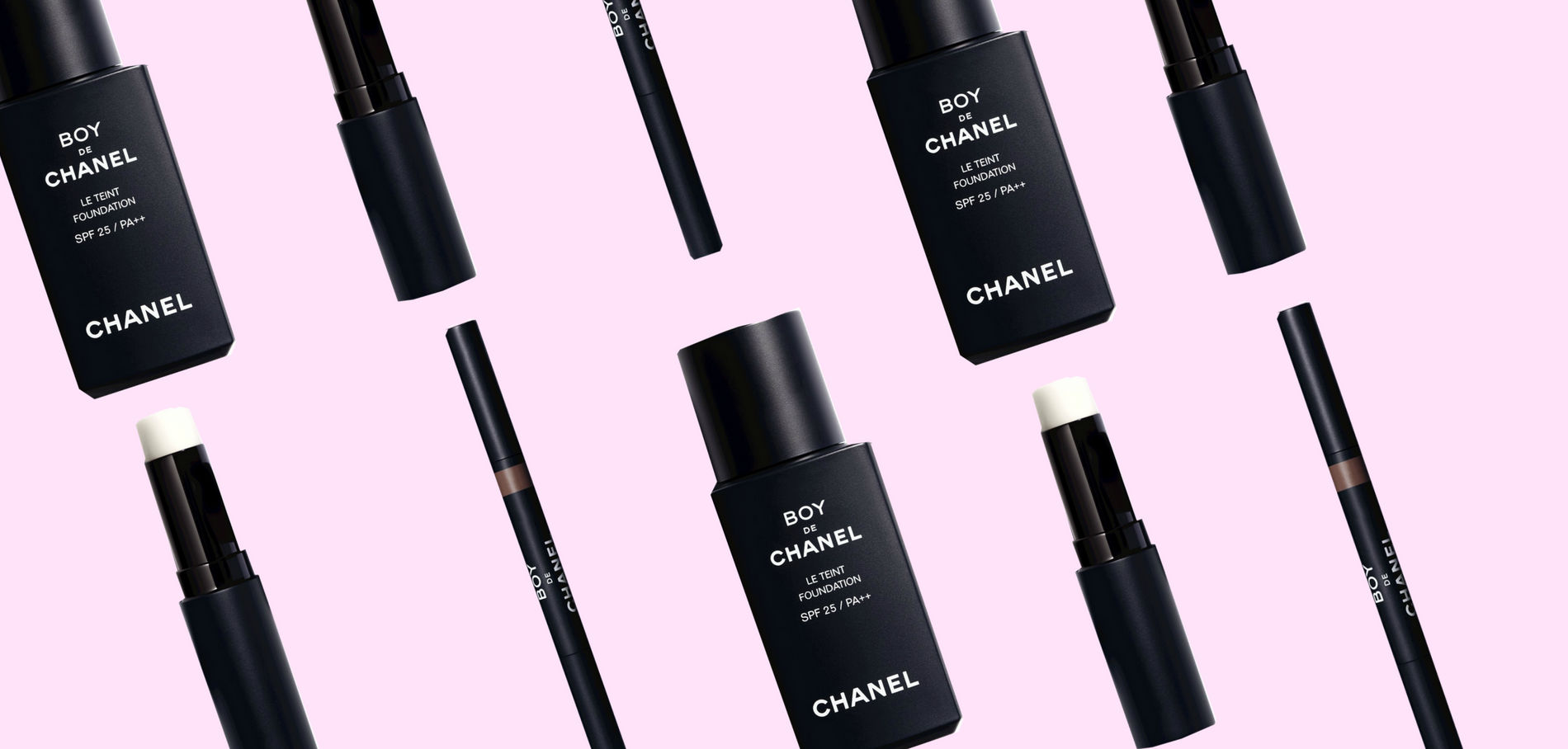
    Striving to rewrite the rules and break free of gender codes, Boy de Chanel will boast three products to add to the luxurious French cosmetics collection in 2019.

    Almost a century after the European empire launched a make-up line for women, Chanel’s first cosmetic collection for men will see the products encapsulate the brand’s classical elegance through its midnight blue and white packaging, highlighting only the essential products.

    Touted as being a name that captures the essence of masculinity, the foundation, lip balm and eyebrow pencil are aimed at boosting confidence and erasing imperfections through a long-lasting formula that creates natural results.

    Chanel says its first make-up line for men “reaffirms the ever-changing codes of an unchanging vision” because beauty is not a matter of gender, it is a matter of style.

    You can expect the SPF 25 foundation Le Teint to have an “undetectable result” as it is described as being invisible to the eye and touch while offering a second skin with natural correction and high protection. It will protect skin from aging while allowing it to breathe through an airy micro-mesh leaving it shine-free.

    Promising to keep lips supple for eight hours, the moisturising lip balm is packed with jojoba oil and shea butter that leave a “featherweight effect”.

    Offering to boost self-confidence in one stroke, the Boy de Chanel eyebrow pencil defines and fills out the brow line with the spiral brush and tapered twist tip.

    Drawing inspiration from the female world of style to craft the timeless products, Chanel strives for inclusivity with “no absolutely feminine or masculine prerequisites” to empower cosmetic fans to be whomever they desire.

  • Mercedes EV to launch in Korea

    Mercedes EV to launch in Korea

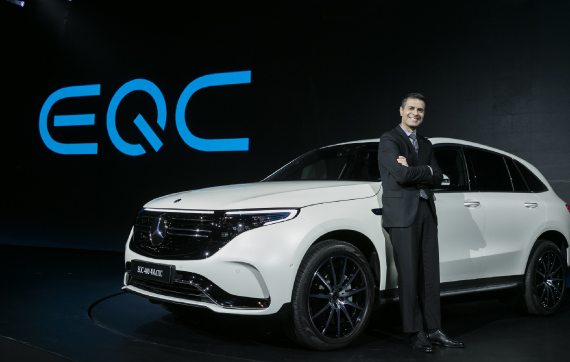
    Mercedes-Benz Korea is setting its sights on the local eco-friendly auto market with the introduction of an all-electric vehicle (EV) along with hybrid offerings this year. The Korean unit of the German brand announced Thursday that it will be introducing 14 new models to the local market this year including the EQC, the first model under its electric EQ brand, as well as four plug-in hybrid EVs at a New Year’s press conference at the Hotel Shilla in central Seoul.

    “2019 will be the year of the EQ,” said Dimitris Psillakis, CEO of Mercedes-Benz Korea. “We will do our utmost to provide the best products and services in the upcoming era of future mobility.”

    The premium electric SUV EQC, unveiled globally last September, is the German automaker’s current flagship EV. The promised hybrid models will range from SUVs to sedans, according to the automaker.

    Along with its entry into the local EV market, the German brand announced that it is also preparing its charging infrastructure.

    Mercedes-Benz Korea said EQC buyers will have access to its combined charging network, which will offer a wide range of charging stations nationwide. EQC drivers will also have access to a one-on-one concierge service that will recommend the nearest charging station to drivers.

    Mercedes-Benz Korea’s push into eco-friendly vehicles comes as it was embroiled in controversy last year regarding its vehicles’ emissions certifications.

    Last month, the automaker said it will appeal a court decision after it was found guilty of violating environmental and customs laws regarding the emissions certification process. The company was fined 2.81 billion won ($2.5 million) and an employee in charge of certifications was handed an eight-month sentence.

    Regarding the legal action, Psillakis promised that the company is following up on the newest regulations.

    “We have a very different changing and toughening regulatory environment around us,” said Psillakis. “We place processes to safeguard so that we can adapt to the new regulations as fast as possible.”

    The company also addressed concerns surrounding recall plans for its vehicles equipped with faulty Takata airbags, saying that it is planning a mass recall in the second quarter of this year of around 30,000 vehicles.

    The German automaker was the best-selling imported brand last year, selling 70,798 vehicles in the country.

    With last year’s sales, the Korean market is the fifth-largest market for the brand after China, the United States, Germany and Britain.

  • Hyundai develops safer airbag deployment system

    Hyundai develops safer airbag deployment system

    Hyundai Motor Group, Korea’s biggest carmaker by sales, said Monday it has developed a safer airbag deployment system to better protect people from multiple crashes. The advanced airbag system immediately prepares for additional crashes once it recognizes an initial collision, in cases where the collision is not serious enough to warrant a deployment, the conglomerate said in a statement.

    “If the first collision is a minor one, but the vehicle continues on and collides with something else, such as trees or street lamps, the airbag system optimizes itself to prepare for additional crashes,” a company spokesman explained to reporters over the phone.

    It is the first time a Korean carmaker has developed such a multi-crash airbag system, the statement said.

    Existing airbag systems do not inflate once they determine the initial collision is minor, even if subsequent impacts involve greater force and can lead to serious injury, it said.

  • Brands planning to cash in on rising menswear trend

    Brands planning to cash in on rising menswear trend

    This week, Nike launched its new collection of yoga wear for men. While this was the company’s first foray into men’s yoga apparel, the move was very much in line with competitors who have been making a push into the menswear apparel market recently. Lululemon, whose bread and butter has long been women’s yoga trousers, is one of those competitors. Former CEO Laurent Potdevin described menswear as one of the brand’s “best-kept secrets.” The company is now looking to grow this division into a billion-dollar business.

    Gap also jumped on the bandwagon last year, with its new casual menswear brand Hill City. But a push into menswear stretches beyond the athletic wear market – Madewell rolled out menswear in September, Saks Fifth Avenue recently closed its womenswear store in Brookfield Place but kept its menswear location open, sisters Mary-Kate and Ashley Olsen launched their own menswear collection for fashion brand The Row last year, and the list continues.

    These brands are all looking to capitalise on a big change in fashion, and that is that in the not too distant future, menswear may outgrow womenswear.

    Business intelligence firm Gartner L2 estimated that in just two years, revenue growth of men’s clothing will surpass that of women’s clothing. This data is backed up by Euromonitor International, which estimated that men’s lines will outperform women’s over the next six years. 

    “Fashion has always been about women but men are finally having their time,” says Lizzy Bowring, catwalk director at trend-forecasting agency WSGN.

    Bowring believes that the rise of a young, fashion-conscious male consumer is a key reason for this. “It’s the younger men that are driving the push for menswear,” she says. “These men are more savvy and aware, and there is a lot of competition to look the part.”

    Ayako Homma, beauty and fashion consultant at Euromonitor International, echoed these thoughts in an email.

    “One key trend is men’s changing perception of fashion. Men are spending more time, effort and money on their grooming and appearance,” she wrote.

    Experts say that this peak in menswear can be traced back to a boom in streetwear clothing, which has been driven by brands such as Supreme, Yeezy, and Off-White. These brands have experienced explosive growth in recent years and are considered to be redefining the fashion landscape.

    These labels have been embraced by luxury players, a move that has in turn given new life to some of the luxury brands.

    Louis Vuitton recently hired industry pro Virgil Abloh to become its new artistic director. Abloh is responsible for setting up perhaps the buzziest streetwear brand of all, Off-White, which was recently ranked the hottest label in the world.

    “The men’s business has exploded in the past five years,” Roopal Patel, fashion director of Saks Fifth Avenue said. Patel said the focus had shifted to bringing in newer menswear-focused labels such as Off-White.

    “We’ve gone from just category addressing to designers looking at how they’re going to wardrobe a man’s lifestyle, everything from work to evening to weekend to sport,” she said.

    Industry insiders say this trend is here to stay. “It’s more than a buzz. It’s a deeper trend,” said Sidney Toledano, head of LVMH’s fashion group. He continued: “There’s strong demand across the men’s fashion industry, in all its shapes and forms, and which comes in part from a younger clientele. We see it very clearly in the sales.”

  • Decathlon Singapore Lab now open

    Decathlon Singapore Lab now open

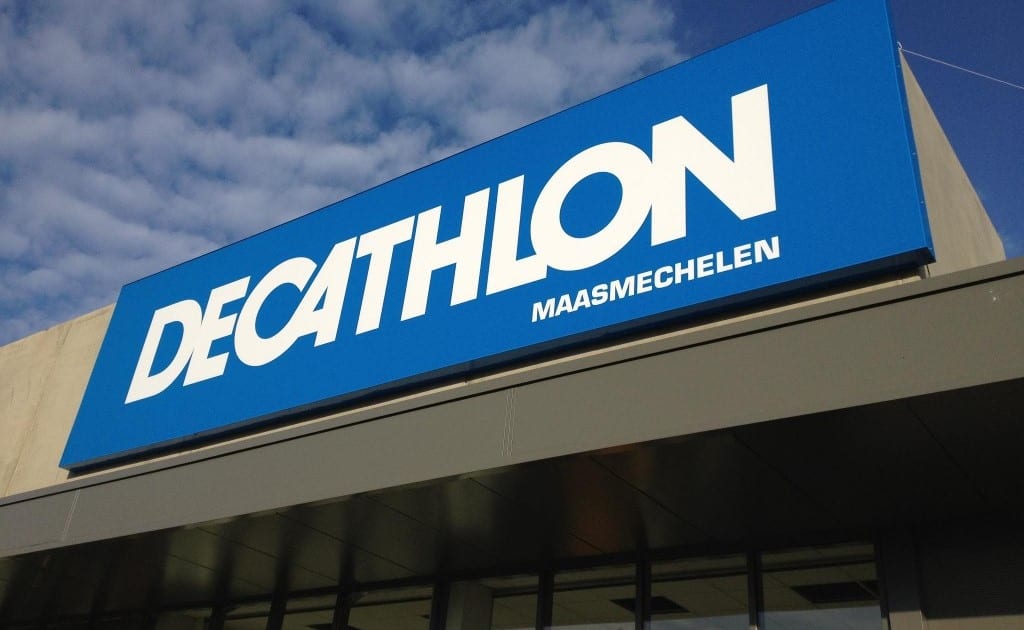
    Sporting goods retailer Decathlon has opened a landmark 5000sqm retail space at Kallang’s Stadium Boulevard, its largest store in Singapore. Designated the Decathlon Singapore Lab, the outlet includes a running area with four different surface types – including a gravel hiking path – for in-store shoe testing. Robotic inventory monitoring and a conveyor belt that immediately transports products once ordered online, allowing two-hour pickups from a customer’s preferred store, are also key features. An Active Health Lab hosted in the store provides free health assessments for customers in partnership with Sport Singapore.

    “A lab is a disruptive and innovative place where we test new solutions”, said Decathlon Singapore CEO Yves Claude in explanation of the store’s name. “We have to give new reasons for customers to come back to our store”, he said.

    “Retail used to be monotonous. Now because our customers are moving to more digital means of shopping, our jobs will also have to evolve”, said Decathlon Singapore Lab store leader Nathaniel Gregory. “In the last three years, my job was very brick-and-mortar style. Tomorrow I need to learn about SEO and digital marketing”.

  • Courts Asia gets buy offer from Japan retailer Nojima

    Courts Asia gets buy offer from Japan retailer Nojima

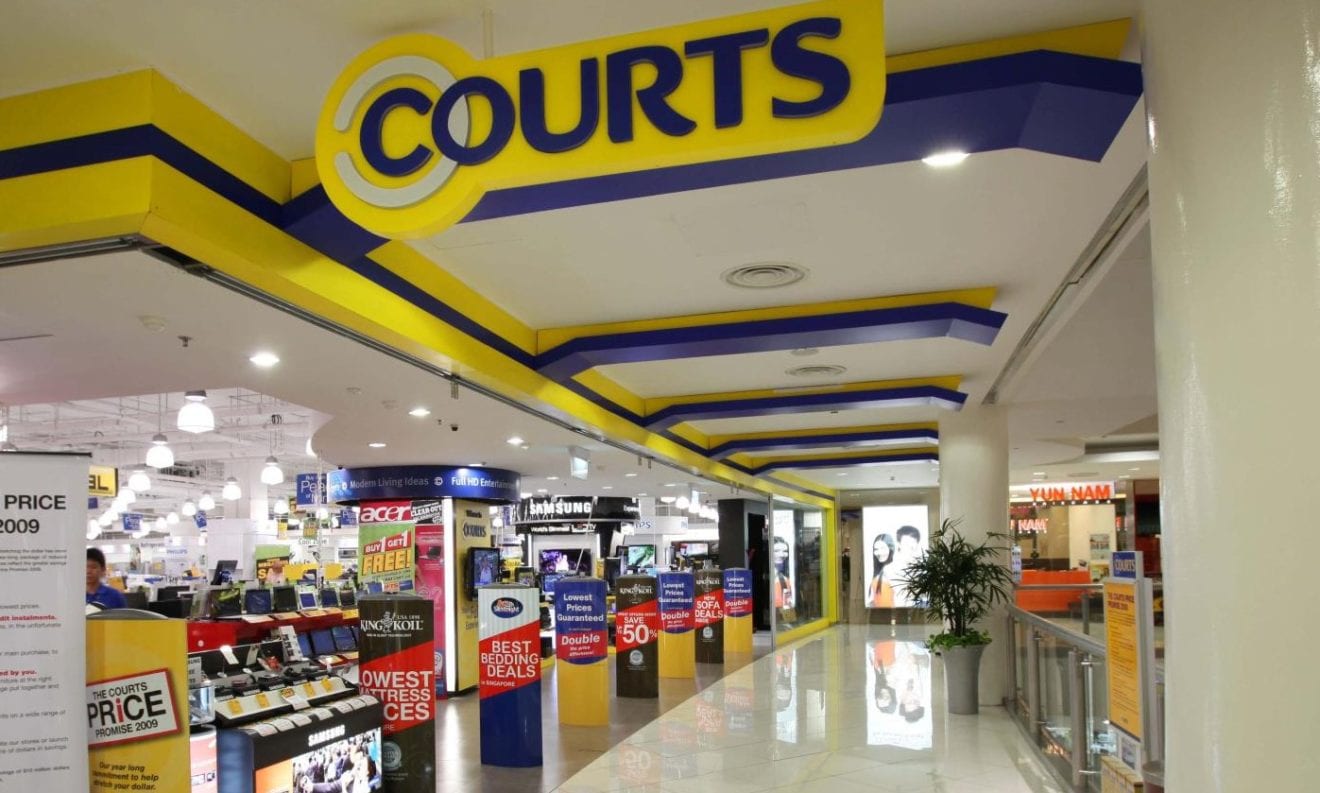
    Japanese electronics retailer Nojima Corp has launched a conditional takeover bid for Courts Asia. The deal is conditional upon Courts Asia’s majority owner Singapore Retail Group (SRG) agreeing to the deal. Offering 20.5 cents a share for the business, the offer represents a 35 per cent premium over the price shares were trading at before the bid was revealed.

    Nojima is listed on the Tokyo Stock Exchange. Like, Courts Asia, it is an electrical appliance retailer, boasting more than 8000 employees and a market capitalisation of S$1.4 billion. Sales in the year to March 31 last year were $6.1 billion.

    Courts Asia has 80 stores trading in Singapore, Malaysia and Indonesia and besides electronics sells furniture and IT products as well. The company has enjoyed mixed fortunes in recent years, impacted by external factors such as the imposition of GST in Malaysia. It reported a net loss of $3.1 million in its second quarter, a stark contrast to the net profit of $1.5 million during the same period a year earlier. Sales for the three months to September 30 fell 6.4 per cent to $165.1 million.

    Nojima says if it wins control of the company it may carry out a “strategic and operational review” of the business to realise “synergies, economies of scale, cost efficiencies and growth potential”. It will most likely delist the company in Singapore.

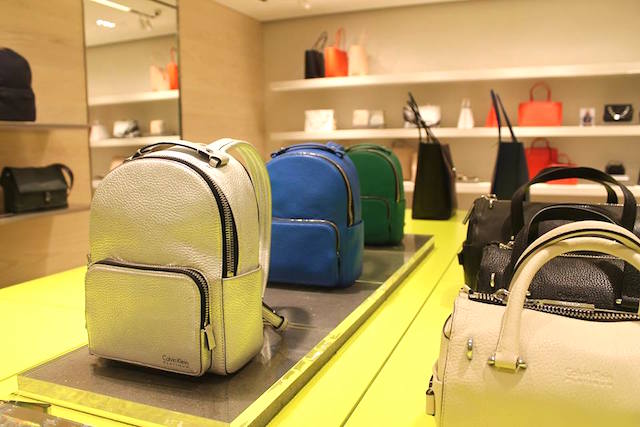
  • Calvin Klein seeking a New Creative Lead

    Calvin Klein seeking a New Creative Lead

    Less than a month after announcing the departure of Raf Simons, Calvin Klein is looking for a new creative lead, said a person with knowledge of the business. Chief executive officer Steve Shiffman said in a separate statement on Thursday that the brand will close its 654 Madison Avenue flagship store, which Simons renovated in 2017, relaunch its ready-to-wear line and consolidate some teams in North America.

    Shiffman said the brand will relaunch the 205W39NYC ready-to-wear line under a different name and a new creative direction. He kept the details vague, stating that the business will be “designed to evolve the traditional luxury fashion model by connecting with a diverse range of communities, offering an unexpected mix of influences and moving at an accelerated pace.”

    Some had speculated after Simons’ departure that Calvin Klein would not hire another creative face of the company, but instead take a collaboration approach similar to Moncler‘s recent strategy. But the search for a new design lead indicates otherwise.

    The source with knowledge of the business also said that several of Simons’ longtime collaborators have exited the business, specifically Pieter Mulier, creative director, and Matthieu Blazy, the design director of women’s ready-to-wear. Michelle Kessler-Sanders, president of the 205W39NYC business, will stay on in an executive position.

    Shiffman’s statement also announced the formation of a new consumer marketing division focused on consumer engagement and shopper experience. According to the source, this department is led by chief marketing officer Marie Gulin-Merle.

    Calvin Klein in North America will see further changes: Shiffman said the brand will consolidate the men’s sportswear and the Jeans businesses, and also integrate the retail and e-commerce teams.

    “Our industry is witnessing a historic transformation in consumer behavior which presents a significant growth opportunity as we look to grow the brand to $12 billion in global retail sales over the next few years,” said Shiffman.

  • ​Vietnam to remain a fast growing Asian economy

    ​Vietnam to remain a fast growing Asian economy

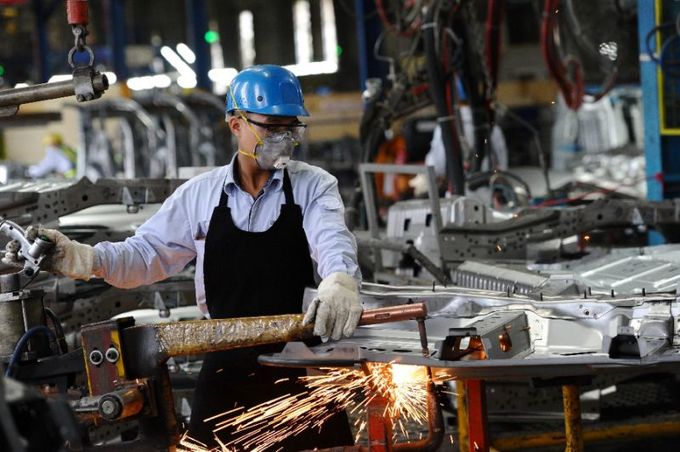
    With a 2019 GDP growth of 6.9 percent, Vietnam will remain one of the fastest growing economies in Asia. “We remain positive on Vietnam’s medium-term growth on strong manufacturing activity as FDI inflows to electronics manufacturing remain strong,” says economist Chidu Narayanan of Standard Chartered Bank. According to a report recently issued by the bank, the country is likely to reach GDP growth of 6.9 percent this year.

    The manufacturing sector has expanded by double digits for most of the past four years and this pace is likely to continue in 2019, says the report.

    The bank expects manufacturing growth to remain strong this year, though mildly lower than in 2018. Strong FDI inflows to manufacturing will likely support robust manufacturing output, it says.

    Standard Chartered economists also forecast FDI disbursement to stay at $15 billion this year and FDI inflows to the manufacturing sector, particularly electronics manufacturing, to remain high in the medium term.

    FDI disbursement in Vietnam reached a record $19.1 billion in 2018, a year-on-year increase of 9.1 percent,  according to the Ministry of Planning and Investment.

    “Most macro-economic indicators improved in 2018, interest and foreign exchange rates were kept stable despite the Fed’s hike in interest rates and U.S.-China tension, and non-performing loans were well-managed below three percent,” says Nirukt Sapru, CEO Vietnam and ASEAN and South Asia Cluster Markets.

    “We believe that the Vietnamese economy will remain one of the fastest growing in Asia and likely the fastest-growing ASEAN economy in 2019.”

    The World Bank forecast that Vietnam’s GDP is likely to drop to 6.6 percent in 2019 and 6.5 percent in 2020. Meanwhile, the Asian Development Bank (ADB) estimates the country’s GDP for 2019 at 6.8 percent.

    Vietnam’s GDP growth of 7.08 percent in 2018 was the highest in a decade, according to the General Statistics Office.

  • Air purifier sales up 414 % after dust attack in Korea

    Air purifier sales up 414 % after dust attack in Korea

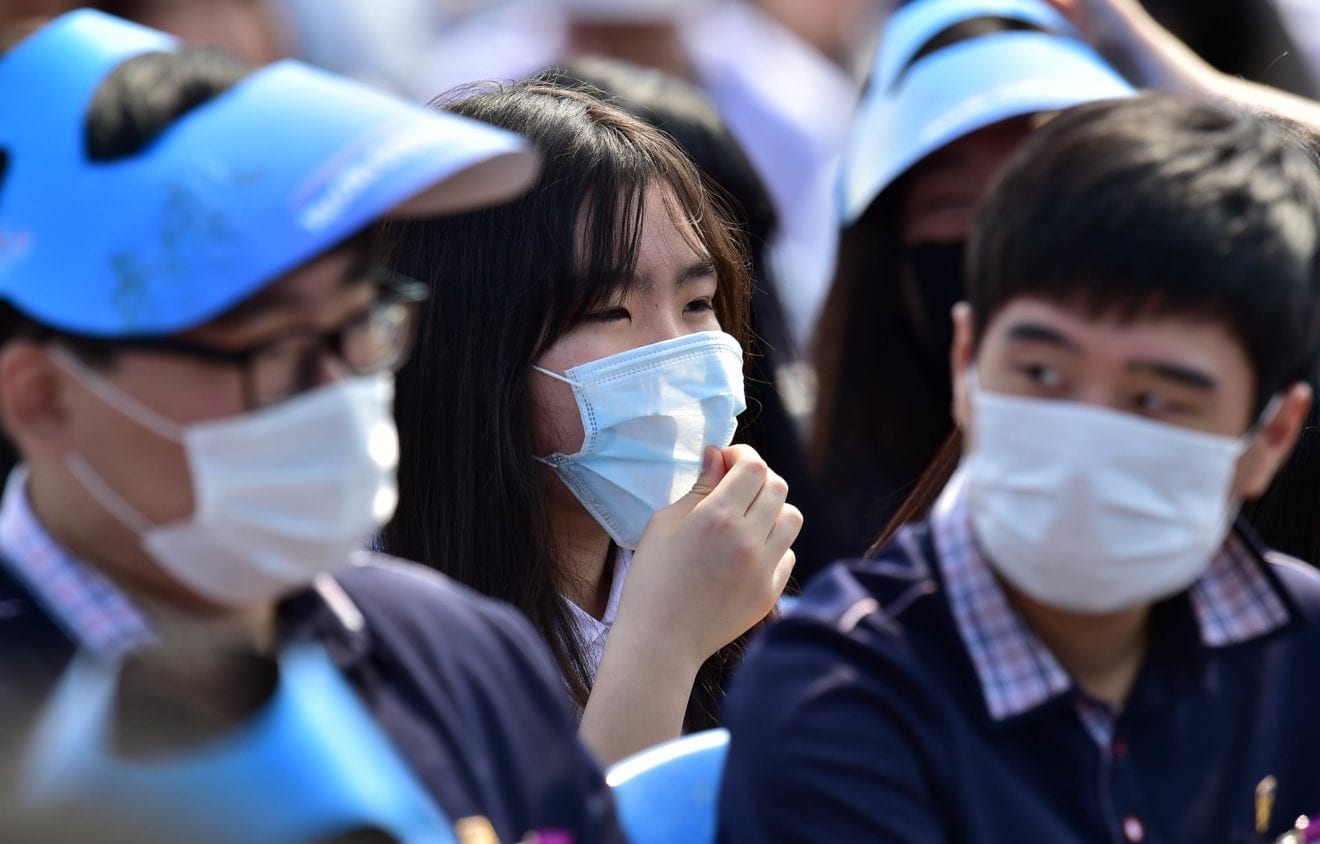
    As fine dust blows into Korea, demand for products that defend against pollution spike. According to an Emart study released Friday, mask sales between Jan. 10 and Jan. 16 surged 458 percent from the same period a year earlier while the sales of air purifiers are up 414 percent. Usually, the products are in high demand around late February and in March, when the yellow dust from the northern deserts descend on the Korean Peninsula. But sales this year are already 95 percent of the total usually reported in March.

    Sales of consumer appliances that clean clothing, such as LG’s Styler clothes closest, are up 186 percent compared to the same period a year ago, according to the retailer. Sales of dryers have increased 67 percent as the worsening pollution has made it difficult to dry laundry outdoors.

    Emart said it will be holding a special sale on fine-dust countering goods through Jan. 30.

    It plans to offer discounts on the bulk purchase of masks: 10 percent when buying two and 30 percent when buying three at a time.

    The Samsung Electronics air purifier with model number AX6ON5081 WDD will be sold at 379,000 won ($338), a 90,000 won discount, while Coway’s AP-1818C model will be sold at 439,000 won, a 60,000 won discount. The purchase of Coway’s air purifier also comes with 85,000 won worth of additional filters and 50,000 won in gift certificates.

    The retailer is also providing discounts on vacuum cleaners, including Dyson’s V10 Fluffy, the LG Electronics A9, which also has a mopping feature, Samsung’s VS8ON8062KKS and Tepal’s Air Force 360.

    Online shopping malls are ramping up their marketing of fine dust-related products. Coupang has been promoting 650,000 fine-dust products since Jan. 10.

    An exclusive study by the JoongAng Ilbo found that much of the recent air pollution is coming from China.

    The Korean Meteorological Administration is forecasting a return of high fine-dust readings. It said the level of concentration of pollutants started rising on Friday and will continue to increase today.

    When the concentration is at 15 micrograms per square meter or lower, the government rates the air quality as “good.” When it is between 16 and 35, it is deemed “normal.” When the figure is between 36 and 75, the government rates the air quality as “bad.”

    On Jan. 14, the fine-dust concentrations in the greater Seoul area peaked at 122 micrograms per square meter, the highest level since related data was first collected in 2015.

    That was two days after air pollution in major areas in China, including Beijing, Tianjin, Tangshan and Hubei Province, peaked.

    The Korean Meteorological Administration forecasts air pollution levels dropping from Sunday afternoon.

    Kweather, a private weather company, has advised people to stay indoors over the weekend and wear a protective mask when having to go outside.

  • Chibo to open Indonesia store soon

    Chibo to open Indonesia store soon

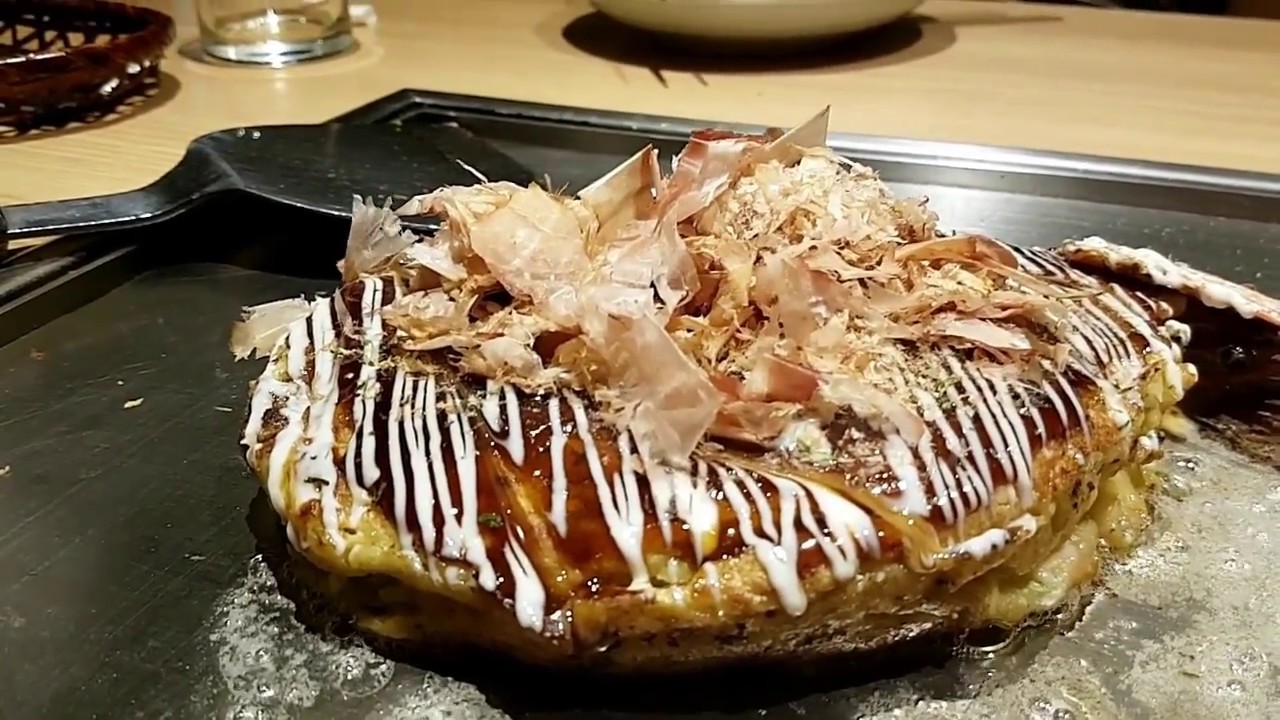
    Japanese “okonomiyaki” pancake restaurant Chibo is launching in Indonesia this month. The opening is part of the firm’s unfolding global plans to counteract a dip in the Japanese food service market. It is partnering with local operator Jaddi Foods within Indonesia’s territory. Importantly for the predominantly Islamic market, the firm will be swapping out pork for suitable Halal alternatives.

    The 188sqm venue is opening at Gandaria City Mall in southern Jakarta, seating 90 diners. It joins eight Chibo restaurants outside Japan, with sister venues in China, Hong Kong, Hawaii, the Philippines, Thailand and Vietnam. The firm is targeting 20 international outlets by March next year, with locations planned for Brazil, London, New York and Russia.