Tag: asia

  • CapitaLand forms JV to acquire prime CBD in Shanghai for RMB2.75 billion

    CapitaLand forms JV to acquire prime CBD in Shanghai for RMB2.75 billion

    CapitaLand has formed a 50:50 joint venture with an unrelated third party to acquire approximately 70% of Pufa Tower in Shanghai, China, for RMB2,752 million (about S$546.3 million). The operational office property has been identified as a seed asset for a value-add fund which CapitaLand is setting up to invest in commercial real estate in key gateway cities in Asia. The acquisition also marks the Group’s first office property in Shanghai’s core Lujiazui central business district (CBD) in Pudong New Area.

    Pufa Tower is 34-storey tall with three basement levels of car park. Post transaction, CapitaLand and its joint venture partner will own levels 8 to 19 and levels 21 to 32 with a total gross floor area (GFA) of 41,773 square metres (sq m), as well as 61 car park lots with property title. Pufa Tower’s ground floor lobby and refuge floor on level 20 are co-owned with Shanghai Pudong Development Bank, which owns the rest of the building.

    Lujiazui CBD, where Pufa Tower is located, is Shanghai’s most coveted office location for financial and professional services companies. With an unabating demand for office space and limited new supply, Lujiazui CBD commands the highest office rents in the city. In view of a sharp decline in Pudong’s office supply from 2019, office rents in Lujiazui CBD are expected to continue trending upwards over the next few years.

    Mr Lucas Loh, President (China & Investment Management), CapitaLand Group, said: “We are pleased to enter Shanghai’s core Lujiazui CBD soon after securing our third Raffles City development in the city. Shanghai is the top investment destination in China, with strong end-user demand for commercial properties. The acquisition of Pufa Tower, an operational asset, will immediately contribute to the Group’s recurring income. It will also strategically diversify CapitaLand’s commercial portfolio into a key CBD to capture new growth, while entrenching the Group’s leadership as the foreign developer with the largest portfolio under management in Shanghai.”

    Mr Loh added: “Continual high demand for quality commercial properties in China’s top tier cities, coupled with low supply, have made the renewal of ageing commercial assets a compelling investment strategy in these markets. Pufa Tower is a prime asset to be seeded into the commercial value-add fund we are raising. We see significant potential in enhancing its asset value by upgrading specifications, tenant mix and improving operational efficiencies. By tapping on third party equity, we are driving capital efficiency to provide CapitaLand with the financial impetus to further accelerate our growth.”
    2

    Mr Puah Tze Shyang, Chief Investment Officer, CapitaLand China, said: “Pufa Tower has not had a major renovation since its completion in 2002. While the building is properly maintained, the interior finishes offer room for improvement. After acquisition, we will focus on extracting greater value from the property through a comprehensive asset enhancement initiative. Leveraging CapitaLand’s asset enhancement capabilities and track record, we are confident of rejuvenating Pufa Tower in ways that will increase and maximise the efficiency of this well-located property.”

    With more than 1,300 multinational companies headquartered in Shanghai, the city continues to power ahead as China’s financial and business centre. In 2017, Shanghai became the first Chinese city to top GDP of RMB3.0 trillion1, of which contribution from Pudong accounted for about 30%2. The continual expansion of Shanghai’s financial sector is expected to drive the demand for prime office space in Pudong2.

    Including this latest acquisition, CapitaLand now owns/manages 21 commercial properties in Shanghai that span close to 1.9 million sq m in GFA. Shanghai is part of the five core city clusters under CapitaLand’s China strategy, which comprises Beijing/Tianjin, Shanghai/Hangzhou/Suzhou/Ningbo, Guangzhou/Shenzhen, Chengdu/Chongqing/Xi’an, and Wuhan.

    In 2018, CapitaLand actively reconstituted its portfolio to enhance its readiness to seize new growth opportunities. During the year, CapitaLand divested close to S$2 billion worth of assets in China, including a group of companies that held 20 non-core retail assets. CapitaLand subsequently redeployed the capital into a mixed-use site Chongqing, one mixed-use site and two residential sites in Guangzhou, as well as a stake in Shanghai’s tallest twin towers – the Group’s third Raffles City development in the city – through Raffles City China Investment Partners III.

  • Sarment Holdings, Blackberry join to deliver security for luxury customer

    Sarment Holdings, Blackberry join to deliver security for luxury customer

    Sarment Holding Limited is pleased to announce that it is partnering with BlackBerry to co-develop KEYYES CHAT, a highly-encrypted messaging application to provide identity and overall data security management for Sarment’s rapidly growing ultra-high, and high-net worth user base. The development of KEYYES CHAT will be in conjunction with a series of other security-focused applications which are anticipated to be launched starting in 2019.

    The KEYYES CHAT application has been developed with the BlackBerry Spark Communications Services SDK, which provides end-to-end encrypted chat, voice, video and data transfer functionality. It includes FIPS-validated, app-level, AES 256-bit encryption to ensure data is always protected on a device, across the mobile network and into the enterprise infrastructure.

    “Working in collaboration with BlackBerry was an obvious choice for Sarment, given they have long been regarded as a global leader in secured data and communications. Integrating this technology into Sarment’s digital ecosystem KEYYES is one of the steps we are taking to continue to provide our communities with useful tools they can trust. We started with bookings, purchases, deliveries and now we are adding communication to solve the issue of privacy and data security for our growing user-base. By leveraging BlackBerry’s Spark Communications Services SDK communication technology, KEYYES CHAT users can feel confident that their data and privacy are certifiably secured,” said Will Beattie, Chief Technology Officer of Sarment Group.

    In 2018, Sarment launched a unique offering which has quickly garnered the attention of the luxury industry by migrating its network of consumers and luxury brand partners into a unique digital ecosystem named KEYYES. ​KEYYES works as a curator, service provider and experience planner. Users discover expert insights, purchase curated goods and make bookings at featured lifestyle venues like restaurants, bars, art galleries, spas, wellness retreats, fashion houses, private clubs, automotive showrooms and designer’s workshops. KEYYES is currently available in 5 cities in Asia and the Company is targeting to be in over 20 additional cities worldwide in the next 3 years.

    KEYYES CHAT will be integrated in KEYYES App but will also be available to the general public in a lighter format with the same level of end-to-end encrypted security. It will give users the possibility to discover and be informed about KEYYES world if they are not yet a member.

    “We are extremely excited to be working with BlackBerry to address the cyber security and overall privacy of our users, and look forward to growing the breadth of our technology and specific application portfolio together in the coming months and years,” said Quentin Chiarugi, CEO of Sarment Group. “Sarment plans to migrate all its employees’ communications and its partners using KEYYES CHAT as the only communication tool when the application is launched. We want to showcase to our corporate partners how valuable KEYYES can be for their own employees and their customers.”

    “As more and more of our private lives are shared and conducted online, the need for secure communications is critical,” said ​Alex Thurber, SVP and GM of Mobility Solutions, BlackBerry. “KEYYES delivers a useful service for high-net worth individuals, whose data may be of value to those with malicious intent, and being able to trust in the integrity of the chat system will be a primary decision-making factor for them in considering the service. With the BlackBerry Spark Communications SDK, KEYYES CHAT will allow seamless communication between members, partners and employees while protecting the privacy and security of its users.”

  • Amazon Kicks Off the New Year with Head Start on Chinese New Year Festivities

    Amazon Kicks Off the New Year with Head Start on Chinese New Year Festivities

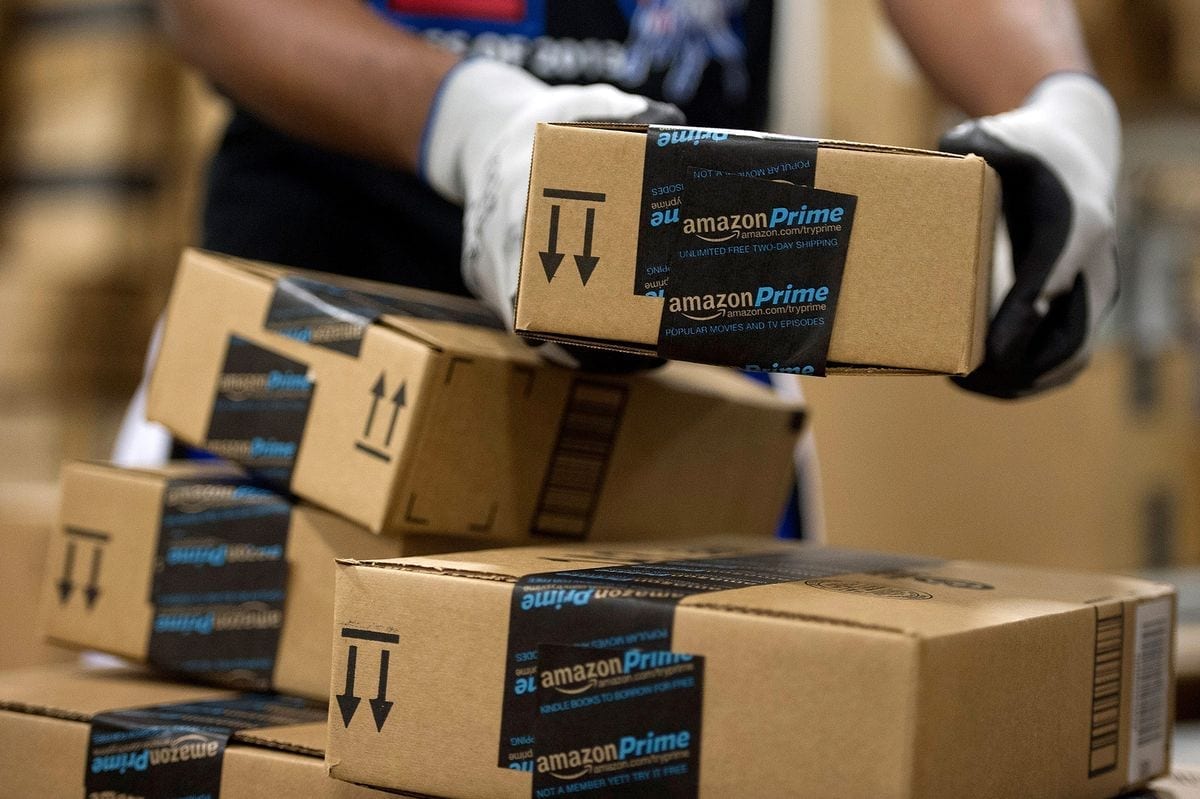
    Amazon announced the kick-off of the Chinese New Year season for Amazon Prime members in Singapore, offering new expanded local selection and great deals and free samplings to help usher in the Year of the Pig with ease. Amazon Prime Now will offer customers a one-stop shop for everything Chinese New Year related — from eight-pack red packets to traditional pineapple tarts and barbequed pork slices (bak kwa).  Anyone in Singapore can join Amazon Prime for S$2.99 a month or start a 30-day free trial at www.amazon.com.sg and download the Prime Now App.

    “We’re excited to jump into the Chinese New Year season, helping Prime members in Singapore get ready for the Year of the Pig with our expanded selection of popular holiday goodies–abalone, traditional pineapple tarts and handmade BBQ pork slice,” said Kourosh Kaghazian, Country Manager, Amazon Singapore. “From cleaning supplies to groceries, we’ve got Prime members covered this new year with the convenience of tens of thousands of items, including a variety of local favorites, and ultra-fast two-hour delivery right to their door.”

    New this season, Amazon is offering some must-have Chinese New Year goodies, including:

    • Kele: Traditional Pineapple Tarts and other festive cookies
    • Kim Joo Guan: Traditional Handmade BBQ Pork Slice
    • Crystal Jade: Almond Puff Cookies and Bo Lo Pineapple Tarts
    • New Moon: Abalone

    Amazon has also expanded its Reunion and steamboat selection for customers in time for their holiday dinner preparations with frozen and fresh sliced meats, noodles and tofu and a wide variety of fresh and frozen seafood, including pomfret, grouper, threadfin, scallops, crabmeat, mussels, squid as well as seasonal fresh vegetables and fruits.

    Amazon has also created specially curated selections according to Chinese New Year themes, such as Readying the House, Spring Cleaning and Organization, Stocking Up on Groceries, Shop Fresh Food/Reunion and Last-Minute Shopping. Prime members will be able to take advantage of the free two-hour delivery on orders of S$40 or more, especially helpful for heavy and bulky items like soft drinks. In addition, Prime members will also be able to shop millions of items on the international selection via the Prime Now App with free delivery in 7-9 business days on orders of S$60 or more.

    Prime Now will offer delivery from 10:00 a.m. to 6:00 p.m. on 4 February, Chinese New Year Eve as well as both public holidays 5 February and 6 February. Leading up to Chinese New Year, Amazon Prime Now will offer regular delivery from 10:00 a.m. to 10:00 p.m.

    Prime members in Singapore have access to millions of items via the Prime Now App. Amazon Prime in Singapore is currently available for S$2.99 per month. Prime membership benefits in Singapore include:

    • Free Two-Hour Delivery on Tens of Thousands of Items: Ultra-fast delivery on tens of thousands of items with free two-hour delivery on orders over S$40, between 10am and 10pm daily.  Items range from groceries to electronics, including a variety of new brands added to Prime Now since the launch such as Yakult, Dell, Tefal, Sambucol, Bausch & Lomb and Pinkfong, as well as new categories including fresh flowers, organic fruits and international foods.
    • Free International Shipping on more than 7 Million of Items: Unlimited free shipping in 7 to 9 business days on orders over S$60 from International Selection via the Prime Now App on more than 7 million international products shipped directly to you from Amazon US. Products include a wide selection of top brands such as Leap Frog, Calvin Klein, Rubbermaid, Zojirushi, BCB Generation, The Children’s Space, Pet Safe, Rebecca Minkoff, and Melissa and Doug.
    • Amazon Prime Video: Prime members can stream or download popular and award-winning Prime Original series like The Grand Tour, Golden Globe and Emmy award winner The Marvelous Mrs. Maisel, Tom Clancy’s Jack Ryan starring John Krasinski, Homecoming starring Julia Roberts, and many more. Prime members can watch anytime, anywhere via the Prime Video App on Android and iOS phones and tablets, smart TVs, game consoles or online at www.primevideo.com.
    • Twitch Prime: Prime members enjoy a selection of free games every month, free in-game loot for the world’s most popular games, a free broadcaster subscription every 30 days, exclusive chat emotes, and more at https://www.twitch.tv.
  • Burberry unveils first-ever Chinese New Year campaign

    Burberry unveils first-ever Chinese New Year campaign

    British luxury fashion house Burberry has unveiled its first Chinese New Year campaign, celebrating family traditions and togetherness. The commercials, shot and directed by photographer Ethan James Green, star Chinese actresses and Burberry brand ambassadors Zhao Wei and Zhou Dongyu, who make their Burberry campaign debut. Inspired by classic portraiture, the campaign has been reimagined in an informal urban environment, and features classic Burberry pieces including archive-print scarves, the trench coat and tailoring, contrasting with urban staples including hoodies, t-shirts and joggers, all of which are now available globally online and in-store.

    “The campaign draws on the concept of families reuniting for the most important holiday of the year, and represents a sense of belonging, but in a very fresh way,” explains Zhao Wei. “It was great fun being back on set with Zhou Dongyu – I enjoyed it very much!”

    Gallery of the campaign (4 images) :

    Zhou Dongyu added: “A family portrait is a very simple concept, but the ceremonial sense behind it holds so much more. For me, being able to go home once a year to spend quality time with my family is something I value above all else, and I wouldn’t trade it for anything.”

    For the campaign, Zhao Wei wore a sleeveless keyhole detail top, reissued Society-print silk scarf and gold plated link drop earrings. Zhou Dongyu wore a vintage check wool jacket with palladium plated link drop earrings.

  • No More Free Checked Baggage on Lion Air Indonesia

    No More Free Checked Baggage on Lion Air Indonesia

    Flying cheap will soon also mean flying light for many Indonesians after the country’s largest airline, Lion Air, and its subsidiary, Wings Air, decided to start charging for checked baggage on all their domestic flights from today. The airlines, which together served around half of the archipelago’s air travelers last year, will only allow one piece of cabin baggage, such as a suitcase of no larger than 40 x 30 x 20 centimeters, weighing less than 7 kilograms, and one personal item, such as reading material, a handbag, or laptop bag.

    “Both Lion Air and Wings Air, which will enforce the new regulation until further notice, will no longer accept free checked baggage of up to 20 kilograms and 10 kg, respectively,” Lion Air Group spokesman Danang Mandala Prihantoro said in a statement on Friday.

    Checked baggage exceeding 7 kg will be subject to an excess baggage fee based on the rate for the day. Carriers will further no longer allow passengers to bring several items tied together with rope or string into the cabin as these will also be subject to additional fees.

    Passengers will be able to purchase prepaid baggage vouchers through tour and travel agencies, the airlines’ websites, or at their ticket sales offices.

    The carriers have advised passengers to prepay for baggage when they buy their tickets, or alternatively, pay for it up to six hours before departure.

    Power banks with capacities of more than 160 watt-hours (Wh), or 32,000 milliamp-hours (mAh), will no longer be allowed on aircraft, while those with capacities of between 100 and 160 Wh will require special permission by airline staff.

    Passengers will still be permitted to take power banks with a maximum capacity of 100 Wh into the cabin after notifying the ground crew. However, these may no longer be used onboard.

    Passengers who have purchased Lion Air and Wings Air tickets before Jan. 8 would still able to enjoy the respective 20 kg and 10 kg free baggage allowances.

  • Ermanno Scervino opened store in Chinese Hangzhou

    Ermanno Scervino opened store in Chinese Hangzhou

    Italian fashion house Ermanno Scervino is launching a new boutique in Chinese Hangzhou. The 140sqm store, located inside the Hangzhou Tower shopping centre, houses the brand’s womenswear and menswear pret-a-porter and accessories collections. Its interior design follows the style of the maison’s flagship store inaugurated in Florence last June, with large surfaces featuring industrial concrete flooring and concrete wall finishing punctuated by inlaid and laminated gold frames. The store showcases wooden furnishings with stucco decorations and retro-inspired details.

    “The growth and development of our brand in Far East has been proceeding systematically and consistently since a few years now,” said Ermanno Scervino Group CEO Toni Scervino.

    “After Shanghai and our recent opening in Hong Kong, Hangzhou is now a further step forward. The Chinese clientele is proving more and more its passion for the tailoring and Made in Italy proposal of our Maison. In collaboration with our partner Riqing we are therefore working to be more and more present on the territory”.

  • Vietcombank to sell 3 percent stake to foreign investors

    Vietcombank to sell 3 percent stake to foreign investors

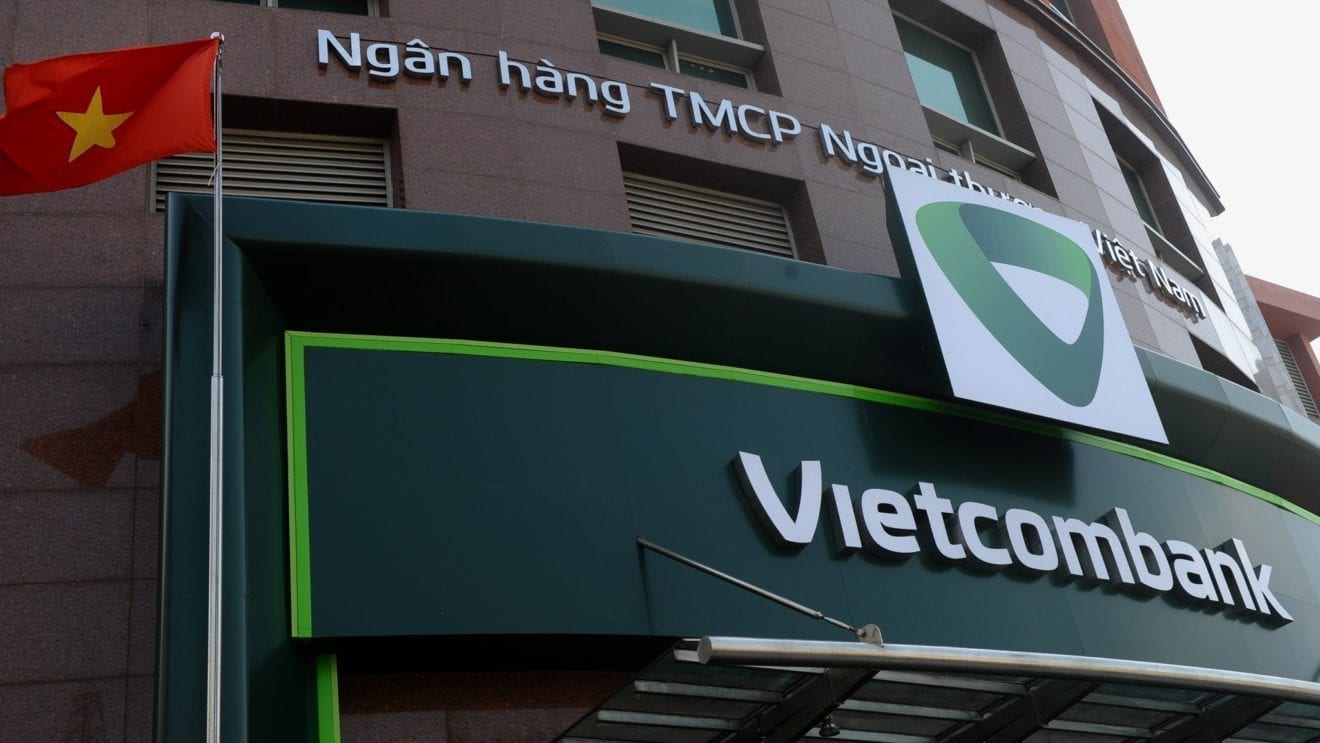
    Vietcombank, Vietnam’s largest bank by market cap, has received permission from the securities watchdog to sell a 3 percent stake to foreign investors. The green light from the State Securities Commission (SSC) will allow the lender to make a private placement of 3 percent as part of its plan to ultimately sell 10 percent. The 3 percent could fetch around $270 million based on its current stock price.

    Vietcombank last month received approval from the State Bank of Vietnam (SBV) to increase its charter capital by selling 10 percent to the Government of Singapore Investment Corporation (GIC) and existing strategic partner, Japanese bank Mizuho.

    Now GIC will buy 2.55 percent while Mizuho Bank will buy the remaining 0.45 percent to keep its current 15 percent stake unchanged.

    Last September the SBV approved Vietcombank’s proposal to increase its charter capital from VND35.98 trillion ($1.55 billion) to VND39.57 trillion ($1.7 billion). The capital has remained unchanged since 2016.

    Vietcombank is one of many Vietnamese lenders that have been seeking to increase capital to meet international capital adequacy norms.

    The country’s banks need to increase their charter capital to meet the Basel II capital adequacy ratio (CAR).

    The accords prescribe capital of 8 percent of risk-weighted assets for all financial institutions, including in Vietnam, to cover operational risks.

    State-owned BIDV, the second biggest bank by market capitalization, said last October it wanted to sell new shares to South Korea’s KEB Hana Bank, giving it a 15 percent stake in the company. The sale would be worth $735 million.

    Vietnam caps foreign ownership of banks at 30 percent. The country has nine wholly-owned foreign banks, four state-owned banks and 31 domestic joint-stock banks.

  • FitFlop flagship opens in Philippines

    FitFlop flagship opens in Philippines

    London footwear brand FitFlop has opened a new flagship store in SM Mall of Asia, Philippines. The new FitFlop Galleon store is the largest FitFlop store in the world to date and now serves as the brand’s global flagship. It is operated by The Primer Group of Companies, the brand’s exclusive distributor in the Philippines. According to a press release, “FitFlop is confident that it will be able to reach and inspire more superwomen to seize life’s opportunities and take on whatever comes their way.”

    The brand’s product line is designed to combine precision ergonomics with functional design, specialising in comfortable footwear for women.

    FitFlop Galleon is currently offering its Spring/Summer 2019 line, inspired by exotic destinations and bustling bazaars, as well as athleisure fashion that features its proprietary Anatomicush sole.

  • BreadTalk, Song Fa JV launch first Beijing restaurant

    BreadTalk, Song Fa JV launch first Beijing restaurant

    BreadTalk and Song Fa have launched their first restaurant in northern China at Beijing’s APM Mall. Saturday’s opening follows the successful launch of the first Song Fa restaurant in Shanghai Jing An Kerry Center in January last year, where it averaged RMB1 million (US$145,570) in monthly sales. It is the fourth restaurant opened following the signing of the joint-venture agreement between BreadTalk and Song Fa Holdings in July 2017.

    The restaurant is located on level 5 of the mall, featuring a spacious interior accommodating close to 100 diners with Nanyang nostalgia decor and contemporary seating.

    “Since the opening of our first Song Fa outlet in Shanghai last year, we were encouraged and overwhelmed by the positive response from consumers in China,” said BreadTalk Group CEO Henry Chu. “This vote of confidence enabled us to open another three restaurants successfully in Shanghai last year.

    With the opening of our first restaurant in Beijing, we will continue to harness and leverage BreadTalk Group’s brand operations and management experience to bring the Song Fa brand to northern China and provide local consumers with high quality Teochew Bak Kut Teh cuisine.”

    “The Bak Kut Teh culture is one of the most iconic food cultures of Singapore,” added Song Fa’s second-generation helmsman and MD Yeo Hart Pong. “It is Song Fa’s mission to spread this culture and continue to serve generations of Bak Kut Teh fans. Besides our Singapore homeground and Indonesia, China is our most-valued market outside Southeast Asia. We feel very honoured to be able to collaborate with BreadTalk Group and introduce the Teochew Bak Kut Teh culture to epicures in China.”

  • South Korean convenience store openings slow down

    South Korean convenience store openings slow down

    South Korean convenience store openings in South Korea fell last year, according to industry data. Thought to be the effect of increasing labour costs and market saturation, the slowdown has manifested amongst several industry operators – including BGF Retail’s CU, which opened 980 fewer stores than the previous year’s total of 1646; and GS25, which opened 1023 fewer stores last year after launching 1701 outlets in 2017.

    A government advisory to chain stores to maintain more of a distance between competing branches signals a likely continuation of the downward trend, as well as new laws mandating higher levels of paid leave to staff and a higher minimum wage. The same pressures have seen 19 per cent of convenience stores closing at night rather than operate 24 hours, compared with 10 per cent in 2017.

    A statement issued by CU said that the firm is prioritising profitability of existing stores over opening new locations.

  • Singapore company seeks to increase stake in Vietnam’s largest dairy firm

    Singapore company seeks to increase stake in Vietnam’s largest dairy firm

    A Singaporean shareholder in Vinamilk is seeking to increase its stake in Vietnam’s largest dairy firm. Jardine Cycle & Carriage Ltd has registered to buy 17.41 million shares between January 9 and February 7 through its wholly-owned local subsidiary, Platinum Victory, which will enable it to increase its ownership in Vinamilk from over 10 percent to 11.62 percent.

    At a proposed price of VND125,000 ($5.38) per share, the transaction will be worth VND2.17 trillion ($94.42 million).

    Last year Jardine, Vinamilk’s third largest shareholder, had registered on six different occasions to buy 14-17 million shares to increase its stake to above 11 percent, but was unsuccessful due to unfavorable market conditions.

    It first bought a 3.3 percent stake in Vinamilk in November 2017. Within a month it raised its ownership to over 10 percent.

    In April last year a representative of Jardine’s parent company, Jardine Matheson, became a Vinamilk board member.

    Hong Kong-based Jardine Matheson is one of Asia’s biggest conglomerates with interests in luxury hotels, motor vehicles, property, food retail, transport financial services, and agribusiness and revenues of almost $16 billion in 2017.

    F&N Dairy Investments, a subsidiary of Singapore-based Fraser & Neave Ltd, which is backed by Thai tycoon Charoen Sirivadhanabhakdi, owns a 17.31 percent stake in Vinamilk.

    Vietnam’s dairy industry reported revenues of more than VND100 trillion ($4.4 billion) in 2017, with Vinamilk commanding more than a 50 percent market share.

    According to a report by the EU-Vietnam Business Network, the market is expected to double in size by 2020 as the country’s population, personal incomes and dairy consumption increase.

  • Ramen Cubism makes debut in Hong Kong

    Ramen Cubism makes debut in Hong Kong

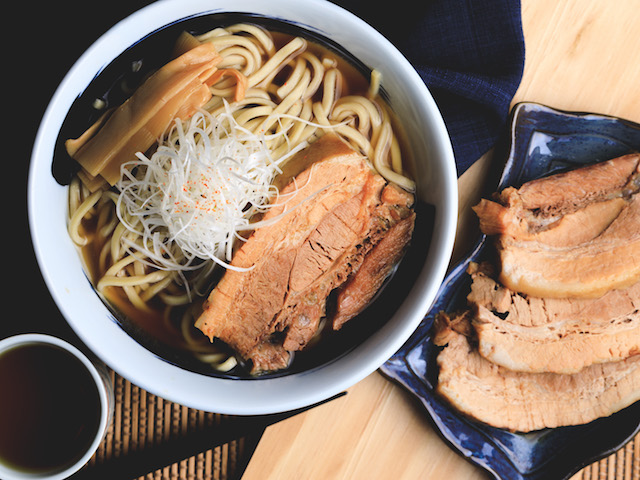
    Japanese celebrity chefs Hayashi Takao and Matsumura Takahiro are launching a new international noodle soup restaurant brand called “Ramen Cubism”. The brand’s flagship opens in a chic basement venue in Hong Kong’s Wellington Street tomorrow. It is the collaborators’ first overseas venture, launched in partnership with Hong Kong’s Bird Kingdom Group, of Lai Chi Kok’s D2 Place. It marks the first collaboration between Chef Hayashi and Bird Kingdom Group, slated for international expansion with branches across the region – including their hometown of Osaka, Macau (within the next quarter) and Mainland China.

    Ramen Cubism introduces Chef Hayashi’s signature ramen creations to Hong Kong, following the success of his Osaka restaurant that regularly attracts long queues of as many as 100 diners.

    Pictures gallery below (5 images) :

    Equally renowned as a ramen master and recipe developer, Chef Matsumura has previously established eight noodle brands in Osaka, including the newly-opened “The Most Hopeful Ramen Bar in the World”.

    In celebration of its launch, Ramen Cubism features Chef Hayashi’s new exclusive Hong Kong recipes, limited to 200 servings a day during opening time.

    “Ramen Cubism promises to be a magnet for lovers of this beloved specialty,” said Bird Kingdom Group CEO Eric Ting. “We look forward to building a new generation of followers in Hong Kong and worldwide for this traditional high quality and flavourful comfort food”.

  • Indonesian Consumers Face Harassment by Fintech Debt Collectors

    Indonesian Consumers Face Harassment by Fintech Debt Collectors

    As a result, she faces constant harassment by debt collectors who call her, wait outside her home, and even go as far as contacting her parents, family members, friends and acquaintances. “I was not expecting these fintech firms to subject their customers to such dreadful practices. They accessed my contact list and messages [on my mobile phone]. They even called my current bosses,” Cintia said.

    “My friends even told me that these fintech firms were defaming and harassing them, sending my friends’ personal photos to their bosses and some of the people in their contact lists, calling my friends imposters,” she added.

    The trouble started a few months ago after she borrowed Rp 1 million each from Uang Kita, Kantong Darurat and Perdana (previously known as Rupiah Plus).

    Risks Associated With Collateral-Free Loans

    Each fintech firm has a different set of requirements borrowers must meet, but most of them do not ask for any collateral, which comes with one major drawback: high interest rates.Despite customers only needing an identity card and a cellphone number to borrow emergency cash, these loans carry interest rates of 1 percent per day for a maximum tenor of 14 days. This exceeds by far the already steep interest rates of 29.9 percent per year that credit card companies charge their customers.

    Customers must also be prepared for some unpleasant treatment from these fintech firms if they fall behind on their repayments.

    “At first, I started borrowing money just for fun but I ended up with these debts and I’m making one debt to pay another debt. I want to pay it off in installments, but they refuse to accept it. They want me to settle the loans in full,” Cintia said.

    Misna Wati, who works for an undisclosed company in Jakarta, has owed money to 25 fintech firms since May last year. She said she regularly receives harassing phone calls and WhatsApp messages from debt collectors and representatives of the firms.

    “We are worried all the time. We did not expect them to be able to access our contacts, call logs, even messages,” said Misna, who declined to state her age and occupation.

    Misna and Cintia are now both seeking assistance from the Jakarta Legal Aid Institute (LBH).

    Need for Strong Data Protection

    With numerous reports about breaches of data privacy by the financial industry, the House of Representatives must accelerate the process involved in passing the data protection bill.The bill, which was supposed to be enacted last year, has now been included in the 2019 priority list of the National Legislation Program, which means that the House might deliberate it sometime this year.

    While Ministerial Regulation No. 20 of 2016 is intended to protects users’ personal data on the electronic system, it is deemed insufficient in preventing large-scale data breaches.

    The regulation only stipulates administrative penalties for violations or the settling of disputes between offenders and system providers or data owners, but does not allow for the recovery of damages related to customer data breaches.

    The bill, if it is passed into law, would apply both in Indonesia and abroad, but only to Indonesian citizens and Indonesia-based business entities.

    The regulation is very important as Indonesia has more than 143 million internet users, which is more than half of the country’s population, according to data compiled by the Internet Service Providers Association (APJII) in 2017.

    Fintech’s Popularity

    Fintech services have gained popularity in Indonesia over the past few years due to their seamless technology systems, innovation, customer-focused approach and simplicity. Fintech companies also offer payment systems, financial assistance and fundraising options.According to a joint study by global technology giant Google and Singaporean wealth fund Temasek, Indonesia’s internet economy – the financial value of all digital services – could exceed $100 billion by 2025, compared with $27 billion last year.

    But despite numerous benefits, the microcredit industry is still poorly regulated in Indonesia and the government is currently dealing with a rising number of illegal or unlicensed fintech firms operating in the country.

    The government banned 738 illegal financial technology websites and applications last year in a bid to protect consumers.

    As Indonesia is now one of the centers of the digital financial industry in the region, it attracts numerous companies from neighboring countries that establish a presence in the country, but which often choose not to obtain licenses from industry regulator, the Financial Services Authority (OJK).

    Most of the unlicensed fintech apps and websites are from China, Malaysia and Thailand. These fintech firms do not have registered offices, either in Indonesia or in their home countries.

    “The OJK has instructed us to ban unlicensed fintech websites and apps,” Ferdinandus Setu, acting head of public relations and communication at the Ministry of Communication and Information Technology, said in a statement last week.

    He said the ban so far applies to 211 websites and 527 smartphone apps, which seemed to have been increasing since August last year.

    There were 171 illegal fintech apps available for download on Google Play in November last year, compared with 144 in August. The ministry also recorded 77 illegal fintech websites in September.

    The ministry said no illegal fintech websites and apps were recorded between January and July last year.

    Ferdinandus said besides the OJK’s instruction, the communication ministry’s actions were also carried out after collecting public reports through a web crawler known as AIS, which filters out content deemed illegal under Indonesian law, such as pornography, the spreading of false news and the promotion of terrorism and radicalism.

    The ministry encouraged members of the public to report websites offering financial services that may be deemed illegal, or fintech companies that are not registered with the OJK.

    Reports can be submitted to aduankonten.id, or @aduankonten on Twitter. A task force comprising more than 13 ministries and agencies will investigate the reports.

  • JD driverless delivery vehicles up for test

    JD driverless delivery vehicles up for test

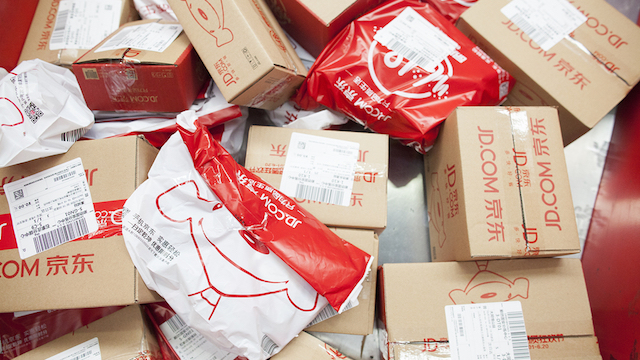
    JD driverless delivery vehicles have been deployed in live testing in two Mainland China cities. The technology-cum-e-commerce company has opened two smart-delivery stations in the cities of Changsha and Hohhot, strengthening its autonomous logistics capabilities. The stations are carrying out research and development testing and personnel training to solve issues related to last mile delivery.

    The JD driverless delivery vehicles can be loaded with up to 30 parcels before autonomously delivering them within a 5km radius. The vehicles can plan routes, avoid obstacles and recognise traffic lights.

    The vehicles have locked boxes so each customer’s purchases are kept separate. Once the robots reach their destination, facial recognition technology enables customers to easily and securely collect their parcels from the correct locker.

    When running at full capacity, the two delivery stations, operating with a half-half split between robots and human couriers, can deliver up to 2000 packages a day.

    The JD driverless delivery vehicles are part of the company’s Boundaryless Retail vision, in which consumers can buy whatever they want, wherever and whenever they want it.

    “As China’s largest retailer, JD is in the unique position of being able to research and develop, and commercially deploy, innovative new technology that is shaping the future of shopping worldwide,” said Chen Zhang, JD’s chief technology officer.

    “As JD opens its technology up to other companies and industries, the features that we’ve already rolled out in China from automated warehouses to virtual shopping are going to be enjoyed by consumers everywhere,” he said, referring to the company’s Retail as a Service strategy.

    CES debut

    The opening of the smart delivery stations comes days before JD attends its first Consumer Electronics Show in Las Vegas, Nevada – the world’s largest event for the latest technology, innovation and creative thinking.

    The company will showcase cutting-edge technology which is changing the way consumers shop in China, and which it says will revolutionise global commerce. Visitors will be able to see how JD uses its drones to deliver consumer goods and medical supplies to remote areas in China, and catch a glimpse of the world’s first fully-automated fulfillment centre. They will also see how underground urban logistics will make shopping more convenient than ever, and fundamentally alter how cities work.

    This year, CES attendees will be able to see JD’s futuristic technology up close and even try some of it for themselves at the company’s interactive booth.

    Aside from drones and delivery robots, visitors will be able to experience drone flights in virtual reality, as well as JD’s augmented-reality fitting and styling software. They will also see how JD is developing Internet of Things technology that enables consumers to remotely control the smart devices in their homes, even from their cars.

    JD will also give people the chance to try a special exoskeleton worn by staff in JD warehouses that makes lifting heavy objects easier.

  • Knows deeper Japanese lifestyle guru Marie Kondo

    Knows deeper Japanese lifestyle guru Marie Kondo

    Marie Kondo is the queen of organization. Her book, “The Life-Changing Magic of Tidying Up: The Japanese Art of Decluttering and Organizing,” reveals her instructions for organizing your space in one sitting, and then never having to do it again. Her methods have garnered a significant social media following with the hashtag #konmarimethod, and also landed her a spot on Time’s 2015 “Top 100 Influential People” list.

    Marie Kondo is a Japanese organizing consultant and author. She has written four books on organizing, which have collectively sold millions of copies and have been translated from Japanese into languages including Korean, Chinese, Spanish, Indonesian, French, German, Swedish and English.

    Ever since Netflix released Tidying Up With Marie Kondo on New Year’s Day, Twitter has been awash with Kondo memes.

    Marie follows the the Japanese way of living based on minimalism, and she applies to all objects in house.

    Marie is growing popularity on the web; however, some of her statements divide the internet.

    In the digital age, while experts maintain that influencer marketing is fading out, and some others opt for micro-influencers, Marie seems to belong to a complete new category that aims to make people’s life better through reducing possessions instead of accumulating goods.

    We are looking forward to see what’s next for influencer marketing.