Tag: asia

  • L Catterton makes exit from China mall operator Sasseur

    L Catterton makes exit from China mall operator Sasseur

    International private equity firm L Catterton has substantially divested from Chinese mall operator Sasseur Cayman Holding. The firm has reduced its shareholding from 58.86 per cent to just 1.36 per cent, as part of ongoing efforts to optimise its portfolio. Sasseur Cayman is the sponsor of listed Sasseur Reit.

    L Catterton Asia chairman Ravi Thakran said: “We continue to strongly believe in the long-term growth prospects of Sasseur and the opportunities it offers to investors in terms of exposure to China’s fast-growing outlet mall industry. We will continue to support the company’s growth initiatives as a Sasseur shareholder.”

    In a separate statement, Sasseur said that growth prospects for China’s outlet sector remain solid – projected to expand at approximately 25 per cent annually for the next five years – with the fastest sales growth among the retail segments in China, even outpacing that of e-commerce.

  • Vietjet and Japan Airlines to Commence Code share Ticket Sales

    Vietjet and Japan Airlines to Commence Code share Ticket Sales

    New-age airline Vietjet and Japan Airlines (JAL) has announced that both carriers` will begin sales of their codeshare flights starting Tuesday, 23 October 2018.

    This follows a formal partnership agreement between both parties in 2017, in which Vietjet and JAL signed a Memorandum of Understanding for commercial cooperation. The two airlines now offer codeshare flights on domestic destinations in Vietnam and on international flights between Vietnam and Japan.

    Applicable routes operated by Vietjet include domestic flights connecting Ho Chi Minh City and Hanoi; Ho Chi Minh City and Da Nang; Hanoi and Da Nang; and international flights linking Kansai with Hanoi. The codeshare flights will be available for travel from 28 October 2018, while the Kansai to Hanoi route specifically commences operation on 8 November 2018.

    According to the agreement, Vietjet and JAL aims to continue expanding their codeshare routes in the near future, including other flight services between Japan and Vietnam as well as JAL’s domestic flights, and Vietjet’s domestic flights.

    Vietjet, the largest domestic airline in Vietnam, started its flight services in 2011 and now operates an expanding network all over Vietnam and Asia. Offering convenient and friendly services with reasonable fares and many other attractive add-on services, Vietjet has succeeded in creating new demands in Vietnam. As a new-age carrier, it also offers top-class service called “SkyBoss”, which has been very well received among passengers expecting quality service.


  • Taxi or not? Vietnam debate rages over Grab status

    Taxi or not? Vietnam debate rages over Grab status

    Transport authorities and taxi associations have reiterated that ride-hailing firm Grab should be treated as a taxi service, but experts disagree. Nguyen Cong Hung, vice chairman of the Vietnam Automobile Transportation Association (VATA), said at a recent meeting that it was incorrect to identify Grab as an electronic contract service firm.

    Hung said that legal experts have affirmed that Grab and other ride-hailing services are taxi services, and ordering a car service via a phone call or a phone app are only superficially different modalities.

    While some people believe that calling Grab a taxi service will hinder the development of technology, Hung disagreed.

    “Identifying a car service as traditional taxi or technology taxi will guarantee authorities management power and fairness in terms of their responsibilities. Whichever service applies technology will have higher profits,” he added.

    Echoing Hung, chairman of the Ho Chi Minh City Taxi Association, Ta Long Hy, said that any service which sets transport fees collects money and spends a large amount of money on discounts is a transportation service, and not merely a software company.

    Hy said that all car services that are 9-seaters or lower are taxi services in nature. “The Ministry of Transport should not create an exclusive playing field for a service that is basically a taxi service.”

    He proposed that 9-seater or lower car services, whether Grab or traditional taxis, be identified by a mark on their license plates or a larger registration label on the car’s windshield.

    Earlier this month, the Transport Ministry released the latest draft of a transportation management decree under which under 9-seater car services be registered as taxi firms before they can apply ride-hailing technologies.

    This means that Grab and other ride-hailing firms would have to register their services again as a taxi business and comply with corresponding legal responsibilities regarding their operating licenses, drivers’ profiles and tax duties.

    Should the decree be passed, Grab and other ride-hailing cars will have to put a sticker labeled “taxi” on their windshields and carry a taxi legend on the top.

    The draft goes against many experts’ requests to treat ride-healing services as a new business model that is different from traditional taxi service.

    Nguyen Dinh Cung, director of the Central Institute of Economic Management (CIEM), had said earlier that firms that primarily used software cannot be called a transportation business.

    Cung said that the government should encourage new investment forms or business models with an open and fair environment in keeping with Industry 4.0 trends.

    Lawyer Truong Thanh Duc said that the Ministry of Transport has been making changes with recent drafts without having a consistent viewpoint.

    The fact the ministry wants to identify ride-hailing services as taxi firms is against the government’s policy of prioritizing technology development in the Fourth Industrial Revolution, he said.

    Marketing expert Do Hoa said that Grab and other ride-hailing services should be managed under a new law specifically written for technological services.

    Traditional regulations related to taxi firms are not appropriate for Grab, as it is not a transport company, he said.

    The heated debates and struggles between ride-hailing cars and traditional taxis have not cooled after the exit of Uber from the Southeast Asian market in March. Taxi firms have continued to complain about the unfair competition they are facing.

    They have also joined hands to fight the market onslaught of ride-hailing firms.

    Grab has consistently been denying that it is a taxi firm, saying it only provides technological solutions to transport services.

    The debate over Grab’s status as transport company is hardly new in Vietnam. Vietnam’s top taxi company Vinasun sued Grab for $1.84 million in losses, citing “unhealthy competition”.

    In Vietnam, local cab firms like Mai Linh and Vinasun have to pay value added tax (VAT) of 10 percent and corporate income tax of 20 percent, while Grab only have to pay some 3 percent.

    The ride-hailing market in Vietnam has seen new entrants after Uber’s departure, including Fastgo and GoViet, which is an affiliate of Indonesia’s Gojek.

    Current market dominator Grab has expanded its services to include GrabFood, a food delivery service, and GrabCar Business, targeting the corporate sector.

    These moves pose further challenges for long-standing taxi firms like Mai Linh, Taxi Group and Vinasun.

  • KitKat opens Osaka shop for made-to-order premium chocolate bars

    KitKat opens Osaka shop for made-to-order premium chocolate bars

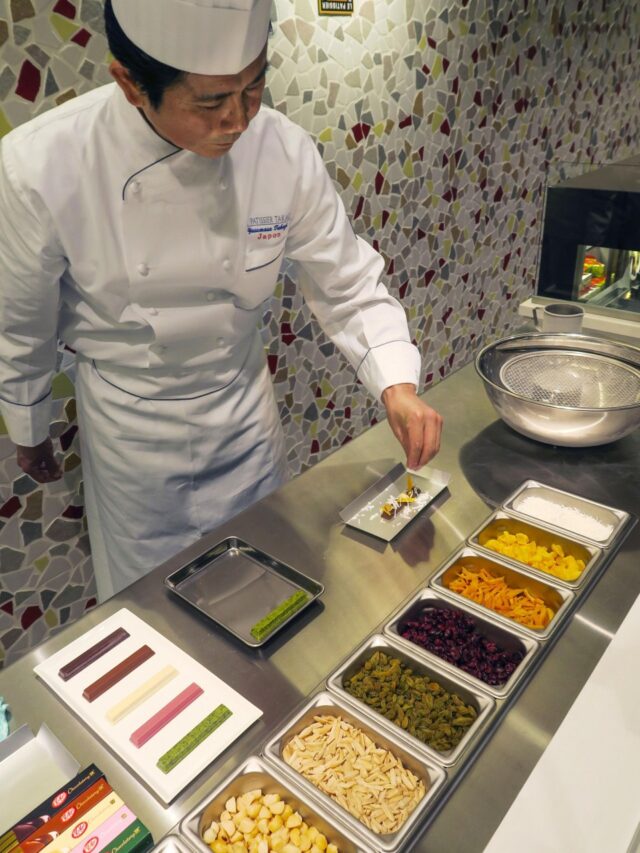
    Nestle Japan has opened a permanent made-to-order Kit Kat store in Osaka. The new specialty store is the first and only permanent location in Japan where personalised Kit Kats can be made. It offers customised creations chilled on-the-spot with liquid nitrogen, with customers choosing from three types of chocolate and nine toppings.

    The store is located just outside Nankai Electric Railway’s Namba Station, a prominent Osaka sightseeing location, given the expected popularity of bespoke Kit Kats among tourists.

    Japan has developed a reputation internationally for its unique Kit Kat flavours, which have proved popular with visitors to the country. The confectionery originally comes from the UK.

    Nestle Japan says its made-to-order Kit Kats are sold from ¥702 (US$6.25).

  • BMW expands recall on fire risk to 1.6 million diesel vehicles

    BMW expands recall on fire risk to 1.6 million diesel vehicles

    BMW is recalling about 1.6 million diesel cars to fix a potential fire hazard in their engines, expanding repairs from just under half a million vehicles in Europe and Asia. The voluntary service action follows a BMW investigation that found coolant could leak from the car’s exhaust recirculation unit. The defect can lead to sparks while driving and cause fires in “in extreme cases,” the automaker said Tuesday in a statement.

    South Korea’s government, after reports of 40 fires this year, asked drivers to keep vehicles off roads until undergoing checks. Police also raided the automaker’s office in Seoul to probe the safety issue, after videos of cars engulfed by fire went viral.

    The vehicles affected — diesels with four- and six-cylinder engines — were produced between 2010 and 2017, BMW said.

    After the initial recall announced in August, BMW’s internal investigation found more vehicles with similar technical setups. The company said it will replace the components as necessary.

    BMW last month cut its profit forecast, blaming an increase in warranty provisions alongside trade tensions and pricing pressure.

  • 2019 Ducati Panigale V4 R Spotted

    2019 Ducati Panigale V4 R Spotted

    The Ducati Panigale V4 R is the downsized, 1,000 cc version of the Ducati Panigale V4, and will be Ducati’s weapon of choice in superbike racing for some time now. The current Panigale V4’s 1,194 cc engine overshoots the displacement limit for the World Superbike Championship (WSBK) for four-cylinder models, so an engine meeting the WSBK homologation requirements was imminent. Latest spy shots show exactly such an example of the V4 R undergoing test runs at an undisclosed location. The bike seen in the spy pictures appear to be the race-spec variant of the new model, although Ducati will certainly introduce a road-legal model of the V4 R as well.

    The spy shots reveal that the V4 R has a different fairing design than the Panigale V4, with a pair of gill-like openings on the side (quite like the BMW S 1000 RR). The fairing also has a number of mounting points that may be used for adding winglets which are now allowed for WSBK racing. Also seen is a dry clutch on the test bike, although this clutch could only be available on the race-spec bike, rather than the street bike. The test bike also sports lightweight magnesium-forged Marchesini wheels, and what seem to be Brembo brakes. The spy shots also reveal a reworked exhaust system which seems to be more compact than the stock exhaust system on the current Panigale V4.

    So far, there’s no indication when the V4 R will be launched and what its pricing will be. The production-spec model of the Ducati Panigale V4 R is expected to be unveiled at the EICMA show in Milan next month, followed by the model’s launch in Europe. We expect Ducati India to introduce the road version of the V4 R in India sometime next year.

  • CITIC Telecom CTC opens cloud centers in London and Moscow

    CITIC Telecom CTC opens cloud centers in London and Moscow

    CITIC Telecom CPC, a subsidiary of CITIC Telecom International Holdings Limited, is launching new connected SmartCLOUD Services Center in Moscow and London. Stephen Ho, CEO of CITIC Telecom CPC, said the ‘Europe & Russia Cloud Ring’ will be crucial for European-based enterprises who are looking to invest in and explore the emerging market and business opportunities in mainland China.

    The two new sites will provide enterprise customers with scalable multi-cloud connectivity with full disaster recovery capability and intra-city, inter-city and cross-boundary redundancies. They will also provide round-the-clock professional support optimizing customers’ IT investment, achieving a faster response time and ensuring business continuity.

    The move follows the company’s recent debut of two cloud centers in Frankfurt, Germany, and Cape Town, South Africa. The company now has 18 cloud centers across Asia Pacific, America, South Africa, Europe and Russia.

    Mavenir creates open RAN ecosystem

    Mavenir has announced an Open RAN partner ecosystem that includes MTI, Tecore Networks, Baicells, NEC, AceAxis, KMW, Benetel, CommScope, Blue Danube Systems and Airrays.

    The move aims to provide more options and makes it easy for operators to deploy an innovative, flexible cloud-based Open RAN solution, the company said.

    Mavenir will act as the end-to-end systems integrator simplifying the engagement for operators and creating an offering that is on par with the traditional, hardware centric proprietary vendors.

    Juniper Networks invests $2m in Corero

    Corero Networks said it has secured a $2 million investment from Juniper Networks.

    The investment follows the pair’s recently signed multi-year global resale partnership, under which Juniper will resell and support Corero’s SmartWall DDoS protection software products and services.

    ServiceNow taps NTT Com to launch two data centers in Japan

    ServiceNow is building two new data centers in Tokyo and Osaka through a partnership with NTT Communications to provide high-performing and high-availability cloud services to enterprises in Japan.

    The two data centers being built by NTT Com are expected to be ready in the first half of 2019.

    The new Japanese data centers are expected to enhance the ServiceNow Nonstop Cloud, which has been designed to support the availability and scalability of services and processes for global enterprises.

    The new data centers will add to ServiceNow’s existing nine data center pairs, which are set up across five continents to meet customers’ location and data sovereignty needs.

  • Ericsson, LimeLight to collaborate on content delivery

    Ericsson, LimeLight to collaborate on content delivery

    Ericsson has announced an agreement with Limelight Networks to add content delivery capabilities to its new Ericsson Unified Delivery Network (UDN) platform.

    Ericsson aims to develop UDN as a webscale edge delivery network, and is using the agreement with Limelight Networks to add content delivery as the first application built on the platform.

    Edge computing promises to address rapid increasing demand for data by leveraging distributed infrastructure to support low laency applications such as IoT, gaming and virtual reality.

    “We are always looking for ways to improve the performance and reach of our network,” LimeLight Networks CEO Bob Lento said.

    “The strength of Ericsson’s partnerships with communications service providers through the UDN Network is a key component of this agreement that enable us to offer even better reach and performance for our customers. We are delighted to work with Ericsson on this initiative.”

    According to Frost and Sullivan principal analyst Dan Rayburn, edge computing and content delivery are a powerful combination.

    “Combining content delivery technologies with an edge cloud platform that’s distributed inside ISPs is one of the best ways to guarantee optimal performance and allow application providers to use edge services to improve the end-user experience,” he said.

  • Dialog Axiata launches VoWiFi

    Dialog Axiata launches VoWiFi

    Sri Lanka’s Dialog Axiata has launched what it says is the nation’s first voice over Wi-Fi calling service. The operator’s VoWiFi service does not require a third party app to be installed and allows calls to be received over Wi-Fi as if they were standard incoming calls.

    Dialog Axiata is offering five Huawei smartphones that support the VoWiFi service, and plans to extend it to other VoWiFi supported handsets from Samsung, Apple and other vendors in the near future.

    “Dialog is committed to delivering the latest in technology and connectivity to all Sri Lankans, and VoWiFi is another key step in offering next generation solutions to our customers,” Dialog Axiata CTO Pradeep De Almeida said.

    “We started this journey by enhancing the infrastructure in our network and migrating to a new state-of-the-art core network. For our customers, this means a better experience through greater agility and flexibility.”

  • Fiat Chrysler Sells Magneti Marelli For $7.1 Billion

    Fiat Chrysler Sells Magneti Marelli For $7.1 Billion

    Fiat Chrysler Automobiles has announced that it has entered into a definitive agreement to sell its automotive components business Magneti Marelli S.p.A. to CK Holdings Co., Ltd, a holding company of Calsonic Kansei Corporation. Following the closing of the Transaction, CK Holdings will be renamed as Magneti Marelli CK Holdings. The combined businesses of Calsonic Kansei and Magneti Marelli will create the world’s 7th largest global independent automotive components supplier based on total revenues.

    The agreement represents a transaction value of 6.2 billion Euros ($7.1 billion). The Transaction is expected to close in the first half of 2019 and is subject to regulatory approvals and other customary closing conditions. The new entity will operate out of nearly 200 facilities and R&D centres across Europe, Japan, the Americas, and Asia Pacific.

    FCA has also agreed to a multi-year supply agreement that will further strengthen a mutually beneficial relationship for both Magneti Marelli and FCA’s expanding model range and which will sustain Magneti Marelli’s Italian business operations, positioning it strongly for continued growth and success in the future. The combined company will be led by Beda Bolzenius, currently CEO of Calsonic Kansei, based in Japan. Ermanno Ferrari, CEO of Magneti Marelli, will join the Magneti Marelli CK Holdings board.

    Mike Manley, CEO of FCA, said: “Having carefully examined a range of options to enable Magneti Marelli to express its full potential in the next phase of its development, this combination with Calsonic Kansei has emerged as an ideal opportunity to accelerate Magneti Marelli’s future growth for the benefit of its customers and its outstanding people. The combined business will continue to be among FCA’s most important business partners and we would like to see that relationship grow even further in the future. The transaction also recognises the full strategic value of Magneti Marelli and is another important step in our relentless focus on value creation.”

  • Philip Morris International Launches Healthier Alternatives for Smokers

    Philip Morris International Launches Healthier Alternatives for Smokers

    In its passion and drive to provide better choices to people who smoke, Philip Morris International Inc. (“PMI”), the global leader in smoke-free innovation and science, has launched the next generation of IQOS. The new IQOS 3 and IQOS 3 MULTI integrate extensive consumer insights and feedback to improve design and user experience while maintaining signature taste, sensory attributes and ritual—all underpinned by strong scientific substantiation. The new versions aim to further encourage a growing number of smokers to switch, to the benefit of their health, public health and, ultimately, society.

    The new iterations were launched in Tokyo, Japan—the country considered the birthplace of IQOS. The iconic brand offers the best in taste and satisfaction in the category, and almost 6 million adult smokers have already quit cigarettes—with more than half of those in Japan.

    “Our dream was to create a better alternative for smokers, and IQOS has made this dream a reality; it’s a revolution for the 1.1 billion people who smoke,” said André Calantzopoulos, PMI’s chief executive officer. “IQOS 3 and IQOS 3 MULTI deliver significant improvement and innovation and mark another step toward convincing all men and women who would otherwise continue to smoke to switch to smoke-free alternatives. IQOS consumers know that this product changes many things in their lives—we thank them, and we thank Japan for leading this positive change.

    Behind every development at PMI is robust science. Its scientific assessment program is based on longstanding practices of the pharmaceutical industry and is in line with U.S. Food and Drug Administration (FDA) guidance. IQOS produces an aerosol that contains on average 90 percent lower levels of harmful chemicals than cigarette smoke. The totality of PMI’s preclinical and clinical evidence indicates that switching completely to IQOS presents less risk of harm than continued smoking. Evidence also shows that IQOS does not negatively affect indoor air quality. On average, 70 to 80 percent of IQOS users have quit cigarettes, which makes IQOS the most compelling smoke-free alternative today.

    PMI has filed a Modified Risk Tobacco Product Application (MRTPA) for IQOS with the U.S. FDA, but the U.S. FDA has not yet completed its review of our data. IQOS is not for sale in the United States.

  • The sharp rise of Pinduoduo – What is the secret?

    The sharp rise of Pinduoduo – What is the secret?

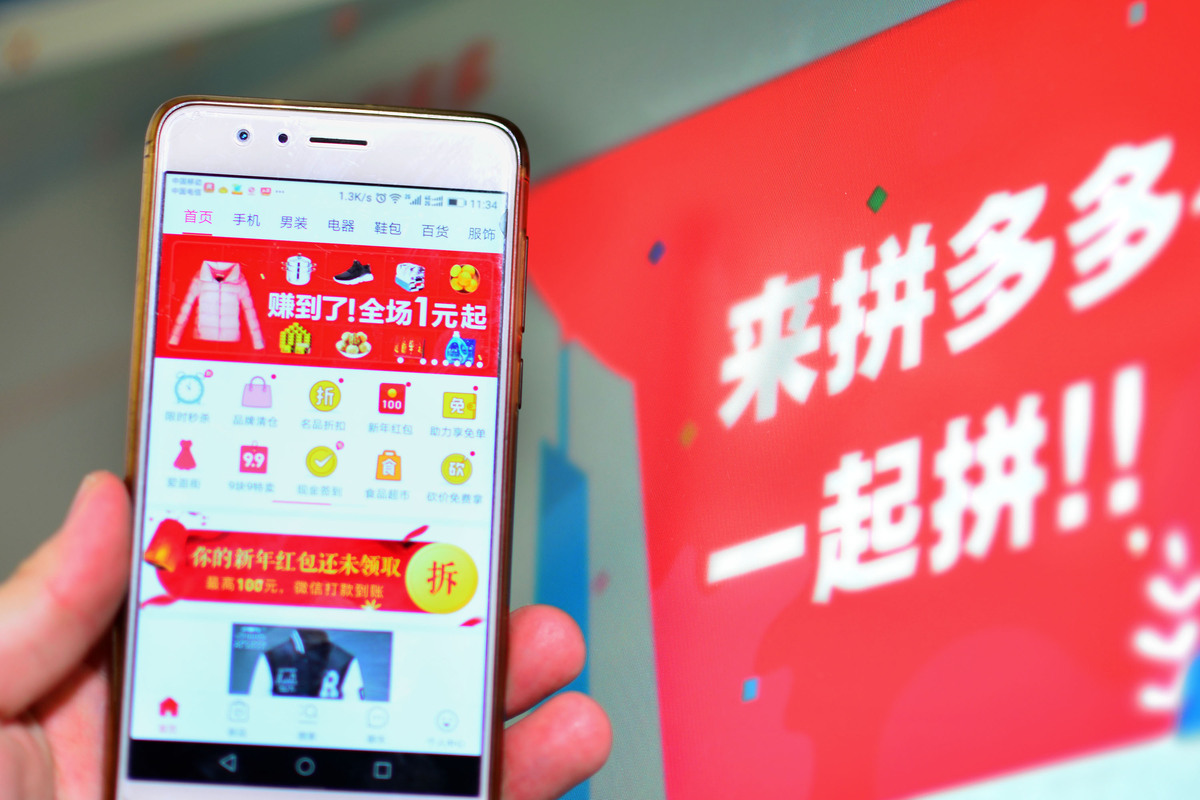
    Pinduoduo, also known as PDD, founded by the Ex-Googler Colin Huang, is currently the fastest growing app in the history of the Chinese Internet and the leading Chinese App for social e-commerce. Pinduoduo is reported to have raised a US$3 billion investment round led by Tencent Holdings, at a valuation of US$15 billion. A significant point here is the collaboration with Tecent’s WeChat app (The Chinese analogy to WhatsApp), which plays the most significant role in the functionality of the app and the way it works.

    The app has a list of techniques to push the users share it with their friends and to keep them actively using it after. Pinduodo allows users to participate in-group buying deals with their friends, mostly via Wechat. Pinduoduo can be described best with the words, viral, quick, addictive, attractive, and convenient. Also, probably the most contemporary version to online shopping, bringing into integration the most powerful tools of nowadays communication- messaging and group chats.

    The app, often used through WeChat messaging service, offers merchandise at times 20 percent cheaper than market price by letting consumers buy directly from manufacturers, cutting out middlemen, advertising and acquisition costs. Huang and his developers also used their experience to add gaming elements to the shopping experience, offering coupons and rewards.

    At the end of December 2017, PDD had more than 156.5 million users. PDD gives people a different experience than at traditional e-commerce sites like Amazon.com or Alibaba. PDD is like a digital version of shopping at the mall with friends.

    The strongest asset of PDD is that it is doing extremely well in small cities. Most of the users are price-sensitive women above 40 years old, living in small cities in China. Which gives us a clear picture – frequent purchases for the whole family.

    Pinduoduo has got a few main features:

    1. Group Buying. In order to get discounted price, find a friend to join the group buy deal.
    2. Free products. If you get enough new users to follow the Pinduoduo Official Account, install the App and sign up via WeChat login.
    3. Buy it now coupons. Unlike other coupons in China, PDD offers coupons for two hours only. Which means the user has to take action immediately.
    4. “Bargain” with friends. Each time a friend volunteers to help you “bargain”, the price decreases a bit. You can even succeed getting the product free.
    5. Get cash rewards for inviting friends.
    6. Use of lotteries. Invite friends to join within a specific period of time and win the product for less than 10% of the cost.
    7. Automatic payment. PDD uses automatic WeChat payments. After allowing “password-less payments” by default at the end of your first purchase, you will not have to enter your password anymore and you will be able to pay with one-click payments.

    Pinduoduo has a strong asset over other online retailers and it is in offering cheap deals. To maximize this, Pinduoduo makes the best out of its own users. You may ask how? Very simple, to get the best bargains, users have to invite more buyers, which helps the company maintain the low prices.

    What are the reasons for the fast growth?

    The first point to highlight is the “social shopping” that PDD offers. WeChat has a monthly active user base of over 1 billion. It allows purchases as a group through which users can receive a group discount for purchasing as a group. Users get a product link that they can share with their WeChat friends. The will of users to get a good deal, it is what makes them want to share the app, with as many as possible people. In 2016, when people did not think it was impossible to exponentially grow user traffic, Pinduoduo accumulated one hundred million users through the above method.

    The second smart move of Colin Huang, the Founder of Pinduoduo is the fact that he knew that he must know his market. To understand Pinduoduo, we must understand the users behind Pinduoduo. Comparing Pinduoduo and JD.com’s user distribution, we see that 65% of Pinduoduo users are from third tier cities or more rural areas, while half of JD.com users come from first plus second tier cities, and half from the rest of China. Pinduoduo has achieved unprecedented growth by targeting the low-income population who are also new internet users with its value game.

    Last but not least key move of Huang was giving more profit for the merchants.  Pinduoduo attracts merchants by charging zero fees for selling on their platform. Advertising is achieved through users sharing to social media. As the number of Pinduoduo users grows, the app has formed an ecosystem of user-generated product promotion, allowing merchants to reach the 300 million users directly. By this, satisfying the survival needs of the mid-tail merchants. Colin Huang gave the small merchant a dream opportunity to grow big. And stories such as “Girl born after 1980 achieves 5 million yuan in sales after four months on Pinduoduo”, and “Selling 260 million packs of napkins in two years with three cents of profit per pack” began to appear on the news.

    Along with that, Huang does not compromise on the quality and makes sure that users know that the rapid rise of PDD is not accidental. After some users being dissatisfied with the poor quality, speed of delivery, inconsistencies between product and photo, and failure to receive refunds after waiting for a long time. To address these problems, a customer protection fund was set up by PDD. It helps consumers deal with after-sales disputes and claims. By this focusing on maintaining returning customers and not one time excitement, that will be the end of the customers’ interaction, with the app.

  • Skechers achieves record third quarter 2018 sales

    Skechers achieves record third quarter 2018 sales

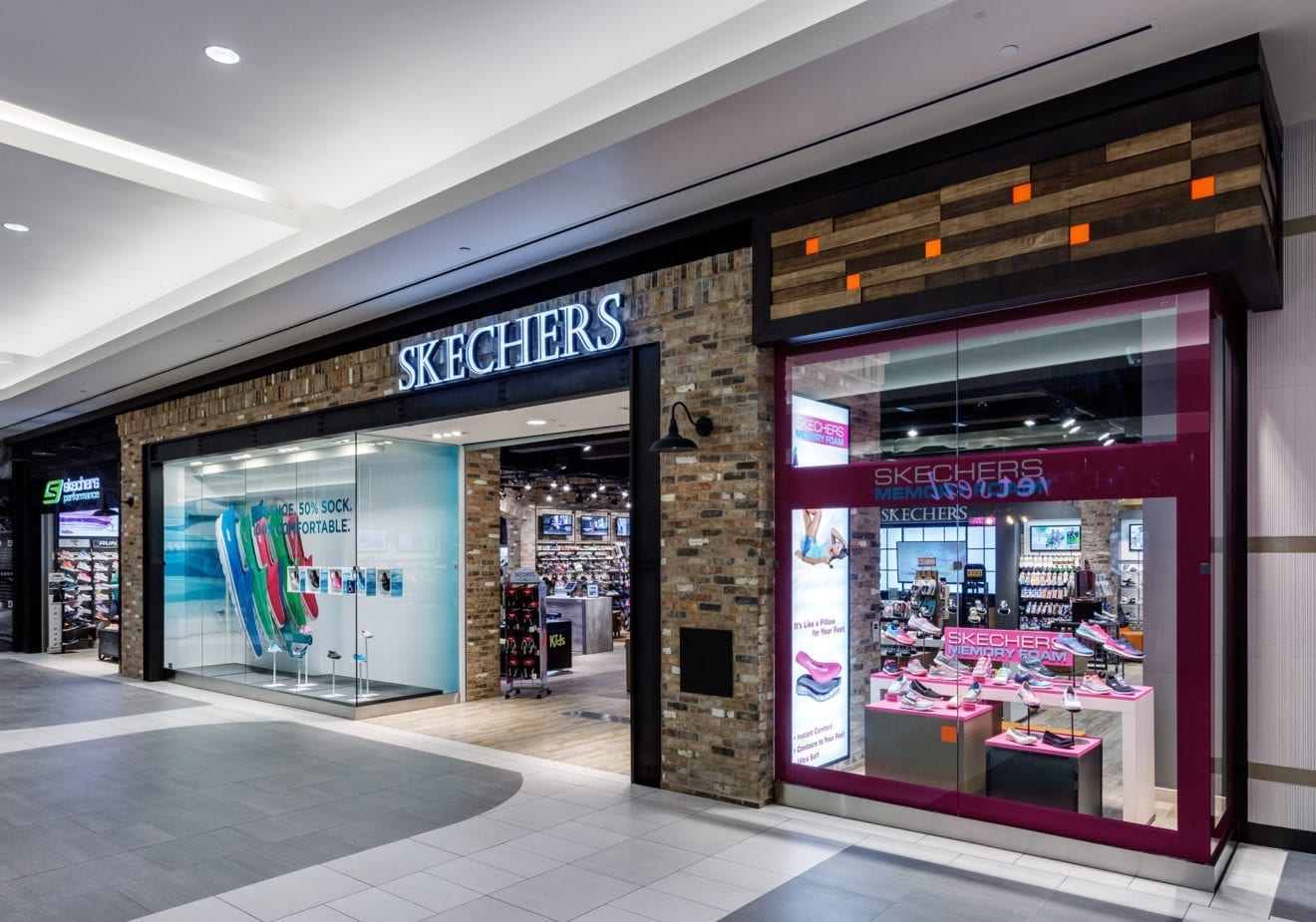
    Skechers USA, a global footwear leader, has announced financial results for the third quarter ended September 30, 2018. “Achieving record third quarter sales is a notable accomplishment given the strength of our third quarter 2017 sales,” began Robert Greenberg, Chief Executive Officer, Skechers.

    Greenberg added, “Both our domestic and international businesses grew, and we remained the leader in walking, work, casual lifestyle and sandals footwear in the United States. We experienced strong product successes across multiple divisions around the world, which was evident by our double-digit growth in both our international wholesale and worldwide Company-owned retail businesses. Skechers D’Lites, our heritage chunky style that has seen great success over the last two years in Asia, is now an in demand style across North America and Europe, and is poised for growth in South America, India and the Middle East. Through Skechers D’Lites, we are reaching a younger, more fashion-savvy audience, and getting press—from Marie Claire and Elle to HypeBae and Highsnobiety—and social media influencers are embracing this signature look. Further, we are seeing renewed acceptance of this chunky style by men. Our core footwear categories for men, women, work and golf are also performing well. We are achieving this growth with the right product mix combined with a balanced approach to marketing spend. As we continue to invest in our international infrastructure, we believe there is significant opportunity to grow our brand further through both wholesale, and Company-owned and third-party retail stores, which now stand at 2,802 locations worldwide. We’re looking forward to fourth quarter growth across both our domestic and international channels and a new annual sales record.”

    “As we near the close of 2018, we believe the direction of our business is on target with our record sales in the third quarter, continued international growth and strong gross margins,” stated David Weinberg, Chief Operating Officer of Skechers.

    Weinberg added, “With three record sales quarters in 2018 and brand acceptance around the globe, we achieved a new record for the first nine months of US$ 3.56 billion, an 11.5 percent increase over last year. In the third quarter, our international distributor business returned to growth, increasing 11.6 percent over the same period last year, and combined with our international joint venture and subsidiary business, our total international wholesale sales increased 11.8 percent for the period. International wholesale along with international retail now represents 55.5 percent of our total business. We expect our business in the United States—both wholesale and retail—to grow in the fourth quarter. We remain committed to efficiently and profitably growing our global footwear business.”

    Sales grew 7.5 percent as a result of an 11.8 percent increase in the Company’s international wholesale business, and a 10.6 percent increase in its Company-owned global retail business. Its domestic wholesale business decreased 3.0 percent. The Company’s total international business grew 12.5 percent and its total domestic business grew 1.8 percent. Third quarter comparable same store sales in Company-owned retail stores worldwide increased 1.9 percent, including an increase of 3.0 percent in the United States offset by a decrease of 0.8 percent in its international stores.

    Gross margins slightly increased as higher domestic margins from improved retail pricing and product mix were partially offset by the impact of negative foreign currency exchange rates.

    SG&A expenses increased 9.5 percent in the quarter. Selling expenses increased by 0.7 percent, but improved 50 basis points as a percentage of sales from 8.2 percent to 7.7 percent for the third quarter 2018. The US$ 37.8 million increase in general and administrative expenses was primarily the result of the Company’s continued commitment to build its international brand presence and direct-to-consumer channels. General and administrative expenses in China grew US$ 7.5 million to support continued expansion, including preparation for next month’s Single’s Day, and US$ 13.3 million associated with operating 58 additional company-owned Skechers stores worldwide, of which 13 opened in the third quarter. General and administrative expenses also included US$ 11.1 million related to corporate and domestic operations, of which US$ 4.8 million was for increased domestic warehouse and distribution costs.

    Earnings from operations increased US$ 7.4 million, or 6.4 percent.

    Net earnings were US$ 90.7 million and diluted earnings per share were US$ 0.58. In the third quarter, the company’s income tax rate was 13.7 percent reflecting its continued assessment of the impact of the recently enacted tax reform legislation. As a comparison, the company’s income tax rate for the three months ended September 30, 2017 was 9.4 percent.

    Sales grew 11.5 percent as a result of an 18.9 percent increase in the company’s international wholesale business, and a 13.7 percent increase in its company-owned global retail business. For the nine-month period, its domestic wholesale business was essentially flat compared to the same prior year period. The company’s combined international wholesale and retail business grew 19.7 percent and its combined domestic wholesale and retail business increased by 3.4 percent.

    Gross margins increased due to strength in the Company’s international wholesale and Company-owned international retail businesses.

    SG&A expenses increased 17.3 percent. This increase was due to an additional US$ 176.3 million in general and administrative expenses. Selling expenses increased by US$ 25.3 million.

    Earnings from operations increased US$ 26.9 million, or 8.2 percent.

    Net earnings were $253.7 million and diluted earnings per share were US$ 1.62. For the nine months, the company’s income tax rate was 13.0 percent. As a comparison, the company’s income tax rate for the nine months ending September 30, 2017 was 12.9 percent.

    For the fourth quarter of 2018, the company believes it will achieve sales in the range of US$ 1.100 billion to US$ 1.125 billion, and diluted earnings per share of US$ 0.20 to US$ 0.25. The guidance is based on expected growth in each of the company’s three segments. The company now expects its effective tax rate to be between 13 and 15 percent, which implies a fourth quarter tax rate of between 17 and 20 percent.


  • Louis Philippe unveils new retail identity at Banjara Hills India

    Louis Philippe unveils new retail identity at Banjara Hills India

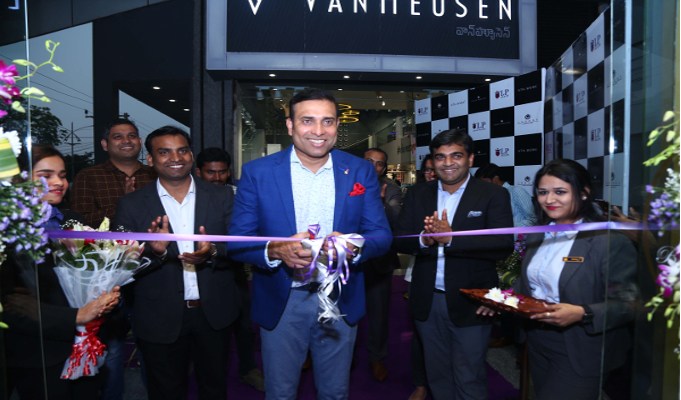
    Louis Philippe, India’s leading premium menswear brand from Aditya Birla Fashion and Retail Ltd, has launched the new retail identity at Banjara Hills. The new identity celebrates ‘The Crest’ which is a symbol of craftsmanship and excellence. The sprawling 4,000 sq.ft. store at Banjara Hills, Hyderabad was unveiled by India’s ace cricketer V.V.S Laxman.

    Speaking on the occasion, Farida Kaliyadan, COO, Louis Philippe said, “We are delighted to introduce the new retail identity for the brand. Louis Philippe is focused on delivering value through superior craftsmanship, diverse product portfolio and an unmatched retail experience. At present we have 17 stores across Hyderabad and Telangana.”

    The revamped outlet houses a wide range of formals, casuals, denims, suits and blazers, and accessories.

    As part of launch promotions, Louis Philippe will be giving the two highest billers a chance to win an Apple iPad. That’s not all, the other customers who participate and stand an opportunity to win PVR gift vouchers, ties, pocket squares, LP gift vouchers.

  • Vietnam fruits, vegetables struggle to enter overseas market

    Vietnam fruits, vegetables struggle to enter overseas market

    Vietnamese fruit and vegetable exporters are struggling with many countries increasing quality standards for them. Dragon fruit, which accounts for 40 percent of Vietnam’s fruit and vegetable exports in value, is facing the biggest challenge as China, which used to buy 80-90 percent of Vietnam’s dragon fruit mainly through border gates, has tightened the import through the channel.

    The importer has also improved standards on quarantine and food safety and origin tracking to Vietnamese fruits, including dragon fruits.

    Facing the difficulties, many traders have recently stopped buying the fruit in some major growing regions.

    As a result, prices of the fruit have plummeted. Recently farmers in Binh Thuan Province said that prices are down 90 percent to VND1,500-2,000 ($0.06-0.08) per kilogram.

    Vietnam’s dragon fruit exports might see more pain since China may reduce purchases after expanding its own cultivation, warned by industry insiders.

    Vietnam’s Plant Protection Department said China has planted dragon fruit on 20,000 hectares in places such as Guangxi and Hainan.

    The department said this area would increase to 30,000 hectares next year.

    Chili, which accounts for a third of Vietnam’s total vegetable export value, is struggling in the Malaysian market.

    Malaysia is among the three largest buyers of chili from Vietnam along with South Korea and China.

    But it announced to cease licensing the import of chili from Vietnam from September 14 after detecting excessive residues of plant protection products in chili shipments.

    Together with dragon fruits and chilli, papaya has struggled to enter overseas market.

    The South Korean Ministry of Food and Drug Safety has informed Vietnam’s Plant Protection Department that it discovered genetically modified papaya in shipments from Vietnam.

    South Korea does not allow entry of genetically modified organism (GMO) products.

    A spokesperson for a large papaya exporter in southern Long An Province said that farmers knew about this policy, and some GMO fruits went into the consignments despite their efforts to prevent it.

    It is working with farmers to grow non-GMO fruits, the spokesperson added.

    Nguyen Quoc Vong, a researcher in the GMO fruit industry, said the trend in developed countries is to consume non-GMO products.

    He warned that Vietnam would be shut out of high-end markets if it exports GMO products since food safety standards around the world are rising.

    “Our competitors like Thailand do not grow GMO produce, so they will have an advantage in high-end markets where we cannot compete,” he said.

    Vietnam earned $3 billion from fruit and vegetable exports in the first nine months of this year, up 15.2 percent over the same period last year, according to the General Statistics Office.