Tag: audi

  • Volkswagen won’t make Audi cars with SAIC in China before 2018

    Volkswagen won’t make Audi cars with SAIC in China before 2018

    German carmaker Volkswagen said on Wednesday it would not produce or sell any Audi cars with SAIC Motor until at least 2018, seeking first to strengthen ties with existing Audi partner China FAW Motor Corp .

    VW announced in November a non-binding agreement with SAIC to discuss a partnership regarding Audi AG, which is the best selling premium brand in China.

    Tying up with SAIC, China’s largest automaker, could boost slowing sales for the premium Audi brand as Daimler’s Mercedes and newer entrants such as General Motor’s Cadillac eat into its market share.

    “No sales, no production, nothing this year (2017),” state-owned China Daily on Wednesday quoted VW China chief Jochem Heizmann as saying.

    A VW spokesman confirmed Heizmann’s remarks, saying talks with SAIC were ongoing but that nothing “operational” would happen before 2018.

    “An agreement (with SAIC) could be reached in 2017 and there will be preparation with all the points for sales and production and so on,” an Audi spokeswoman told Reuters.

    “As soon as there is an agreement, there will be measures to fulfil this agreement, but right now we are just in talks and we have no agreement.”

    She added that while larger talks were ongoing, discussions about sales with SAIC were on hold until an agreement is reached resolving concerns of existing FAW dealers.

    Volkswagen gets a larger proportion of the proceeds from the 50-50 tie-up with SAIC than from its 40 percent stake in the venture with FAW.

    Joint ventures with VW and Audi have given FAW a lifeline as it struggles to create successful brands of its own.

    Existing dealers of Audi cars in a letter to the German firm last year said creating a new sales network would further damage an already tenuous situation as existing dealers suffer from slowing sales and generally operate at a loss.

    The Volkswagen spokesman said the priorities were first to strengthen ties with FAW, including with a recently agreed 10-year joint plan, second to resolve concerns of existing Audi dealers, and last, to move forward with a cooperation with SAIC.

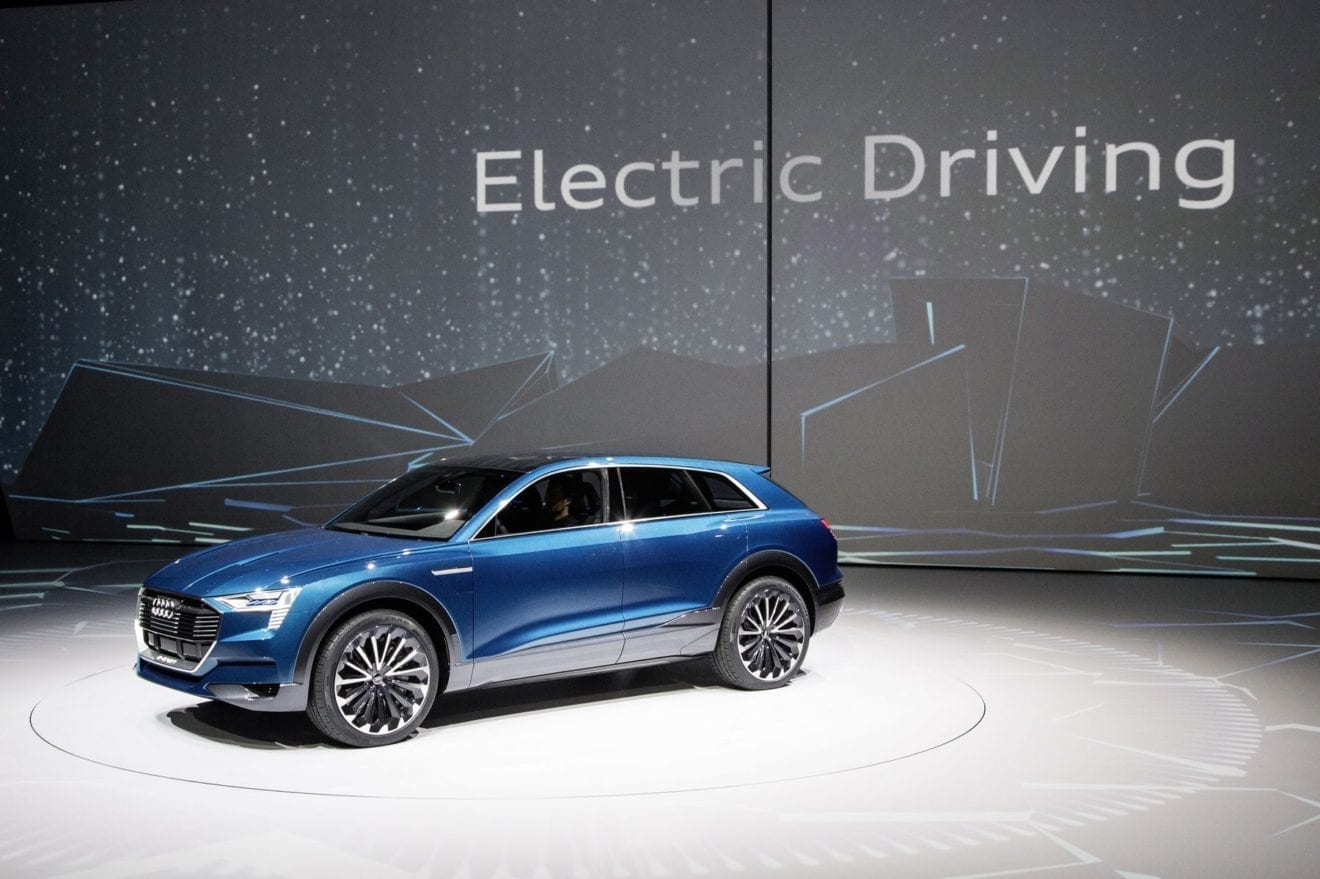
    Audi said on Tuesday that its joint venture with FAW would introduce five more plug-in electric cars in China in the next five years, following on FAW and VW agreeing to a 10-year roadmap for the venture.
  • Samsung Elec to supply Exynos processors for Audi vehicles

    Samsung Elec to supply Exynos processors for Audi vehicles

    Tech giant Samsung Electronics said on Wednesday it will start supplying Volkswagen’s Audi with Exynos processors for the carmaker’s infotainment systems, expanding its chip sales for the auto business.

    Samsung said in a statement its Exynos processors will power up to four in-vehicle displays for Audi’s next-generation infotainment system without elaborating on the contract value or what vehicles Audi will use the chips for.

    Car Infotainment systems for cars are for displaying information such as navigation and playing audio or video. The systems also increasingly allow drivers to connect their phones to their vehicles.

    The world’s top maker of smartphones and memory chips has been trying to boost sales of components for automobiles to boost growth. Samsung already supplies memory chips to Audi.

  • Volkswagen’s Audi in talks with China’s SAIC Motor on tie-up

    Volkswagen’s Audi in talks with China’s SAIC Motor on tie-up

    Volkswagen’s Audi premium brand is in talks with China’s largest automaker, SAIC Motor, on a potential long-term collaboration, Audi said in a statement on Monday.

    Reuters reported on Saturday, citing a source familiar with the matter, that the two had signed an agreement that could pave the way for Volkswagen’s joint venture with SAIC to make Audi brand cars.

    An early entrant to China, the world’s largest car market, Audi is the best-selling premium car brand although it is rapidly losing ground to newer car models from Daimler’s Mercedes-Benz and non-German automakers like Toyota’s Lexus and General Motor’s Cadillac.

    Audi cars are now only made in China through a joint venture with China FAW Group, providing a lifeline to a state-owned company whose own brand cars have struggled with falling sales.

    Audi reaffirmed its commitment to FAW in the release announcing the talks with SAIC, saying it had outlined growth plans with FAW for the next 10 years that include making green energy SUVs and sedans in every major segment.

    Audi will also form a new joint venture company with FAW to be based in Beijing and focus on mobility and digital services, according to the statement.

  • Audi Q5 gains size, power

    Audi Q5 gains size, power

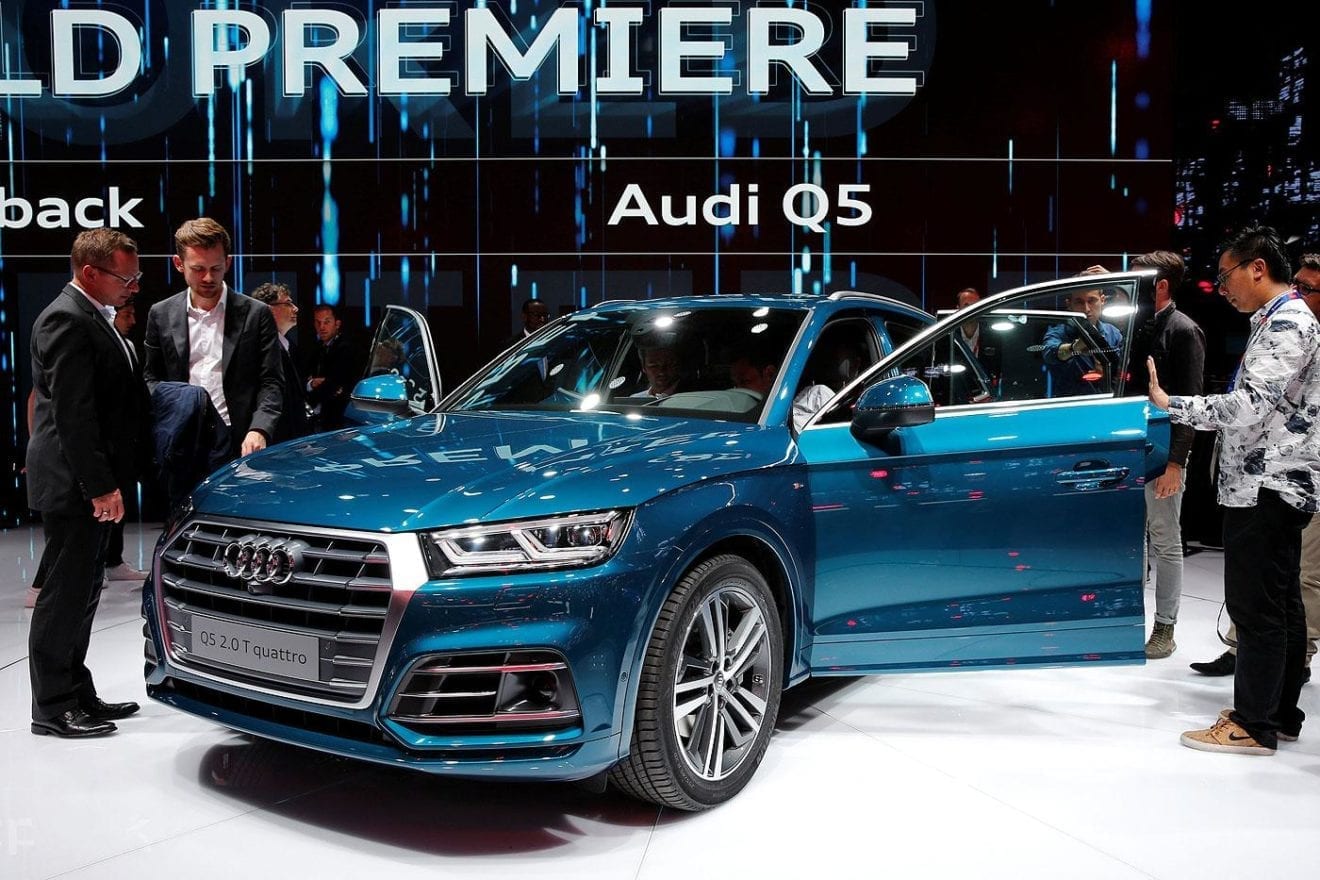
    Audi aims to retain its leadership position in luxury crossovers with a second-generation Q5 that adds size, technology and power to the outgoing model.

    The redesigned Q5 shown Thursday at the Paris auto show is longer, wider and taller with a longer wheelbase, but still lighter than the outgoing model, Audi says. The Q5 rides on Audi’s next-generation platform for vehicles with longitudinally mounted engines, known as MLB Evo.

    More than 1.6 million Q5s have been sold globally since the crossover debuted in 2008, and the stakes are high for the second generation. Audi has a new assembly plant in Puebla, Mexico, to build the Q5.

    “The first Audi Q5 was for many years the world’s best-selling SUV in its class. It was no easy task to design its successor, but that is precisely why it is so very exciting,” Audi AG Chairman Rupert Stadler said in a statement. “With the new Q5 we are setting the bar a notch higher.”

    The Q5 in Europe will be offered with four diesel options and one turbocharged gasoline engine. In the U.S., the Q5 gets a 252-hp turbocharged 2.0-liter four-cylinder engine, adding 32 hp from the outgoing Q5’s 2.0-liter mill.

    The same complement of technology and driver assist systems Audi offers on the A4 sedan and Q7 large crossover will be added to the Q5, including Audi’s virtual cockpit digital instrument cluster, its latest MMI infotainment system and driver aids such as adaptive cruise control, lane assist and traffic-jam assist, which allows for limited hands-free driving at slow speeds.

    A sportier SQ5 model with a 3.0-liter turbocharged V-6 will also be offered to American consumers, according to an Audi spokesman.

    U.S. sales will begin in the first half of 2017, likely in the second quarter after European deliveries begin early next year.

  • Audi says August sales up 2.9 percent on Chinese demand for compact cars

    Audi says August sales up 2.9 percent on Chinese demand for compact cars

    Audi increased global sales 2.9 percent in August on strong demand in its key Chinese market for luxury compact cars including the A3 and Q3 models.

    The Volkswagen-owned division on Tuesday said deliveries rose to 132,350 autos last month from 128,647 a year earlier, with eight-month sales up 4.9 percent at 1.23 million.

    Sales in China were up 8.8 percent at 49,154 cars, expanding year-to-date registrations in Audi’s largest market 6.8 percent to 361,315.

    German luxury rival BMW earlier on Tuesday reported a 5 percent increase in brand sales to 142,554 cars, with eight-month sales up 5.5 percent at 1.28 million.

  • VW’s Audi steps up collaboration with Chinese tech groups

    VW’s Audi steps up collaboration with Chinese tech groups

    Volkswagen’s luxury car unit Audi has agreed to deepen collaboration with Chinese internet technology groups to offer more digital services in the world’s largest car market.

    Audi and FAW-Volkswagen, VW’s joint venture with FAW Car Co Ltd (000800.SZ), have signed letters of intent with Alibaba (BABA.N), Baidu (BIDU.O) and Tencent (0700.HK), Audi said on Sunday. Financial terms were not disclosed.

    Parent Volkswagen has been hobbled by a scandal over the rigging of emissions tests, distracting it in a race with global carmakers to develop computer-aided services for drivers.

    VW’s CEO told a newspaper on Sunday that it has to remain in control of its relationship with car users, which is why it stopped talks with U.S. ride-hailing service Uber and technology giants Google (GOOGL.O) and Apple (AAPL.O).

    Under the agreement with online search company Baidu, Audi aims to improve the use of smartphone apps in its cars.

    Its projects with social network and online gaming group Tencent include helping drivers to make better use of the WeChat communication app.

    The alliance with Alibaba aims to develop more real-time traffic news services and 3D maps.

    VW in May took a $300 million stake in smaller ride-sharing company Gett.

  • Audi recalls A8 models in South Korea due to stalling problem

    Audi recalls A8 models in South Korea due to stalling problem

    Audi is recalling 1,534 A8 cars in South Korea due to a stalling problem, the transport ministry said on Wednesday, adding it was the first country where the German carmaker was recalling the model for such a defect.

    The Volkswagen (VOWG_p.DE) division will expand the recall to the United States and other countries, South Korea said, in what would be a further blow to the German company reeling from its emissions-test cheating scandal.

    An Audi Volkswagen Korea spokeswoman confirmed it was the first recall for such a defect but said she was not aware of any plans to expand the recall to other countries.

    South Korea, a major market for the A8, has sought to punish Volkswagen aggressively following the scandal, suspending sales of some Volkswagen, Audi and Bentley cars for allegedly forging documents on emissions or noise-level tests.

    The ministry said it had found a design problem in a coolant control valve, which was causing the affected models to stall. This is a “serious defect which hampers safe driving,” the ministry said in a statement.

    An Audi spokesman in Germany said a magnetic valve near the car’s gearbox needed to be replaced and that there had been no other recalls in other countries so far.

    The model in question is the A8 4.2 FSI Quattro produced between July 2010 and April 2012.

  • VW’s Audi posts 2.3 percent rise in July sales

    VW’s Audi posts 2.3 percent rise in July sales

    Audi sold 2.3 percent more cars in July on growing demand for the redesigned top-selling A4 saloon, though kept trailing behind German luxury rivals BMW (BMWG.DE) and Mercedes-Benz (DAIGn.DE).

    Audi’s global sales increased to 149,400 cars and sport-utility vehicles from 146,073 a year earlier, the Ingolstadt-based carmaker said on Thursday, with its year-to-date deliveries up 5.2 percent to 1.10 million cars.

    Daimler’s Mercedes-Benz last week posted a 9.4 percent increase in sales to 163,770 cars, its best-ever July result, compared with a 4 percent gain at BMW’s core brand to 153,392.

    After seven months, Mercedes-Benz is on course to become the world’s biggest luxury carmaker by sales, replacing BMW which has kept the lead since 2005.

  • Bang & Olufsen spreads out

    Bang & Olufsen spreads out

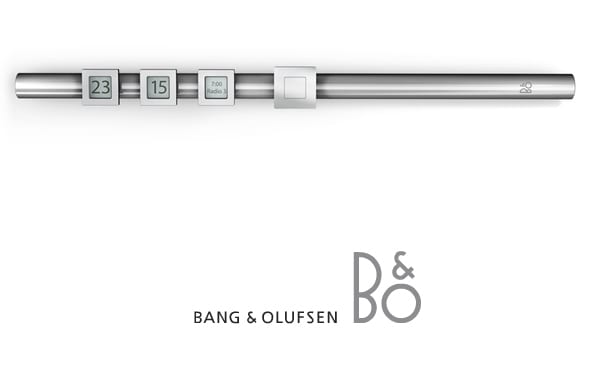
    One of the luxury brands in home and car sound systems, Bang & Olufsen (B&O), has readied its retail foray. Till now, operating mostly in the rarefied world of custom-made audio systems installed in the homes of celebrities and business barons, or pre-installed in luxury marques such as Audi, B&O is finally launching stand-alone stores that will not only afford an experience of its products but also, perhaps, whet the aspirations of those dropping by.