Retail News CRM

Tag: audi

  • Audi Installs Used Lithium-Ion Batteries In Factory Vehicles

    Audi Installs Used Lithium-Ion Batteries In Factory Vehicles

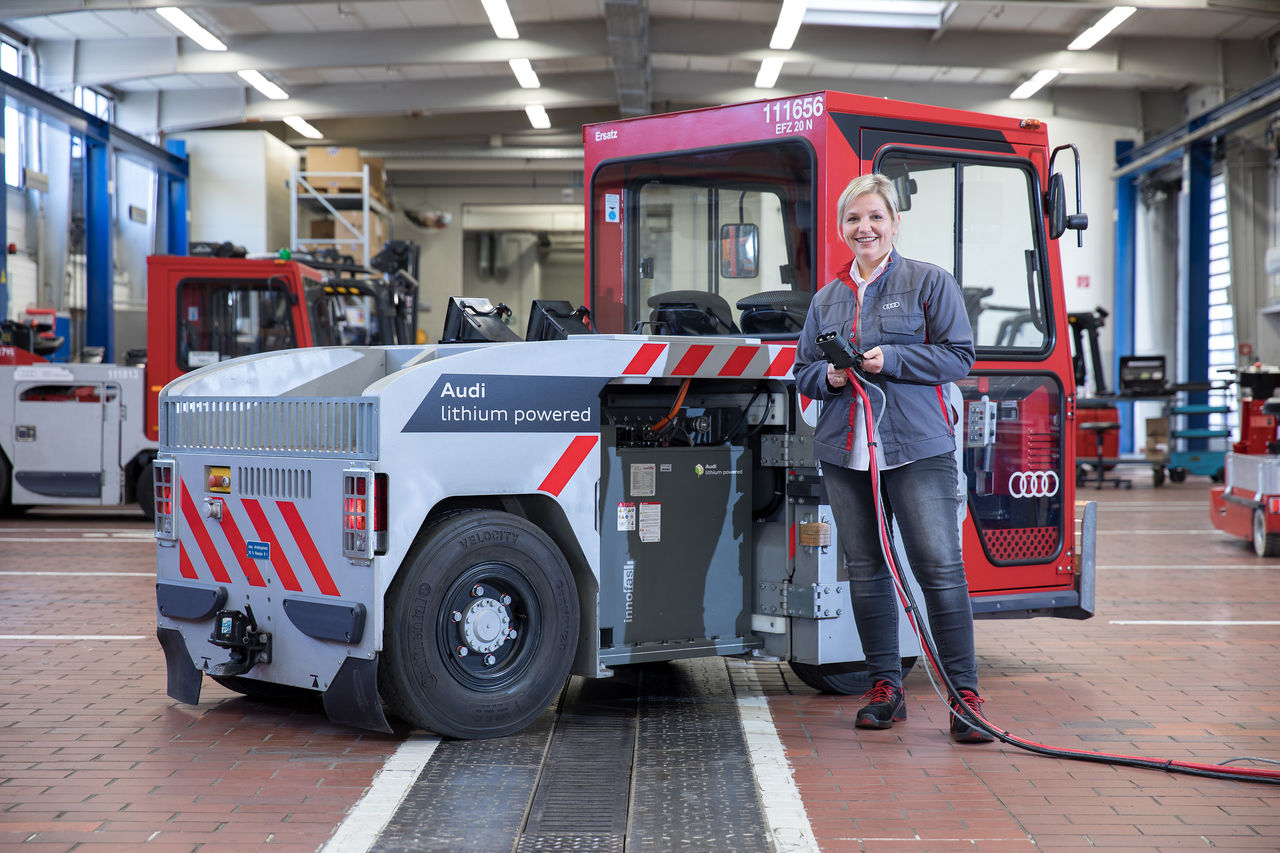
    Audi is testing factory vehicles powered by used lithium-ion batteries at its main plant in Ingolstadt. Audi is obliged by law to take back energy carriers after they have been used in cars because they still have a large proportion of their original charging capacity. An interdisciplinary project team is now investigating how batteries from the Audi e-tron test vehicles, for example, or from hybrid models such as the Audi A3 e-tron and Audi Q7 e-tron, can continue to be used sensibly. A number of other advantages have already become apparent during the test phase.

    Factory vehicles in Audi’s production plants such as fork-lift trucks and tow tractors have so far been powered by lead-acid batteries. When the batteries are empty, employees remove the battery packs weighing up to two tons from the vehicles and connect them to a charging station for several hours. However, lithium-ion batteries can be charged directly where the vehicles are parked during normal downtimes, in breaks between shifts for example. This saves space and also eliminates the high manual effort required to replace the batteries. Audi would save millions if it converted its entire fleet of factory vehicles to lithium-ion batteries at its 16 production sites worldwide.

    The battery of an Audi e-tron consists of 36 individual battery modules and is located under the car’s passenger cell between the axles in the form of a flat, wide block. After the batteries are taken back, the project team checks each individual module for its continued usability. They then install 24 modules in each new battery tray. This has the same dimensions and weight as the previous lead-acid batteries of the factory vehicles, so the company can continue to use all of those vehicles without any major investments. In the future, specialised employees could take over the assembly of the second-use batteries in the company’s own battery centre.
  • Porsche to hike Taycan output

    Porsche to hike Taycan output

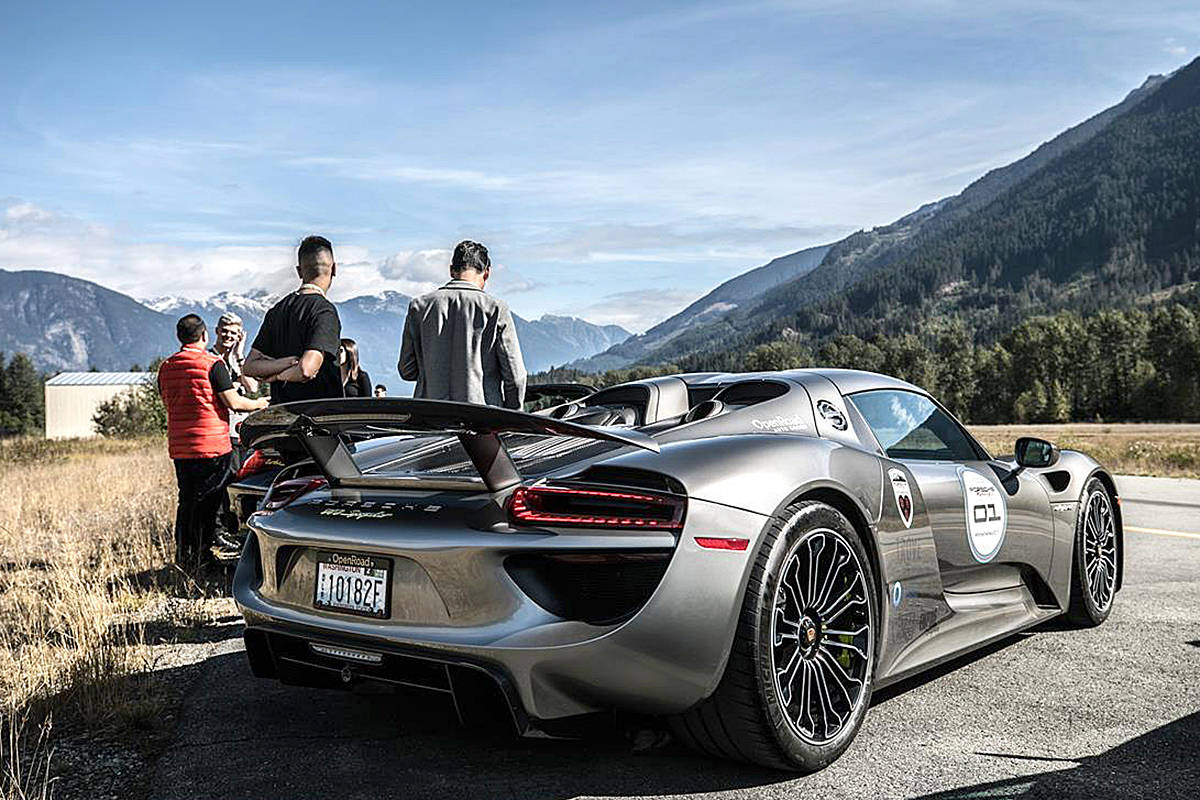
    Porsche AG will increase production of the Taycan after more than 20,000 potential buyers registered to purchase the brand’s first electric car, matching the entire annual output initially earmarked for the four-door sedan.

    “The overwhelming interest in the Taycan shows us that our customers and fans are just as excited about the first Porsche electric athlete as we are,” Porsche sales chief Detlev von Platen said Friday in a statement. “We’ve therefore increased our production capacities.”

    The Taycan will be unveiled in September with a price range between the 74,800-euro ($83,866) Cayenne SUV and the 97,800-euro Panamera coupe to compete with Tesla Inc.’s Model S. The car is part of a wave of new models from Jaguar, Mercedes-Benz and Audi that’ll challenge Tesla’s electric-car leadership.

    Porsche is parent Volkswagen AG’s most profitable brand and its success is vital for the group to pull off the industry’s most aggressive push into electric vehicles. VW has allocated some 40 billion euros for electric and connected cars and targets 50 battery-powered models by 2025. To help drive uptake, Porsche is installing fast chargers at its dealerships in the U.S. and Europe that’ll get the Taycan’s battery up to 100 kilometers (62 miles) in four minutes. The car’s overall range on a single charge stands at 500 kilometers.

    The model’s planned production of 20,000 vehicles per year is based on a two-shift system at Porsche’s main site in Stuttgart, Germany, and can be expanded if needed, production chief Albrecht Reimold told reporters last year. Porsche also confirmed recently it will offer a fully-electric version of its best-selling Macan SUV.

    Interested Taycan buyers are required to make a down payment of 2,500 euros in Europe to register.

  • Audi’s Electric SUV Faces Four Week Delay Due to Software Issues

    Audi’s Electric SUV Faces Four Week Delay Due to Software Issues

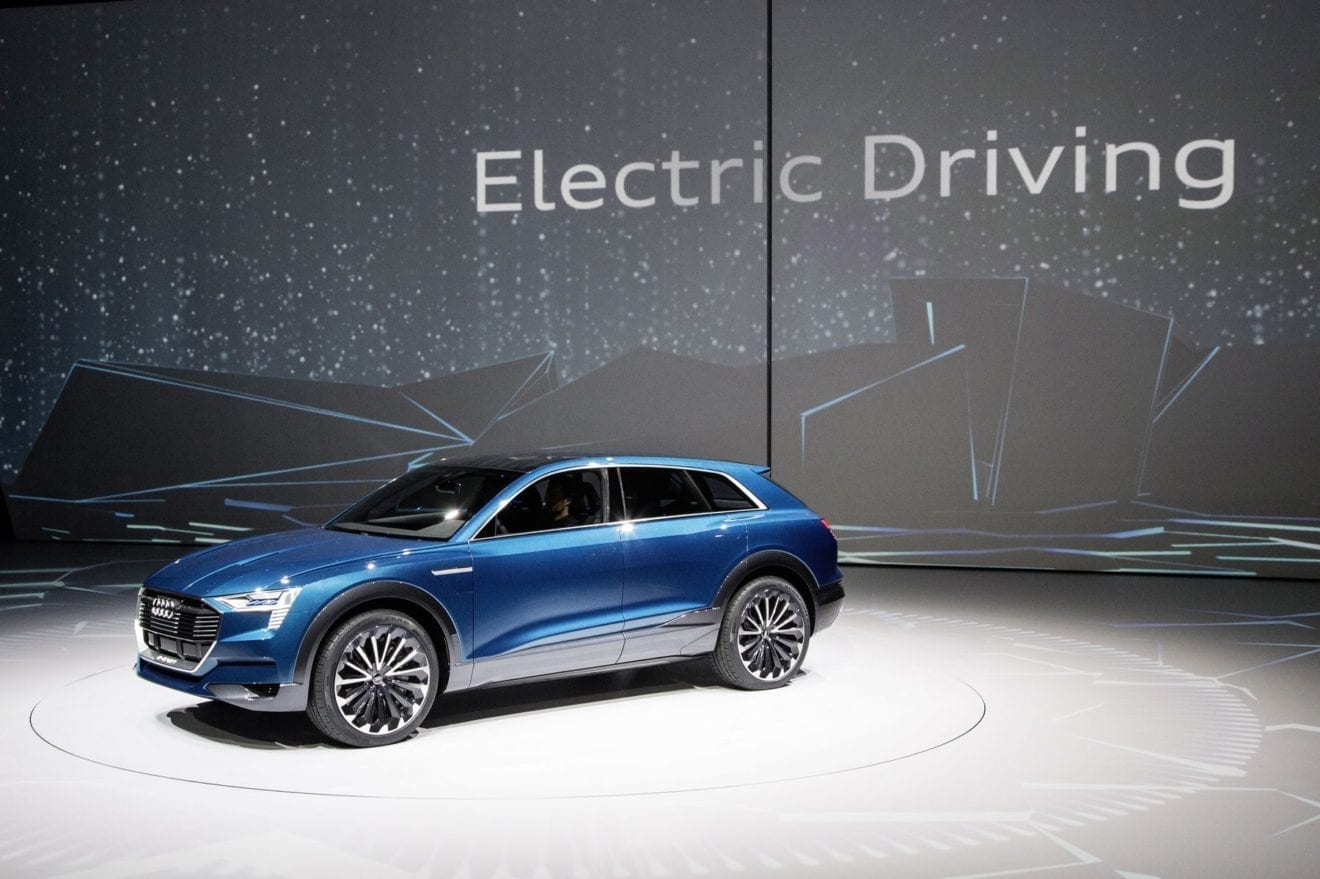
    Audi’s first electric sport utility vehicle (SUV) will hit showrooms four weeks later than planned because of a software development issue, a spokesman for the German luxury car brand said on Sunday. The spokesman said Audi’s e-tron midsize SUV faced delay because the carmaker needs new regulatory clearance for a piece of software that was modified during the development process.

    Audi staged a global launch of the e-tron in San Francisco last month as part of its effort to expand the market for premium electric vehicles and grab a share from California-based Tesla, which has had the niche largely to itself.

    The e-tron delays were first reported by German newspaper Bild am Sonntag, citing sources close to the company. The paper said delivery could be delayed by several months. The paper also said Audi was locked in price negotiations with LG Chem, the South-Korean supplier of batteries for its electric vehicles, which wants to increase prices by about 10 percent because of high demand.

    LG Chem supplies electric vehicle batteries for Audi, its parent Volkswagen and Daimler. An LG Chem official declined to comment on the report, citing the confidentiality of its relationship with a client. The Audi spokesman also declined to comment on price negotiations with LG Chem.

  • Audi To Pay 800 Million Euros Fine Over Dieselgate Scandal

    Audi To Pay 800 Million Euros Fine Over Dieselgate Scandal

    Volkswagen said on Tuesday that its subsidiary Audi would not contest an 800-million-euro (USD 927 million) fine issued by German prosecutors over “deviations from regulatory requirements” in diesel engines.
    “Audi AG has accepted the fine” investigators levied for “deviations from regulatory requirements in certain V6 and V8 diesel aggregates and diesel vehicles”, the group said in a statement, adding that “the fine will directly affectVolkswagen AG’s financial earnings” for 2018
  • Alibaba Announces Smart Mobility Initiatives with Partners

    Alibaba Announces Smart Mobility Initiatives with Partners

    Alibaba Group Holding Limited announced a series of smart mobility initiatives in partnership with auto brands and technology service providers. The announcement was made during The Computing Conference, the company’s largest technology showcase, held over four days in Hangzhou, Alibaba’s home base.

    Partnering with Bosch on Automated Valet Parking

    Alibaba Cloud, the cloud-computing arm of Alibaba Group, and Bosch, a leading global supplier of technology services, announced plans to introduce Automated Valet Parking (AVP) solutions in China. Both parties will work together to enable the infrastructure-based, driverless parking solution. The technology is powered by software in a cloud and it will offer a fully automated valet parking service in the near future.

    As part of the cooperation, Bosch will provide its AVP technology, its experience in systems engineering and its IoT competencies. Alibaba Cloud, meanwhile, will share its technologies and its experience in cloud computing, data analysis and smart mobility. Both parties intend to explore building showcase sites to demonstrate next-generation AVP technology throughout China.The two companies are also committed to exploring future opportunities in connected mobility in China and abroad.

    AVP is an ideal accompaniment to smart cities, an area in which both Bosch and Alibaba aim to become significant players. AVP is also an important milestone on the road to autonomous driving.

    Partnering with Volvo Cars for Car-to-Home AI services

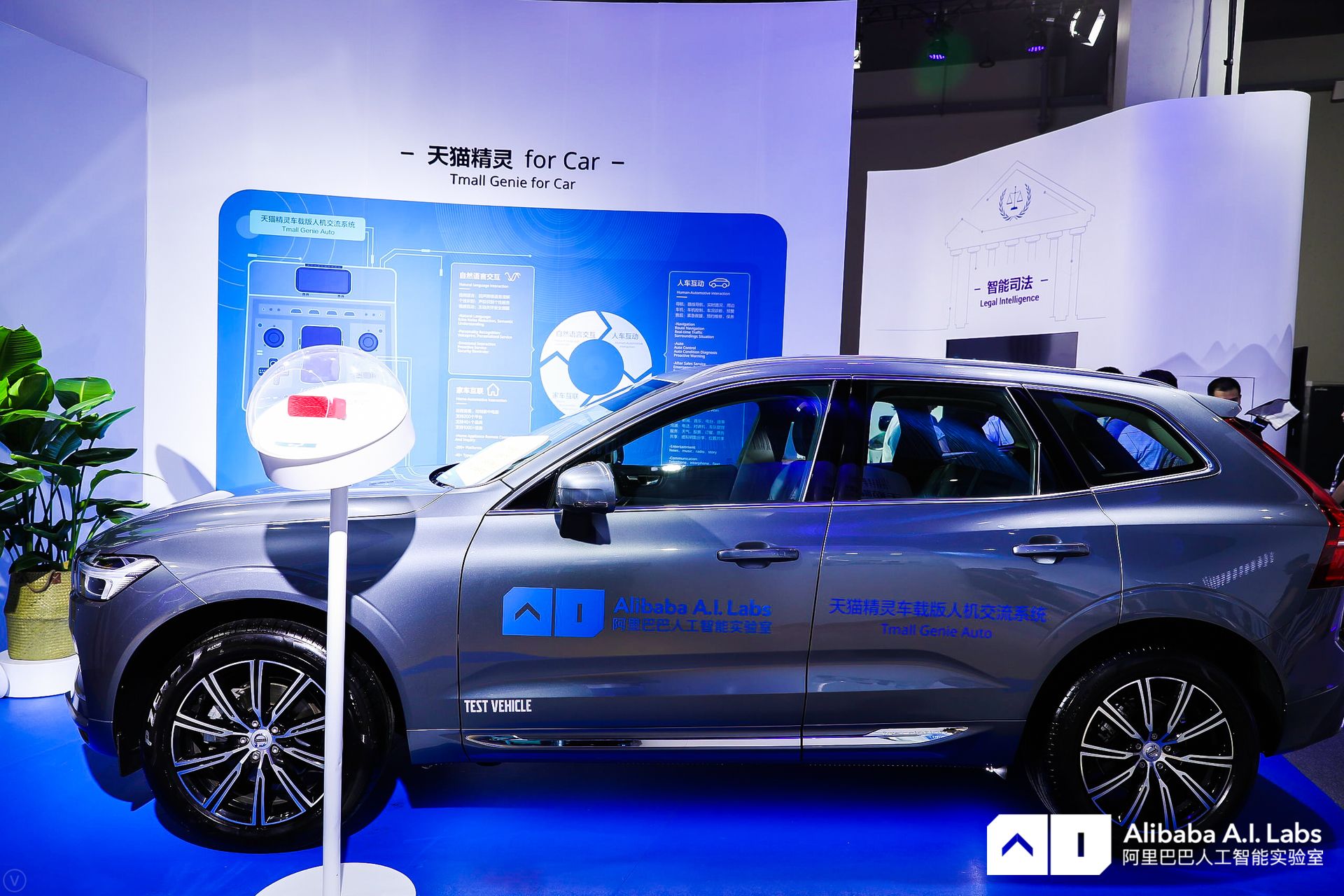
    Alibaba A.I. Labs, the department leading consumer AI product development at Alibaba, announced it is upgrading its auto Artificial Intelligence solution, Tmall Genie Auto, by partnering with Volvo Cars and adding car-to-home AI services. Tmall Genie is an AI-powered smart assistant developed by the Labs. Through the upgraded solution, Volvo Cars drivers with a Tmall Genie-compatible device will be able to monitor and control their smart-home devices from their cars, starting next year. Some of the newly added services include:

    · Running a status check on humidity, temperature, light and air conditioning at home, as well as the on and off status of smart home appliances;

    · Controlling appliance functions, including turning on the heater, air conditioning, door lock and air purifier;

    · Turning on the “home model” when drivers are 10 minutes away from home, which readies smart appliances for your arrival while you’re still in the car.

    Over 90 appliance brands are already in the Tmall Genie ecosystem, enabling over 600 smart home appliances to be easily connected for car-to-home AI services.

    Last June, Alibaba A.I. Labs partnered with Daimler, Audi and Volvo Cars to offer home-tocar AI services through Tmall Genie Auto. The Labs also rolled out in-car AI services by integrating the speech-interaction and Natural Language Processing features of AliGenie, the AI platform behind Tmall Genie. This technology supports voice commands for different tasks, such as identifying nearby attractions and restaurants, booking hotels and movie tickets and ordering to-go boxes by activating the cars’ navigation and infotainment systems.

    Partnering with Ford for New Internet Car

    As part of the strategic cooperation inked last December between Alibaba Group and Ford, the auto brand today confirmed that Ford Kuga SUV customers will be able to order the car which has a 10.4-inch center screen and software powered by AliOS later this year. The debut of this technology in the Kuga marks another milestone in strengthening ties between the two leaders in their respective fields, and highlights the rapid growth of internetconnected cars in China. As of today, there are over 500,000 AliOS – equipped Internet vehicles on the road in China.

  • Audi CEO Stadler faces at least another week in jail

    Audi CEO Stadler faces at least another week in jail

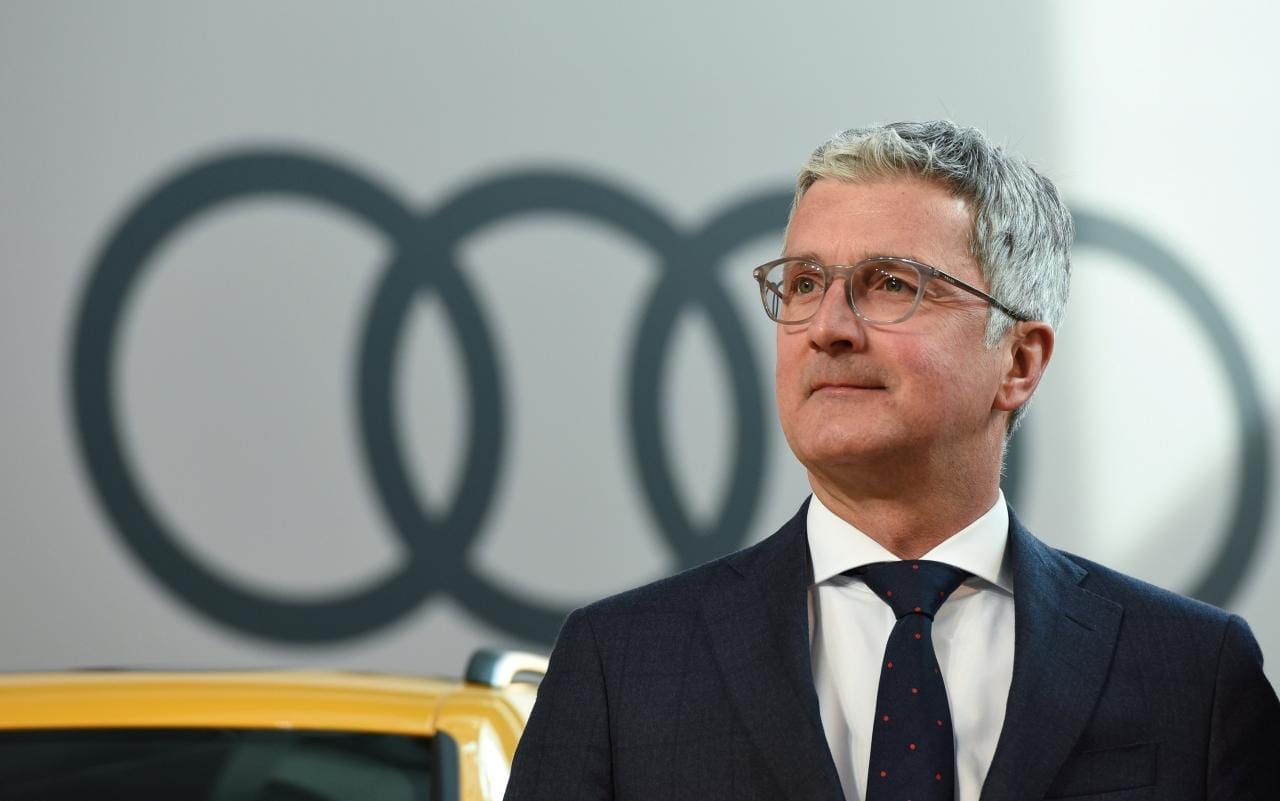
    Suspended Audi CEO Rupert Stadler is facing at least another week in custody after agreeing to additional questioning by prosecutors over his role in the diesel emissions scandal.

    His defense attorneys and investigators scheduled meetings for next week, Karin Jung, spokeswoman for Munich prosecutors said in an interview. He will remain in custody for now.

    Stadler, who became a suspect in the probe at the end of May, was arrested a week ago. He was first questioned June 20, but the interviews were adjourned to allow his lawyers to assess the evidence before deciding whether to resume talks.

    In his first interrogation, prosecutors had quizzed Stadler over the fraud allegations against him and their suspicions — from a wire tapped phone call — that he threatened to suspend an Audi employee who had testified in the criminal probe, two people familiar with the case have said.

    The arrest of the 55-year-old marks the highest-profile detention since Volkswagen Group’s cheating scandal erupted when the automaker admitted to rigging 11 million vehicles globally to bypass emissions tests. Volkswagen has rejected claims that top executives including Stadler were aware of the criminal scheme that stretched over nearly a decade.

  • Audi aims to double China sales over six years

    Audi aims to double China sales over six years

    Volkswagen’s premium brand Audi aims to double sales in China over the coming six years, sales chief Bram Schot told Automobilwoche.

    “In 2023 we want to sell 1.2 million cars in China,” the German trade magazine quoted him as saying.

    Audi sold 597,000 vehicles in China, its biggest single market, last year.

    The company last year resolved a dispute with dealers in China that could have disrupted the luxury carmaker’s business in the world’s biggest auto market.

    The dispute stemmed from a long-term collaboration between Audi and SAIC Motor Corp that had riled Audi store operators in China, who among others sell Chinese-made vehicles as part of Audi’s existing joint venture with China’s FAW Corp .

    Schot said Audi would continue to work with both SAIC and FAW.

  • Porsche, Audi to develop joint electric car platform to save costs

    Porsche, Audi to develop joint electric car platform to save costs

    Porsche and Audi, Volkswagen’s main luxury car divisions, plan to develop a joint platform for electric vehicles that will enable them significantly cut down on costs, German newspapers quoted their chief executives as saying.

    “By 2025, we’re facing a low single-digit billion euro sum to develop the architecture,” Audi CEO Rupert Stadler told both the Stuttgarter Zeitung and Stuttgarter Nachrichten.

    “If both would act on their own, costs would be 30 percent higher,” Porsche CEO Oliver Blume said, adding Audi was hiring 550 developers for the project and Porsche 300.

    From 2021 onwards, both businesses want to bring several models to the streets based on the joint platform, with Stadler saying that would build two sedan cars in Neckarsulm and two sports utility models at its Ingolstadt base.

    Porsche’s Blume said the sportscar maker could build its first model based on the joint architecture in Leipzig, where it is already assembling its Macan sport-utility model. “I currently see good chances for Leipzig,” Blume said.

  • Audi recalls 5,000 diesel cars to fix emissions control software

    Audi recalls 5,000 diesel cars to fix emissions control software

    Audi is recalling almost 5,000 cars in Europe for a software fix after discovering they emitted too much nitrogen oxide, the polluting gas that parent Volkswagen  concealed from U.S. regulators in its devastating 2015 “dieselgate” scandal.

    The luxury carmaker said on Thursday it had reported the matter to Germany’s road transport authority KBA, which was concerned about the possible illegal manipulation of emission levels.

    The KBA had no immediate comment.

    Audi said it would update the software of the 4,997 A8 model vehicles with 4.2 litre V8 diesel engines, of which 3,660 are in Germany and were made between September 2013 and August 2017.

    The software updates will likely be available in the first quarter of 2018 after winter testing.

    “Among other things, the update should ensure that after cold starts the engine more quickly reaches optimal operating conditions for the exhaust-gas treatment system so that its emissions are improved in real driving conditions,” it said.

    “During the testing, it will be ensured that the new software has no disadvantages for customers in terms of fuel consumption or performance.”

    Volkswagen was found in 2015 to have illegally manipulated engine software so that vehicles would meet nitrogen oxide (NOx) emissions standards in laboratory testing but not in real-world conditions, where they could emit up to 40 times the permitted levels.

    Several Audi models were affected and Audi has been accused in media reports of having devised the so-called defeat devices years earlier but not to have installed them in its vehicles at that time. Audi and Volkswagen have never commented on the matter.

    Volkswagen’s shares plunged more than 20 percent when the scandal broke. They climbed back to pre-crisis levels for the first time on Thursday.

  • Mitsubishi, Audi recall cars in Vietnam due to safety concerns

    Mitsubishi, Audi recall cars in Vietnam due to safety concerns

    The automakers said the technical faults could cause serious damage, and they will be fixed free of charge.

    Mitsubishi Motors Vietnam has recalled 4,218 cars due to technical faults, official reports said.

    The majority of the recalled models are Pajero Sports manufactured between 2011 and 2016, but around 20 percent are Outlander Sports produced from 2014-2016.

    Explaining the recall, which may take until July 2019, Mitsubishi Motors Vietnam said the hinges on the rear doors were prone to rust because they were not completely coated in anti-corrosion paint. This meant they could fall off and injure people.

    In a separate move, Audi Vietnam has recalled 33 of its Q3 models manufactured between June 2014 and November 2016 due to a problem with their brake lights.

    Audi said the brake lights could fail if the handbrake was used to make an emergency stop.

    Official data shows Vietnamese customers bought more than 134,200 cars in the first half of this year, down 1 percent against the same period last year.

  • Audi targets 10 billion euros in cost cuts to fund electric-car push

    Audi targets 10 billion euros in cost cuts to fund electric-car push

    Audi aims to cut costs by 10 billion euros by 2022 to help fund a shift to electric cars as it seeks to move on after the emissions scandal, sources close to the carmaker said.

    Audi, Volkswagen’s main profit driver, plans to bring five new all-electric models to market in coming years, starting with the e-tron sport-utility vehicle (SUV) to be assembled from 2018 in Brussels.

    Despite run-up costs for its electric-car programme, the luxury automaker wants to keep its operating profit margin at 8 percent a year at least, two sources close to Audi said. Its profit margin in the first half of this year was 8.9 percent.

    The bulk of the 10 billion cost savings would come from cutting research and development costs, the sources said.

    A spokesman at Audi’s headquarters in Ingolstadt, Germany, declined comment. German business daily Handelsblatt reported the cost-savings target and profitability plans earlier on Sunday.

    Audi also aims to free up funds for investments in zero-emission technology by developing a new production platform with Porsche, allowing both VW premium brands to save money by sharing components and modules.

    Audi is grappling with car recalls, prosecutor investigations and persistent criticism from unions and managers over the diesel emissions scandal and its strategy post-dieselgate.

    Sources told Reuters on Friday that four of the brand’s seven top executives are earmarked for dismissal in the near future. On Sunday, sources said the dismissals were discussed by supervisory board members last Thursday but a formal decision has yet to be taken.

  • Audi to use Valeo’s stop-start technology in sports coupe

    Audi to use Valeo’s stop-start technology in sports coupe

    Luxury carmaker Audi will introduce Valeo’s micro-hybrid “stop-and-start” systems in its RS5 sports coupe, sources told Reuters, in a sign that the Paris-based supplier may be tapping new premium demand for the fuel-saving technology.

    The contract with Volkswagen’s (VOWG_p.DE) upscale Audi division underlines increased spending by automakers on technology designed to reduce carbon dioxide emissions, in response to tightening standards and testing regimes.

    Volkswagen and Valeo both declined to comment.

    Unlike a typical alternator, which converts engine torque to electricity to power a vehicle’s circuitry and charge its battery, the starter-alternator can also re-start the engine in a fraction of a second.

    The Valeo system delivers fuel savings of up to 15 percent by automatically shutting down the engine whenever a car is halted by a red light or traffic, with an in-step reduction of CO2 and pollution emissions in congested cities.

    First introduced in 2004, the so-called “i-StARS” technology is a flagship product of Valeo’s 4 billion euro ($4.6 billion)propulsion systems division, with 3 million units sold.

    But launch customer PSA Group (PEUP.PA) and other volume manufacturers have since dropped it from new models in favor of beefed-up starter motors, a cheaper though less efficient stop-and-start solution.

    The i-StARS system is beginning to find new markets, however, Valeo boss Jacques Aschenbroich told Reuters. “Demand for it is continuing to grow significantly,” the CEO said, predicting double-digit percentage sales rise.

    With the mild-hybrid RS5, which went on sale this month in Germany and in France next week, Audi becomes the first German premium brand to use the technology on its current vehicle lineup.

  • VW’s Audi and Porsche to join forces on vehicle development

    VW’s Audi and Porsche to join forces on vehicle development

    Volkswagen Group’s Audi and Porsche brands will join forces on vehicle development, the two upmarket brands said on Wednesday, to help the world’s largest carmaker save money in the wake of its costly emissions test cheating scandal.

    The pact comes as Volkswagen (VW) Chief Executive Matthias Mueller, who previously worked as Porsche’s CEO and Audi’s head of product management, finalizes a plan to step up development of autonomous cars, electric vehicles and digital services.

    Porsche and Audi said the focus was on jointly developing shared vehicle platforms, modules and components, in a deal that follows a period of intense in-house competition for development resources.

    Projects will be jointly headed by representatives from each brand. In the coming months, joint teams will prepare the specific areas of cooperation and define a roadmap to 2025, they said.

    Porsche, taken over by VW 2012, has emerged as a strong rival engineering center to Audi. Porsche’s MSB platform, used for its four-seater Panamera model, has been adopted for VW group’s next generation Bentley Continental model even though Audi had developed a similar offering.

    Since the group’s emissions test cheating on diesel engines was exposed in September 2015, Audi has lost two research and development chiefs and the head of its automotive electronics division, who did pioneering work in the area of autonomous driving and battery technology.

    Audi remains the group’s center of excellence for sport-utility vehicles, a lucrative and growing market, where it supplies platforms to Porsche and other brands such as Bentley.

    With self-driving vehicles likely to play a major future role in the industry, Audi also develops autonomous cars for the group.

    But a separate internal race has begun to become an engineering hub for electric vehicles, a field which includes research and development of battery cells, battery packs and electric motors.

    Porsche has developed the J1 electric cars platform, while Audi has also worked on its own electric car.

    Porsche has also taken over production of eight-cylinder gasoline engines for large sportscars for the VW group, even though Audi has its own engine factory in Hungary.

  • Audi halts A4, A5 production at Ingolstadt over parts shortage

    Audi halts A4, A5 production at Ingolstadt over parts shortage

    German luxury carmaker Audi will halt production of the A4 and A5 luxury models at its Ingolstadt base this week until Thursday due to a parts shortage after a fire at a supplier, it said on Monday.

    Audi produces 1,400 A4 and A5 models per day at the plant, its largest, so it will lose 5,600 vehicles this week. A fire at a supplier making front wall cladding had disrupted parts deliveries, a spokeswoman said on Monday.

    About 8,500 of the 43,000 workers Audi employs at the plant will be affected and will not be working between Monday and Thursday, she said. Production of A4 and A5 models at a plant in Neckarsulm had not been affected.

    German news agency Deutsche Presse-Agentur reported the stoppages earlier on Monday.

  • Porsche, Audi lift VW to record underlying profit

    Porsche, Audi lift VW to record underlying profit

    Record Audi and Porsche sales helped Volkswagen (VOWG_p.DE) swing to a record underlying profit in 2016, although a bigger than expected charge from the diesel emissions scandal meant it missed estimates for its operating profit.

    Sales of the German carmaker’s luxury brands lifted underlying operating profit before special items 14 percent to 14.6 billion euros ($15.5 billion) in 2016, after the company reported its biggest ever loss in 2015.

    VW forecast broadly stable earnings this year.

    Underlying profit was broadly in line with forecasts for the world’s biggest car manufacturer by volume sales, which hiked its dividend more than expected after group sales rose to new highs, with an 8.1 percent jump in fourth quarter deliveries.

    Volkswagen (VW) is struggling with the fallout from its admission 17 months ago that it rigged U.S. diesel emissions tests, a scandal that some analysts have estimated may cost it more than $30 billion in fines, compensation and vehicle refits.

    VW has since embraced a costly shift to more electric vehicles and last year eclipsed Toyota (7203.T) as the world’s top-selling carmaker with record deliveries of 10.3 million.

    ONE-OFF CHARGES

    Although group sales fell 4 percent in January on the back of national holidays and a tax hike on small-engine cars in China, its biggest market, VW forecast an underlying operating margin of between 6 and 7 percent for 2017, compared with the 6.7 percent it achieved last year.

    But the damage from the emissions cheating affair took its toll, with VW booking bigger-than-expected one-off charges of 7.5 billion euros in 2016, of which 6.4 billion were related to the emissions-test rigging scandal. Analysts had on average forecast the cost would be 4.2 billion euros in total.

    Including those charges, VW made a 2016 operating profit of 7.1 billion euros, missing a consensus forecast of 10.5 billion euros but a big swing from a loss of 4.1 billion euros in 2015.

    VW’s Chief Executive Matthias Mueller said the carmaker was now well set for the years ahead.

    “As the figures show, Volkswagen is very solidly positioned in both operational and financial terms. This makes us optimistic about the future,” he said in VW’s results statement.

    The return to profit at group level may help calm tensions in Wolfsburg where labour bosses and VW’s brand management have been sparring over its ability to tackle the high cost base of VW’s German plants, which what analysts and investors say will be key to a further recovery.

    VW said it would propose a dividend of 2.06 euros per preferred share, more than the 1.86 euros expected by analysts on average, and 2.00 euros per ordinary share for 2016.

    That is up from 0.17 euros and 0.11 euros respectively a year earlier, when VW had to cut the dividend because of the cost of the diesel emissions cheating.