Tag: Australia

  • Two regulators open investigations into Optus over data breach

    Two regulators open investigations into Optus over data breach

    Two Australian regulators said on Tuesday they have opened investigations into Optus, the country’s No. 2 telecoms provider, after a breach of its systems resulted in the theft of personal data from up to 10 million accounts.

    The probes only add to headaches for Optus, which disclosed the breach on Sept. 22 and has since come under heavy fire from the government and the public for not preventing the massive cyberattack.

    The Office of the Australian Information Commissioner (OAIC) said it was investigating whether the Singapore Telecommunications Ltd-owned company took reasonable steps to protect customer data and comply with privacy laws.

    The Australian Communications and Media Authority (ACMA) said it was investigating whether Optus met its industry obligations as a telecommunications provider in terms of the keeping and disposing of personal data.

    Amid the widening fallout, the federal government has flagged it will overhaul data security laws to force firms that have had a cyberattack to notify banks about customers who may be compromised. Several law firms are also considering filing class action lawsuits.

    The OAIC said in a statement if it finds that “interference with the privacy of one or more individuals has occurred”, it may force Optus to take steps to ensure the breach cannot be repeated.

    The agency added that it finds there was a breach of Australian privacy law, it can seek civil penalties of up to A$2.2 million ($1.4 million) per contravention.

    ACMA Chair Nerida O’Loughlin said in a statement that failure by telecommunications providers to safeguard customer information “has significant consequences for all involved”.

    Australian Competition and Consumer Commission Chair Gina Cass-Gottlieb told a parliamentary hearing the regulator was receiving 600 calls a day from people concerned about the Optus breach, although few had been scammed as a result.

    Optus said in a statement that it had received formal notices of investigation from both regulators and that it would fully engage with them.

  • Fonterra to retain Australia business, shares long-term strategies

    Fonterra to retain Australia business, shares long-term strategies

    New Zealand dairy giant Fonterra has decided to retain full ownership of its Australian business after a 12-month review, with chief executive Miles Hurrell saying the Australian consumer brands are important in the company’s strategy of moving higher up the value chain.

    Fonterra’s Australian business includes consumer brands Western Star butter, Perfect Italiano, and Mainland cheese. It also operates the Bega cheese brand under a long-standing license arrangement even though Bega Cheese is a rival dairy and food company.

    Mr Hurrell said in an investor briefing on Thursday that Fonterra did not get to the point of putting a value on its Australian business in the review after deciding that retaining full ownership was the best way of driving future growth and value creation.“We can do that on our own,” he said. “We looked at a raft of options.”

    Fonterra, a co-operative which is owned by 10,000 farmer shareholders, began the review a year ago. Among the options was a potential public float of the business or a sale of a partial stake. Analysts suggested the IPO could have been worth between $1 billion and $1.2 billion.

    It still intends to make a capital return to its shareholders by 2024, but it may not be as high as the previously foreshadowed return of about $NZ1 billion ($585 million).

    Fonterra is selling its Chilean business Soprole after an ill-timed expansion and has redirected its focus to being a big exporter from NZ.

    Mr Hurrell said the Australian operations were an important part of the group’s overall consumer brands strategy as it sought to move higher up the value chain. “The business is going well, and it will play a key role in helping us reach our 2030 strategic targets,” he said.

    Fonterra on Thursday reported its full-year results for the 12 months ended July 31, with normalized net profit up 1 percent to $NZ591 million. Total revenues were up 11 percent to $NZ23.4 billion.

    Mr Hurrell said inflationary pressures curbed profits. Fonterra paid out a record milk price to its farmers of $NZ9.30 per kilogram of milk solids. He said $NZ13.7 billion was injected into the NZ economy from milk price payments.

    The company has made a farmgate milk price forecast for 2022-23 of $NZ8.50 to $NZ10, with a mid-point of $NZ9.25. Mr Hurrell said milk prices appeared to have stabilised for now. “We’ve seen a little bit of stability,” he said

    In 2001, Fonterra Australia and Bega Cheese signed a 25-year exclusive trademark licensing agreement. Fonterra was able to use Bega’s name on natural and processed cheddar cheese, string cheese and butter products sold in Australia. In return, it paid Bega Cheese royalties based on retail sales of these products.

    The licence’s initial term ends in May 2026, but Fonterra has the right to renew as long as it sticks by the contractual rights, which include elements such as managing the Bega Cheese brand responsibly.

    Rich Lister and iron ore billionaire Andrew Forrest’s private family investment unit Tattarang in late July lifted its stake in Vegemite owner Bega Cheese to 11.5 per cent after buying an additional $15 million of shares.

  • Moving CX From Engaging With Service Providers to Deep Interaction With Products

    Moving CX From Engaging With Service Providers to Deep Interaction With Products

    Telstra’s Angela Logothetis, keynote speaker at FutureNet Asia, which is set to take place on October 18-19, at The Westin, Singapore, explains how the next phases in automation are to constantly evolve customers’ experiences of using cloud, edge and network products.

    Ms. Logothetis is executive group owner of edge, cloud and industrial networks at Telstra, which encompasses dedicated and private networks. Her job is to accelerate the adoption of these technologies by enterprises in parallel to and stimulated by the convergence of “the best of global compute with Australia’s best connectivity.” Although she has only been in her post at Telstra since February of this year, her rounded CV has prepared her as well as any for her pioneering role in crucial new territory for Australia’s biggest telecoms service provider.

    “We are really looking at automation from the aspect of how we best deliver an amazing product experience to organizations across Australia. Our automation goes all the way from our network through our IT stack and to the way we build strategic partnerships, including with cloud hyperscalers. We want automation around all those capabilities and to make them modular and expose them through APIs,” Logothetis states.

    She stresses the importance of decoupling the architecture “to build a highly digital, highly automated, amazing product experience using those capabilities. This enables us to be intuitive and agile in what we can deliver to the market; quarter after quarter, we’re getting more and more product experience out to the market. The [decoupling approach] gives us a high degree of reuse: I can reuse the capabilities in edge products. I’ve used them in cloud products and private network products. We are starting to get that consistency of experience across products as well.”

    The modular, API-enabled operating model is also fundamental to collaborating efficiently and effectively with partners. Telstra works with cloud hyperscalers as its cloud compute and edge compute partners, plus some of the large data center vendors and dominant OEM-type vendors. In this ecosystem, Telstra takes on either part or all of its partners’ technology stacks in this modular way via the APIs, then figures out “how we bring that together into a product we can market to our customers,” Logothetis explains. “Luckily, I work with partners that are building technology natively in this way.”

    She clarifies that “natively” in this context means both cloud native and softwarisation – building offers as-a-Service using APIs. She notes, “We are doing that inside Telstra and relying on our partners to do it so we can create this experience for the customer.”

    Automation Beyond Self-Service

    “People tend to think about automation as being about how a customer buys something from and engages with an organization; the order-to-activation process has always been key for telcos…Once we start to build automation, we look at the onboarding experience to make it faster and simpler for customers, so it’s just a clicking this or swipe that type of exercise.”

    Logothetis further stresses, “We have very good digital portals, in the consumer and enterprise spaces, and will continue to develop them. But the more recent innovation we’re working on with our customers is understanding how they use our products and what they want, including using telemetry data.” For example, if a Telstra customer has a cloud tenancy, how can they scale it up or create a new tenancy? How can they add AI on top of it? How can they move the tenancy closer to them? In other words, “It’s less of an interaction with us through a digital channel and more of an interaction with the product itself,” she details.

    While in the first instance, automating this product interaction is geared to the enterprise market where Telstra expects “really deep engagement with products,” according to Logothetis, “I think as we look out into AR and VR augmented and virtual reality, immersive experiences, and the metaverse – depending on [what] it ends up being – it becomes a very similar sort of scenario, right? It’s about how consumers engage with the product or act inside the product versus engagement between them and our organization.”

    Cloud Matters

    In the meantime, she says, “We talk about key things like hybrid and multi-cloud, which enable our customers to put their workloads in the place that best meets their demands. Some are best placed in the public cloud with any one of a number of public cloud vendors. For sovereignty and security reasons, some might need private cloud. For legacy reasons, some might run virtualized technology on a public or a private cloud. Other customers want private cloud workloads. We offer that spectrum.”

    Telstra has multiple partners at all layers of the cloud stack, and this is where edge compute comes into play. Logothetis says, “We start to talk about distributed computing, because customers will have more and more applications and data workloads with unique sets of requirements. Some they’ll want to have much closer to them because it’s data intensive – they want to collect, store and process the data close to where it is – or because they need actionable insights from it to correct a safety issue, say, or change a manufacturing process.”

    Distribute, Compute

    However, these needs might only apply during the day, not overnight, when instead some applications could run at the network edge or in the cloud. Logothetis explains, “I think this notion of distributed compute, with very good connectivity between it, and some smart software sitting on top, for an enterprise or a government organization, places workloads in the right place at the right time.

    “That’s what we’re working on. We already offer all those components today but where we see this industry and demand heading is that all those components work seamlessly together.”

    This is not an easy undertaking. So what are the challenges in this level of automation? And are the limitations of AI an issue? Logothetis’ view is that it depends on what you’re trying to automate and why. She says, “From my role, the trickiest thing is to establish what we are trying to deliver to the customer – a better experience of something they have today or using automation to come up with a fundamentally different experience, maybe something that didn’t exist before.”

    Starting With Desired Outcomes

    It’s refreshing to find an organization that starts by thinking about what they want to achieve and then reverse engineers to where it is today to figure out how to get there. It’s more common for telcos to focus on a shiny new piece of technology, then figure out what they can do with it and how to justify the investment. This common wrong-headedness is often compounded by technology becoming “legacy” at the fastest rate ever.

    Logothetis agrees, and furthers, “That all comes back to the principles of decoupled architecture with the APIs around it; then building this product experience we’ve talked about on top of that – that architecture and that way of interacting will enable us to be really agile in getting things to market and changing things quarter on quarter, based on what we see the customers doing with it.”

    Internal Ops Enable External Experience

    Telstra is also working on AIOps because, as she says, “If you have a highly manual back office or operations, it is very difficult to automate the experience. Even if it looks great on the surface, underneath, it’s like those images of swans sitting serenely on the surface, but their feet are moving frantically under the water. So internal automation and customer experience absolutely are linked, but not tightly coupled because we take a modular approach that is API-driven; then build this experience layer on top. As things change in the underlying organization or in the capabilities of ecosystem partners, we can bring things in without having to build a brand new product from scratch.”

    Logothetis emphasizes how important this is and that the ecosystem is “developing very quickly, particularly around the edge cloud and in private networks. The customer-facing parts are very much an ecosystem play, because customers want a broad spectrum of capabilities, and there’s no single vendor that they want to be totally tied into. Customers want multiple different things, and a big part of our role is to work as a part of that ecosystem and make it easy for our customers to work in that ecosystem as well.”

    She concludes, “We need to build the ecosystem from the experience for the customer and the engagement with the product, as well as building automation behind scenes, which is probably what you hear most about in the industry – things like automating provisioning and billing. That’s happening, but what we’re doing is really interesting – the automation of experience and interaction with products.”

    A version of this article was first published in September 2022 on the FutureNet World website.

  • Fonterra to retain Australia business, shares long-term strategies

    Fonterra to retain Australia business, shares long-term strategies

    New Zealand dairy giant Fonterra has decided to retain full ownership of its Australian business after a 12-month review, with chief executive Miles Hurrell saying the Australian consumer brands are important in the company’s strategy of moving higher up the value chain.

    Fonterra’s Australian business includes consumer brands Western Star butter, Perfect Italiano, and Mainland cheese. It also operates the Bega cheese brand under a long-standing license arrangement even though Bega Cheese is a rival dairy and food company.

    Mr Hurrell said in an investor briefing on Thursday that Fonterra did not get to the point of putting a value on its Australian business in the review after deciding that retaining full ownership was the best way of driving future growth and value creation.

    “We can do that on our own,” he said. “We looked at a raft of options.”

    Fonterra, a co-operative which is owned by 10,000 farmer shareholders, began the review a year ago. Among the options was a potential public float of the business or a sale of a partial stake. Analysts suggested the IPO could have been worth between $1 billion and $1.2 billion.

    It still intends to make a capital return to its shareholders by 2024, but it may not be as high as the previously foreshadowed return of about $NZ1 billion ($585 million).

    Fonterra is selling its Chilean business Soprole after an ill-timed expansion and has redirected its focus to being a big exporter from NZ.

    Mr Hurrell said the Australian operations were an important part of the group’s overall consumer brands strategy as it sought to move higher up the value chain.

    “The business is going well, and it will play a key role in helping us reach our 2030 strategic targets,” he said.

    Fonterra on Thursday reported its full-year results for the 12 months ended July 31, with normalized net profit up 1 percent to $NZ591 million. Total revenues were up 11 percent to $NZ23.4 billion.

    Mr Hurrell said inflationary pressures curbed profits. Fonterra paid out a record milk price to its farmers of $NZ9.30 per kilogram of milk solids. He said $NZ13.7 billion was injected into the NZ economy from milk price payments.

    The company has made a farmgate milk price forecast for 2022-23 of $NZ8.50 to $NZ10, with a mid-point of $NZ9.25. Mr Hurrell said milk prices appeared to have stabilised for now. “We’ve seen a little bit of stability,” he said

    In 2001, Fonterra Australia and Bega Cheese signed a 25-year exclusive trademark licensing agreement. Fonterra was able to use Bega’s name on natural and processed cheddar cheese, string cheese and butter products sold in Australia. In return, it paid Bega Cheese royalties based on retail sales of these products.

    The licence’s initial term ends in May 2026, but Fonterra has the right to renew as long as it sticks by the contractual rights, which include elements such as managing the Bega Cheese brand responsibly.

    Rich Lister and iron ore billionaire Andrew Forrest’s private family investment unit Tattarang in late July lifted its stake in Vegemite owner Bega Cheese to 11.5 per cent after buying an additional $15 million of shares.

  • Cinnabon to launch into Sydney

    Cinnabon to launch into Sydney

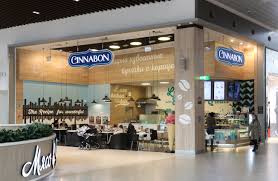
    US cinnamon scroll chain, Cinnabon, is reportedly set to open its first store in Darling Square, later in the year.

    The Seattle-based bakery chain opened its first Australian outpost back in 2020, making its debut in Brisbane thanks to a licensing deal with Queensland import business Bansal Foods.

    Cinnabon is famed for its fresh cinnamon scrolls, which are cooked in-store every half-hour for customers. It is this reputation, combined with a lack of immediate competition in Australia, that attracted Bansal to the chain.

    “You have world-famous doughnuts, you have world-famous burgers but there’s no world-famous scroll brand in Australia,” Bansal Group co-owner Gaurav Bansal said. “Their frosting and cinnamon make them different from any other brand that people can’t imitate.”

    Cinnabon Australia has already built up a strong foundation, opening five locations across Queensland, and one in Victoria, within the last two years.

    While the upcoming Darling Square location may be the first Sydney store on the cards, it certainly won’t be the last. Further expansion across NSW has been promised, with a plan to roll out 15 stores over the next five years.

  • Vietnam among 10 most popular destinations for Australian tourists

    Vietnam among 10 most popular destinations for Australian tourists

    Vietnam was one of the 10 favorite destinations for Australian tourists in July, according to the Australian Bureau of Statistics.

    Over 18,500 visited Vietnam during the month, a 44% increase from the previous month.

    New Zealand topped the list of favorite destinations with 96,500 visiting the island nation, followed by Indonesia, the U.K., the U.S., Fiji, India, Singapore, Thailand, and Italy.

    ABS statistics showed that Australians spend 19 days in a foreign trip on average.

    The Vietnamese government has allowed quarantine-free entry for foreign visitors since March.

    It also offers 30-day e-visas for citizens from 80 countries and territories, including Australia.

    So far this year the country has received 1.44 million foreign tourists and has a full-year target of five million.

  • The changing face of Australian grocery shoppers

    The changing face of Australian grocery shoppers

    The latest Focus Insights 2022 Grocery Shopper Report again highlights the need for suppliers and retailers alike to be mindful of changes in shopper behaviours and to focus on regularly reviewing these changes as a means of assessing where both innovation and product and promotional offers align with shopper trends and expectations.

    From a macro level, we see that the earlier trends in changes in shopper behaviour continue post the Covid period, and are in line with pre-Covid trends. From a top-line perspective, there has been a move back to the supermarket for fresh items, after increased support levels for independent operators such as butchers and greengrocers at the height of the pandemic.

    A key outtake from the table above highlights these continued trends and the need for focus of retailers to allocate the appropriate space, innovation, offers, freshness management and excitement to keep their shopper’s interest in these important categories and allow for a more complete shopper basket profile from these categories and centre of the store.

    From a supplier perspective, it also means focusing at a channel level to ensure the appropriate tailored solutions to enhance their role in each channel, allowing them to maximise their revenue and margins. In simple terms, suppliers need to focus on the key elements of ‘what is their role in the category’ and ‘what do they want to be famous for’ and activate those plans that deliver and enhance that profile.

    The Focus Insights 2022 Grocery Shopper Report also highlights trends among fruit and vegetable shoppers: this profile is important for both retailers and suppliers alike on how they maximise these changes in behaviour to innovate new product offerings that meet shopper expectations. There has been a move back towards more loose/single items after the increased demand for pre-packaged fruit and vegetables during the peak of the pandemic where more consumers demanded pre-packaging as a “protection” against other people touching/handling the product. There has also been a noticeable shift toward packaged/prepared meal size portions which supports the ongoing shopper trends for more meal kits and meal solutions.

    The current trend of plant-based purchasing by shoppers also continues with 39 per cent of Australian shoppers having purchased a plant-based meal product, up from 27 per cent last year. While this category continues to experience strong growth and interest, price (it is perceived as too expensive) is still the number one reason why people are not continuing to buy (or try) plant-based meat alternatives.

    With the constantly changing supermarket environment, it is imperative, that retailers and suppliers keep abreast of shopper behaviours and preferences and be open and agile in responding to the evolving and ever-changing behaviour of Australian grocery shoppers.

    To learn more, register for the Focus Insights 2022 Grocery Report webinar here.

  • Aldi opens its first Melbourne Corner Store concept today

    Aldi opens its first Melbourne Corner Store concept today

    Aldi has opened its first Corner Store concept, in Melbourne’s CBD, complete with a cafe serving barista coffee.

    The company says the store is designed for inner-city customers stocking ready-to-eat meals, fresh produce, bakery items such as cinnamon buns, croissants and baguettes, and its discounted Special Buys products. The Corner Store concept was first tested on Sydney’s North Shore, a hybrid model of part convenience store, part supermarket.

    Huw Longman, director of Aldi Corner Stores, said the new shop will meet customers’ needs in the surrounding high-density, urban area.

    “Shopping habits continue to evolve, and we are seeing a large audience of people who prefer shopping more frequently with a hyper-focus on convenience.”

    He said the store meets these needs, taking convenience and creativity and combining it with quality and savings.

    To commemorate the store opening, a unique limited-time Lazzio coffee cart pop-up will offer customers coffee for 37 cents. The coffee beans are hand-roasted in Victoria by Black Bag Roasters. Proceeds from the coffee sales will be donated to Aldi’s national charity partner, Camp Quality.

  • Brisbane coffee brand Aromas Coffee Roasters sold

    Brisbane coffee brand Aromas Coffee Roasters sold

    Queensland-based Aromas Coffee Roasters has been acquired by local Indigenous-owned company SupplyAus Holdings for an undisclosed sum.

    Aromas Coffee Roasters boasts a 47-year history, serving more than 300 locations in the state, while SupplyAus was co-founded by Adam Williams, a Wiradjuri man, and Shane Andrews, a descendant of the Mununjali people in 2018.

    SupplyAus CEO, Adam Williams, told Business News Australia, that this was a “major step to inspire other Indigenous entrepreneurs to have a go”.

    “Buying a legacy brand like Aromas shows Indigenous kids and young people that even the biggest brands are within our reach.”

    With the acquisition, the company plans to integrate some of Aromas Coffee’s operations with its own coffee portfolio – Dhuwa Coffee, which is sold in 900 Woolworths stores.

    “That’s something we are good at with the rest of our brands, so to be able to roll that through with Aromas is something we are looking forward to.”

    Alongside, the company is currently exploring opportunities to invest in indigenous employment with the rollout of its own Aromas Cafe and also grow the brand internationally.

    SupplyAus now owns and operates a range of brands, including Bunji Workwear, SupplyAus Medical, Jingeri Office National and Aromas Coffee Roasters.

  • Branded sales boost revenue for AVL

    Branded sales boost revenue for AVL

    Australian Vintage Limited (AVL) has reported a total revenue increase of eight per cent to the end of April 2016 on the back of strong branded sales.

    The increase in revenue is a reflection on higher branded sales in the UK, Europe, Australasia, and North America, however it was partially offset by lower bulk wine sales.

    Neil McGuigan (pictured), chief executive officer of AVL, said: “Australasia/North America sales are up eight per cent on last year with bottled sales up 19 per cent and cask sales down 20 per cent. Cask sales are down due to significant pricing pressure.

    “Sales of our bottled product into UK/Europe are up 19 per cent on last year due mainly to the increased sales footprint in the UK market. Bulk sales into this market are down by 77 per cent compared to last year as we continue to focus on changing from a bulk wine producer to a branded business.

    “Sales of our three key brands, McGuigan, Tempus Two and Nepenthe continue to grow with sales to the end of April up 20 per cent on last year.

    “AVL’s commitment to quality has recently resulted in three of the McGuigan Black Label red wines being recognised in the top five selling red wines in Australia. This commitment to quality was again reinforced at the International Wine Challenge held in London where the McGuigan brand was awarded four Trophies, five Gold, nine Silver and 12 Bronze medals including the Trophy for the Best Australian White Wine of Show for the 2010 Shortlist Eden Valley Riesling. AVL will continue to push the boundaries with quality wine production and vineyard innovation to continue to enhance Australia’s reputation globally,” said McGuigan.

    Meanwhile, the company terminated its Del Rios vineyard lease and paid the $4.9 million termination fee earlier this year. This termination together with the recent expiry of other onerous third party grower contracts will provide significant savings in future grape costs.

    “The company continues to focus on increasing branded sales and at the same time improving the efficiency of the business and improving the quality of our outstanding wines. We remain confident that our core strategies are correct,” said McGuigan.

    “Subject to no material changes to the current exchange rates we remain confident that our 2016 net profit before one off items will be up 10 to 15 per cent on last year’s $7.1 million net profit after tax and before one off items.”

  • Coles expands parental leave program

    Coles expands parental leave program

    Coles is expanding the support available for current and new team members across its network who are preparing for parenthood or adjusting to being a new parent.

    The supermarket giant has removed the 12-month service eligibility period for team members to apply for parental leave, meaning primary and secondary carers can now access paid parental leave benefits without having to wait.

    Coles has also increased the paid parental leave for secondary carers from two weeks to four weeks, with access to the leave able to be taken up to 24 months after the birth, adoption, or surrogacy birth of a child. Coles will also offer flexibility of how the leave is taken, such as single days, multiple days, or blocks of days.

    Kris Webb, Chief of People and Culture at Coles, said they want to make Coles a great place to work for all team members, which means supporting them through significant life moments such as planning to welcome a new addition to their family.

    “For people who are having a child and wanting to work for Coles, we don’t want them to feel they need to wait to receive primary carers leave, because we know that this is not always possible. No one should feel they need to hold off having a family because of their job.

    “We also are pleased to be extending our secondary carers leave because we know how important it is for primary carers to have the support of their partners during these important times of their lives.  This policy applies to team members who work in our stores, our distribution centres and our store support centre, so it’s really expansive and we hope will make a big difference to our team members planning to grow their families.”

    Coles is also formalising its policy for having paid parental leave extended to primary carers who suffer a pregnancy loss (stillbirth) through birth, adoption, or surrogacy.

  • Shopify opens funding stream for Aussie online retailers

    Shopify opens funding stream for Aussie online retailers

    eCommerce platform Shopify has launched a new financing service for Australian businesses called Shopify Capital.

    Merchants who run their stores on the platform can receive offers of up to $2.5 million within two business days – once their applications are analyzed by Shopify Capital’s team using data-informed and machine learning models.

    The company says 67 percent of Australian merchants are deterred by high-interest rates and 53 percent are turned off by lengthy application processes and timeframes. Almost 40 percent of home-grown merchants sell internationally through Shopify Markets generating up to $39 million in economic activity.

    “Australian businesses are concerned about the increasing cost of capital, inflationary pressures impacting margins, and declining consumer confidence impacting sales,” Shaun Broughton, Apac MD at Shopify, said.

    “Shopify Capital is remitted only when a sale is made, so Australian merchants can be confident that they can afford to invest in their businesses.”

    Merchants repay funding based on an ‘agreed’ fixed percentage of daily sales helping reduce cashflow risks and uncertainty around compounding interest rates and hidden costs.

    Shopify Capital was first introduced in US, UK, and Canada in 2016. It has provided $5.51 billion in funding to thousands of businesses so far.

  • Egg producers claim 14 years is not long enough to phase out battery cages

    Egg producers claim 14 years is not long enough to phase out battery cages

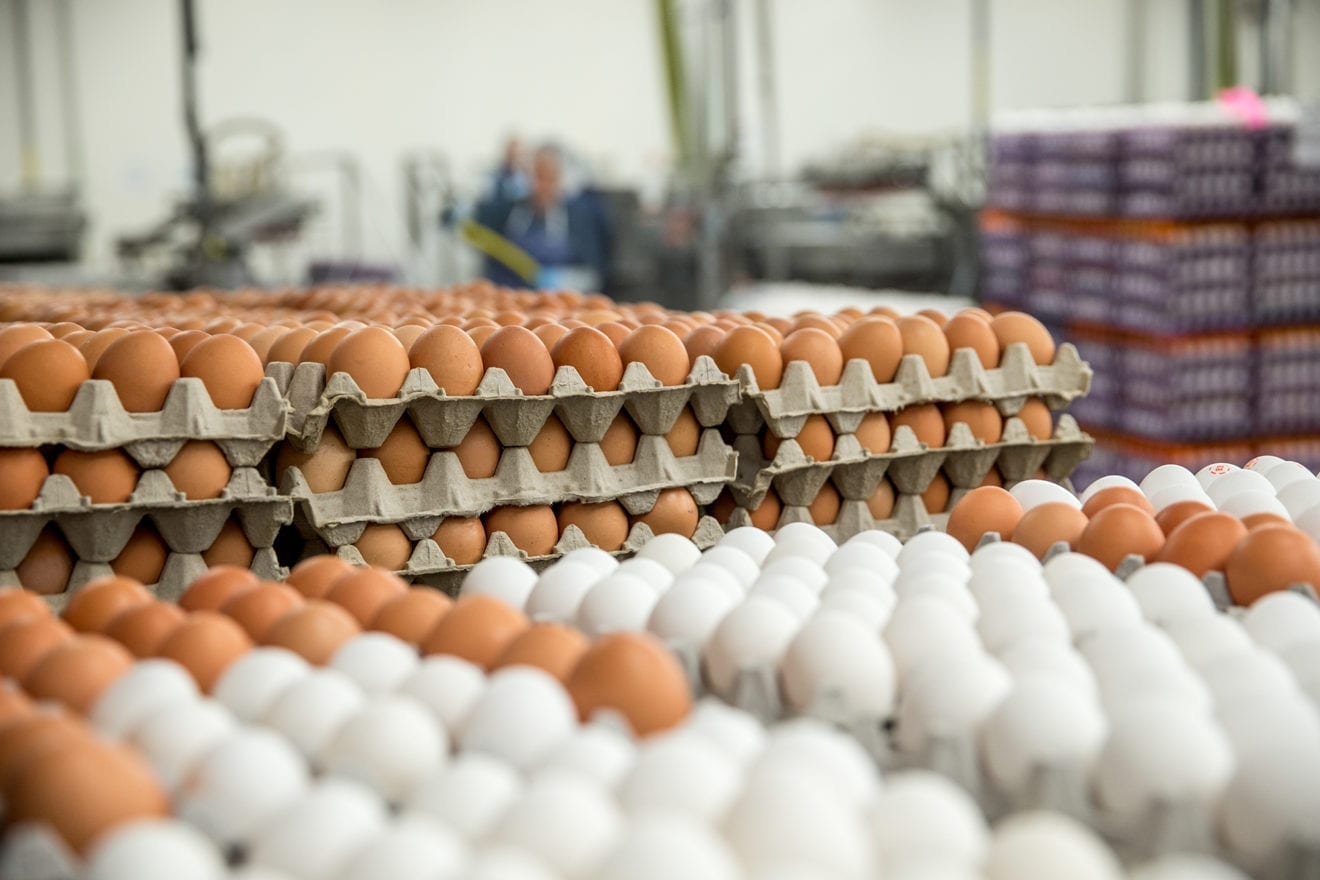
    Australia will phase out battery eggs by 2036, after a lengthy battle between the egg industry and animal welfare groups that the latter says will finally bring the country into line with Europe and New Zealand.

    The reform was quietly announced on Thursday with the publication of the Australian Animal Welfare Standards and Guidelines for Poultry, a framework that has been in negotiations between governments and industry for seven years.

    The new guidelines state that egg producers will phase out the use of conventional layer hen cages over the next 10 to 15 years, and by 2036 at the latest, depending on the age of their current infrastructure.

    From that point, all caged laying hens must have 750cm sq of usable space for each bird, if kept in a cage with two or more others. If the hen is caged alone, the cage must allow for 1m sq of usable space.

    While animal welfare groups say the 14-year timeline is too long, industry group Egg Farmers of Australia released a statement that said it was “dissatisfied” the guidelines “fail to allow the option for conventional cage egg production to continue for a further 24 years”.

    CEO Melinda Hashimoto said the guidelines were a “slap in the face” to egg farmers and “totally ignored evidence on why conventional cage eggs should continue to 2046”. Farmers rely on 30-year loans to pay for cages and other infrastructure, she said, and a 2036 deadline “could derive many family egg farmers to the wall”.

    The new guidelines also require that ducks be provided with access to water to bathe in, and that chickens that are used in the meat industry be provided with “environmental enrichment” such as perches, hay or straw to scratch in, objects to peck and “dust-bathing materials”.

    There is currently no regulatory requirement that ducks be provided with water other than drinking water.

    RSPCA Australia’s chief executive, Richard Mussell, said it was a significant win for animal welfare.

    “But most importantly, it will eventually be a win for the millions of layer hens confined to battery cages,” he said.

    According to the Australian Bureau of Statistics, 5.36 million layer hens, or 32% of the national flock, was caged in 2020-2021. In egg production alone, 50% of birds are caged.

    Mussell said that he hoped state and territory governments would act to enforce the new guidelines long before 2036. The Australian Capital Territory banned the use of battery hen cages and sow stalls in 2014 but no other Australian jurisdiction has begun the legislative process to ban cage eggs.

    New Zealand ended the use of battery cages this year after announcing a 10-year phase-out process in 2012. Most of Europe, including the UK, banned the use of battery cages in 2012; Mexico, Israel, and Canada have also banned battery cages.

    Mussell said the slow pace of the reform – which included a public consultation process that received more than 160,000 submissions – was frustrating.

    “These poultry standards and guidelines were under review for nearly seven years,” he said. “The phase out is the right result, and it should have been put in place six years ago. Millions more layer hens have had to endure barren battery cages as a result of these delays.”

    The Humane Society of Australia, Animals Australia, and the Australian Alliance for Animals all welcomed the announcements that battery cages would be banned, but criticised the 14-year phase-out period.

  • Blackmores registers strong growth, momentum expected to continue

    Blackmores registers strong growth, momentum expected to continue

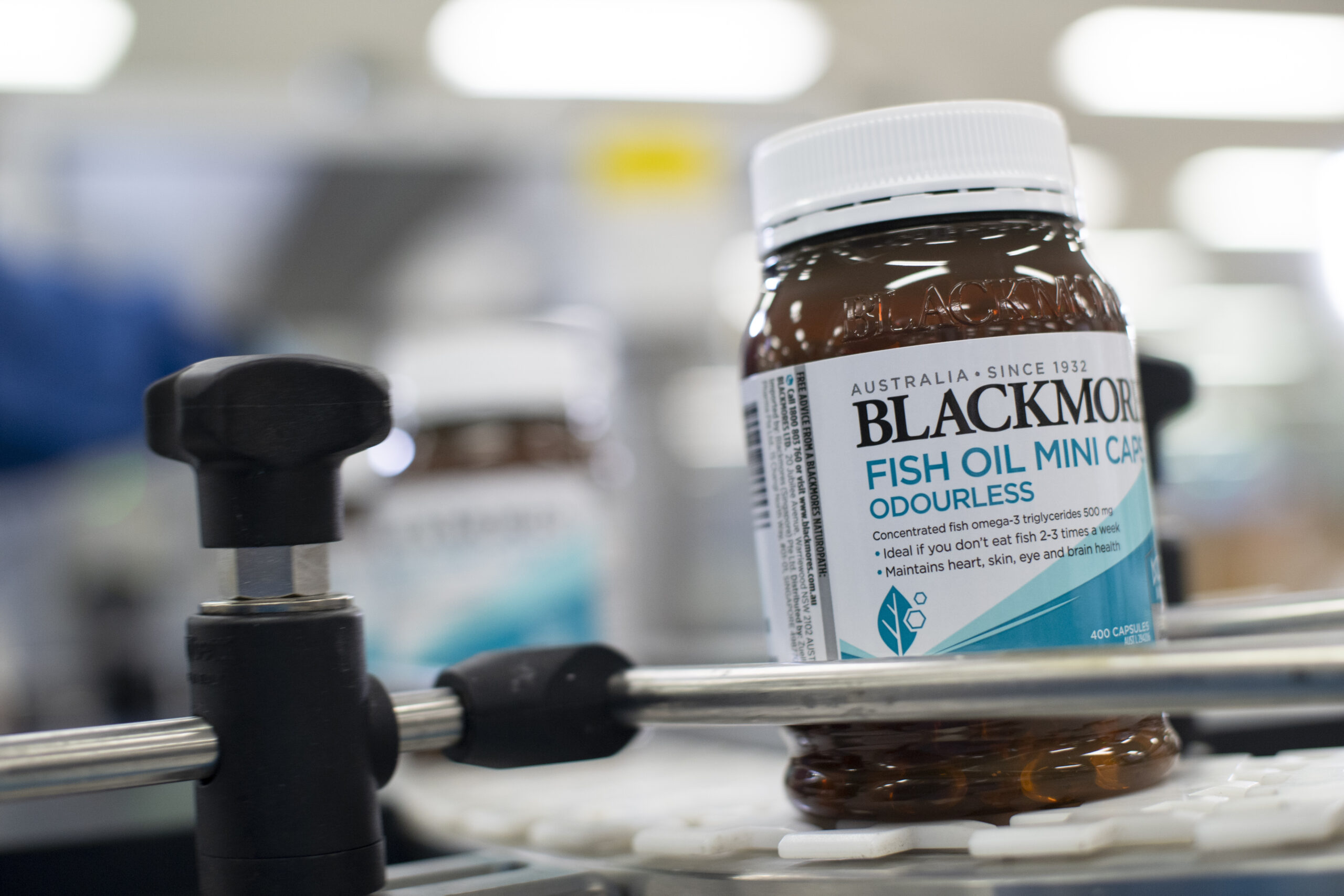
    Vitamin producer Blackmores has seen group revenue rise 12.8 percent in Fy22 to reach $649.5 million with growth across the company’s three major brands.

    This delivered a rise in underlying operating EBIT profit of 19 percent to $56.6 million, with margins expanding 1.1 points to 53.4 percent.

    CEO Alastair Symington said the company had delivered a strong result in a year impacted by the Covid-19 pandemic, increased input costs and significant supply chin disruptions.

    Symington said: “The resilience of our business model, together with the strength of our brands and distribution channels have enabled the group to respond to these challenges to deliver top line growth along with further margin expansion.

    “We recorded growth across all three brands – Blackmores, BioCeuticals and PAW – and all markets for the first time in the last four years.”

    Symington said the company’s focus on product innovation and investment in its brands, as well as selling and marketing spending up 4.6 percent, had delivered revenue growth of 12.8 percent.

    “This has enabled Blackmores to deliver a 22.6 percent increase in underlying net profit together with a 33.8 percent lift in full year dividend to shareholders to 95 cents per share fully franked.

    “Importantly this strong set of financial results has also been delivered alongside the implementation of improvements in our workplace health and safety and further commitments delivered as part of our ongoing sustainability agenda.”

    During the year Australian sales were up 2.7 percent, international sales up 31.7 percent and China sales up 10.6 percent along with an 11.2 percent rise in EBIT to $16 million.

    Blackmores ended the year with newt cash of $82.2 million.

  • Telstra Boasts Fastest Speed in Australia

    Telstra Boasts Fastest Speed in Australia

    Telstra is Australia’s fastest mobile network for the first half of 2022, based on results from the Ookla Speedtest Awards from January to June 2022.

    Telstra has a median download speed of 81.57 Mbps and median upload of 11.38 Mbps, representing an improved speed from the second half of 2021.

    Telstra also has the fastest mobile network speeds in the cities of Sydney, Greater Melbourne and Greater Brisbane – where nearly half of Australia’s overall population resides.

    “Keeping our customers connected is at the centre of everything we do, and one part of that is giving customers access to the largest and most reliable mobile network in Australia. That includes expanding our 5G coverage to allow for faster speeds as well as improving the capacity of our 4G network, and it’s also about the new technologies we’re developing like mmWave 5G,” Telstra commented.

    Telstra currently covers 80% of Australia’s population with 5G, with plans to roll out 5G to 95% of the population by 2025.