Tag: Australia

  • Worldpay expanding to Australia

    Worldpay expanding to Australia

    The company’s expansion in Australia comes at a time of sustained growth for Worldpay, which processed 13.1 billion transactions in 2015 with transaction value of £401.9 billion ($518.9 billion).

    A number of global companies, including ASOS, Expedia, Cathay Pacific Airlines, Digital World International and Freelancer already use Worldpay for payment processing in Australia, due primarily to the company’s international reach, as well as its ability to process a wide range of alternative payment methods such as eWallets and bank transfers.

    Australian e-commerce accounted for an estimated $42 billion of the country’s GDP in 2015, and the country’s consumers lead the world in terms of eWallet adoption, which is favoured by 21% of shoppers buying goods online.

    Shane Happach, Managing Director, Global eCommerce at Worldpay concluded: “We are delighted to extend our services into Australia, which is a tremendously exciting market with lots of growth opportunity,” Worldpay managing director for global e-commerce Shane Hapach said.

    “We have quickly found merchants trading in Australia are hungry for a payment solution that can help them drive up conversion rates and drive down the costs of running an online business across multiple markets.”

  • Telstra to invest $2.3b to improve the customer experience

    Telstra to invest $2.3b to improve the customer experience

    Australia’s Telstra has revealed plans to invest up to A$3 billion ($2.3 billion) over the next few years on improving the customer experience following a wave of recent network outages.

    The operator has revealed plans to increase its capex to sales ratio to 18%, the highest since the operator was building its 3G network in the 2008-09 financial year.

    Telstra CEO Andrew Penn said the investments include plans for consumers, SMBs, domestic and international enterprise users, governments and wholesale customers, as well as both fixed and mobile networks.

    Short term actions to address frequent customer complaints will be followed by more significant and longer term investments aimed at digitising to improve the customer experience and reducing costs.

    “There are a number of immediate actions that we believe will improve customer experiences. We will simplify products and platforms – we need to retire old technology and systems that slow down and complicate how customers are served,” Penn said.

    He said investments will be aimed at evolving the network with new technologies including virtualization and increased automation. The company aims to develop a flexible, software-defined network architecture.

    The move comes as Telstra seeks to win back customers following a series of hardware-related network outages that were heavily reported in Australian media.

    Telstra had already committed A$50 million towards installing new monitoring equipment and improving the capacity of its mobile network to handle large volumes of simultaneous re-registrations.

  • Singtel Group cues video tilt for regions

    Singtel Group cues video tilt for regions

    Singtel Group has launched “The 5-Min Video Challenge” a joint initiative by associates within the group, comprising Singtel, Optus, AIS, Airtel, Globe and Telkomsel.

    Winning content will be distributed and made accessible to over 600 million customers across the group.

    The short five-minute format is ideal for audiences accustomed to viewing content on mobile devices.

    “A pan-regional competition makes a lot of sense as the power of content is its ability to transcend geographical and language barriers,” said Mark Chong, CEO, International, at Singtel. “Our customers will be able to enjoy access to a rich variety of original content created by the most talented content-makers from the region.”

    The competition will be conducted at two levels – local and regional. Each associate will first invite aspiring or experienced local filmmakers to submit five-minute entries based on the theme “Connecting Lives”.

    The entries will be judged on criteria such as originality of content, storytelling and cinematography. Winning entries from the respective associates’ markets will then be judged at a regional level.

    The grand winner and runner-up will be announced at the grand finals, which will be held in Bangkok, on November 21. Cash prizes of $30,000 and $15,000 will be awarded to the grand winner and runner-up respectively.

    The regional winners will also get the opportunity to promote their videos on each associate’s mobile and video platforms to customers in the group’s markets across Asia, Africa and Australia.

  • Australia regulates retail access to high-speed networks

    Australia regulates retail access to high-speed networks

    Australian competition regulator ACCC has decided to require most operators of high-speed broadband networks to grant wholesale access to rival providers.

    Fiber and VDSL network services with a downstream data rate of over 25Mbps have been declared, meaning network owners must provide wholesale access on request.

    Where commercial terms cannot be agreed upon, the wholesale access must be provided at a regulated rate of between A$22.14 and A$27 per port per month, or A$17.50 to A$29.27 per Mbps per month.

    Exceptions apply for high-speed broadband services in metro areas, where competition is already effective, and for network operators with fewer than 20,000 customers. There is also a moratorium for specific networks in some areas that need to be reconfigured to support wholesale provision.

    “This is an acknowledgment that all superfast broadband networks – regardless of their size – display natural monopoly characteristics. What this access declaration does is provide retailers with the opportunity to enter superfast broadband markets, and in turn increase competition,” ACCC Chairman Rod Sims said.

    “This decision will also help to simplify and clarify the existing regulations that apply to superfast broadband services, allowing all retail providers to compete on their relative merits, regardless of the technology used, when the network was constructed, or who operates it.”

    In practice, the move also means that competing commercial high-speed broadband networks to the wholesale only National Broadband Network (NBN) will have to compete on a similar footing.

    This is in line with regulations designed to prevent retail providers from cherry-picking by concentrating their deployments only on the most profitable areas, in contrast to the NBN which needs to provide universal access.

  • Australia’s Megaport expands to Europe

    Australia’s Megaport expands to Europe

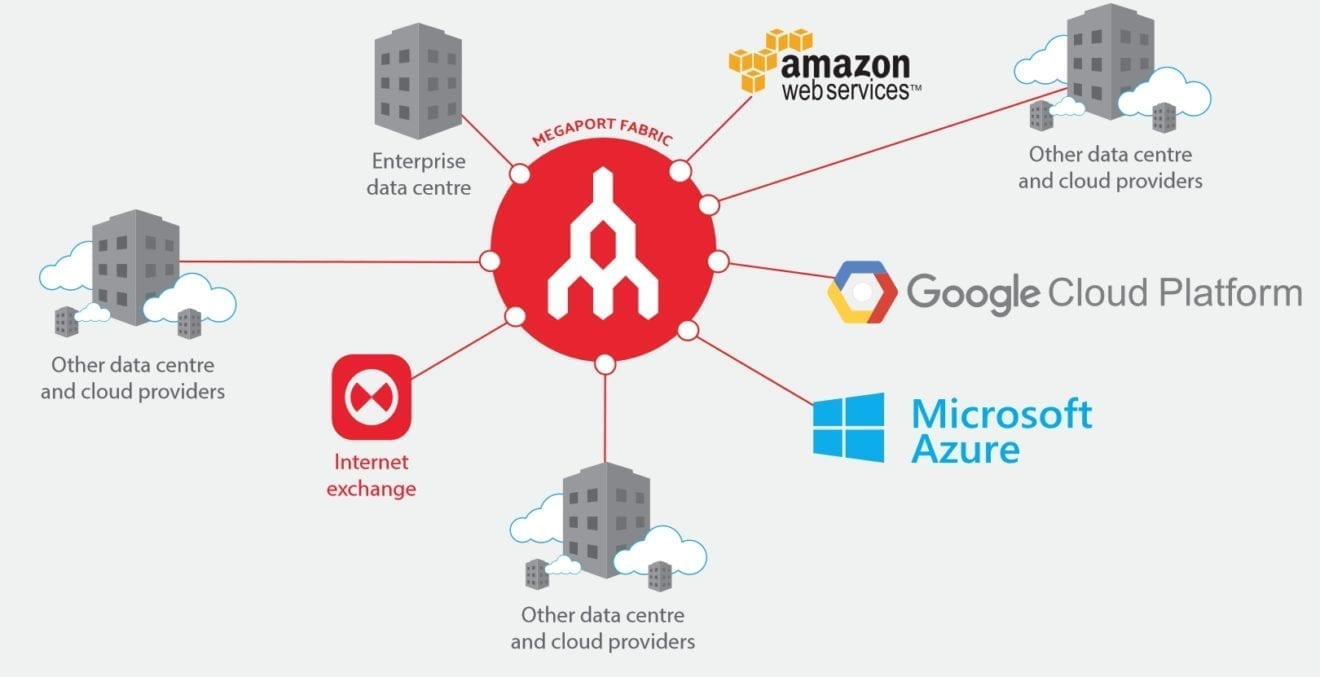
    Australian interconnection upstart Megaport has long been planning to invade Europe this year.  Today they not only formally launched their elastic interconnection platform on the continent, but they revealed two acquisitions that let them hit the ground running in a big way.

    Megaport has signed an agreement to buy Berlin-based Peering GmbH, Germany’s second largest IX provider. ECIX serves some 180 customers across 30 PoPs in Germany, giving Megaport immediate depth in the continent’s biggest market. The deal is expected to close in early August.

    Megaport’s other M&A move gives them an immediate presence in eastern Europe via the acquisition of Bulgarian-based OM-NIX Group AD.

    As one might infer from the IX part of their name, OM-NIX also specializes in interconnection, with extensive reach in Eastern Europe and especially the Balkans. Beyond the ECIX footprint, the deal adds another 18 locations to Megaport’s reach in Europe.

    Put those together with 9 other locations they have been developing organically, and Megaport’s European launch will span 57 locations in 19 cities in 13 countries. The acquisitions cost them some A$3.1 million ($2.3 million) and bring in annualized revenue of A$4.5 million.

    Over the past year, Megaport has expanded its interconnection footprint in markets throughout North America. The buildout has been quite rapid, and the move into Europe accelerates it even further.

    While the next phase is likely more adding revenue on top of the infrastructure they have built out, I have to wonder if they won’t keep going east. It wouldn’t take much to add a PoP or two in the Middle East and India on their way back around the globe to Singapore and Australia.

  • Australia’s ACCC tackles broadband advertising

    Australia’s ACCC tackles broadband advertising

    Australian competition regulator ACCC has hinted it could introduce rules requiring ISPs to provide accurate information to customers about broadband speeds.

    The regulator has published a discussion paper seeking views on how consumer information about the speed and performance of broadband plans can be improved.

    ACCC chairman Rod Sims said the agency is concerned about the lack of clear information about performance of broadband services provided in advertising and related material.

    “At the moment, it is difficult for consumers to access accurate information as broadband advertising is not focusing upon speed and performance,” he said.

    “Consumers are being presented with little information or vague claims like ‘boost’ and ‘fast’, or just pictures in advertising of athletes or animals. Consumers need accurate information about broadband speed and performance so that they can understand if what they are being offered will actually meet their needs.”

    He noted that complaints about slow data speeds were the top internet-related complaint issue among reports to Australia’s Telecommunications Industry Ombudsman (TIO) in the first quarter of 2016, accounting for 2,159 reported issues.

    Given changes in the market and consumer expectations related to broadband performance, “the ACCC believes that it is timely to consider what further steps need to be taken in Australia,” Sims said.

  • Indonesia the most favorite destination for Australian tourists

    Indonesia the most favorite destination for Australian tourists

    Indonesia has so far proven to be the most favorite destination for Australian tourists, overtaking New Zealand, Indonesian Ambassador to Australia Nadjib Riphat Kesoema said.

    “The variety of natural wealth and beauty, culture and world-class tourist facilities that the Indonesian government offers to tourists have become special attractions for Australian tourists,” he stated in a press statement released on Saturday.

    His remarks came when the Indonesian Tourism Ministry and the Indonesian Embassy in Australia were conducting a promotional activity at Hotel Hyatt in Canberra recently.

    Besides helping promote mutual understanding between the peoples of the two countries, the tourism sector can also create jobs in Indonesia, he added.

    He underlined that he supported the program to conduct tourism promotion in several Australian cities such as Canberra, Sydney, Melbourne and Brisbane.

    The program will serve as a venue for a meeting between Australian travel agents and their Indonesian counterparts directly, he said.

    The ambassador has called on Australian tourism companies to encourage Australian citizens to visit other Indonesian tourist destinations than Bali.

    Data from the Indonesian Embassy in Canberra showed that almost 85 percent of 1.2 million Australian tourists visited Bali in 2015.

    Nadjib offered potential visitors from Australia other tourist destinations such Toraja, Lake Toba, Raja Ampat, Labuhan Bajo, Tanjung Kalayang, Seribu Islands, Borobudur Temple, Mount Bromo, Wakatobi and Morotai Island.

  • Aussie ISP takes on NBN with microwave broadband

    Aussie ISP takes on NBN with microwave broadband

    Lightning Broadband is offering fiber connectivity in parts of Melbourne and plans to guide its roll out plans based on demand. Potential customers are able to register for interest on the website.

    The ISP is offering 100Mbps symmetrical plans with unlimited data for A$120 ($90) per month on a 24-month contract. The NBN’s 100Mbps downlink plans offer only 25Mbps uplink.

    Lightning Broadband is also offering 25Mbps, 50Mbps and 75Mbps plans, starting from A$75.

    For business customers, Lighting Broadband will offer dedicated 1000Mbps symmetrical microwave links that will not share equipment with other users.

    Founder Jeremy Rich told that the company believes that many Australians are sick of waiting for the NBN to arrive in their area, and are interested in adopting high-speed broadband today.

    The NBN’s ambitious rollout plans have been delayed repeatedly since the project was announced.

    The project has also been scaled back under the recently re-elected government – the NBN was originally intended to deliver FTTH providing wholesale speeds of up to 100Mbps to 93% of the population, but has since been redesigned to use a mix of access technologies, including FTTN, HFC and fixed wireless.

  • Telstra acquires MSC Mobility

    Telstra acquires MSC Mobility

    Telstra has acquired local enterprise mobility solutions provider and decade-long channel partner MSC Mobility (MSC), in a move to bolster its enterprise mobility offerings.

    MSC provides mobile device management and provisioning services for large organizations, including providing devices and support to end users, and professional services, including strategy consulting and mobility solutions design.

    The company’s core capability is its enterprise mobility management platform, which incorporates mobile device management software such as Airwatch and MobileIron.

    The platform has already been rolled out and delivered device management services for “a large number of the telco’s enterprise customers”, Telstra said in a statement.

    Telstra did not disclose the value of the deal. The acquisition, which will be completed within coming weeks, will enable Telstra to manage the end-to-end enterprise mobility lifecycle, including valuable reporting and analytics that help customers drive better business outcomes, the telco noted.

    Telstra executive director of global products Michelle Bendschneider said that the deal is a key step in the incumbent’s focus on enterprise mobility, which has been prioritized as a fundamental part of Telstra’s growth strategy.

    “This acquisition is an investment capturing the fastest growing segment of the enterprise mobility market: managing the supply of apps, content and mobile services to enterprises,” the executive said.

    “To achieve our growth aspirations in enterprise mobility, we need to develop our customer relationships from a holistic mobility view, rather than just what sits on their device or tablet.”

    Bendschneider added that MSC’s established processes and platform can be expanded to host and support the service in Asia, Europe and the US.

    The acquisition of MSC is Telstra’s latest buy in weeks, after it acquired Microsoft partner Readify earlier this month to boost its cloud offerings for enterprises.

    In February, Telstra also made a strategic investment in Chinese cloud storage service provider, Qiniu, through its investment arm, Telstra Ventures, a month after it acquired another Microsoft partner, Kloud.

  • Optus to compensate customers after regulatory probe

    Optus to compensate customers after regulatory probe

    Australia’s Optus has been ordered to pay around A$2.4 million ($1.8 million) in compensation to mobile customers after an investigation found that some users were overcharged or mislead while signing up for mobile phone insurance.

    Regulator Australian Securities and Investments Commission (ASIC) has instructed Optus to refund around 175,000 Optus mobile customers and write to around 500,000 customers who may have been affected.

    Optus self-reported breaches including a failure to provide some mobile insurance customers with a required product disclosure statement and financial services guide, which may have prevented many customers from being aware of key features and limitations of the insurance they purchase.

    The operator also disclosed that some customers did not receive the one month free insurance they were entitled to under a promotional offer, were incorrectly charged a premium during a rain-check period and in some cases were issued the wrong cover.

    Inadequate training, monitoring and supervision of staff were some of the factors to blame for the oversights, the investigation showed.

    Optus will pay compensation including interest in the form of direct credit to customers’ accounts. The operator is also proposing to donate the compensation owing to former customers who cannot be located to a charity aiding with financial literacy.

    Optus has also taken steps to address the cause of the issue, including providing additional training for sales staff and appointing an independent company to conduct a thorough review of its regulatory compliance functions.

  • Vocus Acquires Netgen

    Vocus Acquires Netgen

    A substantial chunk of fiber is changing hands down under. Vocus Communications has announced plans to acquire Netgen Networks in a deal worth about $500 million.

    Nextgen had built a 17,000km fiber backbone across Australia with fiber into 1,100 buildings including 70 data centers.

    They were also a 50% owner with Vocus on the ACS project building a subsea cable between Perth, Singapore, and Indonesia, which Vocus will take 100% possession of. And they were building the North West Cable system between Darwin and Port Hedland to the oil, gas, and mining industries as well, which will also be bought by Vocus.

    The deal, which follows their recent purchase of M2, will see Vocus add substantial infrastructure muscle in an effort to better compete with Telstra, Optus, and TPG.

    Vocus already has some 700km of fiber hooking up 1,300 buildings in Australia, as well as a more extensive 4,200km of fiber over in New Zealand.

  • Australian NBN launches first HFC services

    Australian NBN launches first HFC services

    Australia’s nbn has announced the launch of the National Broadband Network’s first HFC services under the multi-technology mix model.

    The company in charge of overseeing the rollout and wholesale operation of the national network revealed that around 18,800 premises in Redcliffe in Queensland are now ready for service.

    Service providers in the area will be given access to peak wholesale speeds of up to 100Mbps uplink and 40Mbps downlink.

    The current NBN rollout plan calls for 875,000 HFC premises to be ready for service nationwide by June 2017, with 200,000 of these end-user premises activated on the network.

    The NBN was originally intended to use FTTP for more than 90% of Australia’s population, but on taking power three years ago the current government abandoned this model  in favor of a rollout using a mix of using a mix of FTTH, HFC and FTTN.

    At the time it was claimed this would allow the rollout to be completed faster and more cheaply than using FTTH, but the projected cost and timeframe of the multi-technology rollout has ballooned to be potentially nearly as expensive as the initial rollout plan.

    The in-opposition Labor party has pledged to use FTTP for an additional 2 million premises if it wins power. An election was held over the weekend and while it’s a close race and the votes are still being counted, experts expect the current government to win by a slim margin and form a minority government.

  • Vocus to buy Australia’s Nextgen Networks

    Vocus to buy Australia’s Nextgen Networks

    A substantial chunk of fiber is changing hands down under. Vocus Communications has announced plans to acquire Netgen Networks in a deal worth about $500 million.

    Nextgen had built a 17,000km fiber backbone across Australia with fiber into 1,100 buildings including 70 data centers.

    They were also a 50% owner with Vocus on the ACS project building a subsea cable between Perth, Singapore, and Indonesia, which Vocus will take 100% possession of. And they were building the North West Cable system between Darwin and Port Hedland to the oil, gas, and mining industries as well, which will also be bought by Vocus.

    The deal, which follows their recent purchase of M2, will see Vocus add substantial infrastructure muscle in an effort to better compete with Telstra, Optus, and TPG.

    Vocus already has some 700km of fiber hooking up 1,300 buildings in Australia, as well as a more extensive 4,200km of fiber over in New Zealand.

  • Telstra sells most of its stake in China’s Autohome

    Telstra sells most of its stake in China’s Autohome

    Australian operator Telstra has sold the most of its majority stake in Chinese online car sales business Autohome to Ping An Insurance Group for $1.6 billion.

    Andrew Penn, Telstra CEO, said proceeds from the sale of a 47.4% stake in Autohome will be used to fund a capital management program that will start in the first half of the 2017 financial year.

    After the sale is completed, Telstra will retain a 6.5% interest in the company and will have one nominee director on the board.

    “Ping An will be an important strategic partner for Autohome. Its nationwide footprint in China and experience and expertise in auto financing, insurance and e-commerce mean Ping An is well placed to help Autohome develop outside of its traditional focus on online advertising,” Penn said in a statement.

    Autohome is an online destination for automobile consumers in China. It has a comprehensive automobile library and automobile listing information, as well as an advertising platform for automakers and dealers.

    In the first quarter 2016, the company reported a significant expansion of its transaction platform with a total of 4,957 new vehicles sold through its B2C transaction platform.

    Average daily unique visitors who accessed its mobile websites and mobile applications has also grown to 8.8 million and 7.2 million, respectively.

    Leng Peidong, President of Ping An Trust, said that with Ping An’s nearly 300 million online users, 150 million financial customers, longstanding relationships with car manufacturers and distributors, and a nationwide offline service network, it will be in a better position to transform Autohome into a full auto transaction service platform.

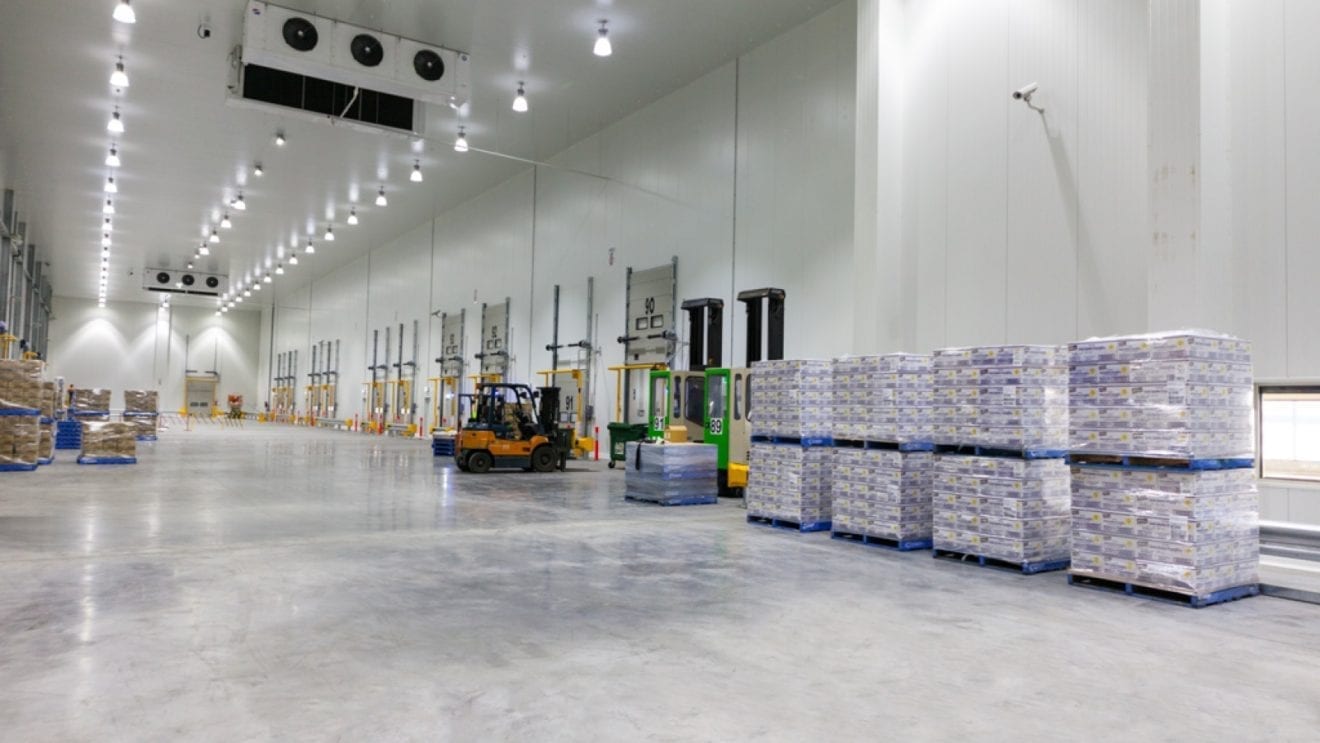
  • Australia’s Cold Store Operator Seeks Partner for Asian Expansion

    Australia’s Cold Store Operator Seeks Partner for Asian Expansion

    Australia’s largest privately-ˇowned cold storage operator, Oxford Cold Storage is seeking an operational and financial partner to expand its world-ˇclass cold storage services across Asia.

    In a global first, Oxford is piloting a system of Automated Guided Vehicles (AGVs) in a third party temperature controlled environment to ensure accuracy, improve safety standards and allow for 24-ˇhour operation, delivering significant competitive advantage in the industry leader’s push for international expansion.

    Founded by the Fleiszig and Stern families over four decades ago, Oxford is a third-ˇgeneration business, now operated by brothers, Paul and Mark Fleiszig, alongside their cousin, Rodney Fleiszig. At the helm are brothers Stephen, Gabor and Luis Fleiszig. “Oxford is extremely well positioned to take advantage of the thriving Asian middle-ˇclass’ skyrocketing demands for produce. As this demographic develops, there is less time for people to wait for fresh food in a traditional market sense, so cold storage is becoming a vital component of the food chain,” said Oxford Director, Paul Fleiszig.

    Paul Profile Pic copy[3IxI]

    “We are at the forefront of logistics technology, designing our own systems with growth in mind to ensure scalability for the next phase, supported by our expertise in data mining and high-ˇdensity operation.” Delivering an annual turnover of $80 million within a robust growth industry (5% p.a. in Australia), Oxford was the first company to introduce a real-ˇtime radio frequency track and trace warehouse management system in 1995.

    “A key priority for us is staying ahead of the logistics technology curve through continuous improvement across warehouse operations. Our R&D team is responsible for ensuring we exceed national and international regulations, meeting the increased need for “paddock to plate” tracing while delivering the best possible service for our customers,” Paul explained.

    As the operator of the largest third-ˇparty temperature controlled warehouse in the country and 20th largest operator globally, Oxford offers racked storage for over 175,000 pallets, with the capacity to freeze 12,000 cartons and carcasses daily. Mike Robbins, Oceania Head of Physical Logistics at Nestlé Australia Ltd said: “Oxford Cold Storage is the most innovative operator in the Australian temperature controlled supply chain. The business invests heavily in technology, offering benefits within and beyond the warehouse.”

    “Oxford is extremely agile and are able to react quickly to changing customer requirements. Through the application of flexible IT solutions applied to operations optimisation Oxford have been able to deliver end to end supply chain efficiencies in warehousing, transport and inventory management.”