Tag: Australia

  • Telstra to address rural 4G black spots

    Telstra to address rural 4G black spots

    Australia’s Telstra has revealed plans to roll out 135 small cell 4G base stations in remote communities across the nation as part of the government’s Mobile Black Spot program.

    The operator is also making the investment as part its efforts to expand its 4G footprint to 99% of the Australian population by June next year.

    Telstra has made an A$165 million ($123.1 million) commitment to improve coverage in regional Australia, and will already expand 3G and 4G coverage to 429 other remote communities as part of round one of the black spot program. But the latest small cell roll out will be solely funded by Telstra.

    “When we made our bid under Round One, our core objective was to maximise new coverage to regional communities, which is why we made this additional pledge to further expand mobile data services at our own expense,” Telstra group managing director for networks Mike Wright said.

    “We worked closely with the Federal Government to identify the communities who were eligible for this small cell technology and we are proud to be part of this important initiative which will connect so many more regional communities.”

    While the small cell technology can currently only provide data services, Telstra said it is working on implementing VoLTE technology over the base stations.

  • New Toys’R’Us Asia-Pacific president named

    New Toys’R’Us Asia-Pacific president named

    The new Toys’R’Us Asia-Pacific president is Andre Javes.

    Taking up the role on May 27, Javes will oversee all operations and business activities for the company’s growing number of stores in Japan, Southeast Asia, Greater China and Australia, and he will be responsible for the profitability and success of the company in these markets. He will report directly to chairman and CEO Dave Brandon.

    A seasoned retail executive with more than 30 years of merchandising and management experience, Javes most recently served as MD of Toys’R’Us, Southeast Asia and Greater China, where he oversaw all operations and business activities for the company’s more than 170 wholly-owned stores and some 2500 employees in Brunei, China, Hong Kong, Malaysia, Singapore, Taiwan and Thailand.

    “Since joining Toys’R’Us, Andre has made significant contributions to the continued growth and success of our business throughout Asia and Australia,” said Brandon. “With his extensive retail background, drive for results, commitment to building and leading high-performing teams and proven track record, we expect to further grow and strengthen our brands’ position in the global marketplace.”

    Javes first joined the company in Australia in 2008 as GM merchandising with responsibility for toy and baby products. After a brief hiatus, he returned to the company in April 2013 as MD, overseeing all operations and business activities for the company’s more than 30 stores, eCommerce site, corporate office and more than 1700 employees.

    Prior to joining Toys’R’Us, Javes served as CEO at Anaconda Group from 2009 to 2012, a retail chain of camping, outdoor and adventure gear stores across Australia. Earlier in his career, he spent three years at Kmart as divisional merchandising manager first for seasonal and consumable items and later for the company’s toy and outdoor product categories throughout Australia and New Zealand. He also served as group merchandise manager, grocery at Coles Supermarkets Australia.

  • Telstra invests in security company vArmour

    Telstra invests in security company vArmour

    Australian operator Telstra has formed a partnership with – and made an investment in – data center and cloud security company vArmour.

    Under the agreement, investment arm Telstra Ventures has participated in vArmour’s recent $41 million Series D funding round.

    Telstra will also add vArmour’s security offerings to its portfolio of enterprise services. In the long term, the operator said it will also be able to develop security consulting and managed services for its customers.

    The vArmour platform is designed to give organizations application-layer control over their networks to help stave off, detect and respond to cyber threats.

    Jeremy Howe, Telstra’s director of IP Data and Security Solutions, commented that the acquisition is aimed at addressing its enterprise customers’ evolving security demands.

    “We see a growing demand among enterprise customers for solutions that help them secure their data in a private, public and hybrid cloud mix. One of the main concerns companies have in embracing cloud services is data control and security,” he said.

    “vArmour’s distributed security software addresses the problem of traffic blindspots inside data centers. This helps businesses protect themselves from one of the critical emerging threats in the security environment, in addition to the benefits of having greater visibility of what is going on with your data.”

  • Telstra hit with two more outages

    Telstra hit with two more outages

    Australian operator Telstra has been hit with two more network outages in the span of three days, weeks after committing to invest to improve its network resilience.

    On Friday, Telstra confirmed it was aware of an unplanned service disruption affecting NBN voice and data as well as ADSL customers.

    Telstra said the issue its engineers have identified is “extremely complex, but in simple terms there was a fault with the device that manages the interaction between our network and all of the different types of customer modems.”

    While the bulk of restoration efforts occurred two and a half hours after the company announced the incident, it took until late Sunday afternoon to resolve residual issues and fully restore services.

    But on Sunday customers were reporting another outage affecting Telstra’s mobile and broadband networks in Sydney, Melbourne,Brisbane and Perth.

    Some customers reporting issues may still have been affected by the residual problems from the Friday outage, the report states. But the mobile outage, which affected data services for some customers, appears unrelated.

    Telstra has been struggling with a spate of network outages over the past few months. The operator recently committed A$50 million ($36.2 million) towards addressing the issue by installing new monitoring equipment and improving its capacity to handle numerous simultaneous re-registrations.

  • Hong Kong mars Estee Lauder Asia result

    Hong Kong mars Estee Lauder Asia result

    Beauty giant Estee Lauder says its Asian sales rose in every country except Hong Kong in the last quarter.

    Estee Lauder Asia achieved double-digit growth in Korea, Japan, Australia and Taiwan and achieved “solid” constant currency sales gains in China and Thailand.

    “The higher sales in China reflected sales gains in most brands due to continued distribution expansion and increased online activity,” the company said in an earnings statement.

    “In Hong Kong, the reduction in tourism from China continues to negatively impact business, particularly for the Estee Lauder, Clinique and La Mer brands. The company remains cautious of the near-term slower growth there.”

    Foreign currency translation unfavorably impacted reported sales by 5 per cent with the largest impact affecting China, Korea and Australia.

    In Asia-Pacific, operating income decreased, with lower results reported primarily in Hong Kong and China.

    “The lower results in Hong Kong were primarily due to the lower sales, and in China were attributable to increased marketing, selling and store operations costs. These lower results were partially offset by higher operating income in Japan and Singapore,” the company said.

    In its outlook for the full 2016 year, now nine months complete, Estee Lauder said it expects the global prestige beauty market  to continue to generate solid growth.

    “However, volatility and economic challenges are expected to continue to negatively impact Hong Kong and some emerging markets challenged by weak currencies. The company’s growth has outpaced global prestige beauty and is expected to continue growing faster than the industry, demonstrating the company’s ability to successfully navigate volatility. The company expects to increase targeted investment spending in the fiscal 2016 fourth quarter compared with the prior year, behind areas with good momentum or with opportunities for share gains, as well as in capabilities to sustain future growth.”

    Globally, net sales for the company’s third quarter to March 31 totalled US$2.66 billion, a 3 per cent increase compared over the $2.58 billion in the prior-year quarter. Net earnings were $265.6 million, down on the $272.1 million of last year.

    Meanwhile, Estee Lauder has revealed plans to save between $200 million and $300 million a year through a series of job cuts, retraining and restructuring initiatives.

  • Telstra spending big to expand intra-Asia capacity

    Telstra spending big to expand intra-Asia capacity

    Australia’s Telstra has announced a series of investments and new network services for the APAC region to help meet soaring demand for data among consumers and businesses.

    The operator has interconnected its networks with the new Bay of Bengal Gateway subsea cable – an 8,000km, three fiber pair system connecting Singapore, Malaysia, India, Sri Lanka, Oman and the UAE – to offer customers direct connectivity between Asia and the Middle East.

    Telstra has also secured capacity on the new trans-Pacific FASTER cable system linking Japan and nearby countries with major hubs on the US west coast.

    In addition, Telstra is investing to enhance the EAC-C2C system to extend the life of the cable to at least 2035. The EAC-C2C is a more than 36,000km cable connecting Japan, South Korea, China, Taiwan, Hong Kong, the Philippines and Singapore.

    The EAC was owned and operated by Pacnet, which Telstra acquired for $697 million in 2015.

    Telstra is also building a new overlaid fiber route between Taipei in Taiwan and Hong Kong that will bypass the notoriously natural disaster prone Luzon Strait, as well as a fiber ring network in South Korea that will interconnect its PoPs and cable landing stations in the country.

    “We already own and operate the largest intra-Asia subsea network, representing around 30% of total active capacity,” Telstra managing director Darrin Webb commented.

    “These enhancements further extend our capacity and will support the provision of our leading technologies, such as Telstra’s PEN software-defined networking and cloud, security and unified communications services.”

  • Optus commences rollout of VoLTE

    Optus commences rollout of VoLTE

    Australia’s Optus has commenced the rollout of VoLTE technology to Australia’s major capital cities.

    The Singtel subsidiary revealed that its initial rollout will concentrate on the central business district metro areas of Sydney, Melbourne, Brisbane, Adelaide, Perth and Canberra.

    Optus will initially offer VoLTE over Samsung’s flagship Galaxy S7 and S7 Edge smartphones.

    Optus managing director Dennis Wong said the company plans to “continue to add capability to other devices and remains focused on expanding our VoLTE footprint to further locations, particularly in regional Australia.”

    “We’ve been testing and tweaking VoLTE for the best customer experience and we’re excited Optus customers will start to see the benefits of this technology on our 4G Plus network.”

    Last year the operator launched the first commercial 3x LTE-A carrier aggregation network combining one FDD carrier with two TDD blocks. The network combines 1800-MHz and 2300-MHz frequency bands.

    Optus is Australia’s second largest operator after incumbent Telstra, offering both fixed and mobile services as well as satellite and other services.

  • Telstra commits $38m to address mobile outages

    Telstra commits $38m to address mobile outages

    Australia’s largest operator Telstra has committed A$50 million ($38.3 million) towards improving its network resiliency following a spate of outages, but coverage of its announcement was tainted by another minor outage.

    At an investor presentation in Melbourne, Telstra COO Kate McKenzie revealed that the operator has completed a review into the recent mobile network disruptions.

    The review identified a range of steps to reduce the likelihood of another outage, including increasing redundancy, adding more capacity to the core network, introducing new procedures for key network element restarts and improving resilience in international connectivity.

    In response, Telstra will spend around A$25 million installing real time traffic monitoring and customer impact monitoring equipment.

    The remaining A$25 million will be spent increasing the network’s capacity to handle a large number of re-registrations occurring simultaneously after a disruption.

    “What this means is that in the event of a disconnection, a much larger number of customers will be able to re-register at the same time so any disruption to services will be of a much shorter duration,” she said.

    The review was conducted by Telstra’s specialist teams, experts from Ericsson, Juniper and Cisco, and independent advisor Dave Williams from Tech Mahindra. It follows a series of mobile network outages in a short period with various causes.

    Unfortunately for Telstra, local media coverage of Telstra’s investment announcement has concentrated on the fact that hundreds of Telstra customers were reporting outages affecting mainly internet access just hours after the announcement was made.

    According to the company, the outage affected ADSL broadband in Queensland, lasted less that half an hour and was unconnected to the recent mobile network outages, but this did not stop subscribers from commenting about the irony on social media.

  • UBS optimistic on Australia, Japan real estate markets

    UBS optimistic on Australia, Japan real estate markets

    UBS Asset Management is optimistic on the Australian and Japanese real estate markets, according to its latest Asia Pacific quarterly outlook report. Amid a challenging macro conditions, transaction volume for commercial real estate fell 12% y-o-y in 2015. However, Japan and Australia bucked the trend as domestic lenders eased their credit policies on account of improving fundamentals and collateral quality.

    Toh Shaowei, UBS Asset Management director of research and strategy for Asia Pacific, says: “Broadly speaking, the near-term condition in APAC region is still challenging and there is a ‘longer winter’, but the long-term fundamentals remain strong. We see a few macro themes and continue to monitor them.”

    In Japan, household spending is likely to be the main driver of economic growth on the back of ongoing wage rises, healthy job market and lower oil prices. Negative interest rates have also boosted capital expenditures. Notably, these expenditures have focused largely on new product development, R&D and efficiency saving measures to counter aging population and labour shortages.

    Occupancy rates and rents for Japan’s key office markets have also trended up due to limited new supply and steady demand from large corporates. These corporates have benefited from Bank of Japan’s asset purchases, lower borrowing costs and weaker currency which boosted earnings.

    The leasing market in the Japanese logistics sector remains robust on the back of increasing demand for same day deliveries from end users and growth of online shopping. However, rising supply from new developments are likely to restrict overall rental growth.

    In Australia, Sydney and Melbourne led the recovery in the office leasing market as the country shifts its growth model from the mining sector and resource-rich state. Finance and insurance, professional services and the technology, media and telecommunications sector are the key drivers of demand for office space. Meanwhile, net absorption level in resource-rich states of Queensland and Western Australia continue to lag but is gradually stabilising, says UBS.

    Separately, robust demand from international retailers looking to gain exposure to the Australian market have strengthened the rents and occupancy rate of prime retail space. However, secondary retail space is expected to continue to underperform amid subdued wage growth and increasing penetration of online retailers. UBS anticipates near-term rental growth to remain below historical averages as households allocates a higher share of their incomes to healthcare and education.

    On the home front, the outlook for Singapore’s real estate market remains challenging in the near term. The clampdown in foreign labour supply and an elusive labour productivity gain have lifted business costs and dented corporate sentiments. Coupled with a supply onslaught, UBS expects the overall office sector performance to remain depressed over the next two years.

    UBS expects the weakness to be broad-based across all property segments. Singapore’s retail rents are likely to witness a flat to marginal declines over the next 12 months while sluggish manufacturing outlook is clouding the overall prospects for the industrial property sector.

  • Superdry Retail Expansion comes to Queensland

    Superdry Retail Expansion comes to Queensland

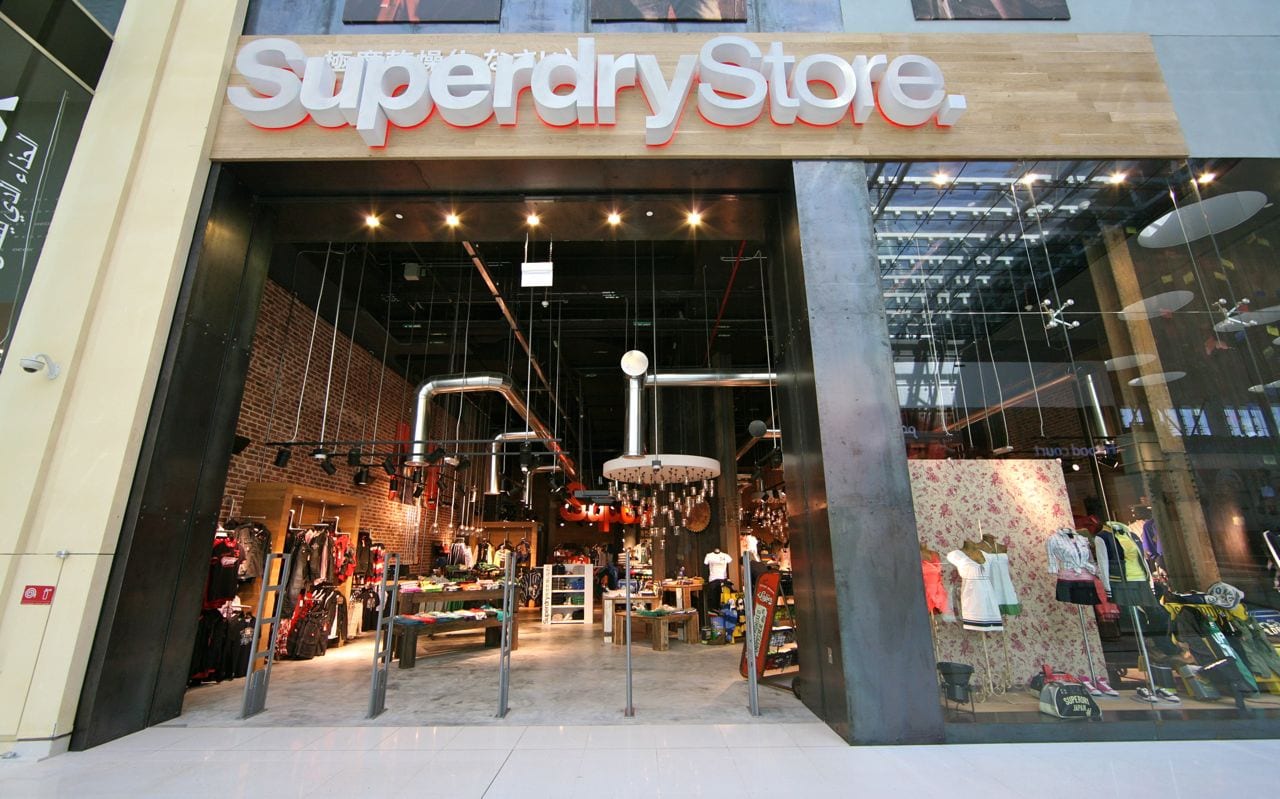
    Superdry is excited to announce the opening of its first Queensland store at Pacific Fair Shopping Centre in May 2016.  

    Housed in the newly renovated Pacific Fair complex, Superdry will have an in-store fit out consistent with the brand’s theme of industrial, exposed brick and vintage oak wood finishes, including steel framework, polished concrete floors and glass jam jar light features.  

    As a major brand milestone, Queensland’s first Superdry store will be 230square metres stocking key fashion pieces and exclusive international collections including SuperdrySport and collaborations with renowned British actor Idris Elba. 

    Superdry is an innovative British premium lifestyle brand with plans for rapid retail expansion across Australia.  

    Euan Sutherland, Chief Executive Officer of SuperGroup, said: 

    “Our strategy is to deliver sustainable growth, as we continue progressing towards our goal of creating a global lifestyle brand. Superdry represents British innovation, quality premium products at affordable prices sold to customers around the world. Superdry is an iconic brand with a strong heritage and we will continue to broaden and strengthen its appeal to customers across countries and age groups. We see significant growth potential in Australia with plans to roll out several stores nationally in the next 12 months. ” 

    On a global scale Superdry is opening an average of six new stores every month. Superdry is sold in over 46 territories with 516 branded locations in major cities from London to Milan, Mumbai to Sydney and New York to Hong Kong just to name a few. In Australia Superdry has 11 existing retail stores, with Pacific Fair being the twelfth. Superdry is stocked in 37 David Jones stores and 40 Myer stores nationally, with category expansion plans to roll out across wholesale channels including womenswear, underwear, swimwear and sport.  

    Superdry fuses design influences from Japanese graphics and vintage Americana, with the values of British tailoring. The result; unique men’s and women’s urban clothing with incredible branding and an unrivalled level of detailing.  Such distinctiveness has gained the brand exclusive appeal worldwide with a cult following amongst celebrities.  

  • Australians benefit from telco sector competition

    Australians benefit from telco sector competition

    Australian consumers are reaping the benefits of competition in the telecommunications sector in the form of increased data allowances, new services, and lower prices, according to a report from competition regulator ACCC.

    “Consistent with the trend in recent years, consumer demand for data is continuing to increase and is affecting both fixed and mobile networks. On fixed networks, data consumption grew by 40% to 1.3 million terabytes (TB) of data. On mobile networks, data consumption increased by 35% to 110,000 TB,” ACCC Chairman Rod Sims said.

    “The increase in demand for data is largely due to the popularity of audio-visual streaming services, including the introduction of subscription video on demand (SVOD) services such as Netflix, Presto, and Stan.

    Industry members have responded to the increase in demand by investing in their fixed and mobile networks to make sure that they have sufficient capacity to meet the data traffic.

    Service providers have also responded by increasing data allowances. During 2014-15, data allowances increased by over 70% for DSL internet services and more than doubled for post-paid mobile services.

    At the same time, overall prices fell by 0.5% in real terms from 2014 to 2015.

    “While a smaller reduction than in the previous eight years, which has seen a 3.3% fall each year on average, this indicates that competition on factors other than price has been a feature of the market,” Sims said.

    “Given this, the ACCC will continue to take a particular interest in ensuring consumers receive accurate information about network performance.”

  • South Tea exporters to double volumes to Malaysia, Indonesia

    South Tea exporters to double volumes to Malaysia, Indonesia

    Tea exporters from south are exploring opportunities to double their exports to Malaysia and Indonesia by joining hands with the tea industry in those countries.

    The exporters’ organisation has signed an MoU with trade representatives in Malaysia to double exports and to create a brand which will cater both domestic and export markets.

    With Indonesian industry the exporters are exploring to see whether they can create a new blended products suitable for that country.

  • CenturyLink expands cloud platform to Australia

    CenturyLink expands cloud platform to Australia

    CenturyLink has announced the availability of CenturyLink Cloud in Australia.

    The CenturyLink Cloud platform delivers enterprise-class control, agility, scalability and security backed by an industry-leading global network.

    Businesses based or operating in Australia can now turn to a single, trusted provider for public and private cloud infrastructure, managed services, colocation, network connectivity and support for advanced hybrid solutions.

    The Sydney cloud node joins the company’s other available cloud locations in the US, UK, Canada, Germany, and Singapore.

    Gery Messer, CenturyLink managing director, Asia Pacific, said “Launching the CenturyLink Cloud node in Australia signals our strong commitment to this key growth market.

    “We’re seeing increased customer demand for IT services in Australia, which is one of the most connected countries in the world. Thanks to our continued investment in Asia Pacific, many more organizations are achieving success on their hybrid IT journeys,” the executive said.

    Business research and consulting firm Frost & Sullivan predicts cloud spending in Asia Pacific will reach $20 billion in 2018.

    CenturyLink’s presence in Asia-Pacific dates back to 1999. Numerous regional and multinational corporations in Australia are customers.

    The Australia cloud node is one of several recent cloud advancements for CenturyLink. In early March, the CenturyLink Development Center opened in St. Louis with a focus on building cloud-based managed services that help drive increased value for businesses. In January, the company launched Relational Database (DB) Service, a MySQL-compatible database-as-a-service designed to meet application developers’ rapid software requirements and drive more agile IT.

  • Telstra to launch Cloud Gateway in June

    Telstra to launch Cloud Gateway in June

    Australia’s largest operator Telstra will launch a product for businesses needing to connect to multiple cloud environments.

    The company has also added Amazon Web Services (AWS) to its list of supported cloud platforms. The service, named Cloud Gateway, will launch in June 2016.

    Cloud Gateway aims to provide private and secure connectivity directly into multiple public cloud platforms. This one-to-many “gateway” model connects an IP network service to the cloud with data carriage, cross connect in the hosting data center, configuration and support.

    Organizations are expected to be able to access their chosen cloud platform from around the world simply and securely, with increased application performance via Telstra’s IP network.

    Initially, Cloud Gateway will offer customers around the world connectivity to AWS and IBM SoftLayer, while Australian customers can also connect to Microsoft Azure, Office365 and VMware vCloud Air. More infrastructure and SaaS platforms are expected to join over time.

    Telstra executive director for global products and solutions Philip Jones said Cloud Gateway aims to help customers take full advantage of multiple cloud-based workloads.

    “Most organizations don’t realize the full value of cloud out of a single service. Instead, our customers are investing in sophisticated hybrid cloud environments, which come with their own range of fragmented networking challenges,” said Jones.

    “These include managing multiple vendors, portals and contracts, while trying to maintain a high level of security, performance and operational efficiency. We believe that just because these solutions are sophisticated, doesn’t mean that they should also be complex. Cloud Gateway is Telstra’s simple way to connect multiple clouds, and create hybrid environments.”

  • Virgin Mobile Australia launches unused data ‘auction’

    Virgin Mobile Australia launches unused data ‘auction’

    Australian MVNO Virgin Mobile has launched a publicity stunt to promote its new data rollover postpaid plans by hosting an auction allowing local consumers to ‘bid’ for items using unused data allocations.

    The company will auction off 30 items over 30 days, with the top prize being an A$43,000 ($33,000) vacation package to the private Wadigi Island in Fiji.

    Consumers can place ‘bids’ on Virgin Mobile’s Facebook page by posting their most recent mobile bill showing how much unused data was left over. The person with the highest amount of unused data wins the prize for that day, or in the event of a tie whoever placed a bid first will win.

    Virgin Mobile Australia head of brand and consumer marketing Philippa Duant commented that the stunt aims to raise awareness of the company’s data rollover plans, that are designed to give subscribers a second chance at using their allocation.

    “Terabytes upon terabytes of unused mobile data are being taken back from consumers every month by other telcos,” she said.

    “At Virgin Mobile we don’t think it’s fair that something they’ve paid for is snatched away – they should get a second chance to use it and what better way than through a unique auction that offers the opportunity to live like [Virgin Group co-founder] Sir Richard Branson on your own private island.”