Tag: Auto

  • Infiniti Teases Electric Concepts, Commits To Being EV First By 2030

    Infiniti Teases Electric Concepts, Commits To Being EV First By 2030

    Infiniti has joined the pantheon of US-based automakers which have pledged to transition mostly to electric powertrains by 2030. In its video, Infiniti also hinted that it will be also be leveraging hybrid powertrains, “we will not let the size of our battery alone define us, but rather, empower customers to choose the power source that fits their lifestyle,” said the company in its video.

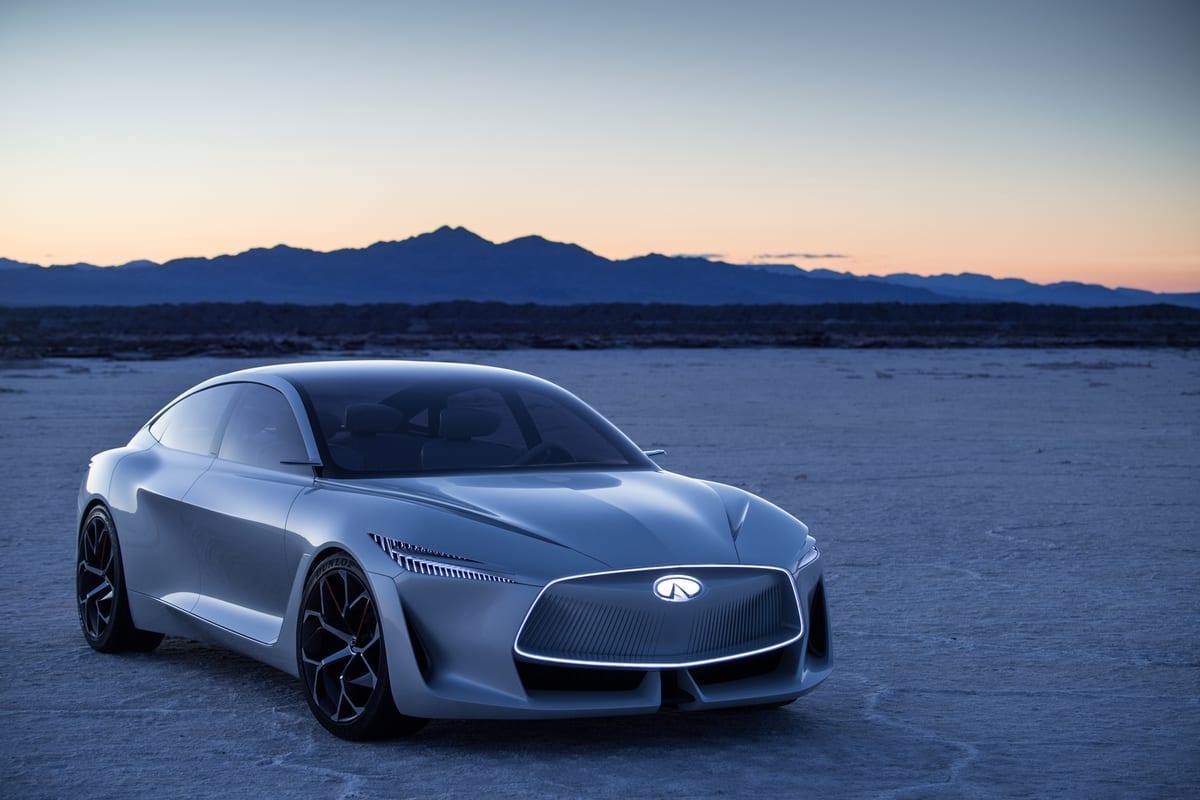
    In the video, Infiniti shows off three unnamed vehicles, one of which is a crossover, though it is not known that these cars have some flow over with Nissan’s out concept vehicles. Of course, Infiniti is owned by Nissan, which has for years pushed electric cars along with Renault.

    The concept cars shown off are low-slung and even have a tachometer which means these are likely hybrid cars. Infiniti now joins the likes of many muscle and sports car brands that have pushed electric and hybrid powertrains. Recently, we have heard from the likes of Dodge which has also hinted that it will be going all-electric and will be retiring its iconic hellcat motors.

  • Toyota Promises 100% Zero Emissions Sales In Europe By 2035

    Toyota Promises 100% Zero Emissions Sales In Europe By 2035

    In an about-face from its anti-EV stance, Toyota has now pledged to have 100 percent zero-emissions sales in Europe by 2035 something which is revealed in a recent media event in Brussels, Belgium. This goal is a follow-up to a commitment of at least 50 percent zero-emissions vehicles sales in Western Europe by 2030. Toyota has still not given up on hydrogen fuel cell-based vehicles as its plan is based on a combination of EVs and fuel cell-based cars. This comes after the company launched its first EV and is preparing to launch another affordable EV in partnership with BYD. This commitment could be bolder should customer demand be higher than what the Japanese giant has envisioned.

    “Moving beyond 2030, we expect to see further ZEV demand acceleration and Toyota will be ready to achieve 100% CO2 reduction in all new vehicles by 2035 in Western Europe, assuming that sufficient electric charging and hydrogen refueling infrastructures are in place by then, together with the renewable energy capacity increases that will be required,” said Matt Harrison, Toyota’s CEO for Europe.

    Toyota is still not committing on its own account but is rather been forced to do so after the new European Green deal which proposes a 55 percent reduction in new car emissions by 2030 and a 100 percent reduction by 2035. A number of nations have already agreed to a 2040 mark following the recent COP26.

    What’s interesting is that unlike some major automakers like Daimler, Volkswagen Group, Stellantis, GM, and Ford, Toyota’s commitment is restricted to only Europe, not globally. Why so? Because Europe is the place where laws are being enacted to ban the internal combustion engine – and hence it has no choice, if it wants to operate in the continent.

  • ARAI Developing Fast Chargers For Electric Vehicles

    ARAI Developing Fast Chargers For Electric Vehicles

    The Automotive Research Association of India (ARAI) is developing fast chargers for electric vehicles to address the issue of charging infrastructure, Union Minister of Heavy Industries Mahendra Nath Pandey said on Saturday. As reported by PTI, the Minister said that the Automotive research and development body has already developed a prototype of the product while replying to a query at a press conference on the sidelines of the ‘Round Table To Promote Electric Mobility’ event organised by the Ministry of Heavy Industries.

    When asked about the challenges related to the usage of electric vehicles, he said, “This issue is being talked about that it consumes more time (to charge an e-vehicle battery). ARAI has been directed to work on it. In fact, they have developed a prototype of a fast charger and the product is expected to be ready by December 2022.”

    He also informed that the ARAI has been asked to complete the project by October 2022, so that it can be made available to the customers by December. The fast chargers will address the issue of charging infrastructure and boost demand for battery-driven vehicles. The minister also said that research is still underway and specific charging time of electric two-wheeler, three-wheeler and four-wheeler e-vehicle can be determined only after its completion.

    He further mentioned that his ministry is also in talks with the Ministry of Petroleum and Natural Gas for EV chargers installation at 22,000 petrol pumps across India. The charging stations would be installed at an interval of 25 km on highways and within a radius of 3 km in cities.

    Transport ministers of various states, other government and industry officials attended the ‘Round Table To Promote Electric Mobility’ event to deliberate ways for promoting EVs in the country.

  • Ford Aims To Be World’s Second Largest Electric Vehicle Maker Within Two Years

    Ford Aims To Be World’s Second Largest Electric Vehicle Maker Within Two Years

    Ford Motor expects to be the world’s second-largest electric vehicle manufacturer within two years, with an annual production capacity of nearly 600,000, a top company executive said Friday.

    The automaker’s optimism stems from the increasing demand for its next new EV, the Ford F-150 Lightning pickup, with retail reservations approaching 200,000, Lisa Drake, chief operating officer of Ford North America, said.

    Reuters reported on Wednesday that Ford likely would be vying with Stellantis for third place in the EV race by 2025, behind Tesla and the Volkswagen Group, based on production forecast data provided by AutoForecast Solutions.

    Speaking at an investor conference, Drake said Ford is working to vertically integrate more EV components, including power electronics and e-drives, at existing facilities that build parts for combustion vehicles – a modern take on founder Henry Ford’s pioneering work in building many of his own components.

    “We haven’t used ‘vertical integration in this industry in a long time,” Drake said, but “you’re going to hear it a lot more” as Ford and other automakers transition from combustion to electric vehicles.

    She said Ford working with five global battery suppliers to manufacture and help develop battery cells for its future EVs, aiming to build 240 gigawatt-hours of production capacity globally by 2030. Those suppliers include SK On, LG Energy Solution, CATL, BYD, and Panasonic.

    Ford expects to reduce EV battery cell cost to $80 per kilowatt-hour at the pack level “well before the end of the decade,” Drake said.

    The automaker is looking at different cell chemistries, including cobalt-free lithium iron phosphate, and cell-to-pack structural batteries to help reduce costs.

    Ford and BMW are working with Colorado-based startup Solid Power on developing solid-state batteries, which Drake said should be commercialized “well before the end of the decade.”

  • Honda Sets Up Battery Sharing Subsidiary In India

    Honda Sets Up Battery Sharing Subsidiary In India

    Honda has announced setting up a new subsidiary in India, which will focus on the supply chain side of the electric vehicle industry. Called Honda Power Pack Energy India Private Limited, the new subsidiary for battery sharing service in India will offer service for small mobility players. In a statement, Honda has said that the company plans to start battery sharing service for electric auto-rickshaws from the first half of 2022 in Bengaluru, Karnataka, and expand the operations in other Indian cities in a phased manner.

    Swappable batteries will offer subscribers fully-charged batteries at the stations which can be swapped in a matter of minutes, instead of waiting to charge the vehicle.

    “The company will offer battery sharing service for small mobility, which will accelerate the penetration of electric vehicles by solving three issues of electric vehicles: limited range, long charging time, and high cost of batteries,” Honda said in the statement.

    Honda’s all-new portable and swappable batteries will be called “Honda Mobile Power Pack e,” and the company’s battery sharing service subscribers can avail of the services from the nearest battery swapping station. At the battery swapping station, subscribers can swap the used batteries with fully charged ones, and need not wait for charging and can get back on the road in marginal time.

    The company has invested ₹ 135 crore, and will work closely with original equipment manufacturers (OEMs) who wish to integrate Honda’s battery into their vehicles, by providing necessary technical information for an interface. By expanding vehicle OEMs, applications, and service areas, the company aims to onboard more drivers which will further enhance service convenience.

  • Samsung To Supply New Advanced Auto Chip To Volkswagen

    Samsung To Supply New Advanced Auto Chip To Volkswagen

    Samsung Electronics on Tuesday revealed new auto chips targeting demand for advanced chips in cars, including one mounted in Volkswagen’s infotainment system developed by LG Electronics. Demand is rising for “high-tech” automotive chips that can handle more entertainment consumption and increased electrical components in cars, Samsung said in a statement, saying that it plans to actively respond to the growing demand.

    The chips, developed by Samsung’s logic chip design business System LSI, includes a chip enabling 5G-based telecommunications for downloading high-definition video content during transit, and a power management chip for stable electricity supply.

    A third chip, an infotainment processor that can control up to four displays and 12 cameras at once, has been mounted in Volkswagen’s high-performance computer called In Car Application Server (ICAS) 3.1, developed by LG Electronics’ vehicle components business, Samsung said.

    Samsung and cross-town rival LG Electronics have both targeted the expansion of the global electric vehicle market and the rapid electrification of cars as opportunities to sell more high-tech chips and sophisticated components, analysts said.

  • Car registration fee cut by half again

    Car registration fee cut by half again

    A government decree has cut registration fees for locally made cars by 50 percent for six months starting December 1.

    This is the second time in the last two years such a cut is being made to mitigate the difficulties faced by the auto industry due to the Covid-19 pandemic.

    In the first six months of last year, 17,600 cars were bought on average each month. In the second half, when the 50 percent cut took effect, sales doubled.

    The registration fees are calculated based on car prices in each locality.

    The rates are 12 percent in Hanoi and Hai Phong, and 10 percent in HCMC.

    Last year, car sales had fallen by 8 percent to 296,634 units as the Covid-19 pandemic badly affected the economy, hitting people’s incomes and discretionary spending.

  • Daimler To Produce First In-House Electric Motor At Berlin Plant

    Daimler To Produce First In-House Electric Motor At Berlin Plant

    Daimler will produce the first in-house electric motor at its oldest plant in Berlin, the carmaker said on Thursday, providing relief to workers worried that the diesel motor production site was on the brink of deep job cuts.

    Workers who feared for their positions after Daimler said in September 2020 its Berlin site would end production of the 6-cylinder diesel motor within a year would also be offered retraining in software and coding, the German company said.

    Around 450 of the plant’s 2,300-odd workers have applied to attend a pilot 160-hour training course in software development, works council chairman Michael Rahmel said on a press call, with around fifteen selected for the first round of training.

    Investment in the 120-year-old Berlin-Marienfelde plant, previously pinned at a two-digit million euro amount, will rise to a low three-digit million euro amount in the next six years, Daimler said.

    The motor, known as an axial-flux motor and designed by the British startup YASA which Daimler acquired earlier this year, weighs a fraction of its diesel equivalent and can boost the range of an EV by up to 7%, YASA’s founder Tim Woolmer told Reuters in July.

    Woolmer said at the time that Daimler had briefed YASA to bring costs down in future iterations of its motor so the carmaker could use them across its entire EV range.

    The e-motor is simpler to produce than its diesel equivalent, meaning the plant will eventually require less workers – but the exact number of future job losses was not yet clear, head of production Joerg Burzer said on a press call. A start date for the production of the motor was not provided.

    The factory’s employees are guaranteed their positions until the beginning of 2030 under an existing union agreement.

    The digital training campus, which Daimler partnered with Siemens in March to develop and which will go live in 2022, would also create new jobs, Burzer said.

    “If we make an effort here in coming years, there could even be more jobs than before,” head of IG Metall Berlin Jan Otto said.

    Production of the 6-cylinder diesel motor and some components would continue at the factory in the short-term but was being wound down, Burzer and union representatives said.

    The factory’s employees are guaranteed their positions until the beginning of 2030 under an existing union agreement.

    “A year ago, we didn’t know what would happen at the plant. Today we’re embarking on what will hopefully be a successful transformation with our heads held high,” Michael Rahmel, works council chairman at Berlin-Marienfelde, said in a statement

  • Nissan Plans 50% Electric Vehicle Sales By 2030

    Nissan Plans 50% Electric Vehicle Sales By 2030

    Automaker Nissan wants half its global sales to be electric or hybrid vehicles by 2030 and plans to plough billions of dollars into the effort, it announced Monday. The move follows in the footsteps of other major global automakers, which have increasingly signaled a move towards electric and hybrid vehicles as concern about climate change grows.

    Unveiling its new long-term plan, Nissan said it will launch 23 new models, including 15 new electric vehicles, in a bid to reach the 2030 goal.

    Last year, only around 10 percent of Nissan’s global sales were EVs or hybrids, and the firm said the new target would help it achieve carbon neutrality across the lifecycle of its products by 2050.

    Nissan has been battered by a series of problems in recent years, ranging from weak demand even before the pandemic, to the fallout from the arrest and subsequent escape of former boss Carlos Ghosn.

    Last year, only around 10 percent of Nissan’s global sales were EVs or hybrids

    After falling behind rivals during the pandemic, it has begun clawing back performance, tripling its full-year net profit forecast earlier this month despite the impact of a global chip shortage.

    In a statement, Nissan CEO Makoto Uchida said the long-term plan announced Monday would “transform Nissan to become a sustainable company.”

    It’s a move seen across the auto industry with Sweden’s Volvo pledging to switch all sales away from traditional fuel cars by 2030, and Japan’s Honda setting the same target by 2040.

    Top-selling Toyota says by 2030 all the vehicles it sells in Europe will be electric or hybrid models, with a goal of 70 percent in North America and 100 percent in China by 2035.

    Nissan said 20 of its new electric models would hit the market in the next five years, setting a target for electric cars to make up 75 percent of sales in Europe by fiscal 2026.

    The Japanese automaker said it will invest two trillion yen ($17.5 billion) over the next five years to speed up electrification, aiming to launch electric vehicles with its proprietary batteries by 2028.

    Electric and hybrid vehicles are being increasingly adopted in the face of concern about climate change, with Britain moving to ban new sales of diesel and petrol cars in the UK from 2030.

    US President Joe Biden earlier this year announced a target for half of all ears sold domestically by 2030 to be zero-emission.

    At present, around 10 percent of European car sales are EVs, but the US figure is just two percent.

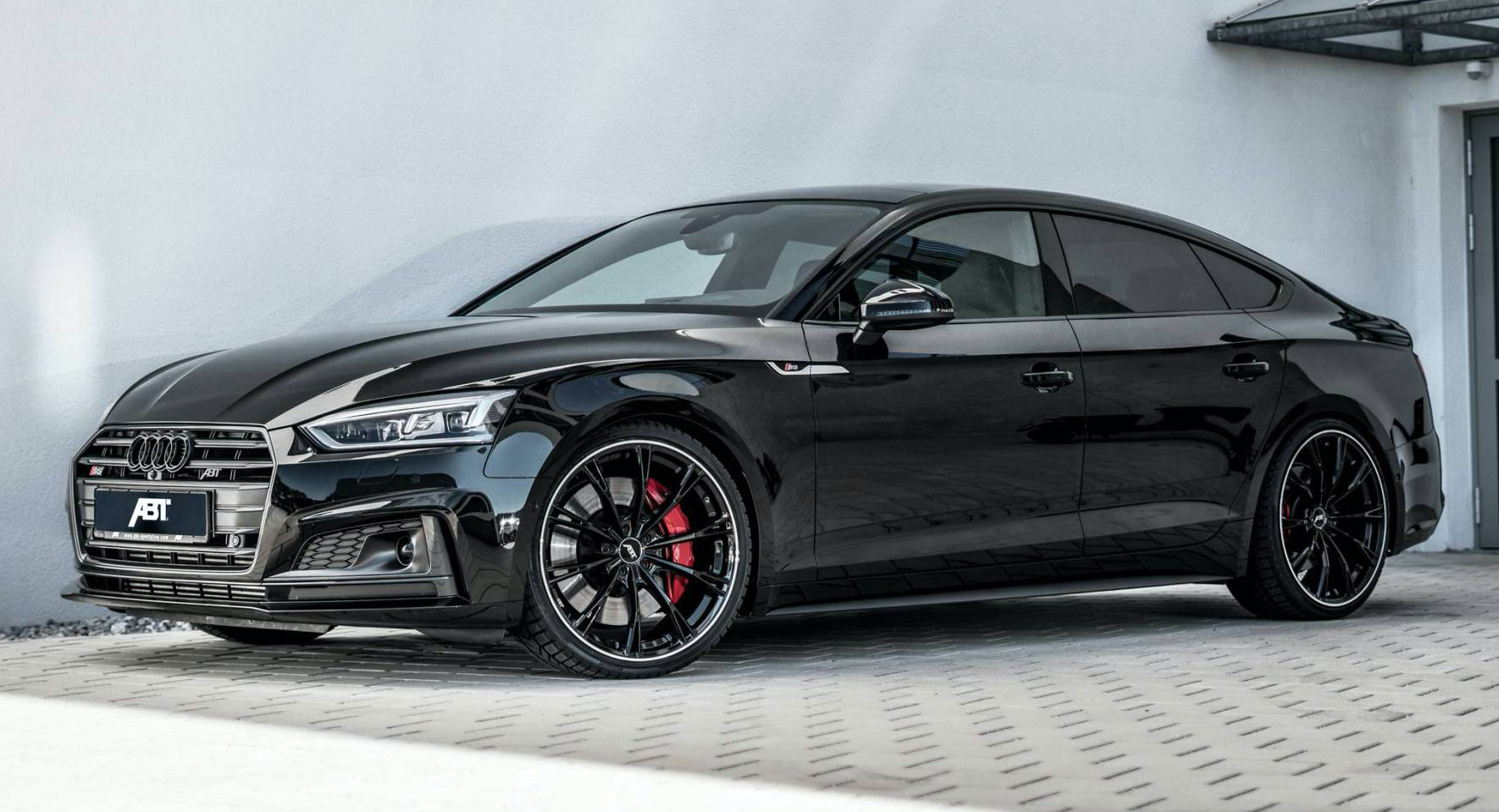
  • Audi recalls 104 cars in Vietnam over lock nut issue

    Audi recalls 104 cars in Vietnam over lock nut issue

    German auto brand Audi is recalling 104 cars in Vietnam due to a lock nut issue on the rear suspension that could cause a loss of control and crash.

    Certain lock nuts on the trailing arm of the rear axle can break due to corrosion, which can change the wheel alignment on the rear axle, according to a notice the company submitted to Vietnam Register.

    If the rear axle suddenly moves in the wrong direction, the driver could lose control and crash, it added.

    There has been no known accidents reported.

    The company will contact each owner about a free replacement of the lock nut, which would take around 1.5 hours.

    The recall lasts from Nov. 15 to Nov. 14, 2024.

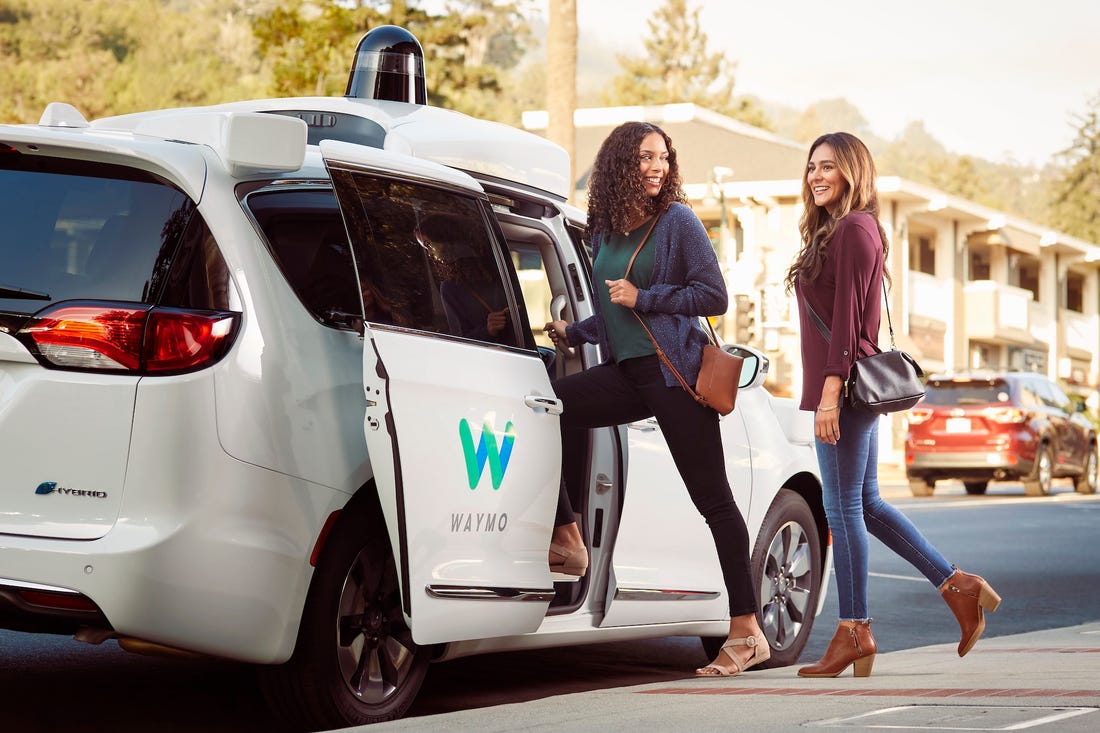
  • Waymo, UPS Expand Autonomous Freight Truck Tie-Up Ahead Of Holidays

    Waymo, UPS Expand Autonomous Freight Truck Tie-Up Ahead Of Holidays

    Alphabet Inc’s Waymo said on Wednesday it is expanding its partnership with United Parcel Service Inc to move freight using autonomous trucks between two of the parcel delivery company’s Texas facilities during the holiday season.

    Waymo Via, the company’s delivery operation, began its partnership with UPS in early 2020 when it shuttled packages for the company between the Metro Phoenix area and its Tempe hub in Arizona using an autonomous minivan.

    The company said trial runs would start in the coming weeks, where big rigs equipped with its fifth-generation Waymo Driver technology will deliver for UPS’ North American Air Freight unit between facilities in Dallas-Fort Worth and Houston, Texas.

    Driver shortages have hit U.S. trucking and delivery companies, most notably FedEx Corp, as they race to hire workers for the crucial holiday season when package volumes can easily double. Waymo and UPS said the trials would help assess the impact of autonomous driving technology on safety and efficiency.

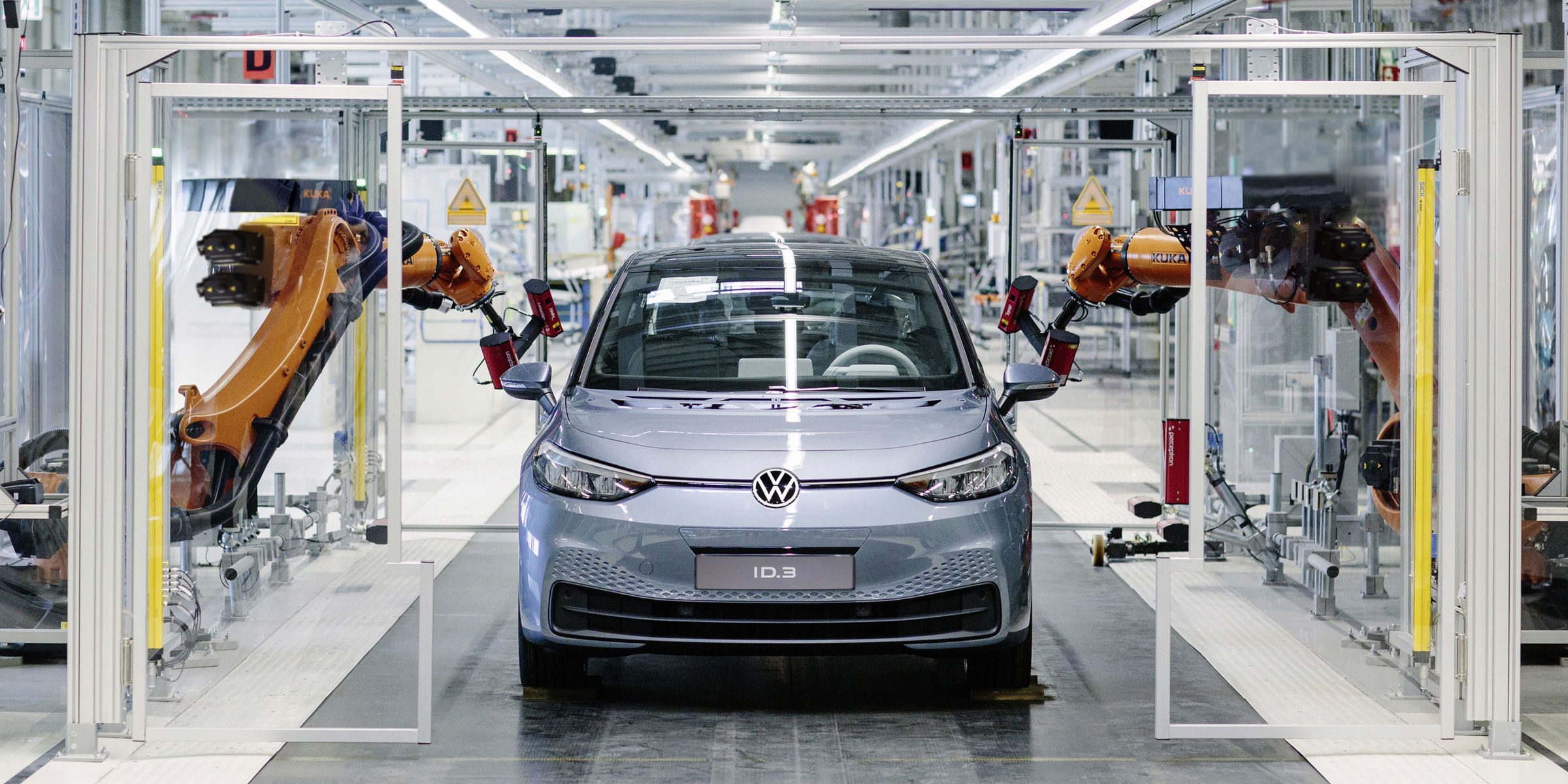
  • Volkswagen Powers Up The Grid To Take On Tesla

    Volkswagen Powers Up The Grid To Take On Tesla

    Volkswagen plans to double staff numbers at its charging and energy division, roll out new payment technology next year and strike more alliances to take on Tesla in a key electric vehicle (EV) battleground: power infrastructure. By ensuring there are enough fast-charging plugs – and enough power – for the EVs it wants to sell, Europe’s biggest carmaker hopes to convince drivers worried about battery ranges that they can ditch their fossil fuel cars for good.

    Underlining its electric ambition, Volkswagen has drafted in power industry veteran Elke Temme, who spent nearly two decades at German energy companies RWE and Innogy, to help the carmaker get in better shape to take on Tesla. In the job since January, Temme, 53, has been tasked with bundling the carmaker’s various power activities such as procuring energy, enabling customers to charge their cars at home, and on the road, and selling the electricity required.

    Getting this done will require a bigger workforce and Temme plans to double the staff at Volkswagen’s European charging and energy division, known as Elli, to about 300 in 2022, having already tripled it this year, she told Reuters in an interview. “We’re investing in huge growth areas that don’t always have to be profitable right away. We always see these investments in the overall context of our group strategy,” she said. “That’s why building up a comprehensive infrastructure is key.”

    Temme declined to specify the budget she has been given but said Volkswagen, led by Tesla admirer Herbert Diess, has approved the investment requests for the division, which also sells home battery storage systems similar to Tesla’s Powerwall. Volkswagen leads the pack worldwide by far with its investment plans for EVs and batteries through 2030, according to a Reuters analysis, and it is planning to spend 35 billion euros on battery EVs by 2025.

    But when it comes to the networks of fast-chargers that many analysts believe are crucial for bringing EVs into the mainstream, VW has some catching up to do. Tesla has been rolling out high-performance Superchargers for years and has a global network of about 30,000 fast-chargers that it says can give a 200 km (125 mile) boost in 15 minutes. The company said in October that its own network has doubled in the past 18 months – and will triple over the next two years.

    Volkswagen, meanwhile expects its network of fast-chargers to nearly quadruple to about 45,000 by 2025 – when it aims to overhaul Tesla as the global EV market leader – with 18,000 EV pumps in Europe, 17,000 in China and 10,000 in North America. Volkswagen in March said it plans to spend 400 million euros on expanding its fast-charging network on the continent by then. But that’s a drop in the ocean compared with the 5 billion euros the European Union reckons is needed every year until 2040 to expand charging infrastructure on the continent, and it is raising the pressure on utilities and governments to step up.

  • REE Unveils Leopard, A Fully Autonomous Concept Vehicle

    REE Unveils Leopard, A Fully Autonomous Concept Vehicle

    REE Automotive revealed its autonomous concept vehicle based on a brand new ultra-modular EV platform design. The full-scale concept is geared for customers including last-mile autonomous and electric delivery companies, delivery fleet operators, e-retailers, and technology companies seeking to build fully autonomous solutions.

    Leopard’s design and specifications are the results of collaborative work with leading global delivery and technology companies focused on autonomous delivery and Mobility as a Service (MaaS) fleets. The concept vehicle is 3400 mm in length with front-wheel-steer, rear-wheel-drive, and has a 2-tonne gross vehicle weight.

    Leopard – the last mile autonomous concept vehicle – is designed to carry significantly more cargo due to REE’s low, flat floor. This means improved environmental impact of fewer trips in fewer vehicles, backed by a strong cost of ownership (TCO) structure: each vehicle in the fleet will be less expensive to run and maintain due to reduced energy cost and improved serviceability, leading to lower maintenance costs.

    Daniel Barel, REE co-founder, and CEO said, “Autonomous and electric vehicles ‘Powered by REE’ offer unsurpassed operational efficiency and the lowest total cost of ownership combined with full flexibility when it comes to integrating top hats in virtually any size, shape or form. We’re here to make the shift to a carbon-neutral future a reality faster and at scale.”

  • Volvos Concept Recharge Uses Sustainable Materials

    Volvos Concept Recharge Uses Sustainable Materials

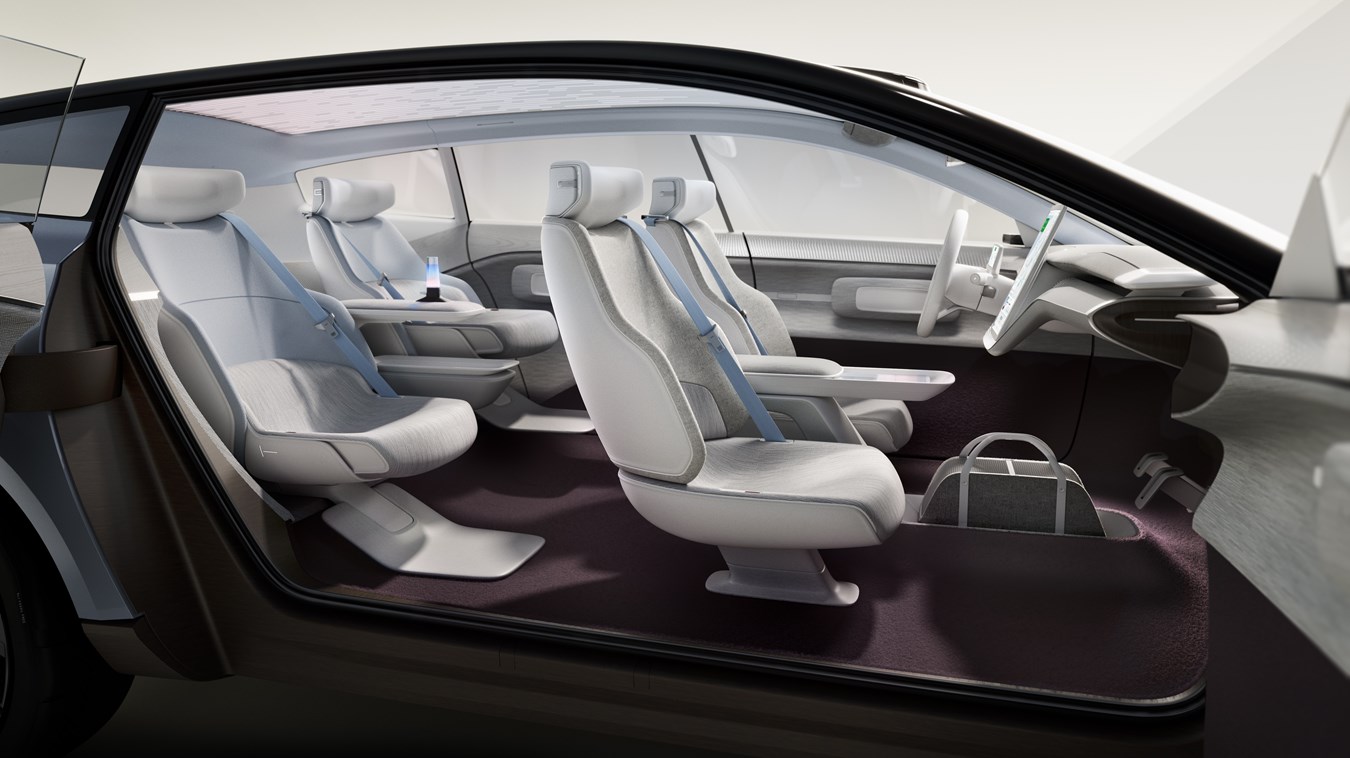
    With the Concept Recharge, Volvo Cars demonstrate the steps it will take in all areas of pure electric car development to reduce its cars’ and its overall carbon footprint. The company plans to sell only fully electric cars by 2030 and aims to be a climate-neutral and circular business by 2040. By using sustainable materials inside the car, equipping it with tyres from recycled and renewable material, improving aerodynamics, and through other measures, Volvo Cars can take huge steps to reduce its carbon impact through the car itself.

    When combining those steps with the use of clean energy throughout a decarbonized supply chain, manufacturing process, and use phase of the car, Volvo Cars believes it can reduce a car’s lifecycle CO2 impact by 80 percent versus a 2018 Volvo XC60, without losing the inherent premium qualities that Volvo cars have become known for.

    This would mean that the Concept Recharge would have an overall lifecycle CO2 impact below 10 tonnes when charged with 100 percent renewable energy.

    Volvo Cars is in the forefront when it comes to working with sustainable and natural materials in its cars, and the Concept Recharge is another proof point of its commitment to push forward with this ambition.

    The interior design is rich in sustainable materials, both natural and recycled materials – think of responsibly sourced Swedish wool, environmentally responsible textiles and lightweight composites created from natural sources.

    Sourced Swedish wool is transformed into fully natural breathable cloth, free from additives. This warm and soft material is used in the seat backrest and instrument panel top. Meanwhile, the floor and lower doors are covered by a rich carpet of 100 percent wool. The seat cushions and touch surfaces on the door are made from an environmentally responsible material that contains Tencel fibers from cellulose. This fabric has great durable strength and is soft to the skin. By using Tencel fibers, which have been produced through high water- and energy-efficient processes, Volvo designers can reduce the use of plastics in interior parts.

    The seatbacks and headrests, as well as part of the steering wheel, use a new material created by Volvo Cars called Nordico. It is a soft material made from bio-based and recycled ingredients that come from sustainable forests in Sweden and Finland, providing a CO2 footprint that is 74 percent lower than leather.

    Elsewhere in the interior, including in the lower storage areas, back of the headrest, and the footrest, the Concept Recharge uses a flax composite, developed by Volvo Cars in collaboration with suppliers. It uses fibers from the linseed plant, which are mixed with composites to provide a strong and lightweight, yet attractive and natural, aesthetic.

    On the exterior, the front and rear bumpers as well as the sill moldings also consist of flax composite. Using a flax composite both inside and out in this way results in a significant reduction of plastics used.

    With the internal combustion engine making way for the pure electric powertrain, tires play an even more important role. Not only are they crucial for safety, but they also contribute largely to the vehicle’s battery range. This means tires for electric cars always have to be on top of technology development.

    Hence the Concept Recharge features special tires made by Pirelli, which are completely free from mineral oil and are made from 94 percent fossil-free materials, including recycled and renewable materials such as natural rubber, bio-silica, rayon, and bio-resin. This reflects the circular approach shared by Volvo Cars and Pirelli, with a focus on reducing resource consumption and environmental impact.

    Beyond its sustainable materials, electric powertrain, and special tires, Concept Recharge also improves the environmental credibility of SUVs through efficiency and aerodynamics.

    With the Concept Recharge, Volvo Cars envision the future of aerodynamics. It incorporates innovative aerodynamic features such as exterior design details that smooth the airflow, a new wheel design, a lower roof, and a more upright rear end.

    As such, it takes the classic SUV shape and improves airflow to increase range, while offering the incredible space opportunities that come naturally with an electric car and its lower floor.
  • Auto sales hit six-month high

    Auto sales hit six-month high

    Vietnam auto sales reached 29,797 units last month, the highest since April, indicating demand recovery after prolonged social distancing.

    This is the second monthly sales rise in a row after a chain of five dropping months from April to August when the fourth Covid-19 wave hit, according to a report by Vietnam Automobile Manufacturers Association (VAMA).

    In the first 10 months, total sales hit 218,734 units, up nearly 3 percent year-on-year.

    Truong Hai Auto (Thaco) continued to lead sales with 75,604 units in the period, up 6.3 percent year-on-year.

    Toyota followed with 45,131 units, down 9.6 percent.

    Mitsubishi, Ford, and Honda rounded out the top five.

    In October, the best-selling model was the sedan Hyundai Accent with 3,346 units, followed by the pickup truck Ford Ranger.

    Last year, sales had fallen by 8 percent to 296,634 units as the Covid-19 pandemic badly affected the economy, hitting people’s incomes and discretionary spending.