Tag: Auto

  • Hyundai Motor To Launch Dedicated EV Platform In Major Push Into Electric Cars

    Hyundai Motor To Launch Dedicated EV Platform In Major Push Into Electric Cars

    South Korea’s Hyundai Motor Group said on Wednesday it will introduce an electric vehicle-only platform early next year that will use its own battery technology to cut production time and costs.

    The plan underscores efforts by the world’s No.5 auto group to become a major player in the global EV market, as car makers around the world are pouring billions of dollars of investment to improve battery technology, which keeps EV prices high compared with combustion engine models.

    Market leader Tesla said in September it aims to halve the cost of its EV batteries and bring more production of the key auto component in-house to lower EV prices to $25,000 each.

    Hyundai expects its dedicated Electric Global Modular Platform (E-GMP) will allow it to use its own battery module technology across various EV models and cut the number of components by 60%.

    “E-GMP will be highly effective in expanding the Group’s EV leadership position as it will enable the company to enlarge its EV line-up over a relatively short period through modularisation and standardisation,” it said in a statement.

    An electric vehicle based on E-GMP will offer driving range of 500 kms (310 miles) or more on a single charge, an improvement of at least 23% from the Kona EV, the longest driving range model among Hyundai’s EV lineups.

    Hyundai Motor and its sister company Kia Motors together aim to sell 1 million EVs in 2025 to become the world’s third-largest seller of EVs.

    It has promised 23 new EVs including 11 all-electric models by 2025 and plans to introduce a family of EVs under the Ioniq brand from early next year to spearhead its near-term transition toward EV production.

  • China Grants Tesla Green Light To Start Selling Shanghai-Made Model Y SUV

    China Grants Tesla Green Light To Start Selling Shanghai-Made Model Y SUV

    Tesla Inc has obtained permission to start selling its Shanghai-made Model Y sports utility vehicle in China. The Ministry of Industry and Information Technology published the approval on its website on Monday.

    Tesla, now sells its Model 3 electric cars in China and has been building new car manufacturing capacity in Shanghai to make its Model Y SUVs. It applied for the Shanghai-made Model Y SUV sales permission earlier this month.

    It started delivering vehicles made in its Shanghai factory last December and sold more than 13,000 vehicles in China in October.

    The company has started exporting China-made Model 3 cars to Europe and said last week it plans to also start making electric vehicle chargers in China in 2021.

  • Hyundai To Pay $ 54 Million Penalty In US For Defective Engines

    Hyundai To Pay $ 54 Million Penalty In US For Defective Engines

    The Hyundai Group had issued one of its biggest recalls three years back in the United States, Canada and South Korea. The recall included 1.19 million cars in the US and over 1.14 lakh units in Canada. The vehicles were recalled because of machining errors during vehicle manufacturing that could have led to “premature bearing wear within the engine,” as pointed out by the National Highway Safety Traffic Administration.

    The Hyundai Sonata and Santa Fe models which were manufactured between 2011 and 2014 were impacted and in a service campaign, engines of these units had to be replaced, free of charge. But the matter hasn’t ended here. The Korean carmaker is now paying a penalty and will have to overhaul its manufacturing plants.

    The company has said that it will be paying a cash penalty of $54 million and will be making a further investment of $40 million to improve the safety standards in its operations. The investment will be used to develop a safety field test and inspection laboratory in the US along with setting up the new IT system for batter safety data procurement and analysis and potential safety issue identification.

    Brian Latouf, chief safety officer, Hyundai Motor North America said, “Customer safety is our highest priority and we are taking immediate action to enhance our response to potential safety concerns. We value a collaborative and cooperative relationship with the U.S. Department of Transportation and NHTSA, and will continue to work closely with the agency to proactively identify and address potential safety issues.” Along with Hyundai, some models of Kia Motors were impacted as well and both carmakers agreed to pay a civil penalty of $ 210 million.

  • Petrol, Diesel Prices Hiked Again Across Metro Cities

    Petrol, Diesel Prices Hiked Again Across Metro Cities

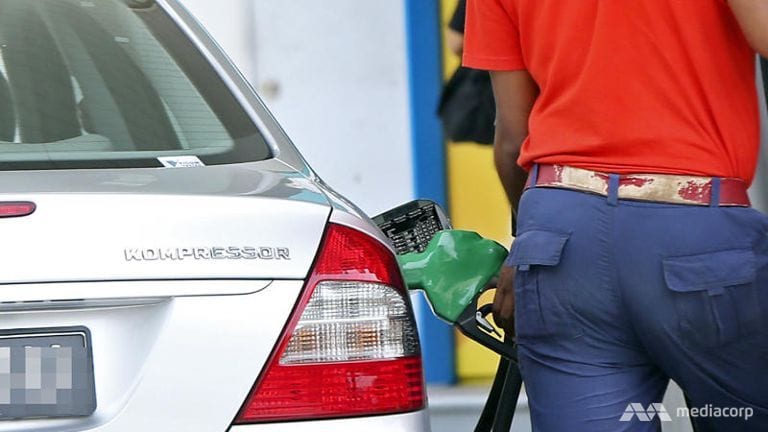
    The oil companies on Sunday, yet again, increased the fuel prices across all the metro cities resulting in a hike of 21 paise and by up to 31 paise in prices of petrol and diesel, respectively. As the price hike continues, the petrol rates on Saturday surpassed the ₹ 82 mark, while diesel breached the ₹ 72 mark in the capital city. With newly revised prices, customers in Delhi will have to shell out ₹ 82.34 per litre for petrol and will have to pay ₹ 72.42 for a litre of diesel. The fuel prices differ from state to state, which depends on the value-added tax (VAT) levied by the state government.

    In the last ten days, petrol price has gone up by ₹ 1.28 per litre and diesel rate has increased by ₹ 1.96 in the national capital. Petrol and diesel rates remained static since September 22 and October 2, respectively. The OMCs started revising rates of auto fuels from November 20 onwards.

    In Mumbai, petrol prices surpassed ₹ 89 mark as it is retailing at ₹ 89.02 per litre against ₹ 88.81 per litre on Friday. Diesel, on the other hand, is retailed at ₹ 78.97 per litre, seeing a hike of 31 paise. In Kolkata, the retail price of petrol went up by 20 paise to Rs 83.87 per litre from ₹ 83.67 a litre and diesel increased to ₹ 75.99 per litre. In Chennai and Bengaluru, petrol retailed at ₹ 85.31 and ₹ 85.09 respectively. On the other hand, diesel retailed at ₹ 77.84 in Chennai and ₹ 76.77 in Bengaluru.

    Oil marketing companies (OMCs) have been revising the retail rates of petroleum products since November 20, 2020. The 58-day hiatus in petrol price revision and 48-day status quo on diesel rates were preceded by no change in rates between June 30 and August 15 and an 85-day status quo between March 17 and June 6.

    Indian Oil Corporation, Bharat Petroleum Corporation, and Hindustan Petroleum Corporation are the three major oil marketing companies in India. The oil marketing companies revise petrol and diesel rates daily and make necessary changes to align the petroleum prices with global benchmark and dollar-rupee exchange rate.

  • Transport Ministry Plans To Introduce Uniform PUC Certificate With QR Code For All Vehicles

    Transport Ministry Plans To Introduce Uniform PUC Certificate With QR Code For All Vehicles

    The Ministry of Road Transport and Highways (MoRTH) is planning to introduce uniform pollution under control (PUC) certificate for all vehicles across the country. As per the report in ETAuto, the transport ministry will soon be made uniform PUC certificates throughout the country and will come with QR code bearing important details. The QR code on the uniform PUC certificates will have specifics of the owner, vehicle and emission status. The ministry of transport issued a draft notification proposing these changes on Friday and has pursued suggestions and objections of the stakeholders.

    The transport Ministry has already proposed the changes in the Central Motor Vehicle Rules and will have the provision for a system generated SMS to the registered mobile number of the owner before getting the PUC done. This system will also help in reducing vehicle thefts which can be detected when taken to testing centres for procurement of a PUC certificate.

    According to the report, officials said that uniform format of the PUC certificates has been proposed for linking the PUC database with the national register. The government has also planned to provide a rejection slip for the first time, specifying the reason for rejection. The rejection slip will also include where the engine emission values exceed the limits set under the CMVR.

    Under the proposed modifications in the law, if the enforcement officer has a reason to believe that a vehicle is not fulfilling the provisions of the emission standards, he can direct the owner or person-in-charge for conducting a test at any authorised PUC testing stations. The communication needs to carried out to the owner or person-in-charge of the vehicle in the form of writing or electronic modes.

    Do note, if the driver or person-in-charge of the vehicle fails to submit the vehicle compliance certificate, he/she shall be liable for plenty under the provisions of Motor Vehicle Act. The owner can face up to three months of jail or up to ₹ 10,000 fine and cancellation of driving licence for three months.

  • Elektrobit Unveils New Software Platform For Next-Gen Vehicle Electronics Architectures

    Elektrobit Unveils New Software Platform For Next-Gen Vehicle Electronics Architectures

    Elektrobit (EB), a global supplier of embedded and connected software products for the automotive industry, announced EB xelor, an industry-first software platform designed to streamline the development of next-generation automotive electronics architectures based on high-performance computing (HPC). The EB xelor platform provides car makers and Tier 1 suppliers with a secure, stable, and easily upgradable software foundation for connected and intelligent vehicles, allowing them to focus less on automotive infrastructure and more on innovation.

    EB xelor brings together production-proven software from EB, open-source and third-party software, plus tools and services that are absolutely critical for HPC environments but won’t necessarily differentiate one vehicle from another. By choosing EB xelor, car makers and Tier 1s can save the time, resources, and staff required to source and integrate these elements on their own. Based on its experience with car makers on production projects involving software for HPC architectures, EB conservatively estimates savings of up to 30 per cent in overall engineering costs.

    EB xelor integrates a high-performance functional safety software stack based on Linux and Adaptive AUTOSAR, a real-time and safety software stack based on Classic AUTOSAR using EB tresos- a hypervisor- plus software for HPC updates and platform health management capabilities. It also includes tools and services to automate builds and facilitate integration. The EB xelor platform is optimized for HPC environments using leading system-on-a-chip (SoC) devices from NXP and Renesas. Car makers can then add their own vehicle-specific software on top of these stacks.

    Maria Anhalt, Chief Technology Officer at Elektrobit said, “With EB xelor, EB draws upon its decades of expertise to do the heavy lifting for the car maker. We’re providing pre-integrated, production-proven software that will jump-start the process.”

    While EB xelor is a new product, it is based on software and technology used in vehicles on the road today.

  • Ford’s New CEO Tackles Warranty Costs In Bid To Boost Profit

    Ford’s New CEO Tackles Warranty Costs In Bid To Boost Profit

    Quality is once again Job One at Ford Motor Co. Taking a page from the automaker’s ad slogan of the 1980s and ’90s, Ford’s new chief executive, Jim Farley, is aiming to rein in rising warranty repair costs that are a key reason why the Dearborn, Michigan, automaker’s financial performance in North America has lagged that of its archrival, General Motors Co.

    As part of its new effort to cut warranty costs, Ford has told suppliers it will charge them upfront for half the cost of a warranty problem. Suppliers might get some of the money back if they resolve problems more quickly. “What we are striving for is to fix the issues as fast as possible so that those adjustments are as small as possible,” Kumar Galhotra, president of the automaker’s Americas and International Markets group, told Reuters. “They’re more incentivized to work with us.”

    Ford North America’s chief operating officer, Lisa Drake, who is responsible for the quality and vehicle launches, said in the same interview supplier contracts have always allowed such debits. “We were never doing it and frankly, it was probably one of the reasons that we became a bit more uncompetitive,” she said. The move to charge parts makers upfront has some supplier executives worried.

    Ford says that warranty repair costs is one of the key reasons why its financial performance in North America has lagged.

    “They push their suppliers so, so hard that it causes the supply base to be weak in the knees,” said one executive, who asked not to be identified.

    But for Ford investors, action to shrink the U.S. automaker’s outlays for vehicle defects is overdue. Ford’s warranty costs for the first nine months of 2020 were more than $2 billion higher than those of GM.

    Industry officials blame the automaker’s higher costs on the introduction of several major vehicle platforms and powertrains, as well as the fallout from the Takata airbag recall that has now also hit GM.

    Bad parts from suppliers account for about one-third of Ford’s warranty costs, Drake said. The rest stem from design and manufacturing issues, Galhotra said.

    “Warranty recovery is increasingly seen as a revenue source” by the automakers, said Ann Marie Uetz, a Foley & Lardner attorney who works with auto suppliers. “Oftentimes, it can feel like a bit of a grab.”

    To attack internal quality problems, Ford has reconstituted teams that track the quality of inbound parts at its plants. These teams were previously disbanded as cost-cutting moves. Farley is pushing executives to resolve quality issues that linger beyond 30 days.

    Ford’s quality gap compared with GM has worsened during the past three years. Warranty claims have ballooned almost $2 billion since 2017, Credit Suisse analyst Daniel Levy said.

    In 2012 and 2013, Ford’s warranty claims as a share of sales were below 2% every quarter, according to industry publication Warranty Week. But at the end of 2018, warranty costs topped 3% and hit 4.3% in the second quarter of this year as overall sales slid due to the coronavirus shutdown.

    Ford investors are focused on the launches of the redesigned and lucrative F-150 pickup truck.

    For the first nine months of 2020, Ford’s warranty costs totaled $3.87 billion, while GM’s were $1.68 billion, according to regulatory filings.

    “It can be fixed,” Warranty Week editor Eric Arnum said of Ford. “They just have to make the effort.”

    Ford investors are focused on the launches of the redesigned and lucrative F-150 pickup truck, and the new and highly anticipated Bronco SUV, but reducing what it spends on repairing vehicles at dealers could provide a big boost to the bottom line.

    “We’re targeting a fully competitive level of warranty spend on coverages and that’s got lots of zeroes next to it,” Farley said on an Oct. 28 earnings conference call, citing a need to be “punitive” with suppliers who ship faulty parts.

    Galhotra said Ford is applying lessons it learned from the mistakes made in last year’s costly introduction of the redesigned Ford Explorer SUV to keep its current launches on track.

    Part of the quality push involves reducing the complexity of the automaker’s vehicles, Farley said.

    For example, the proximity key for the F-150 truck unlocks all four doors, but Farley said consumers only use it for the front doors, meaning Ford can eliminate two sensors – a manufacturing cost savings and a potential reduction in warranty risk.

    Ford also plans to use data gathered from vehicles to catch problems faster – in minutes rather than months in some cases – and fix them with over-the-air software updates, Farley has said.

    Credit Suisse analyst Levy said investors are hopeful Farley can change things, but he will have to prove it.

    “There was a track record already of Ford underperforming and I think this is a frustration for investors,” he said.
  • Porsche Could Make More Than 20,000 Taycan EVs In 2020

    Porsche Could Make More Than 20,000 Taycan EVs In 2020

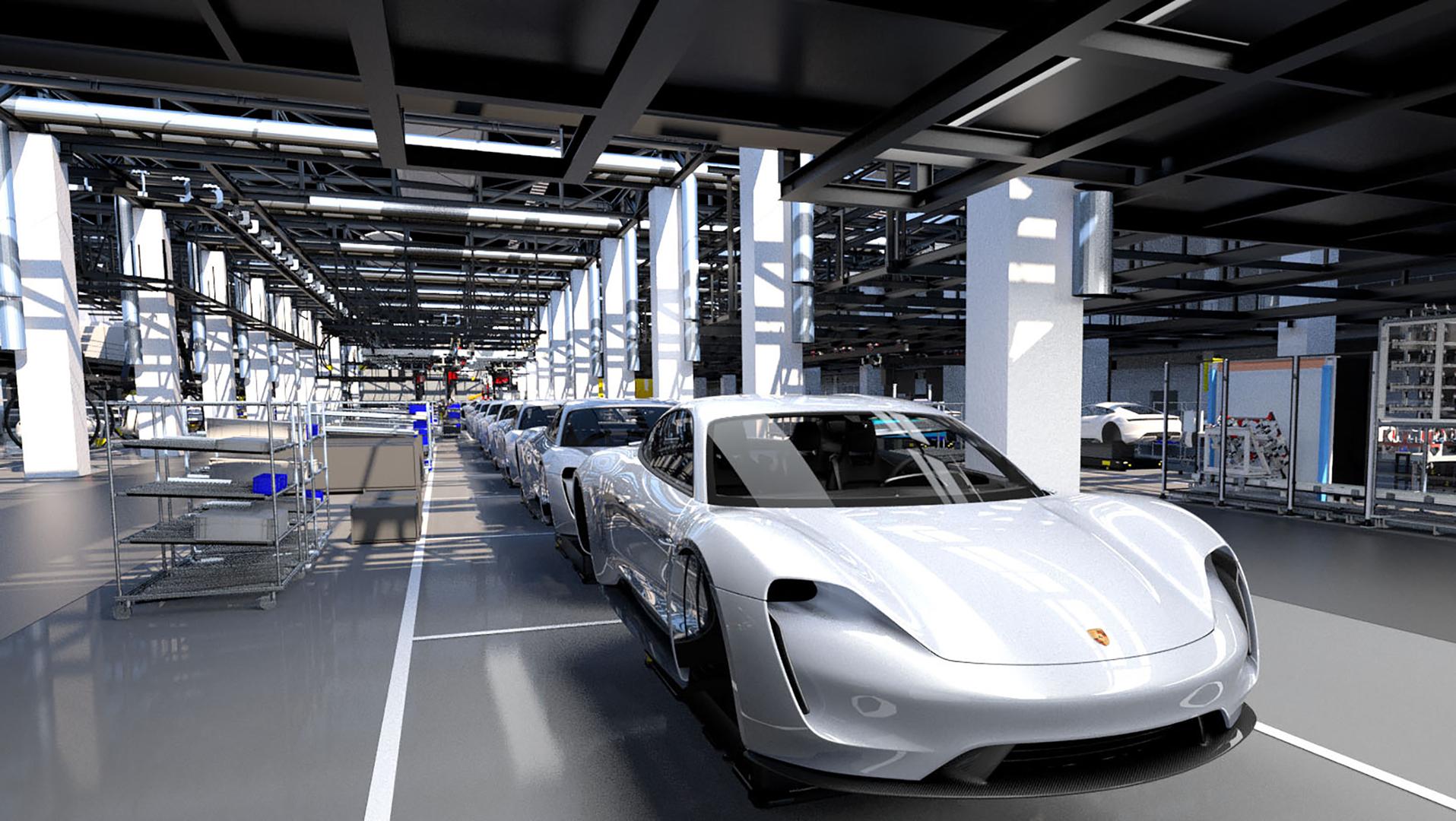
    Porsche has announced that it is on target to produce more than 20,000 Taycan electric cars in 2020. This is quite an achievement for the German automotive giant considering the pandemic has ravaged the demand for vehicles and also the fact that the Taycan is the first full-electric car produced by Porsche.

    The pandemic hasn’t been able to slow down the sales of the Porsche Taycan. “Despite the closure of dealerships and factories during the first corona wave, we will exceed our original target of 20,000 vehicles sold this year,” said Oliver Blume, Porsche’s CEO in an interview with auto motor und sport.

    This news comes a day after the company announced that the Taycan had broken the world record for drifting. It drifted 42 kilometres in 55 minutes in Germany using the RWD version of the Taycan that’s only sold in China.

    The interesting bit is that the sales figures that Porsche is claiming indicate a revival of the automotive market. Till the first half of the year, Porsche had only sold 4,500 Taycans. Porsche then claimed that number had doubled by the end of October, which means in just two months the German automotive manufacturer is looking to double that figure too,  which is staggering.

    The Taycan has been such a success that it has become Porsche’s best-selling car in Europe taking over the Panamera. Porsche at some point will look to deploy a 40,000 Taycan production capacity which will make it its best-selling car this year.

  • Kia Motors India Issues A Recall For Seltos Diesel Over Faulty Fuel Pump

    Kia Motors India Issues A Recall For Seltos Diesel Over Faulty Fuel Pump

    Kia Motors India has issued a recall for the diesel models of the Seltos compact SUV to fix potential damage to the fuel pump. While the company is doing this a service campaign, it has notified its dealer partners to inspect the fuel pump of the diesel Seltos that come for servicing and if its damaged, the part needs to be replaced. When reached out to Kia Motors India, the company said, “The recent communication, involves inspection of fuel pump and in-case of any observation dealer is required to carry out repair/replacement as the case may be.” It’s certainly encouraging to see manufacturers take such proactive initiatives.

    Furthermore, according to a leaked service bulletin that’s circulating the internet, the affected Kia Seltos units were manufactured between October 1, 2019, and March 31, 2020. The damaged fuel pump could cause problems like excessive vibrations, poor pick-up, or in some cases, the vehicle might face a starting problem. So, Seltos owners facing similar issue should reach out to their nearest service centre and get the vehicle examined. As of now, the company is not sending out any communication to vehicle owners, but the faulty part will be replaced by the service centres free of cost.

    According to a leaked service bulletin, the damaged fuel pump could cause problems like excessive vibrations, poor pick-up, or starting problem.

    The Kia Seltos diesel is powered by a 1.5-litre four-cylinder diesel engine that is tuned to produce 113 bhp and 250 Nm of peak torque. The motor comes mated to a 6-speed manual gearbox and an option 6-speed automatic torque converter unit. It worth mentioning that the same engine is used in the Hyundai Verna, and the Kia Sonet, however, considering both these models were launch after March 2020, they are not likely to be affected by this problem.

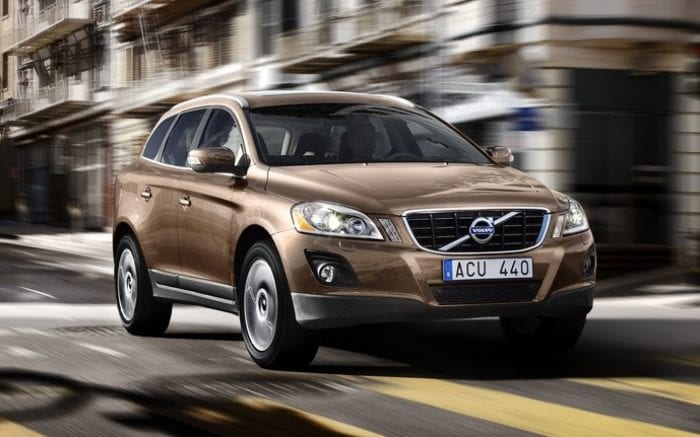
  • New-Gen Volvo S60 Sedan To Be Unveiled This Month

    New-Gen Volvo S60 Sedan To Be Unveiled This Month

    The new-generation Volvo S60 sedan will be unveiled in India on November 27, 2020. Of course, given the current situation with the pandemic, the car will be revealed via a digital event, while the official launch will take place in the first quarter (Q1) of 2021. While the car was supposed to be launched this year itself, the COVID-19 and the resultant lockdown has forced the company to push the launch to next year. Last year, Volvo India had announced that it will be introducing 4 new electrified cars in the country in the next 3 years, so the S60 coming to India could be the plug-in hybrid version.

    Volvo Cars plans to slowly phase out conventional powertrains and focus only on electrified vehicles like PHEVs and fully electric vehicles (EVs). The company has already committed to a goal of featuring some form of electric propulsion in its models from 2019 onwards and now India too is part of this plan. Every new Volvo from 2019 onwards will be electrified.

    Volvo India had announced that it will be introducing 4 new electrified cars in the country, so the S60 could get a plugin hybrid version.

    The Volvo S60 coming to India has been in the global market for a couple of years now, and we have already driven the global-spec model. Overall, the car has become much sleeker now and flaunts some bold character lines that give it a sculpted look. Upfront the car comes with a wide grille with a chequered grille and the Volvo badge at the centre. It’s flanked by a set of sharper-looking headlights with the signature Thor Hammer LED daytime running lamps, and a sporty bumper. The car also comes with a set of 19-inch alloy wheels, along with a new rear design featuring S90 style C-shaped LED taillights, centrally positioned Volvo lettering, and the muscular rear bumper.

    The Volvo S60 is a petrol-only model and it comes with a 2.0-litre in-line 4-cylinder engine, mated to an 8-speed automatic transmission.

    The regular petrol model gets a 2.0-litre in-line 4-cylinder engine which is turbo-charged and pumps out 310 bhp and 400 Nm of peak torque, while mated to an 8-speed automatic. The plug-in hybrid version though gets the same 2.0-litre motor, but, with an electric motor at the rear. The combined power output is about 413 bhp and the total torque output stands at 670 Nm. In pure electric mode, the car can cover a range of up to 45 kilometres.

  • California’s New Coronavirus Curfew Does Not Apply To Tesla Workers

    California’s New Coronavirus Curfew Does Not Apply To Tesla Workers

    Workers at Tesla Inc’s California vehicle factory are deemed essential and are not impacted by the state’s latest restrictions to curb a new surge in coronavirus infections, the California health department said on Friday. Tesla and local California officials in March engaged in a heated months-long standoff over restrictions imposed to curb the first wave of infections, which culminated in the company’s chief executive, Elon Musk, defying health orders, suing local officials and threatening to leave the state. California’s governor on Thursday imposed a curfew on social gatherings and other nonessential activities

    Beginning on Saturday, the stay-at-home order prohibits non-essential business from 10 p.m. until 5 a.m. each day and applies in the majority of the state’s counties, including Alameda County, where Tesla’s factory is located.

    Workers at Tesla Inc’s California vehicle factory are not impacted by the state’s latest restrictions to curb a new surge in coronavirus infections.

    Asked whether the order applied to workers at Tesla’s Fremont factory, the California Department of Public Health in a statement said it did not apply to employees deemed essential workers, with manufacturing listed as an essential workforce.

    “The Critical Manufacturing Sector identifies several industries to serve as the core of the sector including Transportation Equipment Manufacturing Products,” the office said.

    CNBC first reported on the health department’s policies. Under California law, local counties can impose more restrictive measures than mandated by the state. Alameda County on Friday did not immediately respond to a request for comment.

    In a statement on Monday the county’s health department said it was following state guidance, but may act to restrict activities beyond the state’s requirements.

    During the initial virus outbreak in March, local officials ordered Tesla to halt production and Tesla’s factory remained shut down for roughly six weeks. Billionaire Musk in early May defied county orders by reopening the factory, telling county officials he stood ready for arrest.

  • Fiat Chrysler, PSA Merger To Include Investor Loyalty Scheme

    Fiat Chrysler, PSA Merger To Include Investor Loyalty Scheme

    Fiat Chrysler’s merger with Peugeot maker PSA will include a loyalty scheme to reward long-term investors and help prevent future takeover attempts, the prospectus for the planned tie-up shows. Italian-American carmaker Fiat Chrysler (FCA) and France’s PSA agreed to combine in a $38 billion all-share deal in December, uniting brands such as Fiat, Jeep, Dodge, Ram and Maserati with the likes of Peugeot, Opel, Citroen and DS.

    Holders of shares in Stellantis – as the merged group will be known – for an uninterrupted period of at least three years may receive a special voting share in addition to each common share, the companies said in the prospectus.

    Such a move could make management changes and takeover attempts of Stellantis more difficult, they added. The tax consequences of the loyalty scheme are uncertain, the companies said.

    Stellantis will have a Dutch-domiciled parent company and its shares will be listed in Paris, Milan and New York.

    Loyalty schemes are common for companies in the Netherlands and have already been used by Exor, the holding company of Italy’s Agnelli family and FCA’s controlling shareholder, not least during the spin-off of Ferrari, boosting Exor’s grip on the luxury sports car maker.

    PSA CEO Carlos Tavares will run Stellantis and will receive a 1.7 million euro ($2.02 million) bonus upon completion of the merger.

    FCA CEO Mike Manley will receive “a recognition award with a value equivalent to approximately five times his annual base salary” and a cash retention after the merger if certain conditions are met.

    The two companies said they have agreed to review the potential distribution of 1 billion euros to shareholders, either through a dividend evenly before the merger, or to be distributed afterwards by Stellantis.

    PSA and FCA have filed the merger plan with antitrust authorities in 21 countries and the European Union. To date, they have obtained approval from 15 countries and a preliminary okay from Brazil which becomes final next week. The EU is also expected to authorise the merger, sources have said.

  • Tesla Surges For Second Day Ahead Of S&P 500 Debut

    Tesla Surges For Second Day Ahead Of S&P 500 Debut

    Shares of Tesla surged 10% to end near a record high on Wednesday, extending a two-day rally after it was announced the electric car maker will join the S&P 500.

    The California company’s stock has jumped nearly 20% since S&P Dow Jones Indices announced late on Monday it would add Tesla to Wall Street’s most-watched benchmark as of Dec. 21, a change that will force index funds to buy around $50 billion (GBP 38 billion) of its stock.

    A blockbuster quarterly report in July cleared a major hurdle for Tesla’s potential inclusion in the S&P 500, leading to speculation that the company, now with a market capitalization over $450 billion, might be added to the index and spark a surge in demand for its shares.

    Up about 500% in 2020, Tesla has become the most valuable auto company in the world, by far, despite production that is a fraction of rivals such as Toyota Motor, Volkswagen and General Motors .

    Its stock tumbled 21% in one session on Sept. 8 after it was left out of a group of companies being added to the S&P 500, underscoring how much many traders expected it to be added.

  • MINI Reveals The Vision Urbanaut

    MINI Reveals The Vision Urbanaut

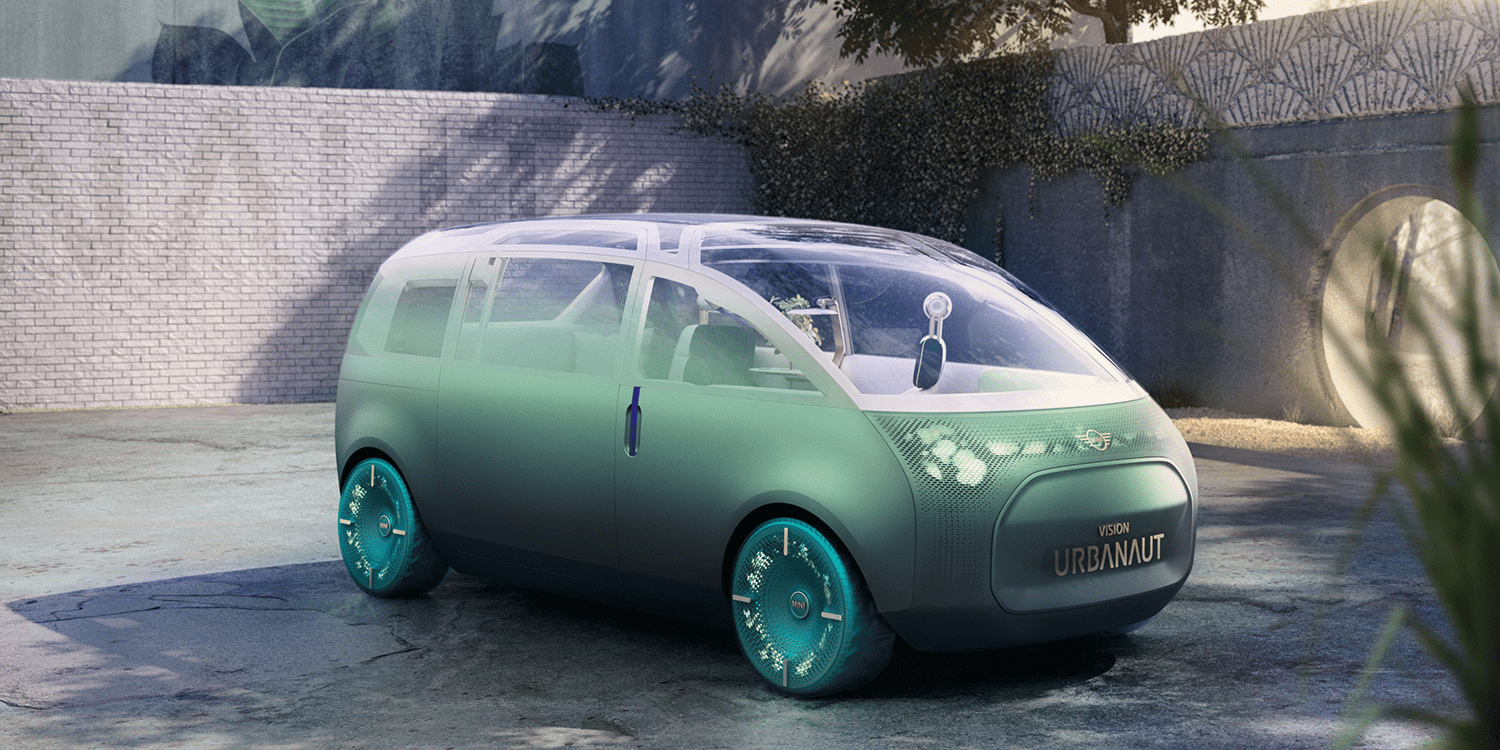
    The Mini Vision Urbanaut is the company’s interpretation of a vision of space. This digital vision vehicle offers more interior space and versatility than ever before, but still on a minimal footprint. It’s not exactly ‘mini’ in the true sense of the term because at 4,460mm long, there’s a lot of room and yes according to the company, the Urbanaut provides an interior space that can be used in many different ways and offers whole new ease of movement inside the car. Adrian van Hooydonk, Head of BMW Group Design said, “The MINI brand has always stood for ‘Clever Use of Space’. In the MINI Vision Urbanaut, we extend private space far into the public realm, creating completely new and enriching experiences,”

    The Mini Vision Urbanaut is an electric concept vehicle that makes clever use of space.

    The Mini Vision Urbanaut was designed from the inside out. The designers created the spacious interior experience before developing the exterior, using floor plans, pieces of furniture plus wooden scale models to provide an indication of size. Over the course of the project, augmented reality was employed to create a digital model, which was then systematically optimized.

    The interior of the MINI Vision Urbanaut provides the ideal environment in which to go on a journey but is also the aim of the journey. Having arrived at the chosen destination, it can transform into a living room in just a few simple steps. Occupants enter the innovative cabin through a large sliding door on the side of the car. The cutting-edge slide and swivel mechanism is the ideal design for urban driving conditions where space is at a premium. There are no other doors on the driver’s side or front passenger side.

    The darker environs of the cabin’s rear section provide a quieter space – the Cosy Corner. This area invites passengers to enjoy some time to themselves. A textile-covered “Loop” extends over the seat bench and features the option of LED backlighting. Between Cosy Corner and the driver’s area is the open and airy central section of the car, which offers quick access to all seating areas. With the door open, it is even possible to sit on the floor. On the side of the car opposite the entry door, a small integrated table with a plant adds a finishing touch to the interior fittings. The table signifies the car’s new center point – the place where passengers meet, face, and engages with one another.

    Oliver Heilmer, Head of MINI Design said, “The car becomes a kind of retreat, a haven where you can relax – or work with full concentration – during a journey. Wanderlust is the only MINI moment where the MINI Vision Urbanaut is being driven or driving with automated driving functions.”
    The Mini Urbanaut was conceived from the outset as an electrically powered vehicle with automated driving functions but the company has not yet provided details on the powertrain.

    The front end of the MINI Vision Urbanaut represents a clear evolution of two time-honored MINI design icons – the headlights and radiator grille. Positioned under a milled aluminum structure with slotted openings, the headlights are only visible when switched on. Thanks to their multicolor dynamic matrix design they can display different multi-colored graphics, which creates a new form of communication between the car and the outside world to suit each moment. The lights on the MINI Vision Urbanaut complement the front “grille” with the attractive look distinctive to every MINI. The enclosed grille itself is now octagonal in shape, representing an evolution of the traditional hexagonal form. Since the MINI Vision Urbanaut does not have a combustion engine requiring cooling air, the grille assumes a new function: it now serves as an intelligence panel for automated driving.

    As with the headlights, multicolor dynamic matrix rear lights behind milled aluminum covers deliver a fresh aesthetic and present a different look in the various driving modes and MINI moments. On closer inspection, the distinctive, convex surfaces also pay homage to previous MINIs and the classic Mini. One small detail – the contour of the rear windows – references the form of the front grille and underscores the car’s stylistic consistency.

    The clear form of the exterior supplies the car’s colors, materials, and details with the perfect stage. The matt exterior shade Zero Gravity transitions from a metallic green with blue flip effect to a subtly toned grey. The windows show a pattern in body color, fading in a gradient from bottom to top. This creates a harmonious transition from the vehicle body to the windows and roof. The pattern also provides a certain amount of privacy without having to darken the windows; the interior remains bright.

    The concept behind the MINI Vision Urbanaut includes services designed to make using the car an enriching and seamless experience. For example, the MINI Vision Urbanaut can be opened using smart devices – so, in keeping with its status as a mobility option of the future, it can be accessed by anyone within a defined circle of family and friends. Playlists, audiobooks or podcasts to suit the route and the moment can be explored while traveling. A personal journey planner displays tips and points of interest (POI) tailored to the individual, as well as recommendations from the MINI Community. These can be proposed and selected as desired.

  • Auto industry seeks to develop components segment

    Auto industry seeks to develop components segment

    While the automotive industry’s target of using 35-45 percent locally made parts remains elusive, auto companies are increasing investments in supporting industries.

    On September 22 TC Motor began construction of the 340 ha Thanh Cong Viet Hung Complex for Automotive Supporting Industries in northern Quang Ninh Province.

    A spokesperson for the Ninh Binh-based auto firm believed that the complex would attract many companies in the auto ecosystem.

    TC Motor is also clearly interested in making parts for Hyundai cars produced in Vietnam. The South Korean brand, which it assembles and distributes, topped the market in the last 10 months.

    Next to Quang Ninh is the VinFast plant that makes cars, motorbikes and electric bikes in the Dinh Vu-Cat Hai industrial zone in Hai Phong City. A third of the 335-ha plant is used to produce auto and motorbike parts.

    The last of the big three local auto companies, Truong Hai (Thaco), is no exception to this trend, making large investments in supporting industries.

    Thaco says that it currently has 12 plants in the 1,200 ha Chu Lai-Quang Nam industrial zone making both internal and exterior parts for buses, trucks and cars; composite parts; automotive glass; air conditioners for trucks, buses and passenger cars; bumpers for passenger cars; seats and seat covers; wires; springs; car body parts and more.

    This producer of Kia and Mazda vehicles is the second largest in the Vietnamese market after TC Motor. Its ambition is to become an original equipment manufacturer (OEM) for not only the domestic market but also exports.

    Where is Vietnam on the automotive map?

    While the Vietnamese car market ranks fourth in Southeast Asia in terms of scale, sales and production, the country’s supporting industry ranked considerably lower.

    In a report in 2018 the Ministry of Industry and Trade said the use of locally produced parts in the Vietnamese auto industry was just 7-10 percent on average, miles away from the 40 percent goal set in 2004.

    While Vietnam is still struggling to develop its supporting industries, an important requirement for auto manufacturing, other Southeast Asian nations like Thailand and Indonesia have already surpassed the 70-80 percent mark.

    To bolster production, it is necessary to have strong supporting industries and steady market growth, said, experts. Vietnam is behind only Myanmar in Southeast Asia in terms of sales growth, but weak supporting industries and a small number of parts suppliers limit production to mere assembly of imported parts.

    The high costs of imported parts have also led to a paradoxical situation of locally made cars being more expensive than imported ones.

    Statistics from the Vietnam Automobile Manufacturers Association (VAMA) show that its members source around 15 percent of tier 1, or low-technology, parts like chairs and wires domestically, and import the rest.

    Thailand and Indonesia only import 10 percent of tier 4 parts, which include the most important like gearboxes and engines.

    In 2018 there were around 2,100 part suppliers in Thailand and only 276 in Vietnam.

    Auto manufacturing costs in Vietnam are around 15-20 percent higher than elsewhere. A steel filler cap costs around $1.5 in Thailand, but $3.8 in Vietnam.

    With even lower-tier parts being expensive in Vietnam, reducing the costs of higher-tier parts like car body, electronics, engines, and gearboxes seems infeasible, said some experts.

    The inability of suppliers in Vietnam to make parts more complicated than tires, seats, and wires require the domestic industry to import about $2 billion worth of car parts each year, mostly components like the braking and steering system, from countries like Japan, China, and South Korea, according to a report by the Ministry of Industry and Trade.

    Car sales in Vietnam reached 385,600 units last year, but the size of the Indonesia and Thailand market was 2.6 times bigger and that of Malaysia, 1.6 times.